Reviewed · CRAFT WORKSHOPS
Experience all of Japanese culture and Japanese food experience classes “origami, udon, Japanese food, green tea, calligraphy” in 4 hours
The heart of this Tokyo experience is not a cooking classroom but a visit to the home of Taka and Keiko, where you learn by doing. In four hours, you fold a paper crane, make udon from scratch, prepare Japanese dishes, drink matcha, and receive a handwritten souvenir.
In This Article
- Key points
- A Japanese home near JR Omori Station
- Folding a paper crane before lunch
- Making udon with your feet
- Preparing sushi, gyoza, and tempura
- A long, relaxed meal with Taka and Keiko
- Matcha and Japanese sweets after the meal
- Calligraphy that gives you a personal souvenir
- What the $92.50 price really covers
- Who will enjoy this Tokyo food and culture class
- Should you book the Homecoming TAKA experience?
- FAQ
- Where does the experience begin?
- What time does the activity start?
- How long does the experience last?
- How do I identify the host at JR Omori Station?
- Is transportation included?
- What food will I help prepare?
- Are drinks included?
- Can vegetarians and vegans participate?
- Is the activity private?
- What souvenir do I receive?
I like two things right away: the walk from JR Omori Station passes a shrine and quiet residential streets, and the meal includes sake, beer, shochu, and soft drinks at no extra charge. The main consideration is the pace. You do many activities in four hours, so this suits you best if you enjoy conversation and hands-on learning more than a tightly timed sightseeing tour.
Key points
- A home visit near JR Omori Station: Taka meets you at the central exit before walking eight minutes to the house.
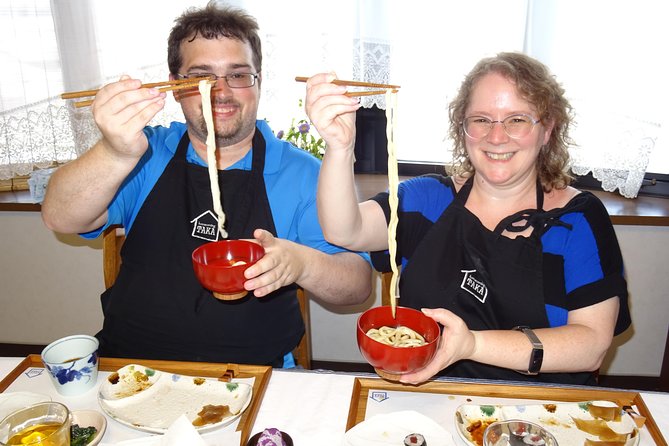
- Udon made from the beginning: You handle the ingredients and even step on the dough as part of the traditional process.
- A full hands-on meal: You help prepare sushi and gyoza, with tempura and Japanese small plates served as part of lunch.
- Culture beyond food: Origami, matcha, Japanese sweets, and calligraphy round out the visit.
- Drinks are included: Sake, shochu, beer, and soft drinks come with the meal.
- A thoughtful souvenir: Keiko writes your name in Japanese calligraphy on colored paper for you to take home.
A Japanese home near JR Omori Station
This activity begins at 10:30 am at the central exit of JR Omori Station in Ota City, Tokyo. Look for Taka carrying a bag marked with the homecoming TAKA logo.
The walk to the house takes about eight minutes. You pass a shrine and move through a quiet residential area, which gives you a small change of scene from Tokyo’s large stations and shopping streets. This is a useful part of the experience because it puts the meal and lessons in an ordinary neighborhood rather than a commercial cooking studio.
Taka and Keiko host the activity in their home. That makes the setting personal and informal. You remove the distance that often comes with a standard class, and the day includes plenty of conversation about Japanese customs, food, daily life, and the area around Omori.
You should be comfortable entering a private home and spending several hours in a social setting. The hosts clearly aim to treat visitors like extended family, and the warm, personal tone is central to the experience. If you prefer to keep to yourself, or want a class that moves quickly from one recipe to another, this may feel less suitable.
A few more Tokyo tours and experiences worth a look
Folding a paper crane before lunch
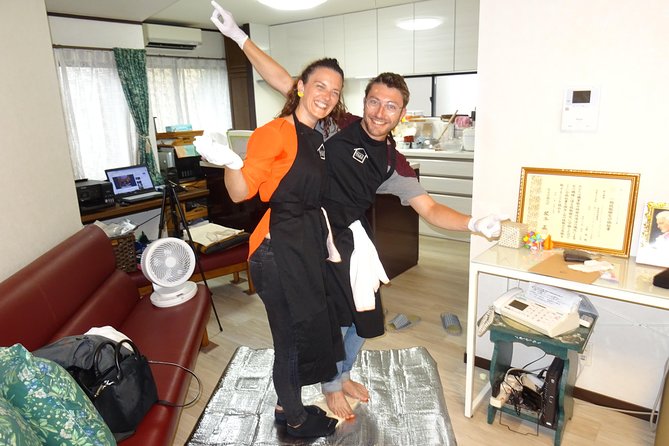
The first activity is origami, with a focus on folding a paper crane. It is a simple start, but it gives everyone a way to begin working with their hands before the cooking starts.
Origami also offers a direct introduction to a familiar part of Japanese culture. You do not just hear about the craft. You follow the folds yourself and leave with something you made.
This is likely to work well for families. Children have a clear task, and the crane is more memorable than a short lecture about Japanese traditions. One family described children aged seven and eight enjoying the session, with udon making becoming a particular favorite. Older children and teenagers can take part too, as shown by the families who brought children aged 13 and 15.
Do not expect an advanced origami workshop. The listed activity is folding a crane, so the value comes from the shared start and the cultural setting rather than a long sequence of paper designs.
Making udon with your feet
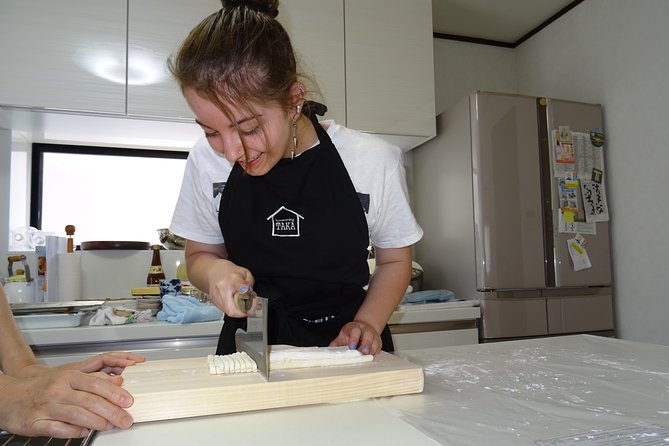
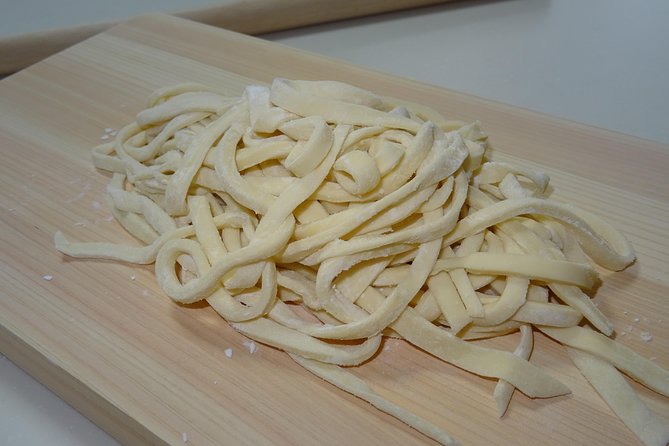
The udon lesson is one of the most distinctive parts of the day. You follow the dough from its ingredients through to the finished noodles, including the unusual step of stepping on the material.
That physical process gives you a better sense of how handmade noodles differ from something pulled from a packet. It is also the sort of activity that works for mixed-age groups because it is practical, a little playful, and easy to remember.
You should wear clothing that allows you to move comfortably and use the provided apron. The description does not give a detailed list of ingredients or cooking equipment, so do not book this expecting a technical culinary course with printed instruction for every stage. The focus is on taking part, understanding the process, and eating what you help make.
The noodle lesson also has value after the visit. Several participants planned to repeat the recipes at home, and one family later made sushi after returning home. The activity gives you ideas you can carry into your own kitchen, even though the exact recipes and quantities are not specified.
Preparing sushi, gyoza, and tempura
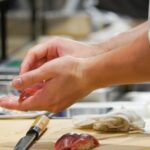
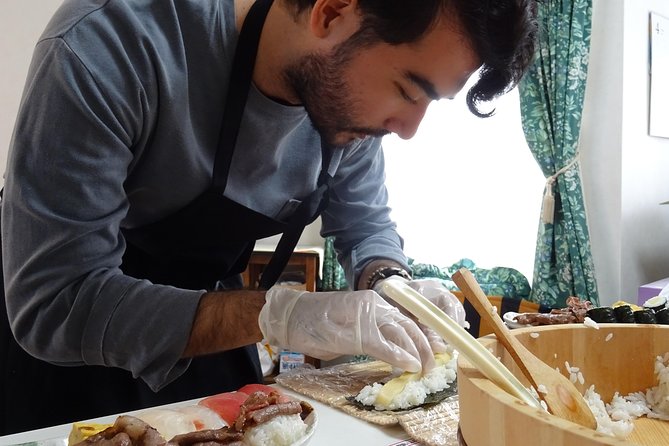
The main meal centers on Japanese cooking. You make sushi and gyoza with Taka and Keiko, while tempura is also part of the food experience. Keiko serves additional Japanese small plates alongside the dishes you prepare.
This is a generous range for a four-hour class. Sushi introduces careful assembly, gyoza brings a different folding and filling method, and tempura adds a cooked dish with its own technique. You get a broader look at Japanese home cooking than you would from a class devoted to one recipe.
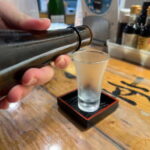
The food is made with ingredients from Japan, and the drinks are also included. Lunch is part of the price, so you are not paying for a lesson and then arranging another meal afterward. Sake, beer, shochu, and soft drinks are available without an added charge, which is a real value if you would like to make the meal a longer social occasion.
The listing uses both lunch and dinner language, but the schedule places the meal after the morning activities and before matcha. Think of it as a substantial midday meal rather than a separate evening dinner.
Vegetarians and vegans can take part in all the dishes with different ingredients. You should still provide your dietary needs when booking or communicating with the hosts, since the actual substitutions are not listed.
A long, relaxed meal with Taka and Keiko
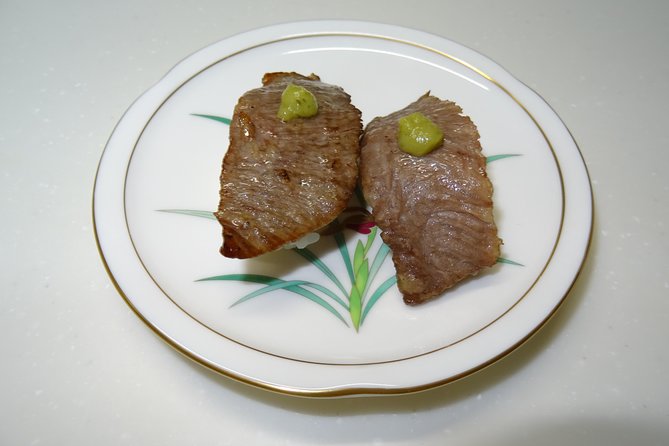
The meal is not just a break between lessons. It is the point where the craft activities turn into a shared experience.
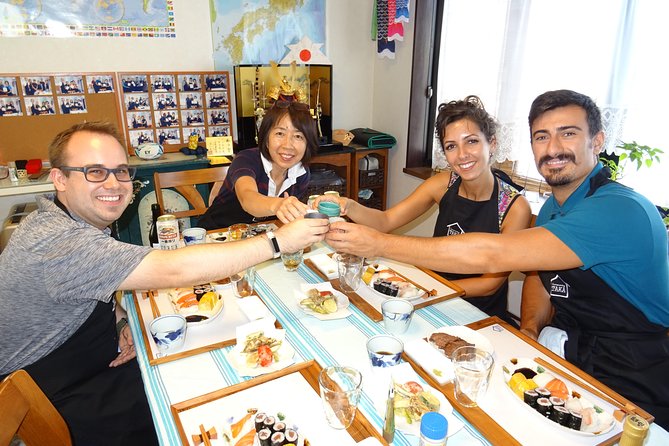
You eat what you have helped prepare, try the small plates served by Keiko, and talk with the hosts. Past participants especially valued the chance to learn about Japan through ordinary conversation rather than only through formal instruction. Some also exchanged information about their own countries and cooking traditions with Taka and Keiko.
That social side is important to understand before booking. You are not simply watching a demonstration, taking a few photographs, and leaving. The hosts encourage a friendly connection, and the four hours can feel more like being welcomed into someone’s home than attending a standard attraction.
The private format helps here. Only your group takes part, so the atmosphere is more personal than a large public class. The available information does not state the maximum group size, so you should contact the provider if that detail matters to your plans.
The hosts have also shown a willingness to keep in touch after the activity. Their relationship with past participants has included recipe photos, future meeting plans, and invitations to return. You should not book solely for that possibility, but it explains why this experience feels more personal than a normal half-day tour.
A few more Tokyo tours and experiences worth a look


Matcha and Japanese sweets after the meal
After lunch, you prepare matcha together and taste it with local Japanese sweets. This is a calm change of pace after the hands-on food preparation.
The matcha session gives you a chance to notice the contrast between Japanese tea and the larger meal that comes before it. You are not only eating Japanese food. You are also taking part in the preparation and serving of a familiar drink in a home setting.
The activity does not claim to be a formal tea ceremony. That distinction matters. Expect an introduction to making and tasting matcha rather than an elaborate ceremonial performance with strict rules and historical explanation.
Calligraphy that gives you a personal souvenir
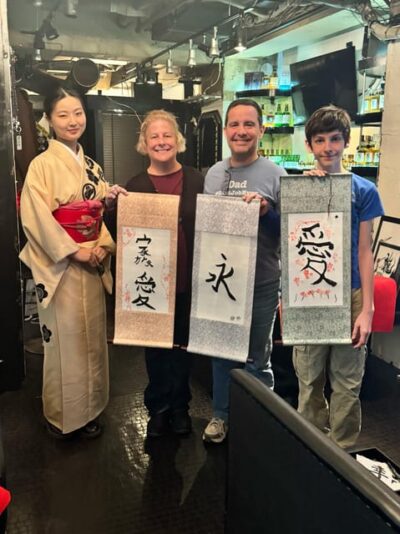
The final scheduled activity is calligraphy. Keiko writes your name on colored paper, and you take it home as a souvenir.
I like this better than a generic branded gift. It is made for you, connected to the day, and small enough to pack easily. It also gives you a lasting reminder of the hosts, not just a photograph of food.
The information does not specify how your name will be rendered in Japanese or how much instruction you receive before Keiko writes it. If you hope to practice several characters yourself, ask the hosts what the calligraphy portion includes. The confirmed feature is a name written by Keiko on colored paper.
After the calligraphy, Taka and Keiko walk you back to JR Omori Station. The activity ends at the same meeting point where it began.
What the $92.50 price really covers
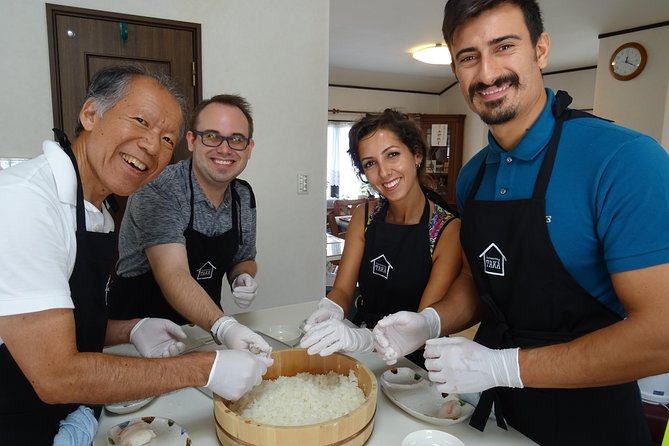
At $92.50 per person, this is not the cheapest way to eat lunch in Tokyo. You are paying for a four-hour private home visit, several hands-on cultural activities, lunch, an apron, origami materials, drinks, and a calligraphy souvenir.
The included alcohol improves the value for adults who want to share sake, beer, or shochu with the meal. Soft drinks are included too, so the price does not depend on drinking alcohol.
Families may find the cost easier to justify because several people are occupied for half a day, and the children receive active instruction rather than simply sitting through a meal. Solo visitors can also book, but the social setting may be especially important if you want a personal connection during your Tokyo stay.
You should also account for your own train fare to Omori Station. Transfers are not included. The station meeting point makes the start fairly clear, but you still need to reach Omori on your own.
The experience is often booked well in advance, with an average booking lead time of 107 days. That is a strong reason to reserve early if the date matters to you. Free cancellation is available up to 24 hours before the start time for a full refund. Changes or cancellations inside that 24-hour window are not accepted and are not refunded.
Who will enjoy this Tokyo food and culture class
I would recommend this activity to you if you want:
- A personal meeting with a Japanese couple in their home
- A family activity that keeps children involved
- Several food projects in one session
- A relaxed meal with conversation
- A small cultural souvenir you can take home
- Vegetarian or vegan food prepared with different ingredients
- A break from Tokyo’s crowded sightseeing areas
It is also a good choice for repeat visitors who have already seen major temples and shopping districts. Omori is not presented as a major sightseeing stop here. Its value is the neighborhood setting and the chance to spend time with local hosts.
You may want something else if you prefer a professional restaurant kitchen, a specialized sushi lesson, a formal tea ceremony, or a quick activity with little conversation. The day covers many subjects, so it offers breadth rather than advanced training in one craft.
Should you book the Homecoming TAKA experience?
Book it if your idea of a good Tokyo day includes making food, asking questions, sharing a meal, and meeting people who want to stay connected after you leave. The strongest parts are the warmth of Taka and Keiko, the hands-on udon process, the broad food menu, and the personal calligraphy souvenir.
I would especially choose it for families, couples, and solo visitors who want a home-based activity that feels different from a normal sightseeing tour. At $92.50, the combination of lunch, drinks, materials, and four hours of personal attention makes the price reasonable.
Just arrive ready for a social visit, not a rapid-fire class. Book early, confirm your dietary needs, and leave room in your schedule for the walk to Omori Station and the unhurried pace of a meal with your hosts.
FAQ
Where does the experience begin?
It begins at the central exit of JR Omori Station in Tokyo. The meeting address is 1 Chome-6 Omorikita, Ota City, Tokyo 143-0016, Japan.
What time does the activity start?
The start time is 10:30 am.
How long does the experience last?
The activity lasts approximately four hours.
How do I identify the host at JR Omori Station?
Look for someone carrying a bag with the homecoming TAKA logo.
Is transportation included?
No. Transfer costs are not included. Taka meets you at JR Omori Station and walks with you to the house, about eight minutes away. The activity ends back at the meeting point.
What food will I help prepare?
You make udon noodles, sushi, and gyoza. Tempura and Japanese small plates are also part of the meal.
Are drinks included?
Yes. Sake, shochu, beer, and soft drinks are included.
Can vegetarians and vegans participate?
Yes. Vegetarians and vegans can enjoy all the dishes with different ingredients.
Is the activity private?
Yes. Only your group participates in this private activity.
What souvenir do I receive?
Keiko writes your name in calligraphy on colored paper for you to take home.
More Dining Experiences in Tokyo

More Food Experiences in Tokyo
More Craft Workshops in Tokyo

More tours in Tokyo we've reviewed












Craft Workshops, compared.
 ★ 4.8Chopstick Making Workshop in GinzaFrom $251 hour
 ★ 5.0Kintsugi Experience: Art of Golden Joinery in TokyoFrom $59
Tokyo: Shinjuku Chopstick Making ClassFrom $121 hour
★ 5.0Kintsugi Experience: Art of Golden Joinery in TokyoFrom $59
Tokyo: Shinjuku Chopstick Making ClassFrom $121 hour
 ★ 5.0Private Craft Your Own Ring Handmade Experience in Asakusa, TokyoFrom $21
 ★ 5.0Authentic Pure Gold Kintsugi Workshop with Master Taku in TokyoFrom $142
 ★ 5.0Tokyo: Calligraphy on Kanji Fan & Scroll with DrinkFrom $531h 20m