Reviewed · TOKYO FOOD TOURS
Tokyo Night Foodie Tour in Shinjuku – Seasonal Sushi, Wagyu Beef
Shinjuku is at its best after dark, when sushi counters glow, Wagyu cooks over a small shichirin grill, and Kabukicho’s neon signs turn a simple meal into a night out. This tour links those scenes with seasonal omakase sushi, several cuts of Japanese beef, dessert or a drink, and a local guide who can help you make sense of it all.
In This Article
- The food-first way to see Shinjuku at night
- Omoide Yokocho sets the mood, even when dinner is elsewhere
- Seasonal omakase sushi at a local-style counter
- Five cuts of Wagyu over a shichirin grill
- Kabukicho after dark, with the city turned up
- Godzilla Road adds a quick pop-culture stop
- Dessert, a drink, and a return to Nishishinjuku
- What the guides add to the evening
- How much food do you actually get?
- Weather, walking, and group size
- Who will get the most from this tour?
- Is $111.62 a fair price?
- Should you book the Shinjuku night food tour?
- FAQ
- How long does the Tokyo Night Foodie Tour last?
- Where does the tour begin?
- Where does the tour end?
- How many people can join the tour?
- Does the tour include vegetarian food?
- Can the tour accommodate food allergies?
- What is the cancellation policy?
I like the small maximum of seven people, which gives guides such as Molly, Aoi, Mimi, and Yuma room to answer questions and help with menus. I also like the useful mix of food and orientation: you get a proper dinner while learning how Shinjuku works and finding places you might not spot on your own.
The main consideration is that the food stops are not all inside the narrow lanes of Omoide Yokocho. You may walk about 15 minutes to the sushi restaurant and another 15 minutes to the Wagyu stop, so comfortable shoes and weather-ready clothing matter.
The food-first way to see Shinjuku at night
This is a three-hour evening walk built around two major Japanese specialties: sushi and Wagyu beef. It is not a quick snack crawl. The meal is substantial enough that several people finished feeling full, with one group enjoying eight pieces of omakase sushi followed by five cuts of A5 Wagyu.
You meet at 1-chōme-2-8 Nishishinjuku, near public transportation. From there, the guide leads you toward the first food stop, then through key nightlife areas before finishing near Nishishinjuku and returning to the meeting point.
The tour costs $111.62 per person. That is not a budget dinner, but the price covers a guided evening, multiple food courses, restaurant access, neighborhood context, and a dessert or drink finale. If you were already planning to pay for quality sushi and Wagyu separately, the price can make sense. If you mainly want a cheap introduction to Japanese food, you can spend less on your own.
The biggest value is the combination. You are not only sitting at a restaurant, and you are not only walking past signs while someone recites facts. You eat, move through the city, and get help with the small choices that can make Japanese dining easier.
Omoide Yokocho sets the mood, even when dinner is elsewhere
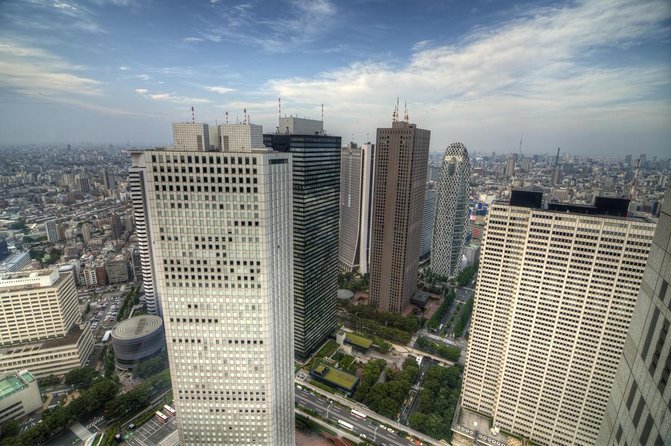
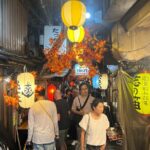
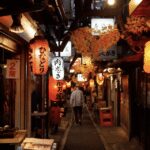
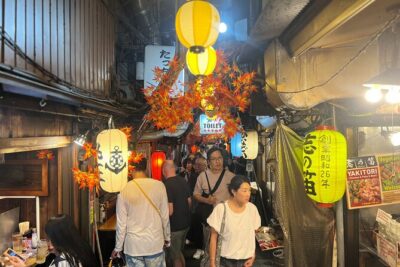
The route begins around Shinjuku and Omoide Yokocho, a compact area known for its tiny food businesses and old-fashioned atmosphere. Its lanes are a useful first look at the contrast that defines Shinjuku: cramped counters and intimate restaurants sit close to towering buildings, train stations, and bright entertainment streets.
One detail matters here. The tour uses Omoide Yokocho as part of the neighborhood experience, but the sushi meal may take place at an omakase restaurant a walk away rather than inside the narrow lanes themselves. Expect roughly 15 minutes of walking before sushi, then another 15 minutes before the Wagyu stop.
That is not a flaw, but it helps to set the right expectation. You are getting a broader Shinjuku walk, not a meal inside every famous alley you pass.
A few more Tokyo tours and experiences worth a look
Seasonal omakase sushi at a local-style counter
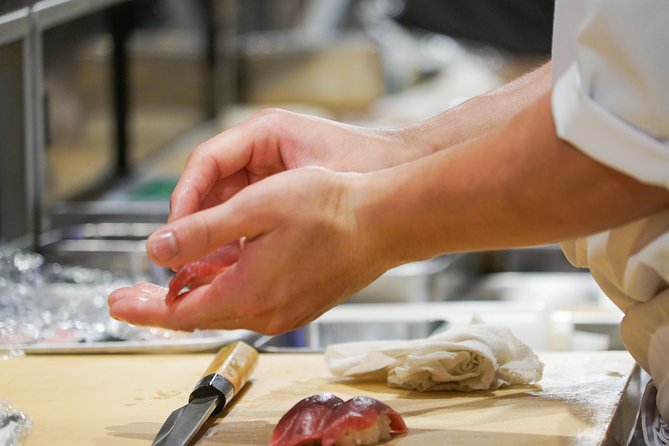
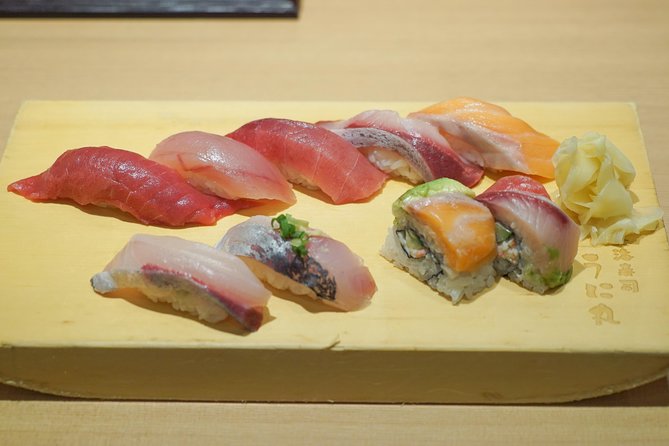
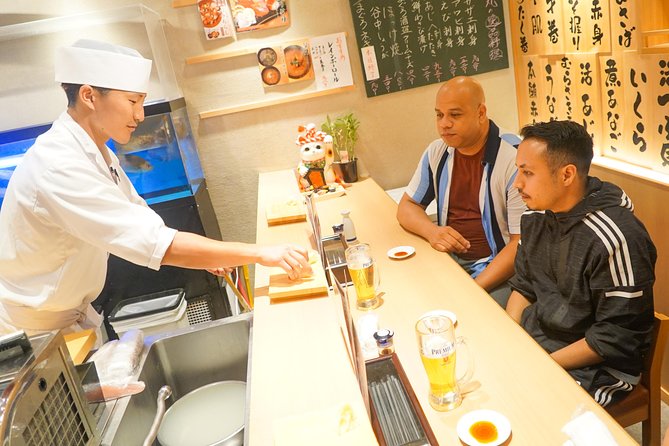
The first major food stop is a sushi restaurant where you can choose an omakase-style meal. Omakase means you place your trust in the chef’s choices, including fish selected for the season. It is a fine format for first-time visitors because you do not need to know every fish, cut, or preparation before sitting down.
The exact serving can vary, but the food described for this experience includes about eight pieces of sushi. The chef prepares the dishes in front of you, giving you a clear view of the work rather than sending a generic plate from the kitchen.
That setting also makes the guide useful. You can ask about what you are eating, how to approach the meal, and what makes one piece different from another. Guides including Mimi and Yuma have been praised for explaining both the food and everyday life in Japan, while Yuki has helped diners with menu choices, including an older family member.
I would treat this as a good chance to ask simple questions. You do not need to pretend you know the difference between every type of tuna or seafood. A guide who can explain the basics without making you feel awkward adds real value here.
The drawback is that dietary flexibility is limited. The operator cannot guarantee an allergy-free meal, and kitchens may not be able to make substitutions. A vegetarian course can be requested by the day before, but it is not available as a same-day request.
Five cuts of Wagyu over a shichirin grill
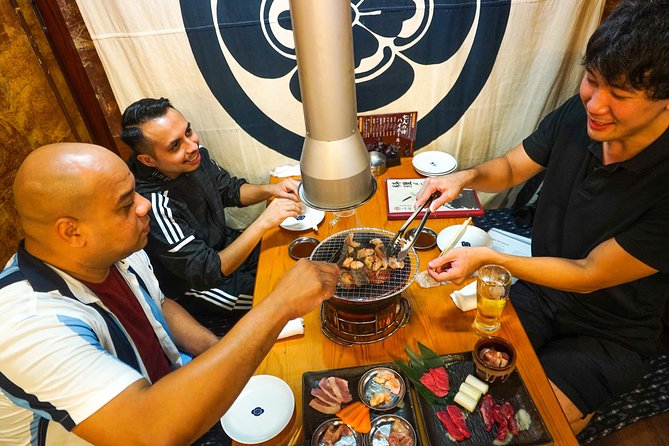
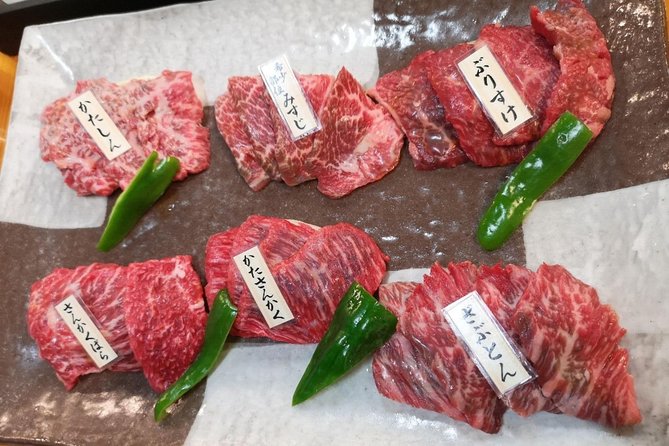
Next comes the meal’s other star: Japanese Wagyu cooked at the table over a traditional shichirin stove. The experience can include five cuts of A5 Wagyu, giving you a chance to compare texture and flavor rather than eating one large serving of beef.
This is a hands-on part of the evening, but the guide remains close to help you understand the meal. You may find the beef is served in small portions because the focus is on tasting several cuts. That format is better for comparison and conversation than for anyone expecting a giant steak.
The Wagyu stop has earned particularly strong praise. Families have singled it out as the favorite part of the night, and several groups described the beef as a memorable highlight. Molly, in particular, is noted for explaining the food clearly and answering questions about Japanese culture and daily life.
If you eat meat but have never tried high-grade Wagyu in Japan, this stop gives you a sensible introduction without asking you to plan a specialty restaurant on your own. You also avoid the uncertainty of choosing a place from a long list of Shinjuku restaurants when you are hungry and unfamiliar with the area.
Smoking is possible at some venues on this experience because the restaurants are independent businesses. The operator may not be able to change the location. That is worth considering if smoke bothers you.
Kabukicho after dark, with the city turned up
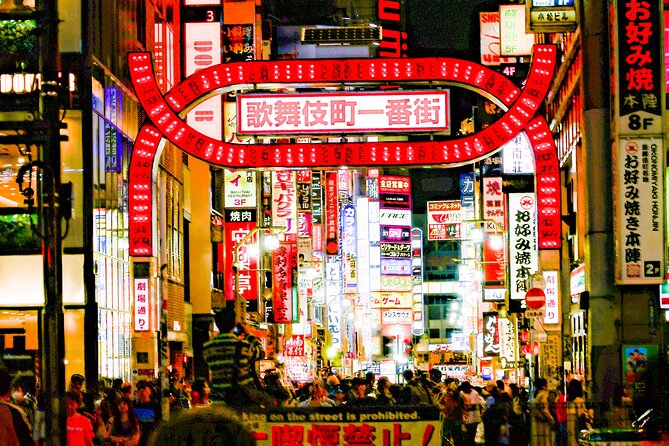
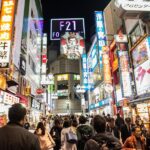
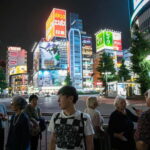
Between the meals, you walk through Kabukicho, Tokyo’s famous entertainment district. At night, this part of Shinjuku is all signs, theaters, restaurants, bars, and constant movement. It can feel chaotic at first, especially if you have just arrived in Tokyo.
The walking portion lasts about 40 minutes. You are not simply crossing the district to reach dinner. The guide helps you read the area and points out the character of its nightlife streets, giving you a better sense of where you are before you return on your own.
That orientation may be one of the tour’s most practical benefits. One couple finished the evening feeling confident enough to return to Kabukicho and try other places independently. I like that result because a good first-night tour should leave you more capable, not dependent on a guide for the rest of your trip.
The pace appears fairly relaxed rather than rushed. One rating specifically described it as a slower-paced Shinjuku walking tour, which suits anyone who wants time to look around and talk. It may feel too gentle if you want to cover a large part of Tokyo in three hours.
Shinjuku can also be hard to absorb in one pass. There is a lot to see, and the signs and streets compete for your attention. A guide can point out useful details, but do not expect a complete tour of every corner of the district.
Godzilla Road adds a quick pop-culture stop
The route includes Godzilla Road and the Godzilla Head, with about five minutes set aside for the stop. The giant head is a fun landmark in the middle of Kabukicho and an easy photo break during the evening walk.
This is a short visit, not a museum experience or a long film-history presentation. The stop works best as a light change of pace between dinner locations. If you are a Godzilla fan, it will feel more important. If not, it is still a memorable marker in the neighborhood.
The tour description indicates that the guide may explain the background of the attraction and its place in the area. Keep your expectations modest: five minutes is enough to see the head and take photos, not to explore a full exhibit.
A few more Tokyo tours and experiences worth a look

Dessert, a drink, and a return to Nishishinjuku
The final stop takes place in Nishishinjuku at a small eatery, where the group can finish with a Japanese dessert or a drink. The group may choose between the two, so the ending is not necessarily the same for every departure.
This final pause helps the tour avoid the abrupt finish that often follows a main meal. You have time to sit, chat with the group, and ask the guide for suggestions for the rest of your stay. Several guides, including Mimi, Yuma, and Aoi, are praised for offering useful recommendations beyond the tour itself.
The dessert or drink is also helpful if you want a softer ending after sushi and beef. If you are already full, you may prefer the drink option. If you have a sweet tooth, dessert gives the evening a clear final course.
The activity ends back at the meeting point. That makes the tour easier to fit into a Tokyo evening, especially if you want to continue exploring Shinjuku afterward or return to your hotel by train.
What the guides add to the evening
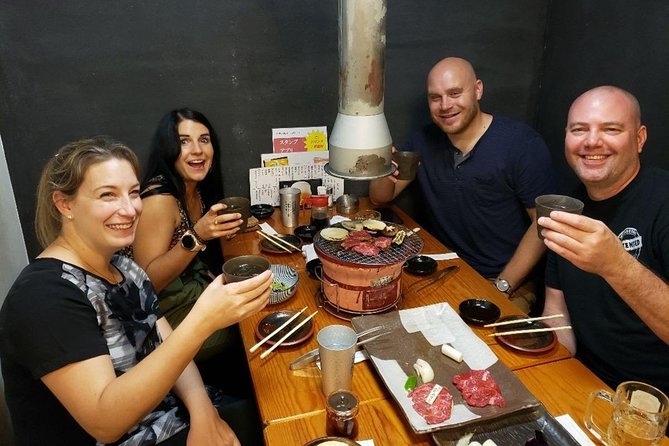
The food is the main reason to book, but the guide shapes the quality of the experience. The strongest guide reports describe friendly hosts who explain local customs, answer basic questions without judgment, and help the group feel comfortable at the restaurants.
Names that appear in especially positive accounts include:
- Molly, praised for her warmth, area knowledge, food explanations, and help with questions from families.
- Aoi, noted for keeping the group comfortable and adding cultural context.
- Mimi, appreciated for clear English, menu explanations, and conversation about life in Tokyo.
- Yuma, praised for humor, local history, and making the evening feel personal.
- Yuki, who helped an older diner with menu choices.
- Yosh, remembered for showing less obvious places and helping a group get home safely.
Your guide is not guaranteed to be one of these people, but the pattern is useful. This experience depends partly on the human connection. Most guides appear to focus on conversation and practical help, though one account wished for more detail about the food itself.
That is a fair limitation. If you want a formal culinary lecture at every stop, this may feel light. If you want a friendly local who can explain the basics and help you navigate an unfamiliar neighborhood, it is a better fit.
How much food do you actually get?
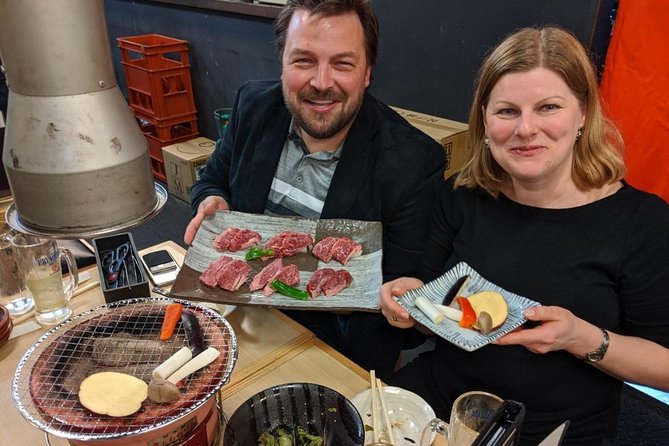
Plan on a full evening meal, not a few token bites. The food can include several sushi pieces, multiple cuts of Wagyu, and a final dessert or drink. Some people finished very full, while another description called the amount just right after arriving directly from a flight.
Your appetite will depend on the serving sizes and the final choice made by the group. Still, the combination of sushi, beef, and a finale should be enough for most people looking for dinner rather than a tasting with tiny portions.
The experience is not designed for strict dietary needs. Vegetarian arrangements must be requested in advance, by the day before. Allergy-free meals cannot be promised, and substitutions may not be possible at each restaurant, although the operator says it will try to compensate at other stops.
Weather, walking, and group size
The tour lasts about three hours and has a maximum of seven people. That small size is a real advantage in narrow restaurant spaces and crowded streets. It also makes it easier to ask questions, hear the guide, and keep the group together.
You should wear comfortable shoes. The route includes walking between the sushi restaurant, Wagyu restaurant, Kabukicho, Godzilla Road, and the final stop. The pace is described as relaxed, but this is still a walking tour.
Tokyo’s weather can be severe at both ends of the scale. Summer temperatures may reach 40°C, or 110°F, while winter lows can fall to about -5°C, or 20°F. Rain can also shape the evening, so bring suitable clothing rather than assuming the neon will keep you dry.
The tour runs through places where smoking may not be prohibited. The restaurants cannot always be changed, so people sensitive to smoke should take note before booking.
Who will get the most from this tour?
I would recommend it most strongly for first-time visitors who want a guided introduction to Shinjuku after dark. You get food, neighborhood orientation, and a chance to ask the questions that are hard to solve from a guidebook.
It also suits couples, adult families, and solo diners who enjoy meeting a small group. Several people appreciated the chance to talk with other members of the group, and the seven-person limit should make conversation easier than on a large bus tour.
Food-focused visitors will like the pairing of omakase sushi and A5 Wagyu. The tour is especially useful if you want to try both but feel uncertain about choosing the restaurants yourself.
I would be more cautious if you need strict allergy control, avoid meat or seafood, dislike possible smoke, or want a fast-moving sightseeing tour. Vegetarians can request an adapted course in advance, but same-day changes are not possible.
Is $111.62 a fair price?
At $111.62 per person, this is best viewed as a guided dinner with sightseeing attached. The value depends on how much you would otherwise spend on sushi and Wagyu, plus the value you place on having someone handle the restaurant choices and explain the neighborhood.
The price feels more reasonable because the meal is not limited to one dish. You may receive around eight pieces of omakase sushi, five cuts of A5 Wagyu, and dessert or a drink, along with about three hours of guiding.
The tour also saves planning time. You do not have to compare restaurants, worry about ordering unfamiliar food, or work out how to connect Omoide Yokocho, Kabukicho, Godzilla Road, and Nishishinjuku in one evening.
For a low-cost introduction to Japanese food, it is expensive. For a special first-night meal that combines sushi, Wagyu, and a local walk, it offers solid value, especially if you use the guide’s recommendations for the rest of your Tokyo stay.
Free cancellation is available if you cancel at least 24 hours before the start time. Cancellations or changes made later are not refunded or accepted.
Should you book the Shinjuku night food tour?
Book it if you want two high-interest Japanese foods in one evening and like the idea of seeing Shinjuku with a local guide. The small group, relaxed pace, and restaurant access make it a strong choice for a first or second night in Tokyo.
I would book early in your trip so you can ask about other places to eat and return to Kabukicho with more confidence. I would also request a vegetarian course by the day before if needed, and contact the operator in advance about any serious food concerns.
Skip it if you are seeking a cheap meal, need guaranteed allergy-free cooking, or want to spend the entire evening inside Omoide Yokocho. For everyone else, this is a well-balanced night out: excellent sushi, memorable Wagyu, neon streets, and enough local help to make Shinjuku feel less confusing.
FAQ
How long does the Tokyo Night Foodie Tour last?
The tour lasts approximately three hours.
Where does the tour begin?
It begins at 1-chōme-2-8 Nishishinjuku, Shinjuku City, Tokyo 160-0023, Japan.
Where does the tour end?
The activity ends back at the meeting point.
How many people can join the tour?
The tour has a maximum of seven travelers.
Does the tour include vegetarian food?
A vegetarian course may be available if you request it by the day before. It cannot be requested on the day of the tour.
Can the tour accommodate food allergies?
Allergy-free meals cannot be guaranteed. Substitutions may not be possible at some stops, though the operator will try to compensate at other venues.
What is the cancellation policy?
You can cancel for a full refund if you do so at least 24 hours before the experience begins. Cancellations or changes made less than 24 hours in advance are not accepted or refunded.
More Sushi Making Classes in Tokyo
More Tokyo Food Tours in Tokyo
More Shinjuku Tours in Tokyo
More tours in Tokyo we've reviewed












Tokyo Food Tours, compared.
 ★ 5.0Tokyo: Shinjuku Food Tour (13 Dishes at 4 Local Eateries)From $86
 ★ 4.9Tokyo: Shinjuku Food Tour (13 Dishes and 4 Eateries)From $97
 ★ 5.0Eat and Drink Like a Local: Tokyo Ueno Food Tour-Taverns&RamenFrom $95
 ★ 5.0Tokyo: Shibuya Food Tour (13 dishes and 4 Eateries)From $77
Tokyo: Shinjuku Food Tour – 15 Dishes, 3 Drinks, 4 EateriesFrom $723 hours
★ 5.0Tokyo: Shibuya Food Tour (13 dishes and 4 Eateries)From $77
Tokyo: Shinjuku Food Tour – 15 Dishes, 3 Drinks, 4 EateriesFrom $723 hours
 ★ 5.0Best of Shibuya Food TourFrom $217