Reviewed · TSUKIJI MARKET TOURS
Tsukiji Fish Market Guided Tour and Sushi Making with Pro Chef
Tsukiji’s best lesson is that sushi begins long before the rice reaches your plate. This four-hour experience takes you from Honganji Temple and market stalls to a hands-on class where a professional chef shows you how to shape five kinds of nigiri and one rolled sushi.
In This Article
- Key points to know
- What this Tsukiji experience actually offers
- Meeting at Tsukiji Honganji Temple
- Reading the outer Tsukiji market
- The foods and customs behind the stalls
- Moving upstairs to the sushi classroom
- Making five nigiri types and one roll
- What the price means in practical terms
- Timing, food restrictions, and what to bring
- Who should book this four-hour tour
- Should you book the Tsukiji sushi tour?
- FAQ
- Where does the tour begin?
- How do I identify the guide?
- How long does the experience last?
- Does the tour visit the old Tsukiji inner market?
- What sushi will I make?
- Is lunch included?
- What should I wear?
- Can the tour accommodate dietary restrictions?
I like the way the tour links food with place, rather than treating sushi as an isolated cooking activity. I also like the chance to eat what you make alongside sushi prepared by the chef, with dashi soup, green tea, and fresh wasabi. The main catch is value: the market walk includes no tastings, so you may want extra cash for snacks, and the classroom location can change.
Key points to know
- The market is Tsukiji’s outer market: The former inner wholesale market moved to Toyosu in 2018, so this is a tour of shops, food stalls, and a smaller wholesale area.
- The temple adds useful cultural context: You begin at Tsukiji Honganji Temple and learn local customs, including how to pray properly.
- The sushi class is the stronger half: A professional chef demonstrates the work, then helps you make five nigiri types and one roll.
- You eat your own lunch: The class includes your sushi, a chef-made piece, dashi soup, fresh wasabi, and green tea.
- Expect stairs and steady walking: The classroom is on the third floor of a traditional building with no elevator.
- Plan for changing logistics: The class may take place in Tsukiji, Asakusa, or Yotsuya, and the end point depends on the date.
What this Tsukiji experience actually offers
At about $104.13 per person, this is not simply a market stroll and not quite a full food crawl. It is a combined cultural walk and beginner sushi lesson, lasting roughly four hours and usually accommodating no more than 22 people.
That distinction matters. You are paying for a guide who explains what you are seeing, a professional chef-led class, ingredients, and a sit-down meal of your own making. You are not paying for a string of included tastings from market vendors. If you expect to eat your way through Tsukiji during the walking portion, the price may feel high.
I see the experience as two connected lessons. First, you learn how seafood and Japanese food products appear in the market. Then you handle some of those ideas yourself in the classroom. The market gives the sushi class a setting and a story, while the class gives the market visit a practical purpose.
The experience has a strong record overall, with a 4.9 rating and 97 percent recommendation rate from 775 reviews. Still, the mixed feedback is useful. The guides are often praised for clear English, good local advice, patience, and a relaxed manner. The sushi class is also repeatedly singled out as fun, clean, and easy to follow. The weaker point is the market portion for people who want extensive sampling or a tour led by the chef.
A few more Tokyo tours and experiences worth a look

Meeting at Tsukiji Honganji Temple
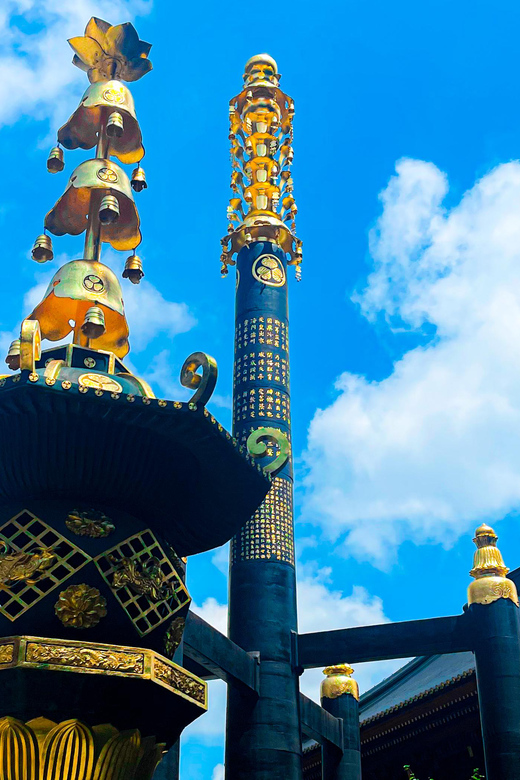
Your meeting point is the main gate of Tsukiji Honganji Temple, at 3-chome-15-1 Tsukiji, Chuo City. This is the front side of the temple, not the back side that Google Maps may sometimes suggest.
Look for a guide holding a Japan Wonder Travel sign. The group leaves sharply at the stated start time, and a late arrival cannot be added to the end of the tour. There is also no refund for arriving late on the day, so give yourself extra time to reach Tsukiji.
Beginning here is more than a simple landmark rendezvous. Honganji is a Buddhist temple, and guides such as Sachi-san have used the opening stop to explain the site and show visitors how to pray properly. Ko has also been praised for explaining customs and the area’s background in a clear, friendly way.
If you have never visited a Japanese temple, this short introduction helps you read the rest of the morning with better manners. You learn that food and religion are not separate subjects in Japan. Both involve care, ritual, presentation, and respect.
The temple stop does mean less time in the market itself. If your only goal is seafood shopping, you may find the opening cultural section longer than expected. If you want some context before entering the food district, it is a worthwhile start.
Reading the outer Tsukiji market
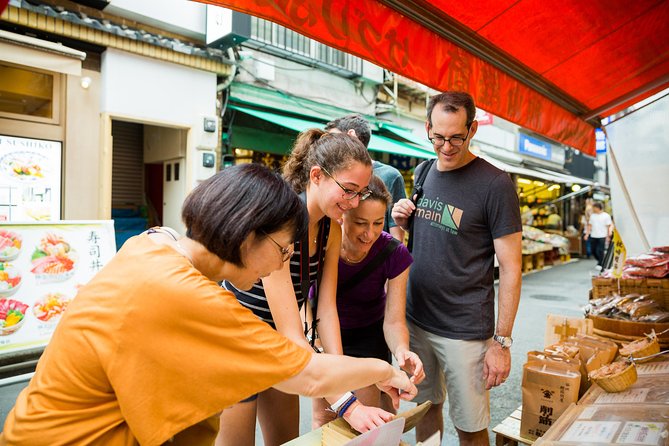
The market section covers the outer Tsukiji market, the Tsukiji Jogai Market, and the Tsukiji Nippon Fish Port Market. You walk through the public shopping streets and a smaller wholesale area rather than the former inner market.
This is an important point to understand before booking. Tsukiji’s inner market and auction operations moved to Toyosu on October 6, 2018. You will not be entering the old business area or watching the famous wholesale auction here. Instead, you see the part of Tsukiji where food shops, seafood sellers, prepared-food stalls, Japanese ingredients, and kitchenware meet the public.
A guide helps you make sense of the density. There are many foods and utensils that can look unfamiliar at first, and a good guide points out what they are used for and how Japanese shoppers approach them. Monami, Yuki, Mari-san, Tad, Ko, and Sachi-san are among the guides praised for clear explanations, patience, and useful suggestions, though the guide assigned to your date can differ.
I particularly like the chance to ask about quality and price before buying. One highly praised guide, Monami, helped visitors find good food spots while keeping an eye on value. That kind of advice can be more useful than a long lecture about the market. It can also keep you from spending your snack budget on the first attractive stall you see.
The walk is mainly about seeing and understanding. Food purchases are generally extra, so bring cash if you want to sample items along the route. One person specifically advised budgeting for street food because the snacks can add up to a meaningful part of the overall cost.
The group format is both useful and limiting. A guide can lead you directly to key spots, but a group cannot stop at every stall. If you enjoy browsing slowly and choosing your own bites, you may want to return to Tsukiji later on your own.
The foods and customs behind the stalls
The market is valuable because it gives you a wider view of Japanese food than sushi alone. You may see different seafood, seasonings, ingredients, snacks, and utensils, each tied to a particular way of cooking or serving.
The guide’s commentary connects these objects to Japanese habits and customs. You may learn basic Japanese words, local etiquette, and the role of seafood in everyday meals. The tour also helps explain how products move from the ocean through distribution and sale, though the public market walk is an introduction rather than a technical trade seminar.
This part suits families and first-time visitors especially well. Younger participants can see foods in their original market setting before being asked to prepare anything. The experience has worked for families with children aged 12 and 16, and even a family from Tokyo found it enjoyable because the market and ingredients offered details they had not considered before.
Do not expect a tasting menu during the walk. You can buy food from stalls, but those purchases are separate. That is the biggest difference between this tour and a dedicated Tsukiji food tour that builds tastings into the price.
Moving upstairs to the sushi classroom
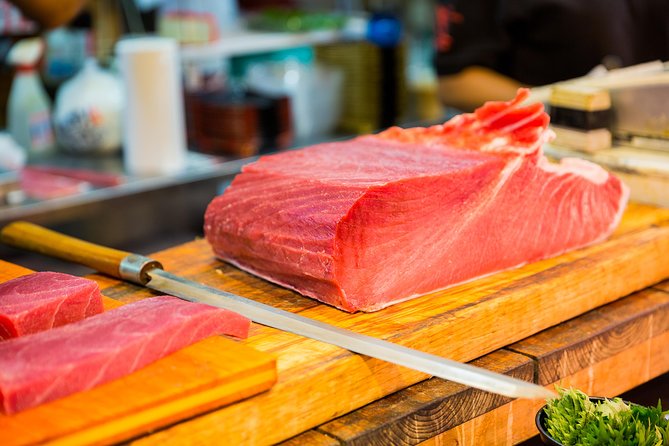
After the market walk, you enter a Japanese-style classroom in a traditional building in the center of the market area. The classroom is on the third floor and is reached only by stairs, so this activity is not a good fit if stairs are difficult for you.
The venue is part of the tour’s charm, but it is not a polished cooking school with guaranteed modern facilities. One disappointed participant found the room small and basic. Other reports describe a clean space with enough table room for everyone to work comfortably. The fairest expectation is a simple local classroom designed for instruction, not luxury.
The sushi-making session may take place in Tsukiji, Asakusa, or Yotsuya, depending on venue availability. The exact location is not announced until the day, and if the class moves, the tour can finish in Asakusa or Yotsuya rather than Tsukiji. This uncertainty is worth noting if you have a tight afternoon plan.
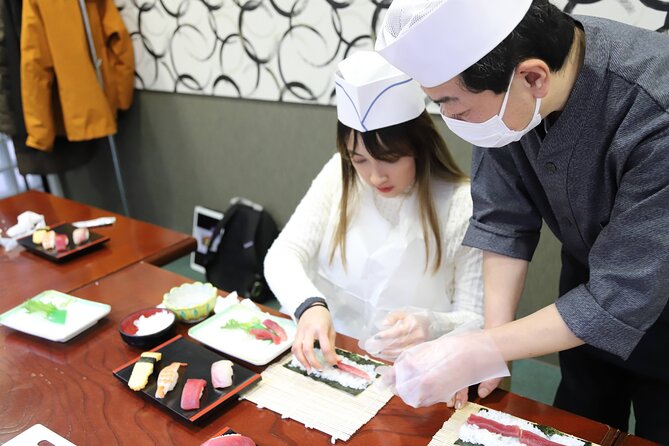
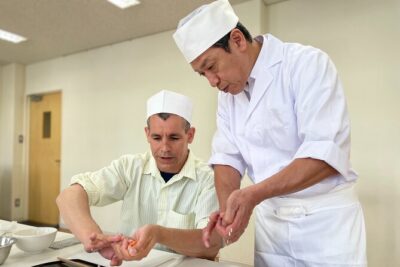
The instructor uses demonstrations and step-by-step help. Some classes include a presentation, while the chef also demonstrates practical skills such as deboning fish. The teaching is intended for beginners, and you do not need to arrive with cooking experience.
A few more Tokyo tours and experiences worth a look
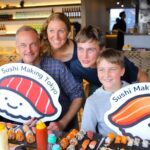
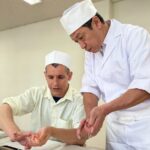
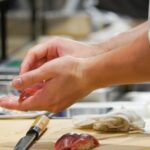
Making five nigiri types and one roll
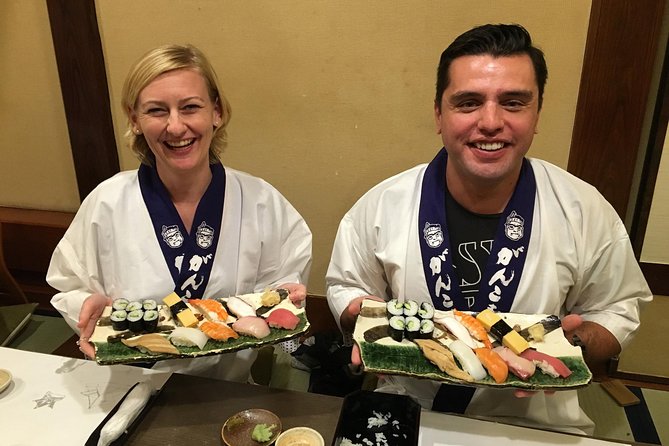
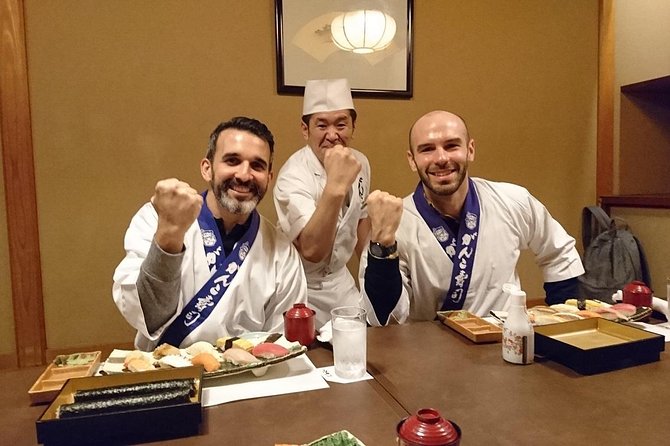
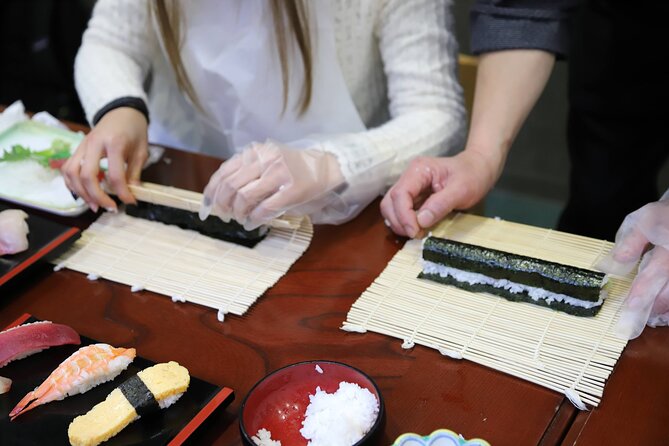
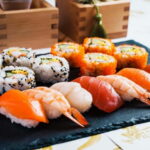
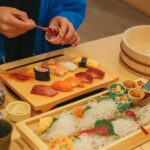
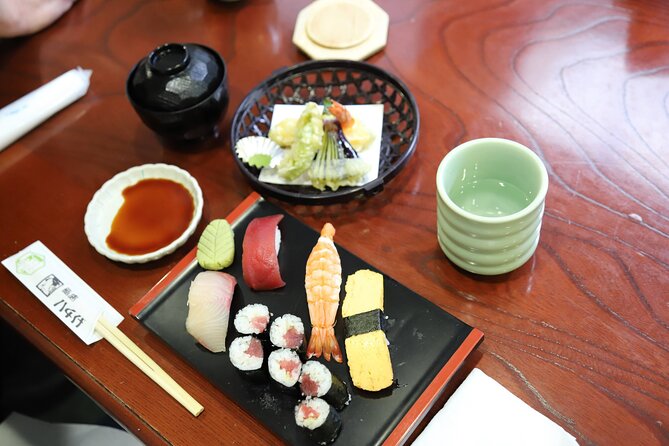
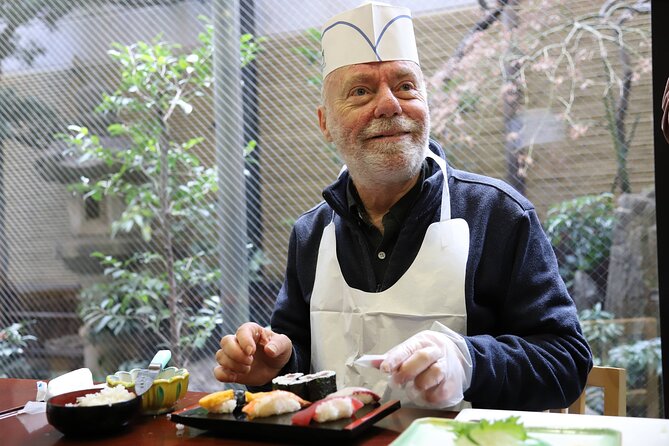
The hands-on portion teaches five types of nigiri sushi and one rolled type. You work with the ingredients provided, follow the chef’s demonstrations, and get help as you go.
Nigiri looks simple, which is exactly why this lesson can be revealing. A small oval of rice, a piece of fish, and a touch of wasabi leave little room to hide uneven technique. You begin to notice how much care goes into rice shape, portion size, handling, and presentation.
The chef’s demonstration is one of the most valuable parts of the class. You can watch the precise preparation of fish, including deboning, before trying the simpler assembly work yourself. One useful suggestion from a participant was to add a clearer lesson on slicing fish for sushi. That tells you where the class focuses: it teaches accessible sushi preparation, but it may not train you in every professional knife skill.
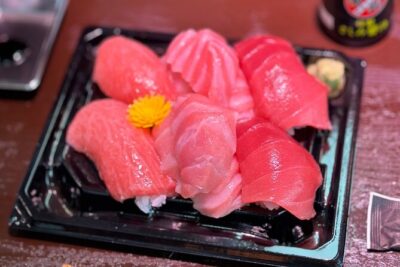
You then eat what you make for lunch. The meal also includes sushi prepared by the master, expertly prepared wasabi, traditional dashi soup, and fine green tea. This comparison is useful. You can enjoy your own work while seeing what a professional version looks and tastes like.
The class is conducted in Japanese and English, with demonstrations that make the process easier to follow. Chef Kate has been praised for a friendly, interactive approach, while other instructors have been described as skilled and patient. Since the chef varies, your teaching style may differ slightly.
What the price means in practical terms
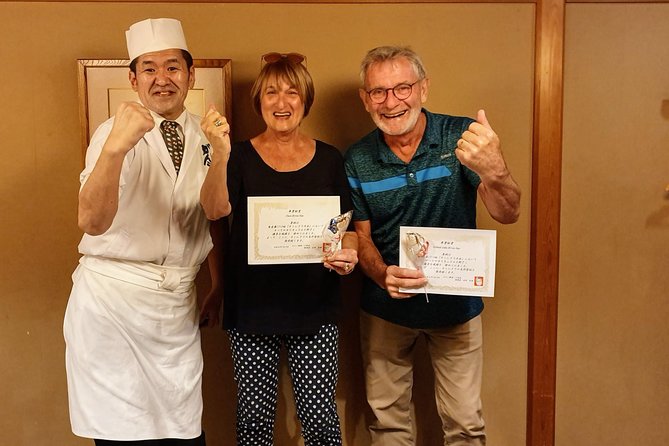
At $104.13, the experience offers solid value if you want both a guided introduction to Tsukiji and a real food activity. The sushi lesson is not a quick demonstration where you watch someone else prepare lunch. You make multiple types yourself, receive instruction, and eat the result.
The value is less convincing if you mainly want market tastings. The walking section includes guidance and cultural explanation, but your purchases from stalls cost extra. You could spend more money on street food after paying for the tour, especially if you arrive hungry.
The group size can reach 22 people. That is large enough to provide a social atmosphere but not so small that you should expect a private market consultation. Some guides allow the group to move at a comfortable pace, while a group still limits how long you can linger at individual vendors.
I would compare this with the cost of booking a separate sushi class and exploring Tsukiji independently. This tour saves you the trouble of learning the market layout and adds temple customs, food background, and a chef-led lunch. If you already know Tsukiji well or want an advanced sushi workshop, the package may feel introductory.
Timing, food restrictions, and what to bring
Wear comfortable walking shoes. The morning involves market streets, temple grounds, and stairs to the classroom, so this is not the day for delicate footwear.
Bring water if you prefer it. Green tea is offered, including cold green tea, but water is not guaranteed. You may also want cash for food from market vendors, since those purchases are not included.
The fish market’s wholesale area is closed on Wednesdays, Sundays, and other market closing days. Check the date carefully before booking. The tour may also run late, so avoid placing an important appointment immediately afterward or tell the operator in advance.
Food restrictions need special care. The booking information asks you to enter allergies or dietary requirements and says requests can be submitted after booking, but the additional notes also state that vegetarian, halal, gluten-free, kosher, and allergy-related requests may not be accommodated. Contact the provider before paying if food safety or a strict diet is important to you. Do not assume the sushi menu can be changed.
Free cancellation is available up to 24 hours before the local start time. Cancellations or changes made inside that window are not refunded or accepted.
Who should book this four-hour tour
I would choose this for a first visit to Tokyo, especially if you want a guided introduction rather than a self-directed market wander. It suits couples, families, and curious eaters who want to understand sushi before trying to make it.
It is also a good pick if you enjoy cultural details. The temple visit, prayer guidance, market customs, Japanese ingredients, and cooking lesson give the experience more range than a standard food stop.
Families should find the hands-on format appealing, provided everyone can manage the stairs and the walking. The cooking lesson is basic enough for beginners and interactive enough to keep older children involved.
I would hesitate if you need a guaranteed Tsukiji-only schedule. The class venue can move to Asakusa or Yotsuya, and the ending point may change with it. I would also choose another option if your top priority is a long list of included tastings, a small private group, advanced sushi knife work, or dietary flexibility.
Should you book the Tsukiji sushi tour?
Book it if you want the full chain from temple and market to sushi plate. The best part is the connection between seeing ingredients in Tsukiji and handling them in class. Guides such as Ko, Yuki, Monami, Mari-san, and Sachi-san have been praised for making that connection clear and approachable, though no particular guide is guaranteed.
Go in expecting a simple classroom, a beginner lesson, extra spending for market snacks, and some schedule flexibility. With those expectations, the $104.13 price is reasonable for a four-hour food and culture experience. If you want only the inner market, a tasting-heavy crawl, or an advanced chef course, spend your money elsewhere.
FAQ
Where does the tour begin?
The tour begins at the main gate of Tsukiji Honganji Temple, at 3-chome-15-1 Tsukiji, Chuo City, Tokyo. Do not go to the back side of the temple, since map directions may point there.
How do I identify the guide?
The guide waits at the meeting point with a board displaying Japan Wonder Travel.
How long does the experience last?
The activity lasts approximately four hours, although the end can be delayed. Avoid scheduling an important appointment immediately afterward.
Does the tour visit the old Tsukiji inner market?
No. The inner market moved to Toyosu in 2018. This experience visits the outer Tsukiji market, the public shopping area, and a smaller wholesale section.
What sushi will I make?
You will learn to make five types of nigiri sushi and one rolled type. The chef provides step-by-step instruction and demonstrations.
Is lunch included?
Yes. You eat the sushi you make, along with sushi prepared by the chef. Traditional dashi soup, fresh wasabi, and green tea are also provided.
What should I wear?
Wear comfortable walking shoes. The tour involves substantial walking, and the classroom is on the third floor of a traditional building with stairs only.
Can the tour accommodate dietary restrictions?
You can submit allergies and dietary requirements when booking or afterward, but vegetarian, halal, gluten-free, kosher, and allergy-related requests may not be accommodated. Contact Japan Wonder Travel before booking if this is important to you.
More Guided Tours in Tokyo


More Sushi Making Classes in Tokyo
More Tsukiji Market Tours in Tokyo
More tours in Tokyo we've reviewed












Tsukiji Market Tours, compared.
 ★ 5.0Tokyo Tsukiji Fish Market Food and Culture Walking TourFrom $99
 ★ 5.0Tokyo: Tsukiji Fish Market Food and Walking tourFrom $30
 ★ 4.9Tokyo: Tsukiji Fish Market Guided Walking TourFrom $222 hours
 ★ 5.0Tokyo Sushi Making Class in Tsukiji with Professional ChefFrom $49
★ 4.7Tokyo: Tsukiji Fish Market Food and Culture Walking TourFrom $963 hours
★ 5.0Tokyo Sushi Making Class in Tsukiji with Professional ChefFrom $49
★ 4.7Tokyo: Tsukiji Fish Market Food and Culture Walking TourFrom $963 hours
 ★ 5.0Tsukiji Fish Market: Street Food & Culture Walking TourFrom $33