Reviewed · TOKYO FOOD TOURS
Tokyo: Night Foodie Tour in Shinjuku
Tokyo’s best evening meal may be a moving one. This Shinjuku food tour takes you from a discreet sushi restaurant to a Wagyu yakiniku table, then into Kabukicho for dessert or a drink. The food is not just a string of samples. You get a look at how sushi chefs work and cook your own thinly sliced beef.
In This Article
- Key points to know before booking
- Why this Shinjuku night works
- Stop one: omakase sushi in a tucked-away Shinjuku restaurant
- Walking through Kabukicho between plates
- Stop two: table-grilled Wagyu beef
- Stop three: sweets, drinks, and a relaxed finish
- What the guide adds to the evening
- Is $164 a fair price?
- Practical details that affect your choice
- Who will enjoy this food tour most?
- Should you book the Shinjuku Night Foodie Tour?
- FAQ
- How long does the Tokyo Shinjuku night food tour last?
- How many people are in the group?
- What food is included?
- Are drinks included?
- Is alcohol available to children?
- Where does the tour start?
- Where does the tour end?
- Is the tour offered in English?
- Can the tour accommodate food allergies or dietary restrictions?
- Is the tour accessible with a wheelchair or stroller?
- What should I bring?
I like the small group, limited to seven people, and the way the three stops cover different sides of Japanese food culture. I also like having a guide such as Hiro, Fuji, Amy, or Max explain what you’re eating and point out shrines, side streets, and local customs along the way. The main caution is value: at $164 per person, you are paying for high-quality food, guidance, and access to places you may not find on your own, not a huge quantity of food.
Key points to know before booking
- Eight pieces of omakase nigiri let the sushi chef choose seasonal selections and prepare them in front of you.
- Wagyu yakiniku is cooked at your table, with the guide showing you how to handle the thin slices and enjoy the beef properly.
- Three food stops create a full evening rather than one long restaurant meal.
- Kabukicho adds local context, with time to walk through one of Shinjuku’s most famous nightlife districts.
- Groups are capped at seven, which helps the guide explain dishes and keep the evening social.
- The final stop varies for families, with a Japanese snack restaurant used instead of a bar when children are present.
Why this Shinjuku night works
Shinjuku can be hard to read at night. The district is packed with restaurants, hotels, signs, narrow lanes, shrines, entertainment venues, and people heading in every direction. A restaurant that looks ordinary from the street may offer excellent food, while a flashy sign may tell you very little.
That is where this tour earns its keep. Your guide handles the restaurant choices and the ordering, while you concentrate on eating and getting your bearings. Guides including Fuji and Chihiro have also been praised for explaining the surrounding streets, Kabukicho landmarks, Japanese customs, and the history of the area.
The tour lasts about three hours. The listed restaurant visits run for roughly 50 minutes, 30 minutes in Kabukicho, another 50 minutes for yakiniku, and 40 minutes at the final stop. Walking between locations fills out the evening, so wear comfortable shoes and expect an active meal rather than a seated dinner from start to finish.
A few more Kabukicho tours and experiences worth a look
Stop one: omakase sushi in a tucked-away Shinjuku restaurant
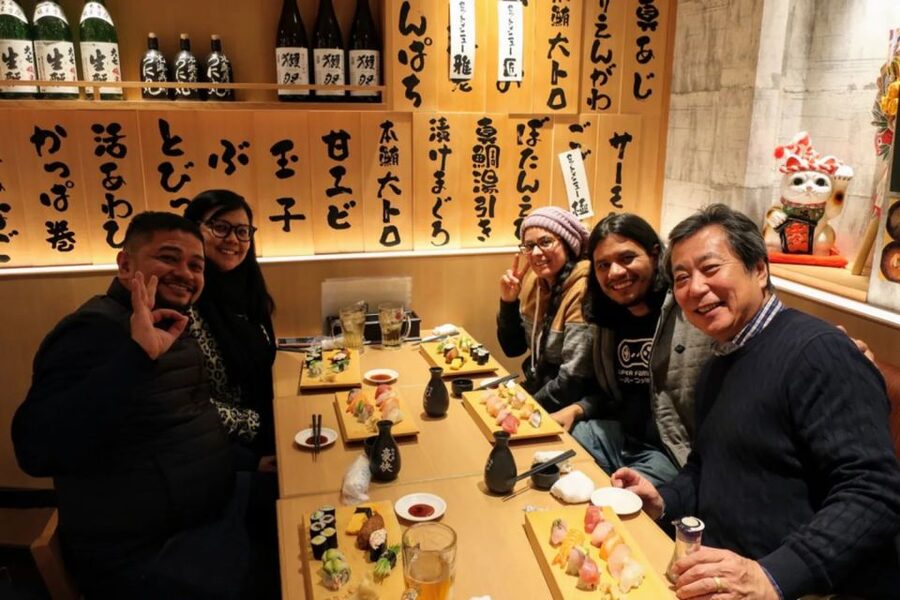
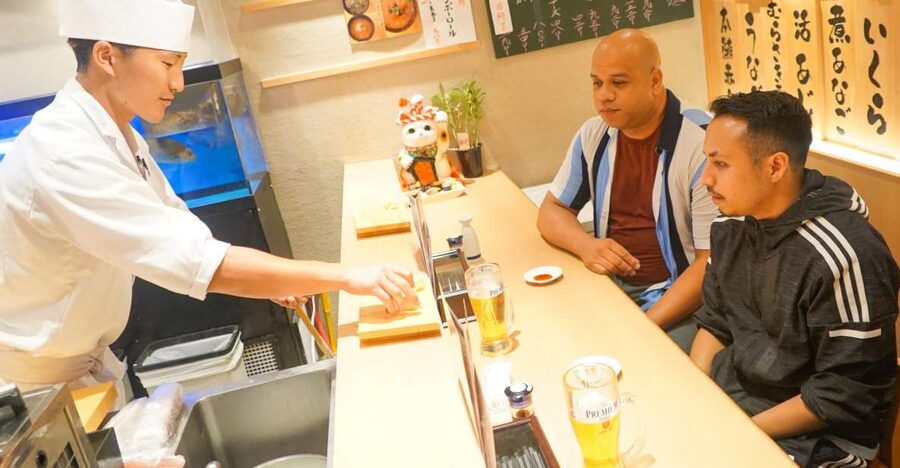
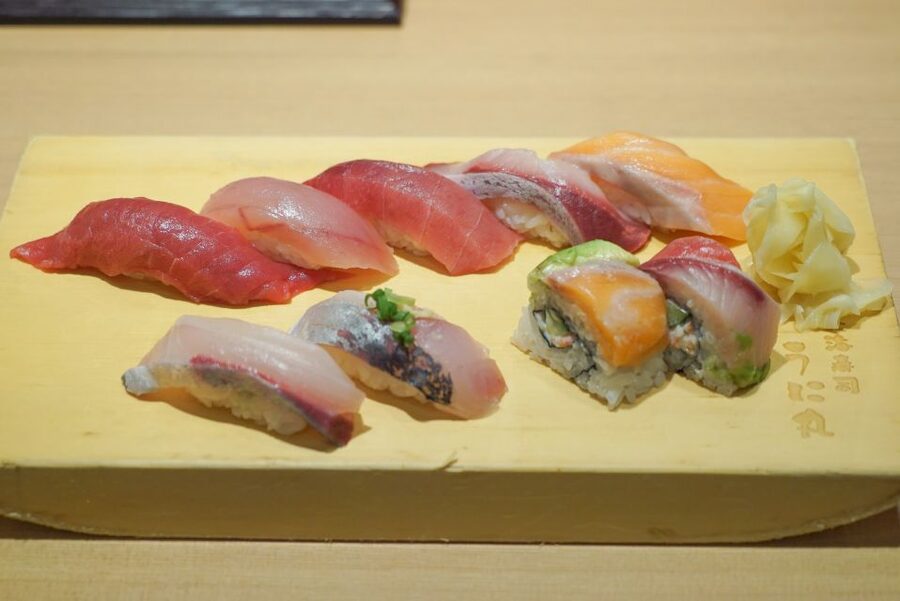
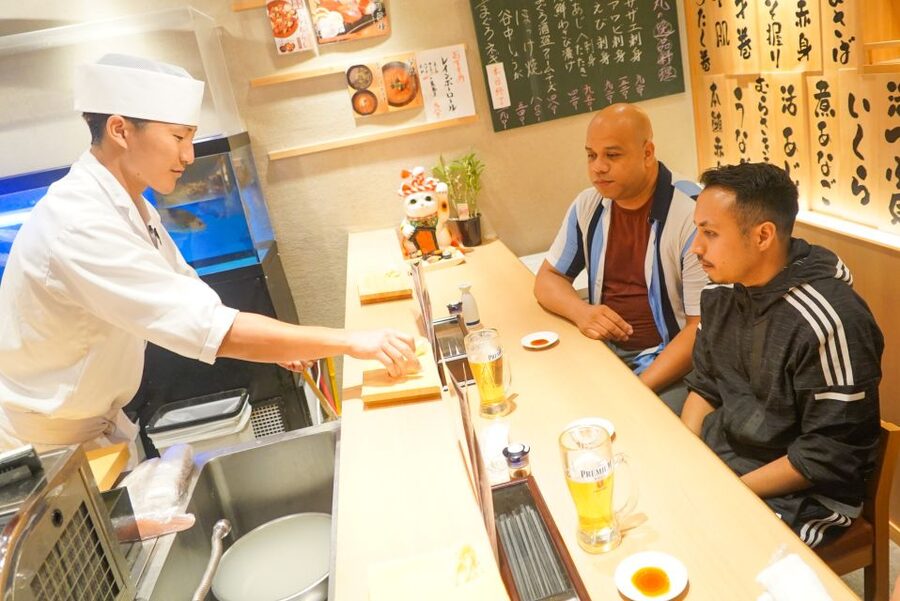
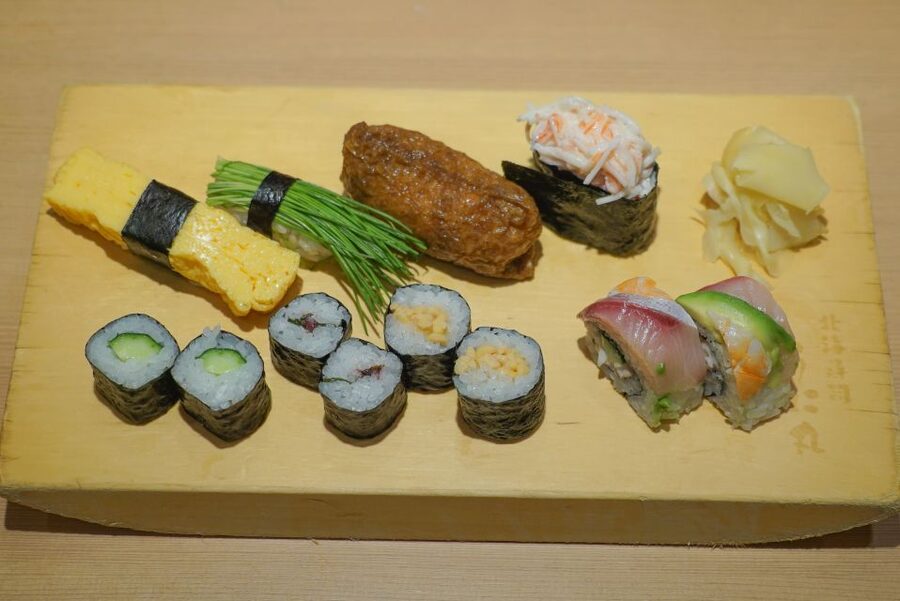
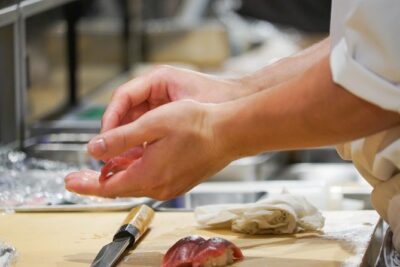
The first restaurant introduces you to omakase sushi, where the chef chooses the selection. The package includes eight pieces of nigiri, and you can watch an authentic sushi chef shape the rice and place the toppings directly in front of you.
This is a useful way to try sushi in Japan because the meal follows the chef’s judgment rather than a familiar tourist menu. The exact fish can change with the season and the restaurant’s supply, so you should arrive ready to try something beyond salmon or tuna. The guide can explain what appears on the plate and how to approach each piece.
The short stop also keeps the evening moving. You get a focused introduction to sushi without spending the entire tour in one restaurant. For many people, this is the food highlight, particularly if seeing the chef prepare artisanal nigiri matters as much as eating it.
Still, eight pieces is a tasting portion, not a giant sushi dinner. If you have a large appetite, plan on enjoying the quality and variety rather than expecting to leave stuffed after the first stop.
The guide can also help with practical details that are easy to miss on your own. One family group appreciated that Amy arranged a more suitable plate for an 11-year-old who mainly liked salmon sushi. That does not mean every substitution is guaranteed, but it shows why having a guide can matter when a member of your group has a narrower palate.
Walking through Kabukicho between plates
After sushi, the route moves through Kabukicho, Shinjuku’s famous nightlife quarter. The listed visit lasts about 30 minutes, and this is more than a simple transfer between restaurants.
Your guide may point out landmarks, side streets, a shrine, and details about the district’s customs and past. Fuji, Chihiro, and Max were especially praised for adding this local explanation to the food stops. That extra context gives the evening a better shape. You are not simply moving from one reservation to another. You are learning how food, entertainment, and city life fit together in Shinjuku.
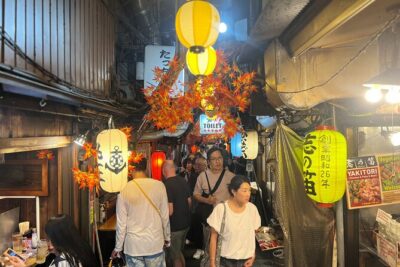
Kabukicho is also where the tour feels most atmospheric. Neon, narrow streets, restaurant entrances, and nightlife crowds create a setting that is very different from a daytime sightseeing route. The area includes adult entertainment, so families should understand the character of the district before booking.
Summer requires some planning. Tokyo can be very hot and humid, so bring water and wear a hat if you are walking in the heat before the tour or arriving early. The tour may also visit places where smoking is allowed, and the venues cannot always be changed for that reason.
Stop two: table-grilled Wagyu beef
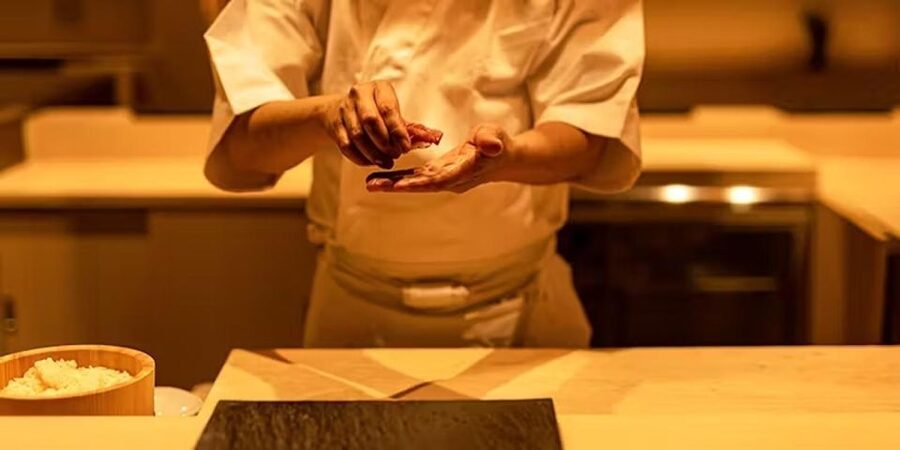
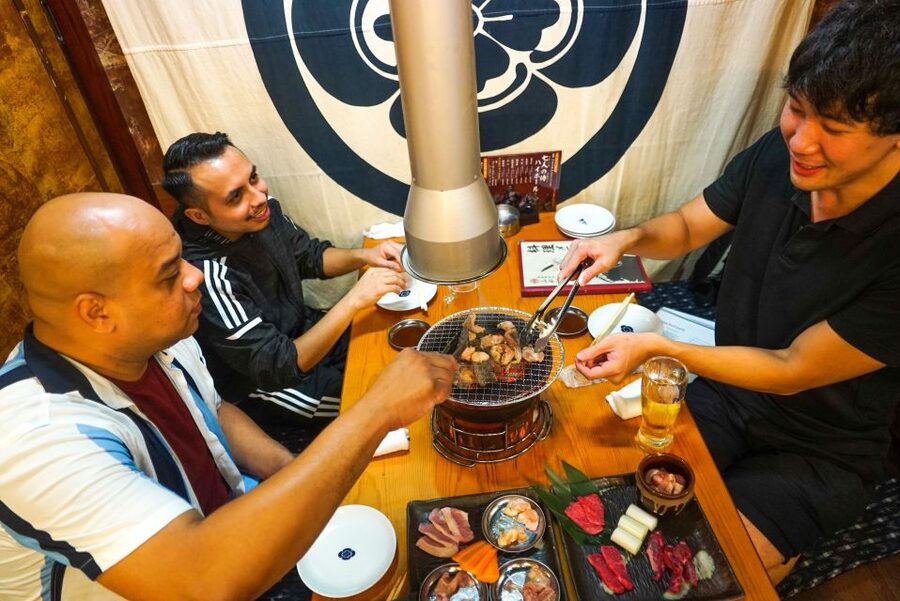
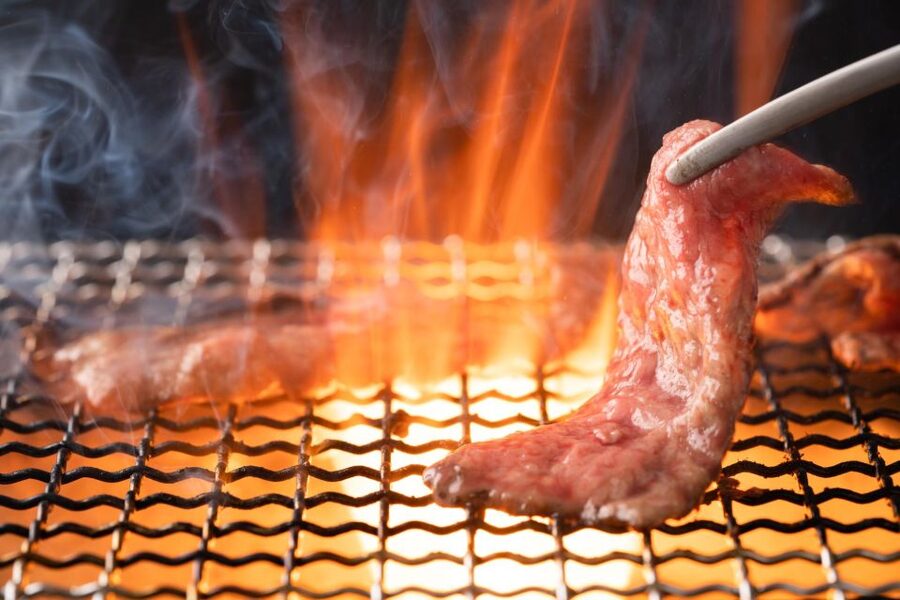
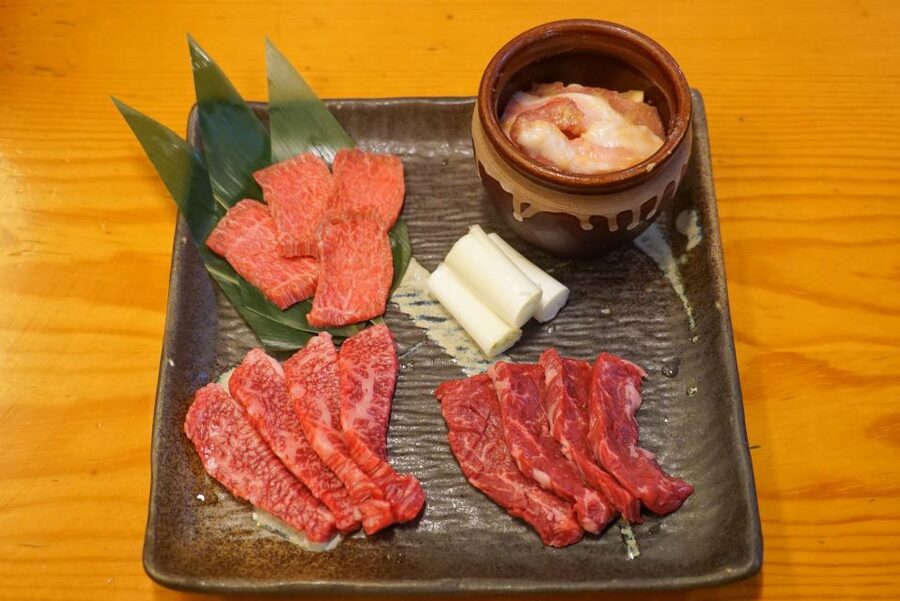
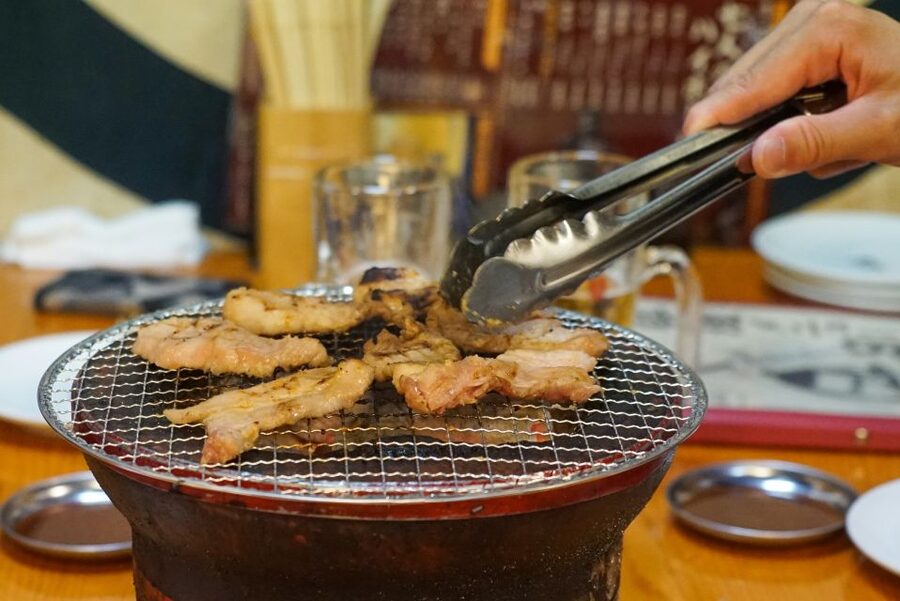
The second major food stop is Wagyu yakiniku. Thin slices of raw beef arrive at the table, and you grill them yourself. The guide shows you how to cook and eat the meat, turning dinner into a hands-on part of the evening.
This is a different experience from sushi. Sushi depends on the chef’s precision, while yakiniku asks you to take part. You control the cooking, watch the beef change, and eat it while it is fresh from the grill. The meal includes a full Wagyu dinner, so this is the point where the tour moves from tasting to a more substantial course.
One particularly memorable detail from the experience is the use of a salt block with the beef. It is the sort of small food ritual you might miss if you simply ordered yakiniku without guidance. Some guides also explain Japanese meat culture, table customs, and how to handle the different cuts and drinks.
The word Wagyu covers a range of beef styles and grades, and the provided details do not promise one specific regional brand or grade at every booking. You should judge this stop as a high-quality Japanese BBQ experience rather than assume it guarantees a particular Kobe beef certification. One account described the beef as Kobe, but that should not be treated as a fixed feature of every departure.
The 50-minute timing is enough for a focused meal, though it may feel quick if you want a long, relaxed BBQ session. It works well in the context of a three-stop tour because you still have another food experience ahead.
Stop three: sweets, drinks, and a relaxed finish
The final stop lasts about 40 minutes and changes the pace again. Depending on the group, you finish with a Japanese dessert or an alcoholic drink. For families with children, the guide selects a Japanese snack restaurant instead.
The final venue may be the most casual and playful stop. One version includes a nostalgic candy shop or snack bar, with traditional sweets and packets of chocolates, crackers, and savory snacks available to enjoy. Another option may center on a drink in Kabukicho.
This ending is less polished than the sushi and Wagyu courses, and that is worth knowing. One food-focused assessment found the dessert stop weaker than the first two restaurants. Yet the relaxed setting can be a good way to finish, especially if you enjoy trying unusual Japanese snacks and talking with the group rather than adding another formal dish.
The package lists two drinks, with alcohol available, and also includes dessert or an alcoholic drink at the final stop. Additional food and drinks can be purchased separately. Since the exact final format depends partly on the group, ask the guide at the start if you need to know how the drinks and dessert will be arranged.
What the guide adds to the evening
The guide is central to the value of this tour. You can find sushi and yakiniku in Shinjuku without help, but choosing the right places, ordering with confidence, and understanding the food takes more work.
English-speaking guides such as Hiro, Fuji, Saki, Min, Megumi, Sara, Amy, Max, Taka, Ken, Chihiro, Rachel, and Rai have led departures. Guide assignments vary, but the strongest pattern is clear: the guide is expected to explain the food, help with ordering, keep the group together, and add information about Japanese culture and Shinjuku.
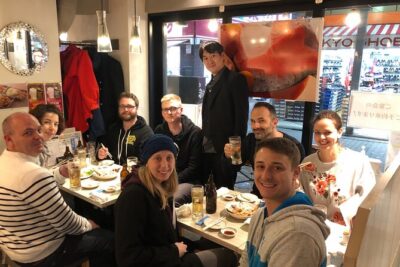
For solo visitors, this format can be especially useful. One solo participant found that Max kept the conversation moving and made the evening feel social. The group limit of seven is small enough for direct interaction without making you feel like part of a large tour procession.
The guides also offer practical help beyond the scheduled meal. Rai, for example, helped a group order more of its favorite dishes on its own. Fuji gave advice for the rest of a Tokyo trip. Those extras are not listed as a formal part of the package, but they show how a good guide can turn one evening into a useful start to your stay.
Is $164 a fair price?
At $164 per person, this is not a budget food crawl. The price includes the guide, three stops, eight pieces of nigiri, a full Wagyu dinner, two drinks, dessert or a final alcoholic drink, and tour photos.
I see the value in the combination. You are paying for high-end ingredients, small-group guidance, restaurant access, and the convenience of moving through Shinjuku without having to research or navigate each stop. If you are visiting Tokyo for the first time and want one organized night focused on Japanese food, the price may compare well with the cost and effort of arranging similar meals independently.
The quantity is the key issue. This tour offers modest portions of premium food rather than a nonstop eating challenge. One assessment described the experience as high-end food in moderate amounts. If your main goal is to eat as much as possible, choose a less expensive meal-based option and spend the difference on extra dishes.
For food lovers who care about preparation, setting, and explanation, the price is easier to justify. For travelers who already have restaurant reservations and feel comfortable navigating Shinjuku, it may be harder to defend.
Practical details that affect your choice
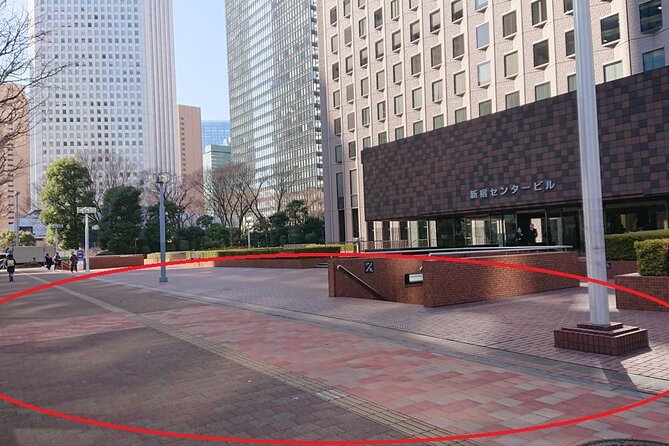
The tour has two possible starting points: the black pillar of Kyu-Ome-kaido or UNIQLO Shinjuku Nishiguchi. Your booked option determines the exact meeting point, and the activity ends back at the meeting point.
Starting times vary, so check availability for the date you want. Bring cash, especially if you expect to buy extra food or drinks. The tour is open to all ages, but the legal drinking age in Japan is 20.
The route includes some places that are not accessible by wheelchair or stroller. Allergy-free meals and dietary substitutions cannot be guaranteed because the food is prepared in kitchens outside the tour company’s control. The staff will try to make adjustments at other stops, but you should contact the provider before booking if allergies or strict dietary needs are central to your plans.
Free cancellation is available up to 24 hours before the tour for a full refund, and you can reserve now and pay later. Those terms help if your Tokyo schedule is still shifting.
Who will enjoy this food tour most?
I would choose this tour if you want a guided first evening in Shinjuku, especially if you are curious about sushi and Japanese BBQ but do not know where to begin.
It suits:
- First-time Tokyo visitors who want food plus neighborhood orientation
- Solo visitors who would like a small social group
- Couples and families comfortable with walking and a late-night district
- People who prefer premium tasting portions to a single large meal
- Food fans who want to watch sushi preparation and grill Wagyu themselves
I would hesitate if you need a fully accessible route, strict allergy accommodations, a smoke-free guarantee, or a very large dinner. I would also skip it if you already have strong restaurant plans in Shinjuku and mainly want maximum food for your money.
Should you book the Shinjuku Night Foodie Tour?
Book it if you want a polished introduction to three important parts of Tokyo’s food culture: omakase sushi, Wagyu yakiniku, and Japanese sweets or drinks. The food is the main draw, but the guide’s explanations about Kabukicho, shrines, customs, and local dining make the evening more useful than a simple restaurant reservation.
Go in with realistic expectations. You are getting premium samples and a full Wagyu course, not an all-you-can-eat feast. At $164, the tour makes the most sense for visitors who value guidance, small-group company, and access to places they might not find alone. If that sounds like your kind of night, it is a strong way to start exploring Shinjuku.
FAQ
How long does the Tokyo Shinjuku night food tour last?
The tour lasts three hours, though some departures may run slightly longer depending on the evening.
How many people are in the group?
The group is limited to seven participants.
What food is included?
The package includes eight pieces of nigiri sushi and a full dinner featuring Wagyu beef. The tour also includes dessert or an alcoholic drink at the final stop.
Are drinks included?
Yes. Two drinks are included, and alcohol is available. Extra food and drinks cost additional money.
Is alcohol available to children?
No. The legal drinking age in Japan is 20. For families with children, the final stop is a Japanese snack restaurant rather than a bar.
Where does the tour start?
There are two possible starting points: the black pillar of Kyu-Ome-kaido or UNIQLO Shinjuku Nishiguchi. The exact meeting point depends on the option you book.
Where does the tour end?
The activity ends back at the meeting point, at either UNIQLO Shinjuku Nishiguchi or the black pillar of Kyu-Ome-kaido.
Is the tour offered in English?
Yes. The tour includes an English-speaking live guide.
Can the tour accommodate food allergies or dietary restrictions?
Allergy-free meals and dietary restrictions cannot be guaranteed. Substitutions may not be possible at every stop, though the staff will try to compensate at another restaurant.
Is the tour accessible with a wheelchair or stroller?
Some locations on the route are not accessible by wheelchair or stroller.
What should I bring?
Bring cash. In summer, also bring water and wear a hat because Tokyo can be hot and humid.
More Shinjuku Tours in Kabukicho
More tours in Kabukicho we've reviewed
Tokyo Food Tours, compared.
 ★ 5.0Tokyo: Shinjuku Food Tour (13 Dishes at 4 Local Eateries)From $86
 ★ 4.9Tokyo: Shinjuku Food Tour (13 Dishes and 4 Eateries)From $97
 ★ 5.0Tokyo Night Foodie Tour in Shinjuku – Seasonal Sushi, Wagyu BeefFrom $111
 ★ 5.0Eat and Drink Like a Local: Tokyo Ueno Food Tour-Taverns&RamenFrom $95
 ★ 5.0Tokyo: Shibuya Food Tour (13 dishes and 4 Eateries)From $77
Tokyo: Shinjuku Food Tour – 15 Dishes, 3 Drinks, 4 EateriesFrom $723 hours
★ 5.0Tokyo: Shibuya Food Tour (13 dishes and 4 Eateries)From $77
Tokyo: Shinjuku Food Tour – 15 Dishes, 3 Drinks, 4 EateriesFrom $723 hours