Reviewed · MT FUJI DAY TRIPS
Mount Fuji Full Day Sightseeing Tour from Tokyo
Mount Fuji is best seen from several angles, and this 10-hour day trip gives you a lot of them in one sweep. From Lake Kawaguchi and flower-filled Oishi Park to the red torii and Chureito Pagoda, you get the classic Fuji photographs without piecing together buses and trains.
In This Article
- Key things to know before booking
- Why this Mount Fuji day trip works from Tokyo
- Lake Kawaguchi gives you the grand first view
- Oishi Park adds flowers and seasonal color
- The Natural Living Center has a compact photo stop
- The Lawson stop is famous, but not especially authentic
- Oshino Hakkai brings water, food, and village atmosphere
- Chureito Pagoda is the visual high point
- Arakura Fuji Sengen Shrine adds meaning beyond the photographs
- Fujiyoshida Retro Shopping Street finishes with a street-level Fuji view
- Guides can make the difference
- What $67 buys you, and what it does not
- The weather is the tour’s biggest wildcard
- Who should book this tour
- Should you book the Mount Fuji full-day tour?
- FAQ
- How long does the Mount Fuji tour from Tokyo last?
- How many places does the tour visit?
- Is lunch included in the tour price?
- Does the tour include transportation?
- How much does the Mount Fuji day tour cost?
- Is the Chureito Pagoda viewpoint difficult to reach?
- What is the cancellation policy?
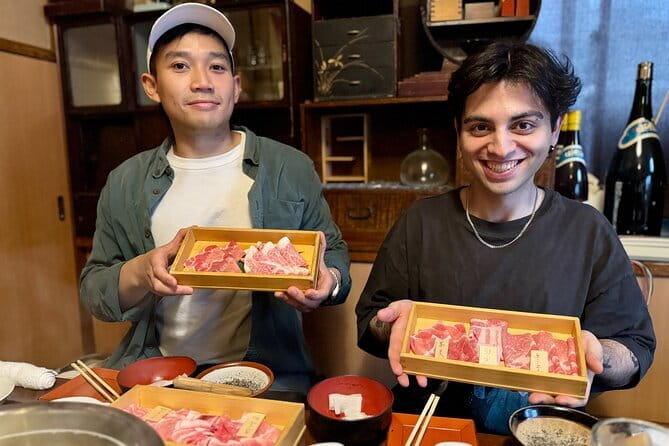
I like the eight-stop plan and the ease of an air-conditioned coach from central Tokyo. I also like the practical help from guides such as Keiko, Winnie, Betty, Joey, and Tim, who have pointed out good photo spots, food, shops, and bits of Japanese culture.
The trade-off is pace and group size. With as many as 45 people and several short stops, you must watch the clock. Guide quality can also vary, particularly when English explanations are difficult to follow. On a clear day, the scenery does the heavy lifting. On a cloudy day, the day becomes more about villages, shrines, and mountain-area sightseeing.
Key things to know before booking
- Eight Fuji-area stops: You see Mount Fuji from lakeside, park, village, shrine, street, and pagoda viewpoints.
- A practical Tokyo escape: The tour removes the work of arranging transport to Lake Kawaguchi, Oshino, and Fujiyoshida.
- Chureito Pagoda requires effort: Arakurayama Sengen Park includes about 400 steps, so bring comfortable shoes.
- Lunch costs extra: Food is not included, though guides may suggest a restaurant or local specialties.
- Good value at $67: Transport, taxes, and admission fees are included, making the price attractive for a full day.
- Weather matters greatly: Clear skies can reveal Fuji from several angles, but the mountain may be partly or fully hidden by cloud.
Why this Mount Fuji day trip works from Tokyo
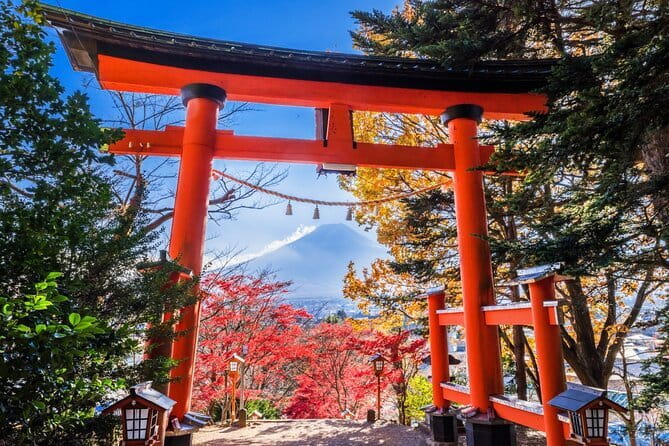
The strongest reason to book this tour is simple: Mount Fuji sightseeing takes planning. Tokyo is connected to the Fuji Five Lakes area, but the journey involves more than one decision about trains, buses, timing, and which viewpoints are worth your limited day.
This coach tour handles that structure for you. You meet at one of two central Tokyo pickup points, board an air-conditioned vehicle, and spend the day moving between the area’s best-known sights. The listed price is $67 per person, with taxes and fees included. Lunch and personal spending are extra.
That is good value if you want variety. A private car or custom day trip would cost far more, while independent travel can quickly become expensive once you add transport and the cost of mistakes. You are paying for convenience, not solitude.
The 45-person maximum is worth noting. A full coach can mean slower boarding and less flexibility at each stop. Still, the schedule gives you a useful range of Fuji views, and the group format keeps the price low.
A few more Tokyo tours and experiences worth a look
Lake Kawaguchi gives you the grand first view
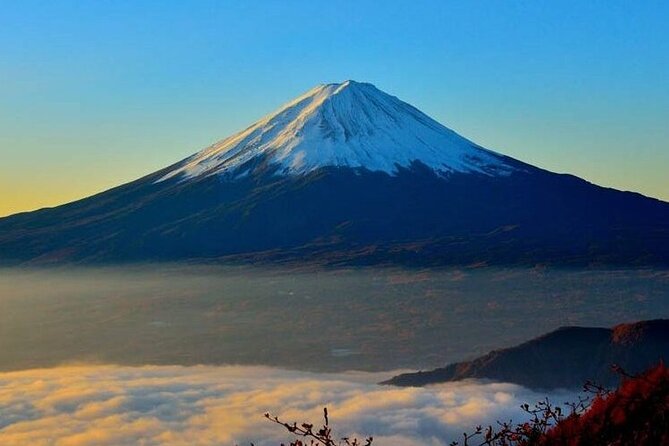
Lake Kawaguchi is one of the most rewarding places to see Mount Fuji. The shoreline creates changing angles, and the lake gives the mountain a broad, open setting rather than a view squeezed between buildings.
The scheduled stop is about 20 minutes. That is enough for photographs and a quick look, but not enough for a long lakeside walk. Keep your camera ready as you leave the coach, since the best view can depend on your exact stopping point and the weather.
This is also a good reminder that Fuji is not a single postcard view. The mountain can look wide and distant across the water, then sharper and more dramatic from a village street later in the day.
Oishi Park adds flowers and seasonal color
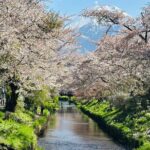
Oishi Park sits along Lake Kawaguchi and is known for its seasonal flower displays. A 350-meter Flowers Road runs along the west side of the park, giving you a more decorative setting for photographs.
You have about 25 minutes here. I would use the time for a few Fuji photos, then take a short look at the flowers and lake rather than trying to cover the whole park. The display changes through the year, so the exact look depends on your visit date.
This stop works well after the open lake view because it gives you a different foreground. Instead of Fuji and water, you may frame the mountain with flowers, paths, and park plantings. It is a pleasant photo stop, though the time limit means you should not expect a full park visit.
The Natural Living Center has a compact photo stop
At the Kawaguchiko Natural Living Center, the tour allows about 10 minutes. The second floor offers a view where a red torii gate can be photographed with Mount Fuji.
This is one of the shortest stops, so you will need to move with purpose. It is less about exploring the center and more about getting a particular composition. If the mountain is visible, this can be a quick and memorable image. If cloud covers the summit, the stop may feel thin.
The sequence also shows the tour’s style. You are not settling into one place for hours. You are collecting a series of carefully chosen views, each with its own foreground and mood.
The Lawson stop is famous, but not especially authentic
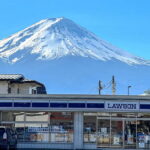
The Lawson Fujikawaguchiko Town Hall location has become famous online because the convenience store’s blue-and-white facade contrasts sharply with Mount Fuji behind it. The tour gives you about 15 minutes to take the familiar photograph.
This is useful if you want one of the internet’s best-known Fuji images. It is also the stop most likely to feel commercial and crowded compared with the shrine, lake, or spring village. Treat it as a quick photo opportunity, not a major cultural experience.
One point to watch: the itinerary includes more than one convenience-store or parking-area setting around the Fuji route. Some people may find that repetitive. If your priority is traditional Japan rather than recognizable social-media photographs, the shrine and Oshino Hakkai will likely mean more to you.
A few more Tokyo tours and experiences worth a look


Oshino Hakkai brings water, food, and village atmosphere
Oshino Hakkai is the longest stop, at about one hour. The site is known for eight clear springs fed by snowmelt from Mount Fuji, and it has recognition as one of Japan’s 100 Famous Waters.
This is where you have the best chance to slow down a little. You can see the springs, walk among the buildings, sample local food, and browse souvenir shops. The water is part of the appeal, but the setting also gives you a look at a traditional Fuji-area village rather than another staged viewpoint.
You should budget your time. An hour goes quickly if you want to see the springs, eat, shop, and take photographs. Lunch is not included in the tour price. Guides may recommend a restaurant, and several guide reports specifically praised the food suggestions, but you pay for your meal yourself.
The site can also feel busy, especially when several coach groups arrive. Even so, Oshino Hakkai is one of the day’s more rounded stops. It offers scenery, food, local products, and a sense of place.
Chureito Pagoda is the visual high point
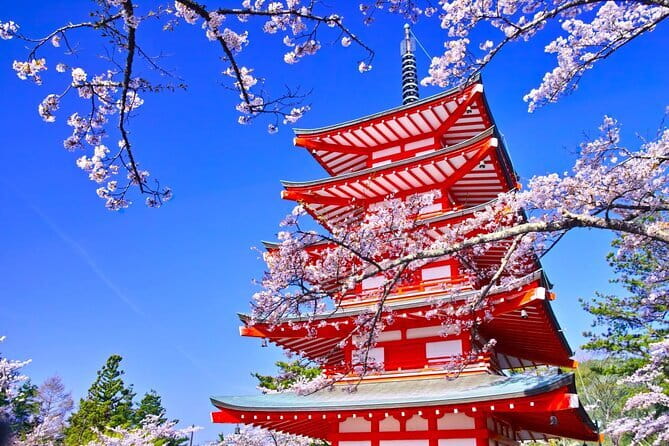
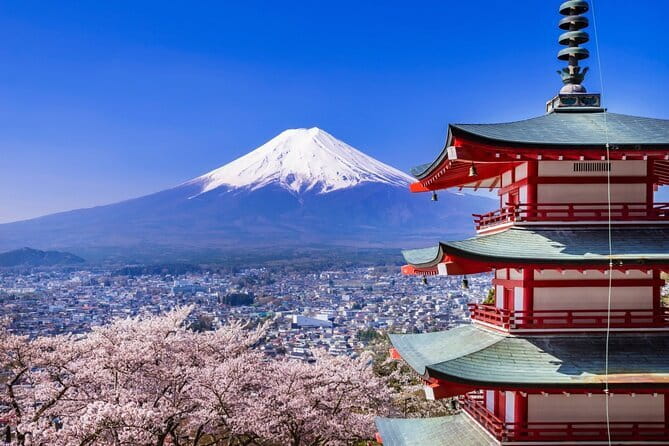
Arakurayama Sengen Park is the stop most people picture when they think of a Mount Fuji day tour. The five-story Chureito Pagoda sits above Fujiyoshida, with Fuji often visible beyond it. The combination of red pagoda, wooded hillside, town, and mountain creates the classic Japanese travel photograph.
You have about one hour here, but that does not mean one relaxed hour at the top. Reaching the main viewpoint involves roughly 400 steps. Good shoes are essential, and anyone who finds steep stairs difficult should treat this stop as a serious consideration.
The climb is worth it when Fuji is out. It also takes energy, particularly if scheduled close to lunch or after a long coach ride. One practical complaint about the timing is that climbing immediately after eating would not suit everyone, so consider keeping your meal light if you know stairs are hard for you.
The park is famous among photographers, but you do not need professional equipment to enjoy it. The view is strong because the composition is already there. Your main task is patience, safe footing, and finding a clear moment at the viewing area.
Arakura Fuji Sengen Shrine adds meaning beyond the photographs
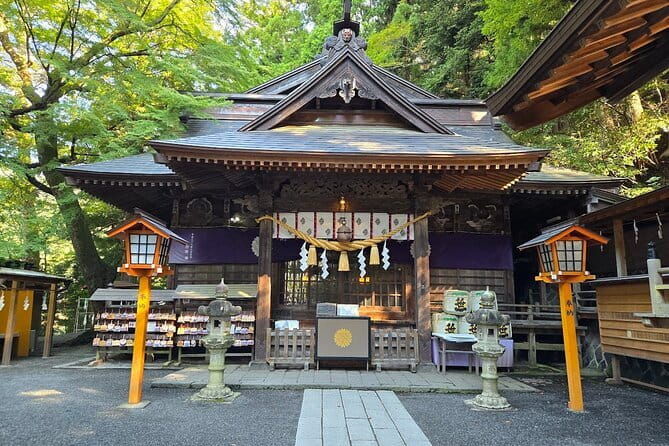
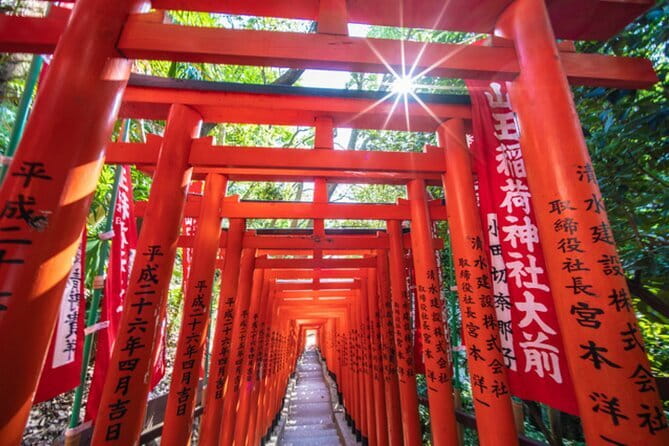
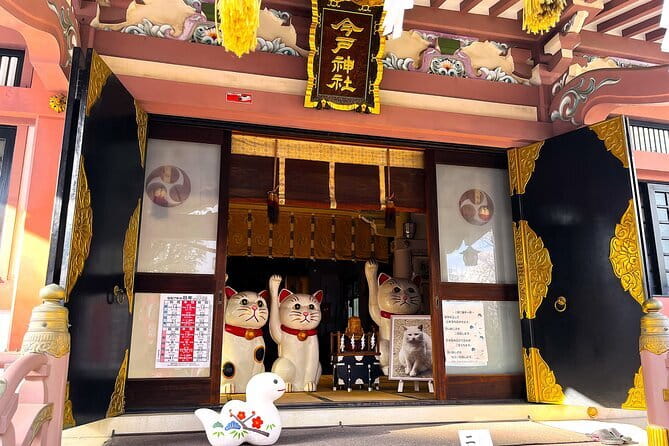
The nearby Arakura Fuji Sengen Shrine receives about 15 minutes. It was built in 705 and has more than 1,300 years of history. The shrine is associated with prayers for well-being and family happiness.
Its connection with Mount Fuji is not only scenic. The site also reflects the mountain’s religious importance. A large eruption in 807 caused widespread fear, and the shrine held a ceremony connected with protection from the volcano.
The short visit does not allow for a detailed shrine experience, but it gives useful context to the pagoda and the mountain. If your guide explains the background clearly, this can be one of the day’s most meaningful moments. If the explanation is brief or hard to understand, you may mainly experience it as a quick walk around a historic site.
Fujiyoshida Retro Shopping Street finishes with a street-level Fuji view
Shimoyoshida Honcho Street, near the Hikawa Clock Shop, offers a different kind of photograph. The route toward the Stairway to Mount Fuji creates a long, direct view toward the mountain through an ordinary town street.
The stop lasts about 20 minutes. You can take photographs, look at the older storefronts, and enjoy the contrast between daily life and the monumental mountain beyond. It is a short visit, so do not expect an extended shopping session.
This is a fitting final viewpoint because it places Fuji in a lived-in setting. The lake and park show the mountain in nature. The pagoda frames it as a cultural symbol. Here, you see it as part of a regular neighborhood.
Guides can make the difference
The clearest pattern in the guide feedback is that a good guide adds far more than directions. Keiko has been praised for patience, clear organization, and food recommendations. Winnie and Betty have been noted for helping with photo locations and explaining the meaning of each stop. Joey has been associated with a smooth trip and useful suggestions, while Tim used WhatsApp to keep communication clear before and during the tour.
That personal help matters on a busy day. A guide can tell you where to stand for a better photograph, point out a local snack, explain a shrine custom, and make sure you return to the coach on time. Several guides have also helped people find locations they could not locate on their own.
There is a real qualification. Some English explanations may be difficult to understand, depending on the guide. One direct criticism described the day as a series of drop-offs and return times, with too little historical explanation. Another gave four stars because the guide was kind and tried hard, but some information was unclear.
If cultural interpretation is your main reason for booking, this variability matters. If your priority is transport and access to many viewpoints, the tour remains useful even when the commentary is modest.
What $67 buys you, and what it does not
At $67, this is a strong budget option for a full-day outing. You get an air-conditioned vehicle, transport between eight sites, and all listed fees and taxes. The coach also saves you from working out how to connect Lake Kawaguchi, Oshino Hakkai, Arakurayama, and Fujiyoshida in one day.
Lunch is not included. You should also allow money for drinks, snacks, meals, souvenirs, and other personal expenses. The price is best judged as a transport-and-sightseeing package, not an all-inclusive excursion.
The value is highest for first-time visitors staying in Tokyo. You see a wide selection of famous places in a single day, and you do not need to spend a night near Fuji. It is less ideal for someone who wants long walks, quiet shrine time, or the freedom to change plans when the weather shifts.
The weather is the tour’s biggest wildcard
Mount Fuji often determines how memorable this day feels. Clear weather can give you views from the lake, park, village, pagoda, shrine, and street. Several people have described seeing the mountain from many angles on sunny days, with the views becoming the highlight of the entire trip.
Cloud can change that calculation. The itinerary still has springs, flowers, shops, shrines, and village streets, but Fuji is the central reason for the outing. No tour can guarantee a clear mountain.
I would book this with flexible expectations. Think of it as a day in the Fuji area that may include excellent mountain views, rather than buying a guaranteed photograph. If your schedule allows only one attempt, check the forecast before booking when possible.
Who should book this tour
I would choose this tour if you:
- Have limited time in Tokyo
- Want to see many Fuji viewpoints in one day
- Prefer a coach to arranging regional transport
- Are comfortable with a full schedule and timed stops
- Want help with photo locations, food, and basic cultural context
- Are visiting the Fuji area for the first time
I would think twice if you want a slow, quiet day. The 10-hour duration includes substantial road time, the group may be large, and some stops last only 10 to 20 minutes. Independent visitors with strong Japanese transport skills may prefer staying longer in one place.
Wear good walking shoes. Keep your belongings compact, and follow the return times closely. If you are bringing a stroller or large luggage, state that when booking. If you book separately from friends or relatives, contact the operator at least one day ahead so you can try to be placed in the same vehicle.
Free cancellation is available up to 24 hours before the start time. Cancellations or changes inside that window are not accepted for a refund.
Should you book the Mount Fuji full-day tour?
Book it if convenience and variety matter most. For $67, you get an efficient route through the major Fuji-area photo stops, an air-conditioned coach, and a chance to see Lake Kawaguchi, Oshino Hakkai, Chureito Pagoda, and several smaller viewpoints without building the day yourself.
Go in for the mountain views, but appreciate the other layers too: spring water, seasonal flowers, old streets, shrines, food, and local shopping. Choose it with the understanding that guide commentary can vary and that the day moves quickly. On a clear day, it is a very good value. On a cloudy day, its success depends on how much you enjoy the places around Fuji itself.
FAQ
How long does the Mount Fuji tour from Tokyo last?
The tour lasts approximately 10 hours, including travel between central Tokyo and the Mount Fuji area.
How many places does the tour visit?
The itinerary includes eight stops: Lake Kawaguchiko, Oishi Park, Kawaguchiko Natural Living Center, Lawson Fujikawaguchiko Town Hall, Oshino Hakkai, Arakurayama Sengen Park, Arakura Fuji Sengen Shrine, and Fujiyoshida Retro Shopping Street.
Is lunch included in the tour price?
No. Lunch is not included. Food, drinks, souvenirs, and other personal expenses are paid separately.
Does the tour include transportation?
Yes. Transportation is provided in an air-conditioned vehicle. The tour also includes all listed fees and taxes.
How much does the Mount Fuji day tour cost?
The listed price is $67 per person.
Is the Chureito Pagoda viewpoint difficult to reach?
The viewpoint at Arakurayama Sengen Park involves about 400 steps. Comfortable walking shoes are recommended.
What is the cancellation policy?
You can cancel up to 24 hours before the experience start time for a full refund. Cancellations or changes made less than 24 hours before the start time are not accepted.
More Full-Day in Tokyo
More Mt Fuji Day Trips in Tokyo
More tours in Tokyo we've reviewed












Mt Fuji Day Trips, compared.
 ★ 5.0Mt Fuji and Hakone 1-Day Bus Tour Return by Bullet TrainFrom $163
 ★ 4.0Mt Fuji & Hakone Cruise, Drum Show Bullet Train 1 Day from TokyoFrom $149
 ★ 4.4Tokyo Mt Fuji 5th St & Hakone Cruise Bus Tour w/Bullet TrainFrom $15410 hours
 ★ 4.5From Tokyo: Mount Fuji Full-Day Sightseeing TripFrom $6810 hours
 ★ 4.7Tokyo: Mt. Fuji Tour, Hakone Ropeway, Owakudani, Lake AshiFrom $5410 hours
 ★ 4.4Tokyo:Mt.Fuji,Kawaguchiko Oishi Park,Arakurayama Sengen ParkFrom $5410 hours
![[electric bicycle tour]: 6-hour travel course by electric bicycle Asakusa, Ueno Park, Edo-Tokyo Museum, and Sky Tree. (There is a support car.) - Lunch at Edonoren: choose your own Tokyo specialty](https://tokyoezine.com/wp-content/uploads/2026/08/electric-bicycle-tour-6-hour-travel-course-by-electric-bicycle-asakusa-ueno-park-edo-tokyo-museum-and-sky-tree-there-is-a-support-car.jpg)