Reviewed · CRAFT WORKSHOPS
Tokyo: Calligraphy Workshop & Original T-Shirt Creation
The most memorable part of this Shinjuku workshop is not simply writing Japanese characters. You grind a solid inkstick into ink, slow down, and learn why each brush stroke matters. Then you turn your name into kanji and create a personal piece of art, either on paper or, for an added cost, on a T-shirt.
In This Article
- Key points to know
- A quiet art lesson in the middle of Shinjuku
- Changing into workwear and preparing the ink
- Learning brush control before writing your name
- Choosing kanji for your name
- Making artwork you can take home
- The optional T-shirt design
- What the $30 price delivers
- Who will enjoy this class most
- Practical details before you book
- Why the traditional method matters
- Should you book the Shinjuku calligraphy workshop?
- FAQ
- Where does the calligraphy workshop meet?
- How long does the activity last?
- Is the workshop taught in English?
- Is the T-shirt included in the price?
- What will I make during the class?
- How many people can join the class?
I like the mix of tradition and hands-on fun, especially the authentic tools and patient instruction from a professional calligrapher. I also like that the English-speaking guide translates the lesson and helps you understand the meaning behind your chosen characters. The main drawback is that T-shirts are not included, and the calligraphy itself is harder than it looks.
Key points to know
- Grind your own ink: Prepare traditional ink from a solid inkstick, an unusually quiet and mindful start to the class.
- Turn your name into kanji: Choose characters connected to your name and learn what they mean.
- Learn from a professional sensei: The instructor explains brush order, spacing, pressure, and traditional technique.
- Create a real souvenir: Take home your finished artwork, with an optional original T-shirt design at extra cost.
- Small English-speaking class: Groups are limited to 10, allowing useful personal feedback.
- Easy Shinjuku location: Meet at the FamilyMart beside Okubo Station’s South Exit.
A quiet art lesson in the middle of Shinjuku
Tokyo can be noisy, crowded, and fast. This workshop gives you two hours to sit down and pay attention to one brush, one pool of ink, and one character at a time.
That change of pace is part of the appeal. You are not only copying symbols from a board. You are learning how Japanese calligraphy uses line thickness, brush angle, pressure, and empty space. Even a simple character can look very different depending on how you begin and finish the stroke.
The class is held in Shinjuku, with the meeting point at the FamilyMart Okubo Station South Exit Store, 1-23-21 Hyakunincho, Shinjuku-ku. You meet a guide holding a Local Guide Stars sign, then continue to the workshop. I would allow a little extra time to find the correct station exit, since large Tokyo stations can be confusing even when the address is clear.
The location is convenient for fitting into a day around Shinjuku. You can schedule the class between sightseeing stops, but remember that the activity lasts two hours. You will get more from it if you arrive without rushing.
A few more Tokyo tours and experiences worth a look

Changing into workwear and preparing the ink
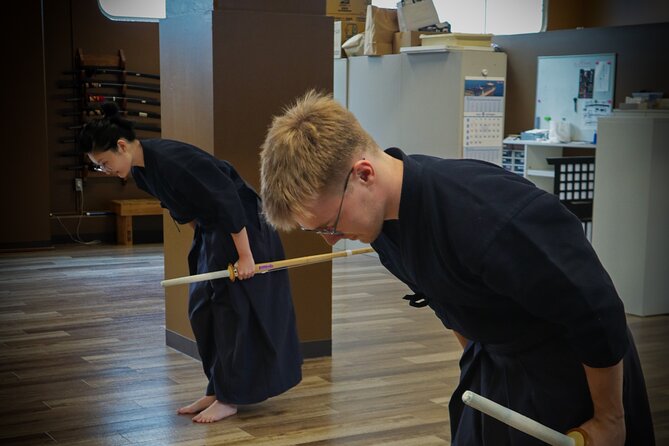
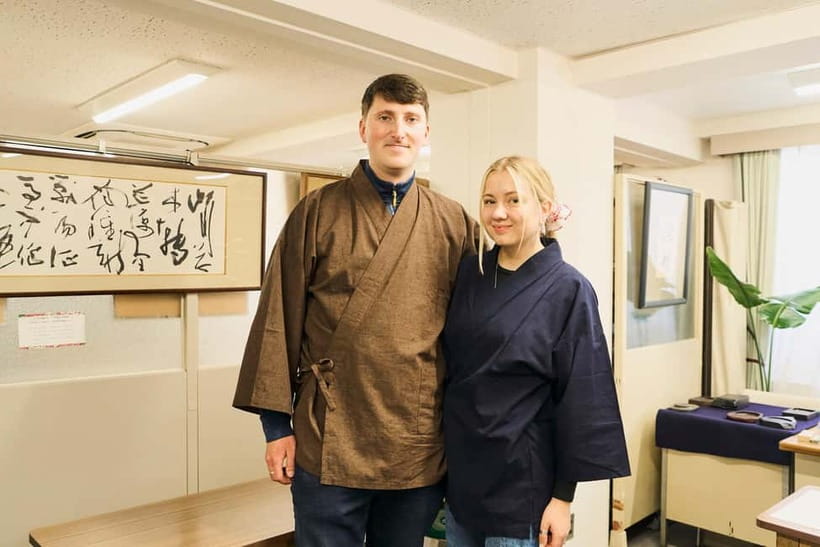
The workshop begins with a small ritual: you change into traditional Japanese workwear before starting the calligraphy. It is a simple touch, but it helps separate the class from the rest of your Tokyo day.
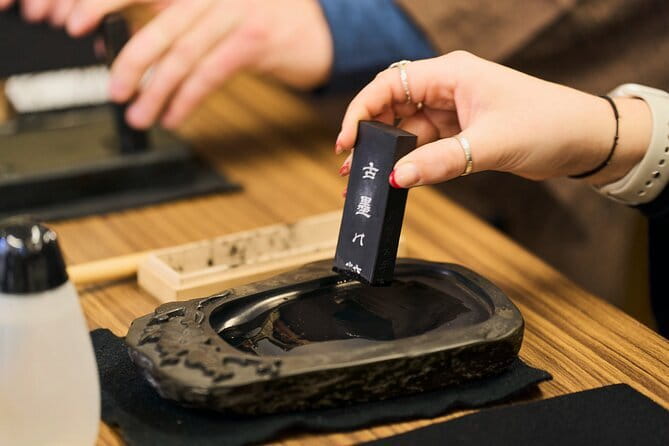
Next comes the ink. Instead of beginning with ready-made bottled ink, you use a solid inkstick and grind it with water. The movement is slow and repetitive. That may sound like a minor detail, but it is one of the most distinctive parts of the experience.
You have to give the process your attention. The ink gradually forms as you work, and the quiet preparation introduces the patient mindset needed for calligraphy. Several participants found this part calming, and I can see why. It is a useful contrast to Tokyo’s bright signs and packed train platforms.
The traditional tools also give the activity a stronger sense of place. This is not a generic art class with Japanese decoration added around the edges. The ink, brush, and preparation method are central to the lesson.
Learning brush control before writing your name
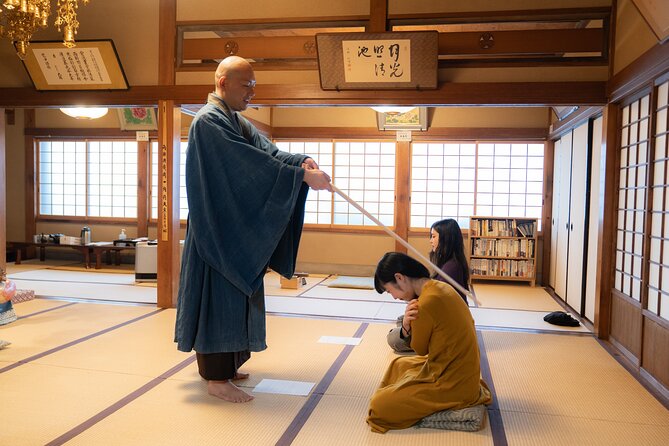
The sensei first explains the basic techniques. You practice how to hold and move the brush, how much pressure to use, and how to control the start and finish of a stroke.
This practice matters because calligraphy is not ordinary handwriting. A brush responds differently from a pen. Too much pressure can make a line heavy. Too little can leave it thin or uneven. The angle of the brush changes the shape, and the order of the strokes affects the final character.
You should expect your first attempts to look rough. That is not a failure. The class is designed for beginners, and the instructor gives corrections as you practice. The small group size, limited to 10 people, makes it easier to receive individual help rather than simply follow a demonstration from across a crowded room.
The English guide translates the sensei’s explanations and helps with questions. Past sessions have included guides named Hiromi, Aki, Nono, Naoto, Erico, Frankie, and others, while instructors have included teachers such as Sousen, Nori, Mona, and Horino. The exact guide and teacher can vary, but the format remains the same: a professional calligrapher leads the art lesson, with an English-speaking host supporting the class.
That translation is important. The value here is not just making a decorative mark. You learn about the writing system, stroke order, and some of the way Japanese characters developed. One participant particularly appreciated learning how characters evolved and how they should be positioned beside one another.
Choosing kanji for your name
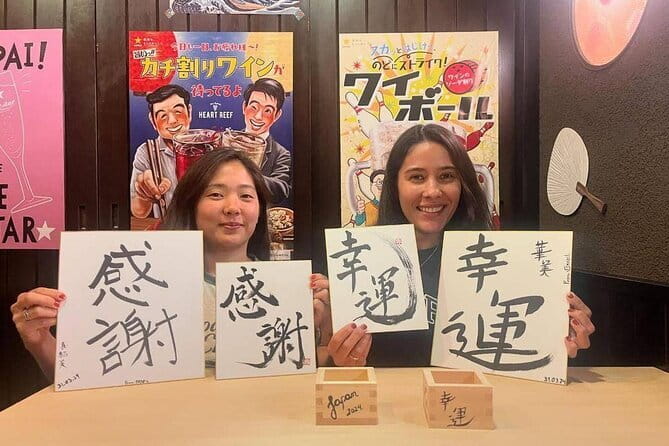
The personal heart of the workshop is turning your name into kanji. Japanese names written in foreign languages do not always have a direct one-to-one translation, so the process involves selecting characters that fit the sound, meaning, or feeling connected with your name.
The instructor helps you understand the options. You may also choose other words or characters that have personal meaning. Some people have selected names, while others have chosen additional words that mattered to them.
This is where the workshop becomes more than a brush practice session. You are making a souvenir that connects language, sound, and meaning. It also gives you a small window into the care involved in Japanese naming and writing.
You should ask about the meaning of each character before settling on your final design. A character can look attractive but carry a meaning you did not expect. The class gives you the chance to make a considered choice rather than simply copying a symbol from a chart.
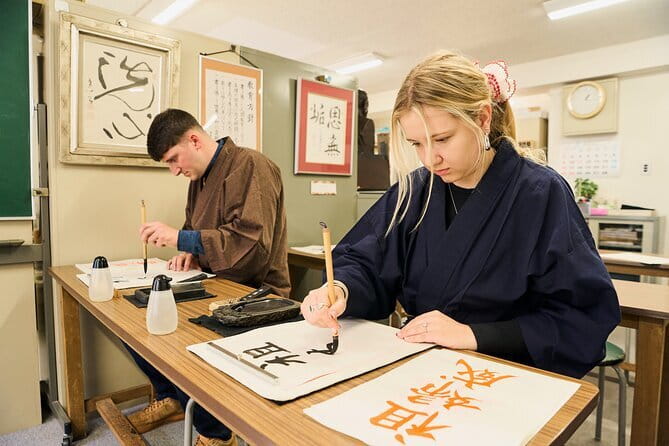
Once you have chosen the characters, the sensei shows you how to arrange them. Spacing matters. So does the balance between the dark brushwork and the empty paper around it. Beginners often focus only on making each character correct, but the instructor also helps you see the whole composition.
Making artwork you can take home
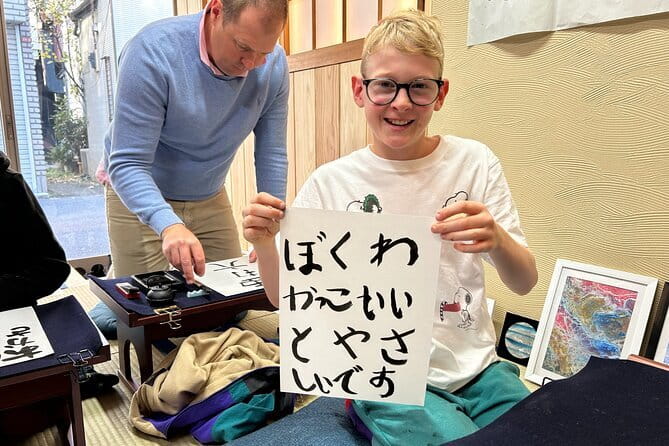
After practice, you create your finished calligraphy artwork. This is the part where the pressure rises a little. You get one chance to make a final piece, and brush ink is not easily erased.
That imperfection is part of the charm. You are not expected to produce museum-quality calligraphy after two hours. You are making a personal souvenir under the guidance of someone who has spent years refining the craft.
If your final piece is not perfect, do not treat that as a problem. The value comes from knowing how the ink was made, how the strokes were built, and why the characters were arranged in that way. The paper work is included, and it is the simplest choice if you want a finished keepsake without paying extra.
Some participants specifically liked that the teacher created a neat version of their names for them to keep. The provided information does not promise a separate demonstration piece for every session, so consider that a possible bonus rather than something to rely on. Your own artwork is included.
A few more Tokyo tours and experiences worth a look




The optional T-shirt design
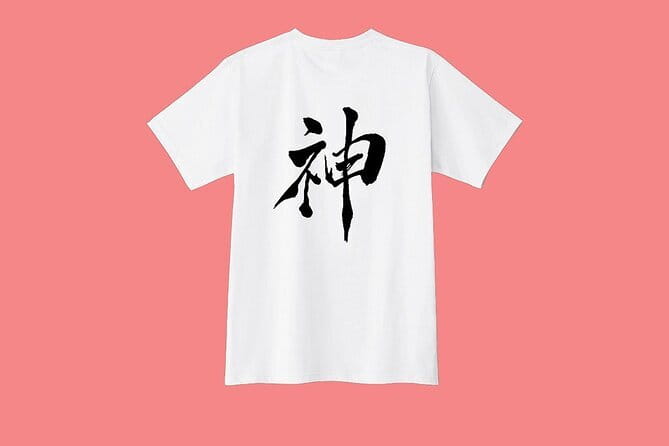
You can also write your kanji directly onto a T-shirt and create a wearable souvenir. This is the most playful part of the activity, and it is likely to appeal to families, couples, and anyone who enjoys making something unusual rather than buying another standard Tokyo souvenir.
The T-shirt costs extra and is not included in the $30 activity price. One participant found the shirt relatively expensive, so check the current additional price before deciding. The basic workshop still works well without it.
A shirt also brings a practical question: calligraphy is difficult, and your design may have the charmingly uneven look of a beginner’s original work. That is exactly the point, but you should not expect a perfectly printed retail garment.
I would choose the T-shirt if you want a fun conversation piece and are comfortable with a handmade result. Choose the paper artwork if you prefer a more traditional souvenir or want to keep the total cost lower.
What the $30 price delivers

At $30 per person, the workshop offers good value for a two-hour cultural activity in central Tokyo. The price includes the English guide, use of the calligraphy supplies, instruction, and your own artwork to take home.
You are also paying for access to professional tools and a teacher who can explain technique rather than simply hand you a brush and let you experiment. That makes the experience more useful for a first introduction to calligraphy.
The optional shirt changes the calculation. Since it is not included, the advertised price is best understood as the cost of the class and paper artwork. If your main goal is a wearable design, budget for the extra charge before booking.
The rating is 4.9 from 105 reviews, and the strongest praise centers on the same features: patient instruction, clear English translation, a calm atmosphere, traditional ink preparation, and the chance to take home something personal. I would give the most weight to those repeated details, since they describe the parts of the class that matter most to a first-time student.
Who will enjoy this class most
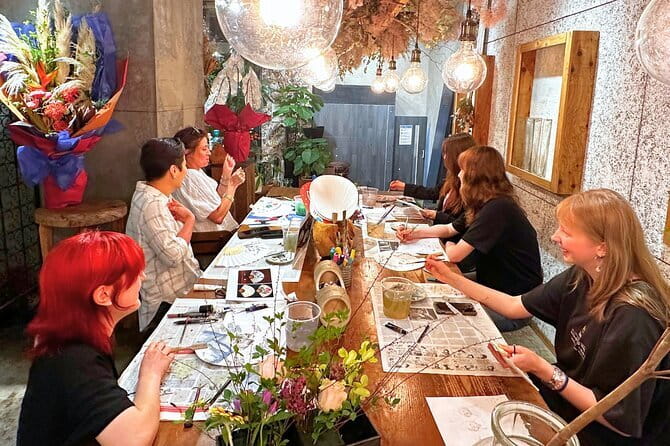
This is a good choice for art lovers, language fans, couples, families, and anyone who wants a quieter activity between Tokyo’s major sights. It is also suitable for complete beginners. You do not need previous calligraphy experience to take part.
Children can enjoy it too. The class has been described as suitable for children, and an instructor showed notable patience with a toddler during one session. Still, the activity involves careful brush work and waiting for explanations, so very young children may need help staying engaged.
I would also recommend it to solo visitors. Group classes can sometimes feel awkward when you arrive alone, but the small format gives you direct time with the teacher. One participant ended up as the only student in the class and received extensive one-on-one help.
If you want a polished, professional artwork with no visible mistakes, this may not be your ideal activity. Calligraphy takes years to master. If you enjoy learning by doing and appreciate the marks made by your own hand, the imperfect result becomes part of the souvenir.
Practical details before you book
The full activity lasts two hours, with starting times based on availability. It is held in Shinjuku, and you meet at the FamilyMart Okubo Station South Exit Store. Look for the guide carrying a Local Guide Stars sign.
The group is limited to 10 people. That is a useful limit for an art lesson because the teacher can watch your brush work and correct small problems. A larger class would make the personal feedback less certain.
The live instruction is in English through the guide. The sensei leads the calligraphy, while the guide translates and helps explain cultural points. English ability has been praised repeatedly, but the names of the guide and instructor can change from one session to another.
You can cancel up to 24 hours before the activity for a full refund. You can also reserve now and pay later, which is helpful if your Tokyo schedule is still shifting.
Wear something that you do not mind using around ink, or follow the workwear instructions when you arrive. The activity provides supplies, but the T-shirt is an extra purchase. If you plan to add the shirt, ask about its price and arrangements before you begin.
Why the traditional method matters
The class is valuable because it gives you context before asking you to make something. You learn that calligraphy depends on preparation, posture, stroke order, and restraint. The grinding of the ink is not just a theatrical opening. It sets the pace for the rest of the lesson.
You also get a better sense of why Japanese calligraphy can feel meditative. The work rewards patience. You have to slow your hand, watch the brush, and accept that a line cannot always be corrected.
The instructors bring a personal connection to the craft as well. One teacher was described as carrying on an art passed down from his grandfather. That kind of teaching adds meaning to the lesson, since you are receiving more than a basic tourist demonstration.
You will not master calligraphy in two hours. You can, however, leave with a better understanding of how the characters are formed and why the art demands such control. That is a fair and worthwhile goal.
Should you book the Shinjuku calligraphy workshop?
I would book this experience if you want a personal souvenir, a calm break from sightseeing, and a real introduction to Japanese calligraphy. The ink-making, kanji selection, and patient English guidance give the class more substance than a quick brush-painting activity.
Choose the paper artwork if you want the best value at $30. Add the T-shirt only if you like the idea of wearing a funny, handmade design and are prepared for the extra cost.
This is not the right pick if you want a fast activity, a guaranteed flawless result, or a purely sightseeing-focused tour. For most beginners, though, the combination of traditional tools, thoughtful instruction, and a keepsake you make yourself is a strong use of two hours in Shinjuku.
FAQ
Where does the calligraphy workshop meet?
You meet at the FamilyMart Okubo Station South Exit Store at 1-23-21 Hyakunincho, Shinjuku-ku, Tokyo. A guide will be holding a Local Guide Stars sign.
How long does the activity last?
The workshop lasts two hours. Starting times depend on availability.
Is the workshop taught in English?
Yes. The activity includes a live English-speaking guide who translates the calligrapher’s lesson and helps explain the cultural and language details.
Is the T-shirt included in the price?
No. The original T-shirt is not included. It is an optional extra, while your calligraphy artwork and use of the class supplies are included.
What will I make during the class?
You will grind a solid inkstick, practice basic brush techniques, transform your name into kanji, and create original calligraphy artwork. You may also write the kanji on an optional T-shirt.
How many people can join the class?
The workshop is a small-group activity limited to 10 participants.
More Workshops & Classes in Tokyo
More Craft Workshops in Tokyo

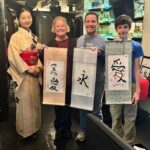
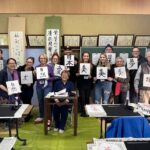
More tours in Tokyo we've reviewed






Craft Workshops, compared.
 ★ 4.8Chopstick Making Workshop in GinzaFrom $251 hour
 ★ 5.0Kintsugi Experience: Art of Golden Joinery in TokyoFrom $59
Tokyo: Shinjuku Chopstick Making ClassFrom $121 hour
★ 5.0Kintsugi Experience: Art of Golden Joinery in TokyoFrom $59
Tokyo: Shinjuku Chopstick Making ClassFrom $121 hour
 ★ 5.0Private Craft Your Own Ring Handmade Experience in Asakusa, TokyoFrom $21
 ★ 5.0Authentic Pure Gold Kintsugi Workshop with Master Taku in TokyoFrom $142
 ★ 5.0Tokyo: Calligraphy on Kanji Fan & Scroll with DrinkFrom $531h 20m