Reviewed · COOKING CLASSES
Ramen & Gyoza Cooking Class in Tokyo with Local Supermarket Visit
Tokyo’s best food lessons do not always happen in polished studios. This one takes you to YUCa’s home kitchen in Nishiogu, where you learn to make ramen and gyoza, then sit down and eat what you prepared. I like the warm, small-group setting and the chance to see a quieter part of Tokyo beyond the usual sightseeing routes.
In This Article
- Key points before you book
- Ramen and gyoza in a real Tokyo home
- The 10:00 meeting and home-cooking introduction
- Making ramen from broth to bowl
- Folding gyoza while the ramen cooks
- Tasting your own lunch at 12:30
- The optional supermarket walk in Nishiogu
- Getting there and planning your morning
- Who will enjoy this class most
- Price, group size, and cancellation
- Should you book YUCa’s ramen and gyoza class?
- FAQ
- Where does the ramen and gyoza class take place?
- What time does the class begin?
- How long does the main cooking experience last?
- What food will I make?
- Is the supermarket tour included?
- Is a vegetarian option available?
- How many people can join?
- Does the activity end at the starting point?
- What is the cancellation policy?
I also like that the class works for beginners, families, and mixed-age groups. The main caution is simple: it is not nonstop hands-on cooking. With one kitchen and a group of up to seven, some steps are demonstrations or brief ingredient additions rather than full individual preparation. The supermarket visit is optional, so confirm that it is available on your date if it matters to you.
Key points before you book
- Cook in YUCa’s home kitchen: You get a glimpse of an ordinary Japanese home and kitchen, not just a classroom designed for tourists.
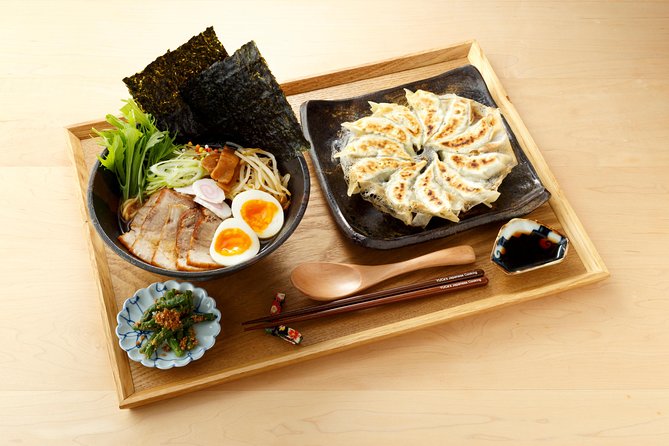
- Make two familiar dishes: The class covers ramen and minced pork gyoza, with vegetables, meat, folding, cooking, and final assembly.
- Expect a friendly teacher: YUCa leads the class in English and adds cultural notes about Japanese home cooking and daily life.
- Small group, shared workspace: The maximum is seven people, but the format includes demonstration as well as hands-on tasks.
- Optional supermarket visit: After cooking, you may walk through a local supermarket and ask about Japanese ingredients and packaging.
- Good for families: Children and teenagers can take part, though portions may feel modest to hearty eaters.
Ramen and gyoza in a real Tokyo home
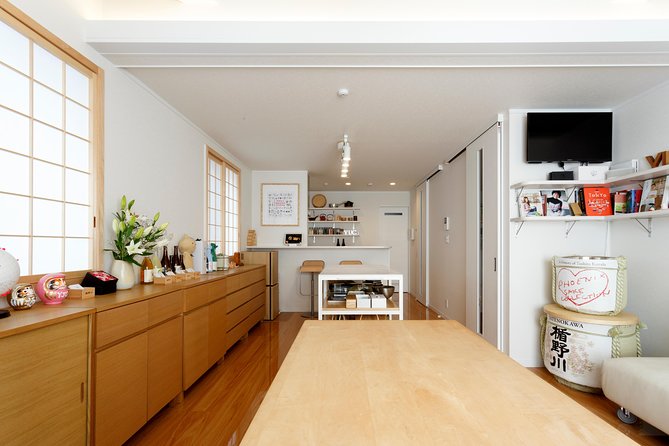
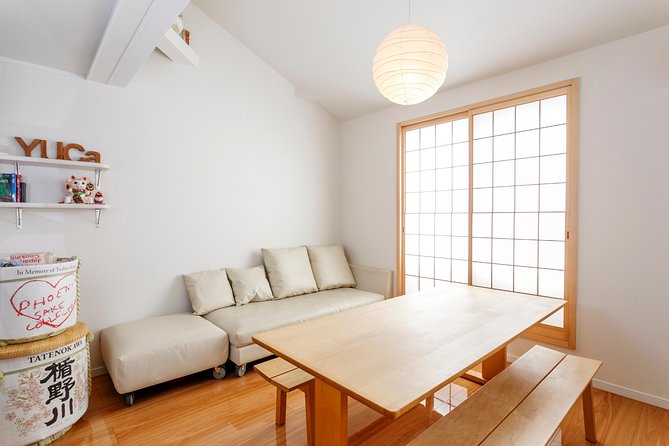
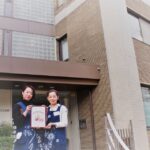
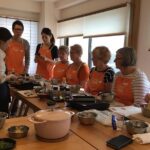
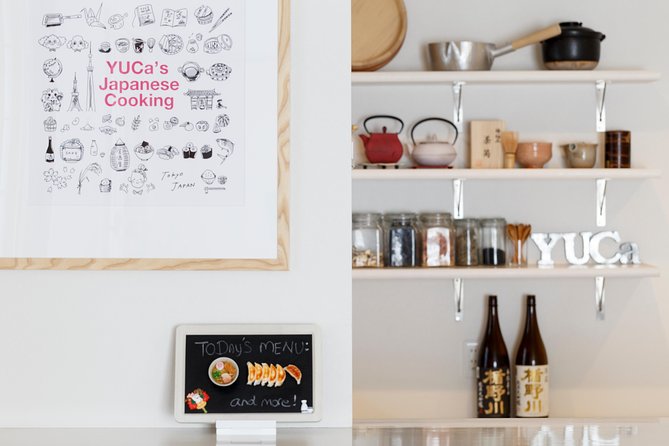
The appeal here is the setting. You are not simply handed a bowl of noodles in a restaurant or shown a pre-recorded lesson. You meet YUCa at her home cooking space in 2-chōme-34-8 Nishiogu, Arakawa City, a residential area away from Tokyo’s most famous central districts.
That location gives the morning a useful second layer. You are not only learning a recipe. You are seeing how a food lesson can fit into everyday Japanese life, inside a compact home kitchen with the host’s own tools and cooking setup around you.
YUCa is the central reason this works. She teaches in English, explains the steps clearly, and shares food customs along with the recipes. Her manner is described as warm, patient, outgoing, and easy to follow. She also takes time to make sure different ages and cooking levels can take part.
The class begins at 10:00 a.m., making it an easy choice for a morning in Tokyo. You will want to allow about two and a half hours for the cooking and tasting, with extra time if you join the optional supermarket walk afterward.
Other cooking classes in Tokyo
The 10:00 meeting and home-cooking introduction
At 10:00, you meet at YUCa’s Japanese Cooking. The published schedule allows a short arrival period before a lecture from 10:15 to 10:30 on Japanese home cooking and lifestyle.
This opening matters because ramen and gyoza can look familiar to many international diners. The lesson gives you a little context before you start handling ingredients. You can ask about how these foods fit into Japanese meals, how ingredients are used, and why a home kitchen approaches them differently from a restaurant kitchen.
YUCa has also added personal touches that make the introduction more social. One activity mentioned by a family was learning to write their names in Japanese characters based on pronunciation. That is not the main purpose of the class, but it shows the personal tone you can expect.
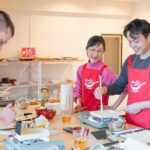
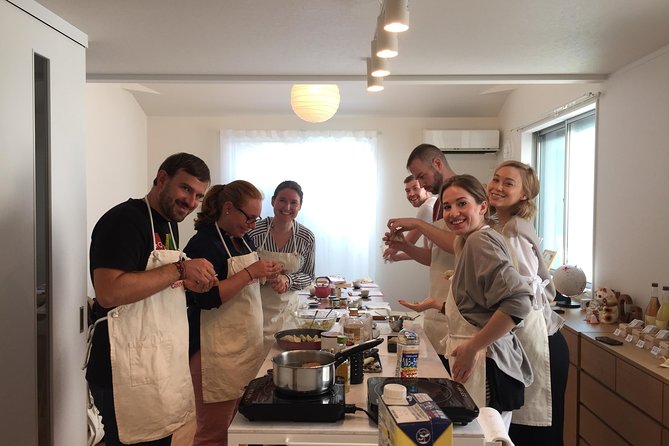
The group size is capped at seven people, and a minimum of two people is required for a booking. A small class is helpful in a home kitchen, but do not picture seven separate cooking stations. The space has one kitchen, so you share tasks and watch some of the preparation.
Making ramen from broth to bowl
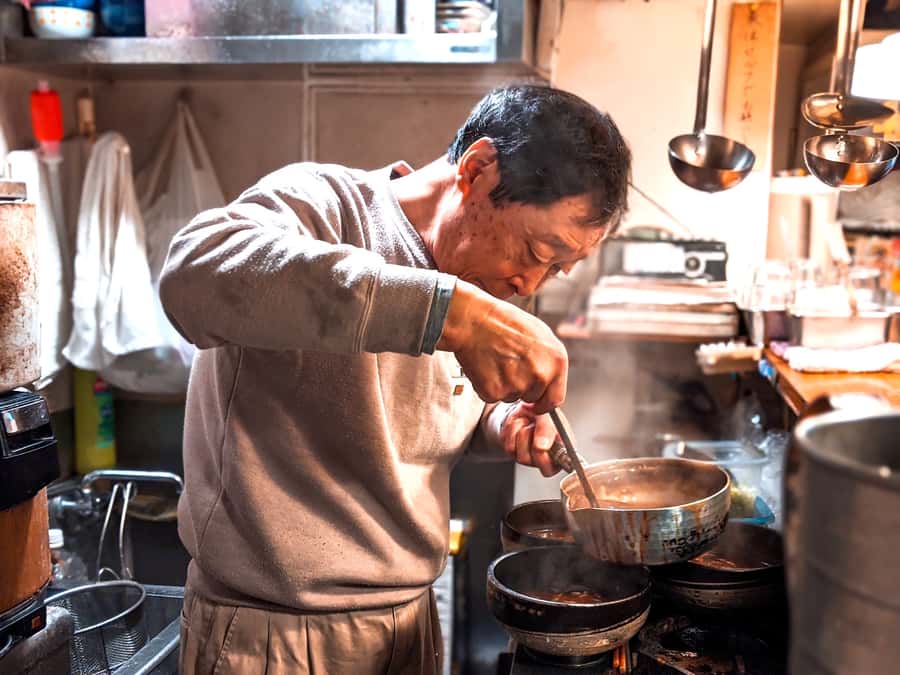
The main cooking period runs from 10:30 to 12:30. Ramen preparation forms one half of the meal, and the structure lets you see how the parts come together rather than simply eating a finished dish.
You work with noodles, soup, vegetables, and meat, then assemble the bowl at the end. The exact method is designed to be approachable, so you do not need advanced cooking skills. Families have used the waiting time while the ramen cooks to prepare the gyoza, which keeps the class moving.
This is also where you should set your expectations carefully. Some participants have found the class highly interactive, with everyone receiving a role. Others have felt that certain steps involved little more than adding a measured amount of powder or liquid. Both descriptions can be true in a shared home kitchen.
I would call this a guided cooking lesson rather than a full individual workshop. You learn the order of operations, watch technique, handle selected tasks, and gain a recipe you can try at home. If your priority is spending every minute chopping, stirring, and cooking alone, you may want a more formal school with one workstation per person.
The reward comes when you assemble the ramen yourself. Several people have been especially pleased with the flavor and have planned to recreate it at home. That practical result is important. You leave with more than a photograph of lunch. You have seen a workable method and can ask questions while the process is still in front of you.
Folding gyoza while the ramen cooks
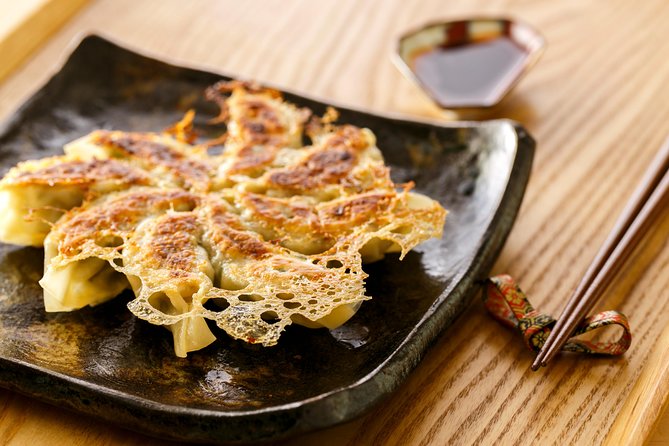
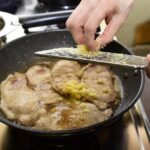
Gyoza brings the most tactile part of the class. You help prepare minced pork dumplings with vegetables and learn how to fill and fold them.
For children, teenagers, and first-time cooks, this can be the most enjoyable section. Folding dumplings is easy to understand but takes a little practice, and the shared table gives the class a relaxed social rhythm. A family with children aged 9, 13, and 14 found the activity suitable for all three ages.
The recipe is intended to be manageable at home. You are not being trained for restaurant production. Instead, you learn the basic sequence and the shape of the finished dumpling, then cook and eat the results with the ramen.
Because the class has a shared kitchen, your exact amount of hands-on time depends on the group. YUCa makes an effort to involve everyone, but you may not personally complete every single step. Ask questions and volunteer for tasks if you want more participation.
Tasting your own lunch at 12:30
After the cooking, you sit down to taste the ramen and gyoza you helped prepare. This is more than a quick sample. The class functions as a late-morning meal, although one person found the portions a little small.
The food has received strong praise, especially the ramen. That is encouraging, but value depends on what you want from the class. If you are paying mainly for lunch, $122.70 per person is expensive compared with an excellent ramen shop. If you are paying for instruction, cultural conversation, a home setting, and a meal, the price becomes easier to justify.
I see the best value for people who enjoy food enough to want the method behind it. You can learn how to make both dishes, ask about ingredients, meet other people in a small group, and take home ideas for future meals. The value is weaker if you want a long, technical chef-training session or a large restaurant-style feast.
The social side is part of the experience. Couples, parents, grandparents, siblings, teenagers, solo participants, and mixed groups can share the work. Several people particularly enjoyed meeting others in the class. That makes this a good break from sightseeing, especially if your Tokyo schedule has been heavy on temples, stations, and crowded shopping streets.
Other cooking classes in Tokyo


The optional supermarket walk in Nishiogu
From 12:30 to 1:00 p.m., you may join an optional local supermarket tour. This is one of the most useful extras for anyone planning to cook Japanese food after returning home.
A supermarket gives you a practical look at the ingredients behind the dishes. You can ask YUCa about labels, products, vegetables, seasonings, and unfamiliar foods. Families have enjoyed using the walk to ask about strange or unusual items they noticed on the shelves.
The neighborhood setting is part of the point. You are seeing a less tourist-focused part of Tokyo and getting a feel for ordinary shopping. It is a short experience, but it can help you understand what Japanese home cooks actually encounter when buying food.
There is an important booking detail: the supermarket visit is optional, and the supplied information includes different experiences with whether it took place. Some people joined it and found it informative, while others finished the cooking without a store visit. If the supermarket is a major reason you are booking, ask ahead and confirm the plan for your date. Do not treat it as guaranteed unless the provider confirms it.
Getting there and planning your morning
The meeting point is in Nishiogu, Arakawa City, northeast of central Tokyo. The activity is near public transportation, but the information provided does not give a specific station, train route, or walking time.
Plan extra time to find the address, especially if this is your first morning in Tokyo. The meeting point is a private cooking venue rather than a major landmark. One person used a taxi service and found that convenient, but that does not tell you how easy the address will be from your own hotel.
The activity ends back at the meeting point. That is helpful if you want to leave your morning open for another part of Tokyo afterward. If you take the supermarket option, plan for the class to finish around 1:00 p.m. rather than 12:30.
The mobile ticket is convenient, and confirmation is provided at booking. Dietary requirements should be sent when you reserve. A vegetarian option is available if requested in advance, but you should not wait until the morning of the class to mention food restrictions.
Who will enjoy this class most
I would choose this for you if you want a personal food experience and like meeting a local host. It suits beginners especially well because the recipes are approachable and the instructions are explained step by step.
Families are a strong match. The class has enough variety to give children and teenagers useful tasks, and the meal gives everyone a clear payoff. It also suits couples and friends who want an activity they can share rather than another meal eaten across a restaurant table.
You will likely enjoy it if you want to recreate Japanese food at home. The recipes are described as easy to follow, and the class focuses on familiar techniques rather than highly specialized restaurant work.
I would think twice if you want a completely hands-on course with your own cooking station. The shared kitchen means some parts are demonstrations, and the amount of active preparation can vary. I would also think twice if you are choosing it mainly for a guaranteed supermarket visit, since that portion is optional and should be confirmed.
Price, group size, and cancellation
The price is $122.70 per person. That is a premium price for a meal, but a reasonable one for a small food lesson in a private home that includes two dishes, instruction, cultural discussion, and tasting.
The maximum group size is seven. That keeps the setting more personal than a large commercial class, though it does not eliminate the limits of one kitchen. The minimum booking is two people, so solo booking is not supported unless you join an existing arrangement through the provider.
Free cancellation is available up to 24 hours before the start time for a full refund. Changes or cancellations inside that 24-hour window are not refunded or accepted. If the minimum number is not reached and the activity is canceled, you are offered another date or experience, or a full refund.
Should you book YUCa’s ramen and gyoza class?
Book it if you want a friendly home-based food lesson, a taste of residential Tokyo, and recipes you can attempt after your trip. YUCa’s warmth, clear English, cultural explanations, and ability to involve families are the strongest reasons to choose it.
Go in expecting a shared demonstration with hands-on moments, not a private chef course. Confirm the optional supermarket walk and mention dietary needs when booking. For food-loving families, couples, and curious beginners, the combination of cooking, conversation, and lunch makes this a worthwhile use of a Tokyo morning.
FAQ
Where does the ramen and gyoza class take place?
The class takes place at YUCa’s Japanese Cooking, at 2-chōme-34-8 Nishiogu, Arakawa City, Tokyo 116-0011, Japan.
What time does the class begin?
The activity begins at 10:00 a.m.
How long does the main cooking experience last?
The full activity takes about two and a half hours. The schedule lists cooking and tasting from 10:30 a.m. to 12:30 p.m., followed by an optional supermarket tour from 12:30 to 1:00 p.m.
What food will I make?
You will prepare ramen and gyoza, including minced pork dumplings. The recipes use different vegetables and meat, followed by cooking and tasting.
Is the supermarket tour included?
The supermarket tour is listed as optional. It takes place after the cooking and tasting, and you should confirm its availability when booking if it is important to you.
Is a vegetarian option available?
Yes. A vegetarian option is available, but you must advise the provider of the requirement when booking.
How many people can join?
The activity has a maximum of seven travelers, and at least two people are required per booking.
Does the activity end at the starting point?
Yes. The activity ends back at the meeting point.
What is the cancellation policy?
You can cancel at least 24 hours before the start time for a full refund. Cancellations or changes made less than 24 hours before the start time are not accepted for a refund.
More Workshops & Classes in Tokyo

More Cooking Classes in Tokyo
More Cooking Classes in Tokyo
More tours in Tokyo we've reviewed





Cooking Classes, compared.
 ★ 5.0Ramen and Sushi Cooking Class with Sake Pairing Set in TokyoFrom $79
 ★ 4.9Tokyo: Wagyu and 7 Japanese Dishes Cooking ClassFrom $673 hours
 ★ 5.0Tokyo Washoku 4-hour Cooking Class: From Market to TableFrom $79
 ★ 5.0Professional Ramen & Gyoza with Ramen Chef in a restaurant!From $159
 ★ 5.0Small-Group Wagyu Beef and 7 Japanese Dishes Tokyo Cooking ClassFrom $72
 ★ 5.0Tokyo Sushi Making Experience & Japanese Cooking ClassFrom $59