Reviewed · SUSHI MAKING CLASSES
Tokyo Sushi Making Experience & Japanese Cooking Class
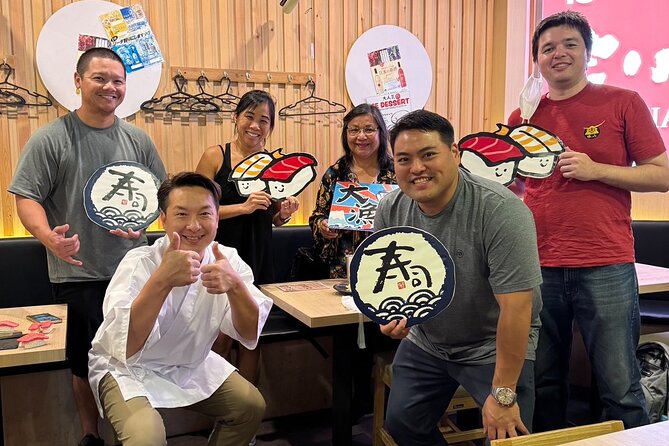
Tokyo’s sushi craft is much easier to understand when you make it yourself. In this 90-minute Shinbashi class, you shape maki, temari, and nigiri with fresh ingredients, then sit down to eat what you prepared.
In This Article
- Key points at a glance
- Why making sushi beats simply ordering it
- Arriving in Shinbashi for the 90-minute class
- Your first taste of sushi culture
- Maki sushi: the most familiar starting point
- Temari sushi: small, round, and family-friendly
- Nigiri sushi: the lesson in restraint
- Tuna, salmon, squid, and flying fish roe
- A small class with room for help
- Adding sake or shochu
- Is $59.46 a fair Tokyo price?
- Who will enjoy this most?
- Practical details before you book
- Should you book this sushi class?
- FAQ
- How long does the Tokyo sushi-making class last?
- Where does the activity start and finish?
- Which languages are available?
- What types of sushi can I make?
- What ingredients are used?
- Can children join the class?
- Are drinks included in the price?
I like the small maximum group of 15, which leaves room for hands-on help. I also like the patient, family-friendly setup, which works for children as young as four. The main catch is that the class is short, and drinks such as sake, shochu, juice, and bottled water cost extra.
Key points at a glance
- Three sushi styles: Depending on the class format, you make maki and temari, or maki and nigiri.
- Fresh fillings: Ingredients can include tuna, salmon, squid, and flying fish roe.
- English or Chinese instruction: Help is available in English, Traditional Chinese, or Simplified Chinese.
- Small-group teaching: The class accepts no more than 15 people.
- A keepsake beyond lunch: Commemorative photos are part of the experience.
- Optional Japanese drinks: Sake and shochu can be ordered separately, with identification required for anyone drinking.
Why making sushi beats simply ordering it
You can eat excellent sushi all over Tokyo, but a plate rarely explains how each piece is put together. Here, the act of making it gives you a better feel for sushi’s balance, shape, and etiquette.
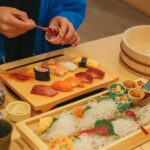
The class focuses on popular forms that look different and behave differently in your hands. Maki sushi is rolled, usually with fillings inside a sheet of nori. Temari sushi is shaped into small round pieces, often with the topping arranged on top. Nigiri sushi requires a more careful hand, since the rice is formed and topped rather than rolled.
That variety gives the session a useful rhythm. You are not repeating one simple roll for an hour. You get to compare several basic techniques and leave with skills you can try at home.
The instructors also explain sushi culture and the manners connected with eating it. That matters because sushi is not only a recipe. The size of a bite, the way toppings sit on the rice, and the use of chopsticks or fingers all form part of the experience.
A few more Tokyo tours and experiences worth a look
Arriving in Shinbashi for the 90-minute class
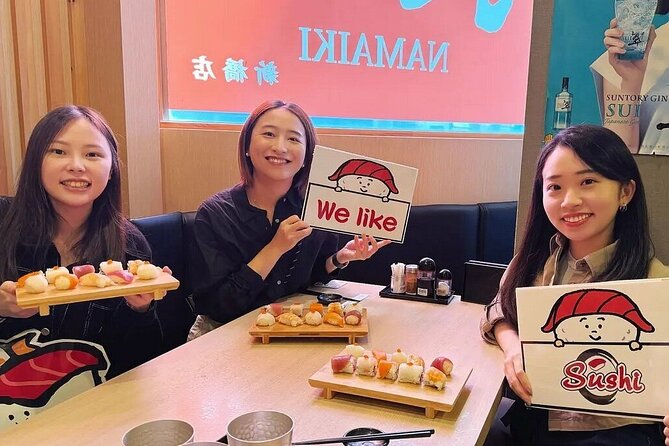
The meeting point is S-PLAZA Yayoi II, 2-chome Shinbashi, Minato City, Tokyo 105-0004. The location is near public transportation, so you can fit the class into a day of sightseeing without treating it as a full-day outing.
You need to arrive at the stated meeting point rather than expecting hotel pickup. The activity also ends there, which makes planning simple. Before booking, check the address carefully and allow enough time to find the building in Shinbashi.
The mobile ticket is useful for a Tokyo day when your plans are stored on your phone. I would still keep the meeting address easy to open before you leave your hotel, since a short cooking class leaves little room for a late arrival.
Your first taste of sushi culture
The session begins with an introduction to sushi’s background and the etiquette behind each bite. The information is delivered by instructors who speak English, Traditional Chinese, or Simplified Chinese.
This opening should help you understand what you are about to make rather than simply copy hand movements. You learn why the forms differ and how the finished pieces are meant to be handled and eaten.
Do not expect a long lecture. The whole activity lasts about an hour and a half, so the cultural explanation is paired with the practical work. That is a good fit for you if you want useful context without sitting through a formal food seminar.
The class is also designed for people who arrive with no supplies. You do not need to bring cooking tools or ingredients. The setup is ready for you, and the staff assists with both sushi-making and commemorative photos.
Maki sushi: the most familiar starting point
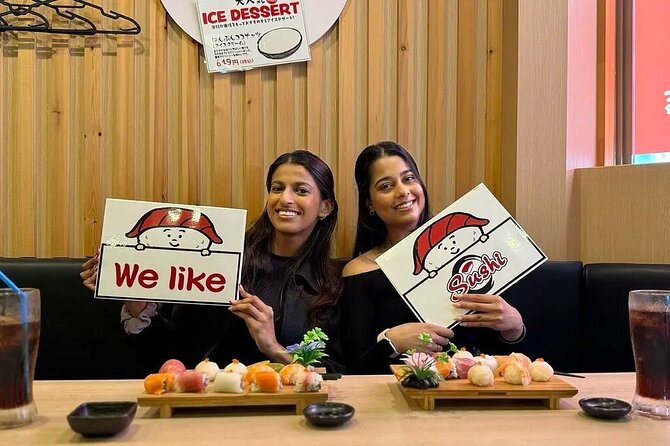
Maki is likely to feel the most recognizable. You work with sushi rice, nori, and fillings, then learn how to bring the ingredients together into a roll.
The trick is control. Too much filling makes the roll difficult to close. Too much pressure can squeeze out the rice. A short lesson like this will not turn you into a sushi chef, but it can show you why restaurant rolls look neat while homemade versions often end up a little lopsided.
That is part of the fun. You get a practical skill you can repeat at home, and you also gain respect for the careful work behind a dish that can look simple on the plate.
The listed fillings include tuna, salmon, squid, and flying fish roe. The exact selection may vary, but the range gives you different colors, textures, and flavors to work with. You will not be limited to one plain vegetable roll.
Temari sushi: small, round, and family-friendly
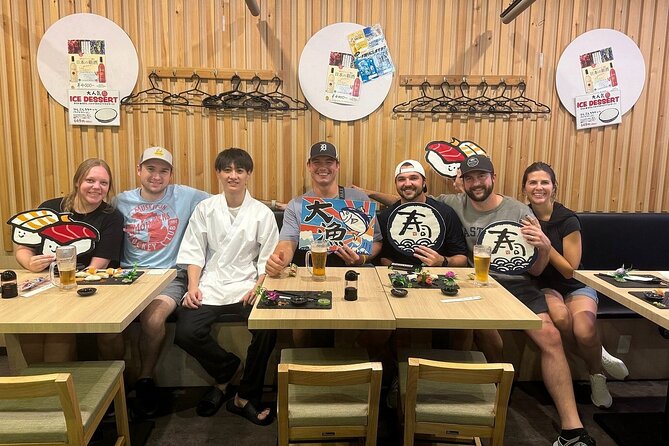
Temari sushi gives the class a different kind of challenge. Instead of creating a long roll, you shape rice into a small round piece and arrange a topping over it.
This style is particularly approachable for families. The shape is compact, visual, and easier to understand than the fine control needed for some nigiri. A child may enjoy the process of making several little pieces, though an adult should help with any food handling tasks as needed.
The supplied information specifically identifies children from age four as eligible. That makes this a useful pick for a family seeking a short cultural activity, rather than a long cooking course that may test a young child’s patience.
You should still judge your own child’s interest and attention span. Ninety minutes is manageable for many families, but it remains a structured class, not a free-form play session.
Other cooking classes in Tokyo


Nigiri sushi: the lesson in restraint
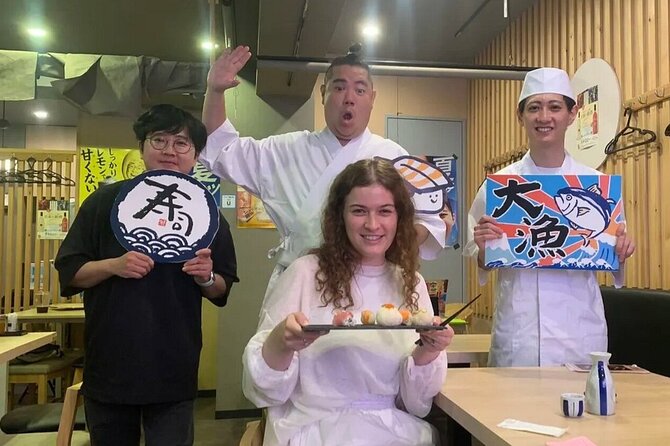
Some class formats pair maki with nigiri rather than temari. Nigiri looks simple, but it asks for a light touch. The rice must hold together without becoming a dense block, and the topping needs to sit neatly on top.
This part can be valuable because it shows how much technique hides behind a small piece of sushi. You learn that the goal is not to pile on ingredients. It is to create a tidy bite with the rice and topping in proportion.
Since the available format may be maki and temari or maki and nigiri, check the specific option when booking. If you have a strong preference, this is one of the most important details to confirm before paying.
Tuna, salmon, squid, and flying fish roe
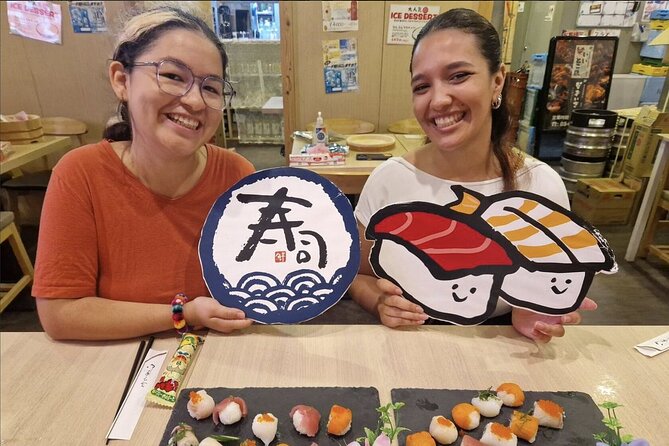
The ingredients make the activity feel like more than a craft exercise. Tuna and salmon offer familiar sushi flavors, while squid gives you a different texture. Flying fish roe adds color and a small pop to the finished pieces.
The class describes these items as snacks included with the experience. In practical terms, you should expect to eat the sushi you make as part of the session. This is not a class where you prepare food and then leave without trying it.
The focus is on making and tasting rather than on a full Japanese meal. If you arrive hungry, keep your expectations sensible. The included food is sushi and related snacks, not a broad dinner with multiple courses.
That said, eating your own work is an important part of the lesson. You can see how the shape holds up, notice which combinations you prefer, and remember the process more clearly than if you had only watched a demonstration.
A small class with room for help
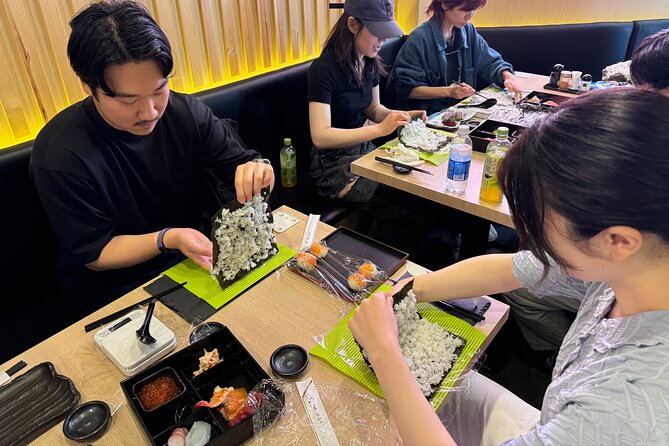
The maximum group size is 15 people. That is not an intimate private lesson, but it is small enough for a shared activity where you need occasional guidance.
I especially like this format for first-time sushi makers. You can work beside other people, compare your shapes, and still ask the instructor for help. A larger class might leave you waiting when your roll collapses or your rice refuses to cooperate.
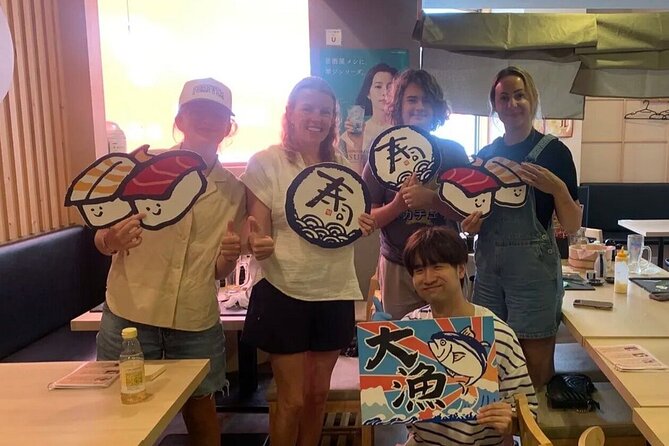
The available feedback points to friendly, patient teaching, including a family with two children. That detail matters more than polished marketing language. Patience is exactly what you want when a young child is learning a new food skill or when your first roll does not look restaurant-ready.
The instructors also help take commemorative photos. You get a record of the activity without having to stop constantly and ask someone else to take pictures.
Adding sake or shochu
Sake and shochu are available as optional purchases. They are not included in the listed price, and you can also order other drinks separately.
A small drink can add a Japanese touch to the meal, especially if you want to compare the sushi with a traditional beverage. But do not assume drinks are part of the $59.46 price. Juice and bottled water also need to be ordered separately.
Japan’s legal drinking age is 20. If you plan to order alcohol, bring valid identification that proves your age. This rule applies even if you look older, so it is better to have your passport or another accepted form of identification with you.
For families, the separate drink arrangement is useful because you can simply skip alcohol. The core activity does not depend on buying sake or shochu.
Is $59.46 a fair Tokyo price?
At $59.46 per person, this is not the cheapest way to eat sushi in Tokyo. You can buy a filling meal for less, especially if your only goal is to try raw fish.
The value comes from the instruction, food, cultural explanation, group setting, and photos. You are paying for an activity that teaches you how the food is assembled, not just for the ingredients on the plate.
I think the price makes the most sense for a first visit to Japan, a family outing, or anyone who wants a hands-on memory rather than another restaurant meal. It is also useful for you if you enjoy taking a new skill home. The class promises practical methods you can try in your own kitchen.
The calculation is less favorable if you already make sushi regularly or want a long, advanced cooking course. Ninety minutes is enough for an introduction, but not enough for a detailed study of rice seasoning, knife work, fish preparation, or several cooked Japanese dishes.
Who will enjoy this most?
This experience suits you if you want:
- A short activity that fits between Tokyo sightseeing plans
- A first lesson in several basic sushi styles
- English, Traditional Chinese, or Simplified Chinese instruction
- A family activity open to children age four and older
- A small group rather than a large demonstration
- Food you prepare and eat during the class
- Photos to keep from the day
It may not suit you if you want a private lesson, a full Japanese cooking menu, or drinks included in the price. The class is about sushi, not a broad survey of Japanese cuisine.
The age policy gives families useful flexibility, but remember that a young child may need close adult attention. The class is short enough to be approachable, yet structured enough that everyone needs to follow the instructor.
Practical details before you book
Confirmation is normally sent at booking. If you reserve within two days of the experience, confirmation can take up to 48 hours and remains subject to availability.
The activity has free cancellation if you cancel at least 24 hours before the start time. Changes or cancellations inside that window are not refunded. The cutoff follows Tokyo local time, so check the clock carefully if you are booking from another country.
The class also requires suitable weather and a minimum number of participants. If poor weather or low enrollment causes cancellation, you are offered another date or experience, or a full refund.
That weather condition may seem unusual for an indoor cooking class, but it is part of the stated terms. Keep a little flexibility in your Tokyo schedule if this class is important to you.
Should you book this sushi class?
Book it if you want to do more than eat sushi. The hands-on work, English or Chinese support, fresh tuna and salmon, several sushi forms, and small-group format give you a clear introduction in a manageable 90 minutes.
I would especially recommend it to families and first-time visitors who want a shared activity. The patient approach with children and the included photos add real value, while the class length keeps it from taking over your day.
Skip it if you are seeking an advanced chef-led course or a large meal with drinks included. For everyone else, the $59.46 cost is reasonable when you count the instruction, food, cultural background, and the chance to make a Japanese dish you can try again at home.
FAQ
How long does the Tokyo sushi-making class last?
The experience lasts approximately 1 hour and 30 minutes.
Where does the activity start and finish?
It starts and ends at S-PLAZA Yayoi II, 2-chome Shinbashi, Minato City, Tokyo 105-0004. The activity ends back at the meeting point.
Which languages are available?
Instruction is available in English, Traditional Chinese, and Simplified Chinese.
What types of sushi can I make?
Depending on the selected class format, you make maki and temari sushi, or maki and nigiri sushi.
What ingredients are used?
Ingredients can include tuna, salmon, squid, and flying fish roe. Maki sushi and temari sushi are included as snacks.
Can children join the class?
Yes. The minimum eligible age is four years old.
Are drinks included in the price?
No. Bottled water, juice, sake, shochu, and other alcoholic drinks must be ordered separately. The legal drinking age in Japan is 20, and valid identification is required to prove your age.
More Cooking Classes in Tokyo
More Cooking Classes in Tokyo
More Sushi Making Classes in Tokyo
More tours in Tokyo we've reviewed












Sushi Making Classes, compared.
 ★ 5.0Sushi Making Tokyo Roll and Authentic Japanese Sushi ClassFrom $59
 ★ 4.9Tokyo: Roll and Authentic Sushi Making Class in AsakusaFrom $581h 40m
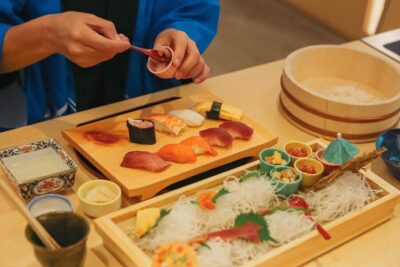 ★ 4.9Tokyo: Sushi Making Class in a Happi Coat near a Famous SpotFrom $421h 30m
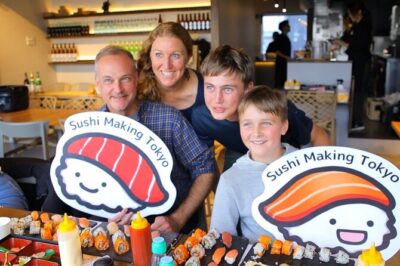 ★ 5.0Sushi Making Tokyo! Popular Maki Sushi & Japanese Sushi(+Recipe!)From $63
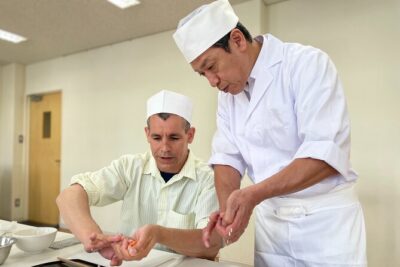 ★ 5.0Tokyo Sushi Making Class in Tsukiji with Professional ChefFrom $49
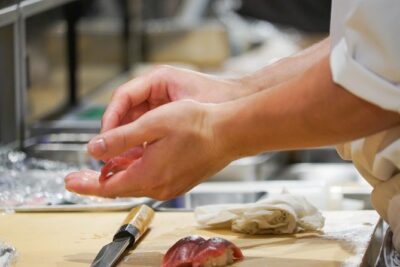 ★ 5.0Tokyo Night Foodie Tour in Shinjuku – Seasonal Sushi, Wagyu BeefFrom $111