Reviewed · JDM & CAR CULTURE
Luxury van Ride to famous car meet up spot Daikoku
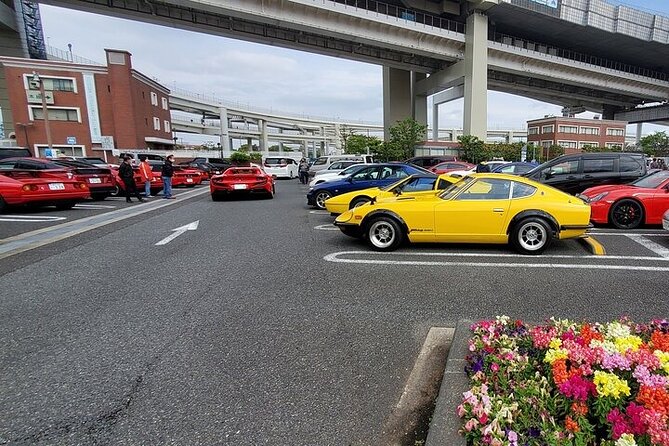
Daikoku Parking Area is one of Tokyo’s best-known meeting spots for car fans, and reaching it is part of the experience. You’ll ride through the city’s raised highways, cross the Rainbow Bridge, pause in futuristic Odaiba, and then arrive at a remote parking area filled with whatever Japan’s car scene has brought out that day.
In This Article
- Key points to know before booking
- Why Daikoku Parking Area is such a special stop
- Leaving central Tokyo in a six-person van
- Tokyo’s raised highways and the Rainbow Bridge
- A short Odaiba break and the Fuji building
- One hour or 90 minutes at Daikoku
- What you might see on a strong night
- The guide makes the transfer more useful
- Is $72.67 per person a fair price?
- Timing, meeting point, and practical planning
- Who should book this Daikoku ride?
- Final verdict: book for access, not guarantees
- FAQ
- Where does the Daikoku car meet tour start?
- Where does the activity finish?
- How long does the tour last?
- How much time is spent at Daikoku Parking Area?
- What type of vehicle is used?
- How many people can join?
- What can I see at Daikoku?
- Is the tour suitable for most people?
- Can I cancel for a refund?
I like two things here: the small group, limited to six people, and the personal service from guides such as Jeremy. I also like the honest focus on transport to Daikoku, rather than padding the outing with shopping stops or sales pitches. The main consideration is simple: the car meet is unpredictable, and your time there may be closer to one hour than the full 90 minutes listed.
Key points to know before booking
- Daikoku is the main event: Look for JDM cars, tuned vehicles, collectibles, supercars, and rare models.
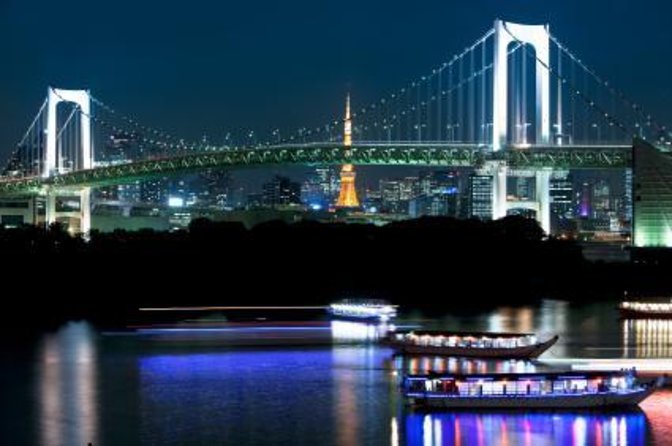
- The drive is part sightseeing tour: You’ll cross Rainbow Bridge, see Odaiba, and pass Tokyo’s bridges, monorails, and towers.
- Groups stay small: The maximum is six people, which makes conversation with the guide easier.
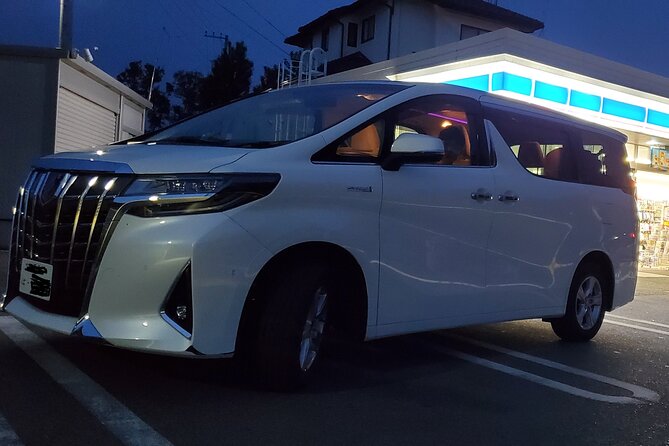
- The vehicle can vary: This booking is for a luxury van, though some outings have used a Toyota GT86 or another tuned car when arrangements allowed.
- The car count changes sharply: Weather and the day of the week can mean 50 cars, 250 cars, or very little activity.
- The price pays for access as much as comfort: Daikoku is not easy to reach by ordinary public transport, so the ride solves a real problem.
Why Daikoku Parking Area is such a special stop
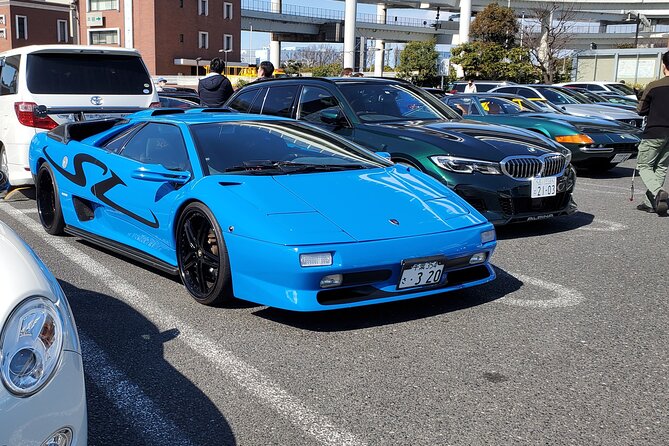
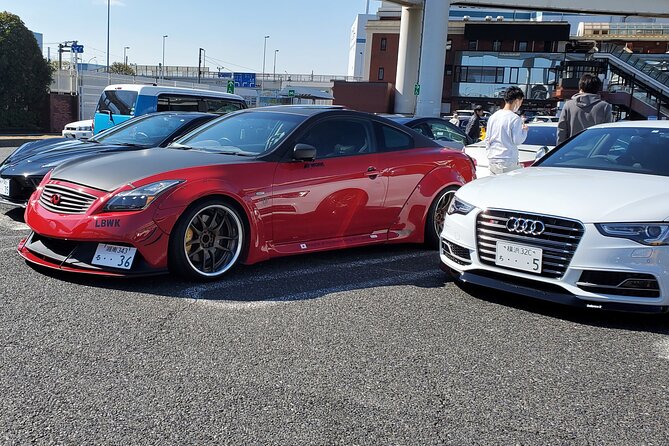
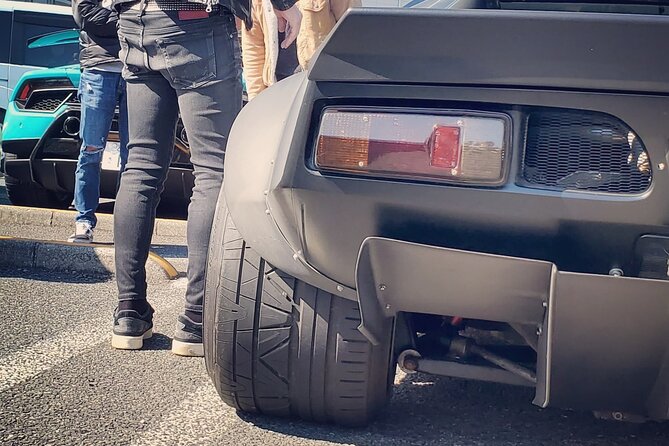
Daikoku is not a museum with a fixed collection. It is a working parking area where car owners gather, and that makes the visit exciting but uncertain. On a good night, you might see Ferraris, Lamborghinis, Nissan GT-Rs, Silvias, BMWs, American classics, and heavily modified Japanese cars lined up in the same place.
The selection changes each time. One outing may bring dozens of impressive cars, while another, especially in poor weather, may feel thin. That unpredictability is part of the appeal for serious car fans, but it is also the biggest risk in booking this activity.
You are not guaranteed a particular model, a certain number of cars, or a dramatic midnight gathering. If your main goal is to see one specific vehicle, this tour cannot promise it. If you want to watch Japanese car culture in its natural setting, the uncertainty makes the visit feel more genuine than a showroom stop.
The parking area is also far enough from central Tokyo that getting there is difficult without a private vehicle. Ordinary taxi and public transport options are not practical for the final approach. This ride gives you a direct way in and out, which is the real value of the service.
A few more Tokyo tours and experiences worth a look


Leaving central Tokyo in a six-person van
The meeting point is at 5-8 Funamachi in Shinjuku City, close to public transport. The garage location is described as easy to find once you are near it, with open doors and cars visible from the street. Still, allow extra time to locate it, since one passenger described the first meeting as stressful.
The small-group setup is a strong point. With a maximum of six people, you are not being moved in a large tour bus, and you have a better chance to ask questions about Japanese cars, Tokyo roads, or the city’s transport system. Jeremy and his team are known for keeping the mood relaxed and for answering questions during the drive.
The standard booking is a luxury van ride, not a guaranteed sports-car drive. This distinction matters. Some passengers expected a Toyota GT86 because the garage has one, only to find that the actual transfer used a van. On a few outings, the group was upgraded to an R35 GT-R or a tuned Toyota when the group size and arrangements made it possible, but you should treat that as a bonus, not part of the booking.
The van also makes sense for families and mixed-age groups. One family used the outing as a special experience for two sons, while another parent felt disappointed because the vehicle did not match the expectation of a fancy sports car. Read the description carefully and book this as comfortable private-style transport, not as a guaranteed supercar ride.
Tokyo’s raised highways and the Rainbow Bridge
The drive begins with a look at Tokyo from its network of raised expressways. You’ll weave between high-rise buildings, bridges, and monorails, seeing a side of the city that is easy to miss from the pavement.
The highlight is the crossing of Rainbow Bridge toward Odaiba. At night, the view toward Tokyo’s illuminated skyline can be striking, with the bridge itself adding a strong sense of movement to the ride. This part gives the outing more character than a simple transfer from Shinjuku to a parking lot.
I especially like this section for first-time visitors who want a short night tour of Tokyo along with their car meet. The city views also give companions who are less interested in cars something to enjoy. If every minute of your visit must be spent beside parked vehicles, though, you may see the sightseeing portion as time taken away from Daikoku.
The guide may also explain Tokyo’s road system and how the expressways are maintained. The exact amount of commentary depends on the guide and the conversation in your group, but the ride is designed to be social rather than silent.
A short Odaiba break and the Fuji building
The route includes a brief stop on Odaiba, the man-made island known for its futuristic buildings and broad waterfront setting. The listed sight is the Fuji building, a distinctive structure with a large spherical form that is easy to recognize from a distance.
This is a quick pause, not a full Odaiba tour. You’ll have time to stretch, take in the modern architecture, and enjoy the city at night before continuing to Daikoku. Do not plan on a long meal, shopping visit, or full island sightseeing session.
For many people, the stop is a useful break after leaving central Tokyo. It also gives you a second setting for photographs before the car-focused part of the evening. The route feels more rounded because you see Tokyo’s modern public spaces, not just a highway and a parking area.
One hour or 90 minutes at Daikoku
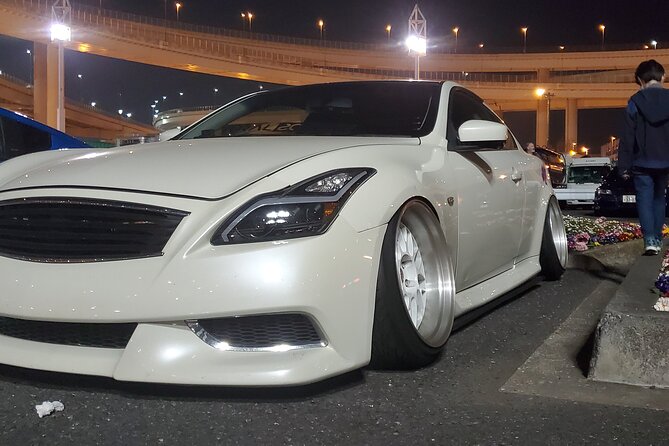
The itinerary lists 90 minutes at Daikoku Parking Area, with admission included at no extra charge. In practice, several departures have allowed about an hour, while some groups had more time when the schedule permitted it.
That difference is important. The drive can take roughly 45 minutes each way, and the total outing is usually around 2 to 3 hours. If the group arrives late, traffic builds, or the schedule is tight, your time walking through the parking area may be reduced.
One hour can be enough to see the main rows of cars, especially if the lot is compact and active. It is less satisfying when cars begin arriving just as you are preparing to leave. A passenger on a busy outing felt the allotted time was too short, while another found an hour perfectly adequate.
I would think of 60 to 90 minutes as the realistic range. If Daikoku is the central reason you came to Tokyo, ask about the expected time at the parking area before booking. If the city drive and the convenience of the transfer matter almost as much, the timing is easier to accept.
A few more Tokyo tours and experiences worth a look




What you might see on a strong night
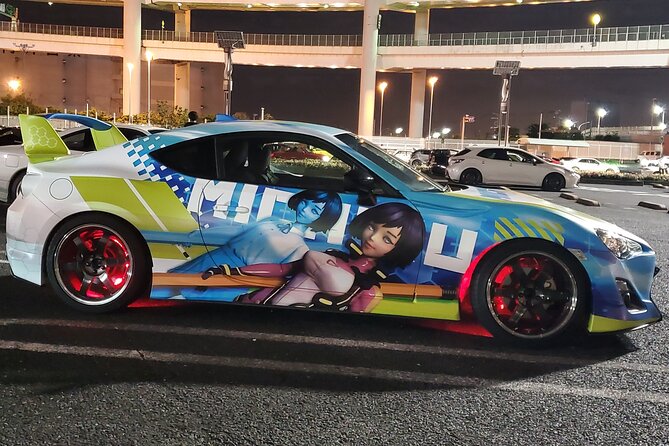
On a good-weather Sunday, the parking area can fill with a wide mix of machines. You might see multiple GT-Rs and Silvias, modified Japanese cars, European supercars, and an older American classic such as a 1970s Barracuda.
Friday evenings can also be active, even when it rains, but poor weather still makes the outcome less certain. A wet night may reduce the number of owners who bring out their special cars. The provider is clear that some days have around 50 cars and others may have 250.
That range tells you how to set your expectations. This is not a scheduled show where the same collection appears every evening. You are watching a live meeting spot, so the weather, weekday, time, and local interest all matter.
Sunday morning and Sunday daytime departures have produced strong results for some groups, but the available schedule and your own plans may point to another time. The tour operates in conditions that can change quickly, so avoid promising children or companions a particular car.
The guide makes the transfer more useful
The strongest part of the service is the personal attention. Jeremy is described as friendly, easy to talk with, and deeply familiar with Japanese car culture. He also answers broader questions about Tokyo roads and train systems, which can make the drive useful even when the meet is quiet.
That personal contact matters because Daikoku itself is largely self-guided. Once you arrive, you walk around and look at the cars on your own. The guide gets you there, explains what you are seeing when asked, and makes the return trip simple.
There are no planned advertisements, shopping stops, or sales pitches. The service stays focused on getting you to the meet and back. That is a welcome feature for anyone who wants a clean, direct outing.
The experience can be particularly good for a parent traveling with a teenage car fan, provided the family understands that the ride may be in a van. It also works for solo visitors, couples, and small groups who would rather talk cars with a local guide than arrange a difficult journey independently.
Is $72.67 per person a fair price?
At the listed price of $72.67 per person, this is reasonable for a small-group transfer to a place that is awkward to reach. You are paying for the vehicle, the driver, the city route, the Rainbow Bridge crossing, the Odaiba stop, and the convenience of returning to the same meeting point.
The value is strongest when you have four to six people sharing the ride and when Daikoku has a good turnout. A quiet evening can make the price feel high because much of the activity becomes transportation rather than a long car show.
Some bookings have been priced higher depending on the departure time. One passenger questioned a more expensive 3 p.m. option, especially after finding that the ride was in a van rather than a sports car. Check the exact vehicle description and departure price shown for your date before paying.
Compared with trying to arrange your own access, the tour removes a major logistical problem. You do not have to work out the remote route, find a driver willing to go there, or worry about getting back after the visit. For a car enthusiast, that convenience can justify the cost.
Timing, meeting point, and practical planning
The activity starts and ends at 5-8 Funamachi in Shinjuku City. It lasts approximately 2 to 3 hours, and the return is to the original meeting point rather than a different station or hotel.
Plan your evening around that return. One passenger made it back in time for the last train, but noted that Tokyo trains stop running after midnight for a period. Do not assume you can extend the evening indefinitely or ask for a different drop-off point.
The meeting point is near public transportation and within an easy walk of Akebonobashi or Yotsuya-Sanchome subway stations. A small street with eateries is nearby, which can be useful if you want food before or after the ride.
Confirmation arrives at booking. Service animals are allowed, and most people can participate. The group maximum is six, which helps keep the vehicle comfortable and the conversation personal.
Free cancellation is available up to 24 hours before the start time. Changes made inside that 24-hour window are not accepted, and late cancellations are not refunded. Because the outing depends on good weather and a minimum number of participants, a provider cancellation offers a new date or a full refund.
Who should book this Daikoku ride?
You should book it if you care about Japanese car culture and want a practical way to reach Daikoku. It is also a good fit if you want a little Tokyo night sightseeing along the way, prefer a small group, and value an approachable guide.
Families can enjoy it, but explain the format clearly to young car fans. The vehicle is normally a van, the meet is not guaranteed to be full, and the stop may last only about an hour. Those details prevent the most common disappointment.
This is less suitable if you want a guaranteed sports-car ride, a fixed car lineup, or several hours to inspect every vehicle. It is also not ideal if the only reason you are booking is the possibility of seeing one exact model.
Final verdict: book for access, not guarantees
I would book this tour if Daikoku is high on your Tokyo wish list and you do not have a practical way to reach it. The small group, friendly guidance, city views, and direct return make it a useful package, and the price is fair when the parking area is active.
Go in with the right picture: you are buying a comfortable route to a live car meet, not admission to a scheduled auto show. Choose good weather when possible, confirm that your booking says luxury van rather than expecting a GT86, and ask how much time is planned at Daikoku. If you can accept those limits, this is one of the simplest ways to add an unusual car-culture night to a Tokyo trip.
FAQ
Where does the Daikoku car meet tour start?
The meeting point is 5-8 Funamachi, Shinjuku City, Tokyo 160-0006, Japan.
Where does the activity finish?
The ride ends back at the original meeting point in Shinjuku City.
How long does the tour last?
The activity takes approximately 2 to 3 hours.
How much time is spent at Daikoku Parking Area?
The planned stop is listed as 90 minutes, although some departures have provided about one hour depending on timing and conditions.
What type of vehicle is used?
The booking is for a luxury van. A Toyota GT86, R35 GT-R, or another tuned car may be used on some outings, but those vehicles are not guaranteed.
How many people can join?
The tour has a maximum of six participants.
What can I see at Daikoku?
You might see Japanese domestic cars, tuned vehicles, collectibles, supercars, GT-Rs, Silvias, European cars, and classic American cars. The selection changes by day and weather.
Is the tour suitable for most people?
Most people can participate, and service animals are allowed. The activity is near public transportation, with the meeting point within walking distance of subway stations.
Can I cancel for a refund?
You can cancel at least 24 hours before the start time for a full refund. Cancellations or changes made less than 24 hours before the activity are not accepted, and poor weather or insufficient numbers may lead to a new date or full refund.
More VIP Experiences in Tokyo
More JDM & Car Culture in Tokyo

More tours in Tokyo we've reviewed












JDM & Car Culture, compared.
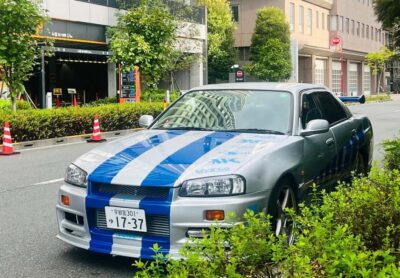 ★ 4.8Tokyo: Fast & Furious Tokyo Drift 3 Experience (Kaila Yu SP)From $157
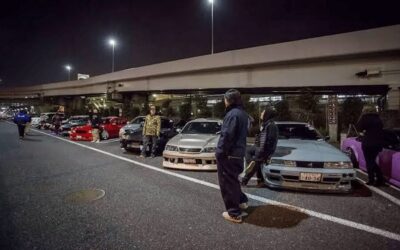 ★ 4.8Tokyo: FAST&FURIOUS EXPERIENCE Daikoku Tokyo Car ClubFrom $157
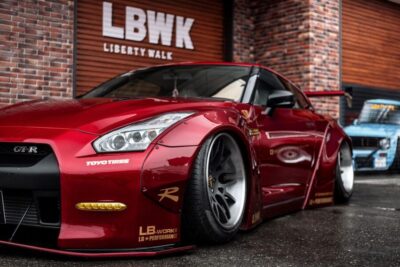 ★ 4.8Tokyo Drift: GT-R Car Club R35 Liberty Walk Daikoku meetingFrom $240
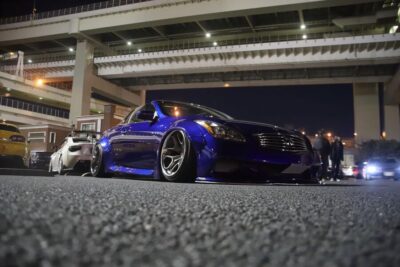 ★ 4.8Tokyo: Daikoku JDM Fast Furious Drift Style Car ExperienceFrom $123
 ★ 4.8Tokyo Drift: GO Daikoku Car Meet R34 Skyline Car ClubFrom $246
 ★ 4.7Tokyo Drift: Daikoku PA Supreme Car Experience 大黒PAFrom $583 hours