Reviewed · JDM & CAR CULTURE
Tokyo: FAST&FURIOUS EXPERIENCE Daikoku Tokyo Car Club
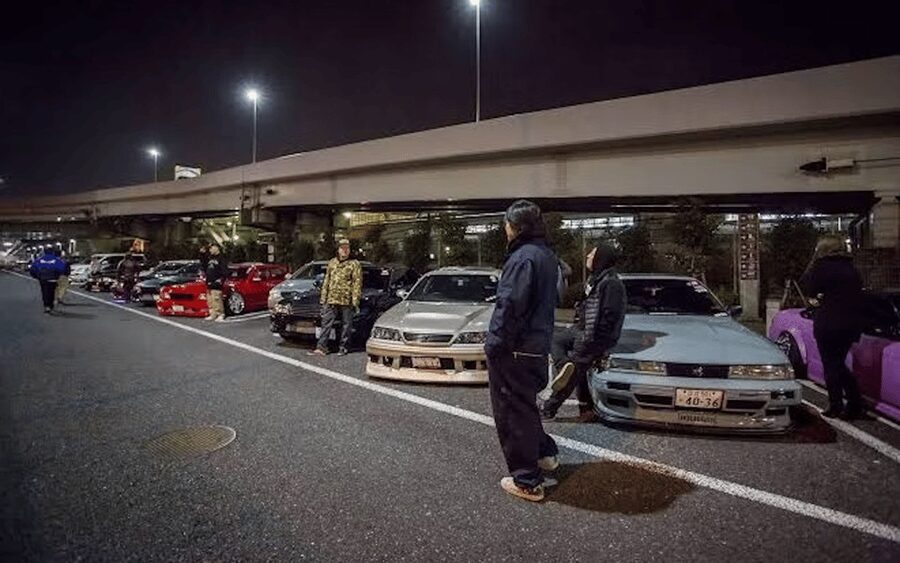
Tokyo Car Club turns a night drive into a full-on Japanese car culture outing. You ride in a sports car as part of a large convoy, pass Tokyo Tower and Rainbow Bridge, and head for Daikoku Parking Area, the famous meeting place for tuned cars. I like the mix of car culture and sightseeing, and I like that guides such as Kai, Timi, Mia, Yuto, and Sho are assigned to real enthusiast cars rather than generic tour vehicles. The main catch is that you do not choose the exact car, and Daikoku can close without notice.
In This Article
- Key points to know before booking
- Why this feels different from a normal Tokyo tour
- Meeting at Akihabara UDX after dark
- Riding in the sports car convoy
- Tokyo Tower, Rainbow Bridge, and the C1 route
- Arriving at Daikoku Parking Area
- Photography and the club membership card
- What $157 gets you
- Who should book this night ride
- Practical advice for making the night better
- FAQ
- Where does the Tokyo Car Club experience start?
- What time does the experience start?
- Is hotel pickup or drop-off included?
- Do I drive the sports car?
- What happens if Daikoku Parking Area is closed?
- What should I bring, and who can join?
- Should you book it?
The four-hour outing costs $157 per person. That is a serious price for a car ride, but it includes the club membership, convoy ride, photography, and guided stops. You should book this for the car culture and the group atmosphere, not as a standard Tokyo sightseeing tour or a chance to drive a supercar yourself.
Key points to know before booking
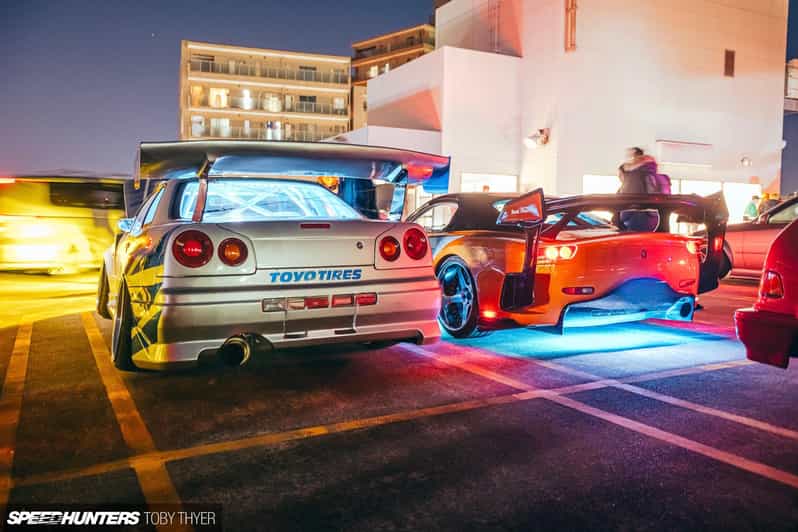
- Ride in a real convoy: You travel with a large lineup of club cars, including Honda Civic FK8s, Toyota 86s, Nissan Silvia S15s, Toyota Chasers, Dodge Challengers, Ford Mustangs, and, at times, Nissan Skyline R34s.
- Daikoku PA is the main prize: This Yokohama parking area is a famous gathering place for Japanese and international car fans, but it may close without warning.
- The ride is shared: You are a passenger in an assigned sports car. You do not drive the car, and the exact model depends on availability.
- Nighttime Tokyo provides the backdrop: The route includes views of Tokyo Tower, Rainbow Bridge, the C1 expressway, Wangan roads, and other city stops.
- Photos are included: Guides provide complimentary photography at designated locations, useful if you want more than quick phone snapshots.
- Plan for a fixed return: The meeting point is in front of Tully’s Coffee at Akihabara UDX, and the stated end point is back at that meeting point. Hotel drop-off is not provided.
Why this feels different from a normal Tokyo tour
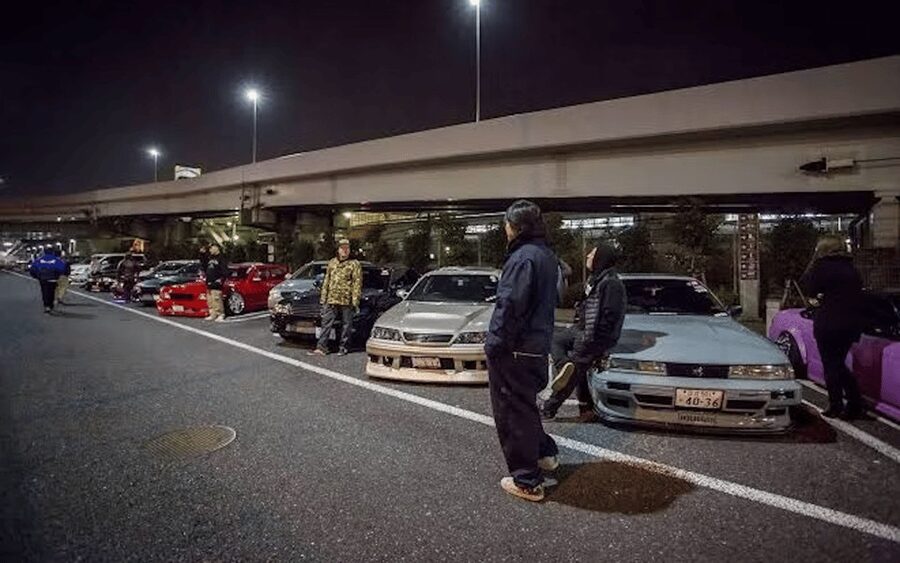
Most Tokyo sightseeing tours keep you on foot or inside a bus. This one makes the journey the attraction. You are not simply being taken to Daikoku Parking Area to look at cars. You join the convoy and become part of the evening’s moving display.
That difference matters. The sound, lights, bridges, tunnels, and changing lineup of cars are central to the outing. The appeal is less about checking off monuments and more about seeing Tokyo through the eyes of people who care about modified cars, JDM models, American muscle, and the roads that connect the city with Yokohama.
The club promotes the largest convoy available for this type of experience, with every car belonging to its own group. The number of cars can vary, but the format is built around traveling together rather than arriving in a single vehicle. That gives the night a social feel. You meet other car fans, compare vehicles, and watch the convoy gather at stops.
You do not need to be an expert. The guides speak English and Japanese, and the team includes people from Japan, Brazil, Germany, and France. That mix suits an international group. You can ask basic questions about a Nissan Silvia or Toyota Chaser without feeling out of place.
If you're still narrowing it down, here are other tours in Chiyoda City we've reviewed.
Meeting at Akihabara UDX after dark
The meeting point is in front of Tully’s Coffee at Akihabara UDX. Akihabara is an easy place to reach by train and gives you plenty to see before the scheduled departure, especially if you arrive early.
The start time depends on the day. From Monday through Thursday, the experience starts at 7:30 PM. From Friday through Sunday, it starts at 6 PM. You are expected to arrive on time, with only a 10-minute tolerance, and late arrivals are not refunded.
Bring your passport. You are also asked to provide a hotel or drop-off address when booking, along with an Instagram account, WhatsApp contact, or registered phone number for communication. This may sound odd since hotel transportation is not included, but it helps the operator contact you and record your booking information.
The outing is shared, so do not expect a private guide or a vehicle reserved entirely for your party. The atmosphere depends partly on the size of the group and the number of available club cars that night.
Riding in the sports car convoy
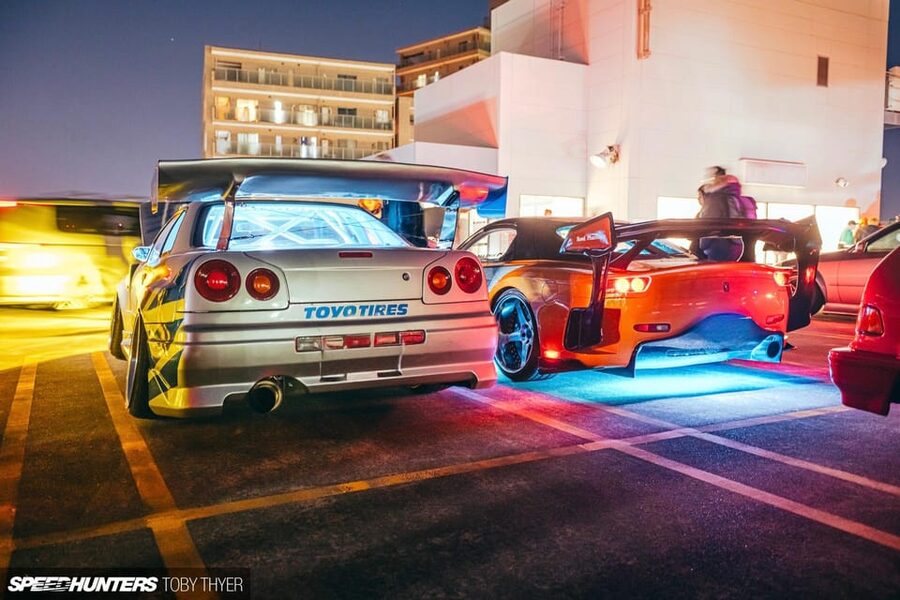
The most exciting part begins once the cars leave Akihabara. You ride as a passenger in one of the club’s sports cars and join the group as it heads through Tokyo toward the expressways and Yokohama.
The vehicle list gives you a sense of the range. You might find yourself in a Honda Civic FK8, Toyota 86, Nissan Silvia S15, Toyota Chaser, Dodge Challenger, or Ford Mustang. Some departures include particularly sought-after cars, such as a Nissan Skyline R34. One guide named Sho has taken passengers in a 1999 R34 Skyline, while Kai is associated with an R34 that passengers have considered a highlight of the night.
Other named guides include Mia, who drives a Challenger, and Yuto, who has hosted passengers in a JDM car. Timi has also driven a Skyline and is known for helping organize the evening. The car and driver you receive are not guaranteed, so do not book solely for one particular model or guide.
The ride is meant to feel energetic, but the guides are still responsible for getting you through Tokyo safely. Some participants have singled out drivers such as Kai, Yuto, Mia, and Takagi for being friendly, careful, and clear in their explanations. That balance matters. A loud engine and quick expressway ride are fun, but a confident driver makes the experience much more comfortable.
Tall passengers should think carefully before booking. Sports cars are not spacious, and legroom can be limited. The activity is also not suitable for children under seven, people with back problems, or people with heart problems. You should treat the ride as a passenger activity, not a driving lesson or racing session.
Tokyo Tower, Rainbow Bridge, and the C1 route
The sightseeing portion keeps the evening from becoming a simple trip to a parking area. The route includes views of Tokyo Tower, Rainbow Bridge, the C1 expressway, and Wangan roads.
Tokyo Tower is especially effective after dark, when its lights give the photo stops a clear Tokyo identity. You do not receive admission to the tower, so this is an exterior view and photography opportunity rather than a tower visit.
Rainbow Bridge adds a second kind of scenery. From the convoy, you see the city and waterway from the road rather than from a viewing platform. The effect is brief, but it helps explain why the route is part sightseeing tour and part automotive outing.
The C1 and Wangan roads are important to the car culture side of the night. They are the roads that make the setting feel like Tokyo rather than an ordinary car meet in a parking lot. Tunnels, bridges, expressway lighting, and the sound of several tuned cars moving together create the cinematic mood that attracts people to this activity.
You should keep your expectations sensible. The convoy is not a legal street-racing event, and you are not promised a particular speed or stunt. Traffic, weather, police activity, and road conditions can change the route. The fun comes from the cars, the setting, and the shared ride, not from reckless driving.
Arriving at Daikoku Parking Area
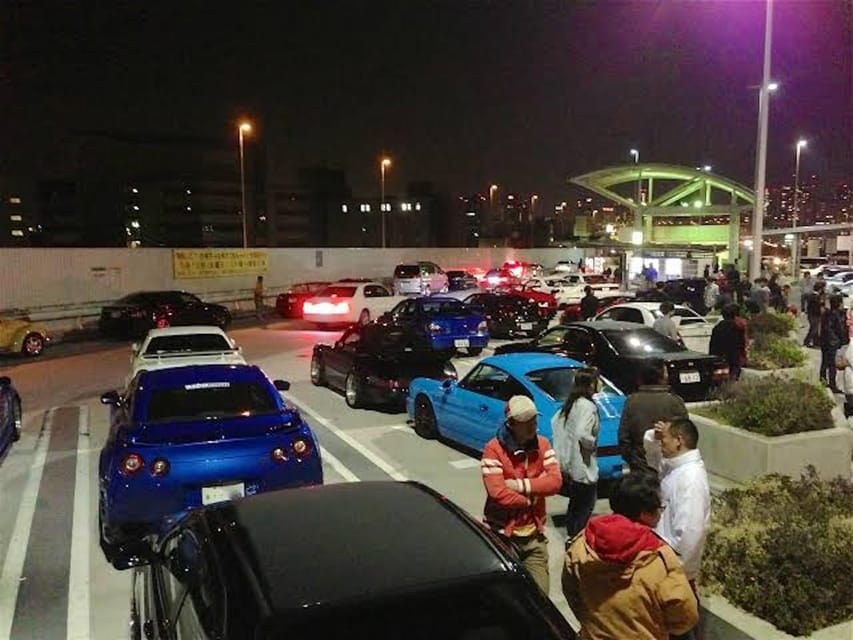
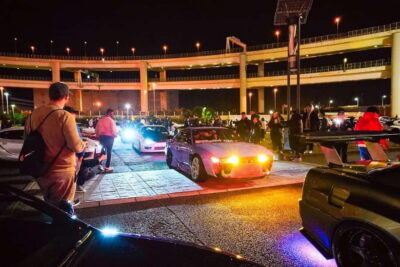
Daikoku Parking Area is the centerpiece. Located in the Yokohama area, it is widely known as a gathering place for Japanese performance cars, tuned vehicles, classic models, and American muscle.
The club takes you there as part of its convoy, which is more memorable than arriving alone by taxi. Once there, you have time to look at the cars, talk with the guides, take photographs, and see what has gathered that night. The exact selection is never fixed. Some evenings may bring a strong collection of JDM cars, while another may offer a different mix.
This uncertainty is part of the appeal, but it is also the biggest risk. Daikoku can close without prior notice. If that happens, the guides visit other car meeting spots instead. The number of cars you see is also outside the operator’s control, and the stated conditions say these changes are not refundable.
That policy deserves attention. If your only reason for booking is to see Daikoku itself, you are accepting a real possibility that the main stop will change. If you value the convoy, the guides, the city drive, and the club atmosphere just as much, the risk is easier to accept.
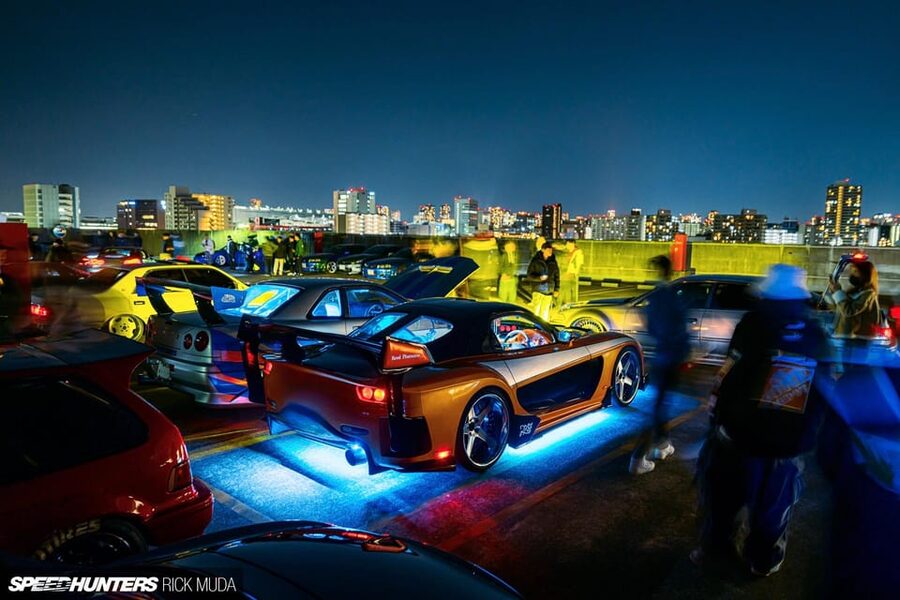
At Daikoku, the club’s own cars also become part of the display. That gives you something to photograph even if the wider parking area is quieter than expected. You can often learn more by asking the driver about the car you are riding in, rather than trying to identify every vehicle in the lot.
Photography and the club membership card
Photography is included at key stops. The guides take pictures for you, which is useful when you want images with the car, the city lights, or Tokyo Tower in the background.
The photo service is not described as a full private photo shoot, so think of it as a helpful add-on during the fixed route. You still need to bring your own phone or camera if you want additional pictures throughout the evening. A passenger with a strong interest in photography can have a good time here, especially when the convoy gathers and several different cars are parked together.
The official Tokyo Car Club membership card is another part of the concept. Your payment is presented as membership to the club, with the guided ride offered to members. In practical terms, the card is a souvenir and a way to connect the evening to the club community.
The wording around transportation is important. This is not sold as a taxi service, and hotel pickup or hotel drop-off is not included. The route is fixed, and the group stays together. After the outing, you return to the stated meeting point at Akihabara UDX, where you can continue by public transport or make your own way elsewhere.
Some descriptions also refer to finishing in central Tokyo or Shibuya, but the meeting information gives Akihabara as both the start and end point. I would confirm the final return location before departure, especially if you have late-night plans.
What $157 gets you
At $157, this is not a cheap way to get from one part of Tokyo to another. The value comes from access and format.
You are paying for a passenger seat in a sports car, the large convoy, a guided route, Daikoku access when open, designated photo stops, and the membership card. There are no extra admission charges for the club portion, though Tokyo Tower admission is not included because you do not enter it.
I think the price makes sense for someone who would otherwise spend heavily on a private car hire, a specialist car meet, or several separate activities. It is less convincing for someone who only wants a quick look at Tokyo’s skyline or a ride in one particular model.
The exact car is not guaranteed. That is the key value question. If you need an R34 Skyline, a Challenger, or a Silvia specifically, you should contact the operator before booking rather than assume the car shown in promotional material will be yours.
The high satisfaction level attached to the activity reflects the parts that consistently make the night work: friendly drivers, exciting cars, well-managed meeting points, good photos, and the feeling of moving through Tokyo as a group. The weak point is usually not the staff or the cars. It is the uncertainty around Daikoku closures, vehicle assignment, weather, and the number of cars present.
Who should book this night ride
I would recommend it most strongly to:
- JDM fans who want to see and ride in modified Japanese cars.
- Parents booking an activity with an older child who already loves cars.
- Photographers interested in Tokyo at night and automotive subjects.
- Visitors who have already seen the main temples, shopping districts, and observation decks.
- Anyone who values meeting enthusiasts and joining a group rather than taking a private tour.
It also suits beginners. You do not need to know the difference between every Skyline generation or understand tuning culture before you arrive. The guides can explain the cars and the local scene in English or Japanese.
I would be more cautious if you dislike shared activities, need hotel transport, have back or heart problems, or expect a spacious vehicle. You should also skip it if your idea of a car tour means driving yourself. This is a ride-along experience.
Practical advice for making the night better
Arrive early at Akihabara UDX. The 10-minute late-arrival tolerance is strict, and the group cannot wait indefinitely for one passenger.
Wear comfortable clothes and bring your passport. If you are tall, ask about seating before the cars are assigned. Small sports-car cabins can become uncomfortable over four hours, especially if you are seated in the back.
Keep your phone charged. You will want it for pictures, communication, and navigation after the activity returns to Akihabara. Share the requested contact information so the operator can reach you if meeting details change.
Treat the route as weather-dependent. Rain does not automatically ruin the night, and wet roads can make Tokyo’s lights look striking in photographs. Still, weather may affect the route and the stops.
If Daikoku is open, use your time there well. Look at the club cars, ask your driver about the vehicle, and take photographs before wandering off. The group follows a fixed schedule, so do not assume you can stay behind.
Finally, do not chase the most famous car. A good driver can make an ordinary model memorable, while a dream car can disappoint if the seating is cramped or the stop is short. The complete night matters more than the badge on the hood.
FAQ
Where does the Tokyo Car Club experience start?
Meet your guide in front of Tully’s Coffee at Akihabara UDX. The stated end point is back at the original meeting point.
What time does the experience start?
From Monday through Thursday, it starts at 7:30 PM. From Friday through Sunday, it starts at 6 PM. You should arrive on time, with a 10-minute tolerance for late arrivals.
Is hotel pickup or drop-off included?
No. The activity follows a fixed route and does not provide hotel pickup, hotel drop-off, or taxi transportation. You are asked to provide your hotel or drop-off address when booking.
Do I drive the sports car?
No. You ride as a passenger in an assigned club sports car. The exact vehicle depends on availability and is not guaranteed.
What happens if Daikoku Parking Area is closed?
The guides visit other car meeting spots if Daikoku closes. The closure can happen without prior notice, and changes caused by closures, weather, traffic, or the number of cars present are not refundable.
What should I bring, and who can join?
Bring your passport. The activity is not suitable for children under seven, people with back problems, or people with heart problems. Tall people can join, but sports cars may not provide much space.
Should you book it?
Book this if you want the full JDM night: a sports-car ride, a large convoy, Tokyo expressways, city lights, car meets, and time with enthusiastic guides. The strongest part is the combination of movement and access. You are not just looking at Japanese car culture from the sidelines.
At $157, it is best viewed as a specialist experience rather than a general Tokyo tour. I would book it for the convoy and the atmosphere, while accepting that the car, weather, and Daikoku stop can change. If that sounds like a fair trade for a Fast and Furious-style night through Tokyo, this is one of the city’s more memorable ways to spend four hours.
More tours in Chiyoda City we've reviewed
JDM & Car Culture, compared.
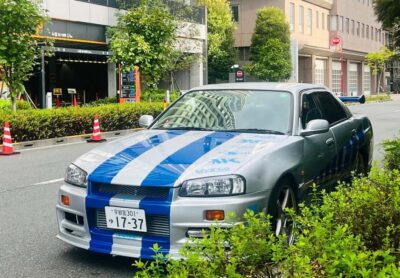 ★ 4.8Tokyo: Fast & Furious Tokyo Drift 3 Experience (Kaila Yu SP)From $157
 ★ 4.8Tokyo Drift: GT-R Car Club R35 Liberty Walk Daikoku meetingFrom $240
 ★ 4.8Tokyo: Daikoku JDM Fast Furious Drift Style Car ExperienceFrom $123
 ★ 4.8Tokyo Drift: GO Daikoku Car Meet R34 Skyline Car ClubFrom $246
 ★ 4.7Tokyo Drift: Daikoku PA Supreme Car Experience 大黒PAFrom $583 hours
 ★ 4.9Tokyo: Legendary JDM CAR Daikoku Underground MeetupFrom $824 hours