Reviewed · WORKSHOPS
Tokyo: Traditional foot-kneaded Udon noodles class
Making udon with your feet sounds odd until you learn it is a traditional part of preparing Musashino Udon. In Izumi’s ordinary Japanese home in green, suburban West Tokyo, you mix the dough, cover it, and carefully knead it underfoot before rolling and cutting your own noodles. It is hands-on, unusual, and genuinely fun.
In This Article
- Key points at a glance
- Why foot-kneading makes this udon class special
- Inside Izumi’s West Tokyo kitchen
- The 150-minute cooking sequence
- Matcha and wagashi slow the pace
- What the $70 price includes
- Getting to the meeting point
- Who will enjoy this most
- What the strongest praise gets right
- Practical booking advice
- Should you book this udon class?
- FAQ
- How long does the udon class last?
- Where does the class take place?
- How do I get to the venue?
- Is transportation included in the price?
- Is the class taught in English?
- Can vegetarians and vegans take the class?
- What should I do if I have an allergy?
I like two things especially: the small group size, limited to four people, and the meal you build from scratch. You also learn dashi, the stock that gives many Japanese dishes their depth, then sit down to cold noodles with hot pork dipping soup and finish with matcha and wagashi. The main consideration is the location. This is not central Tokyo, and you must pay for public transport to Higashimurayama Station, though the host gives you a ride from there.
Key points at a glance
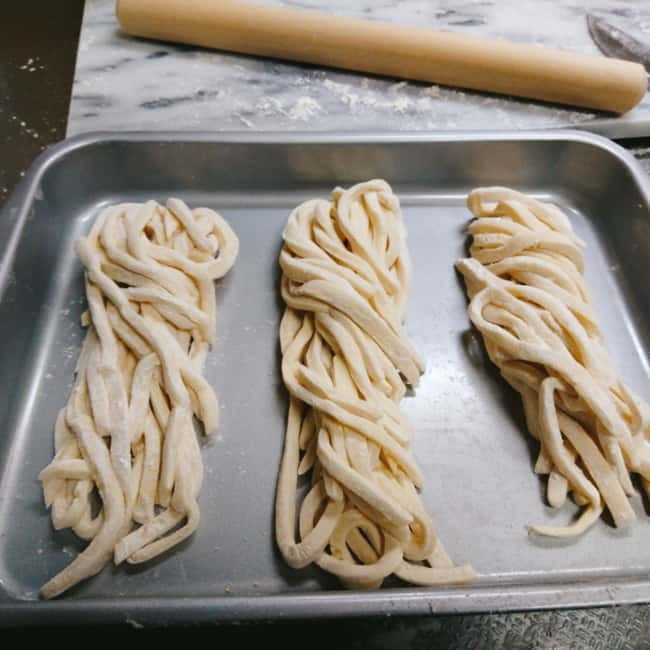
- Foot-kneaded Musashino Udon: Make your own dough, step on it, roll it thin, and cut it with a special udon knife.
- A real home kitchen: The class takes place in Izumi’s house, not a large cooking school.
- Dashi lesson included: Learn the basic stock used throughout Japanese cooking before making the dipping soup.
- A complete meal: Eat fresh cold noodles with hot pork soup, then enjoy matcha and wagashi.
- Limited to four people: The small class leaves room for help and conversation.
- Vegetarian and vegan choices: Ask in advance if you cannot eat pork or other ingredients.
Why foot-kneading makes this udon class special
Musashino Udon comes from the area west of central Tokyo, where wheat farming was once common. Local udon has been made here for about four centuries, so this is not simply a generic noodle workshop moved into a suburban house. The dough reflects a food tradition tied to the land around Musashino.
The foot-kneading is the feature you will remember. After making the dough, you step on it to work it into a smoother, more workable mass. It is practical, but it also breaks the ice quickly. You are not standing politely behind a counter watching someone else cook. You are part of the process, and the slightly comic sight of people making noodles with their feet gives the class its easygoing mood.
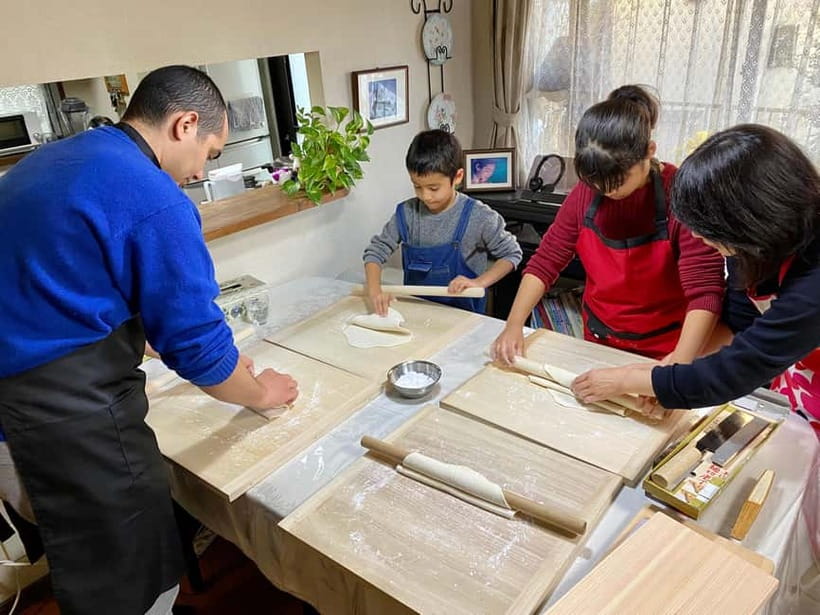
You use the traditional tools supplied for the lesson: a large wooden kneading board, a long rolling pin, and a large bowl. Each person makes their own udon, so the class gives you a clear sense of how flour, water, pressure, and cutting turn into a meal.
The unusual method also has a useful lesson behind it. Udon dough needs firm handling, and the foot-kneading stage shows you how much work goes into the springy texture of a good noodle. You do not need to arrive with cooking experience. One first-time cook described the process as clear and surprisingly calming, which is a fair way to think about the rhythm of stepping, rolling, and cutting.
A few more Tokyo tours and experiences worth a look

Inside Izumi’s West Tokyo kitchen
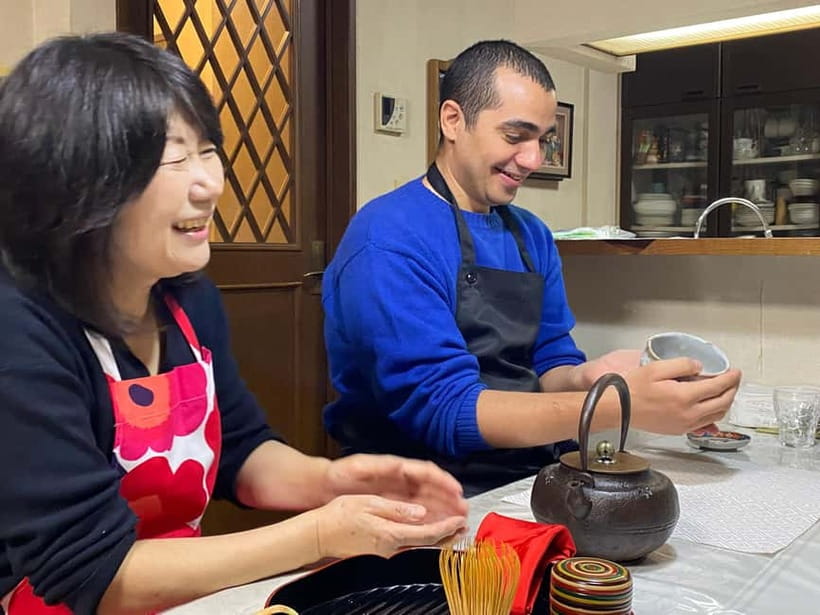
The setting is part of the appeal. You cook in Izumi’s own home in Musashino, a leafy suburb west of Tokyo, rather than in a polished studio designed for large groups. That makes the experience feel closer to being invited into everyday Japanese life.
The class is led in English and Japanese. Izumi is not only the person guiding your hands through the recipe. She also shares stories about udon, her family, and the local community. The atmosphere can be lively, with music ranging from Queen to Japanese singer Fuji Kaze, so do not expect a silent or formal cooking lesson.
The group limit of four matters. With only a few people, you can get help while rolling the dough or cutting the noodles, and you have a better chance to ask questions about ingredients and technique. It also means the social side feels natural rather than forced.
That small scale comes with one tradeoff. A home class has less of the polished, standardized feel you might find at a commercial cooking school. If you want a formal demonstration room, many stations, or a long list of dishes, this is not the right format. If you want a personal lesson with a local host, it is a strong fit.
The 150-minute cooking sequence
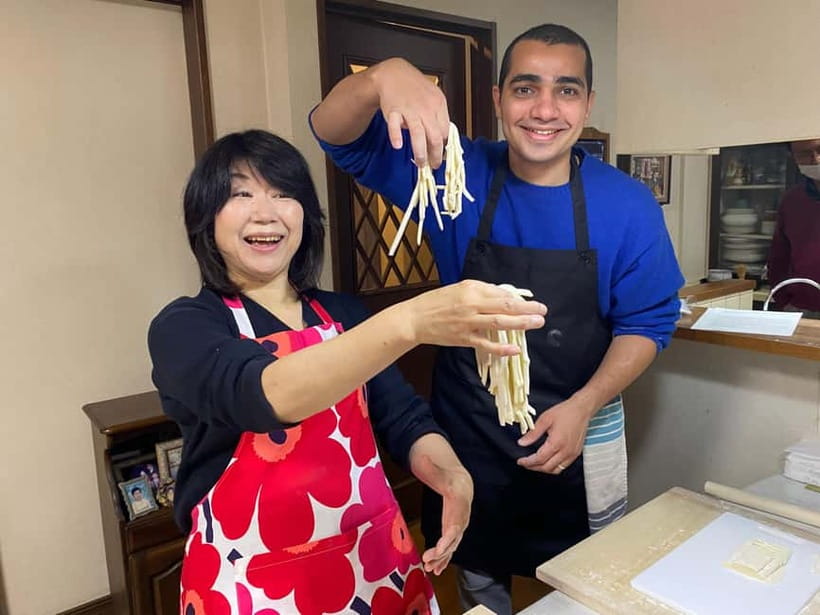
The full experience lasts 150 minutes, or two and a half hours. That is enough time to make the noodles without rushing, prepare the soup, eat, and enjoy the tea portion afterward.
You begin with the udon dough. Once it is mixed, you move to the foot-kneading stage. This is the most playful part of the class, but it is also where the dough develops the texture needed for Musashino Udon.
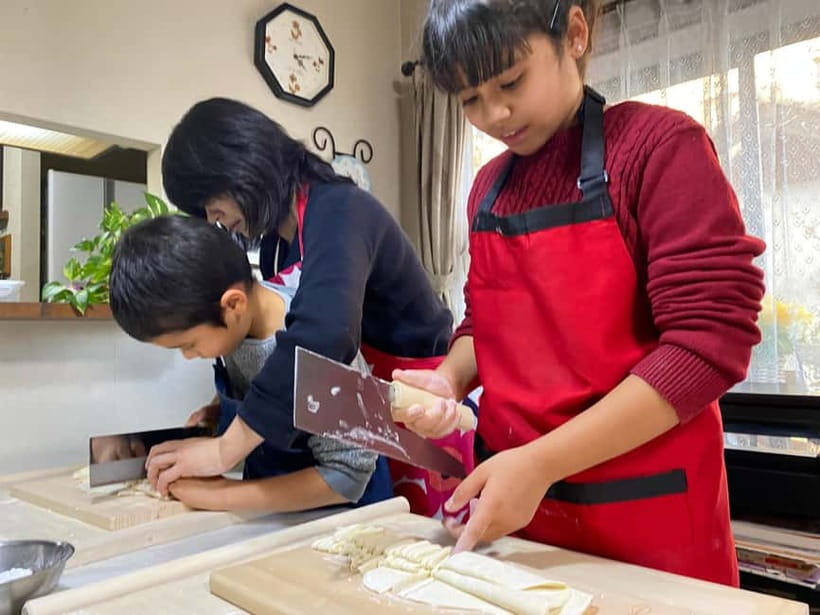
Next comes the rolling. You work the dough into a broad sheet using a long rolling pin. This takes more control than simply flattening a small piece of pastry, and the class gives you the chance to see how the thickness changes as you work.
You then cut the sheet into noodles with a special udon knife. Your cuts may not all be identical, and that is part of the charm. Fresh noodles made by your own hands do not need factory precision to taste good.
While the noodles are prepared, you learn how to make dashi. This stock is one of the foundations of Japanese cooking, and learning it gives the class more value than a simple make-and-eat activity. Dashi appears in many Japanese soups and sauces, so the technique can help you understand other dishes you encounter during your trip.
The dashi becomes the base for a pork soup commonly served as a dipping sauce for the noodles. The finished meal plays with contrast: cool, freshly made udon in one bowl and a hot, savory pork soup in another. You dip the noodles into the soup as you eat, rather than serving them submerged in a single broth.
That contrast is important. The chilled noodles let you notice their texture, while the hot soup brings salt, meat, and dashi flavor. Because you have made both parts yourself, lunch feels like the result of a complete cooking lesson rather than a snack added at the end.
Matcha and wagashi slow the pace
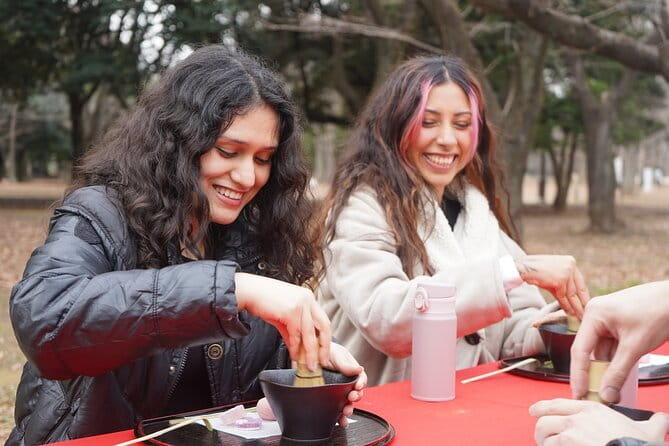
After the udon meal, the class shifts from active cooking to a casual Japanese tea ceremony. You prepare or enjoy matcha and pair it with wagashi, a traditional Japanese sweet.
This is not presented as a highly formal ceremony. The casual format suits the rest of the afternoon, giving you time to sit, taste the tea, and let the energy of the noodle-making settle. It also adds a second side of Japanese food culture: udon shows everyday cooking, while matcha and wagashi bring in a quieter custom.
I like this ending because it gives the class a proper shape. You begin with flour and physical work, eat a substantial meal, then finish with something small and calm. If you have already visited temples and seen tea presented in a formal setting, this home version offers a more relaxed counterpoint.
What the $70 price includes
At $70 per person, the class costs more than simply ordering a bowl of udon. The price makes sense if you value the lesson and the setting, not just the food.
Your fee covers all ingredients, kitchenware, an apron, recipes, the matcha experience, and pickup at the meeting point. You also receive a full 150-minute activity led in a group of no more than four people.
That package removes several small costs and decisions. You do not need to buy ingredients, find the right rolling tools, or work out how to recreate the process while standing in a restaurant kitchen. The recipe gives you something practical to take home, although the information provided does not specify whether it is printed or digital.
The pickup is from Higashimurayama Station to the home venue. Public transportation to the station is not included, so build that fare into your budget. The station connection is also worth planning carefully because the home is in West Tokyo rather than in the main sightseeing core.
For me, the value is strongest for people who want a personal food experience and have enough time to travel outside central Tokyo. If you are counting every dollar and only want to eat noodles, spend less at a restaurant. If you want to learn, cook, and meet an English-speaking local host, the price is easier to justify.





Getting to the meeting point
The class does not begin with pickup from your hotel. You make your own way to Higashimurayama Station, then Izumi gives you a ride to the venue.
The supplied details do not state the exact pickup time, so check the confirmed booking information and allow enough time to reach the station. Since this is a small home-based activity, being late could affect the start more than it would on a large bus tour.
The trip to West Tokyo is part of the experience. You trade central Tokyo’s crowded sightseeing streets for a greener suburban setting with a strong local connection to wheat and udon. I would schedule the class on a day when you do not have a tightly packed list of major attractions elsewhere in the city.
Who will enjoy this most
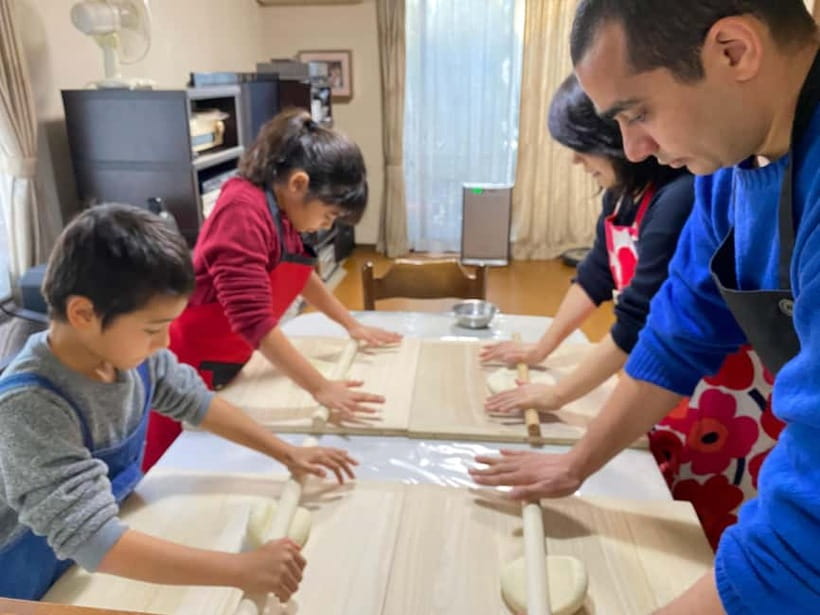
This is a good choice for food-minded visitors, first-time cooking students, couples, families, and anyone who wants a break from Tokyo’s standard sightseeing circuit. The foot-kneading makes it especially suitable for people who prefer doing something active rather than watching a demonstration.
You do not need to be an experienced cook. The steps are taught as you go, and the small group gives you a better chance to receive help. The class also works well for people curious about the difference between homemade and restaurant udon, because you handle every stage from dough to bowl.
It may be less suitable if you dislike being in a private home, cannot stand for parts of a cooking session, or want a formal tea ceremony. The supplied information does not give accessibility details, so ask before booking if you have mobility needs.
Vegetarians and vegans can request an alternative lesson. If you have allergies or cannot eat certain ingredients, tell the host in advance. Do not wait until you arrive, since the soup and other preparations may need to be adjusted before the class begins.
What the strongest praise gets right
The most consistent strengths are Izumi’s warm teaching style, the laughter around foot-kneading, and the quality of the finished noodles. The class seems to work because it combines clear instruction with a personal host who is happy to share stories.
One particularly useful detail is that the experience suits a complete beginner. The steps are not treated as a test, and the fun comes from learning together. The music and informal home setting add to that relaxed tone, though your own group will shape the mood on the day.
The food is the final proof of the lesson. Fresh udon has a texture that is hard to understand from a menu description, and eating it with the pork dipping soup lets you notice why this local style is worth seeking out. You might leave with uneven noodles, but the meal should still feel like a satisfying reward for the work.
The current rating is 5 out of 5 from five reviews, which is encouraging but still a small sample. I would treat it as a sign of strong early satisfaction rather than a guarantee that every group will have the same experience.
Practical booking advice
The activity offers free cancellation up to 24 hours in advance for a full refund. You can also reserve now and pay later, which helps if your Tokyo schedule is still changing.
Check availability for starting times, then plan your route to Higashimurayama Station. Bring any allergy or dietary information when you book, and specifically request the vegetarian or vegan option if needed.
Wear something suitable for a home cooking session. An apron is included, but the class involves dough, rolling, cutting, and foot-kneading, so comfortable clothing makes sense. The provided information does not list a required dress code or special footwear, so ask the host if you have concerns.
Should you book this udon class?
Book it if you want a small, personal food lesson with a strong local setting. The foot-kneaded noodles are memorable, the dashi lesson gives you useful cooking context, and the matcha with wagashi makes the two and a half hours feel complete.
Skip it if your Tokyo schedule is too tight for the trip to West Tokyo, or if you only want a quick meal. At $70, you are paying for instruction, tools, ingredients, transport from the station, and time with Izumi, not just noodles.
For a relaxed half-day outside the usual city center, I think this is a worthwhile choice. You leave with a full meal, a recipe, and a better understanding of why a simple bowl of udon can carry so much local character.
FAQ
How long does the udon class last?
The experience lasts 150 minutes, or two and a half hours.
Where does the class take place?
It takes place in the instructor’s home in Musashino, a suburb west of Tokyo.
How do I get to the venue?
You make your own way to Higashimurayama Station. The host provides a ride from the station to the venue.
Is transportation included in the price?
Pickup from Higashimurayama Station is included. Your public transportation fare to the station is not included.
Is the class taught in English?
The instructor teaches in English and Japanese.
Can vegetarians and vegans take the class?
Yes. Vegetarian and vegan lessons are available as options. You should request the suitable option in advance.
What should I do if I have an allergy?
Tell the host in advance if you have an allergy or cannot eat certain ingredients.
More Workshops & Classes in Tokyo
More tours in Tokyo we've reviewed












Workshops, compared.
 ★ 5.0Sushi Making Tokyo Roll and Authentic Japanese Sushi ClassFrom $59
 ★ 4.9Tokyo: Roll and Authentic Sushi Making Class in AsakusaFrom $581h 40m
 ★ 4.9Tokyo: Sushi Making Class in a Happi Coat near a Famous SpotFrom $421h 30m
 ★ 4.8Chopstick Making Workshop in GinzaFrom $251 hour
 ★ 5.0Tokyo Sushi Making Class in Tsukiji with Professional ChefFrom $49
 ★ 5.0Ramen & Gyoza Cooking Class in Tokyo with Local Supermarket VisitFrom $122