Reviewed · WALKING TOURS
Tokyo Castle & Imperial PalaceーShogun Walking Tour
Edo Castle was not simply a palace. It was a vast military stronghold, protected by layers of gates, stone walls, guardhouses, slopes, and watchtowers. This two-hour walk helps you read those defenses while connecting them to the samurai, the shoguns, and Japan’s long imperial story.
In This Article
- Key points to know before booking
- Why Edo Castle is more interesting than a palace walk
- Starting at Wadakura Fountain Park
- Sakurada Tatsumi Yagura and the first castle lesson
- Otemon Gate and the logic of layered defense
- Three guardhouses, three levels of samurai duty
- Fujimi-yagura and the surviving view of the past
- The castle model at Kokyo Sannomaru Shozokan
- The former main tower at Edo Castle
- Ninomaru Garden provides a welcome change of pace
- Two hours, a brisk pace, and weather to consider
- Is the $23.88 price good value?
- Who should book this walk?
- Practical booking advice and final verdict
- FAQ
- How long does the Tokyo Castle and Imperial Palace Shogun Walking Tour last?
- Where does the tour start?
- Where does the tour finish?
- Is the tour conducted in English?
- What is the maximum group size?
- Can I visit the Emperor’s residence?
- Do I need to pass through a security check?
- Is the walk physically demanding?
- Can I cancel for a full refund?
I like the small-group format of up to 10 people, which gives you a better chance to hear the guide and ask questions. I also like the route’s balance: you get serious castle history, then a quiet garden with koi and seasonal plants. The main consideration is that the Emperor’s residence is not open to the public, so this is a grounds-and-history tour, not an interior palace visit.
Key points to know before booking
- Edo Castle’s defenses are the main event: Learn how gates, walls, guardhouses, and watchtowers protected the shogun.
- The tour covers nine stops in about two hours: Expect a steady walk with slopes and stairs.
- Guides make the difference: K, Keiko, Shin, Ai, Tomo, and others are praised for clear English, stories, and visual aids.
- Ninomaru Garden adds a peaceful finish: See koi, a pond, and seasonal planting after the military sites.
- The walk is conducted in English only: Japanese-language support is not available.
- Prepare for sun and security: Bring water and sun protection, and do not bring knives or alcohol.
Why Edo Castle is more interesting than a palace walk
Tokyo’s Imperial Palace can look like a broad green space in the middle of the city. Without context, it is easy to admire the trees and stone walls, take a few photos, and move on.
This tour gives those details a purpose. At each gate or guardhouse, you learn how the castle worked as a controlled defensive system. The route also explains the people who used it, from lower-ranking samurai at the Constable Guardhouse to higher-ranking retainers near the inner gate.
The title includes shogun, and that is a useful clue to the tour’s emphasis. The focus is not only on the modern Imperial Palace. You are mainly tracing the former Edo Castle, the center of military power during the shogun era, while also learning about Japan’s 2,600-year imperial system.
The result is a practical introduction to several layers of Japanese history. You get the imperial story, the samurai story, and the story of Tokyo before it became the modern capital you see today.
Other walking tours we've reviewed in Tokyo


Starting at Wadakura Fountain Park
The meeting point is Starbucks Coffee at Kokyo Gaien Wadakura Fountain Park, 3-1 Kōkyogaien, Chiyoda City. It is near public transportation, and confirmation is provided when you book.
Arrive with enough time to find the group. In a central Tokyo park, the meeting point can feel less obvious than a train station exit, so having the exact address on your phone is useful. The tour uses a mobile ticket, which keeps the arrival process simple.
A security check is required to enter the Imperial Palace grounds. Leave knives and alcohol behind. This is not just a minor note: packing a picnic knife or a bottle of alcohol could complicate entry.
The route is outdoors from start to finish. Wear comfortable shoes, since you will cover uneven ground, slopes, and stairs. On hot days, the sun can be intense, and much of the walk is exposed. Water, a hat, and an umbrella for shade are sensible additions.
Sakurada Tatsumi Yagura and the first castle lesson
The first stop is Sakurada Tatsumi Yagura, a surviving turret from the Edo period. It gives you an immediate look at the castle as a defensive site rather than a ceremonial one.
The guide explains the security systems that helped protect the Imperial Palace area. This is a good opening because the turret makes the military purpose easy to see. You are not just hearing dates and names. You are looking at a real structure that formed part of the castle’s defense.
Plan on about 20 minutes here. That is the longest stop on the route, giving the guide time to establish the basic story before the walk continues.
Otemon Gate and the logic of layered defense
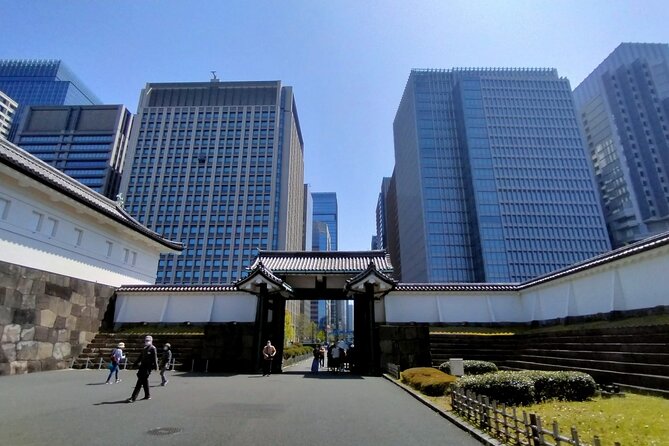
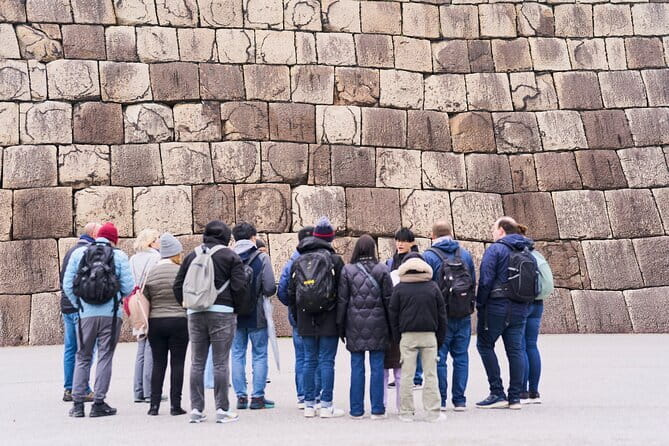
At Kokyo Otemon Gate, you see two massive gates and the stone walls from the original castle. This is where the tour explains how the design slowed and controlled anyone trying to enter.
The value of this stop is the guide’s interpretation. A gate may look impressive on its own, but the spacing, walls, and approach make more sense when you understand the problem they were meant to solve. The castle was designed to protect the shogun through layers of control, not one single barrier.
You spend about 10 minutes here. That is enough for a clear explanation and photographs without turning the tour into a long architectural lecture.
Three guardhouses, three levels of samurai duty
The Constable Guardhouse is small and was used by lower-ranking samurai. Here, the discussion shifts from stone and gates to the social structure inside the castle.
The Hyakunin Bansho Guardhouse was larger, with many samurai stationed there. Its size helps you picture the manpower needed to control a major castle complex.
At the Obansho Guardhouse, near the inner gate, the focus turns to higher-ranking samurai and their duties. Taken together, these three stops show that castle security was organized by rank and responsibility.
Each stop lasts about 10 minutes. That short timing keeps the walk moving, but it also means you should listen for the main idea rather than expect a long lecture at every building. A good guide can make these brief stops count by linking them into one story.
Several guides are praised for doing exactly that. Keiko is known for using laminated pictures of former castle layouts, guard towers, and the royal family. Ai, Shin, Tomo, Yuuki, and K are also described as clear and engaging guides who answer questions well. Guide quality can vary on any scheduled walking tour, but the strongest accounts point to staff who bring the sites to life with visual aids and personal enthusiasm.





Fujimi-yagura and the surviving view of the past
Fujimi-yagura is an old watchtower overlooking the area. The guide explains its former role and what made it special.
A watchtower is another place where the military logic of Edo Castle becomes clear. You can think about visibility, control, and the need to monitor movement around the inner grounds. The structure also adds variety after the guardhouses, giving you a different type of surviving castle feature.
This is a 10-minute stop. It is best appreciated as part of the larger defense system rather than as an isolated monument.
The castle model at Kokyo Sannomaru Shozokan
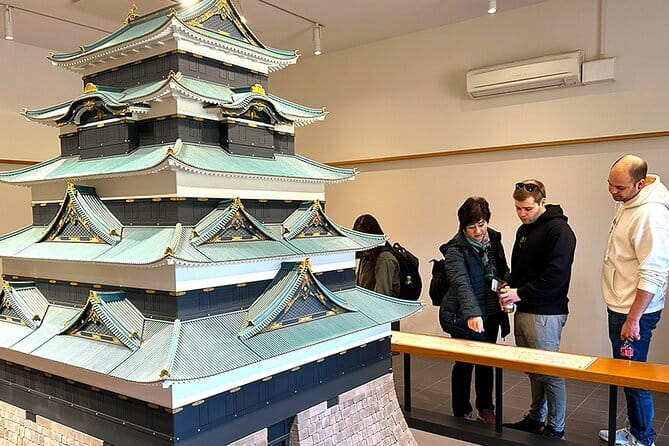
At Kokyo Sannomaru Shozokan, you can see a scale model of the former Edo Castle and visit a souvenir shop with palace-related goods.
The model is especially useful because little of the original castle survives above ground. A broad site can be hard to picture from scattered walls and foundations. The scale model helps you understand the castle’s former size and layout.
You may also appreciate this pause as a visual reset. Instead of trying to imagine the entire complex from ruins alone, you get a more complete picture in miniature. The stop lasts about 10 minutes.
The former main tower at Edo Castle

The East Gardens of the Imperial Palace include the former site of Edo Castle’s main tower. The tower itself is gone, but the site explains why it disappeared and what remains today.
This is one of the most important stops for understanding the difference between a historical castle and a living palace complex. You are standing where the main tower once shaped the skyline, but you will not enter a restored tower or walk through a preserved palace interior.
That limitation is worth knowing before you book. If you want rooms, furnishings, or access to the Emperor’s residence, this tour will not provide them. If you want to understand the castle’s footprint and the changes that took place over time, the ruin site is much more satisfying.
The stop lasts about 15 minutes, giving the guide time to explain the former tower and its place in the castle.
Ninomaru Garden provides a welcome change of pace
The final major stop is Ninomaru Garden, a traditional Japanese garden with seasonal plants and a pond filled with koi.
After the walls, gates, and guardhouses, this garden offers a quieter side of the former castle grounds. It is also one of the best spots for photographs, especially if you enjoy details such as planting, water, and changing seasonal color.
The garden receives about 15 minutes. That is enough to enjoy the setting, though not enough for a slow, solitary garden visit. If your main goal is peaceful garden time, you may want to return independently after the tour.
I like this ending because it keeps the experience from becoming only a military history lesson. You finish with a sense of how the castle grounds functioned as both a place of power and a carefully maintained garden.
Two hours, a brisk pace, and weather to consider
The advertised duration is about two hours. That makes the tour easy to fit into a Tokyo morning or afternoon, and several guides are praised for keeping the experience to a comfortable length.
It is still an active walk. You will encounter steep slopes and stairs, and there are no health restrictions listed that would prevent participation. Most people can take part, but you should judge the route against your own comfort with outdoor walking.
Summer heat deserves special attention. One account describes a guide handing out sweets and menthol napkins during an especially hot day. That is a thoughtful touch, but you should not rely on it. Bring your own water, wear light clothing, and use a hat or umbrella if the forecast is hot.
Rain does not necessarily stop the tour. A guide has been praised for continuing the explanation in wet weather. Still, the experience is much easier with suitable shoes and rain protection.
Is the $23.88 price good value?
At $23.88 per person, this is a modestly priced guided walk in central Tokyo. The sites themselves have free admission, so you are paying mainly for interpretation, organization, and the convenience of a planned route.
You can walk through parts of the Imperial Palace grounds on your own. If you only want a pleasant garden and a few photographs, you may not need a guide. The better value comes if you want the castle walls, guardhouses, and ruins explained as parts of one system.
A small group of up to 10 is another reason the price can make sense. You should be able to hear the guide more easily than in a large coach group, and questions are more practical. However, the additional information lists a maximum of 60 participants for the activity, so confirm the expected group size for your departure if that detail matters to you.
The tour has a 4.9 rating from 725 reviews and a 99 percent recommendation rate. Those figures suggest strong consistency, particularly around guide quality and the amount learned in two hours. One dissatisfied participant left because the guide’s English was not strong enough and felt the garden did not require a guide. That criticism points to the two real variables here: English delivery and your interest in history.
Who should book this walk?
I would choose this tour early in a Tokyo stay if you want a clear introduction to Edo, the shoguns, samurai society, and the Imperial Palace grounds.
It suits you especially well if:
- You prefer stories and explanation to simply walking around a park.
- You want a short activity that fits into a busy Tokyo schedule.
- You enjoy historic walls, gates, ruins, and architectural details.
- You are visiting Japan for the first time and want help sorting out emperors, shoguns, and samurai.
- You like small groups and the chance to ask questions.
- You can manage two hours of outdoor walking, stairs, and slopes.
You may want to skip it if you are seeking access to palace interiors, the Emperor’s residence, or a long, slow garden visit. It is also less appealing if you already know Edo-period history well and prefer exploring without a guide.
Practical booking advice and final verdict
The tour is conducted in English only, with no Japanese-language support. The best guides use clear explanations, humor, questions, and visual materials, but English ability can differ by departure. If precise spoken English is essential for your group, booking with that in mind is sensible.
The activity is free to cancel up to 24 hours before the start time for a full refund. Cancellations or changes inside that window are not accepted, and the cut-off follows local Tokyo time.
The route ends around the ginkgo-lined avenue before Tokyo Station, while the booking details also identify the meeting point as the end point. Confirm the final meeting and departure instructions so you know where to collect the group and where the walk finishes.
I would book this tour for the history and guide commentary, not for palace access. At a reasonable price and a manageable length, it gives you a useful framework for seeing the Imperial Palace grounds. Bring water, wear good shoes, and arrive ready to look past the pretty gardens toward the castle that once controlled Japan.
FAQ
How long does the Tokyo Castle and Imperial Palace Shogun Walking Tour last?
The tour lasts approximately two hours.
Where does the tour start?
It starts at Starbucks Coffee in Kokyo Gaien Wadakura Fountain Park, 3-1 Kōkyogaien, Chiyoda City, Tokyo 100-0002, Japan.
Where does the tour finish?
The tour concludes in front of the ginkgo-lined avenue stretching out before Tokyo Station. The activity details also state that it ends back at the meeting point, so check the final meeting instructions before departure.
Is the tour conducted in English?
Yes. The tour is conducted in English only, and Japanese-language support is not available.
What is the maximum group size?
The tour is described as a small-group experience for up to 10 people. The additional activity information also gives a maximum of 60 travelers, so confirm the group size for your selected departure.
Can I visit the Emperor’s residence?
No. The Emperor’s residence is not open to the public during this activity.
Do I need to pass through a security check?
Yes. You must pass a security check to enter the Imperial Palace grounds. Do not bring knives or alcohol.
Is the walk physically demanding?
You will need to walk up steep slopes and stairs. Comfortable footwear is recommended, and much of the route is exposed to the sun.
Can I cancel for a full refund?
Yes, if you cancel at least 24 hours before the experience start time. Cancellations or changes made less than 24 hours before the start are not refunded or accepted.
More Walking Tours in Tokyo


More tours in Tokyo we've reviewed












Walking Tours, compared.
 ★ 5.0Tokyo Tsukiji Fish Market Food and Culture Walking TourFrom $99
 ★ 4.9Tokyo: Shinjuku Local Bar and Izakaya Guided Walking TourFrom $343 hours
 ★ 5.0Tokyo: Tsukiji Fish Market Food and Walking tourFrom $30
 ★ 4.8Tokyo: Asakusa Walking Tour with Sensoji Temple VisitFrom $222 hours
 ★ 4.9Tokyo: Tsukiji Fish Market Guided Walking TourFrom $222 hours
 ★ 4.7Tokyo Castle & Imperial PalaceーShogun Walking TourFrom $232 hours