Reviewed · ASAKUSA TOURS
Tokyo: Asakusa Walking Tour with Sensoji Temple Visit
Asakusa gives you Tokyo at its most traditional, with the giant red Kaminarimon Gate, the incense-filled grounds of Sensoji Temple, and old shopping streets packed into one easy walk. For $22, you get a useful introduction to a part of the city that can feel confusing on your own.
In This Article
- Why Asakusa makes a smart first stop in Tokyo
- Meeting beneath the Thunder Gate
- Walking Nakamise Street toward Sensoji
- Sensoji Temple and its incense ritual
- Comparing Sensoji with Asakusa Shrine
- Hoppy Street and Shin-Nakamise
- Finishing at Azuma Bridge
- What $22 really buys you
- How the guides shape the experience
- Timing, comfort, and accessibility
- Who should book this Asakusa walk
- Should you book it?
- FAQ
- Where does the Asakusa walking tour start?
- Where does the tour finish?
- How long does the tour last?
- What language is the tour conducted in?
- Is Sensoji Temple included?
- Does the tour visit Asakusa Shrine?
- Does the tour include Nakamise Shopping Street?
- Does the tour include food or drinks?
- Is the walking tour wheelchair accessible?
- What happens if I need to cancel?
I like the clear contrast between Buddhist Sensoji and nearby Shinto Asakusa Shrine, and I like that the tour finishes near Azuma Bridge, close to more river views and places to eat. The main thing to consider is the pace: two hours covers plenty, but it leaves little time for shopping, temple interiors, or a long meal.
- Kaminarimon sets the scene: Start beneath Asakusa’s huge Thunder Gate and learn why it matters.
- Sensoji gets proper attention: Allow time for photos, incense, rituals, architecture, and historical stories.
- Nakamise is more than a souvenir street: Your guide can point out traditional crafts, snacks, and useful shops.
- Two faiths appear in one walk: Compare the Buddhist temple with the Shinto Asakusa Shrine.
- Food advice adds value: Guides such as Aya, Keiko, and Rio are praised for practical restaurant and snack suggestions.
- The price is modest: At $22, this is an affordable way to get context before exploring Asakusa independently.
Why Asakusa makes a smart first stop in Tokyo
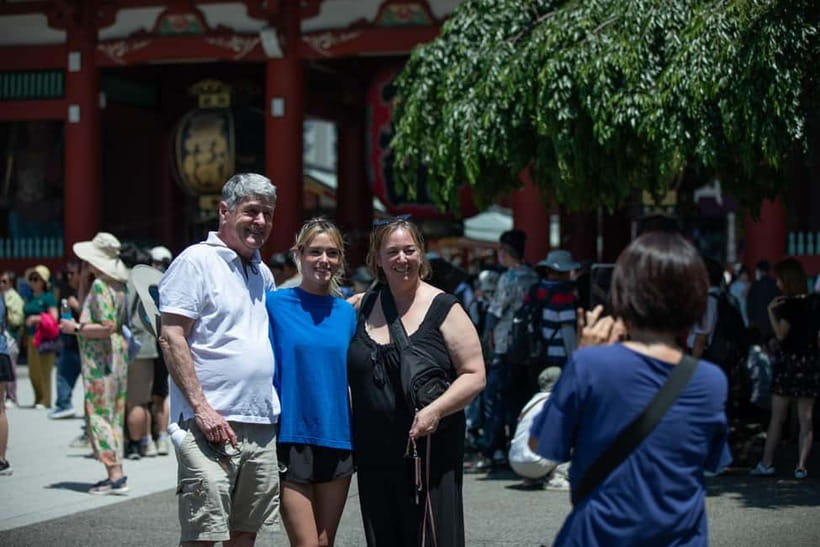
Tokyo can feel like several cities stitched together. Shibuya is neon and screens, Ginza is polished shopping, and Asakusa gives you wooden details, shrine gates, temple rituals, and streets that still feel tied to older Tokyo.
That makes this tour especially useful at the beginning of a Japan trip. You get basic guidance on Buddhist and Shinto customs, hear the stories behind the major sights, and leave with a better sense of how to behave at temples and shrines.
The route is short enough for a first morning or afternoon in the city. It also works well if you want a cultural orientation without committing half a day to a formal museum or a long coach excursion.
The tour is conducted in English, and the guide names vary. Past guides have included Aya, Keiko, Hiroko, Loc, Glenda, Miyu, Polina, Rio, Mei, and others. The strongest feedback repeatedly points to guides who explain clearly, answer questions patiently, use humor, and adjust their pace for children and older members of the group.
Meeting beneath the Thunder Gate
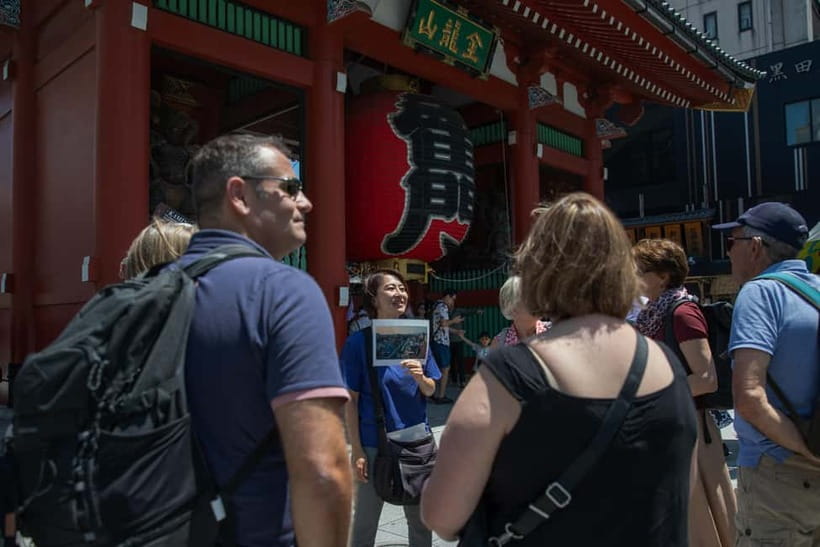
The walk begins at Kaminarimon, the famous entrance gate to Sensoji. Look for your guide on the left side of the gate, near Tokiwado Kaminari-okoshi Honpo, holding a tour sign.
Arrive early. This is a busy meeting point, and the guide cannot hold up the group for late arrivals. The gate itself is a fine place to get your first photographs, but do not spend too long taking pictures before finding the guide.
Kaminarimon means Thunder Gate. Its oversized lantern and guardian figures give the entrance a grand sense of arrival, but the useful part of the stop is the explanation. A guide can help you understand what you are looking at instead of reducing the gate to a quick photo stop.
The scheduled guided visit here takes about 10 minutes. That is enough for a short introduction and a few pictures, not a detailed architectural study.
A few more Tokyo tours and experiences worth a look


Walking Nakamise Street toward Sensoji
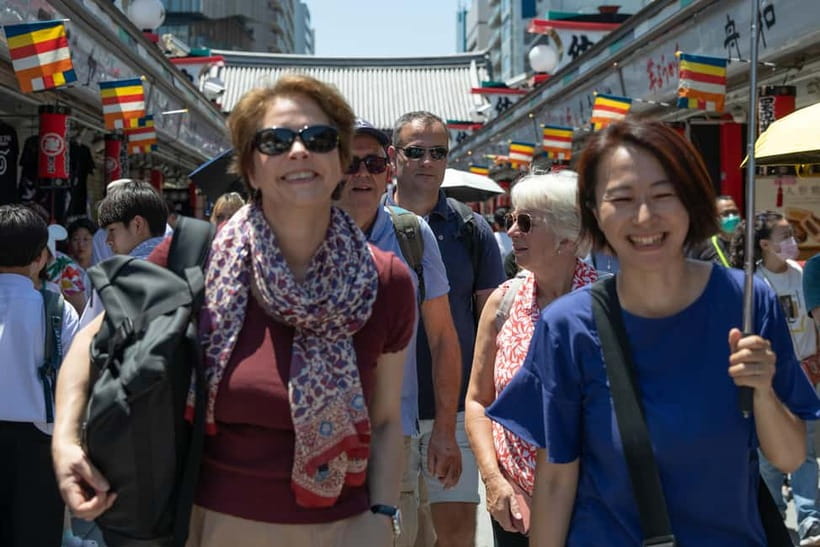
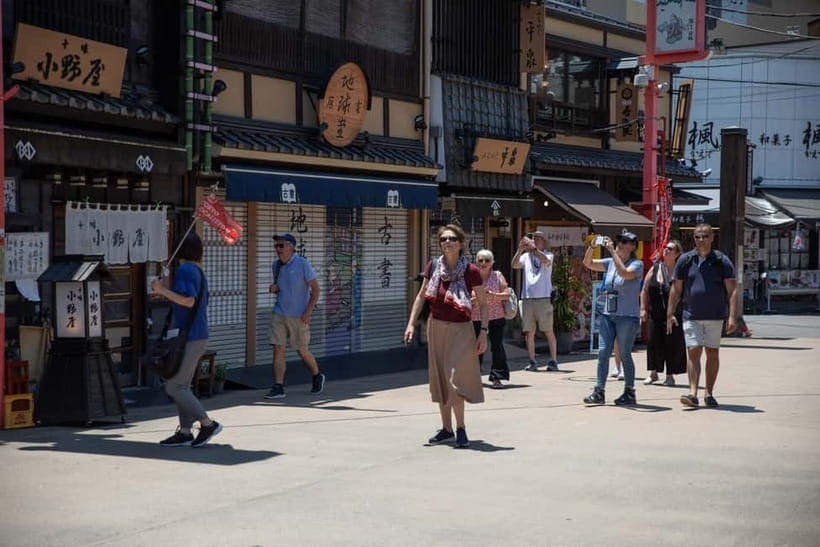
From the gate, you walk down Nakamise Shopping Street, one of Japan’s oldest shopping centers. This is the route toward Sensoji, lined with small shops selling traditional crafts, souvenirs, snacks, and other local goods.
Nakamise can be crowded, so stay close to the guide and watch your footing. The street is not simply a corridor to the temple. It is part of the experience, showing how commerce and religious sites have long worked side by side in Asakusa.
The planned stop lasts about 15 minutes. That is enough to hear what makes the street important and identify things worth returning for later. It is not enough for a serious shopping session, so make a note of shops that catch your eye and come back after the walk.
Guides are also a useful filter here. Instead of buying the first attractive snack or souvenir you see, you can ask about traditional items, local food, and which streets are worth a second look. Several guides are praised for recommending places to eat after the tour, which can save you from making a random choice at lunchtime.
Sensoji Temple and its incense ritual
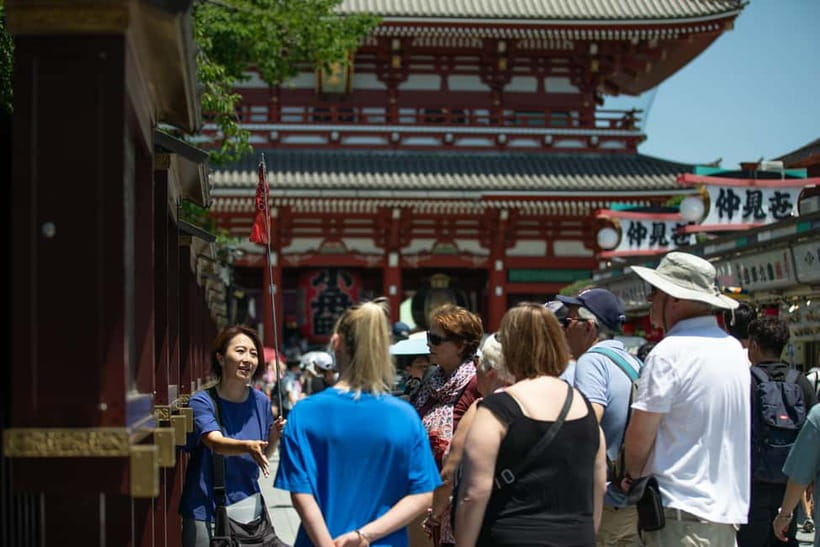
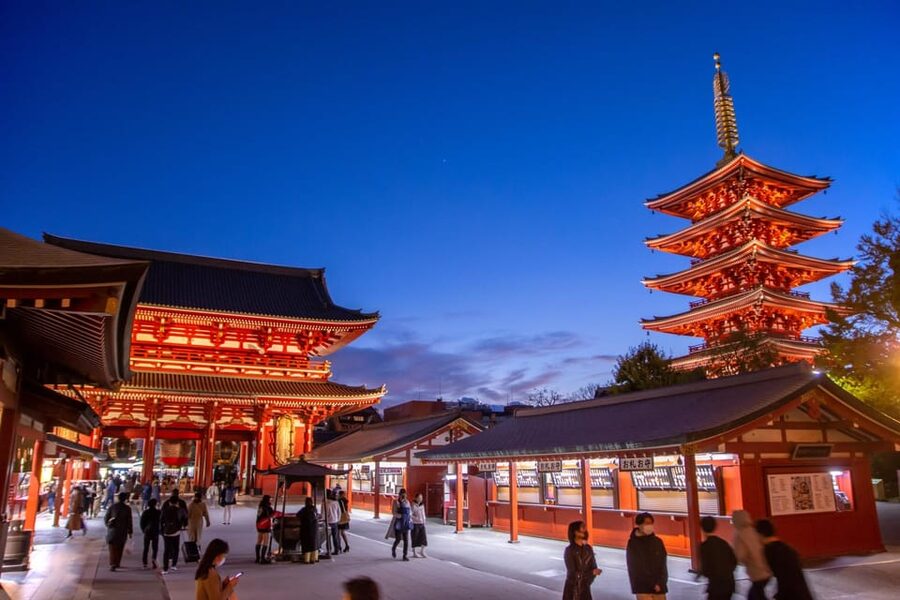
Sensoji, also called Asakusa Kannon, is the centerpiece of the walk. It is Tokyo’s oldest Buddhist sanctuary and one of the city’s major cultural sights.
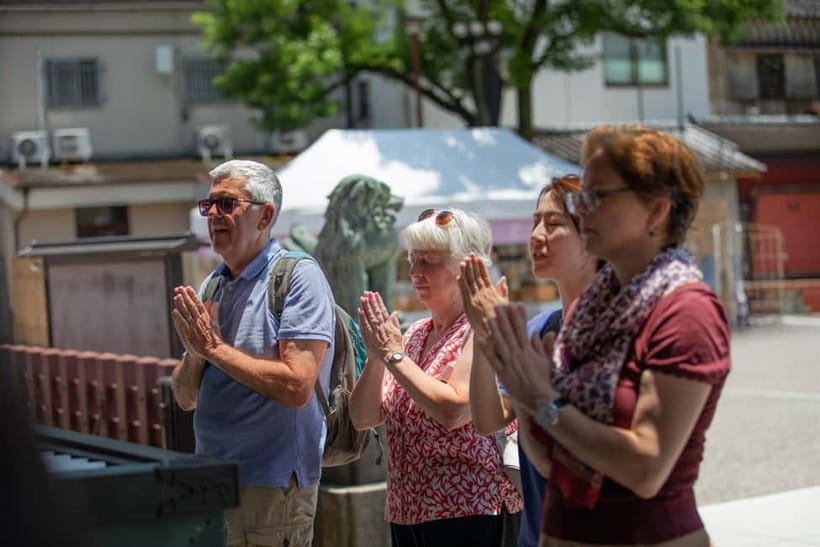
The temple visit includes a photo stop, guided time, and free time, with about 30 minutes scheduled here. That balance matters. You get an explanation of the temple’s past and design, then a little room to look around, take photographs, and observe the rituals at your own speed.
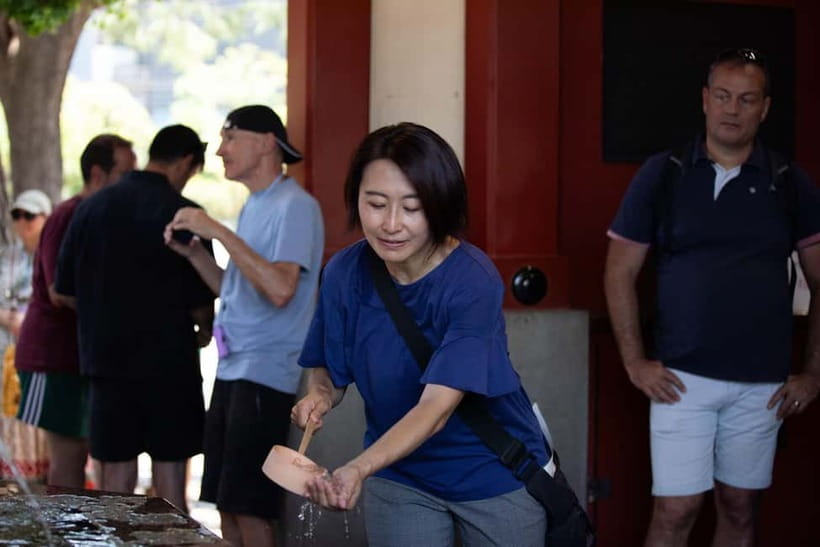
One of the most memorable details is the incense area. Burning incense is not just a visual feature. Your guide can explain how to take part and what the ritual means, so you are less likely to stand nearby wondering what everyone is doing.
Pay attention to the details around the main hall. The large scale, decorative surfaces, gates, and worship customs make more sense when someone explains their purpose. Without that context, Sensoji can become a quick series of photographs. With a guide, the visit has more shape.
The free time is welcome, but it is limited. If you want to linger, pray, browse every side path, or return at night when the temple is lit, plan a separate visit. One person specifically enjoyed seeing the temple illuminated after dark, though the tour itself may run at different times depending on the booking.
Comparing Sensoji with Asakusa Shrine
The next major stop is Asakusa Shrine, with about 20 minutes for a visit, photos, and explanation. This is one of the most useful parts of the route because it lets you see Buddhist and Shinto traditions close together.
You do not need to arrive with a background in Japanese religion. The guide explains the difference in plain terms and shows you how the two sites fit into Asakusa’s cultural life. That comparison gives the tour more substance than a simple temple walk.
The stop also provides a quieter change of mood after the main Sensoji grounds and Nakamise Street. You can ask questions here, and guides are often singled out for making sure every person in the group can hear and keep up.
If religion and history are not your main interests, this section may feel more detailed than the shopping stops. Still, it is valuable because it gives you a framework for understanding many other temples and shrines you may visit in Japan.
Hoppy Street and Shin-Nakamise
The route then moves through Hoppy Street for about 10 minutes. This is one of Asakusa’s well-known food and drink areas, with a more casual atmosphere than the temple approach.
The tour does not include food or drinks, so think of this as an introduction rather than a tasting experience. Your guide may point out eateries or explain the character of the street, and you can return later if you want to sit down and eat.
The final shopping section is Shin-Nakamise Shopping Street, also called Asakusa Shin-Nakamise. Another 10-minute guided visit gives you a look at a different commercial side of the district.
Together, Hoppy Street and Shin-Nakamise keep the walk from becoming only a religious history lesson. You see how Asakusa works as a living neighborhood, where temple visitors, shoppers, diners, and local businesses all share the same compact area.
A few more Tokyo tours and experiences worth a look


Finishing at Azuma Bridge
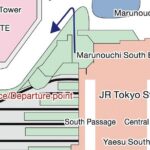
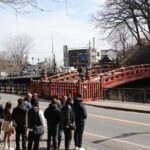
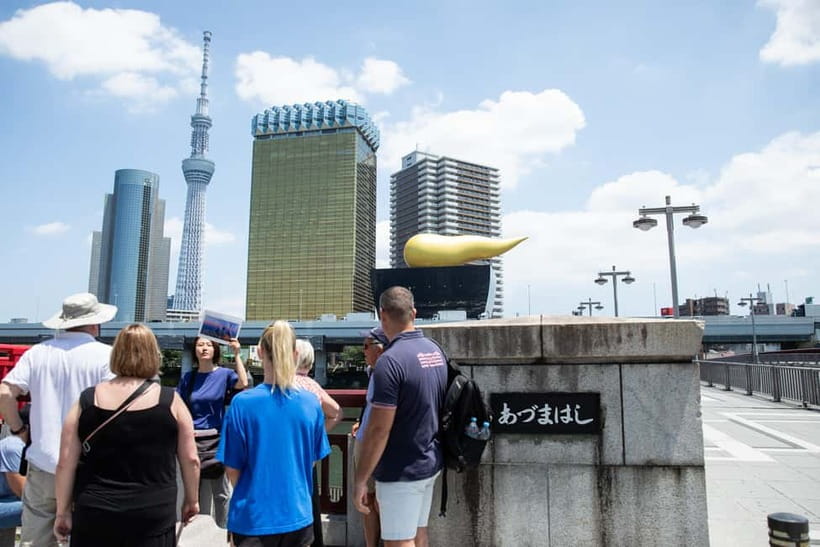
The tour ends at Azuma Bridge. This is a practical finish rather than a return to the starting gate, so you should be ready to continue on your own from there.
The ending works well if you want to eat lunch, walk beside the river, or continue sightseeing. Guides often provide recommendations for restaurants and additional things to do around Tokyo, so this is a good time to ask for ideas and write them down.
Because the tour ends away from Kaminarimon, make sure you know where you want to go next. The route is not difficult, but a little planning helps if you have timed tickets or a reservation elsewhere.
What $22 really buys you
At $22 per person, the tour is priced as a low-cost introduction rather than a full private guide service. You are paying for two hours of orientation, an English-speaking guide, access to a well-planned route, and explanations that help you read the neighborhood.
That is good value if this is your first visit to Asakusa. The sights themselves are free to view, but the stories, ritual guidance, and local suggestions are what make the fee worthwhile. You also avoid spending your first hour wandering past the same shops and trying to work out what deserves your attention.
The value is strongest for people who want cultural context. It is less compelling if you already know Sensoji well, have read extensively about Asakusa, or prefer to stop for long periods at every shop.
The tour does not include food, drinks, private transportation, or a longer temple visit. Keep those limits in mind when comparing it with a food tour or a private Asakusa guide.
How the guides shape the experience
The guide is the most important variable in a short walking tour. A good guide keeps the group together, makes English explanations easy to follow, and turns small details into useful lessons.
Aya is repeatedly praised for explaining history, architecture, traditions, and local food options. She is also described as attentive to questions and good with families. Keiko is noted for patience, clear English, humor, and practical advice for the rest of a Japan trip.
Hiroko is another strong choice when available. She is described as entertaining, responsive, and careful to include everyone. Loc is praised for punctuality and clear explanations, while Rio is noted for bringing extra charts and information.
You should not book on the assumption that one particular guide will lead your departure. Guide assignment can vary. Still, the range of positive guide feedback suggests that the experience is built around personal explanation, not just leading a group from gate to gate.
Small groups are mentioned positively in the available feedback, but a fixed group size is not provided. If a compact group matters greatly to you, check the current booking details before paying.
Timing, comfort, and accessibility
The tour lasts two hours and is entirely on foot. Wear comfortable shoes and bring water, especially if you plan to continue sightseeing afterward.
The route includes crowded shopping streets and busy temple grounds. Children may enjoy the large gate, snacks, and visual details, but younger children may need reminders to stay close in the crowd. One guide was especially praised for engaging a 14-year-old and pointing out things that interested children.
The pace is described as comfortable, with time for photos and questions. Even so, two hours goes quickly once you include seven stops. You should expect short explanations rather than long periods of private reflection at each site.
The activity is listed as wheelchair accessible. If you need specific details about surfaces, crowd conditions, or assistance, confirm those points when booking, since the supplied information does not describe the route in further detail.
Free cancellation is available up to 24 hours before the tour for a full refund. You can also reserve now and pay later, which helps if your Tokyo schedule is still shifting.
Who should book this Asakusa walk
I would recommend this tour to first-time visitors who want a clear introduction to traditional Tokyo without spending a lot. It is also a good fit for solo visitors who want company, families who prefer a guide to explain rituals, and anyone who likes to combine history with food suggestions.
It works particularly well on your first or second day in Tokyo. The guide can give you useful customs and neighborhood tips before you visit other temples, shrines, and markets around Japan.
You may want something else if you want a quiet spiritual experience, a food-focused tour, or extensive time inside Sensoji. Independent visitors can walk the same general area for free, but they will need to supply their own historical background and decide which details matter.
Should you book it?
Book this tour if you want a low-cost cultural orientation to Asakusa, with the major sights arranged in a sensible two-hour route. The strongest reasons are the guide’s explanations, the Buddhist and Shinto comparison, and practical food advice for after the walk.
Skip it if you already know Sensoji and Asakusa well, or if you prefer to set your own slow pace. For most first-time visitors, though, $22 is a fair price for turning a famous temple district into a place you can understand, not just photograph.
FAQ
Where does the Asakusa walking tour start?
The tour starts at Kaminarimon, the Thunder Gate. The guide waits on the left side of the gate, near Tokiwado Kaminari-okoshi Honpo, and holds a sign.
Where does the tour finish?
The walk finishes at Azuma Bridge.
How long does the tour last?
The tour lasts two hours.
What language is the tour conducted in?
The live tour guide speaks English.
Is Sensoji Temple included?
Yes. The route includes a guided visit, photo time, and free time at Sensoji Temple, also called Asakusa Kannon.
Does the tour visit Asakusa Shrine?
Yes. The itinerary includes a guided visit and photo stop at Asakusa Shrine.
Does the tour include Nakamise Shopping Street?
Yes. The route visits both Nakamise Shopping Street and Shin-Nakamise Shopping Street.
Does the tour include food or drinks?
No food or drinks are listed as included. The guide may provide recommendations for places to eat after the tour.
Is the walking tour wheelchair accessible?
Yes. The activity is listed as wheelchair accessible.
What happens if I need to cancel?
You can cancel up to 24 hours in advance for a full refund. The reserve now and pay later option is also available.
More Walking Tours in Tokyo


More Temples & Meditation in Tokyo
More Asakusa Tours in Tokyo

More tours in Tokyo we've reviewed












Asakusa Tours, compared.
 ★ 4.8Tokyo: Japanese Dance Cabaret Theater Asakusa-Kaguwa TicketFrom $492 hours
 ★ 4.7Tokyo: Meiji Shrine, Asakusa, Skytree Bus Tour and CruiseFrom $12210 hours
 ★ 4.9Tokyo: Roll and Authentic Sushi Making Class in AsakusaFrom $581h 40m
 ★ 5.0Tokyo Asakusa Rickshaw TourFrom $42
 ★ 4.5Tokyo Panoramic 1 Day: Meiji Shrine, Asakusa, Odaiba and SKYTREE®From $85
 ★ 5.0Tokyo Go Kart: Asakusa, Skytree, and Akihabara **IDP MUST**From $99