Reviewed · ASAKUSA TOURS
Tokyo Asakusa Rickshaw Tour
Asakusa is at its best when you can slow down and look around. From a rickshaw seat, you pass Edo-era facades, small shrines, cherry trees, and modern Tokyo towers in one compact neighborhood. The contrast is the point: old religious customs and retro streets sit close to the Asahi Beer Headquarters and Tokyo Skytree.
In This Article
- Key points to know before you ride
- Why a rickshaw works so well in Asakusa
- Starting near Asakusa Station
- Ushijima Shrine and the Lucky Fortune Cow
- Sumida River views and the golden Asahi flame
- Imado Shrine, cats, and Matsuchiyama Shoden
- Sensoji, Asakusa Shrine, and the Kaminarimon gate
- Edo streets, raccoon figures, and old Tokyo entertainment
- How much time should you book?
- Price, comfort, and family details
- Who will enjoy this Asakusa ride?
- Booking and the final call
- FAQ
- Where does the Tokyo Asakusa Rickshaw Tour start?
- Where does the tour end?
- How long does the rickshaw tour last?
- Can I customize the route?
- Is hotel pickup included?
- How many adults fit in one rickshaw?
- Can young children ride for free?
- Are children age six charged the adult price?
- Can the rickshaw enter Sensoji Temple?
- What happens if the weather is poor?
I like the custom route, which lets you focus on temples, photographs, local stories, or quirky corners. I also like the guides’ personal touch. Drivers such as Koko, Micchy, Kei, Takumi, Nene, and Yusuke have been praised for their humor, energy, photography, and helpful restaurant suggestions.
The main consideration is space. A rickshaw is only 29.1 inches, or 74 centimeters, wide, and two adults sit close together. A 30-minute ride also cannot cover everything, so choose a longer option if you want several shrines and the old entertainment district.
Key points to know before you ride
- The route is flexible: Tell your driver whether you care most about shrines, history, photographs, gardens, or retro Tokyo.
- A short ride gives a useful overview: Longer options, up to about three hours, are better for multiple stops.
- Expect a personal guide, not a silent carriage ride: Drivers explain Shinto, Buddhism, Asakusa customs, and neighborhood history.
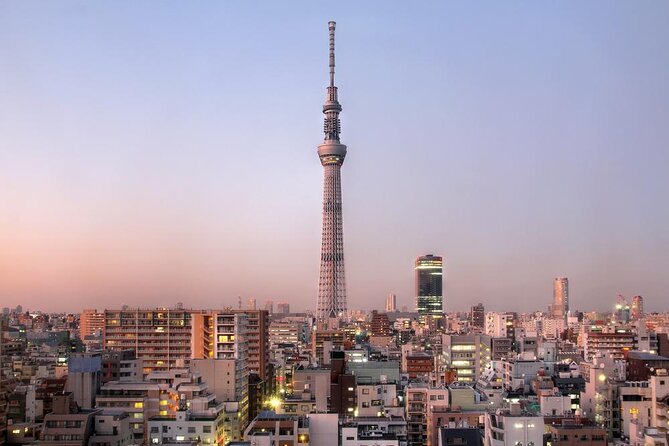
- The best photo stop is across the Sumida River: You can frame Tokyo Skytree with the river and Sumida Park.
- The rickshaw works well for families: Children age five and under may ride free on an adult’s lap, within the stated seating limits.
- Comfort needs planning: Two adults can fit, but separate rickshaws may be wiser for larger passengers or anyone wanting more room.
Why a rickshaw works so well in Asakusa
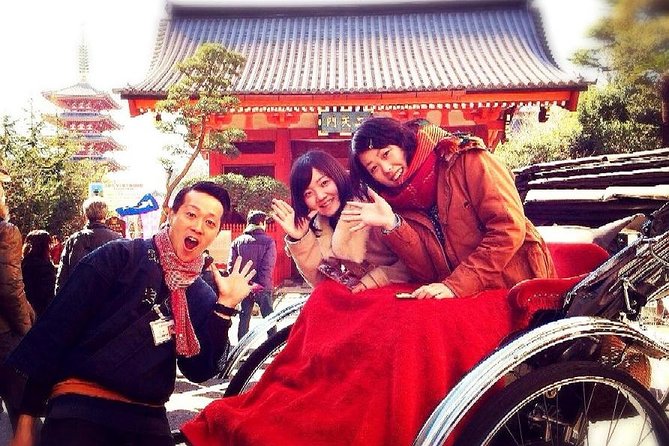
Asakusa is easy to reach by train, but its sights are spread through a maze of lanes, temple grounds, shopping streets, riverfront paths, and old entertainment areas. Walking gives you freedom, but it also takes time and attention. A rickshaw lets you cover more ground while keeping your eyes up.
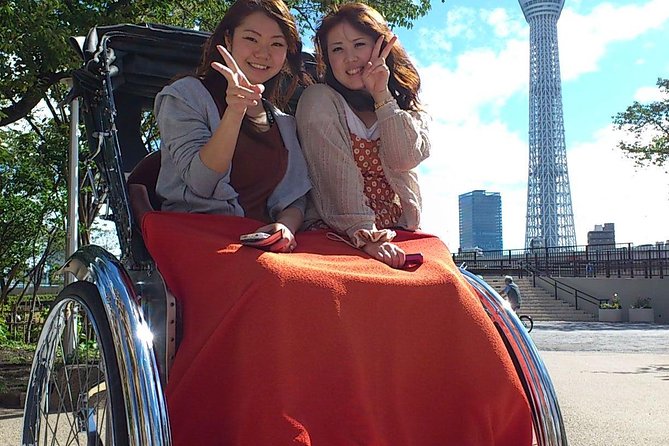
You sit above street level, with a clear view of shopfronts, gardens, rooftops, and passing pedestrians. Your driver does the work and points out details you could easily miss on your own. The pace is slow enough for photographs, yet quick enough to make a short ride worthwhile.
I would not treat this as a replacement for exploring Sensoji Temple on foot. Rickshaws cannot enter the temple buildings, grounds, or Nakamise shopping street. Instead, think of the ride as a guided introduction to the wider Asakusa neighborhood, including places that many first-time visitors skip.
The private format matters. Only your own group participates, so you can ask questions and adjust the emphasis as you go. English and Japanese-speaking drivers are available, depending on availability, and you should state your preferred language when booking.
A few more Tokyo tours and experiences worth a look


Starting near Asakusa Station
You make your own way to the meeting point at 1-chōme-1-4 Asakusa, near Asakusa Station. There is no hotel pickup or drop-off included, so allow time to reach the stand before your scheduled start.
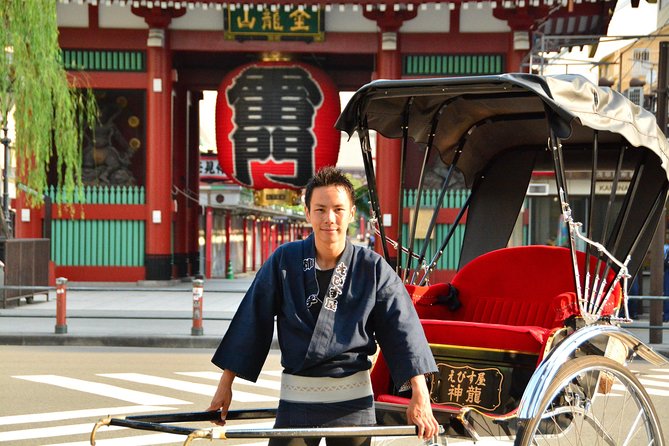
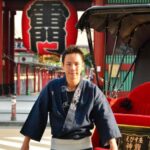
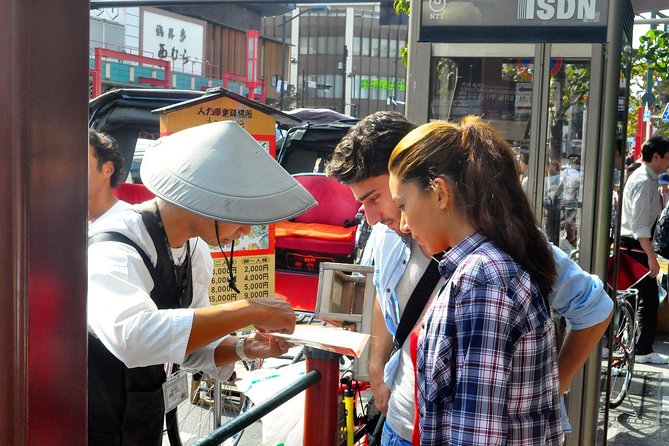
At the meeting point, you meet your driver and settle into the rickshaw. The experience provider is Ebisuya, and the staff greet riders at the stand. Some rides have included a sign with the booked name, which can make the meeting simple in a busy part of Tokyo.
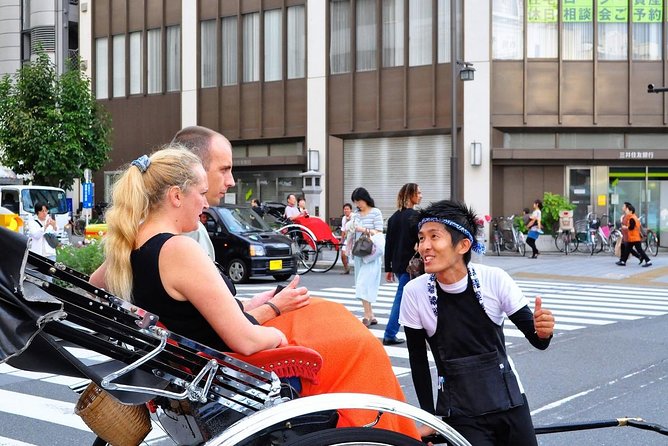
Before setting off, tell your driver what you want from the ride. You might ask for more shrine time, the best Skytree photo angle, Edo-period streets, local entertainment history, or a broad first look at Asakusa. This conversation is important, especially on the shorter options.
The route can last from about 30 minutes to three hours. The exact sights depend on the option selected and the time available. A 30-minute ride is a quick orientation. A longer ride gives the driver room to stop at several landmarks, explain them, and still reach the riverfront and older streets.
Ushijima Shrine and the Lucky Fortune Cow
Ushijima Shrine is one of the most interesting stops because it rewards a question. Your driver explains why the shrine has a gate with three entrances rather than the more usual single entrance. That small detail gives you a glimpse into the way Japanese religious spaces can carry their own local rules and traditions.
The nearby Japanese garden adds a quiet change of pace. You can relax there and see the Lucky Fortune Cow Shrine, a playful and distinctive detail that makes the stop more than a standard photo opportunity.
Ushijima Shrine is listed as a 15-minute stop, with admission not included. The timing is enough for a short visit and explanation, but not an extended religious or architectural study. If you want to linger, tell your driver early so the rest of the route can be adjusted.
This is also a good part of the ride for visitors who want a calmer side of Asakusa. The area around Sensoji can feel crowded, while the shrine and garden provide a more measured setting.
Sumida River views and the golden Asahi flame
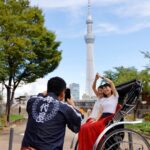
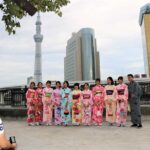
The ride can take you toward the Sumida River, where you get a strong view of Tokyo Skytree from across the water. This is one of the route’s most useful photo stops. The river gives the scene breathing room, while the tower supplies an unmistakable Tokyo backdrop.
Sumida Park runs along the river and is especially appealing in spring, when cherry blossoms line the water. Even outside blossom season, it gives you a place to pause, sit, and recover from sightseeing. I like this stop because it connects Asakusa’s religious quarter with its open riverfront.
Across the river, you can also see the Asahi Beer Headquarters and its famous golden flame on top of the building. It is a striking piece of modern Tokyo design, and its shape makes the building easy to identify from the waterfront.
The contrast here is classic Asakusa: temple roofs and old streets behind you, a major commercial building across the river, and Skytree rising nearby. The rickshaw makes it easy to see these elements together without spending your limited time working out the best route.
Imado Shrine, cats, and Matsuchiyama Shoden
Imado Shrine is a good stop if you like unusual local symbols. It features many cat figures, especially manekineko, the beckoning cat associated with good fortune. The displays give the shrine a lighter and more playful mood than some of Asakusa’s larger religious sites.
Honryuin Matsuchiyama Shoden offers a different lesson. It is a Buddhist temple connected with Sensoji, and its most memorable feature is the repeated image of radishes. Your driver explains why radishes appear at the temple and on its lanterns.
The temple is listed as a 15-minute stop, and admission is not included. The value here comes less from a long visit and more from having someone explain what you are looking at. Without that context, the radishes could seem like decoration. With an explanation, the temple becomes a window into Buddhist belief and local practice.
These two stops also make the tour useful for understanding the relationship between Shinto and Buddhism. At Sensoji, you can see a Shinto shrine located on the temple grounds, then learn how the two traditions coexist in Japan. That distinction is easy to blur when you visit on your own.
A few more Tokyo tours and experiences worth a look

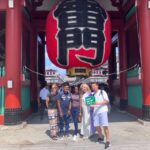
Sensoji, Asakusa Shrine, and the Kaminarimon gate
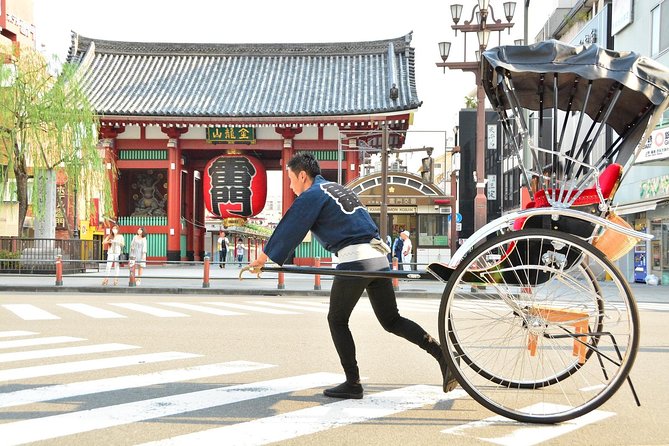
The colorful gate leading toward Sensoji Temple and Asakusa Shrine is one of the neighborhood’s most recognizable sights. It is a natural photo stop and helps you orient yourself before entering the wider temple area.
The ride itself does not continue through the temple buildings, grounds, or Nakamise shopping street. You will need to explore those areas on foot, either before or after the rickshaw experience. This restriction is sensible because the temple zone is heavily used by pedestrians and is not suited to rickshaw traffic.
Asakusa Shrine sits on the Sensoji temple grounds. Here, your driver can explain the difference between a Shinto shrine and a Buddhist temple. That short lesson adds value to the rest of your Tokyo sightseeing because many visitors see both forms of worship but do not know what separates them.
If your main goal is Sensoji, do not book a 30-minute ride expecting a full temple visit. Use the rickshaw to understand the area, then return on foot when you have time to enter the temple grounds and browse Nakamise.
Edo streets, raccoon figures, and old Tokyo entertainment
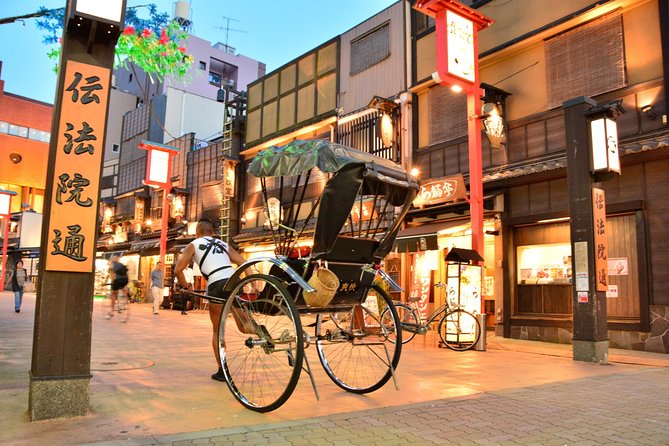
The tour can include a historic street lined with stores and housing facades from the Edo period. These streets help you picture how Asakusa looked before modern towers and large commercial blocks changed the city.
Another unusual stop is a street themed around raccoons. Raccoon figures appear every few meters, giving the lane a quirky identity. This is exactly the sort of small local detail that is easy to miss if you follow only the major sights.
The route may also pass one of Japan’s oldest amusement parks, still in operation. The attraction adds a bit of fun to the historical side of the tour. You are not simply moving between formal temples and monuments. Asakusa has always mixed worship, entertainment, shopping, and everyday life.
The former entertainment quarter includes a venue that remains the heart of Asakusa’s comedy and show scene. Rokku Street, now part of the retro district, was once Tokyo’s leading entertainment area before the war, with cinemas and theaters filling the neighborhood.
This section is particularly useful if you want to see Asakusa as a living district rather than a collection of tourist stops. The stories connect old cinema culture, comedy, amusement parks, and the area’s continuing role as a place for Japanese shows.
How much time should you book?
The 30-minute option makes sense if you have a packed Tokyo schedule or want a quick introduction before exploring on foot. You can get a feel for the streets, hear basic local history, and stop for photographs, but the full list of sights will not fit.
A ride of about 45 minutes to one hour gives you more breathing room. You can see several highlights without turning every stop into a hurried glance. This is a sensible choice for first-time visitors who want an overview and a personal introduction.
Choose a two- or three-hour option if Asakusa is a major part of your day. The longer format is better for combining Ushijima Shrine, the riverfront, Imado Shrine, Matsuchiyama Shoden, old streets, entertainment areas, and photo stops.
The longer rides also give you more time to talk. Drivers such as Takumi have offered Japanese culture, history, language help, and restaurant suggestions during the ride. Yusuke has also been praised for taking photographs that include the riders and the guide, which is useful when you want more than a quick selfie.
Price, comfort, and family details
At $42.90 per person, the experience is not the cheapest way to move around Asakusa. You are paying for the ride, a local driver, private group attention, and explanations along the way. The value improves if you see it as a guided neighborhood tour rather than simple transportation.
Group discounts may be available. The tour is private, so only your group rides together. That makes the price easier to justify for couples, families, or friends who want control over the route and the chance to ask questions.
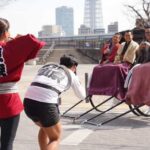
Two adults can share one rickshaw, but the width is 74 centimeters. The seats can feel snug, particularly for larger passengers. The operator recommends booking an individual rickshaw for each passenger when comfort or size is a concern. If two people cannot fit comfortably but want to ride at the same time, an extra rickshaw may not be available with an English-speaking driver unless reserved ahead.
Children age six and over pay the adult price. Children five and under may ride free on an adult’s lap, subject to the stated seating limits. A rickshaw can carry up to two adults, or two adults with up to two young children on their laps. If a five-year-old uses one of the two seats, that child must be booked as an adult.
The ride can work in light rain. Drivers provide protection that has kept riders warm and dry, and some rickshaws offer seat warmers and rugs in colder weather. Still, the experience requires good weather, and poor conditions can lead to a new date or a full refund.
Who will enjoy this Asakusa ride?
I would recommend it to first-time Tokyo visitors who want a quick sense of Asakusa before deciding where to spend more time. It also suits families, older adults, and anyone who prefers not to walk continuously through a large neighborhood.
It is a strong choice for photographers. The Skytree view, Sumida River, cherry trees, old facades, shrines, and colorful gates provide varied settings. Drivers may also help with photographs, which solves the usual problem of trying to include your whole group in the frame.
The ride suits culture-focused visitors who want clear explanations of Shinto and Buddhism without committing to a formal lecture. It also works for anime fans and younger visitors, since one driver has pointed out a Demon Slayer scene in the area.
I would hesitate only if you dislike close seating, want a fully fixed sightseeing list, or prefer to explore every temple interior at your own pace. The rickshaw is a guided overview, not a substitute for a full walking day in Asakusa.
Booking and the final call
The experience is booked, on average, about 54 days ahead, so reserve early if you need a particular date, language, or extra rickshaw. You can cancel for a full refund up to 24 hours before the start time. Changes inside that window are not accepted, and the cut-off follows Tokyo local time.
The finishing point can be chosen with your driver, though destinations outside the rickshaw stand may cost extra. The standard end point is near Kan’non-dōri at 1-chōme-2-11 Asakusa, but discuss your preferred finish on the day.
I would book this tour if you want a friendly, efficient introduction to Asakusa with real local color. Choose 45 minutes or longer for a satisfying overview, and choose the full three hours if you want several shrines, river views, old entertainment streets, and time for questions. For a quick orientation, a comfortable private ride, and some of the best photo angles in the district, it offers good value.
FAQ
Where does the Tokyo Asakusa Rickshaw Tour start?
The tour starts at 1-chōme-1-4 Asakusa, Taito City, Tokyo 111-0032, Japan, outside or near Asakusa Station.
Where does the tour end?
The standard finishing point is near Kan’non-dōri at 1-chōme-2-11 Asakusa, Taito City, Tokyo 111-0032, Japan. The final location can be discussed with your driver on the day.
How long does the rickshaw tour last?
Available tour lengths range from about 30 minutes to approximately three hours. Shorter rides cannot include every listed landmark.
Can I customize the route?
Yes. You can tell your driver what interests you most, including shrines, gardens, historical streets, photographs, or local culture.
Is hotel pickup included?
No. You must make your own way to the meeting point near Asakusa Station. Hotel pickup and drop-off are not included.
How many adults fit in one rickshaw?
A maximum of two adults can ride in one rickshaw. The rickshaw is 74 centimeters wide, so separate rickshaws may be more comfortable for some passengers.
Can young children ride for free?
Children age five and under may ride free on an adult’s lap. Up to two young children can ride with two adults, subject to the seating rules.
Are children age six charged the adult price?
Yes. Adult pricing applies from age six. A five-year-old using one of the two rickshaw seats must be booked as an adult.
Can the rickshaw enter Sensoji Temple?
No. Rickshaws cannot enter Sensoji Temple or Asakusa Temple buildings, temple grounds, or Nakamise shopping street.
What happens if the weather is poor?
The tour requires good weather. If the operator cancels because of poor conditions, you can choose another date or receive a full refund.
More Rickshaw Rides in Tokyo
More Asakusa Tours in Tokyo

More tours in Tokyo we've reviewed












Asakusa Tours, compared.
 ★ 4.8Tokyo: Japanese Dance Cabaret Theater Asakusa-Kaguwa TicketFrom $492 hours
 ★ 4.7Tokyo: Meiji Shrine, Asakusa, Skytree Bus Tour and CruiseFrom $12210 hours
 ★ 4.9Tokyo: Roll and Authentic Sushi Making Class in AsakusaFrom $581h 40m
 ★ 4.8Tokyo: Asakusa Walking Tour with Sensoji Temple VisitFrom $222 hours
 ★ 4.5Tokyo Panoramic 1 Day: Meiji Shrine, Asakusa, Odaiba and SKYTREE®From $85
 ★ 5.0Tokyo Go Kart: Asakusa, Skytree, and Akihabara **IDP MUST**From $99