Reviewed · ASAKUSA TOURS
Asakusa, Tokyo: Rickshaw Experience and Highlights Walking tour
Asakusa is at its most enjoyable when you slow down, look up, and let someone else handle the route. This small-group walking tour links Kaminarimon, Senso-ji, old shopping streets, and Hoppy Street before adding a 20-minute rickshaw ride with Tokyo Skytree in view. I like the mix of famous sights and everyday Asakusa streets, and I like that the rickshaw is a private two-person ride rather than a shared vehicle.
In This Article
- Key points to know before booking
- Why this Asakusa route works well
- Meeting Kaminarimon beneath the red lantern
- Walking Nakamise toward Senso-ji
- Senso-ji, Asakusa’s central landmark
- Hanayashikidori and old Tokyo atmosphere
- Nishi Sando’s lantern-lit shopping street
- Hoppy Street and Asakusa after dark
- The 20-minute rickshaw ride toward Skytree
- Timing, fitness, and group size
- How the guide affects the experience
- Who should book this Asakusa experience?
- Should you book it?
- FAQ
- How much does the Asakusa rickshaw and walking tour cost?
- How long does the activity last?
- Where does the tour begin?
- Where does the tour end?
- Is the tour guided?
- How long is the rickshaw ride?
- Can I choose the rickshaw route?
- How many people can join the tour?
- Can I share the rickshaw with another participant?
- What happens if I arrive late?
- Can weather affect the rickshaw ride?
- Can I cancel or change my booking?
The main drawback is the fixed pace. The tour lasts about three and a half hours, leaves on time, and may finish late. The rickshaw route cannot be chosen, and rain, traffic, or other conditions can cancel that part or the whole activity, so do not place an important appointment immediately afterward.
Key points to know before booking

- A 20-minute rickshaw ride adds a classic Asakusa moment: You ride through the east side of the district and may get photos with Tokyo Skytree behind you.
- The walking route covers the main Asakusa sights: Kaminarimon, Nakamise, Senso-ji, Hanayashiki Street, Nishi Sando, and Hoppy Street all fit into one outing.
- The rickshaw is built for two people: You will not share it with other participants, and solo participants ride alone.
- The group is capped at eight people: That keeps the walk smaller than a large bus-style city tour.
- The guide can add useful Tokyo advice: Yoko, one guide praised for tailoring the visit and suggesting other things to do in Tokyo, shows the value of asking questions as you walk.
- The schedule requires punctuality: Late arrivals cannot extend the tour, and the activity may run past its planned finish.
Why this Asakusa route works well

This experience gives you two ways to see Asakusa. On foot, you can stop at food stalls, temple gates, souvenir shops, and narrow shopping lanes. In the rickshaw, you sit back while a driver takes you through part of the district and handles the sightseeing rhythm.
That combination matters because Asakusa is easy to visit on your own but not always easy to understand at a glance. Kaminarimon and Senso-ji draw the crowds, yet the nearby lanes reveal a different side of the area: old-style storefronts, local snack shops, pub streets, and the nostalgic setting around Japan’s oldest amusement park.
The tour has a maximum of eight people, which is a useful middle ground. You get the structure of a guided walk without joining a huge group. A guide can also respond to your interests. If you care more about food, temple customs, photography, or other Tokyo plans, ask early. Yoko is specifically noted for adapting the visit and offering ideas beyond Asakusa.
The published price is $35 per person. For roughly three and a half hours, that is reasonable if you want an organized introduction to the district plus the rickshaw ride. You are paying for the guide, the planned route, and the rickshaw experience rather than admission tickets, since the listed stops are free to enter. The value drops if you prefer to wander alone or want complete control over the rickshaw route.
A few more Tokyo tours and experiences worth a look
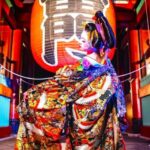


Meeting Kaminarimon beneath the red lantern
The tour begins at 2-chome-18-9 Kaminarimon in Taito City. This puts you close to Kaminarimon Gate, Asakusa’s instantly recognizable entrance to Senso-ji.
Allow yourself enough time to find the meeting point. This is a group activity, and the group leaves at the scheduled departure time. The address is near public transportation, but you should still arrive early rather than trying to locate the guide at the last second.
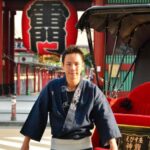
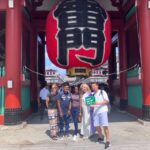
Kaminarimon means Thunder Gate. Its large red lantern is the main photo target, but pause to look at the statues of Fujin and Raijin, the wind and thunder gods, on either side. The gate works as more than a meeting landmark. It introduces the temple district with a bold, theatrical first view.
You have about 10 minutes here. That is enough for photos and a short explanation, but not for a long independent stop. If you want a quiet picture of the gate, the group schedule may not give you much spare time.
Walking Nakamise toward Senso-ji
From Kaminarimon, the route continues along Nakamise Shopping Street for about 30 minutes. This is the main approach to Senso-ji, lined with shops selling Japanese snacks, crafts, souvenirs, and other traditional goods.
I like this part because it gives the walk a clear sense of movement. You are not simply being taken from one landmark to another. You follow the same approach used by countless people heading toward the temple, with shopfronts and food displays filling the route.
Use the time to notice what catches your eye, but do not assume you can stop for a full meal. Thirty minutes passes quickly in a popular shopping street, especially if you want to browse. If a particular snack or souvenir interests you, make a note and return after the tour.
The shops also make this a useful stop for first-time Tokyo visitors who want to pick up small gifts. The selection includes traditional snacks, local crafts, and souvenirs, though the guided schedule is better for orientation than for serious shopping.
Senso-ji, Asakusa’s central landmark

The tour allows about 50 minutes at Senso-ji, the famous temple dedicated to Kannon, the goddess of mercy. This is the longest stop, and rightly so. Senso-ji gives Asakusa its spiritual center and its most familiar views beyond Kaminarimon.
A guide adds value here by helping you make sense of what you are seeing rather than treating the temple as a quick photo stop. You can use the time to look at the temple buildings, observe the approach, and take pictures without having to plan the route yourself.
The temple grounds can feel crowded, especially around the best-known gates and approaches. That is part of the setting, not a flaw in the tour, but it does mean you should expect a lively public space rather than a silent temple visit. Keep your group in sight and follow the guide’s instructions.
Senso-ji is also where the walking portion has its strongest focus. The later streets are more about local atmosphere, food, and shopping. If you want temple context, listen closely here and ask questions while the guide is nearby.
Hanayashikidori and old Tokyo atmosphere

Hanayashiki Street gets about 20 minutes. It sits near Senso-ji and takes its name from Hanayashiki, described as Japan’s oldest amusement park.
The street offers a change of mood from the grand temple approach. Shops, restaurants, and cafes line the route, with traditional snacks, souvenirs, and local food. The appeal is its old Tokyo feel, not a single major monument.
I would treat this as a texture stop. Look at the wooden-style storefronts, check the menus, and notice how close the amusement park district is to the temple. You may find something worth returning to later, but the short visit is mainly about seeing how the neighborhood fits together.
A few more Tokyo tours and experiences worth a look

Nishi Sando’s lantern-lit shopping street

Asakusa Nishi Sando receives about 30 minutes. This west-side approach to Senso-ji has shops selling traditional crafts, local snacks, and souvenirs.
The wooden storefronts and lantern-lit setting give it a more nostalgic character than a standard modern shopping center. That makes it a good place to ask the guide about local foods or crafts, especially if you want something more specific than a generic Tokyo souvenir.
The route includes several shopping streets, so there is some overlap in the basic activity: walking, browsing, taking pictures, and deciding what to eat later. The difference is in the mood and layout of each street. Nishi Sando feels like a pleasant neighborhood passage, while Nakamise is the more direct temple approach.
Hoppy Street and Asakusa after dark

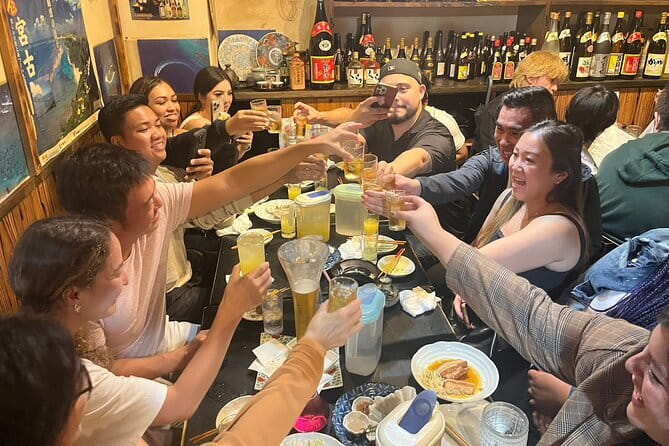
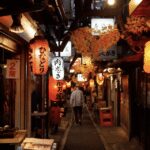
Hoppy Street is the food-and-drink stop, with about 20 minutes allotted. It is known for izakayas serving Hoppy, a local drink, along with foods such as yakitori and oden.
This is a useful introduction to Asakusa’s casual dining culture. The street is associated with friendly pub seating and a relaxed local feel, but 20 minutes is not enough for a leisurely meal. Think of it as a quick look at the area and a chance to mark it for a later return.
The tour does not state that food or drinks are included, so budget separately if you decide to order. Since the walking route ends back at the meeting point, you can also return to Hoppy Street after the activity if the timing suits you.
The 20-minute rickshaw ride toward Skytree

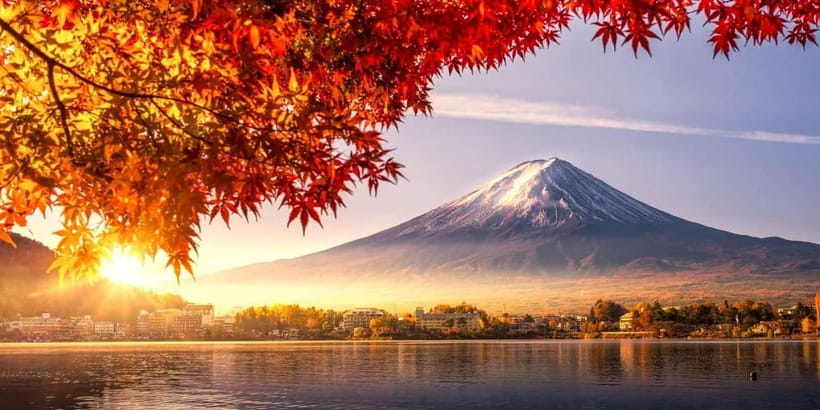
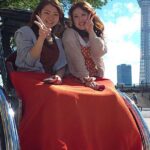
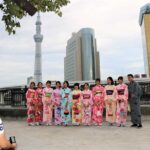
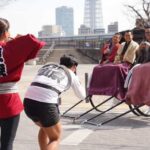
If you select the rickshaw option, you ride for about 20 minutes through the east area of Asakusa. The ride may include views of Tokyo Skytree in the background, giving you a strong photo opportunity that is different from the temple scenes.
The rickshaw is a two-person vehicle. Two people booking together ride in the same rickshaw, while a solo participant rides alone. You will not be placed with another person, which is a small but important comfort detail.
The exact route cannot be requested. The operator arranges the rickshaw according to the number of reservations, so you should book this for the experience itself rather than for one precise street or viewpoint.
You must follow the driver’s instructions during the ride. Weather, traffic, or another operating issue may prevent the rickshaw from running. In those conditions, the activity may be cancelled, so keep your plans flexible.
The rickshaw segment is short compared with the walking time, but it changes the pace nicely. You have already seen the district at street level. Now you can sit above the road, take in a different angle, and aim your camera toward Skytree when the view appears.
Timing, fitness, and group size
The full activity lasts about three hours and 30 minutes. The stop times total a long walking visit, followed by the rickshaw option, so wear comfortable shoes and expect to remain on your feet for much of the experience.
A moderate level of physical fitness is recommended. The supplied details do not specify a distance, step count, or seating breaks, so do not book it if a long guided walk would be difficult for you.
The group can include up to eight people. That size should make it easier to hear the guide and stay together, though public streets around Senso-ji can still be busy. The tour ends at its starting point, which is convenient if you want to continue exploring Asakusa afterward.
A mobile ticket is provided, and booking confirmation is received at the time of booking. The practical rule is simple: arrive early. Late arrivals cannot extend the tour, and the end time may slip, so avoid scheduling a train, reservation, or airport transfer immediately afterward.
How the guide affects the experience
The guide is a major part of the value here. The route itself is easy to find, but a good guide helps connect the temple, shopping streets, food lanes, and rickshaw ride into one readable visit.
Yoko is singled out for tailoring the walk to the group and giving suggestions for other things to do in Tokyo. That tells you what to do if you book: mention your interests early and ask for practical advice while you have the guide’s attention.
The experience is best when you treat it as an introduction, not a final Asakusa itinerary. Let the guide show you the main pattern of the district, then return later to spend more time shopping, eating, or taking photographs.
Who should book this Asakusa experience?
I would recommend it to first-time Tokyo visitors who want a guided start in Asakusa. It also suits anyone who likes a clear schedule, wants a few useful local suggestions, and would enjoy a classic rickshaw photo without arranging the ride alone.
It is a good fit for couples or friends because the rickshaw is designed for two. Solo participants can also ride alone, though the $35 price is easier to justify if you value the guided walk as much as the vehicle ride.
You may want to skip it if you dislike fixed departure times, prefer to choose every stop yourself, or need a firm end time. The rickshaw route is not customizable, the walk follows a set schedule, and weather or traffic can affect operations.
Should you book it?
Book this tour if you want a compact Asakusa orientation that combines Senso-ji and its surrounding streets with a short, private rickshaw ride. The 4.9 rating from 47 reviews and 98 percent recommendation figure support the idea that the format works well, especially when the guide adjusts the walk to your interests.
The strongest value comes from the full package: Kaminarimon, Nakamise, Senso-ji, Hanayashiki Street, Nishi Sando, Hoppy Street, and a Skytree photo opportunity in one visit. Just arrive early, wear good walking shoes, keep your next appointment loose, and remember that the rickshaw route is assigned rather than chosen.
FAQ
How much does the Asakusa rickshaw and walking tour cost?
The tour costs $35 per person.
How long does the activity last?
The experience lasts approximately three hours and 30 minutes.
Where does the tour begin?
It begins at 2-chome-18-9 Kaminarimon, Taito City, Tokyo 111-0034, Japan.
Where does the tour end?
The activity ends back at the meeting point.
Is the tour guided?
Yes. It is a group walking tour with a guide, followed by the rickshaw option if you book it.
How long is the rickshaw ride?
The rickshaw ride lasts about 20 minutes.
Can I choose the rickshaw route?
No. The route cannot be specified in advance.
How many people can join the tour?
The tour has a maximum of eight participants.
Can I share the rickshaw with another participant?
No. The rickshaw is a two-person vehicle. If you participate alone, you ride alone, and you will not share with another participant.
What happens if I arrive late?
The group leaves at the departure time, and the tour cannot be extended for late arrivals.
Can weather affect the rickshaw ride?
Yes. The rickshaw may not operate because of weather, traffic, or another operating issue. In such cases, the tour may be cancelled.
Can I cancel or change my booking?
No. The experience is non-refundable and cannot be changed for any reason.
More Walking Tours in Tokyo


More Rickshaw Rides in Tokyo
More Asakusa Tours in Tokyo
More tours in Tokyo we've reviewed












Asakusa Tours, compared.
 ★ 4.8Tokyo: Japanese Dance Cabaret Theater Asakusa-Kaguwa TicketFrom $492 hours
 ★ 4.7Tokyo: Meiji Shrine, Asakusa, Skytree Bus Tour and CruiseFrom $12210 hours
 ★ 4.9Tokyo: Roll and Authentic Sushi Making Class in AsakusaFrom $581h 40m
 ★ 4.8Tokyo: Asakusa Walking Tour with Sensoji Temple VisitFrom $222 hours
 ★ 5.0Tokyo Asakusa Rickshaw TourFrom $42
 ★ 4.5Tokyo Panoramic 1 Day: Meiji Shrine, Asakusa, Odaiba and SKYTREE®From $85