Reviewed · COOKING CLASSES
Learn to Make Home Style Tempura Udon and Gyoza
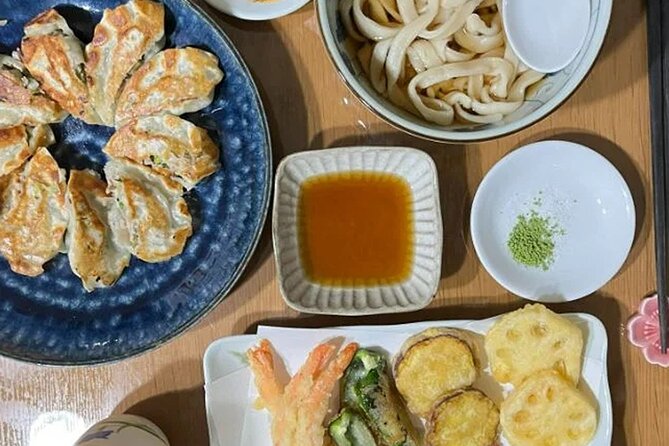
Making udon from flour, frying tempura, and folding gyoza gives you a much better feel for Japanese home cooking than simply eating these dishes in a restaurant. In Emi’s private Tokyo class, you work through the meal step by step, then sit down and eat what you made.
In This Article
- Key points at a glance
- A Japanese meal you make from the ground up
- Kneading udon by hand
- Building the broth with dashi
- Frying tempura without losing the crispness
- Folding gyoza with your chosen filling
- Sitting down to eat what you made
- What Emi adds to the class
- Timing, location, and group planning
- Who will enjoy this cooking class most
- Booking and cancellation details
- Should you book Learn to Make Home Style Tempura Udon and Gyoza?
- FAQ
- How long does the cooking class last?
- Where does the class meet?
- Where does the activity finish?
- What food will I make?
- Which gyoza fillings can I choose?
- Is the class suitable for vegetarians or pescatarians?
- Is transportation included?
- What is included in the price?
- Can I cancel for a refund?
I especially like the hands-on noodle work and the practical recipe booklet in English. You also get direct help from Emi, including the small visual cues that tell you when dough, batter, or vegetables are ready. The main drawback is that this is a short class, so anyone hoping for a broad survey of Japanese cooking will find the menu focused.
The class meets near Nerima Station and lasts about two and a half hours. You need to choose your gyoza filling when booking, and groups of three or more should reserve two to three months ahead, especially for spring and autumn dates.
Key points at a glance
- Hand-knead your udon dough and learn how the texture should feel before cutting the noodles.
- Prepare dashi and tempura as part of one complete meal, rather than studying each dish in isolation.
- Choose one gyoza filling: minced pork, pork with shrimp, or vegetables only.
- Cook privately with Emi, giving you room to ask questions and receive individual guidance.
- Eat the finished meal at the studio with cups of barley tea.
- Take home an English recipe booklet so the class can continue in your own kitchen.
A Japanese meal you make from the ground up
Udon, tempura, and gyoza are familiar Japanese favorites, but each dish teaches a different kitchen skill. Udon shows you how a simple dough becomes a springy noodle. Tempura teaches control of batter and hot oil. Gyoza adds shaping, filling, and pan cooking.
That combination makes the class useful beyond the meal itself. You are not just copying a finished recipe. You are learning what to look for as you work. Emi explains why a step matters and what the food should look like at each stage, a point that is especially helpful for first-time cooks.
The setting is a cozy cooking studio near Nerima Station. This is a residential part of Tokyo rather than a major sightseeing district, so the class can fit well into a day spent away from the central tourist zones. Transportation to the meeting point is not included, and the activity returns to the same meeting point at the end.
Because it is a private activity, only your group takes part. That matters here. Cooking involves questions, messy hands, and occasional uncertainty about timing. You can ask Emi to check your dough or folding technique without worrying about keeping up with a large class.
Other cooking classes in Tokyo



Kneading udon by hand
The class begins with udon made from scratch. Hand-kneading is the part many people remember, since it lets you feel the dough change rather than simply watching someone else prepare it.
The useful lesson is texture. A recipe can tell you how much flour and liquid to use, but the dough still needs judgment. Emi guides you through what to look for, giving you a better chance of repeating the process at home.
Once the dough is ready, you work toward noodles for the final bowl. The class information does not specify every cutting or rolling detail, so the exact pace may depend on your group. Still, the central benefit is clear: you take part in the process that gives udon its satisfying chew.
This is also a good section for children or family groups if they enjoy practical tasks, though the activity details do not give a minimum age. Anyone with limited time should know that making noodles by hand takes attention. You are getting a cooking lesson, not a quick demonstration followed by lunch.
Building the broth with dashi
The udon is served with tempura, so the class also covers dashi, the savory Japanese stock used as a base for the broth. This adds an important piece of context to the meal. The noodles and toppings matter, but the broth gives the bowl much of its character.
Emi’s teaching style appears to focus on the reasons behind each step. That approach is useful with dashi because the finished liquid can look simple, even though small choices affect its flavor. You can ask questions as you work and connect the stock to the bowl you eat later.
The meal is served with barley tea, which is a practical touch during a class involving flour, filling, and hot oil. Cups are available while you cook, so you do not need to treat the meal as the only break in the session.
Frying tempura without losing the crispness
Tempura looks easy until you try to keep it light and crisp. The class gives you a chance to prepare and fry it yourself, with Emi showing you how to judge the process rather than simply handing over a finished plate.
This is one of the most valuable parts for a home cook. The goal is not only to make food hot. It is to learn the signs of a good result: the condition of the batter, the way ingredients are handled, and the point when the coating is ready.
The provided details do not name the exact vegetables or seafood used for the tempura. You should therefore expect the ingredients to follow the class’s available menu rather than plan around a specific vegetable. All ingredients and tools are included, so you do not need to shop or bring cooking equipment.
The hot oil also means you should stay attentive. This is a hands-on cooking lesson, not a casual tasting stop. Emi’s direct supervision is particularly useful here, since frying is the step where timing and safety matter most.
Folding gyoza with your chosen filling
Gyoza gives the class its most customizable element. At booking, choose one of three fillings:
- Minced pork
- Minced pork and shrimp
- Vegetables only
The choice must be made in advance. That is important for anyone in a mixed group, since the host needs to prepare the right ingredients before the class begins.
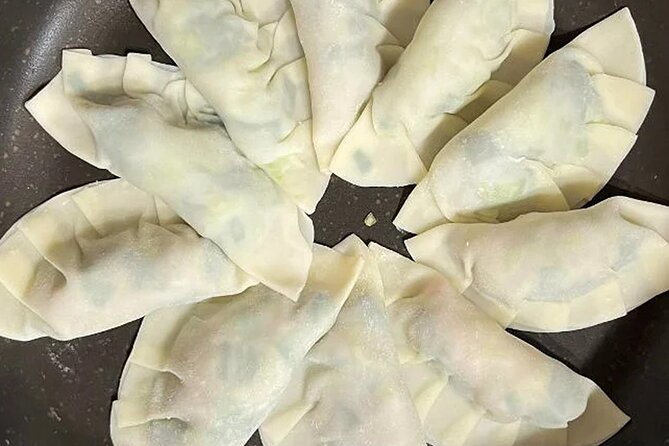
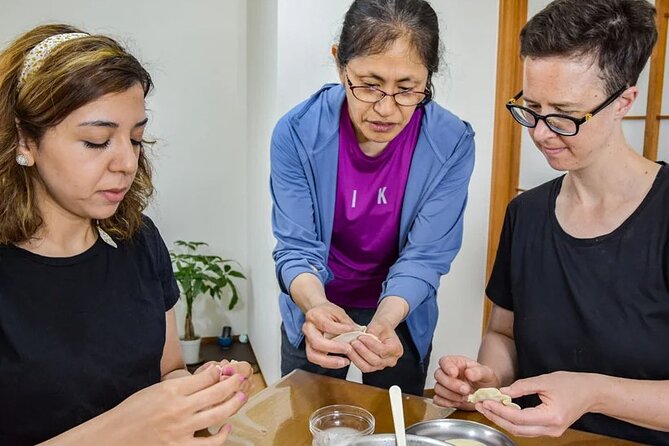
You fill and fold the dumplings yourself. The folding lesson is practical and social, but it can also test your patience at first. Neat pleats take practice. The point is not to produce restaurant-perfect dumplings on the first attempt. It is to understand how much filling to use and how to seal the wrapper so it cooks properly.
The vegetable option makes the class suitable for vegetarians, and vegetarian and pescetarian dietary needs can be accommodated with advance notice. The supplied information does not promise every possible allergy or dietary adjustment, so contact the provider early if your needs go beyond those options.
Pescatarians should pay close attention to the filling choice. Minced pork and minced pork with shrimp are not pescatarian options, while the vegetable selection is the stated meat-free choice. Ask for confirmation if you need the full meal, including broth and tempura, adjusted.
Other cooking classes in Tokyo


Sitting down to eat what you made
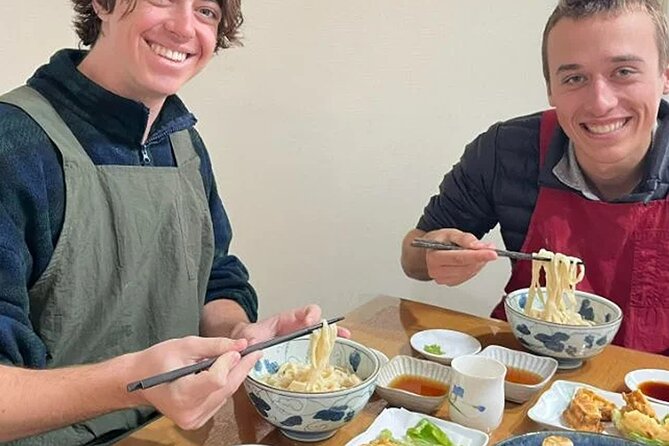
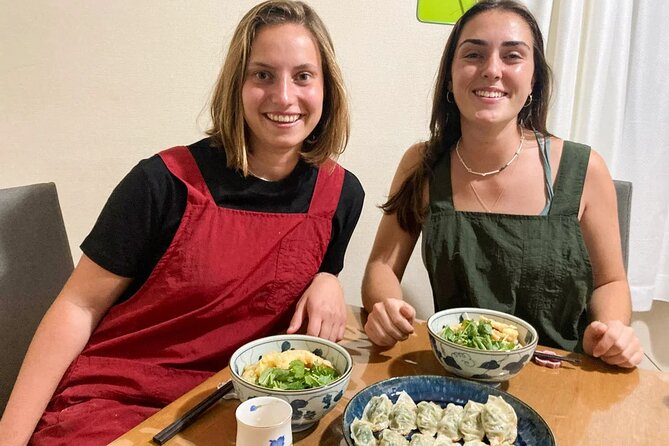
After the preparation and cooking, you sit down at the studio to eat the udon, tempura, and gyoza. This final meal gives the class a clear payoff. You can see how the separate tasks fit together on one table.
I like this format more than a class that sends you home with containers. Eating the dishes immediately lets you assess the texture and seasoning while the instructions are still fresh. If your noodles are softer than expected or your gyoza folds need work, you can ask Emi about it on the spot.
The meal is included in the $95.23 price, along with ingredients, tools, barley tea, and the English recipe booklet. At first glance, that is more than the cost of ordering udon and gyoza at a casual restaurant. The value comes from the private instruction and the reusable skills, not from the food alone.
If you are mainly looking for an inexpensive lunch, this is not the best choice. If you want a guided activity that ends with a full Japanese meal and gives you recipes to use later, the price is easier to justify.
What Emi adds to the class
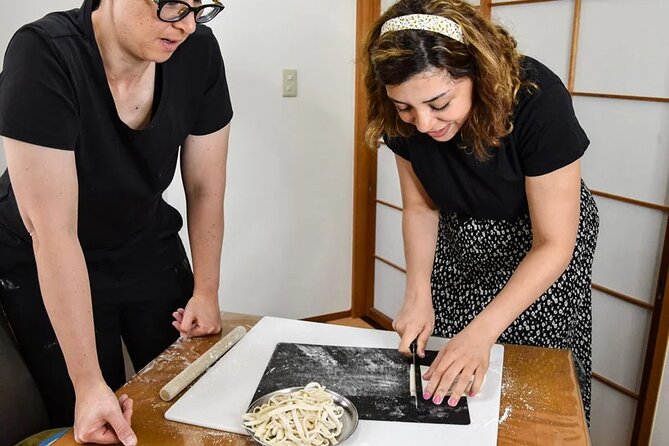
Emi is the named local instructor, and the class’s strongest quality is her direct involvement. She demonstrates each task, explains why the step matters, and points out the visual cues that help you judge your work.
That teaching method is more useful than a lecture about Japanese food. You learn why vegetables may need to be cut a certain way, what the dough should feel like, and how to recognize the right stage of cooking. These are the details that recipe cards often leave out.
The class also offers a personal connection to daily life in Japan. One particularly appealing aspect is the chance to ask Emi about food and life in Japan while you cook. It is a small setting, so the conversation can develop naturally instead of being limited to a scripted presentation.
English instruction is part of the offering, and the take-home recipe booklet is in English. For a visitor who wants to recreate the dishes after returning home, that booklet may be the most lasting part of the class.
Timing, location, and group planning
The meeting point is Nerima Station at 1-chōme-3-5 Nerima, Nerima City, Tokyo. The class ends back at the meeting point, and the location is near public transportation. You will need to arrange your own way there and back.
Allow the full two hours and 30 minutes. Since the class includes dough preparation, broth, tempura, gyoza, and a sit-down meal, it is not wise to schedule a tight connection immediately afterward.
The activity is often reserved about 81 days ahead. That average is a useful warning, not a rule, but it tells you not to leave this until the last week if your dates are fixed. Groups of three or more are encouraged to book two to three months ahead, with spring and autumn tending to fill the studio quickly.
There is also an unusual participation restriction: a single male participant cannot take part alone. The supplied conditions do not explain the reason, so confirm the rule before booking if you are a solo male guest. A solo female booking or other group arrangement should still be checked with the provider for availability.
For smooth contact with Emi, provide a WhatsApp-registered number when you book. Confirmation is sent within 48 hours, subject to availability.
Who will enjoy this cooking class most
I would recommend this class to you if you want an activity with real participation rather than a food tour built around sampling. It suits couples, families, friends, and small private groups who enjoy learning by doing.
It is especially good for:
- Home cooks who want Japanese recipes they can repeat
- Families looking for a shared indoor activity
- Visitors who want a quieter Tokyo neighborhood setting
- People interested in noodles, dumplings, or frying technique
- Vegetarian or pescatarian participants who give advance notice
- Anyone who values personal instruction over a large group format
It may be less suitable if you dislike cooking, have strict dietary requirements beyond the stated options, or want to visit several famous Tokyo sights in the same short block of time. The class is focused on one meal, and that focus is its strength.
The English recipe booklet also makes this a smart choice for someone who likes useful souvenirs. You leave with something you can use, not just something to display. Recreating the meal for family at home gives the class a second life.
Booking and cancellation details
You can cancel for a full refund up to 24 hours before the local start time. Changes or cancellations made less than 24 hours in advance are not accepted for a refund, so check your Tokyo schedule before committing.
Give your gyoza preference at booking, along with any vegetarian or pescatarian needs. The legal drinking age in Japan is 20, though alcohol is not listed as part of this activity.
Should you book Learn to Make Home Style Tempura Udon and Gyoza?
Book it if you want to understand how three everyday Japanese dishes are made and you like the idea of eating your own work afterward. The private format, Emi’s step-by-step instruction, and English recipes give the $95.23 price practical value.
I would skip it only if you are seeking a cheap meal, need a very flexible booking, or prefer a broad cooking tour with many dishes. For a small group with fixed Tokyo dates, reserve early, choose the gyoza filling carefully, and leave enough time to reach Nerima Station. This is a focused, friendly lesson that sends you home with both dinner and a skill.
FAQ
How long does the cooking class last?
The class lasts approximately two hours and 30 minutes.
Where does the class meet?
It meets at Nerima Station, at 1-chōme-3-5 Nerima, Nerima City, Tokyo 176-0001, Japan.
Where does the activity finish?
The activity ends back at the meeting point.
What food will I make?
You will make hand-kneaded udon, dashi, crispy tempura, and gyoza, then eat the completed meal.
Which gyoza fillings can I choose?
You can choose minced pork, minced pork and shrimp, or vegetables only. You must provide your preference when booking.
Is the class suitable for vegetarians or pescatarians?
Vegetarian and pescatarian dietary requirements can be accommodated with advance notice. Inform the provider about your needs before the class.
Is transportation included?
No. Transportation to and from the meeting point is not included.
What is included in the price?
The price includes all ingredients and tools, the udon with tempura and gyoza meal, barley tea, and an English recipe booklet.
Can I cancel for a refund?
Yes. You can cancel at least 24 hours before the local start time for a full refund. Cancellations or changes made less than 24 hours before the start are not accepted for a refund.
More Cooking Classes in Tokyo
More Cooking Classes in Tokyo
More tours in Tokyo we've reviewed












Cooking Classes, compared.
 ★ 5.0Ramen & Gyoza Cooking Class in Tokyo with Local Supermarket VisitFrom $122
 ★ 5.0Ramen and Sushi Cooking Class with Sake Pairing Set in TokyoFrom $79
 ★ 4.9Tokyo: Wagyu and 7 Japanese Dishes Cooking ClassFrom $673 hours
 ★ 5.0Tokyo Washoku 4-hour Cooking Class: From Market to TableFrom $79
 ★ 5.0Professional Ramen & Gyoza with Ramen Chef in a restaurant!From $159
 ★ 5.0Small-Group Wagyu Beef and 7 Japanese Dishes Tokyo Cooking ClassFrom $72