Reviewed · SAMURAI & NINJA EXPERIENCES
Ninja Samurai 2-hour hands-on lesson by Japanese master in Tokyo
The sharpest part of this Tokyo experience is that you do not just watch a staged ninja show. You put on ninja clothing, learn Kuji-In meditation, handle weapons, practise sword movements, throw shuriken, and try a blowgun under the direction of a Japanese master. The class also separates genuine tradition from movie and anime fantasy.
In This Article
- Key points to know before booking
- What happens during the two-hour class
- Kuji-In meditation and the ninja mindset
- Sword drawing and samurai technique
- Shuriken, blow darts, and ninja tools
- The instructors make the difference
- Who will enjoy this most
- Location, timing, and the small practical catches
- Is $86.22 a fair price?
- What I would prepare before going
- Should you book the Ninja Samurai class?
- FAQ
- How long does the Ninja Samurai class last?
- Where does the activity begin and end?
- How many people can join the class?
- Is the class taught in English?
- Are ninja clothes included?
- What happens if I need to cancel?
I like the six-person limit, which gives the instructor room to correct your stance and keep the class moving at a comfortable pace. I also like the mix of history and action: the sword work has a sense of form, while the throwing stars and blow darts give you the quick thrill most people hope for.
The main drawback is practical rather than cultural. The Shiomi address can take a little finding, and one experience found the elevator out of order, requiring four short flights of stairs. Plan extra time, check the directions before leaving, and do not expect a grand historical castle: this is a working dojo in a modern Tokyo building.
Key points to know before booking
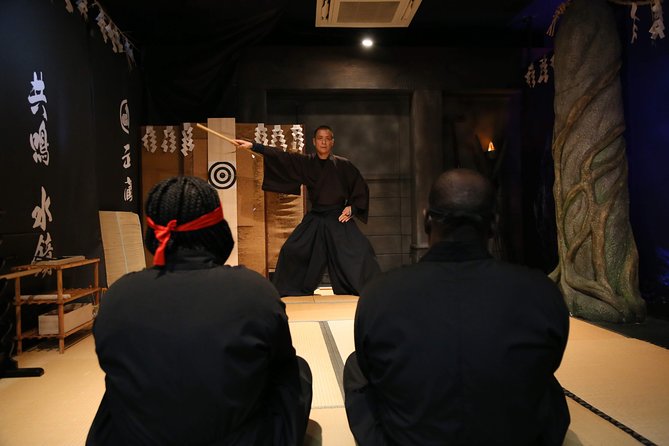
- A true small-group class: The maximum is six people, so you get more personal instruction than in a large stage-style show.
- Several hands-on skills: The class may include sword drawing, sword training, shuriken, blow darts, ninja tools, stealth movements, and Kuji-In meditation.
- English instruction: A Japanese sensei trained in ninja arts teaches the session in English. Instructors named in the experience information include Hyoga, Onel, Asami, and Buddy.
- Ninja clothing is supplied: Changing into the outfit helps turn a short class into a memorable activity for families, couples, and friends.
- Suitable for many ages: Children aged 11 and 13 have taken part, as have adults in their 60s and 70s, though some activities involve movement, running, or jumping.
- Allow time to find the dojo: It is in Shiomi, Koto City, and the meeting point is on the fourth floor of Bayfrere Shiomi.
What happens during the two-hour class
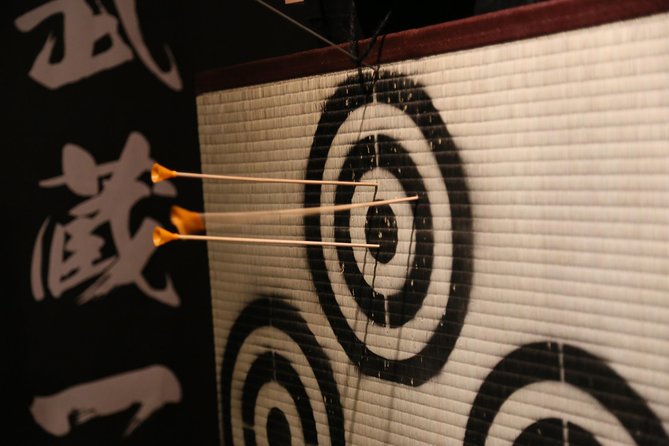
This is a busy two hours, with several short lessons rather than one long sword lecture. The exact order can vary, but you should expect a combination of explanation, demonstration, practice, and a final chance to perform what you have learned.
You begin at NINJA SAMURAI TOKYO, at Bayfrere Shiomi in Koto City. After changing into rented ninja clothing, the class moves into the basics: posture, movement, the idea of discipline, and the difference between popular ninja images and historical practice.
The clothing is not just a photo prop. It gives the class a clear sense of occasion, especially for children and families. You will likely want to take photos, and the class experience information encourages bringing a camera or phone. Keep your device secure and use it during natural breaks rather than while handling equipment.
The instructor then introduces ninja tools and weapons. This section gives useful context before the practical work begins. You learn what different tools were intended to do, how ninja and samurai traditions differ, and why the sword was more than a simple fighting object.
One especially useful point is the distinction between a ninja sword and a samurai sword. Popular culture often treats them as interchangeable, but the class explains differences in handling and tradition. That small bit of background makes the later sword practice more meaningful.
A few more Tokyo tours and experiences worth a look

Kuji-In meditation and the ninja mindset
The meditation section is called Kuji-In, or ninja meditation. It introduces the mental side of the tradition, including hand signs and focused breathing or concentration. This slows the pace before the more active weapon work.
I like this part because it keeps the class from becoming a costume-and-target game. Ninja training is presented as a mix of control, awareness, and technique, not simply stealthy acrobatics. The instructors also use the history section to correct myths and anime assumptions.
Do not expect a long silent meditation retreat. This is one segment of a fast-moving introductory class. Its value is in giving you a glimpse of the mindset behind the physical skills, then showing how focus affects movement.
Sword drawing and samurai technique
The samurai portion focuses on how to draw and use a Japanese sword. The instructor demonstrates the movement, then breaks it down so you can practise the steps safely and in order.
This is more precise than swinging a prop sword around. You work on stance, grip, drawing technique, and the controlled motion of a cut. The instructors are described as patient and careful, which matters here because a sword movement can look simple until you try to coordinate your hands and feet.
Some sessions have allowed participants to practise with a real metal sword, while other activities may use training equipment. The exact equipment can vary, so you should follow the sensei’s directions rather than assume every item is a performance weapon. The lesson is about form and control, not force.
Near the end, you may get to perform a short samurai sequence using what you learned. That gives the class a satisfying finish and makes it easy to see your own progress. You begin with a demonstration that looks complicated, then manage a simplified version yourself.
The samurai section will suit you if you enjoy martial arts, Japanese culture, or activities that reward concentration. It may feel less exciting if you want nonstop action, but the measured pace is part of the point.
Shuriken, blow darts, and ninja tools
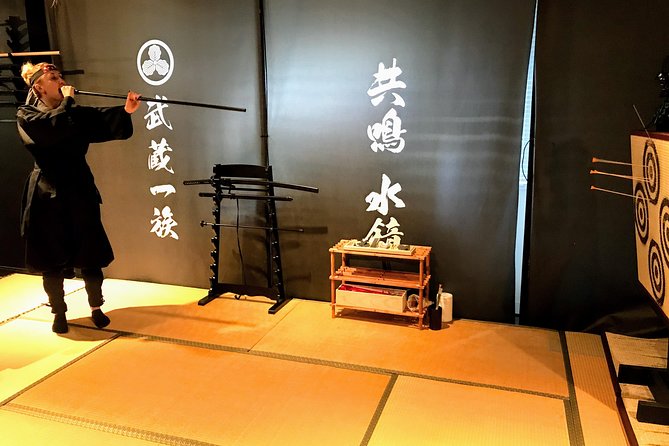
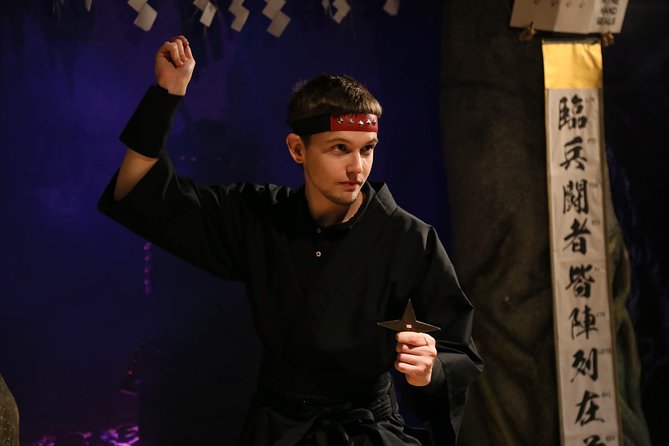
The most playful part of the class is the weapon practice. You may throw shuriken, often called ninja stars, at targets, try ninja blowgun darts, and handle other traditional tools. Some sessions have also included throwing chopsticks, which adds an unusual twist to the target work.
Shuriken practice is easy to understand and fun across a wide age range. You get a clear goal, quick feedback, and the chance to adjust your technique after each attempt. It is not presented as an advanced combat course, so beginners can take part without prior martial arts training.
The blowgun section offers a different challenge. Breath control and aim matter more than strength, and the activity gives you another look at how varied ninja tools were supposed to be. It is also one of the moments that tends to keep children and teenagers focused.
The class may include a short look at a ninja trick house or a demonstration of ninja gimmicks. This adds some theatrical flavor, but it works best when treated as an introduction to old techniques rather than a full attraction in its own right.
Safety is important throughout. You handle weapons only as directed, and the instructor demonstrates each action first. Still, this is an active class, not a passive museum visit. Pay attention, take turns, and avoid turning the equipment into a joke between exercises.
The instructors make the difference
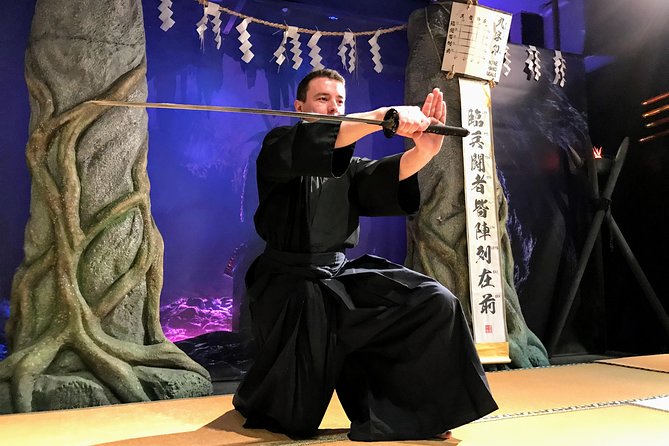
The experience depends heavily on the sensei leading your session. The listed teaching team includes Japanese instructors such as Hyoga, Onel, Asami, and Buddy, and the class is taught in English.
The strongest descriptions of the class consistently focus on the instructors’ teaching style. They are described as funny, patient, clear, and able to explain the historical background without losing the group’s attention. That balance is important: a stiff lecture would make the two hours drag, while a pure comedy routine would make the cultural content feel thin.
You can expect the instructor to demonstrate first, explain the purpose of a technique, and then let you try it. A small group makes this much better than a crowded session. With no more than six participants, the sensei can watch individual sword movements and give basic corrections.
English ability is also a major practical advantage. The instructors are described as fluent or very good in English, so you can ask questions and understand the safety instructions. The quality of the class may still vary slightly by instructor, but the teaching format gives each sensei room to connect with the group.
A few more Tokyo tours and experiences worth a look





Who will enjoy this most
This is a strong choice for families, couples, and friends who want an active cultural activity between temple visits and shopping. It has enough variety to hold the attention of children, while the history and technique give adults something more substantial than a costume photo.
The age range can be broad. Families with children aged 11 and 13 have taken part, and one mixed-age group included people from 11 to 73. You do not need to be an athlete, but you should be comfortable with basic movement. At least one session included running and jumping, so anyone with mobility concerns should consider that before booking.
Martial arts fans will appreciate the sword instruction and the chance to handle several tools. If you are mainly interested in Japanese history, the explanations about ninja and samurai culture will add value, though this remains a practical class rather than a full history seminar.
It is also a good rainy-day plan in principle because the activity takes place indoors, but the stated policy says the experience requires good weather and may be canceled for poor conditions. If your schedule is tight, keep that policy in mind.
Location, timing, and the small practical catches
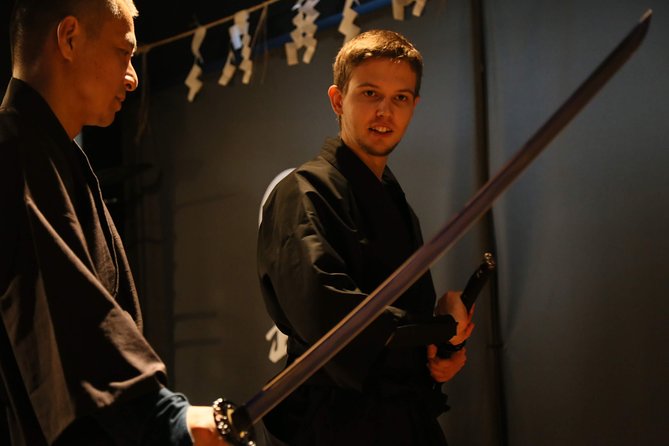
The meeting point is NINJA SAMURAI TOKYO, 2-chome 3-9, Bayfrere Shiomi, East 4th floor, in Shiomi, Koto City, Tokyo 135-0052. The activity ends at the same place.
The dojo is near public transportation, and one experience found it easy to reach by train from Yokohama, followed by a direct walk from the station. A taxi should normally be able to find the address, but one booking had trouble locating the class by taxi. I would rely on the written address and allow extra time rather than arrive at the last minute.
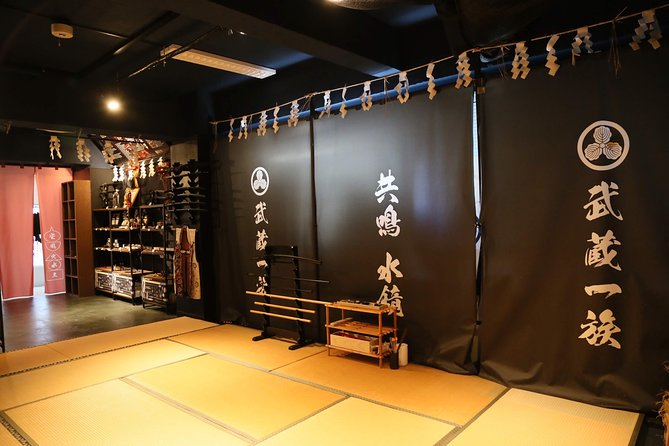
The building matters. The class is in a real dojo setting, not necessarily the polished theatrical room shown in every promotional image. One participant found the elevator was not working and climbed four short flights of stairs. If stairs are difficult for you, confirm the current building access before committing.
Bring water or plan to buy it before class, since bottled water is not included. Private transportation is also not included. The mobile ticket is convenient, but keep the confirmation easy to open on your phone.
Is $86.22 a fair price?
At $86.22 per person, this is not the cheapest costume activity in Tokyo. The value comes from the amount of direct instruction packed into two hours, the small group size, the clothing rental, the English-speaking sensei, and the chance to try several kinds of equipment.
A large performance might offer a more polished show, but it would not give you the same personal practice time. A museum visit could provide more historical detail, but it would not let you draw a sword, throw shuriken, or try a blowgun.
For a family, the cost adds up quickly, so I would book this only if everyone wants to participate. For a couple or a small group of friends, the personal instruction makes the price easier to justify, particularly if you value unusual activities over another sightseeing stop.
The strongest value comes from variety. You are not paying for one short sword demonstration. You get clothing, meditation, history, ninja tools, target practice, sword technique, and a final performance element. That range makes the class feel like a complete two-hour activity.
What I would prepare before going
Wear clothes that allow movement under the ninja outfit. The class can involve running, jumping, and repeated arm movements, so restrictive clothing would be a nuisance.
Arrive early enough to find the building and reach the fourth floor. Do not assume the taxi driver will know the venue instantly, and do not leave only a few minutes for the walk from public transportation.
Bring a phone or camera if you want photos, but keep it out of your hands during weapon practice. You will have better memories if you focus on the instruction first and take pictures during suitable pauses.
Finally, keep your expectations in the right place. You will not learn the full ninja arts in two hours, and you will not be trained as a samurai warrior. You will get a lively introduction, a handful of basic techniques, historical context, and a chance to play the part with proper guidance.
Should you book the Ninja Samurai class?
I would book this if you want a hands-on Tokyo activity with real instruction, a small group, and plenty of variety. It is especially well suited to families with older children, couples, and friends who want to do something active instead of simply looking at another display.
I would hesitate only if stairs, jumping, or active weapon practice are a concern, or if you prefer quiet historical sites to participatory classes. Also check the meeting directions carefully, since the location has caused confusion for at least one participant.
For most people, the combination of Kuji-In meditation, sword drawing, shuriken, blow darts, ninja clothing, and English instruction offers good value for two hours. Book it for the experience of learning and taking part, not for a movie-style stunt show.
FAQ
How long does the Ninja Samurai class last?
The class lasts approximately two hours.
Where does the activity begin and end?
It begins and ends at NINJA SAMURAI TOKYO, Bayfrere Shiomi, East 4th floor, 2-chome 3-9, Shiomi, Koto City, Tokyo 135-0052.
How many people can join the class?
The maximum group size is six travelers.
Is the class taught in English?
Yes. A Japanese sensei trained in ninja arts teaches the class in English.
Are ninja clothes included?
Yes. Ninja clothing rental during training is included.
What happens if I need to cancel?
You can receive a full refund if you cancel at least 24 hours before the local start time. Cancellations or changes made within 24 hours are not refunded or accepted. If the activity is canceled because of poor weather or too few participants, you will be offered another date or experience, or a full refund.
More 2-Hour Experiences in Tokyo


More Workshops & Classes in Tokyo
More Samurai & Ninja Experiences in Tokyo


More tours in Tokyo we've reviewed








Samurai & Ninja Experiences, compared.
 ★ 4.5Tokyo: Samurai Restaurant Show Ticket with 2 DrinksFrom $551h 30m
 ★ 4.6Tokyo: Samurai Ninja Museum Guided tour and ExperienceFrom $27
 ★ 5.0Skip the lines Basic Ticket at SAMURAI NINJA MUSEUM TOKYOFrom $28
 ★ 5.0Tokyo: Authentic Samurai Training at a DojoFrom $211
 ★ 5.0Best Samurai Experience in TokyoFrom $65
 ★ 4.6Tokyo: Legend Samurai Entertainment Night in Kanda ShrineFrom $44