Reviewed · SAMURAI & NINJA EXPERIENCES
Best Samurai Experience in Tokyo
The best part of this Tokyo samurai experience is that you do more than pose in costume. You choose a kimono and hakama, learn how to draw, hold, swing, and return a sword, then use those moves in a short choreographed battle. The Edo-period-style dojo, lined with armor, swords, and spears, gives the hour a proper stage.
In This Article
- Key points at a glance
- Entering the Edo-style dojo in Shinjuku
- Choosing a kimono and hakama
- Learning the katana basics
- From basic moves to a staged battle
- Getting photos and videos you will actually use
- Is the $65 price good value?
- Who should book this samurai experience?
- Practical details that affect your visit
- My call: book it for fun with a cultural angle
- FAQ
- Where does the samurai experience take place?
- How long does the activity last?
- What does the $65 price include?
- Is transportation included?
- Can I participate alone?
- Are photos and videos allowed?
- Can I cancel for a full refund?
I like the hands-on teaching, which turns a costume photo into a simple lesson in sword movement. I also like the staff’s care with cameras and phones. They can take photos and videos for solo visitors and families, so you do not have to choose between performing and recording the moment.
The main consideration is time. At about one hour, this is a brisk introduction rather than a serious study of samurai culture. The venue is also reached through side roads, so allow a few extra minutes to find the flag and entrance.
Key points at a glance
- Choose your own kimono and hakama: You select the traditional outfit before learning the basic movements.
- Practice four essential sword actions: The lesson covers drawing, holding, swinging, and returning the sword.
- Perform a choreographed chambara battle: You put the lesson together in a staged fight, with music and theatrical action.
- Explore an Edo-style dojo setting: Armor, swords, spears, and other weapons surround the activity.
- Photos and videos are welcome: Staff can help record your performance, including for solo visitors.
- Good for families and beginners: The activity has a maximum of 10 people, and children as young as six have enjoyed it.
Entering the Edo-style dojo in Shinjuku
Samurai Theater Tokyo is at 40 Yokoteramachi in Shinjuku City. The meeting point is near public transportation, but the final approach may feel less obvious than the address suggests. The venue sits up side roads, and a flag helps guide you in. I would not cut your arrival too close, especially if you are unfamiliar with Tokyo’s narrow lanes.
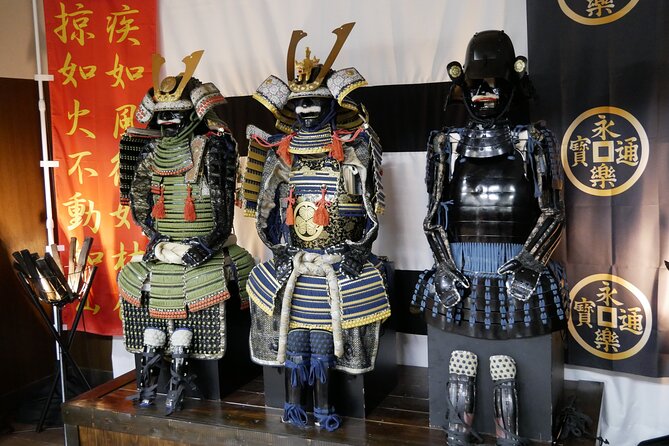
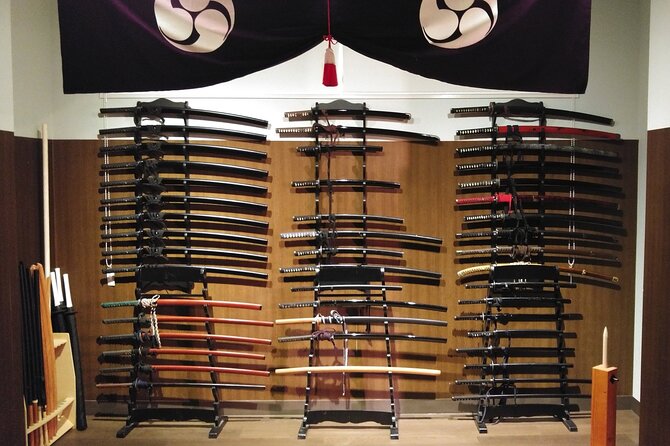
Inside, the setting is designed to resemble a dojo from the Edo period, roughly 400 years ago. This is not a large historical museum, but the surroundings do useful work. Armor, swords, spears, and other weapons give you something to look at before the lesson begins and help separate the activity from a standard costume studio.
That setting matters because the experience depends on atmosphere. Putting on a kimono in a plain modern room would still make a good photo, but standing among displayed armor and weapons gives the short session a stronger sense of place.
The program accepts solo participants, couples, families, and small groups. With a maximum of 10 people, the class is small enough for instruction and pictures without feeling like a large stage show. The exact balance may depend on the day’s group, but the format is built for participation rather than watching from the sidelines.
A few more Tokyo tours and experiences worth a look

Choosing a kimono and hakama
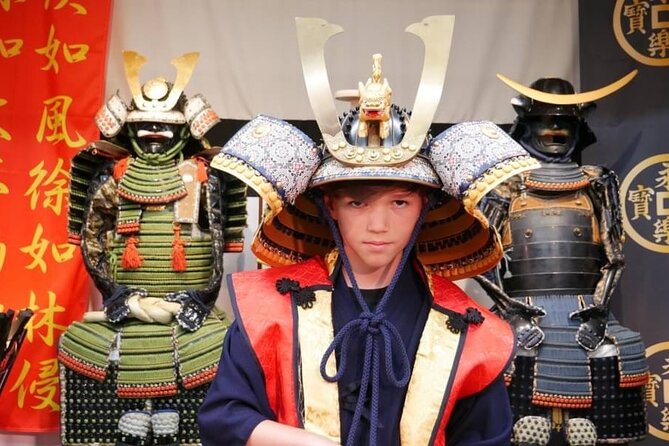
The first real step is selecting your samurai costume. You choose a favorite kimono and hakama, then change into the traditional outfit with help from the staff as needed. Several people describe the formal clothing as more comfortable than expected, which is useful to know if you are worried about spending the hour in stiff or restrictive clothing.
The costume is not just decoration. It changes the way you carry yourself and makes the later sword practice feel like a performance with a role to play. Children tend to enjoy the transformation, while adults get the same chance to take the scene seriously or make it playful.
Allow a little patience during the changing process. The activity lasts only about an hour, and the costume portion takes up part of that time. That is not a flaw, but it means you should think of this as a compact cultural activity with a theatrical finish, not a long workshop.
Photography is part of the fun from the start. You can take pictures with your smartphone and pose with the instructors or the displayed equipment where appropriate. If you are visiting alone, tell the staff early that you would like photos and video. They have made a point of helping solo participants record the experience.
Learning the katana basics
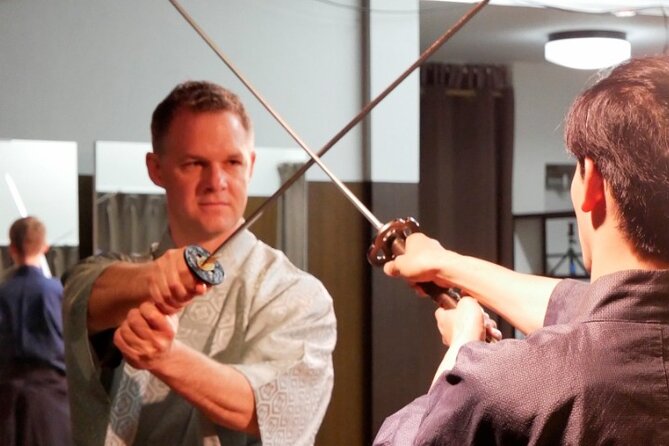
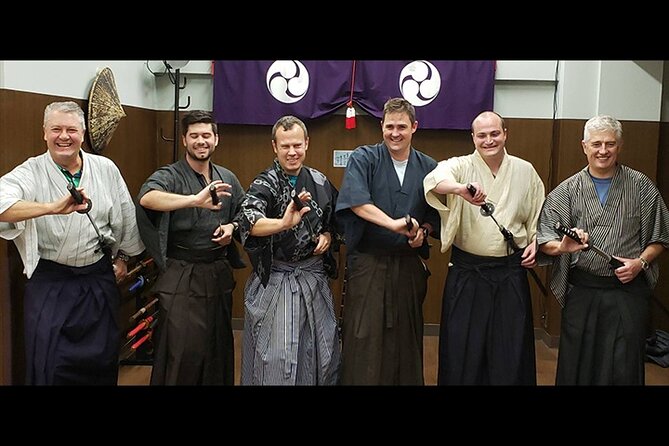
Once dressed, you learn the fundamentals of handling a Japanese sword. The lesson covers how to draw the sword, how to hold it, how to swing it, and how to return it. The instruction also includes safety, an important detail when an activity involves swords, even in a controlled theatrical setting.
The teaching is aimed at beginners. You do not need prior martial arts experience, and the session is paced so children and adults can follow along. The instructors are described as professional performers and teachers who have appeared in major Japanese dramas and films. That background helps explain the mix of clear instruction and stage presence.
I would expect the lesson to feel more like learning a film-ready sequence than studying a complete martial art. You are introduced to basic movements and then asked to remember them in order. That makes the hour accessible, but it also sets a limit: you will leave with a few practiced actions, not mastery of sword technique.
The most useful part is the shift from explanation to repetition. You practice the movements before adding the performance. That gives you a chance to get the posture and timing right without immediately worrying about the camera.
The instructors’ patience is especially valuable for families. A six-year-old can enjoy the activity, but younger children may need reminders to listen, wait, and control their movements. Older children and teenagers get more from the choreography because they can remember the sequence and play up the dramatic parts.
From basic moves to a staged battle
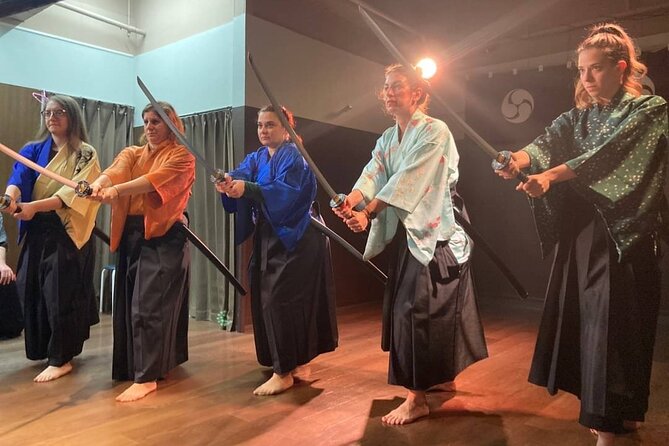
After the sword lesson, the group practices a simple chambara, or Japanese sword-fight performance. This is not presented as a real fight. It is a planned sequence that lets you use the moves you have learned while keeping the action controlled.
The performance is the strongest part for many people because it gives the costume and lesson a clear purpose. You are no longer simply holding a sword for a picture. You have a short scene to perform, with movement, timing, and a little drama.
The session then adds music and a playful good-versus-bad-guys setup. You try to defeat the villains to the soundtrack, which brings a movie-like quality to the finale. If you prefer serious cultural instruction, this theatrical element may feel light. If you want a memorable Tokyo activity with children or friends, it is likely to be exactly the right tone.
The instructors guide the group through the sequence and help keep everyone together. That support matters because a choreographed fight can quickly become confusing when several people are moving at once. The small group limit should make it easier to see what is happening and receive corrections.
You should also expect the session to be energetic rather than solemn. The staff’s role is part teacher, part performer, and part photographer. Their friendliness and humor are central to the experience, especially for anyone who arrives unsure about acting in costume.
Getting photos and videos you will actually use
Bring a charged smartphone. Photography and video recording are allowed inside the venue, and the activity is designed to produce keepsakes. You can record your sword sequence and take posed pictures with the samurai instructors.
This is a real value point. Many costume activities give you a few minutes to pose, then leave you to manage your own camera. Here, staff can take pictures and video, which is particularly helpful for solo visitors and parents who want to be in the frame with their children.
Families should decide in advance who wants action footage and who wants still photos. The hour moves quickly, and you will get better results if your phone is ready rather than tucked away in a bag. Staff assistance is available, but the activity remains short.
The photos also give the experience a longer life. The lesson itself is brief, but the images show the costume, the dojo-like room, and the performance. For a Japan trip, that makes this more than a disposable activity, provided you enjoy playful, staged photographs.






Is the $65 price good value?
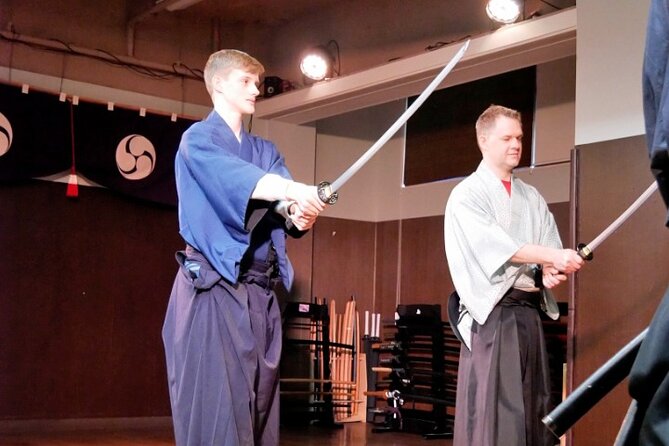
At $65 per person, the experience costs more than a simple visit to a museum or a quick costume rental. The fee includes all taxes and other activity fees, a professional guide or instructor, and the samurai costume. Transportation is not included, but the meeting point is near public transit, so you arrange your own way there.
I see the price as fair if you value participation. You are paying for the outfit, instruction, a themed setting, the choreographed performance, and staff help with photos. The experience also works for a single person, which is not always true of performance-based activities.
The value is weaker if you want a long historical lecture or extended weapons display. The session lasts about one hour, and the teaching stays at an introductory level. You should book it for the combination of dressing up, learning basic movements, performing, and recording the result.
For a family, the cost can make sense because adults and children take part together. Several age groups can enjoy the same activity, from young children to adults in their twenties. The staff have also offered small gifts to children at the end, though you should not treat that as a guaranteed part of every booking.
Who should book this samurai experience?
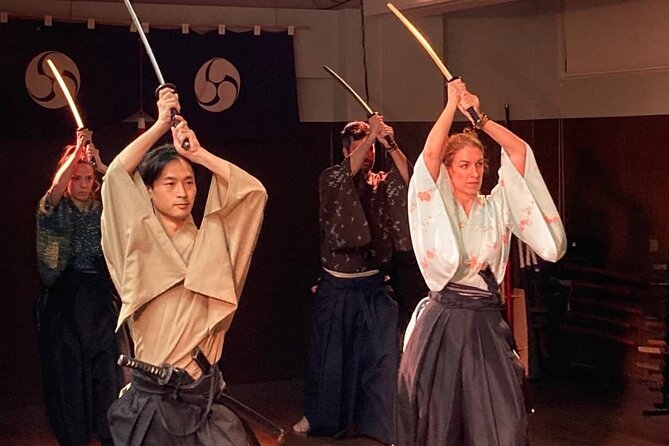
I would recommend it to you if you want an active cultural activity in Tokyo rather than another place to look at objects behind glass. It suits:
- Families looking for something children can understand and enjoy
- First-time visitors who want a clear introduction to samurai imagery and sword etiquette
- Couples or friends who like costumes, staged action, and photographs
- Solo visitors who want staff help recording the experience
- Film and drama fans interested in instructors with professional screen experience
- Visitors with a tight schedule who can spare about one hour
It is also a good choice for people who feel awkward about physical activities. The movements are taught step by step, and you do not need to arrive with martial arts skills.
I would think twice if your priority is a detailed account of samurai politics, warfare, or daily life. The setting includes historical-looking objects, but the focus is doing rather than lecturing. It is best understood as an interactive cultural performance with instruction, not a full museum tour.
Practical details that affect your visit
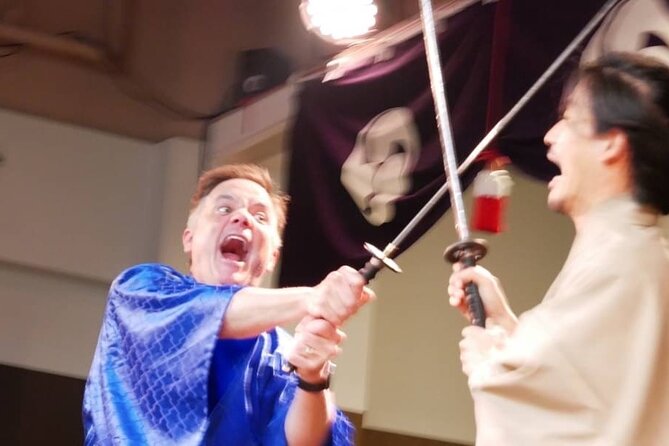
The activity begins and ends at Samurai Theater Tokyo, so you return to the same meeting point. There is no private transportation included. Use public transit and allow time for the last part of the walk, since the side-road location can be easy to miss at first.
The booking confirmation is provided at the time of reservation. Same-day reservations may be possible, but availability can change quickly, especially since the experience has been booked several times in a day. If your Tokyo schedule is tight, reserve ahead rather than relying on a last-minute opening.
The maximum group size is 10 people. That is a useful limit for an activity involving costumes, sword movements, and photography. Most people can participate, and the program is suitable for beginners, but you should still be comfortable standing and following simple physical instructions for the session.
Free cancellation is available if you cancel at least 24 hours before the start time. Cancellations made less than 24 hours ahead are not refunded, and late changes are not accepted. The cut-off follows Tokyo local time, so check the time carefully if you are booking from another country.
My call: book it for fun with a cultural angle
Book this experience if you want to wear a samurai costume, learn a few real-feeling sword movements, and perform a short action scene in an Edo-style room. The strongest points are the patient instructors, the chance to record photos and video, and the fact that solo visitors and families are both welcome.
Do not book it expecting a long history lesson or advanced sword training. At about an hour, it is compact and theatrical. For most visitors, that is the appeal: you get a memorable activity without giving up half a day of sightseeing.
At $65, I think it earns its place in a Tokyo itinerary when you want something social, visual, and easy for different ages to enjoy. Wear the costume, pay attention during the safety lesson, and arrive with your phone charged. You will leave with a few new moves and a much better samurai photo than a standard souvenir snapshot.
FAQ
Where does the samurai experience take place?
It takes place at Samurai Theater Tokyo, 40 Yokoteramachi, Shinjuku City, Tokyo 162-0831, Japan.
How long does the activity last?
The experience lasts approximately one hour.
What does the $65 price include?
The price includes all fees and taxes, a professional guide or instructor, and the samurai costume.
Is transportation included?
No. Private transportation is not included. The venue is near public transportation.
Can I participate alone?
Yes. One person can join the experience, and staff can help solo participants take photos and videos.
Are photos and videos allowed?
Yes. You can take photos and record video with your smartphone inside the venue. You can also take pictures with the samurai instructors.
Can I cancel for a full refund?
Yes, if you cancel at least 24 hours before the experience start time. Cancellations made less than 24 hours before the start time are not refunded, and changes within that period are not accepted.
More Samurai & Ninja Experiences in Tokyo

More tours in Tokyo we've reviewed












Samurai & Ninja Experiences, compared.
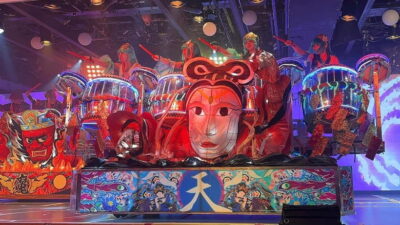 ★ 4.5Tokyo: Samurai Restaurant Show Ticket with 2 DrinksFrom $551h 30m
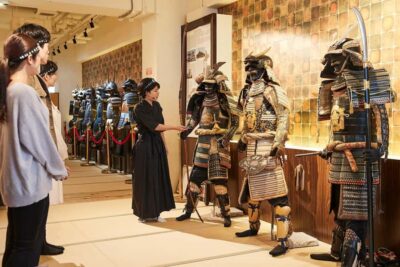 ★ 4.6Tokyo: Samurai Ninja Museum Guided tour and ExperienceFrom $27
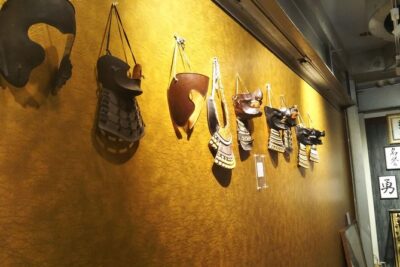 ★ 5.0Skip the lines Basic Ticket at SAMURAI NINJA MUSEUM TOKYOFrom $28
 ★ 5.0Tokyo: Authentic Samurai Training at a DojoFrom $211
 ★ 4.6Tokyo: Legend Samurai Entertainment Night in Kanda ShrineFrom $44
 ★ 4.2Tokyo: Ninja Kabuki PerformanceFrom $291 day