Reviewed · SAMURAI & NINJA EXPERIENCES
Tokyo 2-Hour Genuine Samurai Experience: Kendo in Japan
This is not a staged sword show. You enter a working dojo, learn the manners and movements of Kendo, put on protective armor, and test your skills with a bamboo sword. The two-hour session gives you a real taste of a demanding Japanese martial art without asking you to commit to a full course.
In This Article
- Key points to know before booking
- Entering a working Kendo dojo in Higashinippori
- Learning the manners behind the sword
- Putting on the keikogi, hakama, and bogu
- Basic strikes, footwork, and form
- Facing an opponent in the tournament-style game
- The instructors make the difference
- What the $118.92 price includes
- Timing, group size, and the practical details
- Who will enjoy this most
- Small details that improve the session
- Should you book this Kendo experience?
- FAQ
- Where does the Kendo experience take place?
- How long does the experience last?
- What time does the session start?
- Is hotel pickup included?
- What is included in the price?
- Is previous Kendo experience required?
- What is the minimum age?
- How many people can join the activity?
- Should I wear athletic clothing?
- Can I cancel for a full refund?
I like the hands-on format and the chance to work closely with an English-speaking instructor. I also like that children from age nine can take part, and that the lesson ends with a tournament-style game instead of stopping after a basic demonstration. The main thing to consider is physical effort: full Kendo gear gets warm, and the session includes active movement, loud calls, strikes, and kneeling.
Key points to know before booking
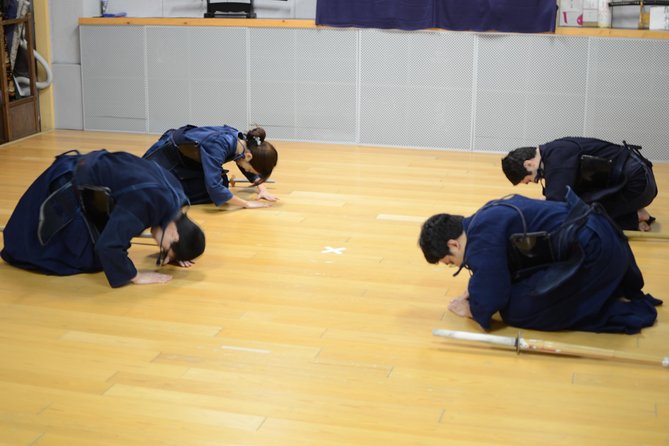
- Real dojo setting: You train at Seidokan Building in Higashinippori, a northern Tokyo neighborhood, rather than at a theatrical attraction.
- Full Kendo equipment included: You receive the uniform, armor, and practice gear needed for the session.
- Practical lesson first: The instructor demonstrates basic forms and hitting techniques before you face an opponent.
- Tournament-style finish: You use what you learned in a friendly combat game.
- Good for families and beginners: The minimum age is nine, and no prior Kendo experience is required.
- Plan for heat and exercise: Wear athletic clothing, drink water before arriving, and tell the instructor if your knees make kneeling difficult.
Entering a working Kendo dojo in Higashinippori
The experience begins at 誠道館ビル4 Chome-7 Higashinippori, Arakawa City, Tokyo 116-0014. You make your own way there, so allow time for the train journey and the walk to the meeting point. Hotel pickup and drop-off are not included, although pickup may be offered in the booking details, so check exactly what applies to your reservation.
The neighborhood matters. This is a northern Tokyo setting, not a purpose-built tourist zone. You arrive at a dojo where Kendo is treated as a sport and discipline, not simply as a samurai costume activity. Some sessions may include local dojo students, giving you a chance to see how regular practice looks alongside your own beginner lesson.
The listed start time is 10:00 am, with morning and afternoon sessions available to suit your plans. The activity ends back at the meeting point after about two hours. A maximum group size of 15 keeps the session social, though it is not the same as a private lesson. Some bookings can feel more personal, especially when the instructor has time to work one-on-one with each participant.
A few more Tokyo tours and experiences worth a look
Learning the manners behind the sword
Kendo means the path of the sword. Its roots reach back to Japanese samurai swordsmanship, but this session is not about pretending to be a warrior from a film. You learn that posture, focus, respect, and correct behavior matter as much as hitting a target.
The instructor explains basic Kendo culture and etiquette in English that is described as easy to understand. That is useful because the rules of the dojo can feel unfamiliar at first. You are not simply handed a bamboo sword and told to swing. You learn how to behave in the training space, how to prepare, and how to approach practice with control.
The lesson includes a guide demonstration, which gives you a clear visual model before you try the movements yourself. For a first-timer, this is important. Kendo techniques depend on the position of your feet, hands, body, and sword. A strike can look simple, but the instructor pays attention to form, timing, and where the bamboo sword lands.
You will likely hear loud calls during the session. The shouting is part of Kendo practice, helping you commit to the movement rather than making a hesitant tap. If you are shy about making noise in front of other people, expect to get over that quickly.
Putting on the keikogi, hakama, and bogu
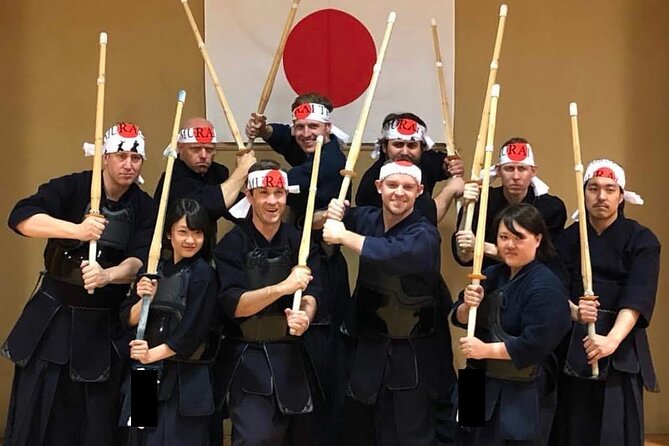
One of the most memorable parts is getting dressed for practice. You learn how to put on the keikogi, a jacket-like top, and the hakama, the pleated trousers that resemble a skirt. You then add the bogu, the protective armor used for Kendo training.
The outfit gives the session its genuine feel, but it also changes the physical challenge. The fabric and armor are heavy and warm, especially when you are moving, calling out, and repeating strikes. You receive bottled mineral water, and a water break is available during the session, but I would still arrive well hydrated.
Wear athletic clothing underneath or beneath the parts of the uniform where appropriate. One useful point is that this is an active class, not a photo opportunity. Comfortable exercise clothing will serve you better than travel clothes that restrict your shoulders, hips, or knees.
The armor also makes the experience more memorable for children and families. Two boys and their parent found it fun as a family activity and a bit of exercise, while another family said the lesson became one of the highlights of their week in Japan. The physical demands mean you should judge your group honestly. Children need to be at least nine, and anyone with limited fitness should ask questions before booking.
Basic strikes, footwork, and form
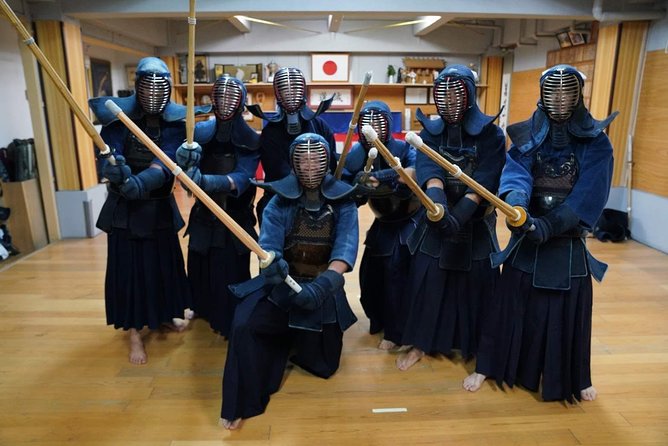
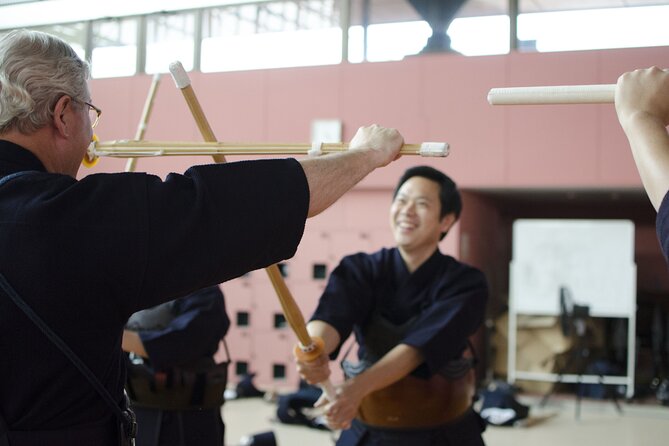
Once dressed, you work through practical Kendo movements with the instructor. The lesson focuses on fundamentals rather than trying to turn you into an expert in one afternoon. You learn how to hold and use the bamboo sword, how to move, and how to make proper hitting techniques.
The teaching style appears patient and encouraging. The instructor corrects participants when a strike is well formed and asks them to try again when it is not. That sort of immediate feedback gives the session purpose. You are not just waving a sword at a target. You are learning why one movement works and another needs adjustment.
The instructor’s praise can be a small but satisfying part of the lesson. A correctly placed strike, made with proper form, earns approval. During practice, you may also hear commands such as kote-men as the instructor prompts you through combinations and attacks. These Japanese terms make the class feel like real Kendo training while the demonstrations keep the activity understandable.
The session is suitable for complete beginners. Several participants arrived knowing little or nothing about Kendo and still managed to learn the basic forms. The instructor’s English explanations help, but pay close attention to the demonstrations too. Martial arts instructions often make more sense once you see the movement.
Facing an opponent in the tournament-style game
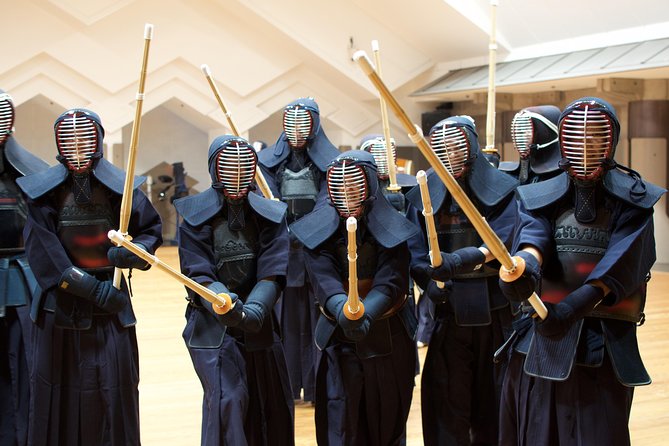
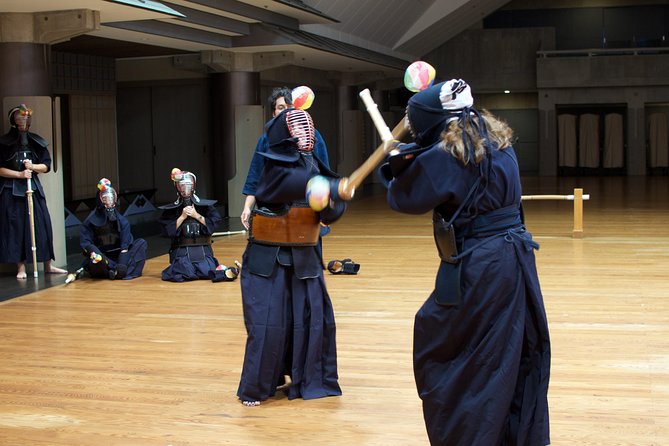
The final combat game is the payoff. After learning the basic techniques, you use them in a tournament-style format against an opponent. This is not presented as a dangerous full-contact contest, but it is active and physical. You will be wearing protective armor and using a bamboo sword, so the session feels far more genuine than a choreographed samurai performance.
The game gives you a reason to remember the earlier instruction. During practice, it is easy to think you understand the movement. Once another person is moving in front of you, timing and confidence become harder. You need to watch, move, and decide when to strike.
This part suits people who like a little challenge. If you want only a quiet cultural demonstration, the combat game may feel more intense than expected. If you enjoy trying something with your family or partner, it adds energy and humor to the session.
You may also practice alongside local students. That can be especially useful because you see the difference between a first attempt and regular training. It also places your short visit in the context of an ongoing dojo rather than making Kendo feel like a temporary show arranged only for tourists.
A few more Tokyo tours and experiences worth a look


The instructors make the difference
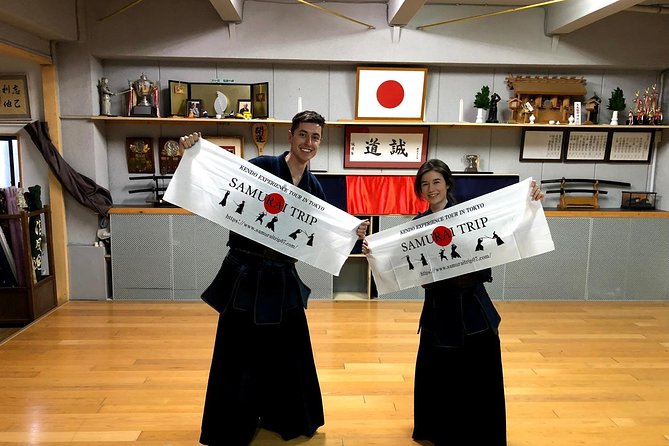
The main instructor is described as a Kendo master with around 60 years of training, supported by a strong co-instructor. Another participant recognized the sensei from a Kendo YouTube channel and was surprised to meet the same instructor at the dojo. The available information does not identify the sensei by name, but Keshi is named by one group as the person who made their time at the dojo memorable.
That personal connection matters. Kendo has many small details, and a rushed lesson would leave you confused about the uniform, etiquette, and movements. The teaching here is repeatedly described as patient, clear, and accommodating, including with children and beginners.
If you have a knee problem, tell the instructor before the session begins. Kneeling can be modified or skipped when it causes pain. This is a practical point, not a minor one, because Kendo includes formal movements and positions that may be uncomfortable for people with bad knees.
The instructors also help make the class approachable. You do not need to arrive with martial arts experience, and you should not feel embarrassed if your first strikes look awkward. The format is built around demonstration, practice, correction, and another attempt.
What the $118.92 price includes
At $118.92 per person, this is not the cheapest two-hour activity in Tokyo. The price makes more sense if you want instruction and equipment, not just a quick samurai-themed photo. Your fee includes a professional guide or instructor, rental Kendo armor and equipment, bottled water, and a Japanese hand towel.
The equipment is a large part of the value. Buying or arranging proper Kendo armor for a short visit would be unrealistic, and wearing the full set changes the experience. You also receive instruction in etiquette and basic technique, followed by the tournament-style game.
The session works best as a special activity rather than a way to save money. If you are comparing it with a museum or a self-guided neighborhood walk, it will cost more and demand more energy. If you are looking for something active that connects you with a real Japanese martial art, the price is easier to justify.
Food and drinks beyond the included bottled water are not provided. Transportation costs between activities are also your responsibility. Plan a meal or snack separately, especially if you choose the morning session and expect to exercise soon after breakfast.
Timing, group size, and the practical details
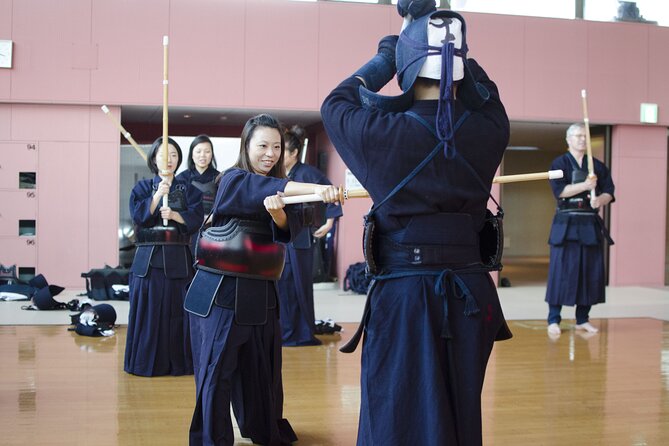
The activity lasts about two hours and has a maximum of 15 participants. That is small enough to keep the class focused, though the amount of personal attention can depend on the group and the instructor’s schedule. A smaller booking may feel more like a private lesson, while a full session will have more people sharing the practice space.
A minimum of two people is required per booking. Solo visitors should not assume they can reserve one place alone. Check availability and booking conditions before making plans around the session.
The experience is near public transportation, but you still need to make your own way to the dojo. I would avoid scheduling a distant attraction immediately afterward. The session finishes on time according to the available feedback, but Tokyo transit and finding the meeting point can take longer than expected.
Free cancellation is available if you cancel at least 24 hours before the local start time. Changes or cancellations inside that window are not refunded. That policy is fairly simple, but the cutoff uses Tokyo local time, so keep that in mind if you are booking from another time zone.
Who will enjoy this most
I would recommend this for families with active children aged nine or older, couples, friends, and solo visitors who can join a booking that meets the two-person minimum. It is also a good choice if you have already seen Tokyo’s temples and shopping districts and want an activity that asks you to participate rather than watch.
It suits beginners especially well. You do not need previous Kendo experience, and the instructors explain the basics before asking you to face an opponent. Martial arts fans will appreciate the traditional fundamentals, while curious first-timers can enjoy the structure, costume, and friendly competition.
You may want to skip it if you dislike exercise, heat, loud calls, or physical games. Kendo armor is warm, and the class can be tiring. People with knee problems should speak with the sensei about kneeling before taking part. The session is not described as wheelchair accessible, so anyone with mobility needs should confirm suitability directly before booking.
Small details that improve the session
Arrive hydrated. The armor is heavy fabric, and one participant specifically advised drinking water before the class. Water is included, but you will appreciate having started the session in good shape.
Wear athletic clothing. This is especially important if you plan to move freely, practice repeated strikes, and take part in the final match. Avoid treating the session as a costume fitting with a short demonstration.
Give yourself time to find the dojo. The meeting point is in Higashinippori, and you are responsible for transportation. If you are met at a station under a particular booking arrangement, confirm the instructions rather than assuming hotel pickup is included.
Tell the instructor about physical limits early. Knee discomfort can affect kneeling, and the class can be adjusted in that respect. Clear communication lets you enjoy the lesson without pushing through pain.
If you have extra time afterward, the area can be combined with nearby shrines and food stalls. That makes the Kendo session a useful part of a larger northern Tokyo outing rather than an isolated appointment.
Should you book this Kendo experience?
Book it if you want an active, authentic-feeling introduction to Japanese martial arts, especially if full armor, practical instruction, and a friendly match sound more appealing than a passive cultural show. The patient teaching, English support, real dojo setting, and chance to train beside local students give the two hours real substance.
Think twice if you need a gentle activity or have serious mobility concerns. The session is warm, physical, and competitive in a light but genuine way. For the right visitor, the $118.92 cost buys more than a souvenir photo: it gives you a short lesson in discipline, etiquette, and the physical challenge of Kendo, plus a Japanese hand towel to take home.
FAQ
Where does the Kendo experience take place?
It takes place at 誠道館ビル4 Chome-7 Higashinippori, Arakawa City, Tokyo 116-0014, Japan.
How long does the experience last?
The experience lasts approximately two hours.
What time does the session start?
The listed start time is 10:00 am. Morning and afternoon sessions are available, depending on the booking option.
Is hotel pickup included?
No. Hotel pickup and drop-off are not included. You make your own way to the dojo, although pickup arrangements may be offered in some booking details.
What is included in the price?
The price includes a professional guide or instructor, rental Kendo armor and equipment, bottled mineral water, and a Japanese hand towel.
Is previous Kendo experience required?
No. The activity welcomes all experience levels and includes instruction in basic techniques, etiquette, and Kendo culture.
What is the minimum age?
The minimum age is nine years old.
How many people can join the activity?
The maximum group size is 15 participants. A minimum of two people per booking is required.
Should I wear athletic clothing?
Yes. The activity is physically active, and athletic clothing is recommended. The Kendo gear can also feel warm during practice.
Can I cancel for a full refund?
Yes, if you cancel at least 24 hours before the experience start time. Cancellations or changes made less than 24 hours before the start time are not refunded.
More 2-Hour Experiences in Tokyo
More Samurai & Ninja Experiences in Tokyo


More tours in Tokyo we've reviewed












Samurai & Ninja Experiences, compared.
 ★ 4.5Tokyo: Samurai Restaurant Show Ticket with 2 DrinksFrom $551h 30m
 ★ 4.6Tokyo: Samurai Ninja Museum Guided tour and ExperienceFrom $27
 ★ 5.0Skip the lines Basic Ticket at SAMURAI NINJA MUSEUM TOKYOFrom $28
 ★ 5.0Tokyo: Authentic Samurai Training at a DojoFrom $211
 ★ 5.0Best Samurai Experience in TokyoFrom $65
 ★ 4.6Tokyo: Legend Samurai Entertainment Night in Kanda ShrineFrom $44