Reviewed · SUMO EXPERIENCES
Tokyo: Watching Sumo and Ryogoku Area Walking Tour
Ryogoku is where sumo feels less like a show and more like part of the neighborhood. This experience pairs a 50-minute walk through sumo landmarks with a live event at Ryogoku Kokugikan, giving you useful cultural context before you take your seat.
In This Article
- Key points at a glance
- Why Ryogoku is the right place for a sumo day
- Meeting at Edo NOREN near Ryogoku Station
- Eko-in Temple and sumo’s spiritual setting
- The Sumo Photo Museum in a compact visit
- Kira Residence and the samurai story
- Entering Ryogoku Kokugikan for the live match
- Choosing between first-floor box and second-floor chair seats
- Food, bags, and behavior inside the arena
- Is $135 a fair price?
- Who will enjoy this experience most?
- Booking details worth checking before you go
- Should you book the Ryogoku sumo tour?
- FAQ
- Where does the tour meet?
- What time should I arrive?
- How long is the guided walking tour?
- Which sites are included in the walk?
- Does the guide stay inside Ryogoku Kokugikan?
- What is the difference between box and chair seats?
- Can I bring food, drinks, luggage, or record video?
I like the visit to Eko-in Temple and the Sumo Photo Museum, two stops that explain why this district matters. I also like having an actual event ticket included, with a choice between close first-floor box seats and more spacious second-floor chairs. The main drawback is that the guide leaves once you enter the arena, so you may need to work out the rules and announcements on your own.
Key points at a glance
- Ryogoku Station meeting: Meet staff holding TNK placards at the Edo NOREN entrance near the west exit at 12:20 PM.
- Three meaningful stops: See Eko-in Temple, the Sumo Photo Museum, and the remains of Kira Residence.
- Live sumo included: Your ticket takes you into Ryogoku Kokugikan after the walking portion.
- Two seat types: Choose a traditional first-floor box or a second-floor chair seat.
- Plan for self-guided arena time: The English-speaking guide does not remain with you inside.
- Bring little: Large bags, outside food and drinks, video recording, smoking, and bare feet are not allowed.
Why Ryogoku is the right place for a sumo day
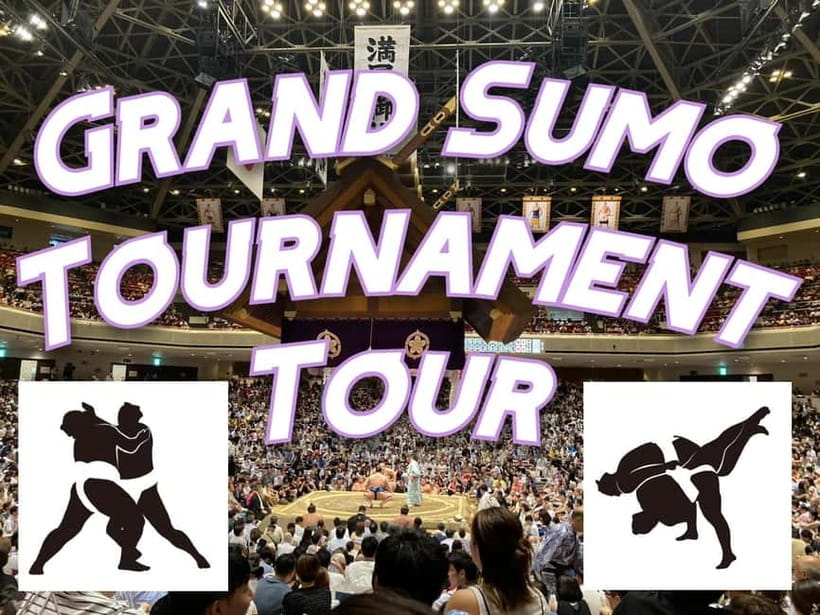
If you want to understand sumo beyond its colorful costumes and powerful throws, Ryogoku is a smart place to begin. The district is closely linked with the sport, and the walk connects religious, artistic, and samurai history before you watch the wrestlers in the arena.
The order works well. You first see places that give the sport a setting and a past. Then you enter Ryogoku Kokugikan, where sumo becomes immediate and physical. That change, from quiet streets and historic sites to a live match, is the central pleasure of the experience.
This is not a full-day guided program. The organized walking section lasts about 50 minutes, followed by free time at the venue. You should book it for a focused introduction, not for continuous commentary from morning until evening.
A few more Tokyo tours and experiences worth a look
Meeting at Edo NOREN near Ryogoku Station
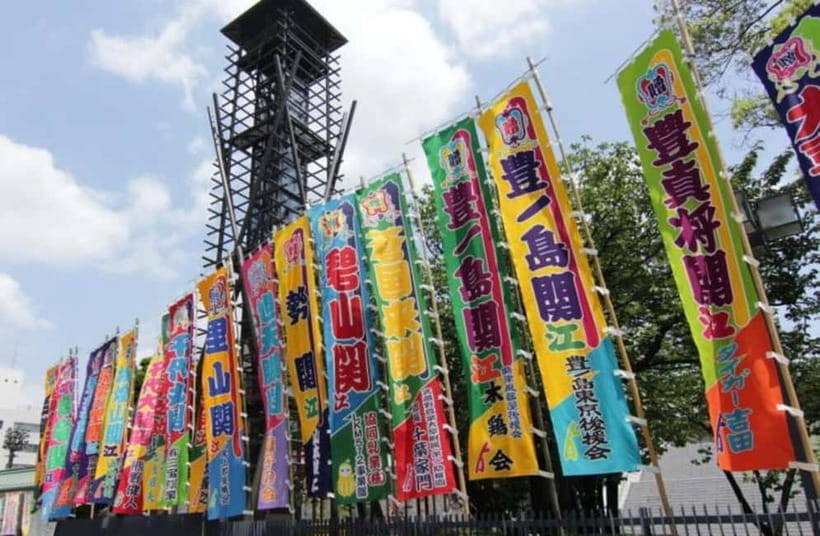
You meet at 12:20 PM at the Edo NOREN entrance by the west exit of Ryogoku Station. Staff will hold placards marked TNK, and you should confirm your name with them.
Arrive 10 to 15 minutes early. Ryogoku Station has a clear connection to the area, but station exits can still cause small delays, especially if you are carrying bags or trying to read signs while checking your phone. You are responsible for getting to the meeting point and arranging your own return transportation.
Wear comfortable clothes and pack lightly. Large luggage is not allowed, and a big suitcase would be awkward during the walking section even if the venue rules permitted it. This activity is not suitable for wheelchair users, so check that point before booking.
The tour is offered in English and Japanese. The supplied information identifies an English-speaking guide, and one guide praised in the experience feedback is Ms. Yuki. The quality of explanation can depend on the person leading your walk, so keep your expectations focused on a short orientation rather than a long lecture.
Eko-in Temple and sumo’s spiritual setting
Eko-in Temple is the first important stop. Its connection with sumo gives you a chance to see the sport in a religious and local setting, rather than treating it as an isolated event inside a stadium.
Your guide explains the temple’s ties to sumo and points out why it matters to Ryogoku. The stop is valuable because sumo has ceremonial elements that can be easy to miss when you watch only the bouts. Even a short explanation here can make the later arena experience feel less confusing.
Do not expect a long temple visit or an extended religious tour. The walk covers several sites in a limited time, so this is an introduction. I would pay close attention to the guide at this point, especially if you know little about the traditions surrounding sumo.
The Sumo Photo Museum in a compact visit
The Sumo Photo Museum adds a visual record of the sport. Exhibits show how sumo has changed and why it holds such a firm place in Japanese culture.
This is a useful stop for first-time viewers. Sumo matches can seem slow at one moment and over in a flash the next. Photographs and displays give you a clearer sense of the wrestlers, the sport’s public image, and its development over time.
The museum portion is not described as a long, private visit, so keep it compact. You may have only enough time to focus on the main displays and listen to the guide’s explanation. That is not necessarily a flaw. The museum works best here as preparation for the live event, not as a replacement for a dedicated museum afternoon.
Kira Residence and the samurai story
The remains of the Kira Residence bring a different side of Japanese history into the walk. This site connects to samurai culture and the background of seppuku, a subject tied to ideas of honor and resolve.
The contrast with sumo is one of the better features of the route. You are not simply moving from one sports-related stop to another. The walk shows how Ryogoku contains several layers of Japanese history, with sumo, religious tradition, and samurai culture sharing the same district.
The site consists of remains, so do not expect a complete residence or a large museum complex. Its value comes from the story attached to the place and from the guide’s explanation. If samurai history interests you, this may be the most memorable stop before the arena.
Other walking tours we've reviewed in Tokyo



Entering Ryogoku Kokugikan for the live match
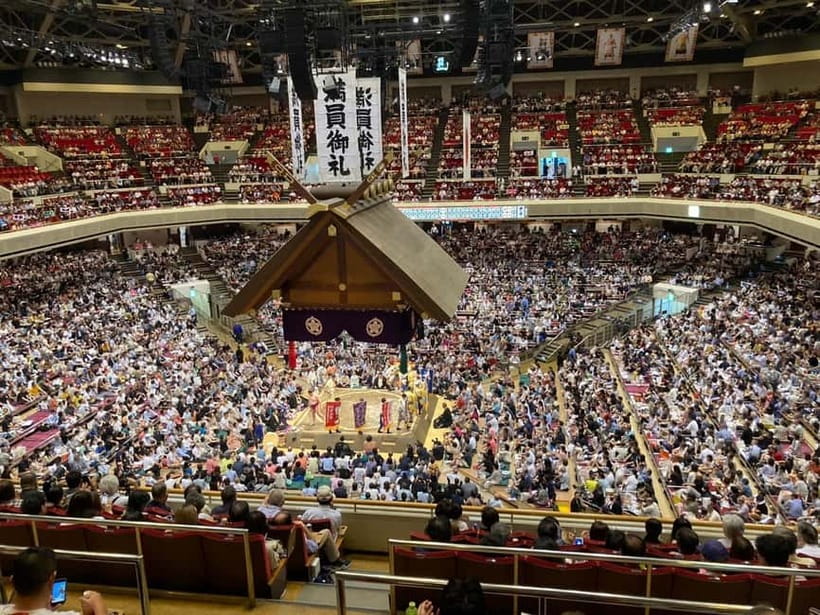
After the walk, you head to Ryogoku Kokugikan Arena for the sumo event. Your ticket is included, which removes one major piece of planning and lets you concentrate on getting inside and finding your seat.
Once you enter, the guide is no longer available. This point matters. You receive help during the city walk, but the match itself is free time. You will need to follow the venue’s announcements and observe what is happening without ongoing English interpretation.
For experienced sumo fans, that independence may be fine. You can watch the action and absorb the atmosphere without someone talking through every moment. If you are new to sumo, though, you may want to read about basic rules and match flow before arrival. One piece of feedback specifically found the lack of arena explanation frustrating, particularly for the price.
The event deserves respectful attention. Do not talk loudly, record video, or disrupt people around you. Breaking the rules can lead to removal from the venue. You may take photographs only within the venue’s permitted rules, since video recording is strictly prohibited.
Choosing between first-floor box and second-floor chair seats
The seat choice changes the character of the experience and the value of the $135 price.
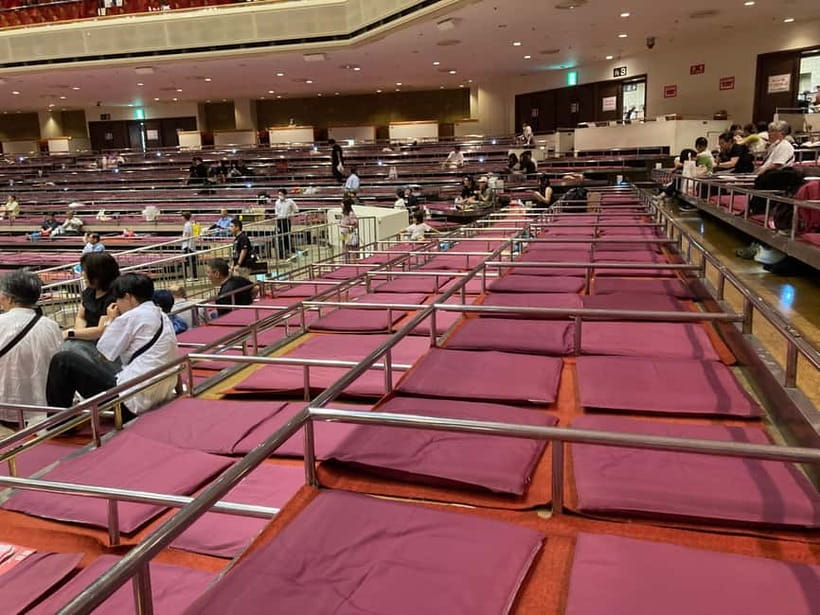
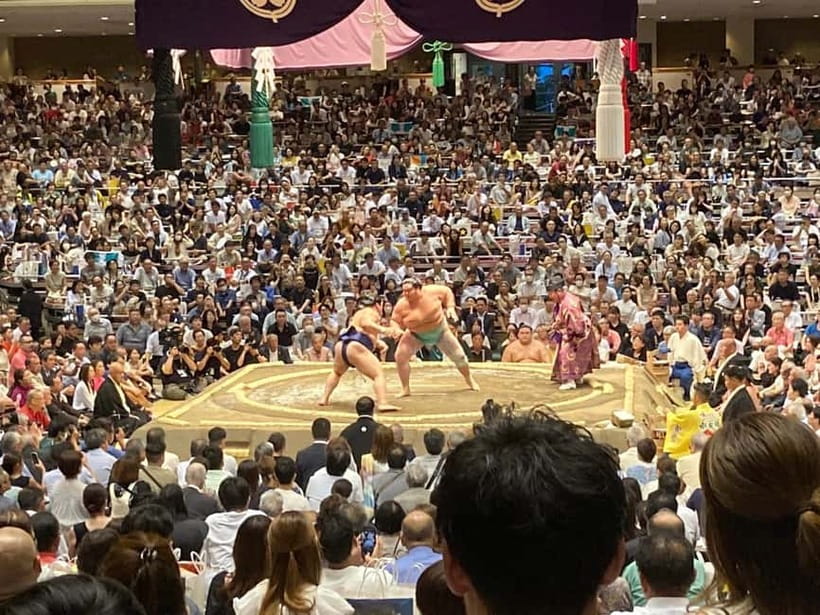
First-floor box seats put you close to the ring. A box measures about 1.3 meters on each side, is bordered by iron pipes, and comes with four cushions. It is a traditional way to watch sumo, but it is not a private room or a standard theater seat.
A box accommodates up to four people. If your party has fewer than four, you may share the box with other customers. That arrangement is important to understand before paying for the close-up view. The limited space can feel cramped, particularly if you prefer a chair, and one report described only a few centimeters between neighboring seating areas.
The floor is also not the easiest choice for every body. Bare feet are not allowed, and the box uses cushions rather than individual chairs. If you want the closest view and like traditional seating, it can be a memorable choice. If personal space matters more, the second floor may suit you better.
Second-floor chair seats offer more room and a more relaxed way to watch the action. You lose some of the closeness of the floor boxes, but you gain a conventional seat and a wider sense of the arena.
For many first-time spectators, chair seats may be the sensible value choice. You can focus on the match without worrying about sharing a tight box. The supplied information does not specify exact sightlines or the precise location of every chair ticket, so do not assume every chair seat gives the same view.
One booking issue deserves attention. A customer who reserved floor seats reported being moved to a semifinal date and then initially offered cheaper seats on the event day. The matter was corrected after protest, but it shows why you should confirm your date and seat category when you meet the staff. Keep your booking details handy.
Food, bags, and behavior inside the arena
Outside food and drinks are prohibited. You can buy refreshments at a shop inside, so plan to purchase what you need after entering rather than bringing supplies from a convenience store.
Large bags and luggage are not allowed. A small, practical day bag is the safer choice, but the information does not give a precise size limit, so avoid bringing anything bulky.
Smoking is not allowed as part of the activity rules. Bare feet are also prohibited, which is especially relevant if you choose a floor box and had imagined sitting in a more casual style.
Sumo is a formal sporting event, even when the crowd reacts warmly to an exciting bout. Keep your voice down, follow venue instructions, and do not use video recording equipment. These rules are not minor details. They protect the experience for the people seated close to you.
Is $135 a fair price?
At $135 per person, this is not a cheap way to see sumo. The price includes the 50-minute English-guided walk and the event ticket, but not transportation, meals, or drinks.
The value depends mainly on your seat and your confidence navigating Tokyo independently. If you want someone to identify the important Ryogoku sites, explain their connection to sumo, and arrange entry to the Kokugikan, the package saves planning time. A positive experience described the guide as friendly and informative, and the ticket as legitimate, with the live sumo itself providing the strongest reward.
The value is weaker if you expect a full explanation inside the arena. The guide leaves at the entrance, and the walking tour is brief. You are paying partly for convenience and access, not for several hours of personal guiding.
Box seats cost more in comfort terms, too, because the space is shared and tight. Chair seats may offer a better balance for people who want to watch the match without sitting close to neighboring spectators. Before booking, compare the ticket category carefully and decide if being near the ring matters more than having room to sit.
Who will enjoy this experience most?
I would recommend this tour to a first-time Tokyo visitor who wants a manageable introduction to sumo and does not want to arrange the arena ticket alone. It also suits anyone interested in the way sport, religion, and samurai stories meet in one neighborhood.
It is a good fit for people who enjoy walking tours but do not need a guide at every stage. You get a short explanation of the district, then have freedom to watch the event at your own pace.
I would be more cautious if you need detailed English commentary during the matches. I would also think twice about a first-floor box if you dislike shared seating or cramped spaces. Families or groups of fewer than four should understand that a box may include other customers.
The experience is less suitable for anyone traveling with large luggage, anyone who needs wheelchair access, or anyone who wants to bring snacks and drinks into the arena.
Booking details worth checking before you go
You can cancel up to 24 hours in advance for a full refund, and the reserve-now, pay-later option can help if your Tokyo schedule is still changing. Still, confirm the meeting point, date, ticket type, and start time before the day of the event.
At the station, look for the TNK placard and confirm your name with staff. If there is any uncertainty about your floor or chair seat, settle it before leaving the meeting area. Since the guide will not be available later, this is the best moment to ask practical questions.
The activity ends back at the meeting point, but you must arrange transportation to and from the venue yourself. Allow enough time for your return plans, especially if you have a dinner reservation or a train to catch.
Should you book the Ryogoku sumo tour?
Book it if you want three things in one outing: a short cultural walk, a legitimate sumo ticket, and help finding the key sites around Ryogoku. The combination is convenient, and the live match is the part most likely to stay with you.
Choose chair seats if you value comfort and space. Choose a box only if the close floor view and traditional setting matter enough to justify shared, cushion seating. Read the seat details carefully, and confirm them on arrival.
Skip it if you require a guide inside the arena, need wheelchair access, or expect a long, fully escorted tour. For everyone else, this is a practical way to meet sumo on its home ground, as long as you arrive prepared to manage the match on your own.
FAQ
Where does the tour meet?
Meet at the Edo NOREN entrance near the west exit of Ryogoku Station. Staff will hold TNK placards and ask you to confirm your name.
What time should I arrive?
The meeting time is 12:20 PM. Arrive 10 to 15 minutes early so you can find the entrance and check in without rushing.
How long is the guided walking tour?
The guided walk lasts 50 minutes. It visits Ryogoku sumo landmarks before you continue to the arena.
Which sites are included in the walk?
The route includes Eko-in Temple, the Sumo Photo Museum, and the remains of Kira Residence.
Does the guide stay inside Ryogoku Kokugikan?
No. The guide assists with the city walk but is not available after you enter the venue. You have free time to watch the sumo matches.
What is the difference between box and chair seats?
Box seats are on the first floor, close to the ring, and use four cushions in a shared box measuring about 1.3 meters on each side. Chair seats are on the second floor and provide more space for a relaxed viewing experience.
Can I bring food, drinks, luggage, or record video?
Outside food and drinks, large luggage, smoking, bare feet, and video recording are not allowed. Food and drinks can be purchased at a shop inside the venue.
More Walking Tours in Tokyo
More Sumo Experiences in Tokyo

More tours in Tokyo we've reviewed












Sumo Experiences, compared.
 ★ 4.8Tokyo: Sumo Show Experience with Chicken Hot Pot and a PhotoFrom $1032 hours
 ★ 4.8Tokyo: Sumo Show and Dining ExperienceFrom $7990 minutes - 2 hours
 ★ 5.0the SUMO showFrom $89
 ★ 5.0Tokyo Sumo Entertainment Show with Chicken Hot Pot and PhotoFrom $106
 ★ 4.6Tokyo: Sumo Tournament Tour with Chair Seat TicketsFrom $141
 ★ 5.0Tokyo Grand Sumo Tournament Viewing Tour with TicketsFrom $124