Reviewed · SUMO EXPERIENCES
Tokyo: Sumo Show Experience with Chicken Hot Pot and a Photo
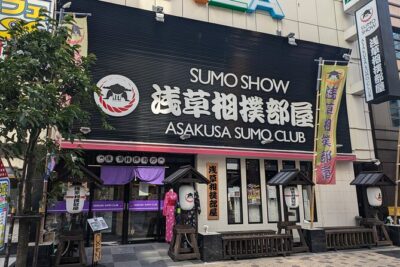
At Asakusa Sumo Club, the ring sits in the middle of the restaurant, so your meal comes with a close view of retired professional wrestlers demonstrating rituals, techniques, and full-contact show matches. I like the English and Japanese commentary and the chance to learn what the gestures and rules mean. I also like the audience challenge, which turns a formal sport into a funny, hands-on experience for brave volunteers.
In This Article
- Key points to know before booking
- A sumo ring in the middle of dinner
- The opening dance and first lessons
- The best-of-three match with retired professionals
- The sumo challenge: fun, but not guaranteed
- Chicken hot pot and the meal served during the show
- What the two-hour schedule feels like
- Standard, VIP, and VVIP seating
- The photo and souvenir set at the end
- Who will enjoy this Asakusa experience
- Practical booking advice for food and timing
- Is the $103 price worth it?
- Should you book the Asakusa Sumo Club?
- FAQ
- How long does the Tokyo Sumo Show Experience last?
- What is included in the ticket?
- Is this a serious sumo tournament or practice session?
- Can I challenge a sumo wrestler?
- Is the show suitable for children?
- What food is served?
- Can I order more food?
- Are vegetarian or vegan meals available?
- Can the activity provide gluten-free or halal meals?
- Is the venue wheelchair accessible?
- What seating options are available?
- Is a photo included?
- Is a drink included?
- Can I cancel the booking?
This is entertainment, not a serious morning practice session or a glimpse inside an active sumo stable. The food is generous and the program is warm and family-friendly, but some diners may find the meal simpler than the show, and challenger places are limited by lottery when demand is high.
Key points to know before booking
- A real dohyo anchors the restaurant, giving every seat a direct view of the action.
- Retired professional wrestlers perform the show, with demonstrations, a best-of-three match, and audience interaction.
- Host Lala explains the sport in English and Japanese, making the rituals and rules easy to follow.
- Chicken chanko-nabe and Japanese dishes are served during the performance, with additional portions available through a QR code.
- A geisha dance opens the program, adding a traditional performance before the wrestling begins.
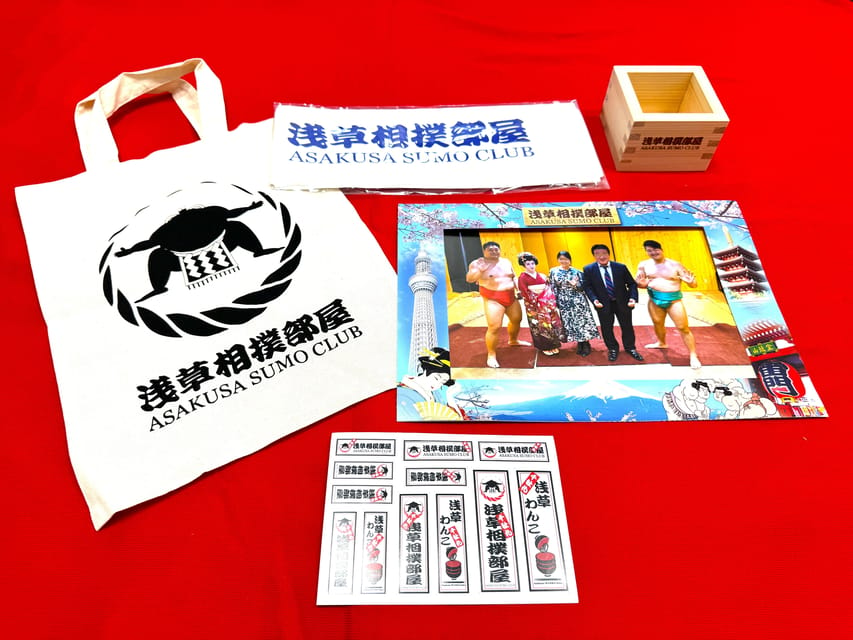
- Your ticket includes one drink, a printed photo, and a souvenir set, which strengthens the value of the $103 price.
A sumo ring in the middle of dinner
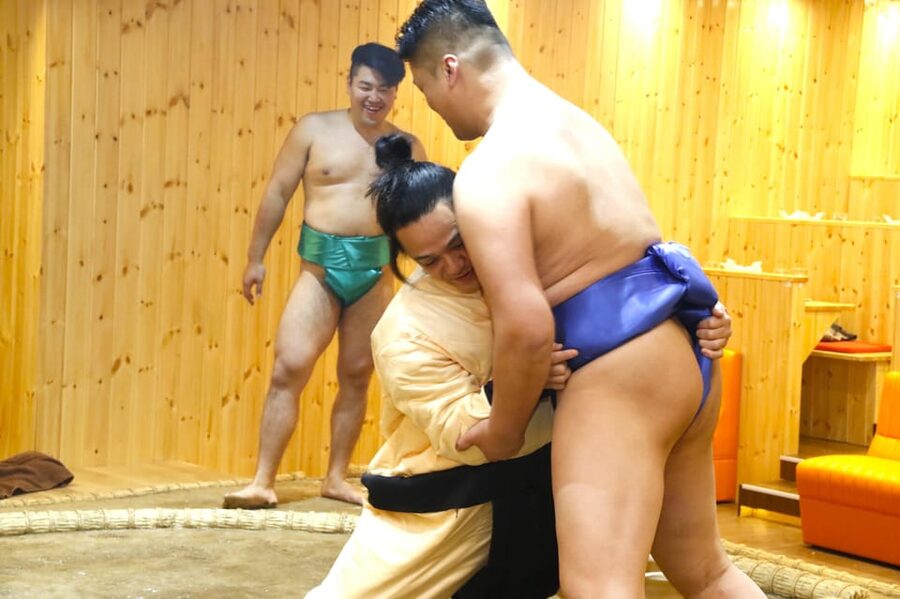
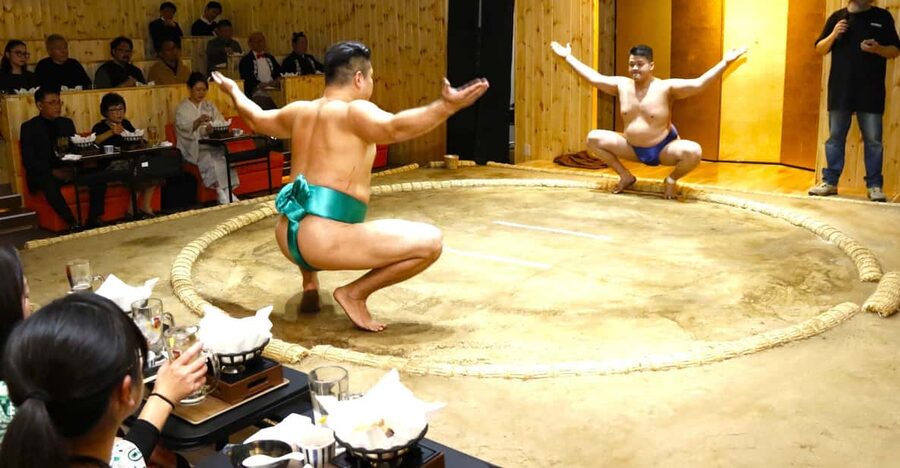
The first thing to understand is the setting. This is not a theater where sumo appears on a distant stage. A real dohyo, the raised ring used for sumo, sits at the center of the Asakusa restaurant. You eat around it, watch the performers from a relatively close distance, and see the basic movements without the scale or formality of a major tournament.
That layout matters. Sumo can seem mysterious if you only see two enormous wrestlers collide on television. Here, the ring gives the demonstrations a clear focus, and the compact room keeps the audience involved. All seats have a view, though the front-row VIP option brings you closer to the action. VVIP seating provides the most central and unobstructed position.
The room is designed for an audience that may know little about sumo. You do not need to understand Japanese terms or already know the rules. The moderator provides live commentary in English and Japanese, explaining what is happening as the show moves along.
This also means the evening feels more like a cultural dinner show than a sporting event. If you want silent concentration and the tension of an official tournament, choose a tournament ticket or a serious practice visit instead. If you want an accessible introduction with food and plenty of laughs, this format makes sense.
If you're still narrowing it down, here are other tours in Taito City we've reviewed.


The opening dance and first lessons
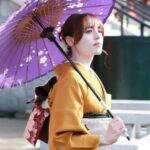
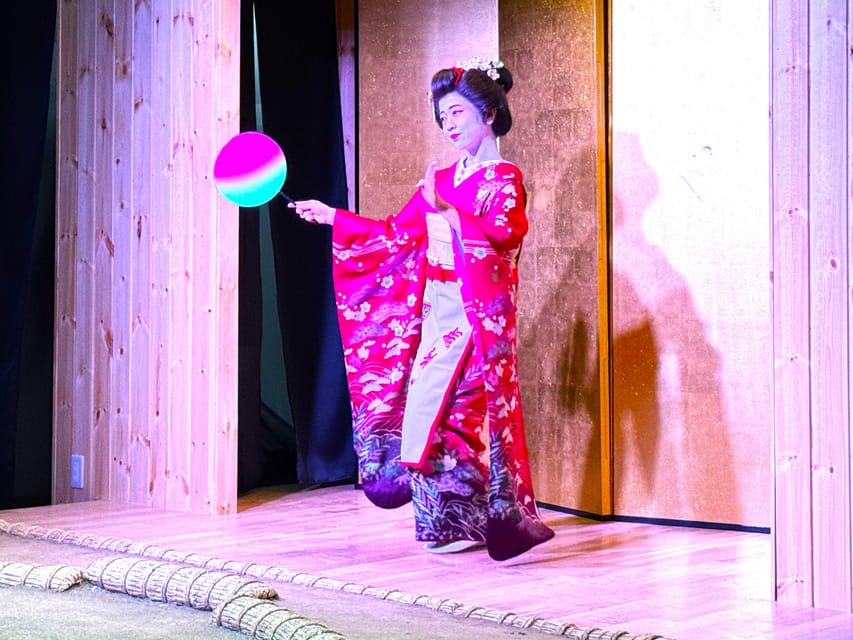
The program begins with a traditional Japanese dance performed by a geisha in an elegant kimono. It sets a distinctly Japanese tone before the louder part of the evening begins. The dance is brief compared with the sumo program, but it gives the experience a second cultural element rather than making the entire event one long wrestling demonstration.
Afterward, the moderator introduces sumo customs, basic rules, and classic techniques. You see morning exercises and demonstrations of movements that are easy to miss during a fast match. The show also covers essential do’s and don’ts, helping you understand the etiquette behind the sport.
I like this teaching section because it gives children and first-time visitors something to follow. The explanations do not require specialist knowledge, and the bilingual format helps international families stay with the story. Host Lala is repeatedly praised for keeping the presentation lively and funny, although one piece of feedback found the host less appealing than the rest of the program. That is a useful reminder that comedy is personal.
The educational material is not intended to be an academic lecture. You receive a brisk introduction that supports the entertainment. The value is in learning just enough to recognize why the wrestlers squat, stamp, clap, and prepare in particular ways.
The best-of-three match with retired professionals
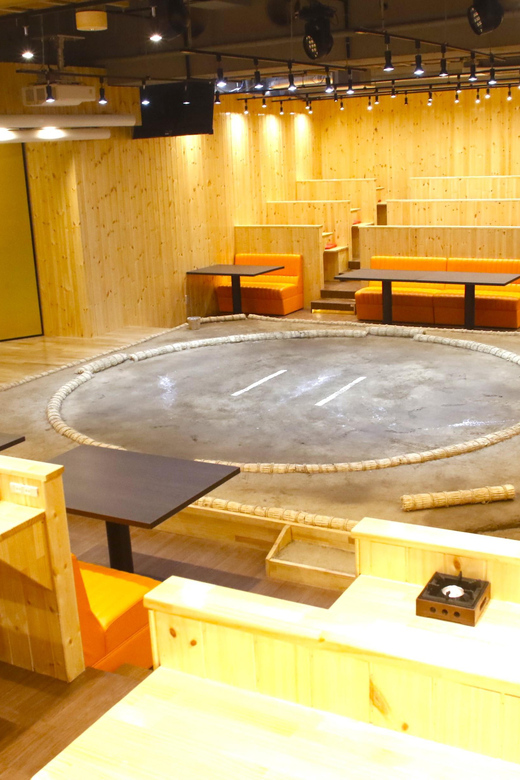
The main wrestling portion features a best-of-three match between retired professional sumo wrestlers. These performers know the sport from the inside, and that experience gives the demonstrations weight even though the event is built for fun.
Expect a show match, not an official bout. The wrestlers play to the audience, use humor, and make room for clear explanations. The action is impressive, but the tone stays light. One of the most important booking points is printed plainly in the activity details: this is performed by retired wrestlers, not active competitors.
That distinction should not reduce your expectations. Retired professionals can still show the size, balance, footwork, and force that make sumo so striking. They also know how to communicate with a crowd. Children can enjoy the physical comedy, while adults get a better sense of how technique matters in a sport often reduced to two bodies pushing at close range.
The audience interaction is a major strength. The wrestlers and presenter repeatedly involve people seated around the ring, so you are not simply watching a fixed performance. The best moments may come from the personalities, reactions, and playful exchanges as much as from the wrestling itself.
The sumo challenge: fun, but not guaranteed
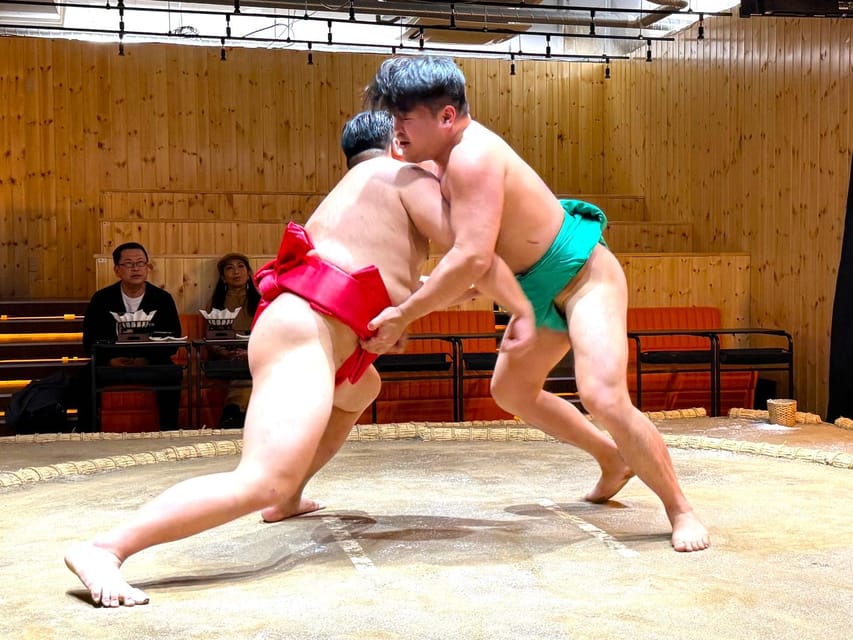
At a later point, a few people can step into the ring and challenge a sumo wrestler. This is the part many families remember most, especially when a child or willing adult gets the chance to try.
You should treat participation as a bonus, not a promise. Challenger places are limited for each show. If too many people volunteer, the participants are selected by lottery. The option is included, but your ticket does not guarantee that you will wrestle.
That system is fair, but it may disappoint someone who books mainly to enter the dohyo. If you have your heart set on the challenge, keep your expectations flexible and be ready to volunteer when the opportunity is announced. Children have enjoyed watching family members take part, and some children have also had the chance themselves.
The challenge is clearly part of the entertainment. It is not a test of professional ability, and you should not expect to defeat a retired wrestler. The appeal is the playful contrast between an ordinary visitor and a trained sumo athlete, along with the cheering and laughter around the ring.
Chicken hot pot and the meal served during the show
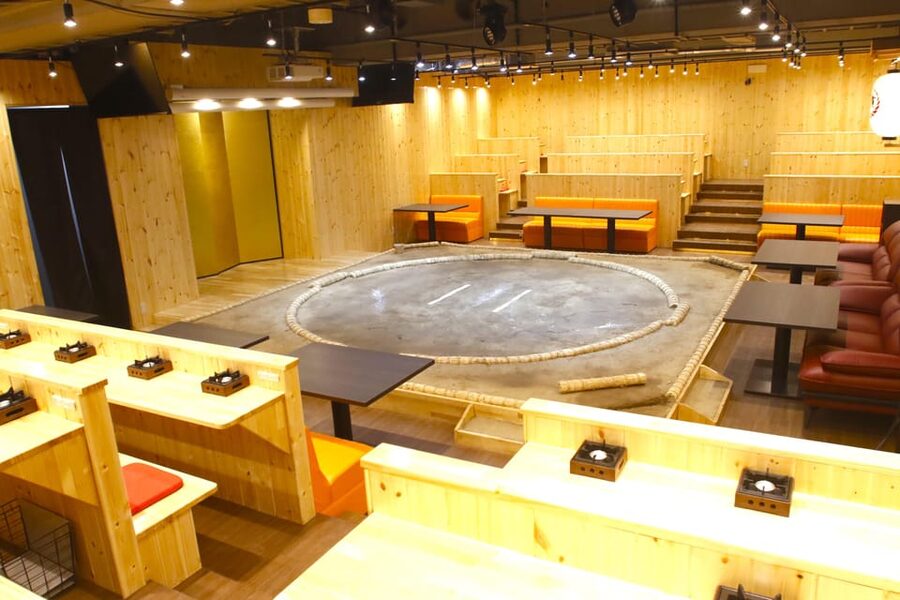
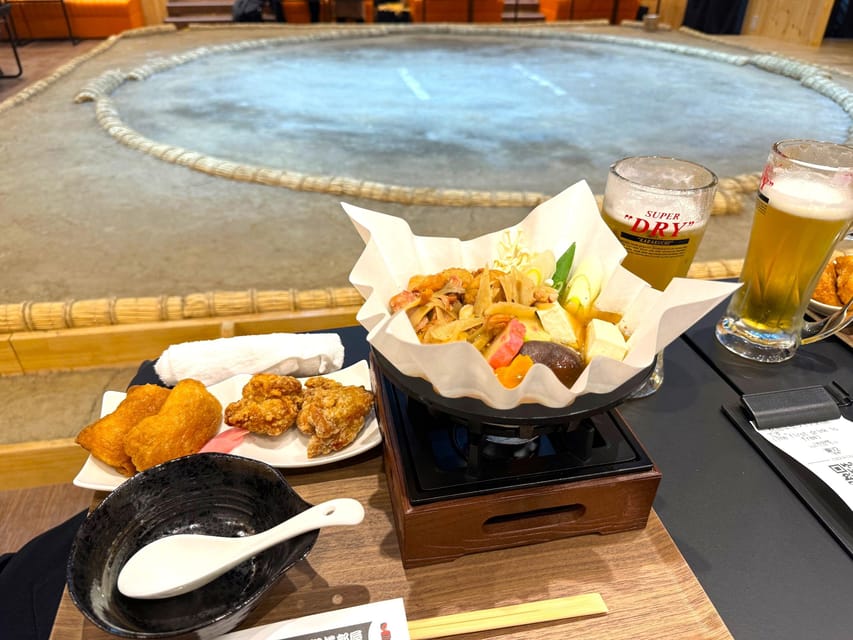
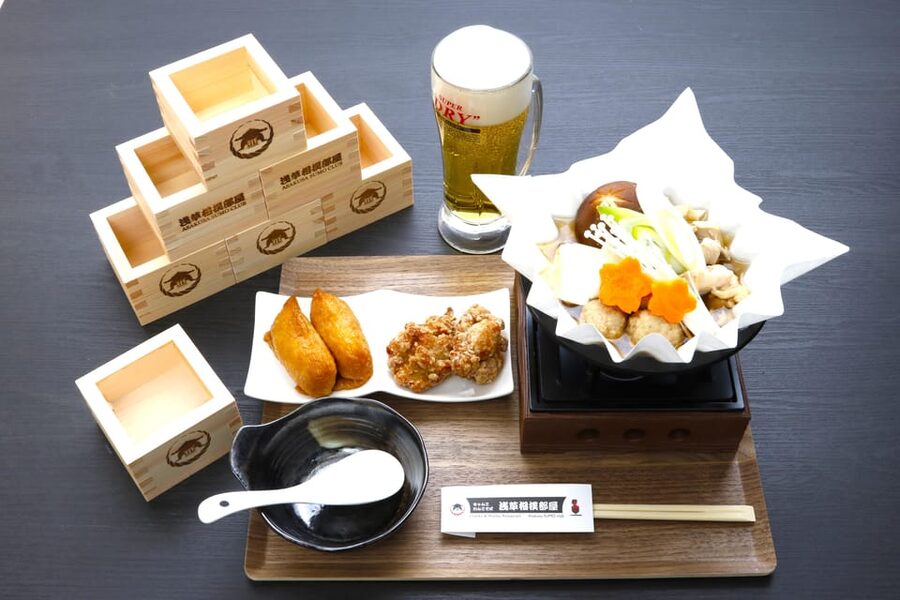
Your meal centers on chanko-nabe, the traditional hot pot associated with sumo wrestlers. Here it is served as chicken hot pot, along with Japanese dishes such as edamame, inari sushi, and sweet rolls. The food arrives during the show, so you can eat while watching rather than sitting through a long formal dinner before the performance.
The meal is all-you-can-eat, and additional portions can be ordered using a QR code. That is handy if your group wants more of one item rather than another full serving. One complimentary drink is included, with more available for purchase.
I see the meal as a strong part of the package, though not the main reason to book. Many diners have found the chicken and soup tasty, and the all-you-can-eat format helps the $103 price feel more reasonable. A few have found the food selection limited compared with the show. That is the right way to frame it: this is a sumo experience with a generous meal, not a fine-dining event.
The hot pot is served over an open flame. One diner felt nervous about the paper bowls used over the heat, so this may catch your attention if you are cautious around table cooking. Vegetarian and vegan meals can be arranged if requested at least two days in advance. Gluten-free and halal meals are not available, though you may bring your own food to meet those needs.
Infants are not included in the meal, seating, or souvenir package, and babies under one year are not considered suitable for this activity. The menu also makes this a meal best planned in advance if anyone in your party has dietary restrictions.
What the two-hour schedule feels like
The full experience lasts about two hours. The format is compact enough to fit into an Asakusa sightseeing day without consuming an entire afternoon or evening, yet long enough to include food, dance, explanations, wrestling, and photographs.
The sequence generally moves from the geisha dance to sumo instruction, exercise demonstrations, technique lessons, the professional show match, and the audience challenge. Food is part of the program rather than a separate course, so the pace stays active.
That structure works well for families. Young children do not have to sit through a long, quiet cultural presentation, and adults receive context instead of watching unexplained physical contests. Several generations can find something to enjoy, from the food and dance to the humor and ring challenge.
The compact timing also has a limitation. You will not get extended time with each wrestler or a detailed look at the daily life of an active sumo stable. The program gives you a polished public presentation, not private access. For most first-time visitors, that is a sensible tradeoff, but serious sumo fans may want a more specialized experience afterward.
Standard, VIP, and VVIP seating
All seating categories offer a view of the central ring. Standard seating is the practical choice if you mainly want the show, meal, and included keepsakes without adding to the cost.
VIP seating places you in the front row, closer to the demonstrations and audience challenges. This is worth considering if you care about photographs, want to see the wrestlers at close range, or are celebrating a special occasion. One person specifically felt the VIP upgrade was worth every cent.
VVIP seating offers premium central seats with the clearest and most direct view of the dohyo. It is the best choice for an unobstructed perspective, though the supplied information does not give a separate price for that category.
You may be seated together with other parties, so do not assume your table will be entirely private. Wheelchair-accessible seating is available but limited. Tell the operator at booking if you need it, since the seating arrangement matters in this compact room.
The photo and souvenir set at the end
The final keepsakes are more useful than a simple digital download. You receive a printed photo with the sumo wrestlers and geisha, plus a souvenir set. The contents of the set can change with the season, so you should not book expecting one specific item.
The photo is taken with the performers, giving you a physical reminder of the evening and a natural closing point after the challenge and match. For families, this can be especially worthwhile because it captures the group with the wrestlers rather than only a distant action shot.
These extras also help explain the price. At $103 per person, you are paying for a two-hour performance, a hot pot meal, Japanese side dishes, one drink, bilingual hosting, the dance, the photo, and the souvenir package. Tokyo offers cheaper meals and free cultural sights, but few combine this many planned elements in one short visit.
The value depends on what you want. If you only want to watch serious sumo, the price will not make sense because this is an entertainment production. If you want a family-friendly cultural activity with food and a guaranteed structure, the package is easier to justify.
Who will enjoy this Asakusa experience
I would recommend it most strongly to first-time visitors, families, multigenerational groups, and anyone curious about sumo but unsure how to approach the sport. The explanations remove the barrier of unfamiliar rules, while the humor keeps the event from feeling stiff.
It also suits people who want an evening activity with a clear start and finish. You do not need to plan a restaurant afterward, since the meal is built in. The location in Asakusa makes it a natural match for a day focused on old Tokyo, though the exact meeting point can vary according to the seating option booked.
Children are a particular strength here. The show is designed for adults and children, and the audience challenge gives younger family members a memorable moment even if they do not follow every technical explanation. Older relatives can enjoy the dance, food, and presentation without needing to participate physically.
You may want something else if you dislike staged comedy, audience involvement, or group dining. The event can also feel too light for someone hoping to see active wrestlers in a strict training environment. The operator specifically distinguishes this show from a serious morning practice tour.
Practical booking advice for food and timing
The activity lasts two hours, and starting times vary, so check the available session before planning transport or another timed attraction. The meeting point may change with the option you select, so read the booking details rather than assuming every ticket uses the same entrance.
Reserve vegetarian or vegan food at least two days ahead. Gluten-free and halal meals cannot be provided, but you may bring suitable food. If you need wheelchair seating, mention it when booking because accessible places are limited.
The activity is wheelchair accessible overall, and small-group availability is offered. Infants under one year should not attend, and meals, seating, and souvenirs are not included for infants.
Cancellation is flexible up to 24 hours before the activity for a full refund, and a reserve-now, pay-later option is available. Those terms are useful if your Tokyo schedule is still shifting, but you should still secure dietary and seating requests early.
Is the $103 price worth it?
For me, the price works when you count the whole package rather than the meal alone. You receive a live program, instruction in two languages, a geisha dance, a best-of-three match, the chance to challenge a wrestler, all-you-can-eat chicken hot pot and Japanese dishes, one drink, a printed photo, and a souvenir set.
The strongest value comes from the combination. A standalone cultural performance may give you more depth, while a restaurant meal may cost less, but neither is likely to include retired professional wrestlers, a central dohyo, and audience participation in the same two-hour block.
The main caution is that the food is not the star attraction for everyone. If your priority is an elaborate Japanese meal, spend your budget at a specialist restaurant instead. If your priority is a fun, well-organized introduction to sumo with enough food to make it a complete outing, the cost is reasonable.
Should you book the Asakusa Sumo Club?
Book it if you want sumo explained in plain English, enjoy a little comedy, and like the idea of eating chicken hot pot while the ring is only a few steps away. It is especially well suited to families, first-time visitors, and groups with different ages and interests.
Skip it if you want a quiet, serious sporting event or access to an active stable. Also skip it if dietary restrictions make the available meal impractical and bringing your own food would be inconvenient.
For most people comparing Tokyo cultural shows, I would put this near the top of the family-friendly list. Just choose your seat carefully, request special meals early, and remember that the ring challenge is decided by availability or lottery. The show delivers its best value when you treat it as an entertaining cultural evening, not as a substitute for tournament sumo.
FAQ
How long does the Tokyo Sumo Show Experience last?
The experience lasts two hours.
What is included in the ticket?
The ticket includes bilingual English and Japanese commentary, the sumo show, a geisha dance, the chance to apply for the sumo challenge, all-you-can-eat chicken hot pot and Japanese dishes, one complimentary drink, a printed photo with the performers, and a souvenir set.
Is this a serious sumo tournament or practice session?
No. This is an entertainment show performed by retired professional sumo wrestlers. It is different from a serious morning practice tour at an active sumo stable.
Can I challenge a sumo wrestler?
You can apply to take part in the sumo challenge. Only a limited number of people can participate in each show, and a lottery is used if there are too many applicants.
Is the show suitable for children?
Yes. The program is designed for both adults and children. Babies under one year are not suitable for the activity.
What food is served?
The meal includes chicken chanko-nabe and Japanese dishes. Specific items mentioned include edamame, inari sushi, and sweet rolls.
Can I order more food?
Yes. Additional food can be ordered during the show using a QR code. The meal is all-you-can-eat.
Are vegetarian or vegan meals available?
Yes, but they must be requested at least two days in advance.
Can the activity provide gluten-free or halal meals?
No. Gluten-free and halal meals are not available. You may bring your own food to accommodate those dietary needs.
Is the venue wheelchair accessible?
Yes, but wheelchair-accessible seating is limited. Inform the operator when booking if you require accessible seating.
What seating options are available?
Standard seating offers a clear view, VIP seating is in the front row, and VVIP seating provides premium central seats with the most unobstructed view of the dohyo.
Is a photo included?
Yes. You receive a printed photo with the sumo wrestlers and geisha, along with a souvenir set. The contents of the souvenir set may vary by season.
Is a drink included?
Yes. One complimentary drink is included. Additional drinks can be purchased.
Can I cancel the booking?
You can cancel up to 24 hours in advance for a full refund. A reserve-now, pay-later option is also available.
More tours in Taito City we've reviewed
Sumo Experiences, compared.
 ★ 4.8Tokyo: Sumo Show and Dining ExperienceFrom $7990 minutes - 2 hours
 ★ 5.0the SUMO showFrom $89
 ★ 5.0Tokyo Sumo Entertainment Show with Chicken Hot Pot and PhotoFrom $106
 ★ 4.6Tokyo: Sumo Tournament Tour with Chair Seat TicketsFrom $141
 ★ 5.0Tokyo Grand Sumo Tournament Viewing Tour with TicketsFrom $124
 ★ 5.0Tokyo Sumo Wrestling Tournament ExperienceFrom $124