Reviewed · GINZA TOURS
Chopstick Making Workshop in Ginza
The most memorable part of this Ginza workshop is that you do real woodworking. You choose a pair of wooden blanks, hold them on a stand, and shave them into chopsticks with a hand plane. I like the choice of 24 woods and the fact that your finished pair is useful, not just decorative. I also like the careful final steps, sanding and oiling, which make the souvenir feel personal.
In This Article
- What makes this workshop worth your hour
- Choosing your wood at 2-9-13 Ginza
- The first real task: planing the chopsticks
- Sanding the tips and corners
- Oiling the wood and taking it home
- Engraving names and phrases
- How the one-hour format works in practice
- Who will enjoy it most
- Price, extras, and overall value
- Booking and practical details
- Should you book the Ginza chopstick workshop?
- FAQ
- Where is the chopstick-making workshop located?
- How long does the workshop take?
- How much does the workshop cost?
- How many types of wood can I choose from?
- Can I choose the length of my chopsticks?
- Can I have my name engraved?
- Can I take the chopsticks home immediately?
- Is the workshop taught in English?
The catch is simple: this takes some muscle. Several people found the planing harder than expected, especially with dense woods such as olive. I would also check the price of upgraded wood before choosing, since only five of the 24 wood types are included in the base fee. Optional engraving costs an extra 1,100 yen.
What makes this workshop worth your hour
- You make a practical souvenir: Take your finished chopsticks home the same day and use them for years.
- You choose from 24 wood types: Five are included, while 19 higher-grade choices cost extra.
- The work is genuinely hands-on: Planing requires pressure and patience, then sanding gives you control over the final shape.
- English help is available: Instructors explain each stage in English or Japanese and assist when the tools feel awkward.
- Engraving adds a Japanese touch: Add your name or a favorite phrase in Japanese or your own language for 1,100 yen.
- The setting is easy to fit into Tokyo plans: The one-hour class takes place at 2-9-13 Ginza, Chuo-ku, Tokyo.
Choosing your wood at 2-9-13 Ginza
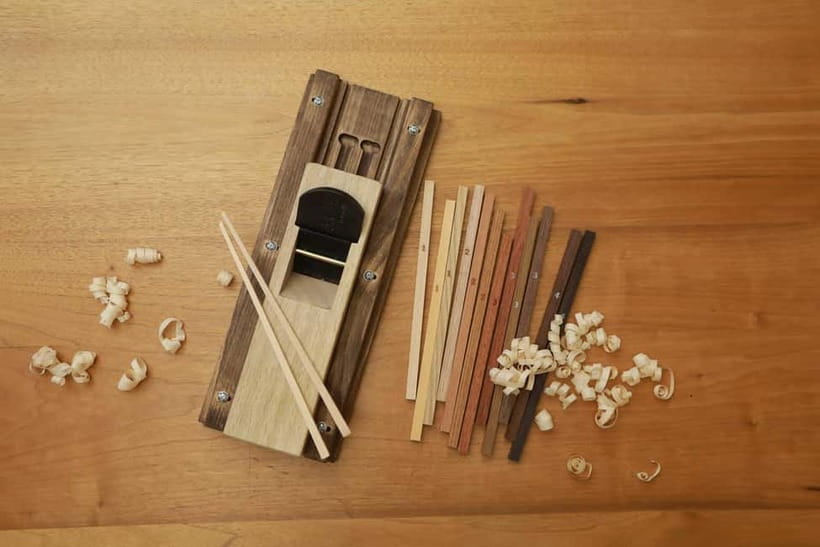
The workshop begins with a decision that matters more than it first appears: which wood should become your chopsticks?
You can choose from 24 types, with five included in the standard price and 19 higher-grade woods available for an added charge. The selection is one of the strongest parts of the activity because the wood itself becomes part of the souvenir. Grain, color, hardness, and the way each piece responds to the plane all affect the finished pair.
I suggest taking a moment here rather than choosing the first attractive option. If you want the simplest work, an easier wood may be the sensible choice. If you care more about a distinctive appearance, one of the specialty woods could be worth the surcharge. Just ask clearly which options cost extra before you commit. A few people misunderstood the different prices, and the workshop is more enjoyable when the final bill is no surprise.
The two length choices are useful for families and couples. You can choose a size that feels comfortable in your hand rather than accepting one standard length. The information provided does not specify the exact measurements, so ask the instructor to explain the difference if you are unsure.
The staff handle the wood selection and processing in-house. That gives the activity a stronger connection to woodworking than a simple souvenir-painting class. You are not merely decorating a finished product. You are shaping a piece of material from the first major cut to the final oil coat.
A few more Tokyo tours and experiences worth a look


The first real task: planing the chopsticks
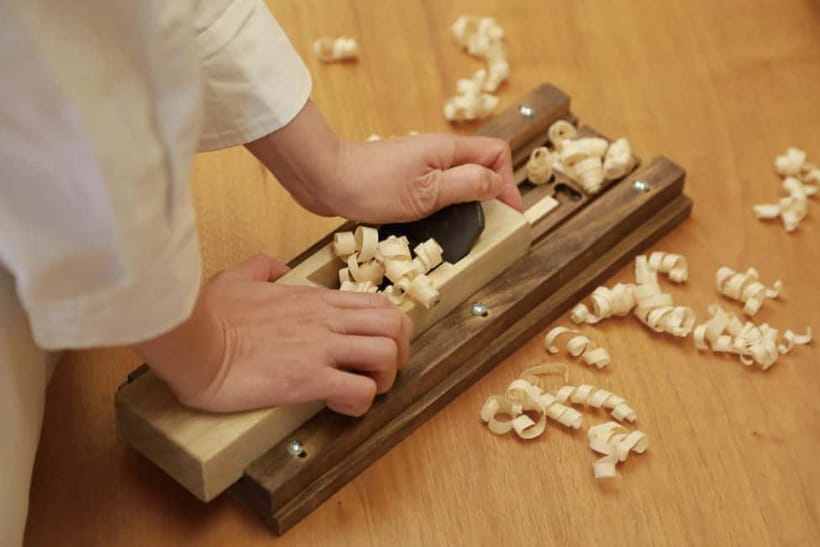
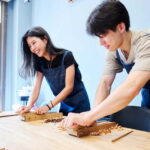
Once you have chosen your blanks, the instructor places them on a stand and shows you how to use the plane. This is the part that separates the workshop from a light craft session.
You push the plane along the wood and remove thin shavings. It takes steady pressure and repeated passes, especially at the beginning when the blanks still look square and bulky. Some people find the motion easy after a few tries. Others need more guidance, and the staff step in to correct the angle or show where to apply force.
I would not arrive expecting a completely effortless hour. One person compared the physical demand to a traditional wood-shop task without electric tools, and that is a useful way to think about it. Your arms and shoulders may get a workout. The work is still beginner-friendly because the instructors explain each stage and help when you get stuck.
The wood can behave differently from one pair to the next. Dense olive, for example, proved difficult for one participant, while other woods were easier to shape. If you are making chopsticks with children or anyone who dislikes strenuous handwork, choose the wood with guidance and expect the adult to provide some help if needed.
The good news is that you are not pushed to rush through the shaping. The staff allow you to continue until the chopsticks feel right. At busy times, instructors may be helping several people at different stages, so you might need to wait briefly for assistance. Even so, the strongest pattern in the feedback is that the instruction is patient and clear.
Names associated with the teaching include Tina and Waka, along with Kotoha, Shion, and Koko. Waka was praised for guiding the process from start to finish, while Tina was singled out for being patient and helpful with a child. The instructors work in English and Japanese, making the class accessible to international visitors.
Sanding the tips and corners
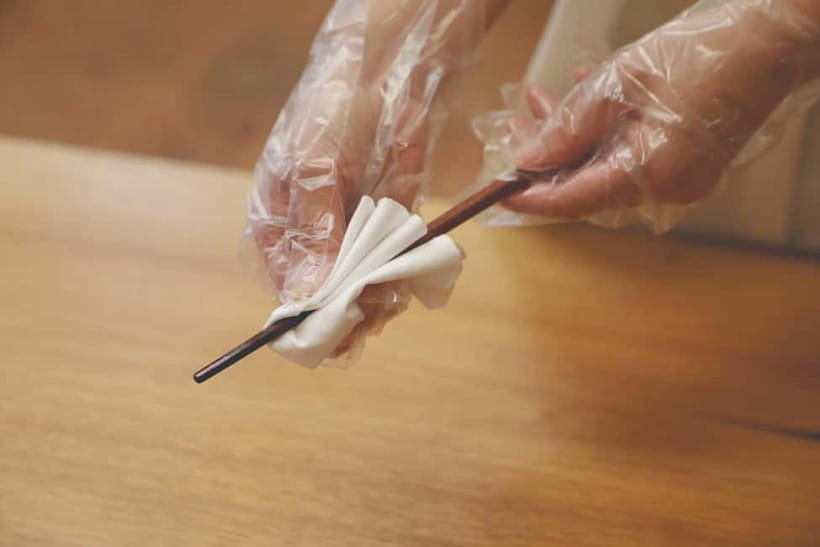
After the main planing, you use sandpaper to smooth the tips and corners. This sounds like a minor step, but it is where the chopsticks begin to feel like finished tools rather than rough wooden blanks.
Sanding also gives you more control than the plane. You can soften an edge, refine the tip, and correct small rough spots. If you enjoy precise work, this may become your favorite part. One participant returned for a second pair and spent two hours sanding carefully, even though the normal class takes about an hour.
That example also tells you something practical about the schedule. The advertised duration is one hour, and many people finish in that time. Some classes may be busy, and careful sanding can take longer. A few people were allowed extra time to finish their chopsticks, but you should not assume every session can run long. If you have a dinner reservation immediately afterward, leave a little breathing room.
The plane itself can take practice. One person found that the chopstick sometimes flipped during shaving, making it unclear which side should face up. If that happens, stop and ask rather than forcing the tool. The staff can show you the correct position.
This is also the stage where you can make each chopstick feel balanced in your hand. They do not need to be factory identical. Small differences are part of the appeal, but careful sanding helps create a comfortable, polished pair.
Oiling the wood and taking it home
The final treatment is oil. After the shaping and sanding, you apply oil to give the chopsticks a smoother, more finished surface.
This step changes the look of the grain and helps the pair feel complete. It is also a satisfying end to the process because you can see the results of your earlier work. The workshop focuses on both materials and finish, so the oiling is not an afterthought.
You can take the finished chopsticks home on the same day. That matters if you are near the end of a Tokyo trip and do not want to arrange shipping or wait for a later collection. It also makes the class an easy addition to a day in Ginza.
The finished pair is more useful than many travel souvenirs. You can use it at home, keep it for special occasions, or give it to a family member. Several people chose the workshop because they wanted something they would actually use rather than another object to store in a suitcase.
Engraving names and phrases
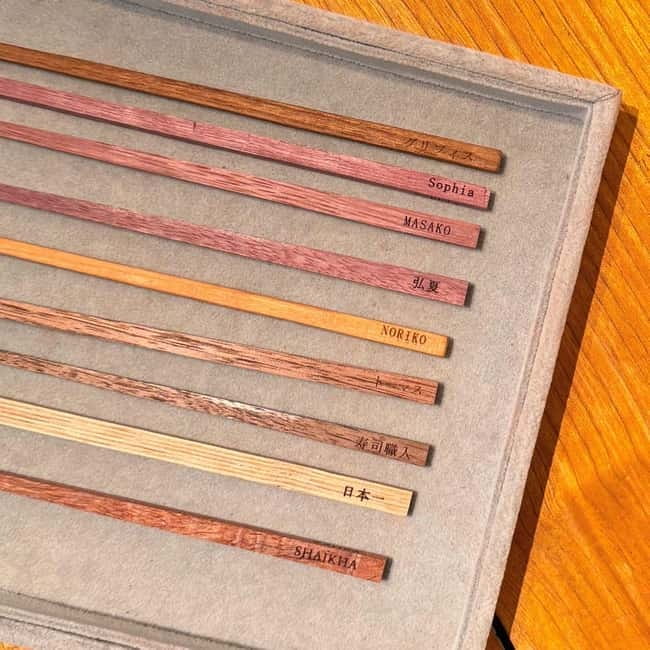
Engraving is optional and costs an additional 1,100 yen. You can add your name or a favorite phrase in Japanese or in your own language.
The workshop uses a high-performance laser designed to put gentle stress on the wood. That allows the engraving to look neat without rough treatment of the finished surface. Staff can also help translate a name or phrase into Japanese, which adds a distinctly local touch.
For families, couples, and birthday celebrations, I think engraving is one of the better extras. A pair with a name on it becomes easier to identify and more meaningful as a keepsake. One family paid to engrave names on several pairs for a 12th-birthday celebration and found the added cost worthwhile.
Still, include it in your budget before booking. The base activity is listed at about $25 per person, while upgraded wood and engraving add to the total. The engraving charge is 1,100 yen per pair, not a reason to avoid the activity, but an expense you should know about in advance.
A few more Tokyo tours and experiences worth a look

How the one-hour format works in practice
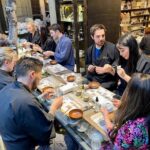
The class is short enough to fit between shopping, lunch, and sightseeing in Ginza. You choose your wood, plane it, sand it, apply oil, and take it home. The process is compact, but it does not feel like a demonstration where you simply watch an instructor.
The one-hour format works especially well for families and first-time craft participants. A 12-year-old enjoyed the class after learning how much pressure to use, and children around eight to 12 have also taken part successfully. Official information says the activity is not suitable for children under three or people over 70, so follow that guidance when booking, even though individual reports describe a wider family age range.
The workshop is wheelchair accessible. English-speaking staff are available, and the guide fee of 1,000 yen is included in the activity price. You do not need to bring tools or materials.
At full capacity, the workstations may feel close, particularly if several people need help at the same time. A quieter session can give you more space and faster access to an instructor. Since starting times vary, check availability when you book.
Who will enjoy it most
I would choose this workshop for anyone who likes making things with their hands and wants a souvenir with a story behind it. It works well for couples, families with school-age children, older teenagers, and friends looking for something different from another temple visit or shopping stop.
It is also a good rainy-day plan. The work takes place indoors, and the activity gives you something focused to do for an hour. If you enjoy Japanese design, wood grain, or practical household objects, you will get more from this than someone who simply wants a quick photo opportunity.
You should think twice if you dislike repetitive handwork or have difficulty applying pressure. Planing is not dangerous when properly supervised, but it is physical. The staff can help, yet you still need to take part. I would choose a simpler wood and allow extra time if you want a very precise finish.
The workshop suits children better when an adult is willing to share the work. Younger participants may enjoy the novelty, but the plane can require more strength than expected. The class becomes more rewarding once the child understands that the uneven blank is slowly becoming a usable chopstick.
Price, extras, and overall value
At $25 per person, the base price is reasonable for a one-hour activity that includes instruction, tools, materials, and a finished pair you take home. You are also paying for a guided introduction to hand woodworking in central Tokyo, not just for the retail value of the chopsticks.
The value depends on how you approach the add-ons. Five wood types are included, while 19 higher-grade choices cost extra. Engraving costs another 1,100 yen per pair. If you choose premium wood and engraving, the total can rise well above the advertised starting price.
That does not make the extras poor value. Specialty wood gives you more choice, while engraving turns a useful item into a personal memento. I would simply decide in advance how much you want to spend, then ask the instructor to identify the included choices and all surcharges before starting.
Factory-made chopsticks may cost less. They will not carry the memory of planing, sanding, and finishing your own pair. If you judge the purchase only by price, this is not the cheapest way to buy chopsticks. If you value the activity and the personal result, it is a fair deal.
The activity has a rating of 4.8 from 1,366 reviews, with repeated praise for the friendly instruction, clear explanations, wide wood selection, and attractive final product. The most useful caution is equally consistent: the work can be strenuous, the shop can become busy, and better wood and engraving cost extra.
Booking and practical details
The meeting point is 2-9-13 Ginza, Chuo-ku, Tokyo. Double-check the address before setting out, since one person went to the wrong location. Arriving early may work well, and an early arrival was accommodated in one case, but you should still follow the reserved start time.
Free cancellation is available up to 24 hours before the activity for a full refund. You can also reserve now and pay later, which helps if your Tokyo schedule is still shifting.
The workshop is taught in English and Japanese. Staff can assist with tool use, wood selection, and engraving text. If you have long hair, tie it back, since the planing can become surprisingly sporty.
Bring patience rather than special equipment. You will use the provided tools and materials, and your main job is to pay attention to the instructions, work steadily, and ask for help when the wood does not behave as expected.
Should you book the Ginza chopstick workshop?
I would book it if you want a hands-on Tokyo souvenir that you can use at home. The class offers a rare mix of craft, choice, and practicality, and the English-speaking staff make it approachable for beginners.
Choose the included wood if you want to keep the cost close to $25. Pay for specialty wood or engraving if the personal detail matters more than the budget. I would also avoid placing a tight appointment immediately afterward, since careful sanding or a busy class can stretch the hour.
Skip it if you want a purely relaxing activity with no physical effort. Otherwise, this is a smart one-hour choice in Ginza, especially for families, couples, and anyone who would rather bring home something made by hand than another mass-produced souvenir.
FAQ
Where is the chopstick-making workshop located?
The meeting point is 2-9-13 Ginza, Chuo-ku, Tokyo, in the Ginza area of Tokyo.
How long does the workshop take?
The scheduled duration is one hour. Some people may take longer if they want to sand very carefully, but you should plan around the advertised one-hour format.
How much does the workshop cost?
The listed price is $25 per person. Upgraded wood and engraving cost extra.
How many types of wood can I choose from?
You can choose from 24 types of wood. Five types are included in the base fee, while the remaining 19 are higher-grade options with an additional charge.
Can I choose the length of my chopsticks?
Yes. You can choose between two lengths.
Can I have my name engraved?
Yes. Name or phrase engraving is optional and costs an additional 1,100 yen per pair. The text can be in Japanese or your own language.
Can I take the chopsticks home immediately?
Yes. You can take your finished chopsticks home on the day of the workshop.
Is the workshop taught in English?
Yes. English-speaking staff assist during the activity, and the listed instructor languages are English and Japanese.
More Workshops & Classes in Tokyo


More Craft Workshops in Tokyo
More Ginza Tours in Tokyo


More tours in Tokyo we've reviewed












Ginza Tours, compared.
 ★ 4.5Tokyo: Art Aquarium Museum GINZA Entry TicketFrom $171 day
 ★ 5.0Tokyo: Best Ginza Food Tour at 3 Local EateriesFrom $150
 ★ 4.5Official Japan Go-Kart Through Tokyo Bay / Ginza (IDP Required)From $85
 ★ 5.0Private Ginza Architecture Walking TourFrom $132
 ★ 4.8Tokyo GINZA: KONPARU Japanese Cabaret Show with DrinkFrom $502 hours
 ★ 4.9Tokyo: Discover the Art of Kintsugi in GinzaFrom $751h 30m