Reviewed · GINZA TOURS
Tokyo: Discover the Art of Kintsugi in Ginza
A broken plate becomes a small work of art in this 90-minute kintsugi workshop near Ginza Station. With an English or Japanese instructor beside you, you repair a ceramic piece step by step, then carry home the finished object in protective packaging. It is a calm, hands-on break from Tokyo’s city rush.
In This Article
- What makes this Ginza workshop worth your time
- Arriving at Cafe AOU Ginza forest
- The first lesson: why kintsugi looks different
- Choosing your ceramic piece
- Step-by-step repair with Tatsu or Teki Sensei
- A quiet craft break in central Tokyo
- What you take home, and what you should not do with it
- Is $75 a fair price for 90 minutes?
- Who will enjoy this most?
- Booking details that matter
- Should you book Tokyo’s Ginza kintsugi class?
- FAQ
- Where is the kintsugi workshop held?
- How long does the activity last?
- How far is the venue from Ginza Station?
- What languages are available?
- How many people can join the class?
- Are tools and materials included?
- Can I take the repaired ceramic home?
- Is the repaired ceramic safe for cooking or microwaving?
- Can I cancel my booking?
I like the intimate group size, limited to eight people, and the easy location just three minutes from Ginza Station. I also like that the instructor gives real context about kintsugi, rather than treating it as a quick craft project. The main consideration is that this is a modern shortcut version of the technique, not the month-long traditional process, and some participants may spend part of the class waiting while the instructor helps others.
What makes this Ginza workshop worth your time

- A cracked ceramic becomes your personal souvenir: You repair a supplied plate or bowl and take it home at the end.
- Only eight people can join: The small group allows the instructor to offer individual help.
- Tatsu and Teki Sensei lead the class: You can expect guidance in English or Japanese, along with stories about Ginza and kintsugi.
- The workshop takes place near Ginza Station: The private room is on the ground floor of Daiwa Ginza Building, inside Cafe AOU Ginza forest.
- You finish in 90 minutes: Synthetic lacquer and metallic powder replace the slower traditional materials.
- Your piece is packed for the journey home: Bring it back as a decorative reminder of Tokyo, but not as everyday tableware.
Arriving at Cafe AOU Ginza forest

The meeting point is Cafe AOU Ginza forest, located on the ground floor of the Daiwa Ginza Building. The room is near Ginza Station, with the workshop space set aside from the café itself. That gives the class a more private feel than a large public craft demonstration.
The location is a practical choice if you are already exploring Ginza. You can pair the workshop with department stores, galleries, restaurants, or a walk through the district without losing much sightseeing time. If high-end shopping is not your thing, the class gives you another good reason to spend time in Ginza.
The exact room can change if availability or reservation numbers require it. You should check your email one day before the workshop for any updated location details. That small bit of planning matters in Tokyo, where a building can be easy to miss even when you are standing on the correct street.
One helpful touch is that instructors may meet you outside the building. Tatsu has done this for participants, which can make arrival easier in a busy district. Still, give yourself enough time to find the building and confirm the entrance rather than arriving at the last minute.
A few more Tokyo tours and experiences worth a look


The first lesson: why kintsugi looks different
The workshop begins with an introduction to kintsugi, the Japanese practice of repairing broken ceramics so the cracks become part of the finished design. Instead of hiding damage, the repair draws attention to it. The result is a piece with visible lines that cannot be duplicated exactly.
That idea is the heart of the activity. You are not trying to make a factory-perfect plate. You are making a one-of-a-kind object that shows where it was broken and repaired. The craft offers a simple way to think about wear, accidents, and change without turning the lesson into a heavy lecture.
The introduction also gives you useful background on the older process. Authentic kintsugi uses natural lacquer and can take about a month to complete. This class uses synthetic lacquer and metallic powder, which lets you finish your piece during the 90-minute session.
That distinction is important. If you want to study traditional lacquer work in depth, this is not that kind of course. If you want a clear, accessible first look at the idea of kintsugi and a finished souvenir before your next Tokyo activity, the shorter format makes good sense.
Choosing your ceramic piece

You receive a ceramic item to restore, so you do not need to bring a broken plate from home. The exact selection can vary, but participants have worked with plates and bowls, and there may be a choice between two colors. This gives you a little creative control before the repair begins.
Your choice affects the look of the final piece. A darker ceramic can make the metallic lines more visible, while another color may give the result a softer feel. You are not simply following a fixed sample, since each broken piece has its own shape and crack pattern.
The supplied ceramic also keeps the class simple for people who are new to the craft. You do not need to worry about finding a suitable item, packing it in your luggage, or bringing something valuable that could break during the repair. All tools and materials are provided.
I would treat the selection as part of the creative process, not just a preliminary chore. Take a moment to look at the form and color of your piece before you start. The final result will be decorative, so choose the item that you will enjoy seeing on a shelf or desk at home.
Step-by-step repair with Tatsu or Teki Sensei
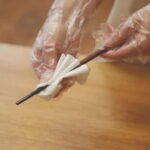
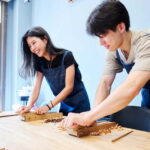
Once the class gets underway, the instructor demonstrates the basic repair method and then guides you through each stage. You work with the supplied ceramic, applying the synthetic lacquer and metallic powder to form the visible repair lines.
The instruction is designed for beginners. You do not need previous kintsugi or pottery experience, and the tools are supplied at the workshop. The instructor explains the sequence clearly, checks your progress, and steps in when a line or join needs extra care.
Tatsu has been praised for helping the class along while sharing stories about Ginza. Teki Sensei has also led sessions, offering clear explanations and friendly support when participants run into trouble. The names may vary by date, so do not assume one particular instructor will lead every session.
The small group limit of eight is a real advantage here. Kintsugi is detailed work, and a large class would make personal help harder to provide. At the same time, the instructor must divide attention among the participants. If someone is working more slowly, you may wait briefly before moving to the next stage.
That pacing issue is worth knowing before you book. Some people would prefer more uninterrupted hands-on time, while others will appreciate having an instructor slow things down and correct mistakes. The session is a guided introduction, not an open studio where you work at your own speed.
A quiet craft break in central Tokyo
Ginza can feel polished, busy, and expensive. This activity gives you a quieter way to experience the area. Rather than spending the whole afternoon looking at storefronts, you sit down, focus on a small object, and work with your hands.
A complimentary soft drink is included, and coffee has also been offered during sessions. The drink is a modest detail, but it suits the relaxed pace of the room. The point is not luxury service. It is having a comfortable pause while you learn something connected to Japan.
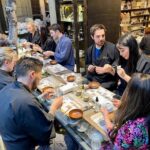
The workshop also creates room for conversation. Instructors have shared stories about Ginza and explained the background of kintsugi during the work. Since the group is small, you may find the class feels more like a personal lesson than a formal tour.
If you are trying to pack every Tokyo sight into one day, 90 minutes is manageable. You can fit the workshop between other plans without giving up a full morning or afternoon. Just remember to leave room for walking to the building and collecting any updated venue information by email.
A few more Tokyo tours and experiences worth a look

What you take home, and what you should not do with it

At the end, you keep the repaired ceramic. The item is packaged carefully for transport, which is especially useful if you are carrying it through several more days of travel or placing it in checked luggage.
The packaging is more than a nice extra. Freshly repaired ceramic needs protection, and a loose plate in a suitcase would be a poor souvenir strategy. Keep the package intact until you reach home, then place the piece somewhere it will not be knocked over.
Your repaired item is recommended for decorative use only. It is not microwave-safe because the repaired area creates a risk of ignition. Treat it as an art object, small display piece, or thoughtful gift rather than a plate for regular meals.
You should also remember that the metallic powder used here is a substitute for gold. The visual idea comes from kintsugi, but the materials and timetable are adapted for visitors. This honest limitation does not ruin the activity, but it does shape what you are buying: a hands-on cultural craft session, not professional restoration training.
Is $75 a fair price for 90 minutes?

The cost is $75 per person. That is not a bargain craft class, but the price includes the 90-minute instruction, ceramic piece, tools, materials, instructor guidance, and a soft drink. You also leave with a finished item that is packaged for the trip home.
For me, the value depends on what you want from the activity. If you are mainly shopping for inexpensive souvenirs, you can find cheaper objects in Tokyo. If you want a personal activity with a piece you helped create, the cost becomes easier to justify.
The setting near Ginza also saves time. You are not traveling far outside central Tokyo for the class, and you can combine it with a day in the district. The small group format gives the fee more weight than a large, impersonal demonstration would.
I would book it for someone who values making something over collecting another mass-produced keepsake. I would hesitate if you expect a full traditional apprenticeship, real gold, or a museum-level restoration lesson. The workshop gives you a taste of the craft and its outlook in a compact format.
Who will enjoy this most?

This is a good fit for adults and children aged 10 and older who enjoy careful creative work. A family group can take part together, and the instructor has worked well with children aged 10 and 14. Younger children are not accepted, so check ages carefully when planning a family day.
It also suits couples, solo visitors, and friends who want something calmer than a food tour or crowded attraction. The activity does not depend on perfect artistic skill. Your finished piece will look individual because the cracks and repairs are different every time.
You should be comfortable sitting through a detailed, hands-on class and following instructions. The experience is not suitable for people with mobility impairments, people with a cold, babies under one year, or people with hearing impairments, according to the activity restrictions.
English and Japanese instruction is available. If language support is a major concern, confirm your preferred language when booking. The lesson is designed to be clear, but the instructor also provides cultural background and conversation, which can add to the experience.
Booking details that matter
You can cancel up to 24 hours before the start time for a full refund, and the reserve-now, pay-later option keeps your plans flexible. Availability varies by starting time, so check the schedule before building the rest of your Ginza day around the class.
The activity does not include hotel pickup or drop-off. You are responsible for reaching the meeting point near Ginza Station. Because the room may change, check for an email with new venue details one day before your session.
There is no ticket line to negotiate, and the group is limited to eight. Those details make the experience fairly simple once you know where to go. The only packing tip I would add is to leave a little room in your luggage for the repaired ceramic and its protective wrapping.
Should you book Tokyo’s Ginza kintsugi class?
Book this workshop if you want a personal souvenir, a quiet creative pause, and a short introduction to a Japanese art practice. The small group, patient instruction, Ginza location, and careful packaging give the class practical value beyond the craft itself.
Skip it if you need authentic natural lacquer, real gold, food-safe tableware, or a long technical course. The modern materials are a clear compromise, but they are also what make it possible to finish and carry home your piece in 90 minutes.
For most first-time visitors, I see this as a thoughtful way to spend part of a Ginza day. You learn the idea behind kintsugi, make something with your own hands, and leave with a souvenir that shows its repaired history rather than hiding it.
FAQ
Where is the kintsugi workshop held?
The meeting point is Cafe AOU Ginza forest on the ground floor of the Daiwa Ginza Building, near Ginza Station. The workshop takes place in a private room.
How long does the activity last?
The workshop lasts 90 minutes.
How far is the venue from Ginza Station?
The private room is about three minutes from Ginza Station.
What languages are available?
Instruction is available in English and Japanese.
How many people can join the class?
The workshop is limited to eight participants.
Are tools and materials included?
Yes. The workshop provides all necessary tools and materials, including a ceramic piece to restore.
Can I take the repaired ceramic home?
Yes. You take home the repaired piece, and it is packaged to help protect it during your journey.
Is the repaired ceramic safe for cooking or microwaving?
No. The repaired item is recommended for decorative use only and is not microwave-safe because of a risk of ignition.
Can I cancel my booking?
You can cancel up to 24 hours in advance for a full refund. A reserve-now, pay-later option is also available.
More Craft Workshops in Tokyo
More Ginza Tours in Tokyo


More tours in Tokyo we've reviewed












Ginza Tours, compared.
 ★ 4.8Chopstick Making Workshop in GinzaFrom $251 hour
 ★ 4.5Tokyo: Art Aquarium Museum GINZA Entry TicketFrom $171 day
 ★ 5.0Tokyo: Best Ginza Food Tour at 3 Local EateriesFrom $150
 ★ 4.5Official Japan Go-Kart Through Tokyo Bay / Ginza (IDP Required)From $85
 ★ 5.0Private Ginza Architecture Walking TourFrom $132
 ★ 4.8Tokyo GINZA: KONPARU Japanese Cabaret Show with DrinkFrom $502 hours