Reviewed · TOURS
Tokyo: Full Course Tour: Explore 10 Must-Sees & Hidden Gems
Tokyo reveals itself quickly on this seven-hour city tour, which links shrines, temples, markets, imperial sites, pop culture, and everyday Japanese life. You may visit up to 10 attractions from a route that includes 12 listed stops, all with free entry, while using the metro and your own feet to move between districts.
In This Article
- Key points to know before booking
- A fast introduction to Tokyo, from Yoyogi to Asakusa
- Konbini culture at Seven-Eleven
- Meiji Jingu and the quiet side of Harajuku
- Hachiko and Shibuya Scramble
- Tsukiji Honganji and the outer market
- The Imperial Palace, Marunouchi, and Tokyo Station
- Akihabara and Tokyo’s pop-culture center
- Sensoji and Asakusa Shrine
- How much does the $77 price really include?
- What the guides add to the day
- The walking and metro reality
- Who should book this Tokyo route?
- Should you book it?
- FAQ
- How long does the Tokyo Full Course Tour last?
- How many attractions will I visit?
- Are admission fees included?
- How much should I budget for transportation?
- Where does the tour meet?
- Is the tour suitable for people with mobility issues or young children?
I like two things right away: the guides are born and raised in Japan, and the tour teaches practical skills, not just dates and photo stops. Sam and Yasuko have earned special praise for their warmth, clear explanations, maps, and help with questions. The main drawback is the pace. At about 20,000 steps, plus several metro rides, this is a serious walking day.
Key points to know before booking

- Up to 10 Tokyo sights in one day: Visit shrines, temples, markets, historic districts, and pop-culture centers.
- A local guide leads the way: Sam, Yasuko, and other English-speaking Japanese guides explain etiquette, history, and daily customs.
- No admission charges at the listed stops: You still pay for metro or JR fares, food, and drinks.
- Expect about 20,000 steps: Comfortable sports shoes and easy-moving clothes are essential.
- Small groups cap at seven people: That makes it easier to ask questions and keep up in crowded stations.
- Best for a first day or short stopover: You get a broad view of Tokyo and can return later to the places you like most.
A fast introduction to Tokyo, from Yoyogi to Asakusa

The meeting point is outside the west exit of JR Yoyogi Station. This is a practical starting place for a route that quickly moves from ordinary Tokyo life to grand shrines, famous crossings, old temples, and neon streets.
The day works best as an orientation tour. You are not spending long hours inside one museum or palace. Instead, you move through several districts, learn how they fit together, and collect ideas for the rest of your stay.
The small group size matters here. Tokyo stations can be confusing, and busy streets can split a group in seconds. With no more than seven participants, your guide can answer questions and keep the pace under control. You must still stay with the group, since the guide cannot leave to search for anyone who wanders off.
At each area, expect some walking, a short explanation, time for photos, and then a metro ride to the next part of the city. The exact number of stops can vary, so think of the schedule as up to 10 main attractions rather than a guarantee that every listed place receives equal time.
If you're still narrowing it down, here are other tours in Tokyo we've reviewed.

Konbini culture at Seven-Eleven
Beginning with a Seven-Eleven may sound odd beside Tokyo’s famous shrines, but it is one of the more useful choices. Japanese convenience stores, known as konbini, are part of daily life. They offer snacks, drinks, quick meals, and practical services in a clean, efficient setting.
Your guide can help you understand why a convenience store deserves a place on a city introduction. You may learn what local snacks to try, how to read some everyday packaging, and why these shops are so useful during a trip.
This stop is not a grand sightseeing moment. It is a small window into ordinary Tokyo. I like that balance. A tour made only of landmarks can leave you knowing what Tokyo photographs like, but not how the city functions.
Meiji Jingu and the quiet side of Harajuku

Meiji Jingu provides a sharp change of mood. After the bright commercial streets around Yoyogi and Harajuku, you enter a large wooded shrine setting that feels removed from the city.
The shrine offers an introduction to Shinto customs and to the respectful behavior expected at a Japanese religious site. Your guide can explain how to approach the entrance, where to bow, and how to take part without treating the shrine as just a backdrop for photos.
The peaceful setting is the main appeal, but do not expect an isolated wilderness experience. It is a major Tokyo sight, and other people will be present. Still, the contrast between the surrounding city and the calm shrine grounds makes this one of the day’s most useful stops.
Hachiko and Shibuya Scramble

The Hachiko statue and Shibuya Scramble Crossing put you in the middle of modern Tokyo. Hachiko’s story, based on the loyalty of a dog who continued waiting for his owner, has become one of the city’s best-known pieces of local folklore and public memory.
The statue is small, so your guide’s explanation adds much of the value. It helps turn a quick photo stop into a short lesson about how stories become part of a city’s identity.
Then comes the famous crossing. From the edge, you watch several streams of people move across the intersection. When the signal changes, you join them. It is a simple activity, but it gives you a direct sense of Tokyo’s scale and rhythm.
You should keep your expectations sensible. This is not a long Shibuya exploration, and the crossing can be crowded. The point is to experience the scene, learn where you are, and return later if you want time for department stores, cafés, or nightlife.
Tsukiji Honganji and the outer market

Tsukiji Honganji Temple is one of the day’s more unusual architectural stops. Its Indian-inspired exterior and stained glass make it different from the wooden Buddhist temples you may expect in Japan.
The building is useful for showing that Tokyo’s religious architecture does not fit one simple pattern. A guide can also explain the temple’s place in the Tsukiji area and how it differs from the Shinto shrine experience at Meiji Jingu.
Nearby, Tsukiji Outer Market shifts the focus from worship to food. This is the place to browse fresh seafood, Wagyu, snacks, and other local specialties. Lunch is not included, so this is where you should budget extra money and decide how much you want to eat.
I like the market stop because it leaves room for personal choice. You might prefer a full lunch, a small snack, or simply a look at the food stalls. Vegetarian and vegan options are available, but tell the guide about your needs early so the stop is easier to manage.
Cash is important. Some small shops accept cash only, and the tour specifically advises carrying Japanese yen. Food prices are not included in the $77 tour cost.


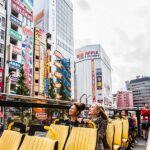
The Imperial Palace, Marunouchi, and Tokyo Station

The Imperial Palace area introduces the historic center of Tokyo. You walk near the former Edo Castle grounds, stone walls, and the surroundings of Japan’s imperial residence.
This is more of an outdoor history lesson than a palace visit. The tour does not include an interior palace admission, and the listed attractions are free to enter. Your guide’s explanations help connect the old castle city with the modern capital around it.
Marunouchi provides the next contrast. Modern office towers and polished streets sit close to the imperial grounds. This area shows how Tokyo places old power, business, transport, and public space side by side.
Tokyo Station is another strong photo stop. Its red-brick exterior gives you a clear look at the city’s railway history, while the station itself remains one of Tokyo’s key transport centers. The stop is especially helpful if you plan to use trains later, since you have already seen one of the city’s major arrival points.
The drawback is time. These areas reward a slower walk if you want detailed architecture or palace history. On this route, you get an introduction rather than a full historical tour.
Akihabara and Tokyo’s pop-culture center

Akihabara changes the subject again. Known as Electric Town, the district is linked with anime, gaming, electronics, and Japanese pop culture.
This stop gives the itinerary a useful modern edge. You are not seeing only temples and old buildings. You are also learning about a major part of Tokyo’s cultural identity today.
The experience is mainly an area walk, not a scheduled shopping session. If you are eager to browse shops, you may want to return after the tour. The advantage of visiting with a local guide is that you can ask questions about the district and learn how it fits into the city beyond its famous signs and storefronts.
Sensoji and Asakusa Shrine

Asakusa brings you into old Tokyo. At Sensoji, you pass through the Kaminarimon Gate and approach the city’s oldest temple.
The approach is part of the experience. The gate, the approach road, and the temple grounds form a strong visual introduction to traditional Tokyo. Your guide can explain the difference between Buddhist and Shinto practices, an important distinction when you visit both Sensoji and Asakusa Shrine.
Asakusa Shrine sits within the Sensoji complex and offers a quieter Shinto counterpoint. Seeing both sites in one area makes the cultural explanation easier to follow. You are not simply collecting two religious buildings. You are learning how different traditions share space in Japanese life.
Asakusa can be crowded, especially around the main approach. Keep your belongings close, follow the guide’s meeting instructions, and allow yourself extra time later if you want to browse at a slower pace.
How much does the $77 price really include?

The tour costs $77 per person. The price covers the professional guide and taxes, while the listed attractions have no admission charge.
You should add about 1,500 yen, listed as roughly $10, for Metro and JR fares. You also pay for lunch, snacks, and drinks. That makes the real day cost higher than the headline price, but the guide is doing more than walking you to free landmarks.
The value comes from route planning, translation of customs, transport help, and the ability to ask questions throughout the day. Tokyo can be easy once you know the system, but the first attempts at changing lines, finding station exits, and choosing the right platform can consume valuable sightseeing time.
At seven people or fewer, the price is reasonable for a private-feeling introduction, though it is not the best choice if you prefer spending an entire day in one district. The tour gives you breadth. You then decide where to spend more time on your own.
What the guides add to the day
The strongest part of this experience is the guide. Several guests have singled out Sam and Yasuko, also written as Yasko in one account, for their friendly manner, patience, and clear explanations.
Sam has been praised as a strong introduction to Tokyo, with a gift for making the day enjoyable. Yasuko has been described as caring, positive, and eager to answer questions. One particularly useful detail is that she used maps to help the group understand where they were at each point. Another guide used slides on an iPad to explain the route and local context.
Those details matter. Tokyo’s districts can blur together when you visit many of them in one day. Maps and visual explanations help you remember how Shibuya relates to Harajuku, how Tsukiji fits into the central city, and where Asakusa sits in relation to the rest of your route.
The tour also covers etiquette, public transport behavior, history, culture, and everyday life. That makes it especially useful on your first day. You can ask about practical matters as they come up rather than trying to decode everything from a guidebook.
The walking and metro reality
The itinerary is ambitious. You walk between sights and use the metro between districts, with roughly 20,000 steps expected.
Bring sporty shoes and clothes that allow easy movement. High heels are not suitable, and oversize luggage, baby strollers, and baby carriages are not allowed. The tour runs in the rain, so carry an umbrella or raincoat.
You need a pre-charged Suica, Pasmo, or Icoca card for the Metro travel. Transportation is not included, and the tour advises bringing cash for small food shops and other places that may not accept cards.
This is not a good fit if you have low fitness, back problems, mobility limitations, or are pregnant. People with colds are also advised not to book. Children under 13 require a private tour, and anyone under 18 must be accompanied by an adult.
The group leaves on time. Late arrivals cannot join, and the stated conditions provide no refund in those cases. Give yourself plenty of time to reach the west exit of Yoyogi Station.
Who should book this Tokyo route?
I would choose this tour for a first full day in Tokyo, a short stopover, or a trip where you want a quick map of the city before exploring on your own. It is also a good match if you want cultural explanations alongside major sights and pop culture.
You may not enjoy it if you dislike changing trains, walking long distances, or moving on a fixed schedule. Families with young children, people carrying large bags, and anyone who needs frequent rest stops should choose something slower.
The tour has a perfect 5 rating from 35 reviews, and the praise centers on the same points: the guides, the amount covered, the cultural explanations, and the warm personal help. That does not remove the physical demands, but it does show where the experience earns its strongest marks.
Should you book it?
Book it if you want to get your bearings fast, learn how Tokyo works, and see a wide mix of old and new in one day. The route is especially useful at the beginning of a longer stay, since you can return to Meiji Jingu, Tsukiji, Akihabara, or Asakusa with a better sense of direction.
Skip it if you want a relaxed day, long meals, or detailed time inside one attraction. At $77, plus transport and food, you are paying mainly for the local guide, efficient route, and cultural context. For a fit visitor with limited time, that is a fair trade.
FAQ
How long does the Tokyo Full Course Tour last?
The tour lasts seven hours. Check available starting times when booking.
How many attractions will I visit?
The route includes up to 10 main attractions. The listed places include Seven-Eleven, Meiji Jingu Shrine, Hachiko, Shibuya Scramble Crossing, Tsukiji Honganji Temple, Tsukiji Outer Market, the Imperial Palace area, Marunouchi, Tokyo Station, Akihabara, Sensoji Temple, and Asakusa Shrine.
Are admission fees included?
The listed attractions are free to enter. Metro and JR fares, food, drinks, and any other entrance fees are not included.
How much should I budget for transportation?
The estimated Metro and JR transportation cost is about 1,500 yen, or roughly $10.
Where does the tour meet?
Meet outside the ticket gate at the west exit of JR Yoyogi Station, at 1-chōme-34 Yoyogi, Shibuya City, Tokyo.
Is the tour suitable for people with mobility issues or young children?
No. The tour is not suitable for wheelchair users, pregnant women, people with back problems, people with colds, or those with low fitness. Children under 13 require a private tour, and anyone under 18 must have an adult with them.
More tours in Tokyo we've reviewed












Tours, compared.
 ★ 5.0Mt Fuji and Hakone 1-Day Bus Tour Return by Bullet TrainFrom $163
 ★ 5.01-Day Tokyo Bus TourFrom $129
 ★ 5.0Tokyo: Shinjuku Food Tour (13 Dishes at 4 Local Eateries)From $86
 ★ 4.4Tokyo Mt Fuji 5th St & Hakone Cruise Bus Tour w/Bullet TrainFrom $15410 hours
 ★ 5.0Flagship 2-Hours Official Street Go-Kart Tour – Tokyo Bay ShopFrom $642 hours to 2 hours 30 minutes (approx.)
 ★ 4.7Tokyo: Mt. Fuji Tour, Hakone Ropeway, Owakudani, Lake AshiFrom $5410 hours