Reviewed · TOKYO
Urban Geometry with Laurence Bouchard
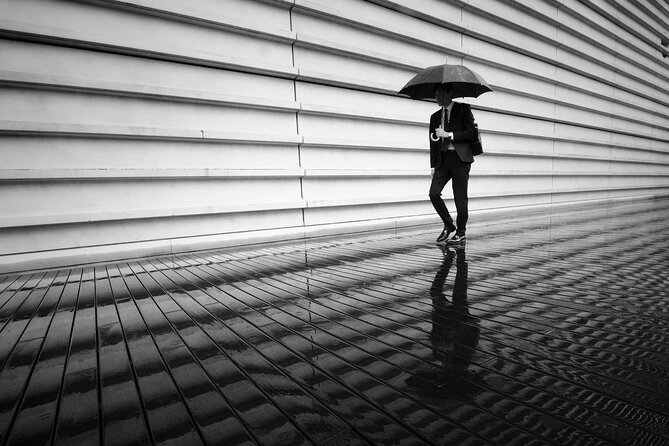
Tokyo is a terrific place to stop chasing famous sights and start looking at lines, shadows, and reflections. Laurence Bouchard’s four-hour workshop takes you from Ebisu to Roppongi and Yurakucho, where ordinary structures become bold black-and-white compositions.
In This Article
- Key points to know before you book
- Seeing Tokyo as a set of shapes
- Ebisu Garden Place and its trellised shadows
- Roppongi’s quieter corners
- The National Art Center’s glass facade
- Yurakucho and the Tokyo International Forum
- What Laurence’s feedback adds
- Small-group size, cost, and overall value
- Who will enjoy this Tokyo photography workshop
- Should you book Urban Geometry with Laurence Bouchard?
- FAQ
- Where does the photography workshop begin?
- How long does Urban Geometry with Laurence Bouchard last?
- Where does the activity finish?
- How many people can join the workshop?
- What should I bring?
- Can I cancel for a full refund?
I like the small maximum of six people, which gives Laurence room to review your work and offer advice suited to your camera and skill level. I also like the hands-on approach: he may model as a passerby when a scene needs a human figure, then help you refine the timing and framing.
The main consideration is pace. You will visit several parts of Tokyo, so some movement between locations is involved, and four hours can feel short if you want long, unhurried shooting sessions at every stop. Bring comfortable shoes and a fully charged phone or camera.
Key points to know before you book
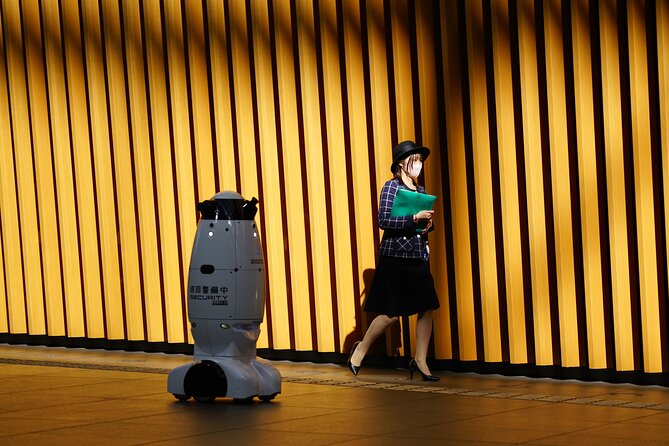
- Ebisu starts the workshop with strong shadows: Garden Place offers a ready-made study in repeated lines and patterned light.
- The National Art Center provides a striking indoor setting: Its huge glass facade creates shifting shadows and reflective surfaces.
- Laurence gives practical image feedback: You can show him your work and receive advice linked to your own camera and experience.
- The group is capped at six people: This matters when you want individual help rather than a general photography walk.
- The route ends at the Tokyo International Forum in Yurakucho: Its open structure gives you a different kind of geometric subject.
- You need to come prepared: Start at 9:00 am with a full battery, comfortable shoes, and a Suica or Pasmo card if possible.
Seeing Tokyo as a set of shapes
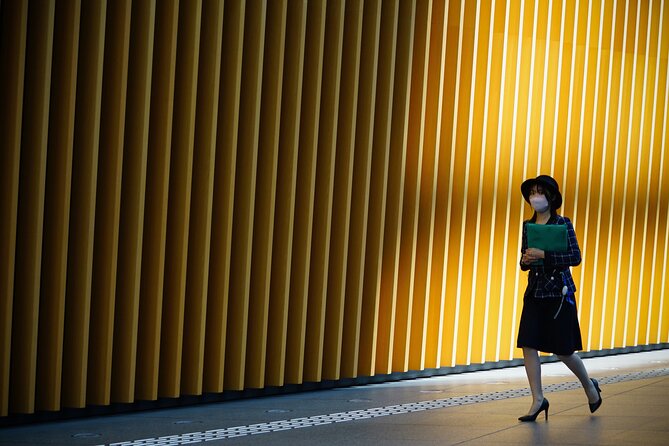
This is not a standard sightseeing route with a camera pointed at famous buildings. Laurence Bouchard uses Tokyo as a practical classroom, showing you how to find graphic order in places you might otherwise pass without a second look.
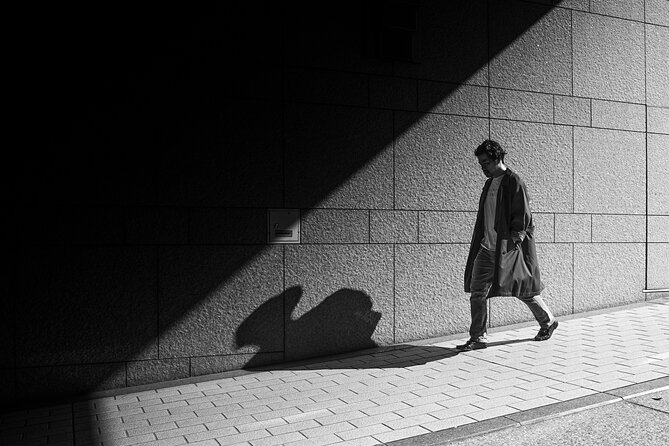
The focus is high-contrast and black-and-white photography. That means you will pay closer attention to bright and dark areas, repeated forms, hard edges, reflections, and the way people move through a frame. These are useful skills in any city, not just Tokyo.
I like this approach because it changes what you do with the rest of your trip. Once you begin watching for shadow patterns and strong geometry, a station corridor, building entrance, or glass wall can become a picture rather than just a way to get somewhere.
The workshop is also designed around your own equipment. You can work with your camera or phone, then receive feedback that fits the tool in your hand. That is more useful than a lecture packed with technical terms you may not remember later.
If you're still narrowing it down, here are other tours in Tokyo we've reviewed.
Ebisu Garden Place and its trellised shadows
The morning begins at 4-chōme-2-6 Ebisu in Shibuya, Tokyo. The first shooting area is Ebisu Garden Place, where a broad complex and its trellised canopy cast repeated shadows across the space.
This is a smart place to begin. The patterns give you an immediate subject, but they are not so complicated that you need advanced camera skills. You can work on framing, look for symmetry, and compare a wide view with a tighter crop of the same structure.
The canopy’s shadows are especially useful for learning how timing changes an image. A small shift in the sun can alter the shape and strength of the pattern. Laurence can help you decide when the light is doing the most work, rather than encouraging you to photograph the scene at random.
You may also find that the best image is not the obvious view of Garden Place. Try looking down, isolating one section of the trellis, or waiting for a person to cross the shadow. The aim is to make a clear composition from a large public space.
The drawback is that patterned architecture can tempt everyone in a small group toward similar frames. Laurence’s feedback should help you move beyond the first idea, but you still need to make your own choices about distance, angle, and timing.
Roppongi’s quieter corners
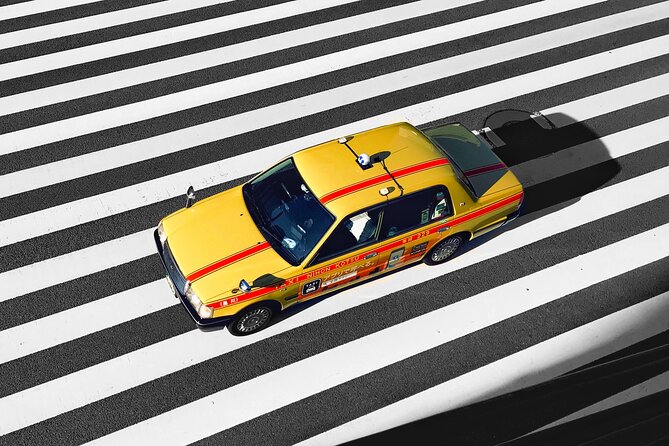
The next part takes you to Roppongi for a few less obvious shooting locations. The exact spots are not specified, which gives Laurence room to respond to the conditions and direct you toward useful patterns, light, or subjects on the day.
That flexibility is valuable in street photography. A fixed list of stops can be less helpful than a guide who notices where the light is working right now. In Roppongi, you will continue looking for structure rather than simply collecting another famous Tokyo view.
This is also where the workshop’s people skills can help. If a scene needs a passerby to give it scale, Laurence may step into the frame himself. That small act solves a common problem in architectural photography: you find a strong shape, but the picture lacks a sense of size or movement.
I would use this section to test ideas from Ebisu. Try a high-contrast frame with a person crossing a hard edge, then make another image without the person. Compare how the human figure changes the balance and meaning of the picture.
Because the route includes several areas, you should expect some walking and public transport movement between locations. A Suica or Pasmo card is recommended if possible, and it will make the transitions easier. The activity details do not specify the exact transport arrangements or travel time, so do not assume every minute will be spent shooting.
The National Art Center’s glass facade
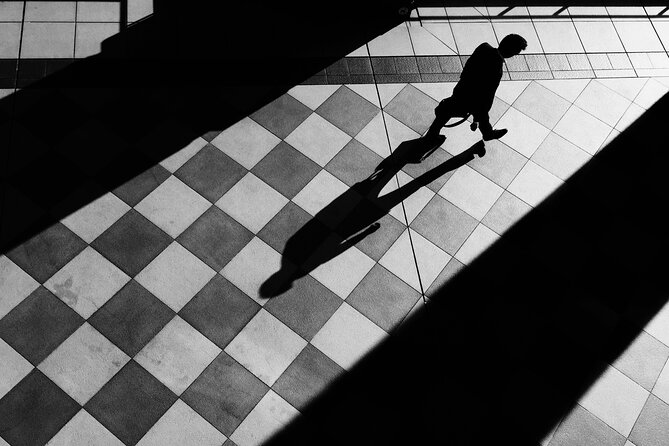
The National Art Center, Tokyo is one of the most visually useful stops on the route. Its massive glass facade offers both reflection and shadow, giving you two related subjects in one setting.
Glass can make a photograph confusing in a productive way. You may see the building, the sky, nearby forms, and passing figures layered into one frame. In black and white, those layers become less about color and more about brightness, shape, and overlap.
The facade’s shadows add another graphic element. Look for the way structural lines cut through the light. A broad view may show the full rhythm of the building, while a tighter frame can reduce it to a few diagonals and dark blocks.
This is an excellent point for practical feedback. You can show Laurence several versions of the same subject and ask which one has the clearest structure. The goal is not simply to make an attractive picture, but to understand why one arrangement reads better than another.
The National Art Center is also a useful reminder that this workshop does not depend on remote or obscure locations. You are learning to see familiar public architecture differently. That makes the lesson portable when you return home.
One possible limitation is that reflective surfaces can be difficult to control. You might find unwanted shapes or bright areas entering the frame. That is part of the exercise, but photographers seeking only clean, predictable compositions may find this section demanding.
Yurakucho and the Tokyo International Forum
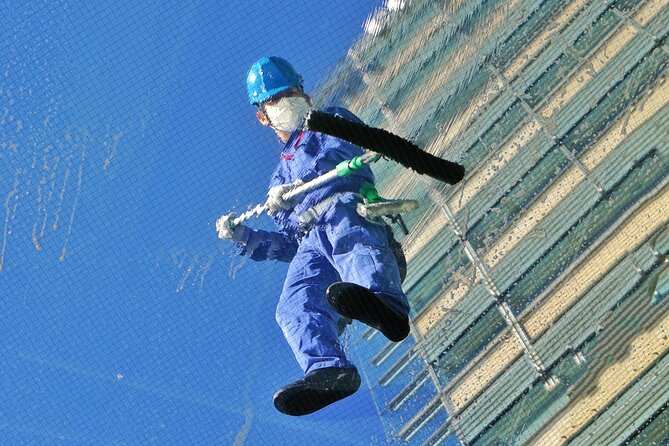
The final area is Yurakucho, where the group explores the hidden depths of the Tokyo International Forum. The building’s large interior structure gives you a different type of geometric study from the outdoor shadows in Ebisu and the glass facade at the National Art Center.
Here, you can work with height, repetition, curves, and strong perspective. A large interior space can make scale difficult to judge, so a person in the frame becomes useful. Laurence’s willingness to act as a passerby can help you create that sense of proportion when the space is otherwise empty.
I like the order of the route. You begin with clear shadow patterns, move into less fixed street scenes, study reflections and facade structure, then finish with a large architectural interior. Each stop adds a new problem without abandoning the central idea of graphic composition.
The Forum may also be the most rewarding place to experiment with unusual framing. You can point upward, isolate a structural detail, or use the edges of the building to lead the eye inward. You do not need to photograph the entire structure to make the stop worthwhile.
The activity ends back at the meeting point, and the supplied details identify Yurakucho as the final stop. Since the exact return arrangements are not given, allow yourself a little flexibility after the four-hour estimate if you have another appointment.


What Laurence’s feedback adds
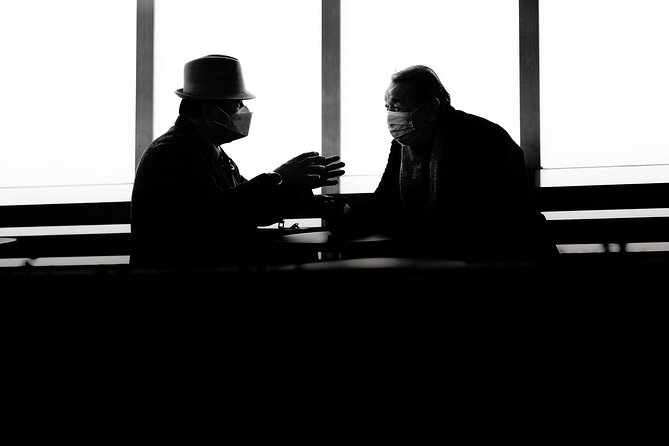
The strongest reason to book this rather than simply walk through the same places alone is the feedback. Laurence reviews your work and helps you shape more compelling images, with guidance tailored to your equipment and skill level.
That can mean discussing framing, timing, or the balance between light and dark. It can also mean having someone point out a pattern you missed. The benefit is not just one good photograph from Tokyo. You are building a way of looking that can serve you in other cities.
The workshop also appears suited to different levels of experience. A beginner can work on simple choices such as where to stand and what to leave out of the frame. Someone with more practice can use the time to tighten a personal style around contrast, reflections, or black-and-white work.
Keep your expectations practical. Four hours is enough for focused instruction and several locations, but it is not a full photography course. You will not learn every camera setting or cover every type of photography. The value comes from repeated practice with one clear visual theme.
If you want to make the most of the session, arrive ready to show your images. A fully charged camera or phone is required, and having enough battery matters because you will be shooting across several stops. A mobile ticket is provided, and the meeting starts at 9:00 am.
Small-group size, cost, and overall value
The price is $130.31 per person for about four hours. That is not a low-cost city walk, but the comparison should be with a private or specialist photography lesson, not with a basic sightseeing outing.
The group maximum is six people. For this type of activity, that is a meaningful limit. Laurence can move among participants, look at individual images, and give more direct help than a guide managing a large crowd could provide.
The value is strongest if you want to improve. You are paying for access to several carefully chosen urban settings, practical instruction, feedback on your own work, and a method you can use beyond Tokyo. If you only want someone to lead you to scenic places for snapshots, the price may feel harder to justify.
The booking pattern also matters for planning. This experience is booked about 36 days in advance on average, so you should not leave it until the last moment if the date is important to you.
Free cancellation is available if you cancel at least 24 hours before the local start time. Changes or cancellations made less than 24 hours before the start are not accepted for a refund.
Who will enjoy this Tokyo photography workshop
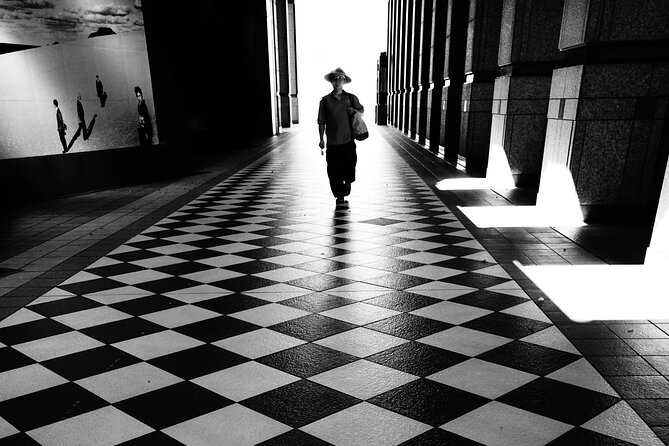
I would recommend this for you if you enjoy making pictures but often return with many images that feel alike. The focus on structure, shadow, and reflection gives you a clear challenge and helps you edit your choices while you shoot.
It is also a good fit if you are interested in black-and-white photography or want to understand high contrast better. You do not need to use a particular camera, and the instruction is intended to match your skill level.
You may prefer another activity if your main goal is to see Tokyo’s major sights, hear broad cultural commentary, or spend the whole morning in one neighborhood. This workshop is about looking closely, not covering a long list of attractions.
It suits solo participants and small groups who are happy to pause, repeat a shot, and discuss why one frame works better than another. Comfortable shoes matter because the route connects several areas, and a Suica or Pasmo card can make metro travel simpler.
Should you book Urban Geometry with Laurence Bouchard?
Book it if you want your Tokyo photos to show more than famous buildings. Laurence’s route gives you repeated chances to work with shadows at Ebisu Garden Place, reflections at the National Art Center, and large-scale structure at the Tokyo International Forum.
The best reason to choose it is the personal feedback. You can bring your own camera or phone, receive advice that fits your ability, and even use Laurence as a passerby when a composition needs a human element.
Skip it if you want a relaxed sightseeing stroll with little instruction or if four hours of focused photography sounds tiring. For a small group of up to six, a 9:00 am start, and a specialist approach that can improve how you see any city, the $130.31 cost is reasonable for photographers who want to practice rather than simply collect pictures.
FAQ
Where does the photography workshop begin?
It begins at 4-chōme-2-6 Ebisu, Shibuya, Tokyo 150-0013, Japan, at 9:00 am.
How long does Urban Geometry with Laurence Bouchard last?
The activity lasts approximately four hours.
Where does the activity finish?
The activity ends back at the meeting point. Yurakucho and the Tokyo International Forum are the final listed stops.
How many people can join the workshop?
The maximum group size is six people.
What should I bring?
Bring a fully charged phone or camera and wear comfortable shoes. A Suica or Pasmo card is recommended if possible for metro travel.
Can I cancel for a full refund?
Yes. You can cancel at least 24 hours before the local start time for a full refund. Cancellations or changes made less than 24 hours before the start are not accepted.
More tours in Tokyo we've reviewed












Tokyo, compared.
 ★ 5.0Mt Fuji and Hakone 1-Day Bus Tour Return by Bullet TrainFrom $163
 ★ 5.01-Day Tokyo Bus TourFrom $129
 ★ 4.6Tokyo: teamLab Planets TOKYO Digital Art Museum Entry TicketFrom $251 day
 ★ 4.0Mt Fuji & Hakone Cruise, Drum Show Bullet Train 1 Day from TokyoFrom $149
 ★ 5.0Tokyo: Shinjuku Food Tour (13 Dishes at 4 Local Eateries)From $86
 ★ 4.4Tokyo Mt Fuji 5th St & Hakone Cruise Bus Tour w/Bullet TrainFrom $15410 hours