Reviewed · IMPERIAL PALACE & SHOGUN TOURS
Tokyo: Imperial Palace with Nostalgic Alley Kagurazaka tour
Tokyo’s Imperial Palace is more than a grand photo stop. This walk links the polished Marunouchi district with the old Edo Castle grounds, then carries you into Kagurazaka, a neighborhood of shrines, narrow lanes, cafés, and traditional restaurants. The changing scenery is the main attraction.
In This Article
- Key points at a glance
- From Tokyo Station into the old shogun capital
- Ote-Mon Gate and the scale of Edo Castle
- Nippon Budokan and a useful coffee break
- Tokyo Daijingu and a quieter side of central Tokyo
- Kagurazaka’s old lanes and geisha-era past
- What the $51 price really covers
- Walking comfort, group size, and the best fit
- Should you book the Imperial Palace and Kagurazaka walk?
- FAQ
- How long does the tour last?
- Where does the tour begin?
- Where does the tour finish?
- Is the Imperial Palace interior included?
- What language is the tour offered in?
- How large is the group?
- Are coffee, tea, and a snack included?
- What should I wear or bring?
- Can pregnant women join the tour?
I like the small group, limited to eight people, and the way the guide ties stone walls, gardens, and gates to the Tokugawa Shogunate. I also like the final stop in Kagurazaka, a part of Tokyo that feels far removed from the usual Asakusa and Shibuya circuit. The main drawback is that you do not enter the Imperial Palace itself, and the 3.5-hour walk can feel long in uncomfortable shoes.
Key points at a glance
- From Tokyo Station to Edo Castle: Begin beside the modern Marunouchi district and walk into the former political center of shogun-era Japan.
- A compact Imperial Palace visit: See Ote-Mon Gate, Ninomaru Garden, castle ruins, and other important sites in about an hour.
- A small English-speaking group: With no more than eight participants, you can ask questions and keep a steady pace.
- A break at Aomi Coffee Kudanshita: Coffee or tea gives your feet a rest before the second half of the walk.
- Tokyo Daijingu and love: Visit a shrine associated with good relationships and marriage.
- Kagurazaka after the crowds: Finish among Geisya Komichi, Hyogo Yokocho, and Kakurenbo Yokocho, with a local snack along the way.
From Tokyo Station into the old shogun capital
The tour begins outside Shin-Marunouchi Building, in front of the café called STAND T. Look for the BEAMS sign on the second floor. Marunouchi Central Exit is the closest Tokyo Station exit, and the meeting point is about a two-minute walk away.
This is a useful starting place because Tokyo Station gives you a clear sense of modern Japan before the tour turns toward the past. The surrounding Marunouchi area is sleek and businesslike, but the Imperial Palace grounds are close by. Your guide uses that short transition to explain how Edo, the city ruled by the shoguns, became the center of political power and later the capital of modern Japan.
You spend about 10 minutes around Tokyo Station for photos and orientation. Do not expect a long architectural tour here. The value is the context. You are beginning at one of Tokyo’s main transport hubs, then walking toward the former seat of the Tokugawa government.
The guide is an important part of this experience. The tour is offered in English, and past bookings specifically praise guides Hiro and Shuntaro for clear explanations, good answers to questions, and useful suggestions for seeing more of Tokyo. The exact guide depends on the date, but you should expect a personal style rather than a recorded script.
A few more Tokyo tours and experiences worth a look


Ote-Mon Gate and the scale of Edo Castle
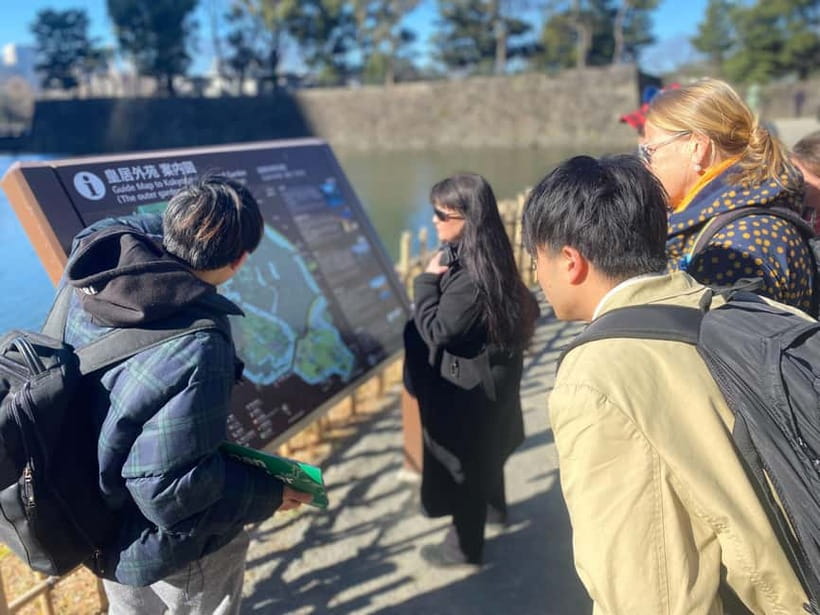
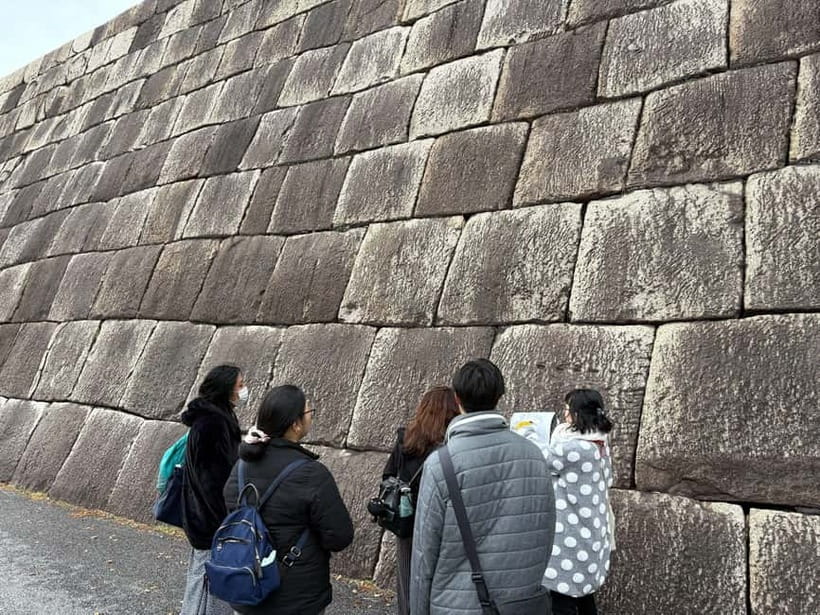
The first major section takes you through the grounds of the Imperial Palace. The focus is on the public outer areas and former Edo Castle grounds, not the private inner palace. The Imperial Palace itself is not open to the public as part of this tour, so set your expectations correctly.
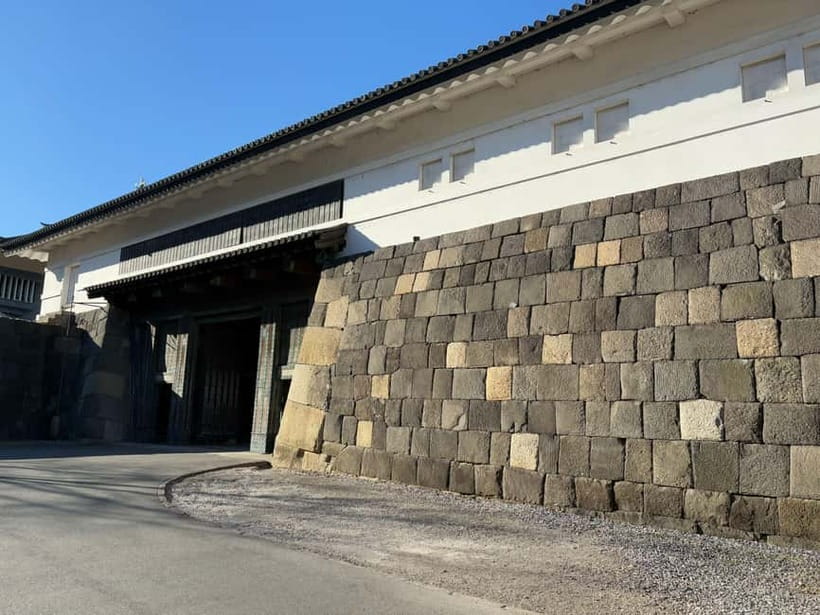
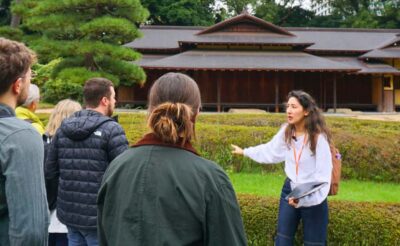
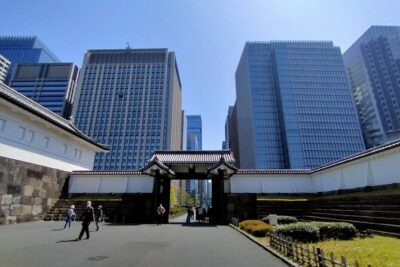
Ote-Mon Gate gives you one of the clearest reminders of the castle that once controlled Japan. Its heavy construction and formal approach help you picture the security and ceremony of the shogun’s headquarters. Your guide adds the political background, explaining how the Tokugawa Shogunate governed from Edo for centuries.
I find this kind of guided walk more useful than simply photographing a gate and moving on. Without context, a castle wall can look like another attractive piece of old Japan. With the story of Edo Castle, the wall becomes part of a much larger system of power, rank, defense, and administration.
The route continues to Ninomaru Garden. Here, the mood changes. Instead of massive stonework, you get the calmer side of the former castle grounds, with carefully arranged Japanese garden scenery and good photo opportunities. The garden helps balance the political story with the design traditions that shaped elite Japanese spaces.
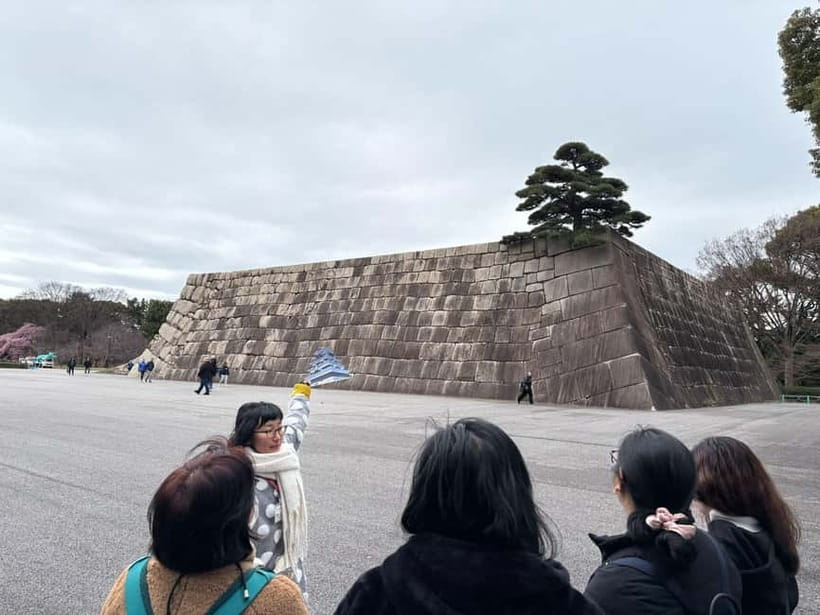
You also visit the Edo Castle ruins. These remains do not recreate a complete castle, so you should not expect towers, rooms, or a preserved palace interior. Their value is scale and location. You can stand on the site and consider how much land the castle complex occupied and how central it was to the country’s government.
The guide encourages you to sense the size of the former castle grounds as you walk. That is one of the stronger ideas in the tour. The history is not confined to a museum display. Streets, gardens, gates, and open spaces all occupy land that once belonged to the castle.
Nippon Budokan and a useful coffee break
Nippon Budokan is a short photo stop of about five minutes. It adds another layer to the route, since the building is associated with Japanese martial arts and national events. The stop is brief, so treat it as a quick look rather than a full visit.
After the Imperial Palace section, you stop at Aomi Coffee Kudanshita for about 25 minutes. Coffee or tea is included, and this pause matters. The tour lasts 210 minutes, with much of that time spent on foot, so a proper break keeps the second half enjoyable.
This is also a good moment to ask your guide about places to visit later in Tokyo. Hiro, one of the guides praised in the booking feedback, is noted for giving practical ideas for exploring more of the city. A small group makes this sort of conversation easier than it would be on a large coach tour.
The café stop is not a major sightseeing attraction, and it should not be treated as one. Its purpose is simple: sit down, have a drink, and reset before the shrine and alley section.
Tokyo Daijingu and a quieter side of central Tokyo
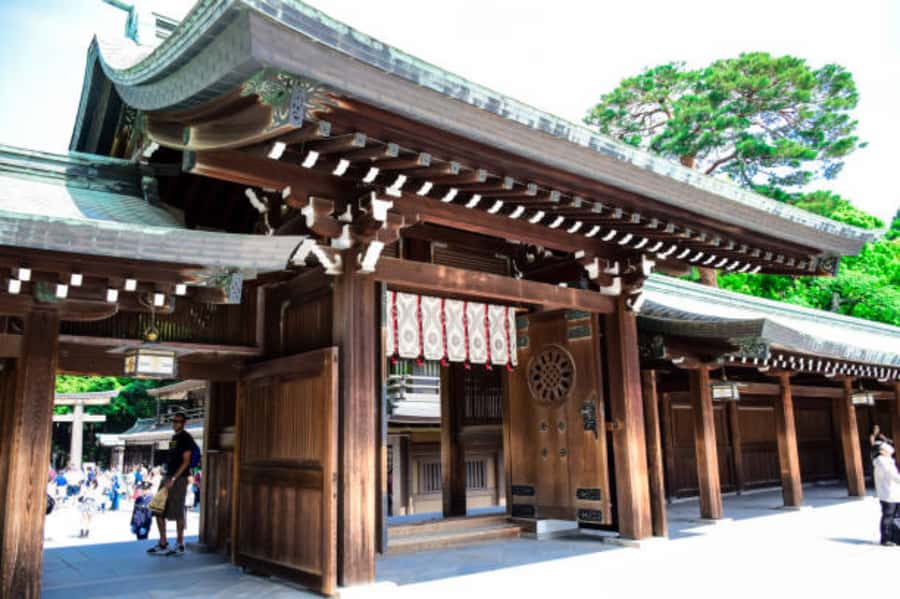
Next comes Tokyo Daijingu, a shrine connected with love, marriage, and good relationships. The visit lasts about 20 minutes, giving you time to see the shrine and hear about its role without turning the tour into a long religious lecture.
For many visitors, this is an appealing contrast to the Imperial Palace. The castle grounds tell you about national power. Tokyo Daijingu brings the tour back to everyday hopes and personal life. You can ask your guide about the shrine’s customs and meaning, then continue through the surrounding streets.
The route also passes the remains of Ushigome Gate. Like the castle ruins, this is not a full reconstructed building. It is a place where the past survives in fragments. The appeal lies in noticing how old defensive boundaries fit into the present-day city.
You should not expect every stop to look dramatic. Some points are valuable because the guide explains what you are seeing. If you prefer major monuments with extensive preserved interiors, this tour may feel light on traditional buildings. If you enjoy connecting small remains to the shape of a city, the route works well.
Kagurazaka’s old lanes and geisha-era past
The final section moves into Kagurazaka, the neighborhood that gives the tour its distinctive character. About 200 years ago, this area was known as a red-light district with teahouses where maiko and geisha performed. Today, the same district has local shops, cafés, and restaurants in traditional-looking lanes.
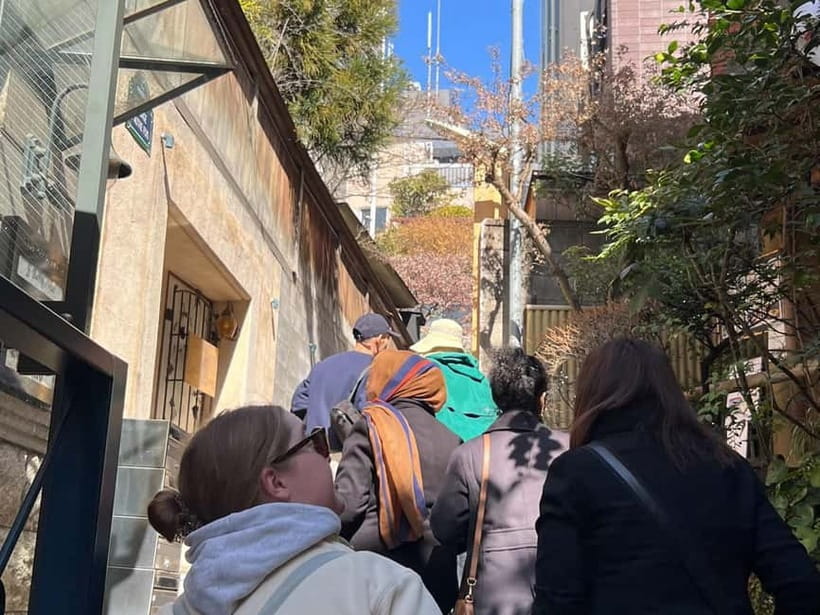
The change is important. Kagurazaka is not presented as a preserved historical village. It is a working Tokyo neighborhood with traces of its past. You see old street patterns and narrow alleys beside current businesses, which makes the area feel connected to daily life rather than sealed behind a museum rope.
Geisya Komichi Alley and Hyogo Yokocho are photo stops where the narrow streets create a strong sense of place. The lanes are a good reason to bring a camera, but remember that they are local passages, not stage sets. Keep your voice low, avoid blocking the way, and follow your guide’s lead around homes and businesses.
Kakurenbo Yokocho adds another small lane to the walk. The exact atmosphere will vary with the time of day and the businesses operating, but the point is to see a less familiar side of Tokyo. Compared with the bright crowds and major shopping districts of Shibuya, Kagurazaka offers a slower, more intimate setting.
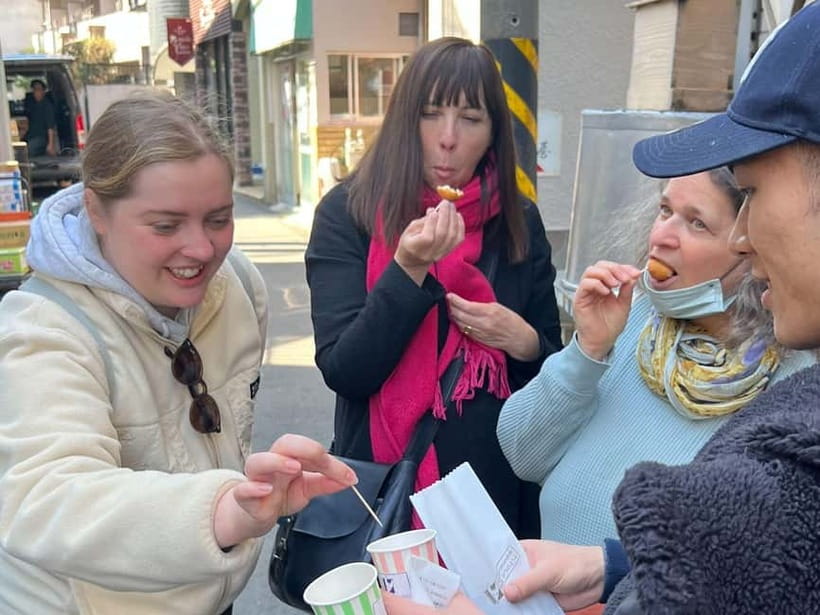
The local snack is part of this final section. The group stops at a local shop for a snack, though the business may change depending on its operating day. Coffee or tea and the snack are included in the price, but do not book this expecting a full meal. You are getting a taste of local food culture, not lunch or dinner.




What the $51 price really covers
At $51 per person, this tour sits in a sensible middle range for a small guided walk in Tokyo. You are paying for 210 minutes with an English-speaking local guide, a planned route through several areas, a coffee or tea break, a snack, and a group capped at eight.
The strongest value comes from the route design. You could visit the Imperial Palace grounds on your own, but it would be harder to understand the relationship between the castle gates, gardens, ruins, and the Tokugawa government. You could also walk through Kagurazaka independently, but you might pass through the lanes without knowing why the neighborhood looks and feels different from other central districts.
The tour also saves planning time. In one half-day, you cover Tokyo Station, the Imperial Palace grounds, Nippon Budokan, Tokyo Daijingu, old gate remains, and three Kagurazaka lanes. That is a lot of ground, but it is arranged as one continuous story rather than a set of unrelated stops.
The value is lower if you already know Edo-period history, have visited the Imperial Palace grounds several times, or prefer to set your own pace. The group follows a schedule, and the end time can run about 15 minutes late because of traffic or route conditions. That is worth remembering if you have a restaurant reservation or train to catch.
Free cancellation up to 24 hours before the tour and the option to reserve now and pay later also make it easier to fit into a changing Tokyo schedule.
Walking comfort, group size, and the best fit
You should wear comfortable shoes and clothes. The tour combines city streets, palace grounds, garden paths, and narrow lanes, with no public transport listed between the stops. Even though there is a café break, this is a walking experience first.
The small group, limited to eight participants, is a real advantage. You can hear the guide more easily, ask about details, and move through compact streets without the awkwardness of a large crowd. It also lets the guide respond to your interests. One booking described Shuntaro as fun and able to answer questions well beyond the basic sights, while another praised Hiro for local advice and attention to personal interests.
The tour is not suitable for pregnant women. Weapons or sharp objects, smoking, drones, alcohol, and drugs are not allowed. These rules are straightforward, but the walking requirement is the more important practical issue for most people.
I would recommend this route to a first-time Tokyo visitor who wants history without spending a full day inside museums. It also suits someone who has already seen Asakusa and Shibuya and wants a neighborhood with a different feel.
You may want to skip it if your priority is entering the Imperial Palace interior, taking a food-focused tour, or spending a relaxed morning in one place. The tour covers several areas, so its strength is variety rather than long visits at individual sights.
Should you book the Imperial Palace and Kagurazaka walk?

I would book this tour if you want Tokyo’s history explained as you walk through it. The best part is the progression from modern Tokyo Station to the former Edo Castle, then from political history to a shrine and the old entertainment lanes of Kagurazaka.
The tour is particularly useful early in your stay. It gives you historical context for the city and may help you choose where to go next. The guides Hiro and Shuntaro have received especially strong praise for answering questions, adapting to interests, and offering practical Tokyo suggestions.
Book with realistic expectations. You will not enter the inner palace, the snack is small, and the walk may finish 15 minutes late. But for $51, the small group, guide, refreshments, and carefully connected route make this a solid choice for seeing both a major Tokyo sight and a less familiar neighborhood in one half-day.
FAQ
How long does the tour last?
The scheduled duration is 210 minutes, or about three and a half hours. The finish may be delayed by approximately 15 minutes because of traffic or route conditions.
Where does the tour begin?
It begins outside Shin-Marunouchi Building, in front of STAND T café. Marunouchi Central Exit of Tokyo Station is the closest exit, and the meeting point is about a two-minute walk from there.
Where does the tour finish?
The tour finishes at FamilyMart Kagurazaka Sanchome, written as ファミリーマート 神楽坂三丁目店.
Is the Imperial Palace interior included?
No. The tour does not enter the inner palace because that area is not open to the public. The route covers public areas and former Edo Castle sites, including Ote-Mon Gate, Ninomaru Garden, and castle ruins.
What language is the tour offered in?
The tour is offered in English with a live tour guide.
How large is the group?
It is a small-group tour limited to eight participants.
Are coffee, tea, and a snack included?
Yes. Coffee or tea is included during the short break, and a local snack is also included. The snack stop may change if the planned shop is not operating that day.
What should I wear or bring?
Bring comfortable shoes and wear comfortable clothes because the experience involves substantial walking.
Can pregnant women join the tour?
The tour is not suitable for pregnant women. Smoking, drones, weapons or sharp objects, alcohol, and drugs are also not allowed.
More Imperial Palace & Shogun Tours in Tokyo



More tours in Tokyo we've reviewed












Imperial Palace & Shogun Tours, compared.
 ★ 4.9Tokyo: Imperial Palace Japanese History Walking TourFrom $32
 ★ 4.9Tokyo: Imperial Palace and Shogun Walking TourFrom $162 hours
 ★ 5.0Imperial Palace East Garden and Edo Castle Walking Tour in TokyoFrom $25
 ★ 4.8Tokyo: Imperial Palace East Gardens Walking TourFrom $192h 30m
 ★ 4.5Tokyo: Imperial Palace, Sensō-ji Temple, & Tokyo Tower TourFrom $404 hours
 ★ 5.0Tokyo Castle, Imperial Palace, Shogun & Garden Walking TourFrom $31