Reviewed · IMPERIAL PALACE & SHOGUN TOURS
Imperial Palace East Garden and Edo Castle Walking Tour in Tokyo
Tokyo’s Imperial Palace East Gardens give you a rare look at the site of Edo Castle without leaving central Tokyo. This 2.5-hour walking tour links Wadakura Fountain Park with castle ruins, traditional gardens, ponds, and the former castle tower site, while an English-speaking guide explains how shoguns, samurai, and emperors shaped Japan.
In This Article
- Key points before you book
- Why Edo Castle matters in modern Tokyo
- Starting at Wadakura Fountain Park
- Walking through the East Gardens
- Seeing Edo Castle through its remains
- A small group makes the walk easier
- What the $25 price really buys you
- Weather, clothing, and timing
- Who will enjoy this Imperial Palace walk?
- Should you book it?
- FAQ
- Does this tour enter the Imperial Palace buildings?
- How long does the tour last?
- Where does the tour begin?
- Where does the tour end?
- How much does the tour cost?
- Is admission to the gardens included?
- Is the tour conducted in English?
- How large is the group?
- Should I wear special clothing?
- What happens if the weather is poor?
- Can I cancel the booking?
- Are snacks included?
- Are service animals allowed?
- Can most people participate?
I like the small group of up to 12 because it is easier to hear the guide and ask questions. I also like the price: at $25, you get a guided introduction to one of Tokyo’s most important historic areas without paying an entrance fee.
The main catch is simple: you do not enter the Imperial Palace buildings. You walk through the East Gardens and surrounding grounds, and the garden scenery can vary by season. Some sections have neat plantings and greenery rather than flower displays, so this is best for history and setting, not a guaranteed floral show.
Key points before you book
- Wadakura Fountain Park begins the walk: Meet at the Starbucks near the park and use the fountain area as your first Tokyo landmark.
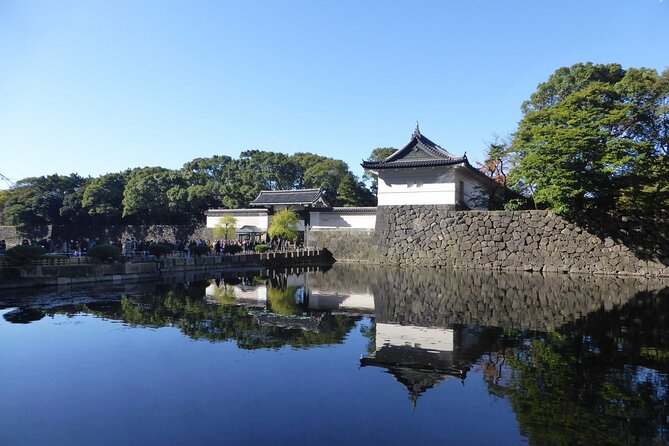
- Edo Castle ruins provide the historical focus: See the former Honmaru area, castle remnants, and the site of the old castle tower.
- The tour stays outdoors: Palace interiors are not open to the public as part of this experience.
- English-speaking guides add the context: Guides including Kenta, Glenda, Kei, Sato, Miko, Kaz, and others have led walks covering samurai, shoguns, emperors, gardens, and Japanese culture.
- Plan for a full 2.5 hours: The route includes some hills and steep paths, though one guide described it as having no stairs.
- The price is low for a guided orientation: Admission to both listed stops is free, and your $25 mainly pays for the guide’s explanations and the convenience of a planned route.
Why Edo Castle matters in modern Tokyo
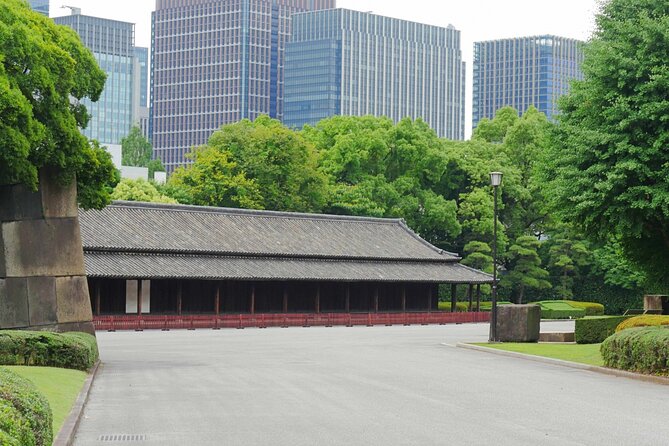
It is easy to see Tokyo as a city of glass towers, rail lines, and neon signs. The Imperial Palace grounds offer a different view. Beneath the clipped greenery and broad open spaces is the former center of political power during the Edo period, when Tokyo was known as Edo and the shogun ruled Japan.
That change in name and power is one reason a guide helps. Without context, you see stone walls, garden paths, ponds, and foundations. With a guide, those pieces become clues to a much larger story involving samurai government, the imperial family, castle defenses, and the transformation of Edo into modern Tokyo.
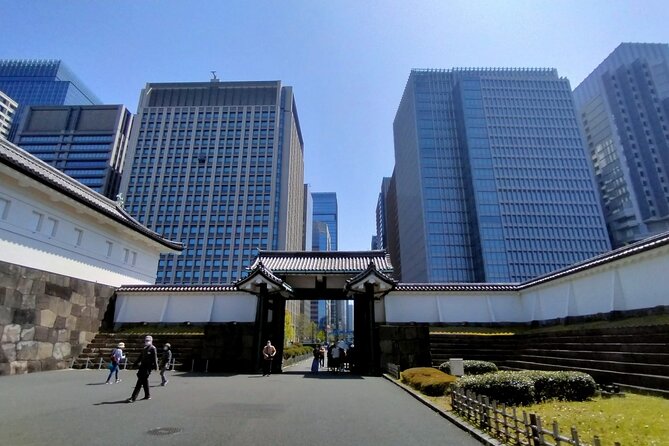
The East Gardens are not a preserved medieval town. They are open public grounds with carefully maintained plants and historic remains. That distinction matters. You are not walking through intact palace rooms or a fully reconstructed castle. You are walking through a calm urban space where the original castle survives mainly in ruins, foundations, walls, and the shape of the grounds.
I find that mix appealing. You get a break from traffic and crowds, but you remain close to Tokyo’s central business district. It is a practical first stop for a visitor who wants historical grounding before tackling museums, temples, or other parts of the city.
A few more Tokyo tours and experiences worth a look


Starting at Wadakura Fountain Park
The meeting point is the Starbucks Coffee near Wadakura Fountain Park at 3-1 Kōkyogaien, Chiyoda City. This gives you a clear place to meet, though you should still allow time to find the correct Starbucks and arrive ready for an outdoor walk.
Wadakura Fountain Park is more than a place to gather. It was first built in 1961 to mark the royal wedding of Emperor Akihito and Empress Michiko. The park was redesigned and reopened in 1995 for the wedding of Crown Prince Naruhito and Crown Princess Masako.
The park’s water features and open design make a pleasant introduction to the palace area. You get about 30 minutes here, with no admission charge. The fountains provide a softer start than jumping straight into castle walls and military history.
This first stop also helps you get your bearings. Tokyo can make even a simple meeting feel complicated, especially near major stations and wide palace avenues. Meeting beside a recognizable park and Starbucks is more useful than being told to wait at a vague palace entrance.
Do not expect a long independent visit to the park. It functions as the opening part of the guided walk, with the main portion taking place in the East Gardens.
Walking through the East Gardens
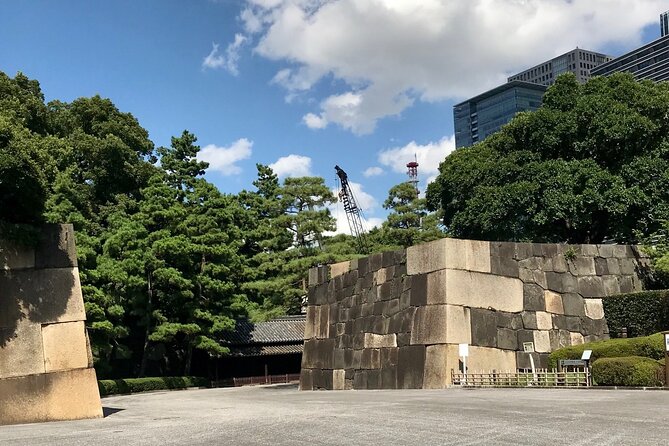
The East Gardens account for about two hours of the tour. This is where the experience earns its keep, provided you want explanations rather than a quick stroll through greenery.
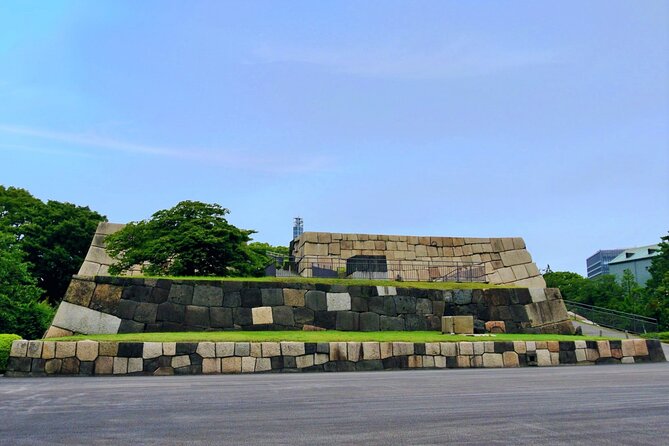
The grounds once formed part of Edo Castle. Today, you can see garden areas, ponds, stonework, castle remnants, and the former Honmaru section. The Ninomaru Garden offers a more traditional Japanese setting, with carefully arranged plantings and water features.
The scenery changes with the calendar. Cherry blossoms can add color in spring, while autumn may bring foliage in some sections. But timing matters, and you should not book this as a sure bet for flowers or fall colors. A walk in October, for example, may show plenty of tidy greenery without much autumn color or many blooms.
That is not a flaw in the gardens so much as a matter of expectations. The East Gardens are attractive, but their appeal is often quiet and orderly rather than dramatic. If you want sweeping mountain views or a huge collection of blossoms, this may feel modest. If you enjoy ponds, clipped plants, old stone walls, and a sense of place, the setting works well.
Some paths rise more sharply than you may expect from a city garden. A few sections can feel steep, and the tour lasts much longer than a quick loop around a park. Wear comfortable shoes and plan for changing weather. The route is outdoors, so rain can affect both comfort and footing.
Seeing Edo Castle through its remains
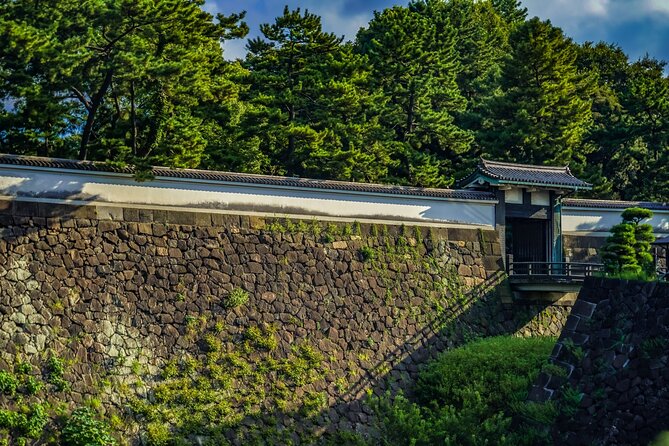
Edo Castle was once far larger than what you see today. The East Gardens do not give you a complete castle interior, but the ruins help you understand the scale and purpose of the site.
The Honmaru area was the castle’s central compound. Here, the guide can explain the castle’s former role and point out what remains. The former castle tower site is another important stop, especially when paired with visual material. Kenta, for example, was praised for bringing pages and images that helped explain buildings, the castle grounds, and the tower site.
Those aids matter because ruins can be hard to read at first glance. A large stone base may look like a wall or platform until someone explains its former use. A guide can also connect the physical remains to the lives of shoguns, samurai, court figures, and the imperial family.
The strongest part of this tour is likely the storytelling. Guides such as Kenta, Glenda, Miko, Kaz, Kei, Sato, Midori, Miki, Satoko, Miyu, and Loc have been singled out for clear English, humor, patience, and strong command of Japanese history and culture. You cannot choose the exact guide from the information provided, but the range of names and positive comments suggests that the experience depends heavily on who leads your departure.
The best guides do not simply recite dates. They explain how the castle grounds worked, answer questions, and connect the Edo period with present-day Japan. Several guides have also covered language, culture, the current emperor and family, and everyday life around the old political system.
A small group makes the walk easier
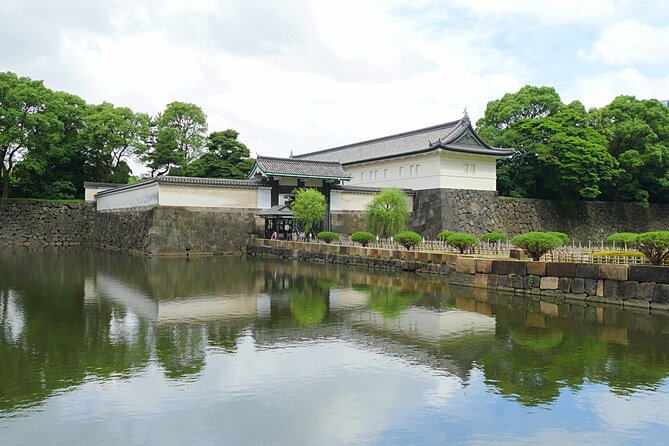
The maximum group size is 12 people. That is small enough to keep the guide within earshot and large enough to create a bit of social energy. You may make a few new friends without feeling trapped in a large tour crowd.
A smaller group is especially helpful on a walking route with frequent stops. If the guide uses photos or printed pages, you have a better chance of seeing them. Questions are also easier to handle when there are not dozens of people waiting behind you.
The group format does mean you follow the guide’s pace. You are not free to linger at every pond or take as many photos as you want. If you prefer complete independence, a map and self-guided walk may suit you better. But for a first visit, the structure keeps the route moving and helps you notice details you might otherwise pass.
Families can take part, and most people can participate. One guide helped obtain a wheelchair when a member of a group became tired and dizzy, but you should still remember that this is a walking activity with some hills. Specific accessibility arrangements are not described, so ask before booking if you need more than ordinary walking access.
Service animals are allowed, and the meeting point is near public transportation.
Other walking tours we've reviewed in Tokyo




What the $25 price really buys you
At $25 per person, this is an inexpensive guided activity for central Tokyo. Admission to Wadakura Fountain Park and the East Gardens is free, so you are paying for the guide, the planned route, interpretation, and the ease of joining a ready-made walk.
That value is strongest if you are visiting Tokyo for the first time or if Japanese castle history feels unfamiliar. A guide can turn a collection of walls and gardens into a readable place. You also avoid spending your own time researching the difference between Edo Castle, the Imperial Palace, the East Gardens, and the current imperial residence.
The value is less convincing if you only want to see gardens. You can enter the public grounds without paying for this tour, and the plantings may not be especially dramatic on your date. One hour of casual sightseeing might be enough for someone focused on scenery, while this activity takes roughly two and a half hours.
No snacks are included, so bring something if you need food during the morning or afternoon. The activity ends back at the meeting point, which is useful for planning your next stop, but you should not assume the tour finishes early. A full 2.5 hours can affect a tightly packed Tokyo schedule.
Weather, clothing, and timing

The tour requires good weather. If poor weather causes cancellation, you are offered another date or a full refund. You can also cancel for a full refund up to 24 hours before the start time. Changes or cancellations inside that 24-hour window are not accepted for a refund.
Use comfortable walking shoes. The route includes gardens, historic grounds, and some hills, and wet paths may be less pleasant in bad weather. Tokyo’s weather can shift quickly, so a light rain layer is sensible even when the forecast looks promising.
Give yourself enough time to reach the meeting point. The Starbucks at Wadakura Fountain Park is the official start, and the group needs to leave together. Your mobile ticket makes access convenient, but it does not remove the need to locate the guide before departure.
Who will enjoy this Imperial Palace walk?
I would recommend it most strongly to you if you want a gentle introduction to Tokyo’s political and imperial past. It suits first-time visitors, history fans, families who prefer a guided outing, and anyone who wants a calm outdoor activity close to the city center.
It is also a good choice if you appreciate guides who explain rather than rush. The strongest guiding style here appears to combine clear English with humor, printed visuals, personal examples, and room for questions. Glenda was noted for speaking clearly and slowly, while Kaz kept a group moving at a comfortable pace during rain. Those details matter if you have struggled to follow fast-paced tours elsewhere in Japan.
You may want to skip it if palace interiors are your main goal. This tour does not provide access to the buildings, and the public cannot enter those interiors as part of this experience. You should also think twice if you want a short photo stop, guaranteed seasonal color, or a highly ornate garden.
Should you book it?
Book this tour if you want the East Gardens and Edo Castle remains to make sense, not just appear attractive. For $25, the cost is modest, the group is limited to 12, and the two-and-a-half-hour format gives the guide time to explain samurai rule, castle life, gardens, and the imperial family.
Skip it if you already know the site well or prefer to wander alone. Also leave room in your schedule for the full stated duration. The smartest expectation is a history walk in a peaceful garden setting, not an interior palace visit or a flower-focused garden tour.
FAQ
Does this tour enter the Imperial Palace buildings?
No. The tour visits the Imperial Palace East Gardens and surrounding grounds, but it does not enter the palace buildings.
How long does the tour last?
The tour lasts approximately 2 hours and 30 minutes. The East Gardens portion takes about two hours, while Wadakura Fountain Park takes about 30 minutes.
Where does the tour begin?
It begins at Starbucks Coffee near Kokyo Gaien Wadakura Fountain Park, at 3-1 Kōkyogaien, Chiyoda City, Tokyo 100-0002, Japan.
Where does the tour end?
The activity ends back at the meeting point.
How much does the tour cost?
The listed price is $25 per person.
Is admission to the gardens included?
Yes. Admission to the listed stops is free, and all fees and taxes are included in the tour price.
Is the tour conducted in English?
Yes. An English-speaking local guide leads the tour.
How large is the group?
The tour has a maximum of 12 travelers.
Should I wear special clothing?
Wear comfortable shoes because this is a walking tour. The route can include hills and some steep paths.
What happens if the weather is poor?
The tour requires good weather. If it is canceled because of poor weather, you can choose another date or receive a full refund.
Can I cancel the booking?
You can cancel at least 24 hours before the start time for a full refund. Cancellations or changes made less than 24 hours before the start time are not accepted for a refund.
Are snacks included?
No. Snacks are not included.
Are service animals allowed?
Yes. Service animals are allowed.
Can most people participate?
Yes. Most people can participate, though you should remember that the activity involves walking and some hills.
More Walking Tours in Tokyo
More Imperial Palace & Shogun Tours in Tokyo


More tours in Tokyo we've reviewed












Imperial Palace & Shogun Tours, compared.
 ★ 4.9Tokyo: Imperial Palace Japanese History Walking TourFrom $32
 ★ 4.9Tokyo: Imperial Palace and Shogun Walking TourFrom $162 hours
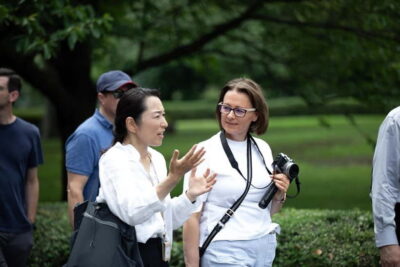 ★ 4.8Tokyo: Imperial Palace East Gardens Walking TourFrom $192h 30m
 ★ 4.5Tokyo: Imperial Palace, Sensō-ji Temple, & Tokyo Tower TourFrom $404 hours
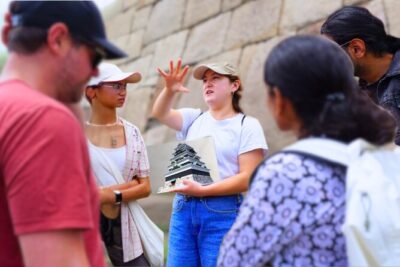 ★ 5.0Tokyo Castle, Imperial Palace, Shogun & Garden Walking TourFrom $31
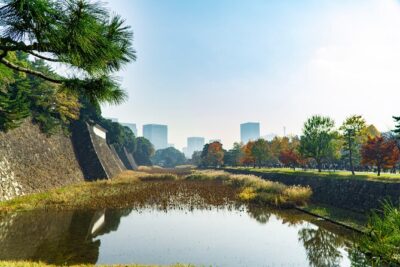 ★ 4.7Tokyo: Edo Castle & East Garden of the Imperial Palace TourFrom $422 hours