Reviewed · NIKKO DAY TRIPS
Nikko Private Day Tour By Car with Pick-up
Nikko gives you Japan in two strong flavors: ornate Tokugawa power at Toshogu Shrine and cool mountain scenery around Lake Chuzenji and Kegon Falls. This private tour links both in one long day from Tokyo, using a clean car for your group of up to six.
In This Article
- Key points at a glance
- Why Nikko Works as a Full-Day Escape from Tokyo
- A Comfortable Car, With One Important Qualification
- Toshogu Shrine and the Tokugawa Showpiece
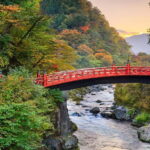
- Shinkyo Bridge and the Sacred Entrance
- Lake Chuzenji and the Mountain Change of Pace
- Kegon Falls, Nikko’s Big Natural Display
- Rinnoji Temple and Three Buddhist Mountain Deities
- Kirifuri Waterfall and the Final View
- What the Ten-Hour Schedule Really Means
- Who Gets the Best Value
- Should You Book This Nikko Day Tour?
- FAQ
- How long does the Nikko private day tour last?
- How many people can join the private tour?
- Is hotel pickup available?
- What type of vehicle is provided?
- Is the driver a tour guide?
- Are attraction admission fees included?
- Is lunch included?
- Can the schedule be changed?
- What happens if bad weather cancels the tour?
I like the door-to-door convenience and the chance to shape the schedule around your group. I also like the mix of sacred buildings, waterfalls, and lake views, since you are not spending ten hours looking at shrines alone. The main concern is the driver’s role: this is described as an English-speaking driver, not a dedicated sightseeing guide, and one reported outing began more than 30 minutes late with the driver nearly skipping Toshogu.
Key points at a glance
- Toshogu Shrine is the heart of the day: See the Sleeping Cat, Three Monkeys, lavish carvings, and Tokugawa Ieyasu’s mausoleum.
- A private car saves effort: Highway tolls, petrol, and private transportation are included for up to six people.
- Nature gets equal billing: Lake Chuzenji, Kegon Falls, and Kirifuri Waterfall bring mountain air and changing seasonal scenery.
- The schedule can be adjusted: Your group travels alone and can request changes to the day’s order or timing.
- Admission costs are extra: Budget separately for Toshogu, Kegon Falls, Shinkyo Bridge, and possibly Tamozawa Imperial Villa.
- The day is long: Ten hours gives you access to a lot, but Tokyo to Nikko and back leaves limited room for slow wandering.
Why Nikko Works as a Full-Day Escape from Tokyo
Nikko sits at the entrance to Nikko National Park, north of Tokyo in Tochigi Prefecture. It is best known for the shrines and temples connected with Tokugawa Ieyasu, the founder of the Tokugawa shogunate, but its appeal goes well beyond architecture.
Forests, mountain roads, a broad lake, and waterfalls give the day a useful change of pace. I like that contrast. After studying carved gates and gold-lacquered statues, you can look at open water or hear Kegon Falls thunder into its gorge.
The price is $500.06 per group, not per person, with a limit of six people. For two people, that is a costly private day. For four to six people, the mathematics improves, especially since the price includes the vehicle, private transportation, highway tolls, and fuel.
This is not the cheapest way to reach Nikko. Its value comes from simplicity. You do not need to arrange separate transport between the shrine district, Lake Chuzenji, and the waterfalls. You also avoid sharing the day with strangers or following a fixed group pace.
A few more Tokyo tours and experiences worth a look

A Comfortable Car, With One Important Qualification
The tour provides an air-conditioned, modern, clean vehicle. That matters on a ten-hour outing, particularly because the route combines city pickup, mountain roads, sightseeing stops, and the return to Tokyo.
A private vehicle is also useful for groups with mixed interests. One person can spend longer at a shrine while another prefers a waterfall viewpoint. The experience allows schedule changes because only your group participates.
Still, you should understand the service correctly. The included staff member is an English-speaking driver. The supplied information does not promise a licensed cultural guide, detailed explanations at every site, or guided entry into the buildings.
That distinction matters most at Toshogu. The driver may help you reach the site and organize the day, but you should not assume that every carving, religious symbol, or historical connection will be explained in depth. If interpretation is important to you, ask before booking exactly how much guiding is included.
There is also a practical pickup warning. One reported experience involved difficulty finding the address and a delay of more than 30 minutes. Confirm your pickup point clearly, keep the provider’s SMS or WhatsApp contact handy, and make Toshogu an agreed priority before leaving.
Toshogu Shrine and the Tokugawa Showpiece
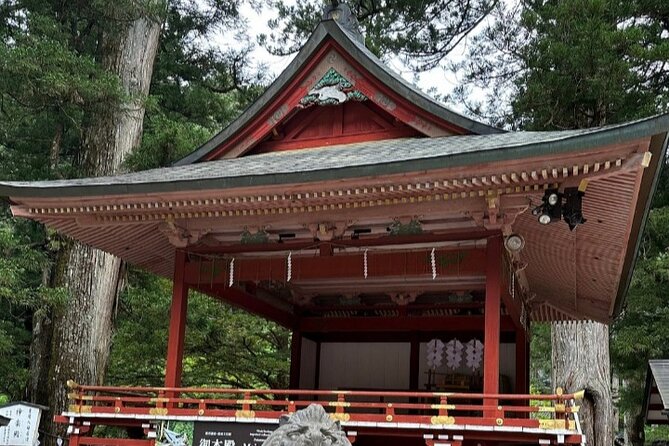
Toshogu is the main reason many people come to Nikko. It is the mausoleum of Tokugawa Ieyasu, whose shogunate began the long Edo period of Japanese rule.
The complex contains 55 buildings, including eight national treasures and 34 listed buildings. Much of what you see today was rebuilt in the seventeenth century, and the decoration is intentionally lavish. Expect bright color, lacquer, detailed woodwork, and carvings that reward a slower look.
Two small details have become especially famous. The Sleeping Cat is a compact carving with an outsized reputation. Nearby, the Three Monkeys represent the familiar see no evil, hear no evil, speak no evil poses.
The planned visit here is about one hour, with the shrine admission paid separately. I would treat that hour as a minimum, not an invitation to rush. Toshogu is dense with gates, buildings, carvings, and religious meaning. If you are interested in Japanese art or political history, you may want the flexible schedule to give this stop more time.
The admission fee is listed as less than $5, but the tour information says it is not included. Prices can change, so confirm the current amount before setting your budget.
Shinkyo Bridge and the Sacred Entrance
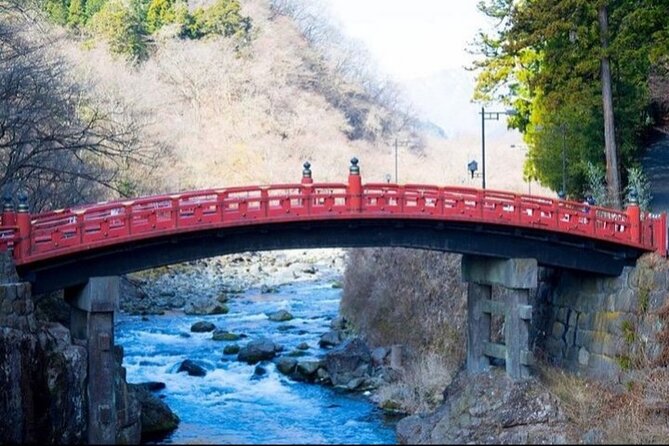
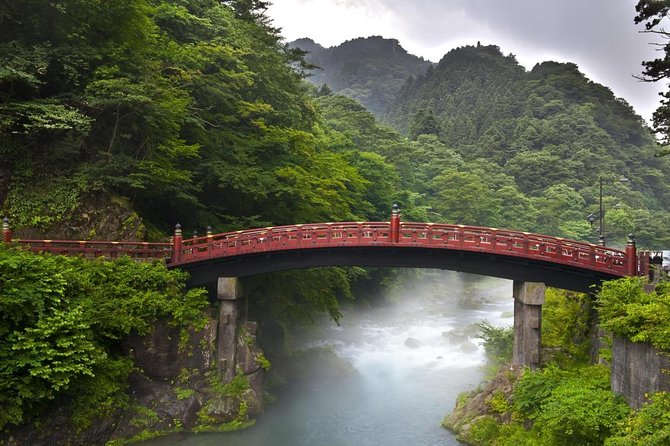
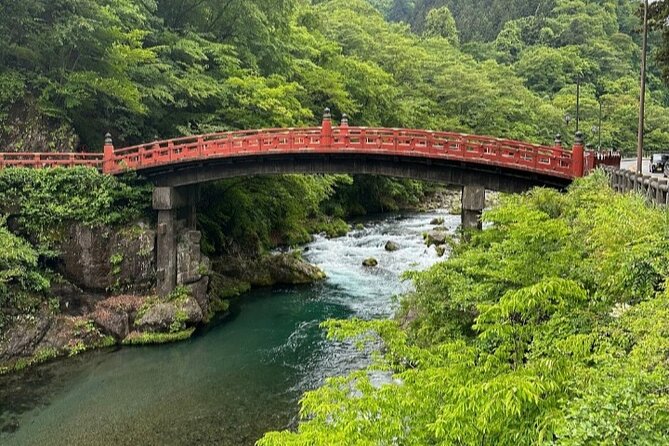
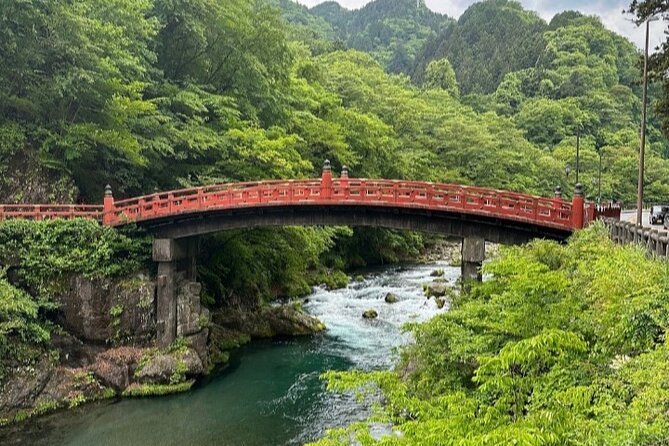
Shinkyo Bridge is a short stop, listed at about 30 minutes. It is the first major structure many people notice before entering Nikko’s shrine and temple area.
The bridge provides a useful visual introduction to the town’s sacred character. It is not a large sightseeing complex, so half an hour is enough for a look and photographs. Admission is separate, listed at about $3.
Because the stop is brief, you should not expect a long walk or extensive time around the bridge. Its value is as a graceful threshold before the larger shrine district, not as a stand-alone half-day attraction.
Lake Chuzenji and the Mountain Change of Pace
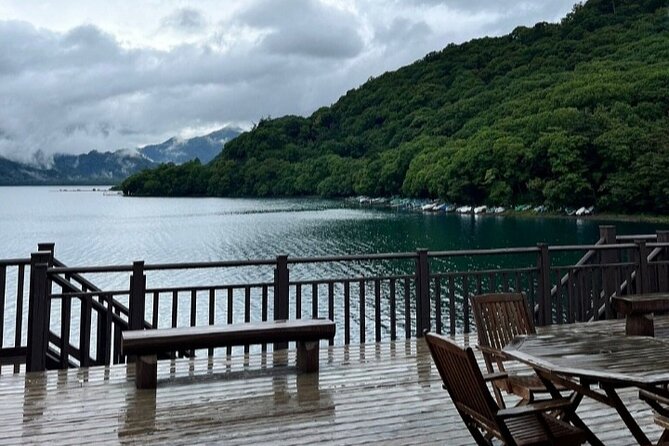
Lake Chuzenji is the largest lake in Tochigi, surrounded by about 25 kilometers of natural scenery. The lake area became a summer resort for foreign residents in the late nineteenth and early twentieth centuries, and villas connected with the French and Belgian embassies remain part of its story.
The scheduled stop is about 30 minutes and admission is free. That is enough to take in the view, stretch your legs, and enjoy a pause after the shrine district. It is not enough for a full shoreline walk or a boat excursion.
The lake changes character with the season. Cherry blossoms and azaleas add color in spring, while autumn foliage reflects on the water. The local Koyo-meguri experience, centered on fall leaves mirrored in the lake, is especially appealing if your date matches the season.
I like this stop because it keeps Nikko from becoming a string of indoor and architectural visits. You get open space and a quieter setting. The limitation is time. If the lake is a major reason for your visit, ask to protect more than 30 minutes here.
Other private tours in Tokyo


Kegon Falls, Nikko’s Big Natural Display
Water from Lake Chuzenji drops 97 meters at Kegon Falls, creating one of Nikko’s most powerful sights. It is considered the best known of Nikko’s 48 waterfalls.
A special lift takes you down toward the basin, where the falling water feels close and forceful. The lift admission is not included and is listed at about $3. The visit is planned for 30 minutes, so allow enough time for the lift and viewpoint without lingering too long at the lake beforehand.
Kegon changes dramatically through the year. Fresh leaves are prominent in May, house martins can be seen around the falls in June, and January and February may bring the famous small frozen streams known as the 12 falls.
The short stop works if you want the main view. It is less suitable if you hope to explore every viewing area or wait patiently for ideal photographs. Weather also matters. The tour requires good weather, and mist or poor conditions can reduce the experience.
Rinnoji Temple and Three Buddhist Mountain Deities
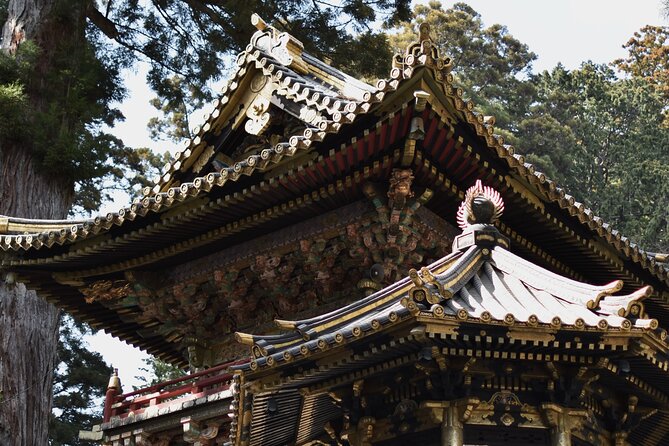
Rinnoji is Nikko’s most important temple and was founded by Shodo Shonin, the monk credited with introducing Buddhism to Nikko in the eighth century.
The main building, Sanbutsudo, contains three large gold-lacquered wooden figures: Amida, Senju-Kannon with a thousand arms, and Bato-Kannon with a horse head. These figures are regarded as Buddhist forms of the three mountain deities honored at Futarasan Shrine.
The Sanbutsudo renovation lasted a decade and was completed in spring 2019. That recent restoration is useful context because the building and its statues can be appreciated both as religious objects and as carefully maintained works of art.
The planned visit is one hour. The entry is listed as free in the stop details, although you should confirm current site charges locally because admission arrangements can vary. Rinnoji gives you a more contemplative counterpoint to Toshogu’s visual excess.
Kirifuri Waterfall and the Final View
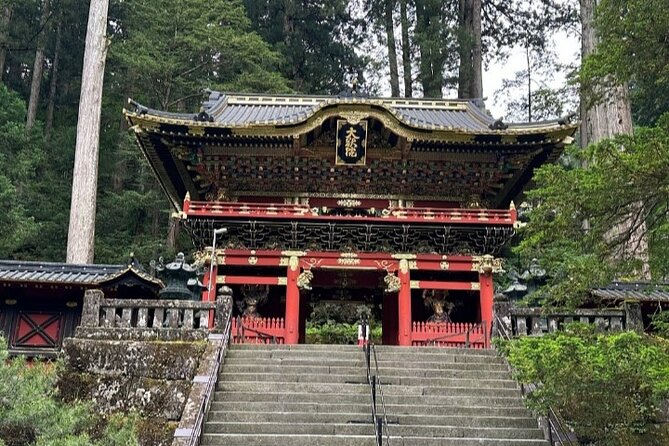
Kirifuri Waterfall is about 75 meters high and falls in two stages below the Kirifuri Highlands, a few kilometers northeast of Nikko’s main shrine and temple area.
Its name means falling mist, referring to the fine spray created when water hits the rocks below. Spring and summer bring green foliage, while autumn turns the surrounding trees red, orange, and gold.
The tour allows about one hour here, longer than at Kegon Falls. That gives you a more relaxed look at the valley and the falls, although fog or mist can sometimes obscure the view.
Do not plan on hiking to the base. The trail down partially collapsed several years ago and has remained closed. The attraction is the overlook and surrounding scenery, not a descent into the gorge.
What the Ten-Hour Schedule Really Means
The stated duration is about ten hours. The named sightseeing stops add up to roughly six and a half hours, before allowing for Tokyo pickup, the journey to Nikko, driving between sites, traffic, and the return trip.
That makes this an ambitious day. You can see the major highlights, but you will not have unlimited time at each one. A private vehicle gives you control, yet flexibility cannot remove the distance between Tokyo and Nikko.
I would decide your priorities before departure. For many people, Toshogu comes first, followed by Kegon Falls and Lake Chuzenji. If your group values temples more than scenery, give Toshogu and Rinnoji extra time. If you prefer nature, protect the lake and waterfalls and accept a shorter shrine visit.
The broader Nikko stop also mentions Futarasan Shrine and Tamozawa Imperial Villa. Tamozawa admission is listed at less than $5 and is not included, but the schedule does not give it a separate timed stop. Ask the provider if you want it added, since doing so may require trimming another visit.
Lunch is not included. You will need to pay for your own meal, and the long schedule means you should discuss when and where to stop rather than assume a generous restaurant break.
Who Gets the Best Value
This tour suits a family or friend group of up to six that wants private transport and a flexible day. It is also useful for anyone who finds the combination of trains, buses, mountain roads, and multiple Nikko sites too complicated.
I think it offers its strongest value with four to six people. At two people, the per-person cost becomes high unless private transport and a custom schedule are worth paying for.
You should also be comfortable taking some responsibility for the cultural side of the visit. The driver speaks English, but the service may feel more like private transportation with sightseeing assistance than a full guided tour.
The vehicle itself receives the clearest positive emphasis: it is described as comfortable, modern, and clean. That is a real advantage on a long day. The weak point is consistency at pickup and the possibility that the driver will not provide much interpretation, so confirm expectations in writing.
Free cancellation is available up to 24 hours before the start time. Changes made within 24 hours are not accepted, and late cancellations are not refunded. Since poor weather can cancel the experience, you are offered a different date or a full refund in that situation.
Should You Book This Nikko Day Tour?
Book it if you want private door-to-door transport, your group has several people to share the cost, and you value seeing both Toshogu and Nikko’s mountain scenery in one day.
Think twice if you want a deeply explained cultural tour, a slow hike, or long unhurried visits at every stop. In that case, a dedicated guide or an overnight stay in Nikko may suit you better.
Before paying, confirm the pickup address, the driver’s guiding role, the exact admission costs, and which stops are firm priorities. With those points settled, this is a practical way to cover a wide stretch of Nikko without managing the transport yourself.
FAQ
How long does the Nikko private day tour last?
The experience lasts approximately 10 hours, including pickup from Tokyo, transportation between sites, sightseeing, and the return journey.
How many people can join the private tour?
Up to six people can participate in one group. No other group joins your vehicle or sightseeing activity.
Is hotel pickup available?
Pickup is offered, but the supplied information does not specify particular hotels or pickup zones. Confirm your exact address with the provider before the day of travel.
What type of vehicle is provided?
The tour includes a modern, clean, air-conditioned vehicle and private transportation.
Is the driver a tour guide?
The included staff member is described as an English-speaking driver. The experience does not state that a licensed sightseeing guide is included.
Are attraction admission fees included?
No. Separate charges include Toshogu Shrine, Kegon Falls, and Shinkyo Bridge. Tamozawa Imperial Villa is also listed as an extra cost if you visit it. The stated amounts are less than $5 for Toshogu and Tamozawa, and about $3 for Kegon Falls and Shinkyo Bridge.
Is lunch included?
No. Lunch is not included in the tour price.
Can the schedule be changed?
Yes. Since the tour is private, your group can request changes or adjustments to the schedule. Any changes should be discussed with the provider before or during the day.
What happens if bad weather cancels the tour?
The experience requires good weather. If it is canceled because of poor weather, you will be offered another date or a full refund. You can also cancel for a full refund if you do so at least 24 hours before the start time.
More Private Tours in Tokyo
More Nikko Day Trips in Tokyo
More tours in Tokyo we've reviewed












Nikko Day Trips, compared.
 ★ 4.5Tokyo: Nikko Toshogu Shrine and Kegon Waterfall TourFrom $8410h 30m
 ★ 5.0Nikko, Kegon Waterfall & Chuzenji Lake from TokyoFrom $89
 ★ 4.4From Tokyo: Nikko, Toshogu Shrine, Waterfall & Chūzenji LakeFrom $54
 ★ 4.3Nikko: Edo Wonderland Edomura Cultural Theme Park TicketFrom $351 day
 ★ 4.8Tokyo: Nikko World Heritage Private Day Trip Hotel Pick-upFrom $39011 hours - 1 day
From Tokyo: Nikko World Heritage Sight Full Day Private TourFrom $36210 hours