Reviewed · KAMAKURA & ENOSHIMA DAY TRIPS
Tokyo: Kamakura Day Tour in Spanish – Spanish
Kamakura gives you a sharp change of pace from Tokyo: one hour by train takes you to temples, shrines, and old samurai stories beside quiet streets. This eight-hour Spanish-language tour adds the local streetcar, Hase-dera, the Great Buddha, Komachi Dori, and Tsurugaoka Hachimangu in one well-planned day.
In This Article
- Key points to know
- Why Kamakura makes a strong day trip from Tokyo
- The train ride from Tokyo to Kamakura
- Riding the old streetcar to Hase-dera
- Hase-dera and its legends
- Meeting the Great Buddha at Kōtoku-in
- Lunch and shopping around Kamakura
- Tsurugaoka Hachimangu and the samurai connection
- What the Spanish guide adds
- Is $102 per person good value?
- Who should book this Kamakura tour?
- Should you book it?
- FAQ
- Where does the Kamakura tour start?
- How long does the tour last?
- Is transportation included in the tour price?
- Are temple entrance tickets included?
- Is lunch included?
- Is the tour offered in Spanish?
I like the friendly Spanish guidance, especially if Nerea or Ori leads your group, and I like that transportation between Tokyo and Kamakura is handled as part of the day’s plan, even though you pay the ¥2,300 transport cost separately. The main drawback is the long schedule and steady walking, which may not suit anyone who needs wheelchair access or dislikes a full day on foot.
Key points to know
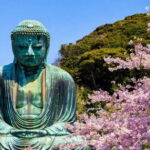
- The Great Buddha is more than 11 meters tall and weighs 120 tons, making Kōtoku-in the visual high point of the day.
- The Enoden streetcar adds character to the journey between Kamakura and Hase.
- Hase-dera gets the most time, with about 90 minutes for its legends, temple grounds, and spiritual atmosphere.
- Komachi Dori combines lunch and shopping, but you will need to budget separately for both.
- Spanish-speaking guides Nerea and Ori bring a warm, easygoing tone to the visit.
- The tour returns to Tokyo Station, with drop-off at Marunouchi Square or the station area.
Why Kamakura makes a strong day trip from Tokyo
Tokyo can fill every hour with tall buildings, train stations, and bright signs. Kamakura offers a different Japan, one shaped by temple bells, shrine gates, old religious traditions, and the memory of samurai rule.
The town was once a major political center, but you do not need a long lecture to feel its importance. The route brings the past into view through a series of approachable stops. You see a temple with legends attached to nearly every corner, a huge outdoor Buddha, a shopping street, and a shrine linked to the warriors who once governed the area.
I think this tour works best for someone who wants context without arranging several train connections alone. You still have time to look around and eat, but a Spanish-speaking guide keeps the day from becoming a simple checklist of monuments.
The meeting point is in front of Tokyo Station at Marunouchi Square, by the central exit. Hotel pickup is available if you select that option. Leave luggage and large bags behind, since they are not allowed on the activity.
A few more Tokyo tours and experiences worth a look
The train ride from Tokyo to Kamakura
The first transfer takes about one hour. Transportation costs ¥2,300 and are not included in the tour price, so add that amount to the advertised $102 per person when working out the real cost.
This is a useful point to understand before booking. The tour price pays for the eight-hour guided experience, while the train and local transport remain your responsibility. You also pay ¥700 in temple admission fees, plus your own food and drinks.
A guide makes the train portion easier because you do not need to work out the route while keeping a group together. The return trip later takes about 70 minutes, so the full day includes a fair amount of travel. That is normal for a Kamakura day trip from Tokyo, but it means the tour is not eight hours of sightseeing.
Once you arrive in Kamakura, you transfer for about 10 minutes before reaching the next part of the route.
Riding the old streetcar to Hase-dera
One of the nicest details is the ride on one of Japan’s oldest operating streetcars. The short trip adds a sense of place that a standard bus transfer would miss.
The streetcar takes you toward Hase-dera, and the change from Tokyo rail travel to a smaller local line helps mark the start of your Kamakura visit. It is a modest part of the day, but it gives the route some personality.
You should not think of this as a scenic railway excursion with hours of views. The value is practical and atmospheric: you use an old local transport system while moving between the main station area and the Hase temples.
Hase-dera and its legends
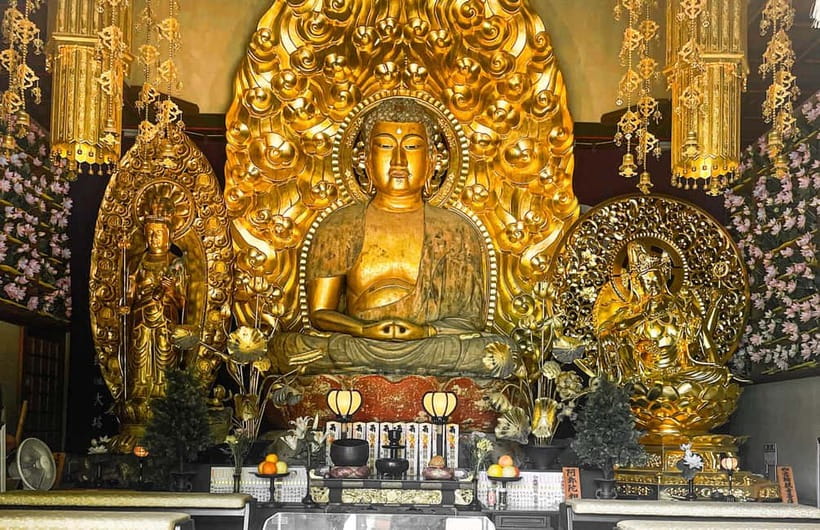
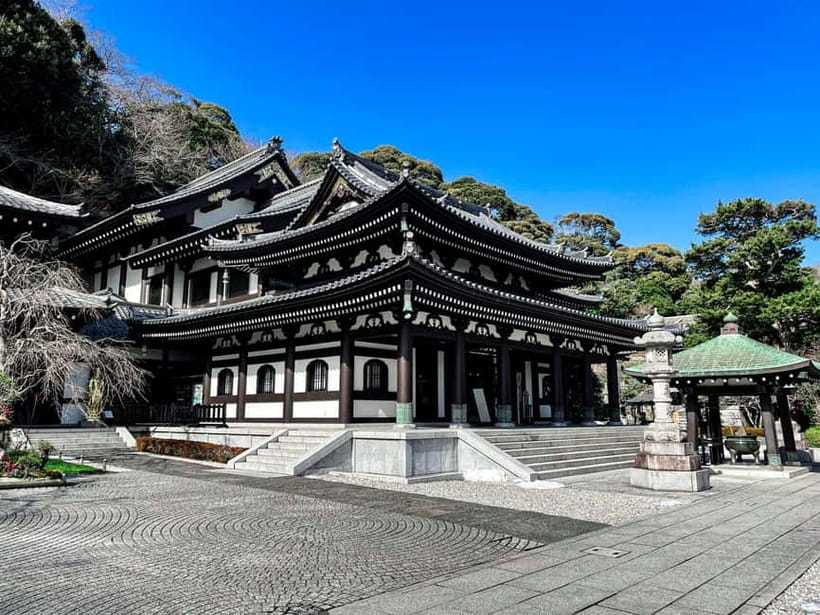
Hase-dera receives about 90 minutes, the longest visit at a single temple. That extra time matters because this is not a quick photo stop. The guide uses the grounds to explain myths, legends, and unusual details connected with the temple.
The experience is designed around stories. You can expect the visit to feel more memorable when you hear why particular features matter instead of simply walking past them. The Spanish explanations are especially useful here, since the temple’s meaning may be difficult to grasp from signs alone.
The temple is also one of the places where the tour’s mix of spirituality and nature comes through most clearly. The emphasis is not only on a famous building. You are given time to slow down, look around, and connect the setting with Kamakura’s older religious traditions.
The practical issue is pace. Ninety minutes may feel generous to someone who wants a quick look, but it is helpful if you prefer to take your time. It also contributes to a full day, so wear comfortable shoes and expect plenty of standing and walking.
The temple ticket costs part of the separate ¥700 admission total. Ask your guide early in the visit which admissions are covered by that amount so you know what remains to pay.
Meeting the Great Buddha at Kōtoku-in
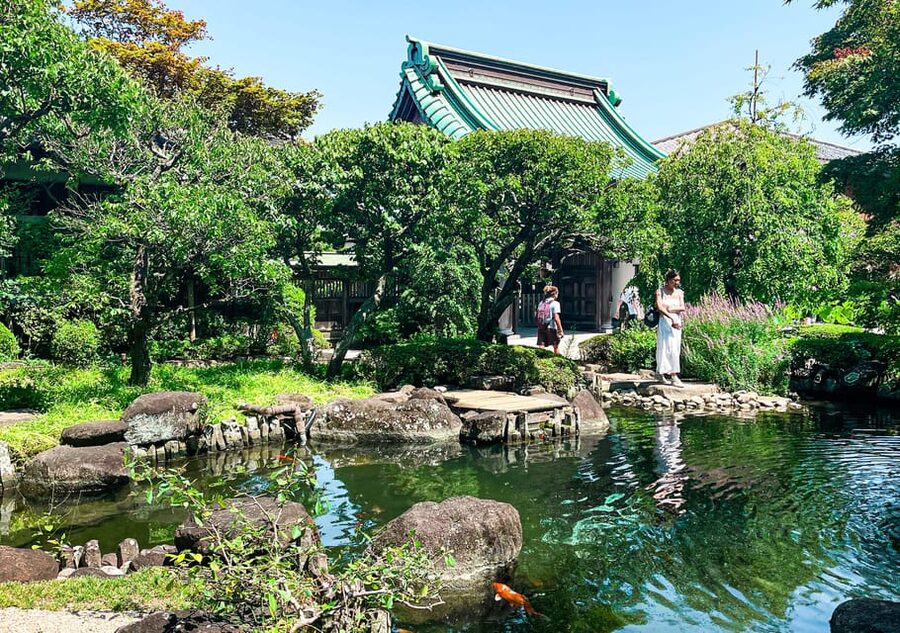
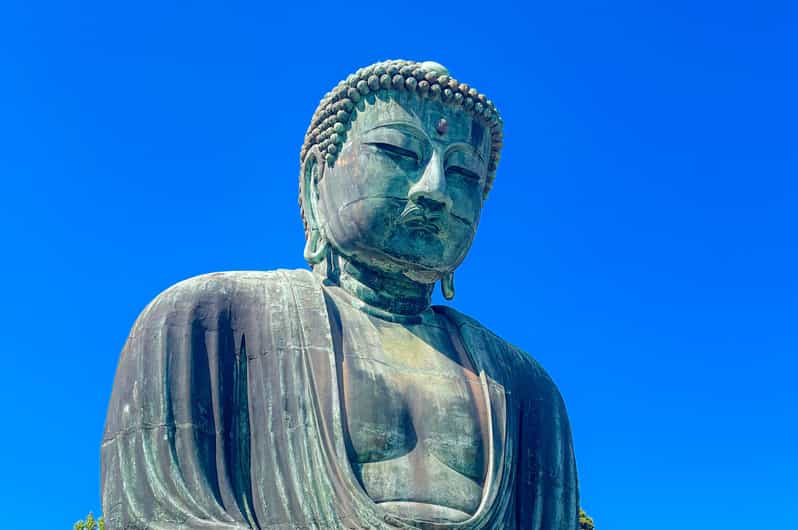
After another 10-minute transfer, you reach Kōtoku-in, home of Kamakura’s Great Bronze Buddha. The statue is more than 11 meters tall and weighs 120 tons.
This is the day’s clearest landmark. Even with only about 30 minutes here, you have enough time to see the statue and hear why it matters. The short visit keeps the overall route moving, but it does limit the chance for a long, quiet examination of the grounds.
I like the contrast between Hase-dera and Kōtoku-in. Hase-dera gives you legends and a broader temple setting. Kōtoku-in gives you one powerful object that is easy to understand at a glance. The two stops work well together.
Your guide can also help you place the Great Buddha within the larger story of Kamakura, rather than treating it as a giant statue made only for photographs. That historical framing is one of the main reasons to choose a guided visit instead of handling the same route alone.

Lunch and shopping around Kamakura
The next transfer takes about 20 minutes, followed by around 80 minutes for a break and lunch in Kamakura. This is your main chance to eat, rest your feet, and browse at your own speed.
Food is not included, so plan to pay separately. The tour does not specify a set restaurant or menu, which gives you flexibility but also means the guide may not be providing a formal lunch arrangement. Use this time to ask for recommendations. One of the stated benefits of the tour is practical advice that helps you continue enjoying Japan after the activity.
After the break, you spend about 30 minutes on Komachi Dori Street. This is Kamakura’s main shopping street, with stores of many kinds and a distinctly different feel from Tokyo’s major commercial districts.
Thirty minutes is enough to sample the atmosphere and pick up a small purchase, but it is not enough for a serious shopping session. If you see something you want, do not wait until the last minute. The schedule moves on to the shrine, and the group must keep to the return train.
Komachi Dori can also be the most commercially oriented part of the day. That is not a flaw, but it is worth knowing. The temples provide the quieter cultural experience, while the shopping street gives you snacks, souvenirs, and a more active town setting.
Tsurugaoka Hachimangu and the samurai connection
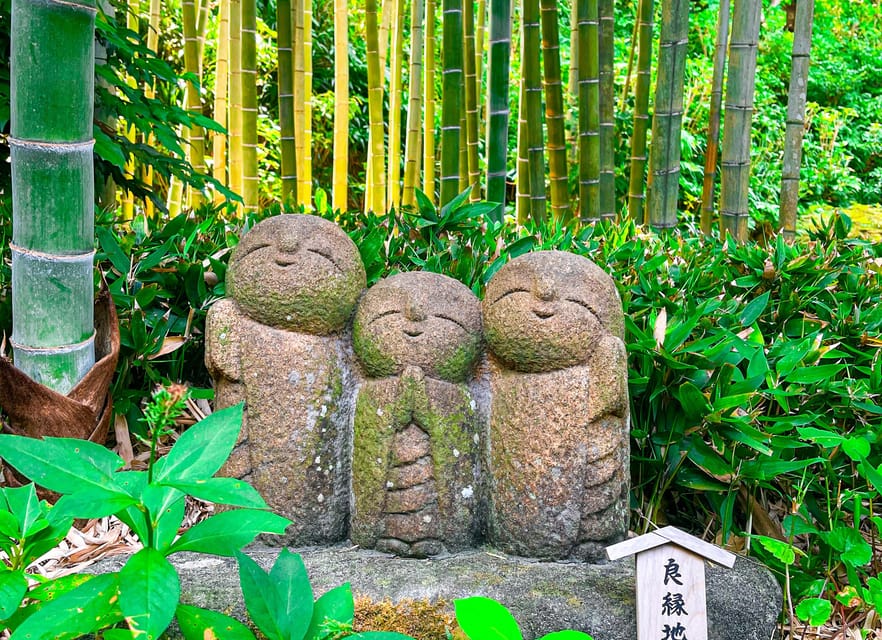
The final major stop is Tsurugaoka Hachimangu, with about 80 minutes to explore. This shrine is more than 800 years old and is dedicated to the guardian deity of samurai warriors.
For me, this is the stop that ties the day together. Hase-dera introduces religious stories, Kōtoku-in gives you the famous Buddha, and Tsurugaoka Hachimangu connects Kamakura to the warrior government that made the town so important.
The long visit allows the guide to explain the shrine’s role without squeezing everything into a rushed photo stop. You can take in the approach, the shrine buildings, and the sense of ceremony that sets a Shinto site apart from the Buddhist temples earlier in the day.
The tour description calls attention to ancient spirituality and serene nature, and this is where that mood is easiest to appreciate. It is also a good place to ask questions about the difference between the Buddhist and Shinto sites you have seen.
Keep in mind that the day ends with a return transfer of about 70 minutes. After a full schedule, you may be ready for a quiet train ride. The activity finishes back at the original meeting area, with drop-off listed at Tokyo Station and Marunouchi Square.
What the Spanish guide adds
The language is the central reason to book this particular version of the tour. You receive live guiding in Spanish, not simply written information or a multilingual audio device.
That matters most at Hase-dera and Tsurugaoka Hachimangu, where customs, legends, and historical references can pass quickly if you are relying only on signs. A guide can also explain small curiosities and answer questions as they come up.
Nerea is singled out for going beyond expectations and creating an especially memorable experience. Ori is described as making the tour engaging and pleasant for an entire family. Those comments point to a friendly guiding style rather than a stiff, lecture-heavy walk.
The provider also offers private groups. That option may be worth considering if your family or friends prefer a slower pace, want to ask many questions, or need more control over lunch and shopping time. The standard tour details do not specify the regular group size, so check the selected option before paying.
Is $102 per person good value?
At $102 per person, the tour is not the cheapest way to see Kamakura. You still need to add ¥2,300 for transportation, ¥700 for temple tickets, and the cost of lunch and drinks.
The value comes from having an eight-hour Spanish-language plan that joins several important sights in one day. You avoid piecing together the train route, local streetcar, temple sequence, and return journey yourself. You also get historical explanations and recommendations for the rest of your Japan trip.
The price makes more sense if Spanish guidance is important to you. If you are comfortable navigating Japanese trains and reading about each site on your own, an independent day may cost less. You would also have more freedom to spend extra time at one temple or shop longer on Komachi Dori.
I would compare the cost against your priorities, not only against the train fare. You are paying for structure, language support, local transport guidance, and company throughout a long day. For a first visit to Kamakura, that can be fair value.
Who should book this Kamakura tour?
This tour suits you if you want to see Kamakura’s major cultural sights without managing the route alone. It is particularly useful for Spanish-speaking families and couples who prefer personal explanations over guidebooks.
The mix of temples, a giant Buddha, a historic streetcar, shopping, and samurai history gives the day variety. You will not spend eight hours looking at similar religious buildings.
It may be less suitable if you want a slow, unstructured day. The schedule includes several transfers and fixed visit lengths, with only 80 minutes set aside for lunch and a break. It is also not suitable for wheelchair users or hearing-impaired people, and unaccompanied minors are not allowed.
Book with comfortable footwear, a small day bag, and enough money for transport, admission, meals, and shopping. Large luggage is not permitted.
Free cancellation is available up to 24 hours before the start, and you can reserve now and pay later. Starting times depend on availability, so check the date carefully before choosing.
Should you book it?
Book this tour if you want Kamakura explained in Spanish, with the main temples, the Great Buddha, Komachi Dori, and Tsurugaoka Hachimangu covered in one organized day.
I would choose it for a first Kamakura visit, especially if Nerea or Ori is available and you value a warm, conversational guide. I would skip it if you already know the town well, want to set your own pace, or are trying to keep the day as inexpensive as possible.
The strongest reason to go is not simply the statue or the old shrine. It is the way the route connects Kamakura’s spiritual traditions, samurai past, local transport, and everyday shopping in a single Spanish-language experience.
FAQ
Where does the Kamakura tour start?
The meeting point is in front of Tokyo Station at Marunouchi Square, near the central exit. Hotel pickup is available if you select that option.
How long does the tour last?
The tour lasts eight hours. Starting times depend on availability.
Is transportation included in the tour price?
No. Transportation costs ¥2,300 and are paid separately.
Are temple entrance tickets included?
No. Temple tickets cost ¥700 and are not included in the tour price.
Is lunch included?
No. Food and drinks are not included. The schedule provides about 80 minutes for a break and lunch in Kamakura.
Is the tour offered in Spanish?
Yes. The tour has a live Spanish-speaking guide. Private groups are also available.
More Kamakura & Enoshima Day Trips in Tokyo


More tours in Tokyo we've reviewed




Kamakura & Enoshima Day Trips, compared.
 ★ 4.5Tokyo: Kamakura & Enoshima Day Trip including Temple TicketsFrom $589 hours - 570 minutes
 ★ 5.0Mount Fuji, Kamakura, Big Buddha, & Lake Ashi Day TripFrom $109
 ★ 4.7Tokyo: Mt Fuji, Kamakura, Lake Ashi & Big Buddha Guided TourFrom $50
 ★ 4.5From Tokyo: Kamakura & Enoshima 1-Day Bus TourFrom $66
 ★ 4.9Tokyo:Sea of Mount Fuji, Hakone Ropeway, Ōwakudani, EnoshimaFrom $5010 hours
 ★ 5.0Kamakura 8 hr Private Walking Tour with Licensed Guide from TokyoFrom $201