Reviewed · KAMAKURA & ENOSHIMA DAY TRIPS
From Tokyo Kamakura, Hachimangu Shrine and Enoshima Full Day Tour
The best part of this day trip is the Enoden train ride along the Shonan coast, linking Kamakura’s old streets with Enoshima’s seaside views. I like that transport is handled for you, and I like the mix of Buddhist, Shinto, food, shopping, and ocean scenery in one outing.
In This Article
- Key points at a glance
- Why this makes sense from Tokyo
- The Great Buddha at Kotoku-in
- Riding the Enoden from Hase Station
- Exploring Enoshima’s shrines and sea views
- Tsurugaoka Hachimangu and Kamakura’s samurai past
- Food and shopping on Komachi Street
- How the schedule works in real life
- Who will enjoy this day trip most
- What to bring and what to expect
- Should you book this Kamakura and Enoshima tour?
- FAQ
- How long does the tour last?
- Where does the tour depart from?
- Is transportation included?
- Is the Enoden train ticket included?
- Is admission to the Great Buddha included?
- Is lunch included?
- What languages does the guide speak?
- How large can the group be?
- Can traffic make the tour return late?
- What is the cancellation policy?
You also get useful cultural background from guides such as Alex, Allan Tan, Peter, Leonard, and others assigned to different departures. The main caution is time: with five stops packed into about 10 hours, you will walk a lot and may have less freedom than you would on an independent visit.
Key points at a glance

- The Great Buddha comes first: See Kamakura’s famous 13.35-meter bronze Buddha, with admission paid separately.
- The Enoden ticket is included: Ride the small railway from Hase Station toward Enoshima, a highlight for many visitors.
- Enoshima gets the longest stop: You have about 1 hour 50 minutes to explore its shrines, lanes, and sea views.
- Lunch is your responsibility: The tour does not include a meal, but guides may suggest restaurants and local food.
- Expect a full day on your feet: Walking, stairs, crowds, and limited shade can make this tiring in hot weather.
- Traffic can change the plan: Weekend and holiday congestion may delay your return to Tokyo past 8 p.m.
Why this makes sense from Tokyo

Kamakura and Enoshima are close enough to visit independently, but the route takes planning. You must work out trains, transfers, station exits, admission fees, and the order of sights. This tour removes much of that friction with pickup and drop-off at designated Tokyo or Shinjuku points, an air-conditioned vehicle, a guide, and the Enoden ticket.
At $60.62 per person, the price is fair if you value convenience. You are paying for a full day of transport, a driver, a guide, and a carefully linked route rather than for a long list of expensive admissions. The Great Buddha admission is extra, and lunch is not included, so keep some yen ready.
The group can reach up to 40 people. That is a sizeable group, and it affects the feel of the day. A good guide can keep everyone moving, but you should not expect the freedom or quiet pace of a private tour. The multilingual format also means explanations may alternate between English, Mandarin, and Japanese.
Several guides receive especially warm praise for clear organization and personal help. Allan Tan is described as energetic, funny, and good at switching between English and Mandarin. Alex is praised for explaining history and keeping the schedule on track. Peter is noted for restaurant suggestions and a friendly manner, while Leonard is described as attentive and fluent in English. Your guide will depend on the departure.
A few more Tokyo tours and experiences worth a look
The Great Buddha at Kotoku-in
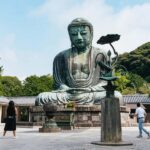
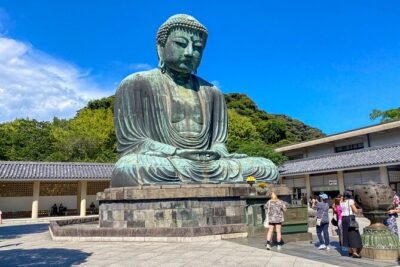
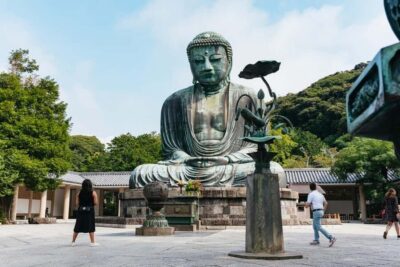
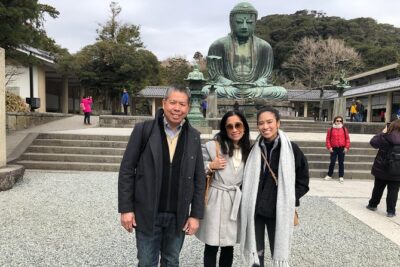
The first major stop is Kotoku-in, home of Kamakura’s Great Buddha. The bronze figure rises 13.35 meters and gives you an immediate sense of why Kamakura is such a popular day trip from Tokyo. It is a powerful sight even if you have already seen large religious statues elsewhere in Japan.
You get about 30 minutes here. That is enough to see the statue, take photographs, and listen to an explanation, but it is not a long temple visit. Admission is not included, so budget for the entrance fee separately.
The short visit has one advantage: you see the most important feature without spending the morning inside one complex. The disadvantage is that you may want more time to look closely, especially if the grounds are crowded. If photography matters to you, stay aware of the meeting time. The group cannot wait indefinitely.
The Great Buddha is also a good place to begin the day because it gives your guide a natural way to explain Japanese Buddhism and Kamakura’s religious importance. Guides have been praised for making temple and shrine visits easier to understand instead of simply pointing out buildings and names.
Riding the Enoden from Hase Station

Next, you walk to Hase Station and board the Enoshima Electric Railway, usually called Enoden. The ticket is included, which is an important practical benefit because this short rail journey is part of the experience rather than just a transfer.
The train has operated for more than a century and passes through a changing mix of neighborhoods, coastal scenery, and well-known Kamakura areas. You get about 40 minutes for this part of the route, including the railway experience and movement between stops.
Do not expect a private carriage or guaranteed window seat. The train can be crowded, especially during popular travel periods. One person described the train as very crowded, but still considered the ride worthwhile. That is the right way to approach it: treat the train as a charming local connection, not a scenic railway reserved for sightseeing.
The Enoden also adds a welcome change of pace. After the Great Buddha, you shift from a formal religious site to everyday local transport. You see how shrines, homes, streets, and the coast fit together around Kamakura. It is one of the most distinctive pieces of the tour.
Exploring Enoshima’s shrines and sea views

Enoshima receives the longest scheduled visit, about 1 hour 50 minutes. That is helpful because the island has more to see than a single shrine gate. The route includes Enoshima Shrine, built in 552 by order of Emperor Kinmei, along with religious objects and details such as the colorful eight-armed seated Benzaiten statue and the Happo tortoise.
The island is reached by walking across a bridge, and the visit includes uphill walking and stairs. You should wear shoes that can handle uneven streets and slopes. Several accounts stress that the day involves lots of walking, while one notes limited shade on a very hot day.
This is the portion of the tour where you may wish for even more time. Enoshima combines shrines, narrow lanes, food, shops, and broad coastal views. The time available lets you see the main character of the island, but it may force choices. You might focus on the shrine area and views, or spend more time looking for food and browsing.
The views from higher parts of the island are a major reward. On a clear day, you might even see Mount Fuji in the distance, as one visitor did. The tour does not promise that view, since weather controls what you can see.
Lunch is not included. That gives you some choice, but it also means your break must fit the schedule. Guides have recommended restaurants and local foods to members of their groups, which can save time if you do not know where to start. Bring cash, since some restaurants, scenic spots, and other places may not accept cards.
Because this is a shared group excursion, pay close attention to where and when you must regroup. Enoshima is enjoyable precisely because there is plenty to look at, so it would be easy to lose track of time.
Tsurugaoka Hachimangu and Kamakura’s samurai past

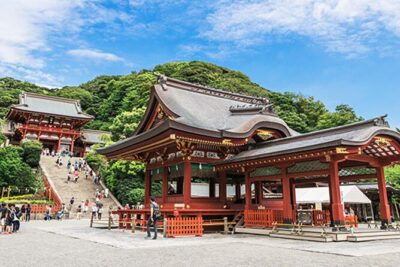
After Enoshima, the tour returns to Kamakura for Tsurugaoka Hachimangu Shrine. This is one of the city’s defining Shinto sites and a useful counterpoint to the Buddhist Great Buddha.
The shrine is closely tied to Kamakura’s samurai heritage and political power. You will see large torii gates, formal grounds, and traditional shrine architecture. The scheduled visit lasts about 40 minutes, with admission included.
This stop works best if you listen to the guide before exploring on your own. The buildings and approach are attractive, but the meaning of the shrine is what gives the visit weight. Guides such as Allan Tan have been praised for explaining Japanese religion and history in a way that makes the places more than photo stops.
Forty minutes is enough for the principal areas, but not for a slow, detailed examination of every corner. If you are especially interested in Shinto, samurai history, or architecture, you may find the pace brisk. The benefit is that the tour gives you both Kamakura’s Buddhist and Shinto sides in the same day.
A few more Tokyo tours and experiences worth a look


Food and shopping on Komachi Street

The final stop is Komachi Street, a lively route running between Tsurugaoka Hachimangu and Kamakura Station. This is where the day shifts from formal sights to snacks, shops, and modern life in the old city center.
You have about 30 minutes, so think of this as a tasting and browsing stop, not a full shopping session. You might find local foods, small gifts, and busy storefronts, but the exact experience will depend on crowds and how quickly your group reaches the street.
A half hour is short if you want lunch here. It is more useful for buying a snack, looking at a few shops, or getting a feel for Kamakura’s commercial side. If your guide recommends a restaurant earlier in the day, consider taking that advice rather than waiting until this last stop.
Komachi Street also gives the itinerary a practical ending. You finish with a place that feels lived-in and social, not another temple or shrine. Just keep an eye on the meeting point and time.
How the schedule works in real life

The advertised duration is about 10 hours. That includes pickup, driving from Tokyo, local movement, sightseeing, and the return journey. Weekend and holiday traffic in Japan can push the return past 8 p.m.
The operator says it will cover additional guide and driver overtime fees caused by traffic, but that does not make the delay convenient for you. Do not schedule a flight, long-distance train, restaurant reservation, or other fixed activity immediately afterward.
Traffic may also lead to shortened, adjusted, or canceled visit times. This is the trade-off for covering several popular destinations in one day. If you want a calm, unhurried visit to Kamakura, travel independently and spend a full day or two in the area. If you want a broad first look while based in Tokyo, the packed schedule is useful.
Pickup is available from designated points, and the guide carries a yellow flag marked with the Gogoday logo. Arrive 15 minutes early. Late arrivals and no-shows do not receive a refund, so build in plenty of time to reach the meeting point.
The guide and vehicle details are sent by email around 9 p.m. the night before departure, including the vehicle license plate. Since the booking platform may not share your email address with the operator, you need to provide it after booking.
Who will enjoy this day trip most

I would choose this tour if you have limited time in Tokyo and want to see Kamakura and Enoshima without managing several rail connections. It is also a sensible choice for solo visitors who prefer the structure of a group, and for first-time visitors who want explanations along the way.
The tour suits people who enjoy variety. In one day, you get a Buddhist statue, a historic railway, coastal scenery, island shrines, a major Shinto shrine, and a shopping street. Guides have also helped with photographs, directions, food suggestions, and keeping the schedule clear.
I would think twice if you dislike group travel, walking, stairs, or fixed departure times. The group size can reach 40, and one poor experience described chaotic check-in, an older vehicle, and too much time waiting for people who fell behind. That appears to be the exception among the supplied feedback, but it is a fair risk to understand before booking.
The multilingual format deserves attention too. Most comments about English-speaking guides are positive, especially for Alex, Peter, Leonard, Allan Tan, and others. Still, explanations may be given in more than one language, which can make the day feel slower or less detailed for some English-only participants.
What to bring and what to expect
Wear comfortable shoes. The day includes walking through stations, shrine grounds, streets, and Enoshima’s sloping routes. In hot weather, bring water, sun protection, and patience for areas with little shade.
Bring cash for admission, food, and places that may not accept cards. The Great Buddha ticket is extra, while the Enoden ticket is included. Enoshima Shrine is listed as free to enter, and admission to Tsurugaoka Hachimangu is included.
The tour provides an air-conditioned vehicle, a driver, a guide, pickup, and drop-off. Most people can participate, and the route is near public transportation, but the supplied information does not promise a fully step-free route or special mobility arrangements.
You can cancel for a full refund if you do so at least 24 hours before the experience starts. Changes or cancellations inside that window are not accepted for a refund.
Should you book this Kamakura and Enoshima tour?
Book it if you want an efficient first look at two excellent day-trip destinations and prefer a guide to handle the route. The included Enoden ride, strong guide feedback, and mix of religious sites, food streets, and coastal views make the $60.62 price reasonable for a full day from Tokyo.
Skip it if your priority is slow exploration. You will have limited time at the Great Buddha, Hachimangu, and Komachi Street, and traffic can disrupt the plan. For most first-time visitors with one free day, though, this is a practical way to get beyond Tokyo, provided you accept the walking, crowds, and group schedule.
FAQ
How long does the tour last?
The tour lasts approximately 10 hours.
Where does the tour depart from?
Pickup is available from designated points in Tokyo, including Tokyo and Shinjuku pickup areas.
Is transportation included?
Yes. The tour includes an air-conditioned vehicle, a driver, pickup, and drop-off at a designated point.
Is the Enoden train ticket included?
Yes. The Enoshima Electric Railway ticket is included in the tour price.
Is admission to the Great Buddha included?
No. Admission to Kotoku-in and the Great Buddha is not included.
Is lunch included?
No. Lunch is not included, so you should budget separately for food.
What languages does the guide speak?
Guides may provide explanations in English, Mandarin, and Japanese. The assigned guide varies by departure.
How large can the group be?
The shared tour can have a maximum of 40 travelers.
Can traffic make the tour return late?
Yes. Weekend and holiday traffic may delay the return to Tokyo past 8 p.m. Sightseeing times may also be shortened, adjusted, or canceled because of traffic.
What is the cancellation policy?
You can cancel for a full refund up to 24 hours before the experience starts. Cancellations or changes made less than 24 hours before the start time are not refunded.
More Full-Day in Tokyo

More Temples & Meditation in Tokyo
More Kamakura & Enoshima Day Trips in Tokyo


More tours in Tokyo we've reviewed












Kamakura & Enoshima Day Trips, compared.
 ★ 4.5Tokyo: Kamakura & Enoshima Day Trip including Temple TicketsFrom $589 hours - 570 minutes
 ★ 5.0Mount Fuji, Kamakura, Big Buddha, & Lake Ashi Day TripFrom $109
 ★ 4.7Tokyo: Mt Fuji, Kamakura, Lake Ashi & Big Buddha Guided TourFrom $50
 ★ 4.5From Tokyo: Kamakura & Enoshima 1-Day Bus TourFrom $66
 ★ 4.9Tokyo:Sea of Mount Fuji, Hakone Ropeway, Ōwakudani, EnoshimaFrom $5010 hours
 ★ 5.0Kamakura 8 hr Private Walking Tour with Licensed Guide from TokyoFrom $201