Reviewed · E-BIKES
Tokyo: 3h Private E-bike Tours, Starting at Your Hotel
Tokyo is easiest to understand when you can connect its famous districts by road instead of viewing each one from a train station. This private three-hour e-bike tour links skyscrapers, shrines, riversides, old lanes, and major sights at a useful pace.
In This Article
- Key points at a glance
- Why an e-bike is a smart way to see Tokyo
- Meeting Kazuma at your hotel
- From Shinjuku towers to quiet Tokyo streets
- The Imperial Palace, Tokyo Station, and old merchant districts
- Tsukishima, Tokyo Tower, and the city’s waterfront
- Asakusa, Kitasenju, and the Sumida River
- What the private format is really worth
- Who should book, and who should think twice
- Practical details before you reserve
- Should you book this Tokyo e-bike tour?
- FAQ
- Where does the tour start and finish?
- How long is the e-bike tour?
- Which languages does the guide speak?
- Is the tour suitable for children?
- What should I wear?
- Can I request a different route or starting time?
I especially like the hotel pickup and drop-off, which removes a common Tokyo headache, and the freedom to shape the route around your interests. Guide Kazuma is praised for careful riding, patient explanations, bike adjustments, and taking group photos. The main catch is that 15 to 20 kilometers of city cycling still requires confidence, and custom requests or hotels outside the service area may cost extra.
Key points at a glance

- Start at your hotel: Meet the guide in your lobby and finish back at your hotel when the service area allows.
- E-bike assistance: The motor helps as you pedal, making hills and a long city route less tiring.
- Kazuma leads the ride: Expect English or Japanese commentary, safety guidance, local context, and a careful pace.
- A genuine Tokyo cross-section: Possible sights range from Tokyo Tower and the Imperial Palace to Tsukishima, Kitasenju, and riverside paths.
- Private and adjustable: You can request different stops, a later start, or a longer ride, though added fees may apply.
- Good for confident riders age 12 and up: Riders should be 145 to 185 centimeters tall and under 100 kilograms.
Why an e-bike is a smart way to see Tokyo

Tokyo is huge, but its neighborhoods are close enough to connect by bicycle. A train can take you from Shibuya to Ginza quickly, yet it hides the small changes between districts: office towers giving way to quiet streets, a shrine tucked beside a road, or a local shopping lane that never appears in a standard sightseeing plan.
This tour covers roughly 15 to 20 kilometers in three hours. That sounds like a lot on paper, but the electric motor assists while you pedal. You still ride under your own power, yet hills and longer stretches become far less demanding.
I would describe the activity as active sightseeing rather than a workout. You will need to steer, pedal, watch traffic, and stay with the guide. Still, the e-bike helps keep the outing relaxed, particularly if you want to cover several districts without spending the whole day on foot.
The short stops matter. You pause for photos, hear an explanation, and have a moment to drink water before moving on. The format gives you more contact with the city than a bus tour, but without asking you to plan every turn yourself.
Other cycling tours in Tokyo
Meeting Kazuma at your hotel
The tour begins in your hotel lobby, where you look for the guide wearing or carrying a bike helmet about five minutes before the scheduled pickup. The operator uses WhatsApp, iMessage, or SMS to keep in touch, so make sure the phone number on your booking works in Japan.
Hotel pickup is more than a small convenience. Tokyo’s neighborhoods can have several stations, exits, and similarly named streets. You do not need to explain a meeting point to a taxi driver or navigate across town before you have even started riding.
Kazuma then adjusts each bike to fit the rider. That step is especially useful for families or mixed-ability groups. Several riders found his approach patient and safety-conscious, and one novice cyclist felt comfortable throughout the ride. You receive a helmet and a safety briefing before setting off.
The tour is private, so your group is not tied to the speed or interests of strangers. That makes a real difference if one person wants more shrine time, another prefers architecture, or your group wants to spend less time at famous crossings.
From Shinjuku towers to quiet Tokyo streets

A Shinjuku start can give you an immediate sense of Tokyo’s scale. The Tokyo Metropolitan Government Office rises above one of the city’s best-known business districts, while nearby Omoide Yokocho offers a sharp change of mood with its narrow, old-style food lanes.
You may then move toward the Meiji Gaien area, where the National Stadium and Gaien Ginkgo Tree Avenue provide broad streets and recognizable Tokyo scenery. The route can include Hatonomori Hachiman Shrine, a useful reminder that places of worship remain woven into even the most built-up parts of the city.
Aoyama Cemetery is another possible stop, especially during cherry blossom season. Its tree-lined roads offer a calmer ride than the central avenues, though seasonal interest naturally depends on the date of your visit.
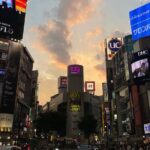
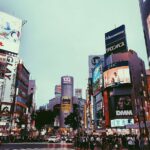
Shibuya Crossing may be included for the full neon-and-crowds experience. Do not expect to cycle through the crossing itself as if it were a quiet park path. The value is seeing how the district connects to the surrounding streets and getting a photo stop in one of Tokyo’s most familiar areas.
The Imperial Palace, Tokyo Station, and old merchant districts

A central Tokyo route can shift from modern towers to formal public spaces. Hibiya Park, described as Tokyo’s first Western-style park, gives you a leafy pause near the business district. From there, the Imperial Palace area and Marunouchi offer impressive avenues, office architecture, and a sense of Japan’s political and commercial center.
Tokyo Station is another likely highlight. Its red-brick exterior contrasts with the glass and steel around it, and the area is easy to appreciate from a bicycle because you can approach, stop, and continue without dealing with a train platform.
Nihonbashi Bridge provides a different kind of city history. This is an old commercial center, and the bridge area helps explain how Tokyo developed as a place of trade and movement. Cycling between Marunouchi, Nihonbashi, and nearby streets creates a useful story about the city rather than a string of disconnected photo stops.
The private format works well here. If you have already visited the Imperial Palace, you can ask for more time in older districts. If this is your first Tokyo morning, Kazuma can use the central route as a broad introduction.
Tsukishima, Tokyo Tower, and the city’s waterfront

The tour may continue toward Tsukuda Island and Tsukishima, where the feel changes again. Tsukishima is associated with monja, a local style of savory Japanese batter dish, and Monja Street offers a food-focused neighborhood atmosphere. Food and drinks are not included, so any stop to eat is at your own expense and would need to fit the three-hour schedule.
Nearby waterways can make the ride feel less enclosed than central Tokyo. Tsukuda Island and the Sumida River area show how residential and industrial waterfront spaces sit beside high-rise development. You are still close to the city center, but the view opens up.
Zojo-ji Temple and Tokyo Tower create one of Tokyo’s most recognizable pairings. The temple provides a traditional setting, while the tower rises behind it with unmistakably modern lines. This is one of the stronger photo opportunities on the possible route, though you should remember that the exact selection depends on your starting point, pace, and requests.
A three-hour ride cannot cover every place in the long list of possible stops. A route that includes Shinjuku and Shibuya will not necessarily also reach Asakusa or Tokyo Skytree. Ask for your priorities when you book, and be realistic about distance.
Other private tours in Tokyo

Asakusa, Kitasenju, and the Sumida River

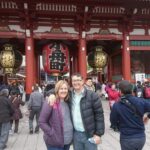
An eastern Tokyo route can focus on Asakusa and the river districts. Kaminarimon Gate is the grand entrance to one of the city’s best-known temple areas, and its large lantern makes an easy visual anchor for the ride.
From there, the route may reach Tokyo Skytree or follow the Sumida River. The river corridors offer a different pace from central traffic, although you should still follow the guide’s instructions and remain alert around other road and path users.
Kitasenju gives the tour a more local feel. It is a lively neighborhood rather than a checklist attraction, with ordinary streets and daily city life. That kind of stop is valuable if you want more than Tokyo’s postcard sights.
Arakawa Riverside is another possible change of scene. The open space can provide a break from dense streets, but the route and conditions may vary. Your guide decides what is practical on the day, and the private setup lets you discuss adjustments rather than simply accepting a fixed program.
What the private format is really worth

The price is $154 per person. That is not the cheapest way to move around Tokyo, especially for a solo rider. You are paying for a private guide, e-bike, helmet, safety instruction, insurance, hotel service, and a route shaped to your group rather than a standard group departure.
For two or more people who want an introduction to Tokyo, the value becomes easier to see. You save the time of planning a route, get help connecting districts that would otherwise require several train journeys, and can ask questions as the city unfolds around you.
The hotel service also saves practical effort. A normal bike tour may require you to locate a shop or meeting point, arrive early, and return there afterward. Here, you can finish at the hotel, which is helpful if you are tired or carrying shopping.
The tradeoff is that the base price does not include food or drinks. Changes to the starting time, added duration, or visits to distant spots can bring extra charges. Confirm those costs before agreeing to a customized plan.
Who should book, and who should think twice
This tour suits you if you want to see many parts of Tokyo in a short time and prefer a personal guide to a fixed group itinerary. It is particularly useful on your first day, when you want a broad sense of the city before returning to favorite areas on foot or by train.
Families with children aged 12 or older can benefit from the private pace, provided everyone meets the height and weight requirements. The listed ideal height range is 145 to 185 centimeters, and the tour is not suitable for riders over 100 kilograms.
You should be comfortable on a bicycle, even though the motor helps. The guide is careful, but Tokyo remains a busy capital. Wear closed, practical shoes. High heels, sandals, flip-flops, and skirts are not allowed, and you cannot smoke, drink alcohol, or use drugs during the activity.
Photography is encouraged during stops, but you may not shoot photos or video while cycling. That is sensible advice. Stop first, then take the picture.
Practical details before you reserve

The listed pickup areas include Roppongi, Shibuya, Toranomon, Ebisu, Hatchobori, Nishishinjuku, Shibakoen, Ginza, Shinbashi, Asakusa, Suido, Marunouchi, Hibiyakoen, Nagatacho, and Shinagawa City. Drop-off is available in the listed service areas, though your hotel must be within range for standard hotel service.
The tour lasts three hours, with starting times depending on availability. Japanese and English are offered. You can reserve now and pay later, and cancellation is free up to 24 hours before departure.
Tell the operator your preferred sights when signing up. You might request Tokyo Tower, old neighborhoods, riverside riding, shrines, or central Tokyo landmarks. Just remember that distance controls the day. A focused route will feel better than trying to force every name on the list into one ride.
The activity receives a five-star rating from 25 reviews, with especially strong praise for Kazuma’s friendliness, safety awareness, useful commentary, and ability to adjust the ride. He has also taken photos of groups and sent them afterward, which is a thoughtful extra, though you should treat that as part of his personal service rather than a guaranteed formal photography package.
Should you book this Tokyo e-bike tour?
Book it if you want personal guidance, hotel convenience, and a wide look at Tokyo without spending hours changing trains. Kazuma’s careful approach makes the tour appealing to riders who are willing to cycle but do not want to manage city navigation alone.
Skip it if you dislike traffic, cannot ride comfortably for several hours, or want an attraction-by-attraction tour with guaranteed entry times. Also check the extra cost before requesting a distant neighborhood or a longer ride.
For most confident riders who have only three hours and want Tokyo to feel like a city of connected neighborhoods, this is a strong, practical choice. Ask for your must-see district in advance, wear sensible shoes, and let the route breathe.
FAQ
Where does the tour start and finish?
The tour starts and ends at your hotel when the hotel is within the service area. If your hotel is outside the range, you can discuss another starting point, but an additional charge may apply.
How long is the e-bike tour?
The tour lasts about three hours. The standard route covers roughly 15 to 20 kilometers.
Which languages does the guide speak?
The live guide service is available in Japanese and English.
Is the tour suitable for children?
Children under 12 are not allowed. Riders should also be between 145 and 185 centimeters tall and under 100 kilograms.
What should I wear?
Wear practical, closed shoes. High heels, sandals, flip-flops, and skirts are not allowed.
Can I request a different route or starting time?
Yes. You can request a different starting time, a longer tour, or visits to specific places. Custom requests may involve additional charges.
More E-Bikes in Tokyo


More Private Tours in Tokyo
More Cycling Tours in Tokyo
More tours in Tokyo we've reviewed
E-Bikes, compared.
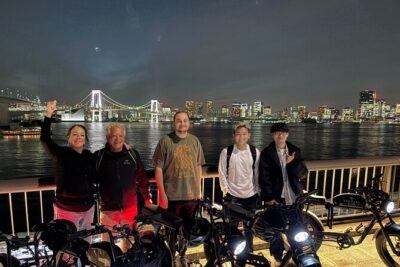 ★ 5.0Tokyo Top Highlights 3h Guided E-bike TourFrom $63
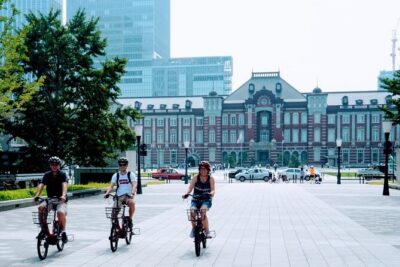 ★ 5.03h Tokyo E-Bike Tour: Hidden Gems, and Local Life with guideFrom $63
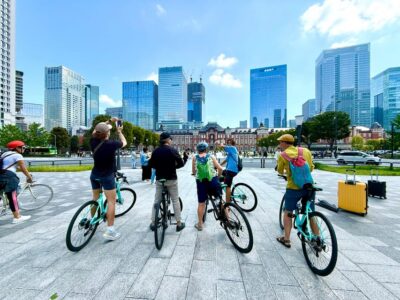 ★ 4.8Tokyo: 3-Hour Bike or E-Bike City Highlights TourFrom $453 hours
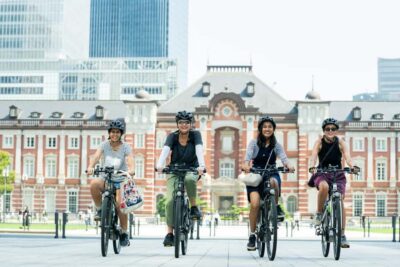 ★ 4.8Tokyo: 3-hour Guided E-Bike Tour of the City’s Hidden GemsFrom $65
 ★ 5.0Tokyo: 3-Hour Bike/E-Bike Tour of the City’s HighlightsFrom $63
 ★ 5.03-Hour Tokyo Private E-Bike Tour Starting from Your HotelFrom $145