Reviewed · E-BIKES
Tokyo: 3-Hour Bike/E-Bike Tour of the City’s Highlights
Tokyo is huge, but this three-hour bike tour gives you a quick, lively introduction without trapping you in a bus. You ride from Zojo-ji Temple past the Imperial Palace and Tokyo Station, then cut through Aoyama and Harajuku toward Shibuya Crossing and Yoyogi Park.
In This Article
- Key things to know before you book
- Why a bike works so well in Tokyo
- Starting at Zojo-ji beside Tokyo Tower
- The Imperial Palace and Otemon Gate
- Tokyo Station’s red-brick face
- Akasaka Palace and the Olympic Stadium
- Aoyama’s polished streets
- Cat Street, Harajuku, and the run to Shibuya
- Ending near Yoyogi Park and Harajuku Station
- What the guides add to the ride
- E-bike comfort, helmets, and road conditions
- Families, layovers, and the right kind of sightseeing day
- Weather, meeting point, and cancellation rules
- Should you book this Tokyo bike tour?
- FAQ
- How long is the Tokyo bike tour?
- What sights are included?
- Where does the tour start?
- Where does the tour finish?
- Is bicycle rental included?
- Is a helmet included?
- Is a child seat available?
- What languages are available?
- Is this a private tour?
- What happens if the weather is poor?
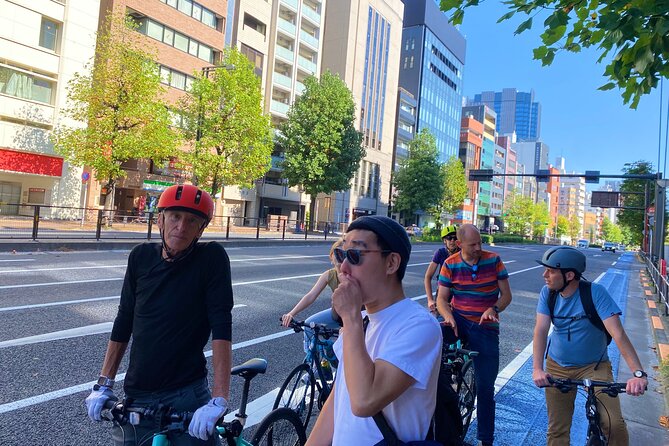
I like two things here: you cover a surprising amount of ground, and guides such as Naoki, Rinto, Sho, Rin, and Casey bring local stories to the ride. The main catch is traffic. You need moderate fitness, confidence on a bicycle, and a willingness to ride through crowded city streets.
Key things to know before you book
- Ride across central Tokyo: The route links Minato, Marunouchi, Akasaka, Aoyama, Harajuku, and Shibuya in one outing.
- Choose pedal assist if available: The e-bike option makes the three hours easier, especially in hot weather or on a busy sightseeing day.
- Expect practical local guiding: Guides explain Tokyo’s history, customs, and popular culture while keeping the group together.
- Bring cash for extras: A helmet costs ¥1,000, and a child seat costs ¥3,000 when arranged ahead.
- The finish is useful: You end near Yoyogi Park, Harajuku Station, and Shibuya, with plenty of options for lunch, dinner, or more sightseeing.
- Plan around the weather: Rain cancellation can mean a new date or a full refund, but changes inside 24 hours are not accepted.
Why a bike works so well in Tokyo
Tokyo’s rail system is superb, but trains move you from station to station. A bicycle lets you notice the spaces between them. You see office districts change into palace grounds, quiet temple corners, tree-lined avenues, designer shops, and packed youth-fashion streets.
That makes this a good orientation ride. You are not spending a long time inside each attraction. Instead, you collect a broad first look at the city and note where you want to return later.
The tour costs $63.01 per person. That includes the bicycle, bike insurance, a small pouch for your phone, wallet, or keys, a raincoat on rainy days, and an English or Japanese guide. For three hours of guiding and transport across several districts, I consider the price fair, especially if you have only one free morning or a long layover.
The value drops a little if you want long temple visits, museum entries, or detailed photography stops. This is a moving tour. The total duration includes time spent riding between stops, and several listed stops last only five or ten minutes.
Other cycling tours in Tokyo
Starting at Zojo-ji beside Tokyo Tower
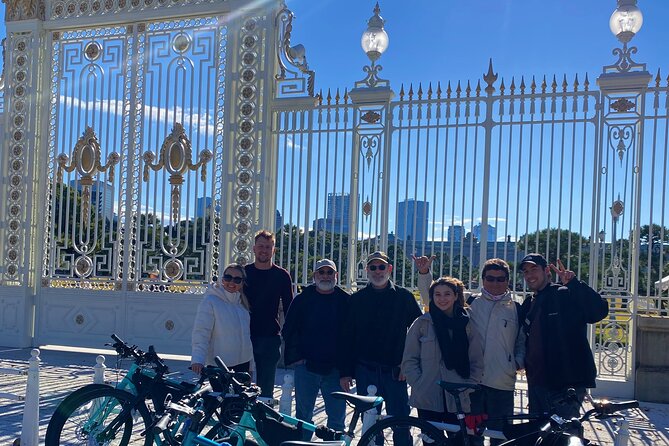
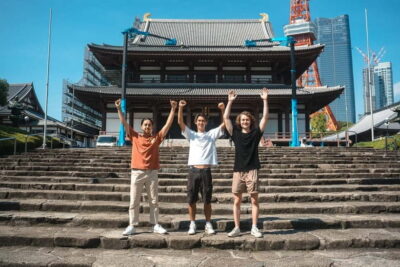
The ride begins at the Statue of Commodore Perry in Shibakoen, near Zojo-ji Temple. The meeting point deserves extra attention because the statue can be hard to locate, even for people familiar with the area. Give yourself time to find it rather than arriving at the last second.
Zojo-ji is a strong opening stop. This Buddhist temple sits close to Tokyo Tower and is tied to the Tokugawa shoguns, the military rulers who shaped Japan for centuries. The grounds include important memorials and figures connected with powerful warlords.
You get about five minutes here, so think of it as a quick look and explanation rather than a temple visit. If Zojo-ji matters to you, return later on foot when you can slow down and explore.
The Imperial Palace and Otemon Gate
From Zojo-ji, the route heads toward the Imperial Palace. The palace is the residence of Japan’s emperor, but much of the inner grounds are not open for ordinary sightseeing. Your guide helps place the palace in context, while the surrounding stone walls, moats, gardens, and gates provide the visual interest.
The scheduled stop is about 15 minutes. That is enough for a brief introduction and photographs, but not enough for a full palace-area walk. You should see this portion as a taste of central Tokyo’s ceremonial side.
The Otemon Gate adds a more tangible historic detail. It is one of the main entrances to the palace grounds, with the kind of heavy gate construction that makes Tokyo’s old defensive planning easier to understand. You have another ten minutes here, mainly for pictures and a short explanation.
This pairing works well because the palace can otherwise feel like a large, quiet area with few obvious details. A guide gives you a reason to pause and tells you what you are seeing instead of simply cycling past a wall.
Tokyo Station’s red-brick face
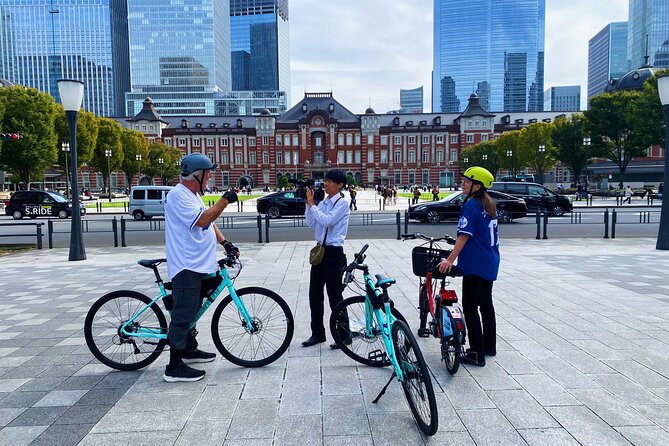
Tokyo Station Marunouchi is one of the route’s best photo stops. The red-brick building opened in 1914 and looks quite different from the glass towers surrounding it. It is a useful reminder that Tokyo is not only neon, concrete, and giant screens.
The planned stop lasts ten minutes. You will likely view the station from outside rather than take a full interior tour. That is fine for a quick city ride, but set your expectations correctly. If you want to admire the architecture in detail, return independently.
I especially like this stop for first-time visitors because Tokyo Station is also a major transport hub. The tour helps you recognize the Marunouchi side, one of the city’s most polished central districts, so the station feels less confusing when you come back on your own.
Akasaka Palace and the Olympic Stadium
Akasaka Palace, also called the State Guesthouse, gives the ride another change of mood. It began as a royal villa and now serves as a state guesthouse. The grand architecture offers a glimpse of Japan’s modern imperial and diplomatic world.
You only have about five minutes here, so this is another brief exterior stop. The appeal is visual and historical rather than an extended visit inside the building.
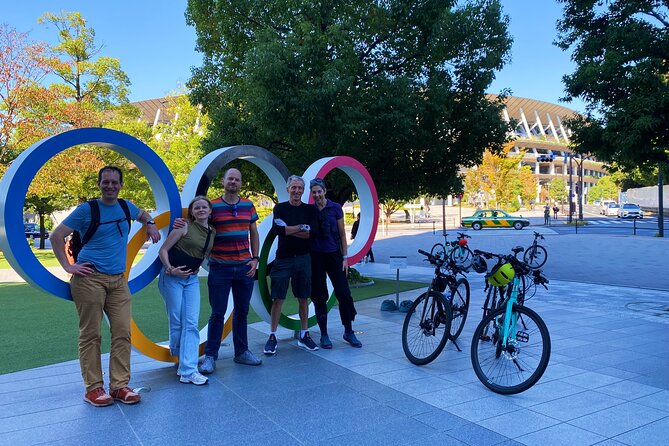
The Japan National Stadium follows, with 15 minutes devoted to the site of the 2020 Tokyo Olympic and Paralympic Games. This stop connects the city you see today with a major recent event. It also gives you a chance to pause after several urban riding sections.
The route does not treat every stop as a formal attraction visit. It uses each place as a marker in Tokyo’s story: temple, palace, station, state building, and sports venue. That broad range is one of the tour’s better qualities.
Other city tours we've reviewed in Tokyo


Aoyama’s polished streets
Aoyama brings you into a very different Tokyo. The area is known for high-end fashion brands, modern architecture, and carefully designed streets. You have about five minutes here, so the point is to ride through the district and get a feel for its style, not to shop.
This is where the bicycle has a clear advantage over a walking route. You can connect several districts without repeatedly entering and exiting stations. You also get a better sense of how quickly Tokyo changes from one neighborhood to the next.
The tradeoff is that traffic and road awareness matter more here. Guides generally lead from the front and keep an eye on the rear of the group, but you still need to follow instructions, watch other bicycles and vehicles, and stay comfortable in an urban setting.
Cat Street, Harajuku, and the run to Shibuya
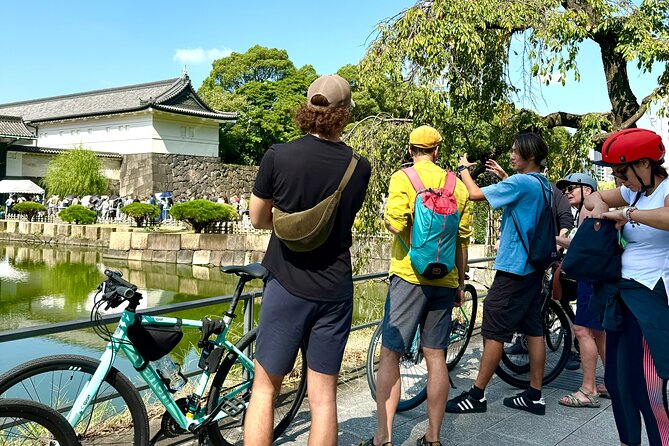
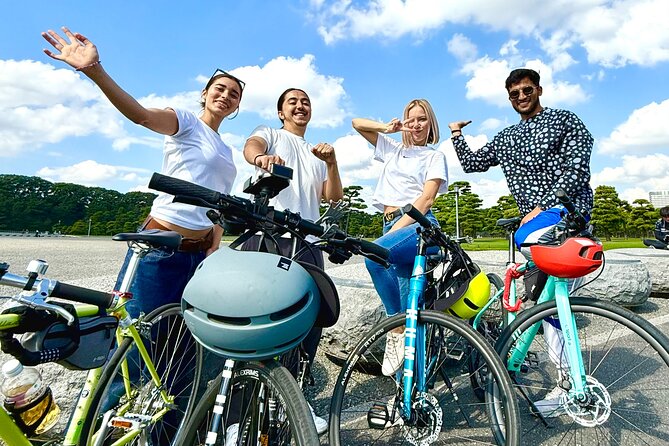
Shibuya Cat Street is a lively link between Harajuku and Shibuya, with fashion labels, vintage shops, and a younger street style. It is a good contrast to the palace and government buildings earlier in the ride.
The stop lasts about five minutes. You should not expect time to browse the shops. Instead, take in the mix of storefronts, people, and street design. If this part of Tokyo interests you, the tour leaves you well placed to return on foot after it ends.
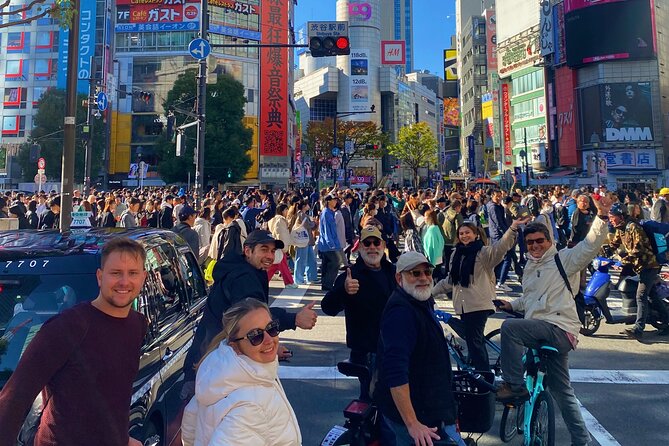
The final major sight is Shibuya Crossing. The itinerary says you bike through the famous crossing, which is an unusual way to experience one of Tokyo’s most photographed places. The stop is also about five minutes, so you will not have a long pause for people-watching or repeated photos.
The crossing can feel stressful if you are not used to riding among crowds. Several guides receive praise for calm road handling and clear instructions, but this is still the point where you need the most focus. It is exciting because you are part of the street scene, not viewing it from behind a coach window.
Ending near Yoyogi Park and Harajuku Station
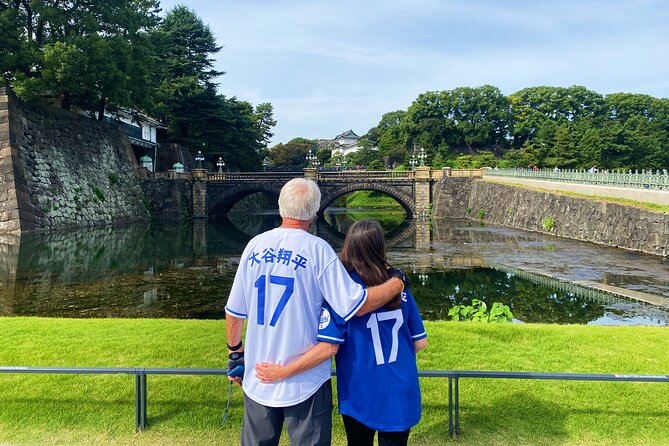
The ride ends at the Bell of Peace in Jinnan, a shopping and dining area between Yoyogi Park and Shibuya. You are about five minutes on foot from Yoyogi Park and roughly ten minutes from Shibuya Station.
This is a smart finish. You can continue into Yoyogi Park, walk toward Harajuku Station, explore nearby shops, or find food in Jinnan. The endpoint also makes it easy to keep sightseeing rather than losing time getting back to the start.
One special detail connected with the final part of the route is the grave of Hachiko, the famous dog associated with Shibuya. The supplied route information does not list it as a formal stop, so you should not count on a dedicated visit, but one guide-led ride included a cemetery visit connected with Hachiko. Ask your guide at the start if this can fit the day’s route.
What the guides add to the ride
The guide can make or break a fast city tour. You are moving too quickly to read every sign or study every building, so clear explanations matter.
Naoki is praised for bringing history to life and for explaining road rules in a calm way. Hiroto is also singled out as an excellent guide, including for evening rides when Shibuya Crossing takes on a different feel. Rinto is described as patient and considerate, while Sho is noted for mixing history with popular culture and managing the group carefully.
Rin is a strong choice for visitors who want clear English and Japanese communication. Kei receives praise for explaining the sites and city history, and Casey is noted for friendliness, patience, and useful local guidance, including during rain.
Guide assignments can change, so you should not book solely to secure one particular person. Still, the pattern is clear: the strongest part of this experience is the human guidance, especially when the route gets busy or the city’s history needs a little explanation.
One less positive point is that explanations may be brief at some stops. If you want a detailed lecture at every site, this pace may feel thin. You can get more from the ride by asking questions as you go.
E-bike comfort, helmets, and road conditions
The standard ride lasts about three hours and calls for moderate physical fitness. You do not need to be a racing cyclist, but you should be comfortable riding for a sustained period and handling crowds.
Pedal assist is worth choosing if you have the option. It reduces the effort on a long route and helps you keep up without turning the ride into a hard workout. One benefit is that the e-bike lets you focus on Tokyo rather than on conserving energy.
The bicycles include insurance and a mini pouch. Raincoats are provided on rainy days. Helmets are not included, however. You can rent one for ¥1,000, and the operator asks you to bring cash on the activity date.
The ride includes city traffic, and you may feel tense at moments, especially around busy streets and Shibuya. Guides help keep the group together, and several people appreciate the safety guidance, but you should not treat this as a traffic-free park ride.
In hot weather, an earlier departure is the better choice. A three-hour ride under strong sun can feel tiring even with pedal assist. In cold weather, the ride may feel chilly, especially toward the end of the day.
Families, layovers, and the right kind of sightseeing day
This tour fits first-time visitors who want a quick sense of Tokyo’s size and variety. It is also useful at the start of a longer stay because you finish knowing which areas deserve a second visit.
It can work well during a long layover. One booking used a 12-hour Tokyo stopover to see major sights quickly. You still need to allow generous time for airport transfers and city traffic, but the fixed three-hour route gives structure to a short visit.
Families can book, though children who need a seat require advance arrangement at least two days before the activity. The child seat costs ¥3,000, payable in cash. You should also consider the child’s ability to cope with three hours on a bicycle and city riding.
This is less suited to anyone who dislikes cycling near traffic, needs frequent long stops, or wants to enter every landmark. It is also not ideal if your main goal is shopping, since the stops in Aoyama and Cat Street are short.
Weather, meeting point, and cancellation rules
The tour requires good weather. If poor conditions cause a cancellation, you are offered another date or a full refund. The operator has sometimes contacted participants to move a booking because of rain, even when conditions later improved, so weather changes can affect a tight itinerary.
You can cancel for a full refund up to 24 hours before the start time. Inside that window, cancellations and changes are not accepted, and no refund is provided.
The start is near public transportation, but the Statue of Commodore Perry is not an obvious meeting point. Use the map carefully and arrive early. The end is easier to use, since you finish close to Yoyogi Park, Harajuku, and Shibuya.
Should you book this Tokyo bike tour?
Book it if you want to see many parts of Tokyo quickly, enjoy cycling, and prefer a local guide to handle the route. The combination of Zojo-ji, the Imperial Palace, Tokyo Station, Akasaka Palace, Aoyama, Cat Street, and Shibuya gives you a useful first map of the city.
Choose pedal assist, bring cash for a helmet if you want one, and schedule the ride early during hot weather. If you need deep visits at each attraction, pick separate walking tours instead. For a fast, active introduction with strong guiding and a memorable ride through Shibuya, this is a good-value choice.
FAQ
How long is the Tokyo bike tour?
The tour lasts approximately three hours, including the time spent riding between stops.
What sights are included?
The route includes Zojo-ji Temple, the Imperial Palace, Tokyo Station Marunouchi, Otemon Gate, Akasaka Palace, Japan National Stadium, Aoyama Street, Shibuya Cat Street, and Shibuya Crossing. It ends near Yoyogi Park.
Where does the tour start?
The meeting point is at the Statue of Commodore Perry, 2-chōme-2-20 Shibakōen, Minato City, Tokyo 105-0011, Japan.
Where does the tour finish?
It ends at the Bell of Peace in Jinnan, near Yoyogi Park and Shibuya. Yoyogi Park is about a five-minute walk away, and Shibuya Station is about a ten-minute walk away.
Is bicycle rental included?
Yes. Use of a bicycle and bike insurance are included, along with a mini pouch attached to the bicycle.
Is a helmet included?
No. A helmet can be rented for ¥1,000. Bring cash on the activity date.
Is a child seat available?
Yes, but it costs ¥3,000 and must be arranged at least two days before the tour. Bring cash on the activity date.
What languages are available?
The in-person guide service is available in English and Japanese.
Is this a private tour?
Yes. Only your booking group participates in the private activity.
What happens if the weather is poor?
The experience requires good weather. If the operator cancels because of poor conditions, you can receive a different date or a full refund. You can also cancel up to 24 hours before the start for a full refund.
More E-Bikes in Tokyo
More City Tours in Tokyo
More Cycling Tours in Tokyo
More tours in Tokyo we've reviewed












E-Bikes, compared.
 ★ 5.0Tokyo Top Highlights 3h Guided E-bike TourFrom $63
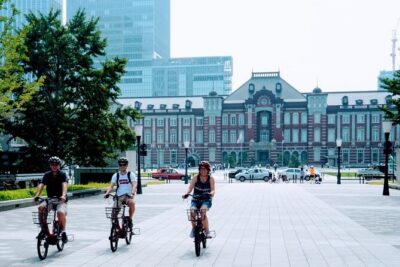 ★ 5.03h Tokyo E-Bike Tour: Hidden Gems, and Local Life with guideFrom $63
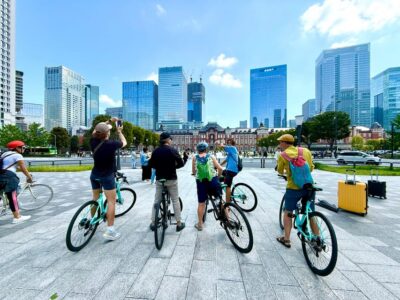 ★ 4.8Tokyo: 3-Hour Bike or E-Bike City Highlights TourFrom $453 hours
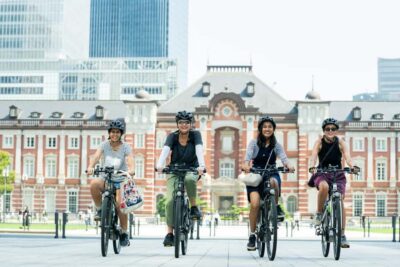 ★ 4.8Tokyo: 3-hour Guided E-Bike Tour of the City’s Hidden GemsFrom $65
 ★ 5.03-Hour Tokyo Private E-Bike Tour Starting from Your HotelFrom $145
 ★ 4.7Tokyo: 3-Hour Bike or E-Bike Tour of City’s Hidden GemsFrom $603 hours