Reviewed · TEMPLES & MEDITATION
Tokyo: Meiji Shrine Walking Tour — Shintoism & Imperial System
Meiji Shrine feels far removed from Tokyo’s traffic, yet this tour begins at Harajuku Station and reaches a quiet forest path within minutes. You’ll pass a giant cypress torii, learn how Shinto worship works, and see why this shrine matters to Japan’s modern imperial story.
In This Article
- Key points to know before you book
- From Harajuku Station into Meiji Shrine’s forest
- The big torii and the meaning of the approach
- Understanding Shinto at the main shrine
- The garden, café, and a calmer finish
- What the guide adds to the visit
- Is $21.22 good value for 90 minutes?
- Timing, transport, and practical limits
- Who will enjoy this Meiji Shrine walk?
- Should you book the Meiji Shrine Walking Tour?
- FAQ
- Where does the Meiji Shrine tour start?
- Where does the tour end?
- How long does the experience last?
- Is admission included?
- How many people can join the tour?
- Can I cancel for a refund?
I like the small-group limit of 15, which gives you a better chance to ask questions. I also like that a local guide puts everyday rituals, sake barrels, omikuji, ema, and omamori into context instead of leaving you to guess what they mean.
The main consideration is time. At about 90 minutes, this is a focused introduction rather than a leisurely survey of every corner. The garden and café add breathing room, but you should not expect a full museum-style history lesson.
Key points to know before you book
- A forest walk begins at Harajuku Station: The route quickly trades city noise for broad paths beneath trees.
- The giant cypress torii is a major photo and history stop: Its timber came from Taiwan, and its scale gives the approach real drama.
- Shinto customs are explained as you see them: Your guide covers purification, prayer, omikuji, ema, and shrine charms.
- The imperial connection is part of the lesson: Meiji Shrine is not only a peaceful green space, but also a place tied to Emperor Meiji and Empress Shoken.
- The tour ends near Mori no Terrace: You can finish with a drink, a light meal, or a look at shrine goods and exclusive items.
- The price is modest for a guided visit: At $21.22 per person, the value rests mainly in the explanation and small-group attention.
From Harajuku Station into Meiji Shrine’s forest
The meeting point is at Harajuku Station, 1 Chome-18 Jingumae, in Shibuya. That location is practical. You do not need to cross half of Tokyo to find the group, and the station is close to one of the shrine’s main approaches.
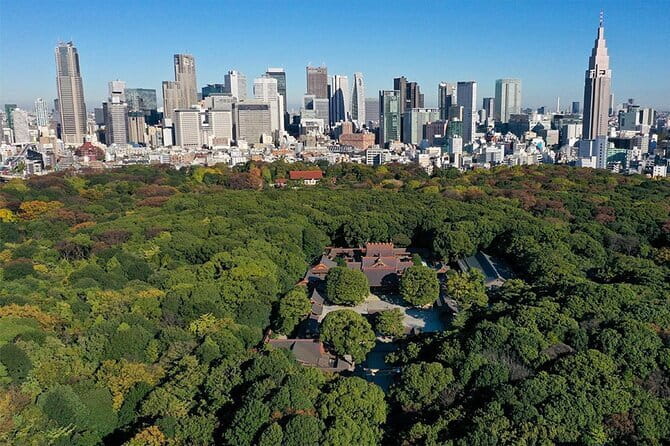
The contrast is the point. Harajuku is known for shops, crowds, and youthful street culture. Meiji Shrine begins with a broad entrance and a gradual shift into trees. The walk does not feel like a quick photo stop. It gives you time to slow down before reaching the main buildings.
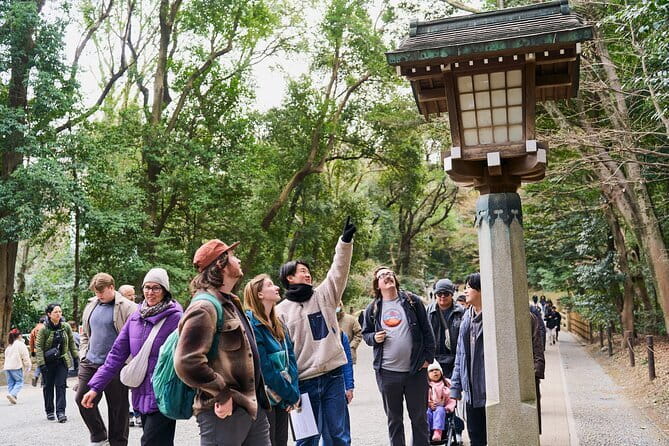
Your guide leads the group along a peaceful forest path toward the shrine. The route is simple enough for most people, and the tour is described as suitable for most participants. Still, you should expect steady walking for much of the 90 minutes, so comfortable shoes make sense.
One useful benefit of a guide appears right away: the forest is not treated as empty scenery. You learn how the approach to a Shinto shrine works and why the route feels deliberately calm. Without that explanation, it is easy to see only trees and gates. With it, the walk becomes part of the religious experience.
A few more Tokyo tours and experiences worth a look



The big torii and the meaning of the approach
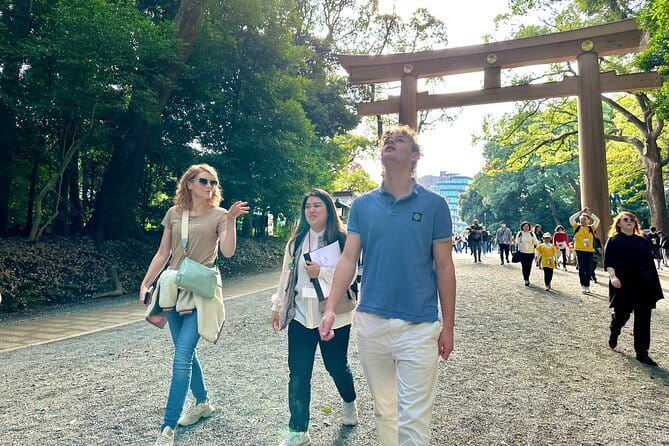
One of the first memorable stops is the large wooden torii. It is made from ancient cypress brought from Taiwan, and its size changes the mood of the walk. You pass beneath it rather than simply viewing it from a distance, which makes the structure feel more like a threshold than a monument.
The stop itself takes about five minutes, but the detail is worth hearing. A torii marks the entrance to sacred ground. It is not a gate in the same practical sense as a city entrance, and the guide can help you understand the difference between passing through a shrine boundary and entering an ordinary park.
This is also one of the better places to take a photograph, although the tour’s purpose is not simply to collect pictures. The useful part is learning to notice the sequence: city, torii, forest path, purification area, and main shrine. The order helps you read the site.
The path includes displays of sake barrels. These are a distinctive sight at Meiji Shrine, and they give the guide a chance to explain how offerings connect business, tradition, and worship. You also visit the purification area, where you can learn about the basic cleansing customs before approaching the shrine.
Do not worry if you have never visited a Shinto shrine. The tour is designed to explain the customs as they appear, which is far more helpful than receiving a long lecture before seeing anything.
Understanding Shinto at the main shrine
The main shrine is the heart of the visit, with roughly 30 minutes set aside for this part of the experience. Here you can offer a prayer and watch the rhythm of shrine worship at close range.
Your guide explains the customs without turning them into a test. That matters because Shinto rituals can seem formal if you do not know what you are seeing. Purification, respectful movement, prayer, and offerings all have a place in the visit, and the tour gives you a framework for taking part appropriately.
You can also draw a distinctive type of omikuji. Omikuji are fortunes or written guidance found at Japanese shrines, but the details vary by site. At Meiji Shrine, the format is a special feature of the visit, and your guide can explain why it differs from the fortune slips you might see elsewhere.
Another option is writing a wish on an ema, a wooden plaque. You can also look through the selection of omamori, or protective charms. These are not just souvenirs. They are small religious objects associated with particular hopes and forms of protection, so the explanation helps you choose with more understanding.
The shrine also connects the visit to Japan’s imperial system. Meiji Shrine honors Emperor Meiji and Empress Shoken, and the guide discusses how the site relates to the country’s modern imperial period. That subject can be hard to grasp from a quick visit alone. The tour gives you a basic path through the religious and political background without requiring prior knowledge.
This balance is one of the strongest reasons to book. You get the living practice of Shinto alongside an introduction to modern Japanese history. Neither side is treated as a museum display.
The garden, café, and a calmer finish

The garden is included in the experience, and admission is covered. The supplied schedule places time at the shrine and then about 15 minutes near Café Mori no Terrace, where you can find light meals and drinks in a quiet forest setting.
The café is a useful ending because it gives the group somewhere to pause after the walking portion. It also keeps the visit from ending abruptly at the shrine gate. You can use the time to ask a final question, check the shop, or simply sit among the trees.
The nearby gift shop sells charms, traditional goods, and items exclusive to Meiji Jingu. If you want an omamori or an ema, this is a convenient point to look again after hearing what the objects mean. The shop is not a substitute for the shrine visit, but it gives you a practical way to take home something connected to the place.
Keep your expectations reasonable about the café stop. Fifteen minutes is enough for a short break, not a full meal or a long café session. If you want to linger, you may need to continue on your own after the tour ends back at the meeting point.
What the guide adds to the visit

A walk through Meiji Shrine is easy to arrange independently. The grounds are a major Tokyo sight, and you can follow the main path without much trouble. The reason to pay $21.22 is the explanation.
The guide connects objects that otherwise look unrelated. The torii, sake barrels, purification area, omikuji, ema, and omamori become parts of one system. You also get help with the shrine’s connection to Emperor Meiji and Empress Shoken.
Several guide names associated with the experience include Yuuki, Nono, Nana, Keiko, Nonoka, and Nanami. The comments about these guides repeatedly focus on patience, friendly communication, clear English, enthusiasm, and careful answers to questions. That is especially useful for solo visitors, couples, or families who want to ask about customs without feeling awkward.
The age and personality of a guide can vary, but the repeated strength is personal attention. Yuuki is described as patient and detailed. Nana is praised for explaining Shinto, ritual, and history. Keiko is noted for her affection for the shrine and Japanese culture. Nonoka and Nanami are also described as friendly and well prepared.
You should still remember that a small group is not a private tour. With up to 15 people, the pace may need to accommodate different walking speeds and interests. The group size is far more manageable than a large coach tour, but it cannot promise an entirely personal conversation at every stop.
Other walking tours we've reviewed in Tokyo





Is $21.22 good value for 90 minutes?
At $21.22 per person, this is a fairly accessible way to add structure to a shrine visit. There is no expensive attraction ticket included for the main shrine itself, but admission to the Meiji Shrine Garden is included. The real purchase is the guide’s time and interpretation.
I see the value most clearly if this is your first Tokyo visit or your first encounter with Shinto. You can walk through Meiji Shrine for free, but you may miss the meaning of the purification area, the special omikuji, the sake barrels, and the imperial connection. The tour turns a scenic walk into a readable cultural visit.
The value is less clear if you already know Japanese shrine customs or prefer to move at your own pace. Ninety minutes gives you a set route and a fixed rhythm. You may want longer at the garden, more time for photographs, or a slower look at the shop.
The small-group format helps justify the fee. A maximum of 15 people leaves more room for questions than a mass tour, and the two available tour times make it easier to fit into a Tokyo day. The activity also has more than 20 bookings in a recent month, so this is not an obscure or difficult-to-arrange outing.
Timing, transport, and practical limits
The tour lasts about one hour and 30 minutes and ends back at the Harajuku meeting point. That makes it easy to pair with other activities in Shibuya or Harajuku, although you should allow extra time if you plan to eat, shop, or continue through the shrine grounds afterward.
The experience is near public transportation, with the start at Harajuku Station. The exact two tour times are not provided here, so check the booking page before you plan the rest of your day.
Mobile tickets are provided, and confirmation arrives at booking. Most people can participate, but the route includes walking through the shrine grounds and forest paths. If you have concerns about walking or need a specific accommodation, confirm details before paying.
Free cancellation is available when you cancel at least 24 hours before the local start time. Within 24 hours, the payment is not refunded, and changes are not accepted. That rule is worth noting if your Tokyo schedule is still moving around.
Who will enjoy this Meiji Shrine walk?

I would recommend it most strongly to first-time visitors who want cultural context without committing to a long formal tour. The pace is short, the meeting point is convenient, and the subject matter is broad enough to make the shrine more meaningful.
It also suits solo visitors. The small group gives you company, while the guide provides an easy way to ask questions about prayer, charms, and etiquette. The experience is also a good fit for families and couples who want a calm break from Tokyo’s commercial streets.
History and religion enthusiasts will get the most from the discussion of Shinto and the imperial system. You may also like it if you care more about understanding a place than simply photographing it.
I would be more cautious if you want a completely private experience, extensive garden time, or a tour lasting several hours. This is a well-shaped introduction, not an all-day study of Meiji Shrine.
Should you book the Meiji Shrine Walking Tour?
Book it if you want a friendly, compact introduction to Shinto and Japan’s imperial story, especially if Meiji Shrine is your first shrine visit. The forest approach, giant torii, rituals, garden access, and café finish give the 90 minutes a clear shape.
Skip it if you are happy exploring alone and already understand shrine customs. Otherwise, $21.22 is a reasonable price for turning a beautiful but potentially puzzling walk into a more informed visit. Schedule it early enough to enjoy Harajuku afterward, and leave room for a short pause at Mori no Terrace.
FAQ
Where does the Meiji Shrine tour start?
The tour starts at Harajuku Station, at 1 Chome-18 Jingumae, Shibuya, Tokyo 150-0001, Japan.
Where does the tour end?
The activity ends back at the meeting point.
How long does the experience last?
The walking tour lasts approximately one hour and 30 minutes.
Is admission included?
Admission to the Meiji Shrine Garden is included. The main Meiji Shrine stop has no admission ticket listed.
How many people can join the tour?
The tour has a maximum group size of 15 travelers.
Can I cancel for a refund?
Yes. You can cancel at least 24 hours before the local start time for a full refund. Cancellations or changes made within 24 hours are not refunded or accepted.
More Walking Tours in Tokyo
More Temples & Meditation in Tokyo



More tours in Tokyo we've reviewed










Temples & Meditation, compared.
 ★ 4.7Tokyo: Meiji Shrine, Asakusa, Skytree Bus Tour and CruiseFrom $12210 hours
 ★ 4.8Tokyo: Asakusa Walking Tour with Sensoji Temple VisitFrom $222 hours
 ★ 4.5Tokyo: Kamakura & Enoshima Day Trip including Temple TicketsFrom $589 hours - 570 minutes
 ★ 4.5Tokyo: Nikko Toshogu Shrine and Kegon Waterfall TourFrom $8410h 30m
 ★ 4.5Tokyo Panoramic 1 Day: Meiji Shrine, Asakusa, Odaiba and SKYTREE®From $85
 ★ 5.0Asakusa Senso-ji Temple and Old Tokyo Walking TourFrom $20