Reviewed · E-BIKES
Tokyo: 3-Hour Bike or E-Bike City Highlights Tour
Tokyo makes more sense from a bicycle seat. In three hours, you can move from Zojo-ji Temple and Shiba Park to the Imperial Palace, Tokyo Station, Aoyama, and Shibuya without spending much of the morning underground. The route mixes famous sights with quieter streets and lesser-known stops, so you get a quick feel for how the city fits together.
In This Article
- At a glance: five things worth knowing
- Why three hours on a bicycle works in Tokyo
- Starting near Commodore Perry in Shiba
- Zojo-ji Temple and Shiba Park
- Hibiya Park and the Imperial Palace area
- Tokyo Station, Ote-mon Gate, and Chidorigafuchi
- Akasaka Palace and the National Stadium
- A lesser-known stop before Aoyama
- Cat Street and the approach to Shibuya
- What the bikes and riding feel like
- Guides, pace, and the human side
- Weather, age limits, and who should book
- Booking value and practical details
- Should you book the Tokyo bike tour?
- FAQ
- How long is the Tokyo bike tour?
- Where does the tour start?
- Is an e-bike available?
- Are helmets included?
- What languages are offered?
- Who cannot join the tour?
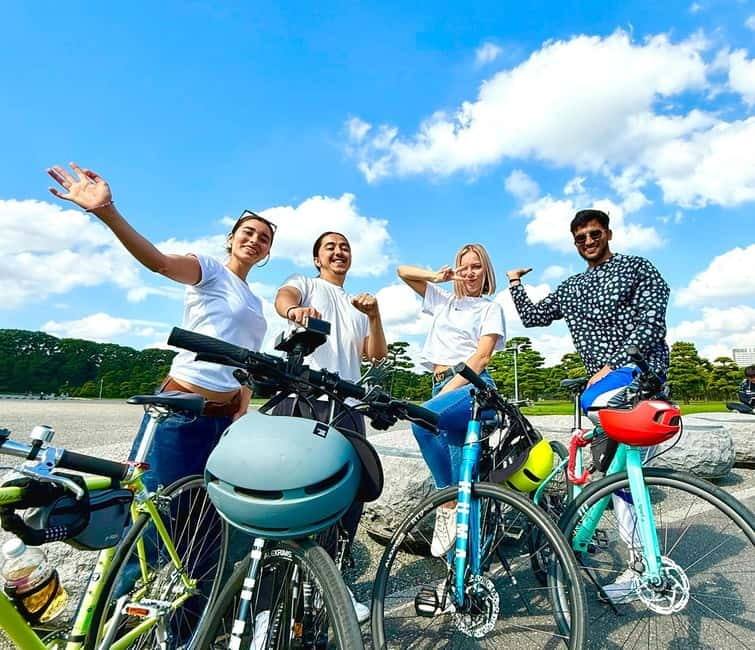
I like two things here: the small-group feel and friendly English-speaking guides, including Naoki, Atsu, Kosei, and Kay, who add stories and local suggestions; and the choice between a standard cross bike and an e-bike. The e-bike is a smart pick if you do not cycle often or want to save your energy for sightseeing.
The main consideration is that this is a real city ride, not a closed park circuit. You may move between sidewalks and roads, and you need to feel comfortable riding near traffic. Helmets are not included and cost ¥1,000 in cash.
At a glance: five things worth knowing
- The route covers a lot: Expect around 15 to 20 kilometers, depending on the group and route adjustments.
- You see Tokyo in layers: Temples, palace grounds, formal parks, fashionable streets, stadiums, and neon Shibuya all appear in one outing.
- E-bikes make the distance easier: They are especially useful if you lack stamina or do not cycle regularly.
- Guiding is a major strength: Guides such as Naoki, KJ, Rikuu, and Miguel are praised for safety, humor, local tips, and clear explanations.
- Traffic is part of the experience: The city is manageable by bicycle, but this tour suits riders who can confidently handle streets and changing surfaces.
Why three hours on a bicycle works in Tokyo
Tokyo is huge, and its sights are spread across several districts. On foot, you can spend half a day moving between only two major areas. On the train, you get there quickly but miss the changes between neighborhoods.
A bicycle gives you a useful middle ground. You cover serious ground, yet you still notice small shrines, side streets, office districts, tree-lined roads, and the way quiet residential areas sit close to major avenues. The tour is not built around long museum visits. Instead, it gives you short stops, useful explanations, and a moving picture of the city.
The pace is generally relaxed, but the distance is not trivial. Some riders describe the route as about 15 kilometers, while others estimate closer to 20. That difference likely reflects route changes, group pace, and the exact starting time. Plan on steady cycling for most of the three hours, with brief stops at major sights.
At $45 per person, the tour offers good value if you want orientation early in your stay. You get a bike, guide, local stories, a small pouch for your phone and wallet, and bike insurance. You are paying less for lengthy entrance visits and more for access to a broad slice of Tokyo in a short time.
Other cycling tours in Tokyo
Starting near Commodore Perry in Shiba
The meeting point is near the Statue of Commodore Perry, about a three-minute walk from Daimon Station’s A6 exit. This places you near Shiba Park and Tokyo Tower country, though Tokyo Tower is not listed as a formal stop on the route.
The start has a useful bit of context. Commodore Perry’s arrival is tied to the opening of Japan to wider foreign contact in the nineteenth century, so the meeting point begins the ride with a reminder that Tokyo has long been shaped by outside influence and rapid change.
You will meet the guide, choose your bike, and prepare for city riding. The standard bikes are high-quality cross bikes from Bianchi and Fuji. An e-bike is available as a separate booking choice. Bring comfortable clothes, water, and shoes that stay secure on the pedals.
Helmets are available for ¥1,000 each, paid in cash on site. Since helmets are not part of the listed inclusions, I would bring the cash and decide before the ride rather than discovering the extra fee at the start.
Zojo-ji Temple and Shiba Park
The first substantial stop is Zojo-ji Temple, with about 15 minutes for a visit and guide commentary. This is one of the tour’s best early contrasts. You begin among Tokyo’s roads and office buildings, then reach a temple compound with a much calmer feel.
Zojo-ji is closely tied to the Tokugawa shoguns, the military rulers who governed Japan during the Edo period. The temple’s setting near modern Tokyo makes the city’s old and new sides easy to see at once. You get time for photographs and a short explanation, but not enough for a full temple visit.
That short format is typical of the tour. You will see many places rather than study one place in detail. If your priority is religious architecture or quiet contemplation, plan a separate return visit to Zojo-ji.
Hibiya Park and the Imperial Palace area
The ride continues toward Hibiya Park, where the stop is brief, about three minutes. Hibiya is a useful pause between old Tokyo and the government and business districts around the Imperial Palace.
Next comes the Tokyo Imperial Palace, with roughly 15 minutes for photographs, a visit, and guided explanation. The palace grounds occupy the site of the former Edo Castle, and the moats, stone walls, and broad open spaces give you a sense of the scale of the old seat of power.
Do not expect access to the palace interiors on this tour. The value is in seeing the setting, hearing the basic story, and understanding the palace’s place in central Tokyo. The short visit also means you can enjoy the sight without giving up the rest of the route.
Tokyo Station, Ote-mon Gate, and Chidorigafuchi
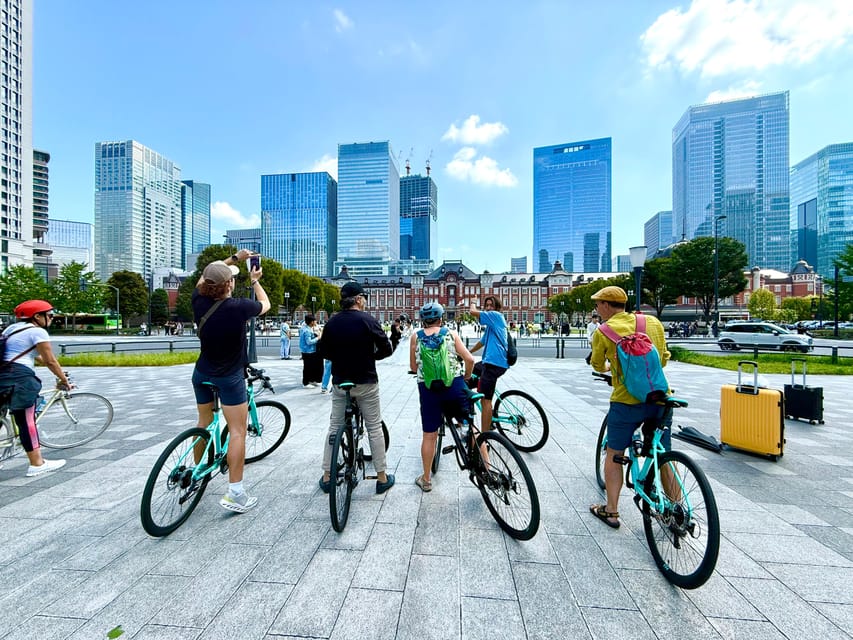
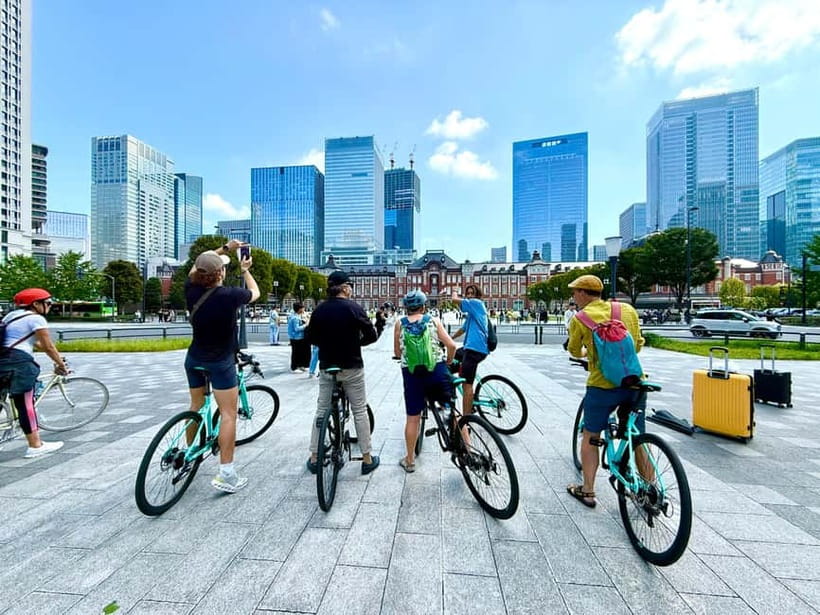
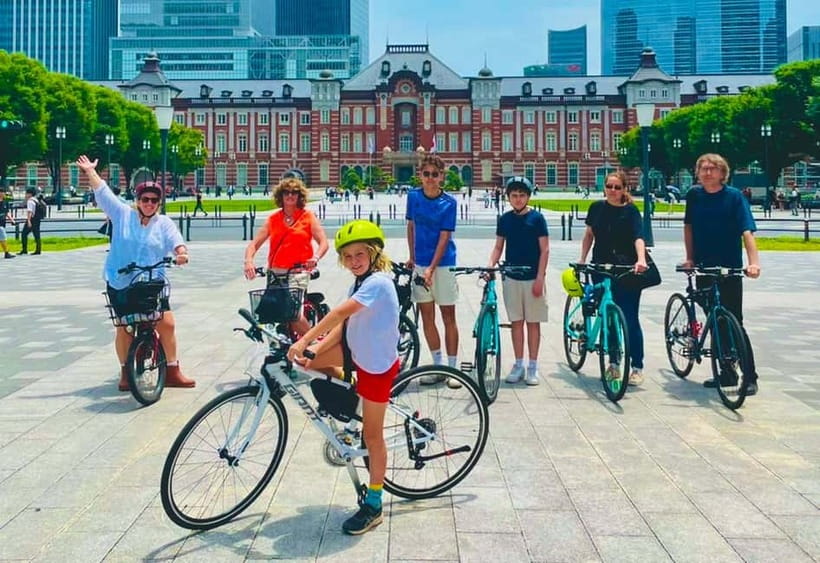
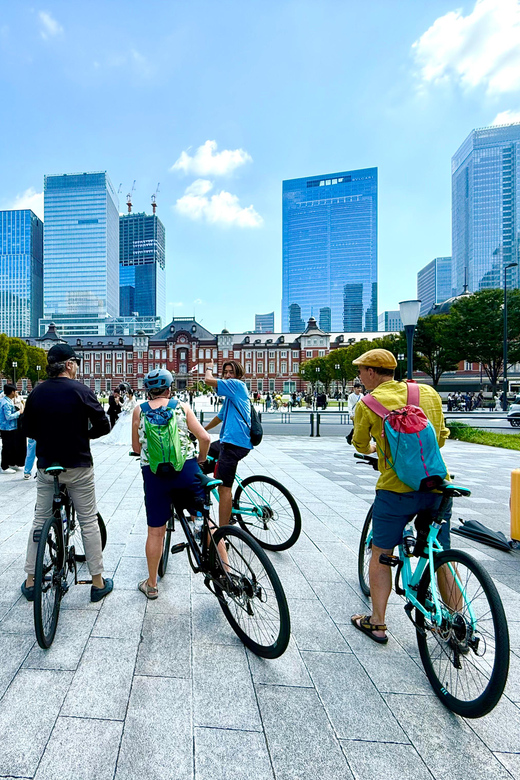
Tokyo Station follows, with about 10 minutes for photographs and sightseeing. The red-brick Marunouchi building provides one of the city’s most recognizable architectural views. It is a sharp change from the Imperial Palace’s walls and greenery, and the surrounding district shows Tokyo at its most polished and businesslike.
The group then passes Ote-mon Gate, one of the historic entrances associated with Edo Castle. Five minutes is enough for a photograph and a quick look at the construction, but not a detailed architectural study.
At Chidorigafuchi, you get another short break and photo stop. The area is known for its moat and seasonal trees, and it can feel remarkably open compared with the dense streets nearby. The appeal changes with the season, but the stop gives you a chance to pause, stretch, and let the guide connect the old castle area with present-day Tokyo.
This portion is one reason the bicycle format works. The stops are close enough to link naturally, while walking between them would take much longer.
Other city tours we've reviewed in Tokyo




Akasaka Palace and the National Stadium
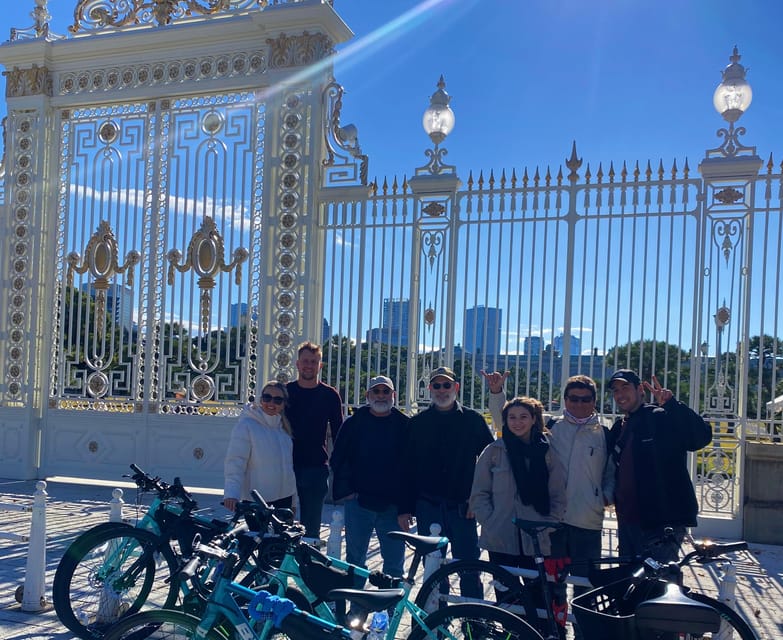
The State Guest House Akasaka Palace receives about 10 minutes for photographs. Its formal European-style design is unusual in Tokyo and offers a different look from the city’s temples, stations, and Japanese gates.
You then reach the New National Stadium, with another 10-minute visit and photo stop. Built for the Tokyo Olympic and Paralympic Games, the stadium represents the city’s recent international face. The route’s mix is effective here: you move from a historic temple and imperial grounds to a modern sports venue within the same morning.
The itinerary allows time for orientation and pictures, not an interior stadium tour. If you want to explore the venue in detail, treat this as a preview and return independently if access is available.
A lesser-known stop before Aoyama
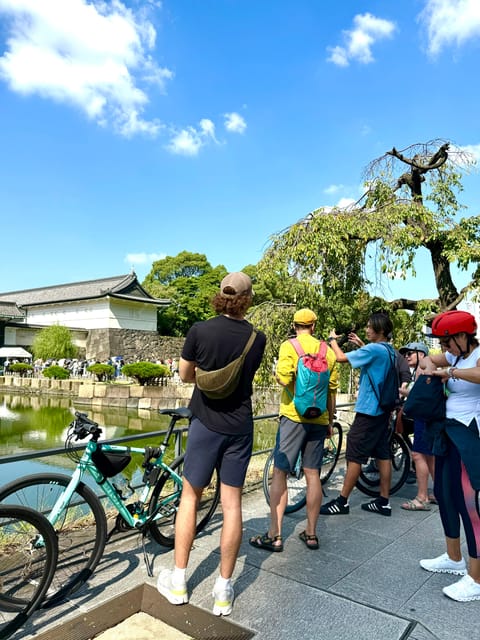
The tour includes a 15-minute stop described as a lesser-known spot. The exact place may vary, and the route can be modified, so you should not book this expecting one fixed attraction.
That flexibility is useful. It lets the guide respond to weather, traffic, group pace, and local conditions. It also gives the ride room for the kind of place you might not find by following a standard first-time Tokyo checklist.
Aoyama St. Grace Cathedral comes next, with only a few minutes for sightseeing and a photograph. The cathedral adds another change of mood and design before the ride moves into the fashionable streets around Omotesando and Shibuya.
Cat Street and the approach to Shibuya
Cat Street is a five-minute stop. The street is associated with independent shops, fashion, youth culture, and a more relaxed urban feel than the large department-store avenues nearby.
Five minutes will not let you shop properly, so consider this a quick orientation. The guide can point out the character of the area and give you a reason to return on foot later. I like this kind of stop because it shows how Tokyo’s districts have distinct personalities, even when they are close together.
The group then rides toward Shibuya Crossing. This is one of the tour’s most memorable sections, especially if you are seeing the crossing for the first time. You get around 10 minutes for photographs and guided explanation, enough to take in the famous intersection and watch the city’s organized rush from the edges.
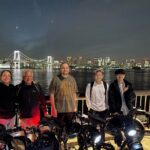
Some departures have included an evening ride through Shibuya, when the signs and crowds create a more dramatic scene. The exact atmosphere depends on your starting time, so check availability carefully if you specifically want nighttime views.
Tower Records Shibuya is the final sightseeing stop before the finish. It is a small but fitting marker of Shibuya’s music and youth culture, and it helps round out the route’s movement from temples and palace grounds to contemporary Tokyo.
What the bikes and riding feel like
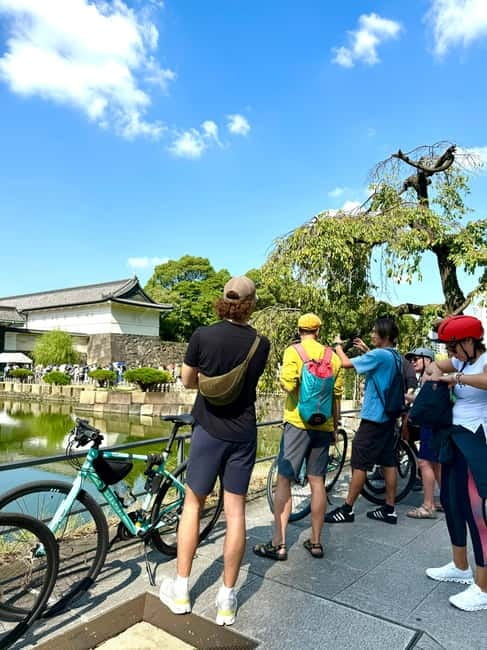
The standard bicycles are cross bikes from Bianchi and Fuji, rather than heavy city cruisers. They are suited to covering distance, but you should still expect active riding. One rider reported a slipping gear on one bicycle, while the wider experience points to equipment being in good working order. Tell the guide immediately if a gear, brake, or saddle feels wrong.
The e-bike option is not just a novelty. The route is long enough that assistance can make a real difference, particularly in warm weather or on the occasional incline. Several riders specifically found the e-bikes helpful after a tiring day or when they did not cycle often.
You will probably ride on a mixture of roads and sidewalks. One useful warning from the experience is that you may shift between the two, and traffic awareness matters. Tokyo generally has manageable traffic in the areas covered, but this is not a traffic-free ride.
The guide leads the group and checks on riders along the way. Small groups are easier to manage, and larger bookings may be split into several smaller groups for better movement through the city. Private and small-group options are available.
Guides, pace, and the human side
The guides are one of the strongest parts of this outing. Names repeatedly associated with warm, effective guiding include Naoki, Atsu, Kosei, Rikuu, KJ, Kay, Miguel, Keiji, Rinto, and Tyler.
The best guides do more than recite dates. They explain what you are seeing, answer questions, watch the group’s comfort, and offer suggestions for later in your trip. Naoki, in particular, is noted for combining historical context with conversation and practical recommendations.
The experience is more sightseeing ride than lecture. One rider appreciated the relaxed format but noted that it was not a talk-heavy tour. That is fair. You stop, listen, photograph, and ride on. If you want a detailed seminar at every site, this may feel light. If you want a friendly introduction that keeps moving, it should suit you well.
A quick convenience-store stop has also been part of some rides, including a brief 7-Eleven break. It is a small detail, but it can be welcome during a three-hour outing, especially in hot weather.
Weather, age limits, and who should book
The tour operates in conditions that can change the feel of the ride. Rain does not necessarily ruin it, and a guide may adjust the pace and keep the group together. Still, bring suitable clothing, and buy a poncho at a FamilyMart or 7-Eleven if rain is forecast.
Summer can be hot. Water and breathable clothing matter, and the e-bike option becomes more appealing. Autumn weather may be ideal for cycling, while evening departures can make Shibuya especially striking.
The tour is not suitable for children under 12, pregnant women, people with back problems, or anyone unable to ride a bicycle. The age rule matters for families: riders aged 12 and up may join, but every participant needs enough confidence for public-road cycling.
I would recommend it most strongly to:
- First-time Tokyo visitors who want a quick city orientation
- Solo visitors who want an easy social activity
- Families with older children and teens who already ride comfortably
- Active visitors who prefer seeing districts connect in real time
- People with limited stamina who choose the e-bike
I would be cautious if you dislike traffic, have balance or back problems, or want long, unhurried visits inside temples and monuments.
Booking value and practical details
At $45, the price is reasonable for three hours in a city where private guiding can become expensive quickly. You receive the bicycle, guide, local explanations, a mini pouch, and bike insurance. The helmet surcharge is the main extra cost listed, at ¥1,000 in cash per unit. Child seats cost ¥3,000 each, though the tour does not suit children under 12 according to the stated restrictions.
Free cancellation is available up to 24 hours before the activity for a full refund. You can also reserve now and pay later, which helps if your Tokyo schedule is still changing.
I would book this early in your stay, not because it is the only way to see Tokyo, but because it gives you a useful mental map. After riding from Shiba to Shibuya, you will have a better sense of the distances and may know which areas deserve a longer return visit.
Should you book the Tokyo bike tour?
Book it if you want to cover a wide area, hear local stories, and see Tokyo’s major contrasts in one morning or afternoon. The mix of Zojo-ji, the Imperial Palace, Tokyo Station, Akasaka, the National Stadium, Cat Street, and Shibuya is unusually broad for three hours.
Choose the e-bike if you are unsure about your stamina. Choose the standard bike if you cycle regularly and want more exercise. Bring cash for a helmet, expect some road riding, and treat the short stops as introductions rather than full visits.
I would skip it only if cycling in traffic makes you tense or if your main goal is slow sightseeing at one or two sites. For most confident riders, this is an efficient and enjoyable way to get your bearings fast in a very large city.
FAQ
How long is the Tokyo bike tour?
The tour lasts three hours. The route covers approximately 15 to 20 kilometers, depending on the group and route.
Where does the tour start?
You meet near the Statue of Commodore Perry, about a three-minute walk from Daimon Station’s A6 exit.
Is an e-bike available?
Yes. You can select an e-bike when booking. It is recommended if you do not cycle often, lack stamina, or are not comfortable riding longer distances.
Are helmets included?
No. Helmets are available on site for ¥1,000 per unit, payable in cash.
What languages are offered?
The tour is available in English and Japanese. English-speaking guides are provided.
Who cannot join the tour?
The tour is not suitable for children under 12, pregnant women, people with back problems, people who cannot ride a bicycle, or anyone unable to manage city cycling.
More E-Bikes in Tokyo
More City Tours in Tokyo
More Cycling Tours in Tokyo

More tours in Tokyo we've reviewed












E-Bikes, compared.
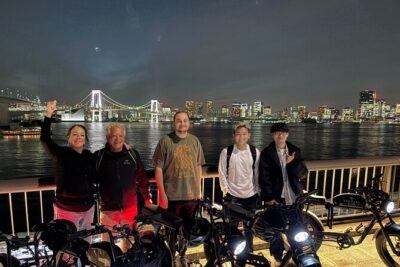 ★ 5.0Tokyo Top Highlights 3h Guided E-bike TourFrom $63
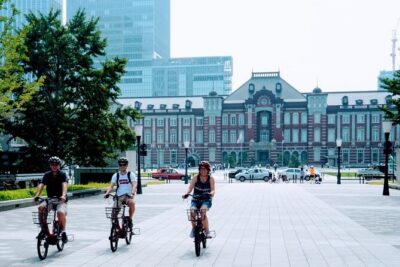 ★ 5.03h Tokyo E-Bike Tour: Hidden Gems, and Local Life with guideFrom $63
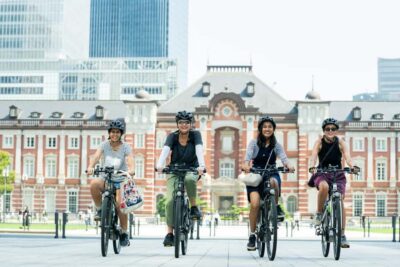 ★ 4.8Tokyo: 3-hour Guided E-Bike Tour of the City’s Hidden GemsFrom $65
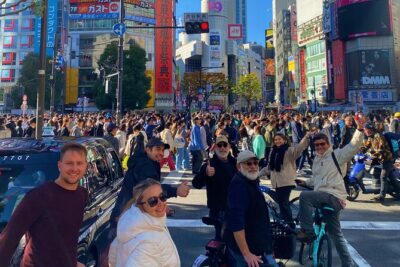 ★ 5.0Tokyo: 3-Hour Bike/E-Bike Tour of the City’s HighlightsFrom $63
 ★ 5.03-Hour Tokyo Private E-Bike Tour Starting from Your HotelFrom $145
 ★ 4.7Tokyo: 3-Hour Bike or E-Bike Tour of City’s Hidden GemsFrom $603 hours