Reviewed · TOKYO FOOD TOURS
Tokyo West-Side Cycling & Food Tour
Tokyo’s best cycling here is not about famous sights. It is about slipping behind the signs and department stores into Koenji, Nakano, and Asagaya, where people park bicycles, shop, eat, work, and live. On this three-and-a-half-hour ride, you follow quiet lanes and the Zenpukuji River on a sturdy Japanese mamachari bicycle.
In This Article
- Key points at a glance
- Why this west-side ride feels different
- Starting at Koenji Station
- Riding the back streets of Nakano and Koenji
- The Zenpukuji River and a slower pace
- Snacks that explain more than a checklist of sights
- Lunch with local office workers
- What Andy adds to the experience
- The bicycles, distance, and comfort level
- Group size and the social side
- Who should book this Tokyo cycling tour
- Booking, timing, and cancellation details
- Should you book the Tokyo West-Side Cycling and Food Tour?
- FAQ
- How long does the Tokyo West-Side Cycling and Food Tour last?
- Where does the tour begin and end?
- How far do you ride?
- Do I need urban cycling experience?
- Is there a minimum height or are helmets provided?
- What food is included?
- What happens if the weather is bad?
I like the small maximum group of eight, which gives guide Andy room to answer questions and keep the ride together. I also like that the $99.49 price includes snacks, drinks, lunch, the bicycle, and cycling liability insurance. The catch is simple: you need to be comfortable riding 12 to 15 kilometers through narrow streets, uneven surfaces, and occasional crowds.
Key points at a glance
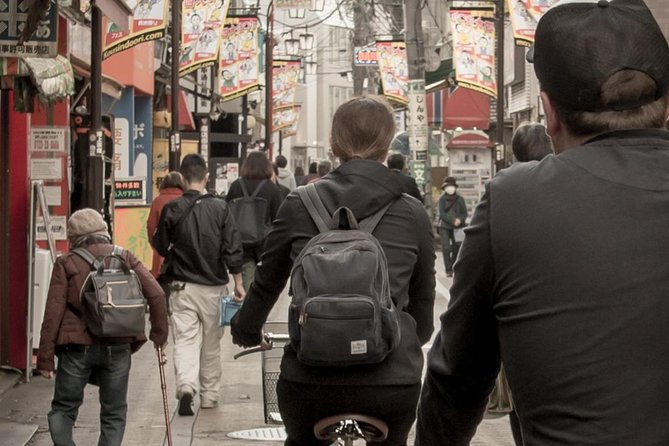
- Ride a real Japanese mamachari: These practical city bicycles have front baskets and are kept in good working order, even if some creak or squeak.
- See three everyday neighborhoods: Koenji, Nakano, and Asagaya offer a calmer side of Tokyo away from Shibuya and Shinjuku.
- Follow the Zenpukuji River: Riverside paths provide a welcome break from the tighter back streets.
- Eat as you go: Included local snacks and a Japanese-style lunch make this both a cycling and food outing.
- Learn how Tokyo works: Andy explains housing, schooling, religion, bicycle parking, food, and daily routines.
- Plan for an active morning or afternoon: The ride covers roughly 7.5 to 9.5 miles and usually lasts 3.5 to 4 hours.
Why this west-side ride feels different
Tokyo can feel like a city of major stations. You emerge from Shinjuku or Shibuya into crowds, tall buildings, bright signs, and a steady stream of commuters. This outing takes you somewhere else. The point is not to collect landmarks, but to notice the small systems that make ordinary Tokyo run.
You pedal through residential lanes, local shopping areas, and streets that most first-time visitors have no reason to find. The route links Nakano, Koenji, and Asagaya, three areas with their own character but a shared sense of daily neighborhood life. You might see small homes, local businesses, bicycle racks, temples, schools, and quiet corners that are easy to pass by on a train.
That local focus is the tour’s main strength. Andy has lived in Japan for more than 20 years and brings an easy, conversational style to the ride. He is originally from Melbourne, and his role is part guide, part host, and part translator of everyday customs. He explains what you are seeing without turning the ride into a formal lecture.
This is especially useful early in a Tokyo visit. You can ask questions about food, etiquette, transport, neighborhoods, and Japanese routines, then use those answers during the rest of your trip. The experience is also a good counterweight to visits to major attractions.
A few more Tokyo tours and experiences worth a look

Starting at Koenji Station
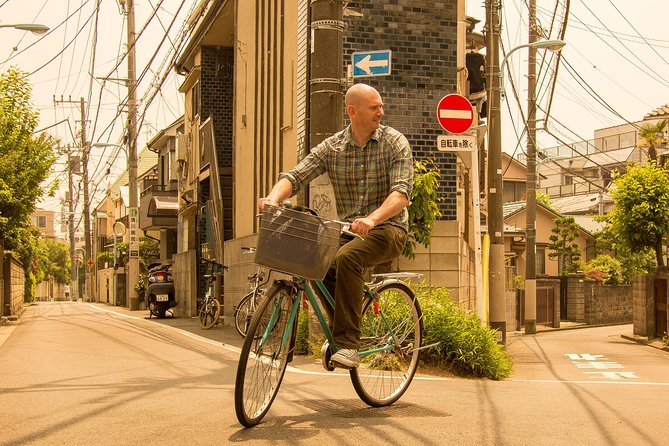
The meeting point is near Koenji Station, at 4-chōme-48-2 Kōenjiminami in Suginami City. The activity returns to the same meeting point, so you do not need to solve a transport puzzle at the end.
The start in Koenji makes sense. The area is well known for independent shops, music culture, small eateries, and a strong local identity, but the ride is not built around formal sightseeing stops. You should arrive ready to get on a bicycle rather than expecting a walking tour of the station area.
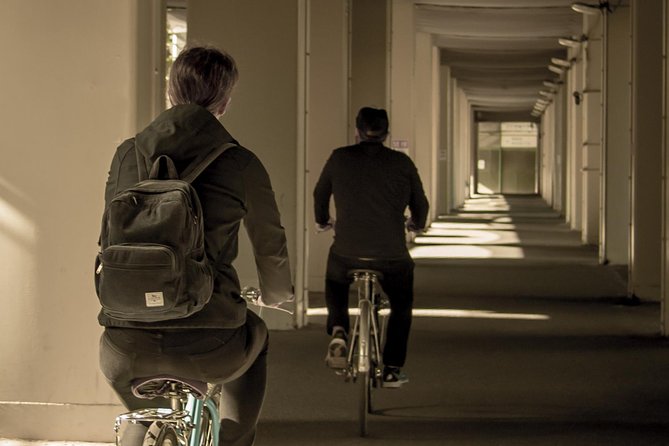
After introductions, you are matched with a salvaged Japanese mamachari. These are the upright bicycles commonly used for short city trips in Japan. They are not sleek road bikes or sporty hybrids. They are simple, practical machines, and their front baskets can carry a standard-size backpack.
That design suits the route. An upright riding position lets you look around rather than stare at the pavement, and the basket keeps your hands free. The bicycles are described as well maintained, though the occasional creak is part of their personality. Helmets are available for everyone if requested, so ask for one when booking or before setting off.
Riding the back streets of Nakano and Koenji
The first part of the route uses twisting neighborhood streets. This is where your riding ability matters most. Tokyo’s side roads can be narrow, and you may need to slow down near pedestrians, parked bicycles, corners, and other traffic. The ride is not presented as difficult, and the route is mainly flat, but it is still urban cycling rather than a carefree path through a park.
You should be able to start, stop, turn, and maintain control around other people. Basic cycling experience is not enough if you are uneasy on crowded streets. The operator asks participants to be competent riding in an urban setting and comfortable covering 12 to 15 kilometers.
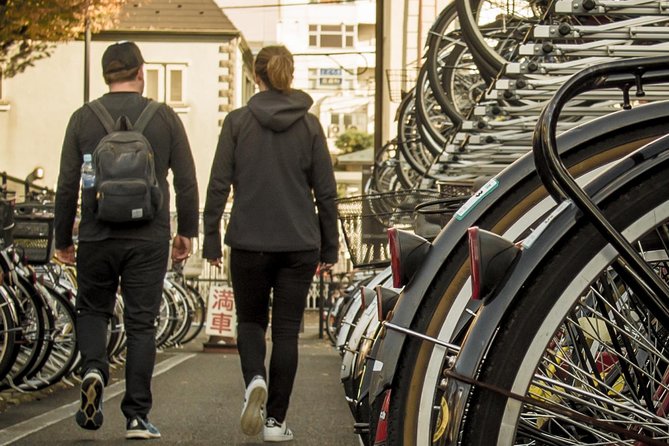
The reward is the chance to notice details you would miss from a train. Andy talks about the neighborhoods as you move through them, adding context about housing, schooling, religion, local habits, and the way residents use public space. You also learn practical things, such as how bicycle parking systems work. One stop may involve trying Tokyo’s bicycle parking system yourself, which sounds mundane until you realize how much city life depends on orderly parking.
This portion of the tour also gives you a better sense of scale. Tokyo is huge, but many west-side neighborhoods feel surprisingly intimate at street level. A train journey jumps between stations. A bicycle connects the spaces between them.
The Zenpukuji River and a slower pace
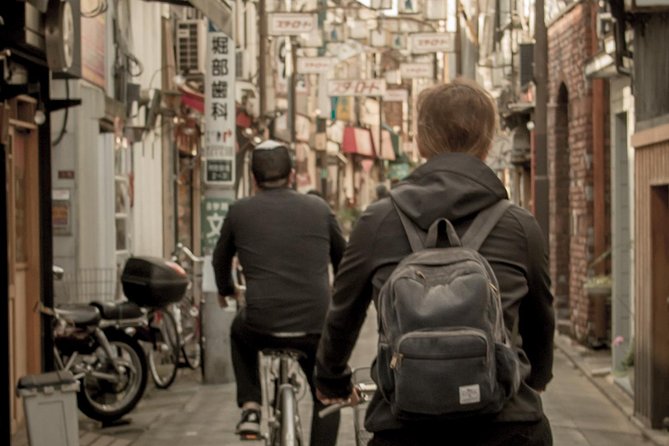
The route reaches the Zenpukuji River, where riverside paths provide a change from the tight urban lanes. The river section is one of the more scenic parts of the outing, but it is not a grand nature excursion. You are still in Tokyo, with the city close by.
I like this change of pace. After navigating back streets, a riverside stretch lets the group spread out a little and ride more comfortably. It also shows how Tokyo’s waterways can serve as everyday recreation corridors rather than just features on a map.
Weather will affect this part of the ride most clearly. The tour operates in different seasons and may proceed in light rain, with basic ponchos provided. Still, this is an outdoor activity, and poor conditions can lead to a cancellation, a new date, or a full refund. Bring clothing that can handle a change in weather, and do not assume that a wet forecast guarantees either a cancellation or a dry ride.
Snacks that explain more than a checklist of sights
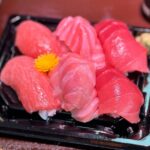
Food is not an extra tacked onto the cycling. It is one of the ways the guide introduces local life. Along the route, you stop for a tailored selection of popular Japanese snacks and drinks. The exact choices can vary, and the focus is on ordinary local eating rather than expensive restaurants.
That distinction matters. You are not being taken to a famous destination restaurant or a polished tasting menu. You are trying foods that you might not recognize, know how to order, or feel confident choosing on your own. Andy explains what you are eating and answers questions about the ingredients and customs around it.
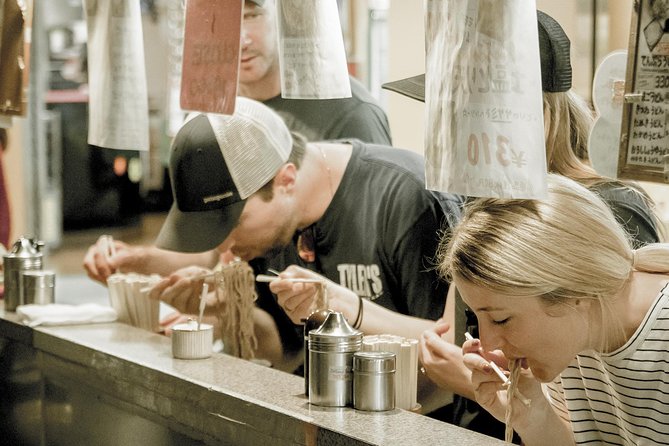
Several parts of the experience are built around small acts of participation. You may find yourself sharing counter space with local office workers at lunch, learning how a bicycle parking system works, or trying a snack from a neighborhood shop. These moments can tell you more about the rhythm of Tokyo than another hour spent photographing a major crossing.
Japanese food can be difficult for people with strict dietary needs. Meat and seafood are common, and dashi, a stock made with ingredients that can include fish, appears in many dishes. The tour visits typical local eateries, so personal tastes, allergies, and dietary restrictions may not be easy to manage. If you have serious food restrictions, contact the operator before booking rather than hoping the stops can be changed on the day.
A few more Tokyo tours and experiences worth a look


Lunch with local office workers
The included lunch is Japanese style, but this is not a fine-dining experience. You may be eating at a compact local place, with the group sharing limited counter space alongside people on a work break. That setting is part of the appeal, especially if you want a normal neighborhood meal rather than a restaurant designed for international visitors.
You should expect lunch to be practical and social. The group pauses, eats, talks, and gets back on the bicycles. The pace may change depending on how quickly everyone eats, so the advertised three-and-a-half-hour duration is an estimate. A 3.5 to 4 hour outing is a more realistic planning window.
The meal also adds value to the price. At $99.49 per person, this is not the cheapest way to spend a few hours in Tokyo. But you are paying for a bicycle, a local guide, several food stops, lunch, drinks, a small group, and a route that would be hard to reproduce without local knowledge. If you were already planning to buy lunch and snacks, the difference becomes easier to justify.
The value is strongest for people who want interpretation. If you simply want to rent a bicycle and ride independently, this tour will cost more than necessary. If you want someone to handle the route, explain local habits, select food, and keep the group moving, the package is more convincing.
What Andy adds to the experience
The guide can make or break a neighborhood ride. Here, Andy’s long residence in Japan is central to the experience. He speaks fluent English and keeps the tone friendly and informal. That helps during a tour where the main subject is not one famous monument, but the way people live.
You can expect plenty of chances to ask questions. The most useful topics are likely to be the ones that come up naturally: why homes and streets are arranged as they are, how children get to school, how people use bicycles, what certain foods contain, and why a neighborhood feels different from another part of Tokyo.
Andy also gives practical help beyond the cycling itself. Clear directions to the meeting point and advice about what to do after the outing are useful, especially if this is your first day in Tokyo. The tour’s social feel suits people who enjoy conversation rather than wearing headphones and following a silent guide.
The experience is not ideal if you want a tightly scripted historical tour. You will not spend the morning at Tokyo’s major sights, and there is no promise of a long stop at a landmark. Think of Andy as your local interpreter on two wheels.
The bicycles, distance, and comfort level
The mamachari bicycles are Japanese sized, so height matters. Participants should be over 140 centimeters, or about 4 feet 7 inches, to ride comfortably. The upright frame and front basket are practical, but they do not turn the ride into a luxury cycling experience.
The route is mainly flat, which makes the distance manageable for many people. You still need stamina for roughly 12 to 15 kilometers, plus repeated starts and stops. Uneven surfaces and narrow lanes require attention even when the terrain is not hilly.
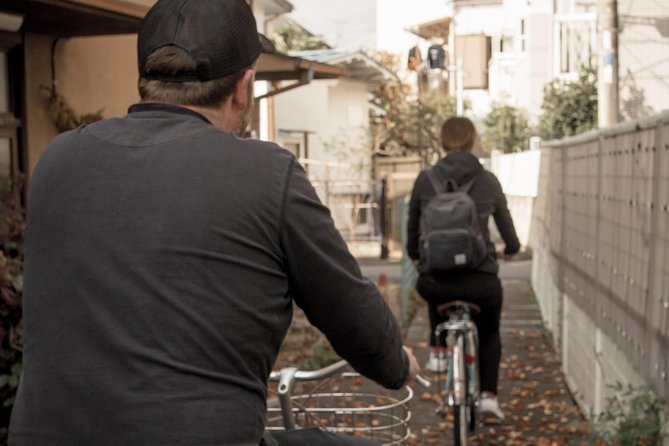
Wear comfortable clothing and shoes suitable for pedaling and walking. Keep your bag small enough for the front basket, since it can hold a standard backpack but not a large suitcase. Ask for a helmet if you want one. Most people who can ride confidently in an urban setting should be able to participate, but a nervous or inexperienced cyclist may find the traffic conditions tiring.
Families can enjoy the outing if everyone meets the height and cycling requirements. An 11-year-old has completed the ride successfully, but age alone is not the deciding factor. Your child needs to control a bicycle around narrow streets and remain with the group.
Group size and the social side
The maximum group size is eight. That is a useful limit for this kind of route. A larger group would be harder to move through back streets, and it would be less practical to fit into a compact lunch spot.
You will spend much of the ride talking with the guide and the other people in your group. That makes the experience more social than a standard bike rental. It also means the pace is not entirely yours. Stops, meal speed, weather, and the cycling ability of the group can affect the finish time.
Group discounts are available, though the amount is not specified. If you are traveling with family or friends, check the current booking price before assuming the discount applies to every date. The small group is a bigger benefit than the discount for many people, since it keeps the outing personal without making it private.
Who should book this Tokyo cycling tour
I would choose this experience if you have already seen, or plan to see, Tokyo’s headline districts and want a different angle. It is a particularly good fit for:
- People who enjoy exploring cities by bicycle
- Visitors who want insight into ordinary Japanese life
- Families with confident older children
- First-time visitors who want to ask practical questions
- Repeat visitors looking for neighborhoods beyond the usual route
- Food-minded people willing to try typical local dishes
- Anyone who prefers a small, social group to a large bus tour
I would think twice if you dislike cycling in traffic, need strict control over every ingredient, or want major sightseeing landmarks. The tour is also a poor match for anyone seeking a fast, athletic ride. The pace is built around conversation, food, stops, and local discovery.
Booking, timing, and cancellation details
The activity is booked an average of 57 days ahead, so reserving early is sensible if your Tokyo dates are fixed. You receive confirmation at booking, and the experience is available with a mobile ticket.
Free cancellation is available up to 24 hours before the start time for a full refund. Changes or cancellations inside that 24-hour window are not accepted for a refund. If bad weather forces the operator to cancel, you can choose another date or receive a full refund. The same applies if the minimum number of participants is not met.
Leave room in your schedule after the ride. The stated duration is about 3 hours 30 minutes, but the practical estimate is 3.5 to 4 hours. Food stops, group speed, weather, and the time spent cycling can all shift the finish.
Should you book the Tokyo West-Side Cycling and Food Tour?
Book it if you want Tokyo as a lived-in city, not only Tokyo as a collection of famous views. The combination of a small group, local food, a mostly flat route, and Andy’s long experience in Japan gives the outing a clear purpose.
At $99.49, the cost is fair when you count the included lunch, snacks, drinks, bicycle, guide, and route planning. It is less appealing if you would rather cycle alone or cannot handle a 12 to 15 kilometer urban ride.
For a first day in Tokyo, it can help you get your bearings and learn how the city works. For a repeat visit, it offers a useful reason to spend time in Nakano, Koenji, and Asagaya. Just bring a flexible attitude, a reasonable level of cycling confidence, and an appetite for food you may not recognize at first glance.
FAQ
How long does the Tokyo West-Side Cycling and Food Tour last?
The advertised duration is about 3 hours 30 minutes. In practice, you should allow roughly 3.5 to 4 hours because group size, weather, eating speed, and cycling pace can affect the finish time.
Where does the tour begin and end?
The tour begins near Kōenji Station at 4-chōme-48-2 Kōenjiminami, Suginami City, Tokyo. It ends back at the same meeting point.
How far do you ride?
You should expect to cycle roughly 12 to 15 kilometers, or about 7.5 to 9.5 miles, through narrow streets, riverside paths, and uneven surfaces.
Do I need urban cycling experience?
Yes. You are expected to be competent riding a bicycle in an urban environment, including narrow and potentially crowded streets. The route is mainly flat, but you still need to control the bicycle confidently.
Is there a minimum height or are helmets provided?
Participants should be over 140 centimeters, or approximately 4 feet 7 inches, to ride the Japanese-sized bicycles comfortably. Helmets can be provided for all participants on request.
What food is included?
The outing includes local-style snacks, drinks, and a Japanese-style lunch. Japanese food commonly contains meat and seafood, and dashi may be used, so strict dietary requirements and allergies may be difficult to accommodate at typical local eateries.
What happens if the weather is bad?
The tour may proceed in rain, and basic ponchos are provided. If the operator cancels because of poor weather, you can select another date or receive a full refund.
More Cycling Tours in Tokyo
More Food Experiences in Tokyo
More Tokyo Food Tours in Tokyo
More tours in Tokyo we've reviewed












Tokyo Food Tours, compared.
 ★ 5.0Tokyo: Shinjuku Food Tour (13 Dishes at 4 Local Eateries)From $86
 ★ 4.9Tokyo: Shinjuku Food Tour (13 Dishes and 4 Eateries)From $97
 ★ 5.0Tokyo Night Foodie Tour in Shinjuku – Seasonal Sushi, Wagyu BeefFrom $111
 ★ 5.0Eat and Drink Like a Local: Tokyo Ueno Food Tour-Taverns&RamenFrom $95
 ★ 5.0Tokyo: Shibuya Food Tour (13 dishes and 4 Eateries)From $77
Tokyo: Shinjuku Food Tour – 15 Dishes, 3 Drinks, 4 EateriesFrom $723 hours
★ 5.0Tokyo: Shibuya Food Tour (13 dishes and 4 Eateries)From $77
Tokyo: Shinjuku Food Tour – 15 Dishes, 3 Drinks, 4 EateriesFrom $723 hours