Reviewed · CYCLING TOURS
Tokyo Great Cycling Tour
Tokyo reveals itself best at street level, and this six-hour cycling tour gives you a practical way to cover ground without being sealed inside a bus. You ride from Tsukiji Jogai Market to Zojo-ji Temple, Meiji Jingu Shrine, and the Imperial Palace, with city neighborhoods linking the major sights.
In This Article
- Key points at a glance
- Why a bicycle works so well in Tokyo
- Starting at the Tokyo Great Tours office
- Tsukiji Jogai Market: Tokyo’s food district after the inner market moved
- Zojo-ji Temple and the Tokyo Tower backdrop
- From expensive apartments to office towers
- The cemetery hidden among fashionable districts
- Meiji Jingu Shrine: a major Shinto stop
- The Imperial Palace and the final major view
- What the guides add to the ride
- Is $99.49 a fair price?
- Fitness, heat, and practical limits
- Who will enjoy this Tokyo cycling tour?
- Should you book the Tokyo Great Cycling Tour?
- FAQ
- How long is the Tokyo Great Cycling Tour?
- What time does the tour start?
- Where does the tour begin?
- Where does the tour end?
- How many people can join the tour?
- What sights are included?
- Does the tour require physical fitness?
- Is admission included for the listed stops?
- Can the tour be canceled because of weather?
- Can I cancel for a full refund?
I like the small maximum group of 12, which gives the guides room to watch the road and keep the experience personal. I also like the mix of old and new: a Buddhist temple framed by Tokyo Tower, a quiet cemetery amid fashionable districts, and the Imperial Palace alongside modern high-rises. The main drawback is simple: six hours on a bicycle requires a moderate level of fitness, and hot or wet weather can change the day.
Key points at a glance
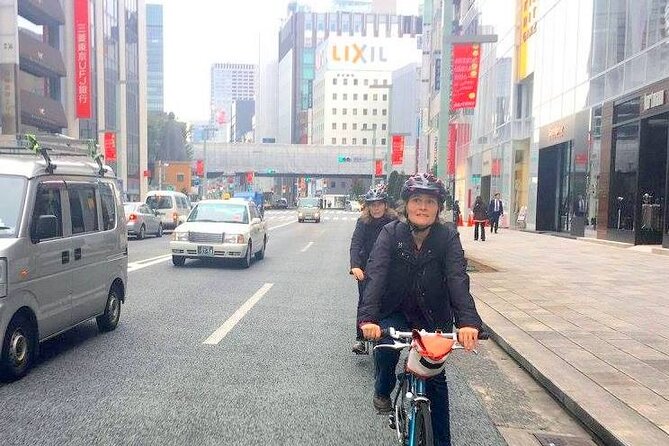
- Tsukiji still has plenty to see: The outer market remains active with local shoppers and visitors, even after the inner market moved to Toyosu.
- A rare Tokyo contrast: Zojo-ji Temple offers traditional architecture with Tokyo Tower rising behind it.
- Small groups matter: The tour caps participation at 12 people, making road safety and guide attention easier.
- The route covers several sides of Tokyo: Expect markets, temples, shrines, office districts, expensive apartment areas, a cemetery, and the Imperial Palace.
- Guides named by past guests include Toshi, Nick, and Naoko: Their role includes route guidance, safety, and practical care during the ride.
- Weather can affect the plan: A hot day once led the group to replace a picnic with lunch at an izakaya.
Why a bicycle works so well in Tokyo
Tokyo is huge. Walking gives you close contact with the city, but it limits how many districts you can connect in one day. A bus covers distance, yet it can miss the small streets and local atmosphere between major sights. A bicycle gives you a middle path.
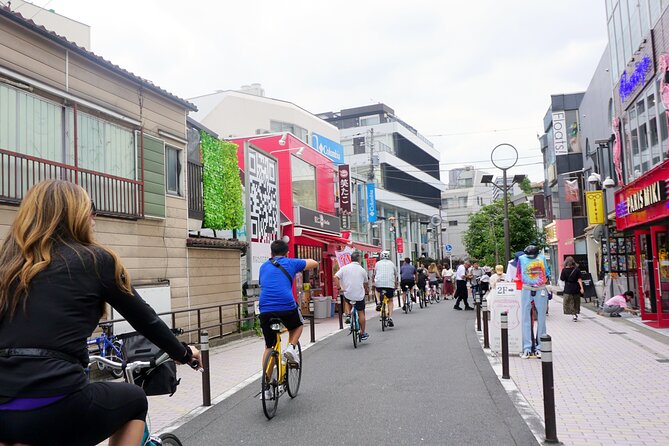
You can move from a market district to a temple, then continue through dense commercial areas without spending the day waiting for traffic or changing trains. You also see the transitions. One block may hold older buildings and small businesses, while the next brings tall offices, luxury apartments, or a broad shrine approach.
This is not a racing tour. The appeal is coverage and context. You pedal at a pace that lets you take in the city, stop at key places, and hear explanations about Japanese history and culture along the way. The route also reaches places that a large sightseeing bus cannot easily access.
The six-hour length is important. This is a full half-day experience, not a quick introduction. You should expect the ride to take real energy, especially in warm weather. The payoff is a broad look at central Tokyo without trying to squeeze every sight into a frantic checklist.
Other cycling tours in Tokyo
Starting at the Tokyo Great Tours office
The meeting point is Tokyo Great Tours at 1-chome-3-2 Shinkawa in Chuo City. The start time is 9:00 a.m., and the activity ends back at the same meeting point.
The return to the starting point is useful when you are planning the rest of your day. You do not have to finish at an unfamiliar district with a bicycle route to retrace. The meeting point is near public transportation, which also makes the early start more manageable.
The tour is offered with a mobile ticket, and confirmation is sent within 48 hours of booking if space is available. Since the group limit is 12, it is sensible to reserve ahead. The average booking lead time is 46 days, which suggests that dates can fill well before arrival.
You should arrive ready to ride rather than treating the morning as a casual photo walk. Wear clothing that allows easy movement and plan for six hours outdoors. The provided information does not specify bike type, helmet arrangements, or a detailed food plan, so those are sensible points to confirm before booking if they matter to you.
Tsukiji Jogai Market: Tokyo’s food district after the inner market moved
The first stop is Tsukiji Jogai Market, the outer market area that remains active after the inner wholesale market moved to Toyosu. You get about 15 minutes here, with no admission charge.
That short stop gives you a taste rather than a full food tour. The appeal is the local rhythm: shoppers, small food businesses, and the familiar energy of one of Tokyo’s best-known market districts. It is a good opening because it places you in a working part of the city before the route moves toward temples and imperial sites.
Do not expect unlimited time to browse every stall. Fifteen minutes passes quickly, especially if you are looking at food, taking photographs, and listening to the guide. If Tsukiji is a major priority for you, consider returning on your own at another time. Here, the market is one part of a much wider day.
Zojo-ji Temple and the Tokyo Tower backdrop
Zojo-ji Temple is the first major historical contrast on the route. You spend about 15 minutes at this old Buddhist temple, again without an admission fee.
The memorable feature is the view: traditional temple buildings with Tokyo Tower behind them. Few scenes explain modern Tokyo as neatly. The city does not replace its older places; it often builds around them, creating sharp visual contrasts that are easy to miss from a train window.
The short visit works well for orientation and photographs, but it will not allow a long examination of the temple grounds. Think of it as a focused stop within a moving city tour. You get the setting, the cultural context, and the chance to understand how an old religious site fits into present-day Tokyo.
From expensive apartments to office towers
Between the named sights, the route passes areas filled with tall apartment buildings, shopping centers, and office towers. These stretches may not appear on a standard first-time sightseeing list, but they help you understand Tokyo as a place where people live and work, not just a collection of famous monuments.
This is one of the strongest reasons to choose a bicycle. You are not jumping from one isolated attraction to another. You see how districts change as you ride through them. Modern development, high rents, retail streets, and business buildings become part of the story.
The tradeoff is that this portion may feel less dramatic than a shrine or temple. If you want nonstop landmark views, you may find some of the urban riding ordinary. I see its value in the connections. A guide can point out the character of each area while you move through it, and the route gives you a broader sense of Tokyo’s scale.

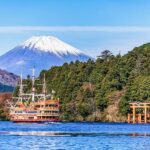
The cemetery hidden among fashionable districts
A cemetery situated amid fashionable areas provides another unexpected change of mood. The supplied route details do not name the cemetery, so you should not book this stop expecting a particular famous burial site.
Its value is in the setting. Tokyo’s polished shopping and residential districts do not erase older spaces of remembrance. A cemetery in the middle of expensive apartments and commercial buildings shows how different uses of land sit close together in a crowded capital.
This is also a quieter pause in a long ride. You may appreciate the contrast after the market and city streets. As with several stops, the visit lasts about 15 minutes, so the experience is a brief look rather than a long historical tour.
Meiji Jingu Shrine: a major Shinto stop
Meiji Jingu Shrine is described as Tokyo’s most popular Shinto shrine, and the tour allows about 20 minutes here. There is no admission charge.
This is the longest scheduled stop, which makes sense. Meiji Jingu is a central place to discuss Shinto traditions and Tokyo’s connection to Japan’s imperial past. The shrine also gives the day a different cultural focus after the Buddhist setting at Zojo-ji.
Twenty minutes is enough to see the main atmosphere and hear an introduction, but it is not enough for a slow, complete visit. If you want to linger, study every detail, or walk farther through the grounds, you may need to return separately. The tour’s purpose is to place the shrine within a larger Tokyo route rather than give it the entire morning.
I like the pairing of Zojo-ji and Meiji Jingu. You are not seeing only one type of sacred site. The Buddhist temple and Shinto shrine help you compare two important parts of Japanese religious life while also seeing how each fits into the modern capital.
The Imperial Palace and the final major view
The route reaches the Imperial Palace, where the Emperor and Empress live. The planned stop lasts about 15 minutes.
The palace is one of Tokyo’s central symbols, but you should keep your expectations clear. The information provided describes a stop at the Imperial Palace, not admission to private interiors or a palace tour. Treat this as an exterior visit and a chance to learn about the site from your guide.
The palace stop works well near the end because it brings together many themes from the ride: imperial history, public space, old traditions, and modern Tokyo surrounding them. After riding through office districts and residential areas, the palace gives you a different sense of the city’s center.
Again, 15 minutes is a brief visit. You will get an introduction and a chance to look around, but not a full exploration of every palace-related area. The route then returns to the original meeting point.
What the guides add to the ride
The guides named in the supplied comments include Toshi, Nick, and Naoko. Their duties go beyond leading the route. You can expect attention to cycling safety and general welfare, along with explanations of Japanese history, culture, and the neighborhoods you pass.
One account describes Toshi taking particularly good care of a rider during very hot weather. Another highlights Naoko and Nick for watching safety and welfare. Those details matter because a long city ride feels much better when the guide is alert to the group rather than focused only on reaching the next stop.
The route may also be adjusted when conditions call for it. On one hot day, a planned picnic changed to lunch at an izakaya. The supplied details do not promise an izakaya meal or a fixed lunch arrangement every day, so do not book this as a food tour. Still, the change shows a useful willingness to adapt to weather and comfort.
Specific route choices can also vary. One rider refers to Route B, suggesting that the operator may use different route versions. Ask about the route available on your date if a certain set of sights matters most to you.
Is $99.49 a fair price?
The price is $99.49 per person. For six hours, a small group capped at 12, a guide, and a route linking several distant parts of Tokyo, I consider that a reasonable mid-range price.
You are paying for more than bicycle time. The value comes from the planning, the route, the guide’s attention, and the ability to connect sights that would take more effort by public transportation. If you tried to recreate the day independently, the train fares might be modest, but you would need to plan the sequence, navigate each district, manage the bicycle, and provide your own cultural context.
The price is less compelling if you only want to visit Tsukiji, Meiji Jingu, or the Imperial Palace. Each stop is relatively short, and admission to the listed sights is free. The tour earns its cost through coverage and interpretation, not through paid entry tickets.
I would also compare the price with your energy level. A person who enjoys active sightseeing may find six hours excellent value. Someone who prefers long meals, quiet museum visits, or slow shrine walks may get more from a shorter activity.
Fitness, heat, and practical limits
The operator requires a moderate level of physical fitness. That is the clearest practical warning. You need to be comfortable riding for much of the day through city streets, even though the supplied details do not give a mileage figure or describe the exact pace.
Weather matters. The experience requires good conditions and can be canceled for poor weather, with a different date or a full refund offered. Hot weather does not necessarily cancel the tour, but it can make the ride harder and may lead to changes such as moving a picnic indoors.
I would not choose this tour if you are unsure about cycling for six hours. The group size is small, but that does not remove the physical demand. If you can ride comfortably and want to cover more ground than walking allows, the format makes good sense.
The tour is also not designed for complete independence. You follow a planned route and move with the group. That is helpful in a large city, though it means you cannot spend as long as you like at every sight.
Who will enjoy this Tokyo cycling tour?
I would recommend it most strongly to first-time Tokyo visitors who want a broad introduction in one day. You see a market, Buddhist temple, Shinto shrine, imperial site, cemetery, and modern business and residential districts. That range gives you useful bearings for later exploring.
It also suits repeat visitors who have already seen the main central sights but want to understand how they connect. The less famous stretches between the stops may be just as useful as the landmarks.
Families with older children may appreciate the active format, though the supplied information does not give a minimum age. Couples, solo riders, and small groups can also benefit from the 12-person limit. If you are traveling with someone who has only limited cycling ability, think carefully before booking.
The tour is less suitable for someone seeking a deep visit to one attraction, a dedicated culinary experience, or a relaxed day indoors. It is a moving overview, with several short stops and plenty of time in the saddle.
Should you book the Tokyo Great Cycling Tour?
Book it if you want to see a lot of Tokyo in about six hours and you are comfortable cycling for most of that time. The strongest reasons are the small group, the mix of old and new districts, and the chance to reach city corners that buses cannot handle well.
I would especially choose it early in a Tokyo stay. The route gives you a practical sense of how the central districts fit together, and you can return later to Tsukiji, Meiji Jingu, or the Imperial Palace for longer visits.
Skip it if heat, rain, or sustained cycling will spoil your day. The listed sights are free, so the $99.49 price makes sense only if you value the guide, route design, safety support, and time saved connecting them. For an active visitor, this is one of the more efficient ways to get a first look at Tokyo beyond the usual station-to-station routine.
FAQ
How long is the Tokyo Great Cycling Tour?
The experience lasts approximately six hours.
What time does the tour start?
The tour starts at 9:00 a.m.
Where does the tour begin?
It begins at Tokyo Great Tours, 1-chome-3-2 Shinkawa, Chuo City, Tokyo 104-0033, Japan.
Where does the tour end?
The activity ends back at the original meeting point.
How many people can join the tour?
The maximum group size is 12 travelers.
What sights are included?
The route includes Tsukiji Jogai Market, Zojo-ji Temple, Meiji Jingu Shrine, and the Imperial Palace. It also passes modern apartment, shopping, and office districts and a cemetery in a fashionable area.
Does the tour require physical fitness?
Yes. Participants should have a moderate level of physical fitness.
Is admission included for the listed stops?
The supplied details list admission as free for Tsukiji Jogai Market, Zojo-ji Temple, Meiji Jingu Shrine, and the Imperial Palace.
Can the tour be canceled because of weather?
Yes. The experience requires good weather. If poor weather causes a cancellation, you can receive a different date or a full refund.
Can I cancel for a full refund?
You can cancel for a full refund if you do so at least 24 hours before the local start time. Cancellations or changes made less than 24 hours before the start are not refunded or accepted.
More Cycling Tours in Tokyo
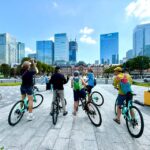


More tours in Tokyo we've reviewed












Cycling Tours, compared.
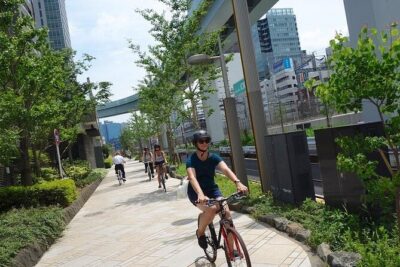 ★ 5.0Tokyo Guided Small-Group Biking TourFrom $106
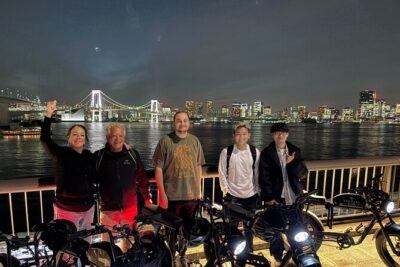 ★ 5.0Tokyo Top Highlights 3h Guided E-bike TourFrom $63
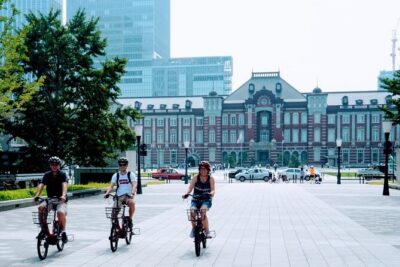 ★ 5.03h Tokyo E-Bike Tour: Hidden Gems, and Local Life with guideFrom $63
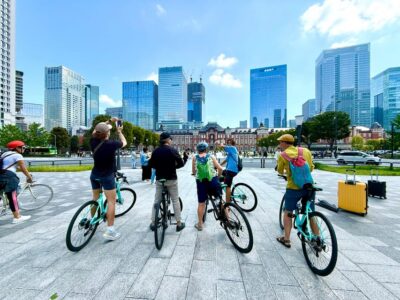 ★ 4.8Tokyo: 3-Hour Bike or E-Bike City Highlights TourFrom $453 hours
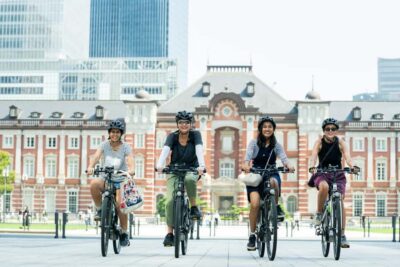 ★ 4.8Tokyo: 3-hour Guided E-Bike Tour of the City’s Hidden GemsFrom $65
 ★ 5.0Tokyo West-Side Cycling & Food TourFrom $99