Reviewed · E-BIKES
3h Tokyo E-Bike Tour: Hidden Gems, and Local Life with guide
Tokyo reveals itself quickly from an e-bike. In three hours, you can move from Kanda’s tiny bars to Tokyo Station, palace moats, market lanes, or Asakusa’s temple district without spending half the day underground. The electric assist helps you cover ground, but you still travel slowly enough to notice neighborhood life.
In This Article
- Key points to know before you ride
- Why an e-bike works so well in central Tokyo
- Kanda gives you a local starting point
- Morning ride: Tokyo Station and the Imperial Palace
- Ginza back streets and Tsukiji’s food lanes
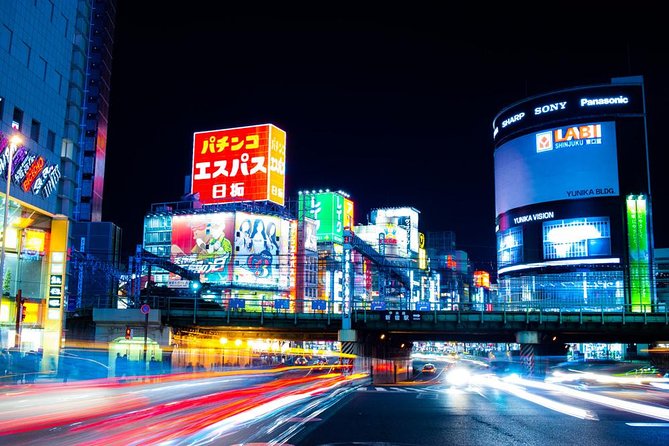
- Afternoon ride: Akihabara and Tokyo’s modern subculture
- Kappabashi, Asakusa, and the route toward sumo country
- Guides make the short route more useful
- The real drawback: this is city cycling
- Who gets the best value for $63.01?
- Booking details that affect your plans
- Should you book the Cycling Holiday Tokyo ride?
- FAQ
- How long does the Tokyo e-bike tour last?
- Where does the tour meet?
- Are morning and afternoon routes the same?
- What is included in the tour price?
- Can children join the tour?
- What happens if it rains?
- How large is the group?
I like the small groups of up to six and the range of guides, including Yo, Jenny, Kazu, Take, Ted, and Yoshiko. I also like the useful mix of famous sights and ordinary back streets. The main thing to consider is traffic: you need to be comfortable riding on busy city streets and keeping up with the group.
Key points to know before you ride
- Two different routes: Morning rides focus on Tokyo Station, the Imperial Palace, Ginza, Tsukiji, and local streets. Afternoon rides head toward Akihabara, Kappabashi, Asakusa, Ryogoku, and Nihonbashi.
- Electric assist makes a difference: The bikes are simple to operate and take much of the strain out of riding in Tokyo’s heat and busy streets.
- A useful first-day activity: You cover enough ground to mark places you may want to revisit on foot or by train.
- Local context comes with the stops: Guides explain station history, temple customs, food areas, subcultures, sumo, and everyday neighborhoods.
- Small but real riding requirements: You must already know how to ride a bicycle, be at least 12 years old, and measure at least 147 centimeters tall.
- Weather matters: Rain can cancel the tour, and extreme summer heat can also lead to a cancellation or an early return.
Why an e-bike works so well in central Tokyo
Tokyo is easy to reach by train, but the railway network can hide the connections between neighborhoods. An e-bike gives you a better sense of how the city fits together. You see the distance between Kanda and Ginza, understand how the Imperial Palace sits at the center of the capital, and pass from major avenues into quiet residential lanes.
The electric assist is the practical reason this tour works. You still pedal, but the motor reduces the effort, especially on a hot day or after several hours of sightseeing. The front basket is useful for a small bag and water, and rental helmets are included. You also receive insurance, simple rain gear, winter gloves, and summer cooling items when appropriate.
This is not a race. The guide leads the group, sets the pace, and stops for photographs and explanations. You should still be ready to ride in city traffic, watch pedestrians, and stay close enough to follow the route. One useful warning: it is possible to fall behind, particularly if you stop looking around or hesitate at an intersection.
The shop is one minute from the west exit of JR Kanda Station. It has a restroom, waiting room, and luggage storage for nonvaluable items, which makes the start easier if you are carrying bags between hotels or train journeys.
Other cycling tours in Tokyo
Kanda gives you a local starting point
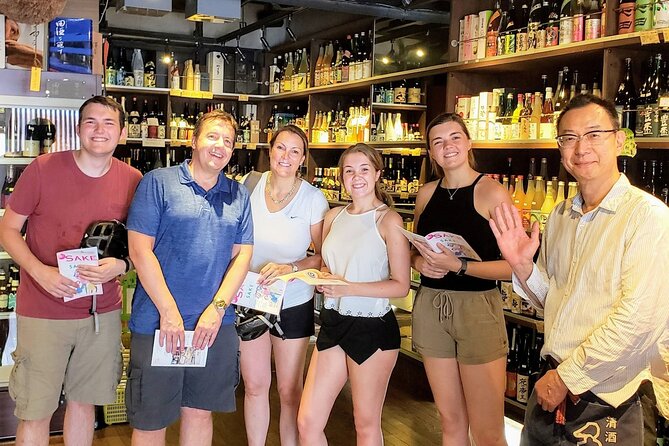
The tour begins in Kanda, a compact downtown area shaped by office workers and small Japanese-style bars. It is not the polished postcard version of Tokyo. That is exactly why it works as a starting point.
You get an early look at the sort of narrow streets and neighborhood businesses that can be easy to miss from a train. The guide uses this area to explain local life before the route moves toward the larger sights. Allow about 10 minutes here, though the actual riding and stopping pattern can change with traffic and road conditions.
The route is also practical for orientation. Starting near Kanda Station places you close to central Tokyo, so the ride can reach several distinct districts within the three-hour window.
Morning ride: Tokyo Station and the Imperial Palace
The morning route begins by cutting through Tokyo’s financial and business center. Here, modern office buildings create a sharp contrast with Kanda’s smaller streets. You get a good sense of Tokyo’s scale without being confined to one plaza or observation deck.
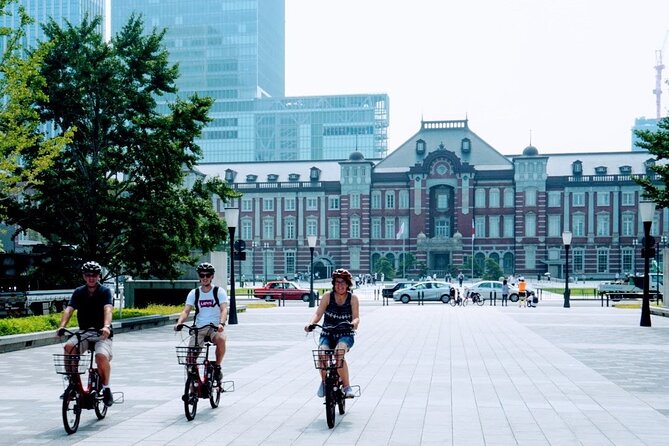
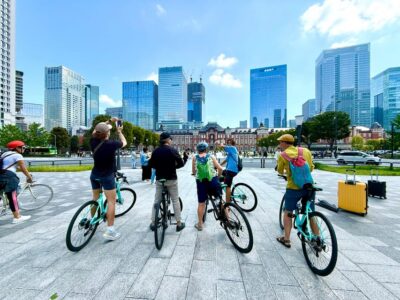
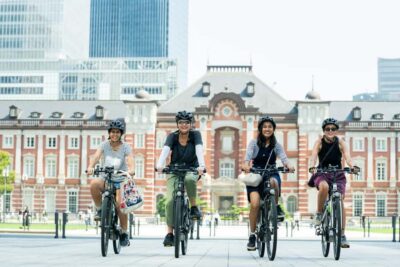
At Tokyo Station, the main view is the Marunouchi building from Gyoko-dori Street. The guide explains the station’s history and gives you time for photographs. The stop is brief, about five minutes, so it is best to have your camera ready rather than expect a long visit inside the station.
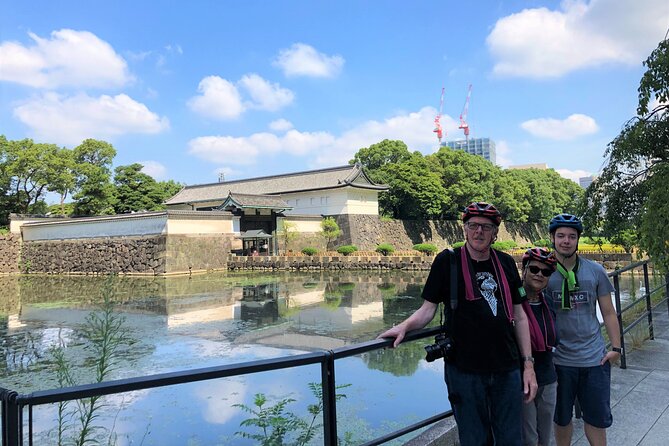
The Imperial Palace area offers a different mood. At Otemon Gate, you look across the moat toward Fujimi-yagura Tower. The scene is open and formal, with stone walls, water, and traditional castle architecture surrounded by the modern capital.
You also pass through or near the Imperial Palace gardens and Sakuradamon, a famous traditional castle gate. The palace grounds cover a large area in the middle of the city, so the bike gives you a practical way to appreciate their size. A walk through every garden section would take much longer, while the cycling route provides a broad view in a short time.
The value here is not simply checking off the palace. You see how imperial spaces, office towers, busy roads, and public parks sit beside one another. The guide’s explanations help connect the views instead of leaving you with a series of attractive but unrelated stops.
Ginza back streets and Tsukiji’s food lanes
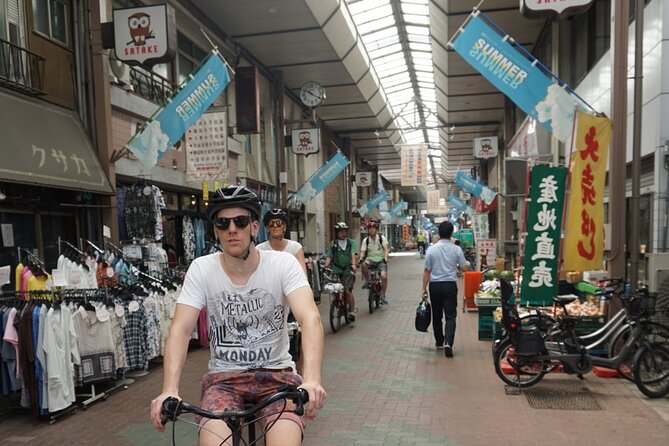
After the palace area, the morning route may pass through Ginza. Depending on traffic and conditions, you may ride the main streets or use back lanes. The main avenues show Tokyo’s luxury retail district, while the smaller streets offer a more ordinary view of the area.
The back-street option is especially useful if you want practical food ideas. The route can point out less expensive and more local places near Ginza, rather than leaving you with only the district’s department stores and luxury brands. Food is not included, so treat this as an introduction to places you can return to later.
Tsukiji Outer Market is another short stop, usually around 10 minutes. Small, old-fashioned food shops line the streets, selling ingredients and prepared foods. The market is a better fit for a quick look than a full meal during this tour. You will not have unlimited time to browse, eat, and shop, so consider returning separately if you want to explore at a slower pace.
The ride then uses local streets and passages that are more practical by bicycle than by car. This portion may be the most rewarding for you if ordinary Tokyo life interests you more than landmark photographs. You see how the city changes from major commercial districts to smaller streets, with the e-bike making those transitions possible in one outing.
The morning route finishes at Nihonbashi Bridge, one of Tokyo’s historic centers. Road distances in Japan traditionally begin from Nihonbashi, giving the bridge an importance beyond its appearance. It is a short stop, about five minutes, but the guide’s explanation gives the place useful context.
Afternoon ride: Akihabara and Tokyo’s modern subculture
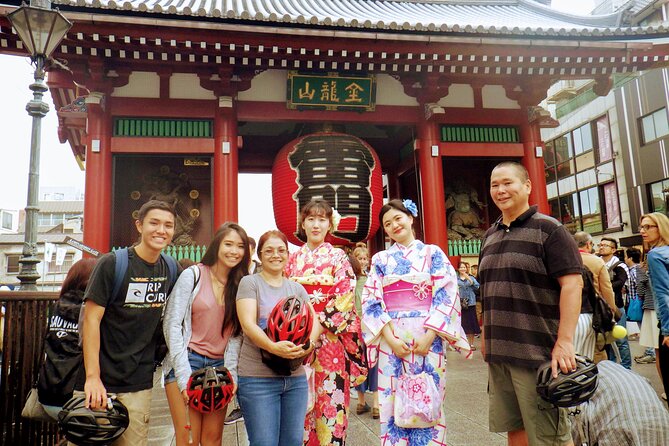
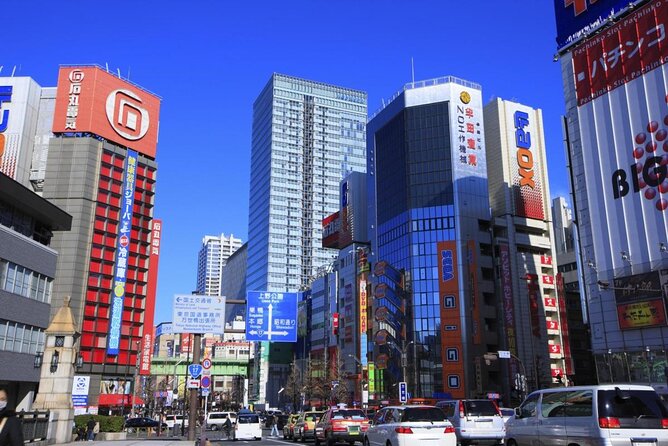
The afternoon route takes a different direction. Akihabara is Tokyo’s center for youth culture, electronics, games, anime, and manga. The area is famous for maid cafés, but the guide provides more than that one familiar reference point.
You should expect a brief introduction, not a long shopping session. The stop is about five minutes, so it works best as a snapshot of the district’s character. If you want to browse stores or spend time in a café, plan to return after the tour.
Akihabara also shows how quickly Tokyo can shift from traditional districts to highly specialized urban culture. A few minutes of cycling can take you from old commercial streets into a district known around the world for its modern Japanese subcultures.
Other guided tours in Tokyo


Kappabashi, Asakusa, and the route toward sumo country
Kappabashi Street, also called Kappabashi Dogugai, is lined with shops selling kitchen equipment, professional cooking tools, Japanese knives, and other restaurant supplies. It is one of the better stops for a small purchase with a clear connection to Japanese food culture.
The schedule allows about 10 minutes to look around and shop. That is enough to browse, but not enough for a long search through every store. If you are interested in knives or cooking tools, note the shops you like and return later with more time.
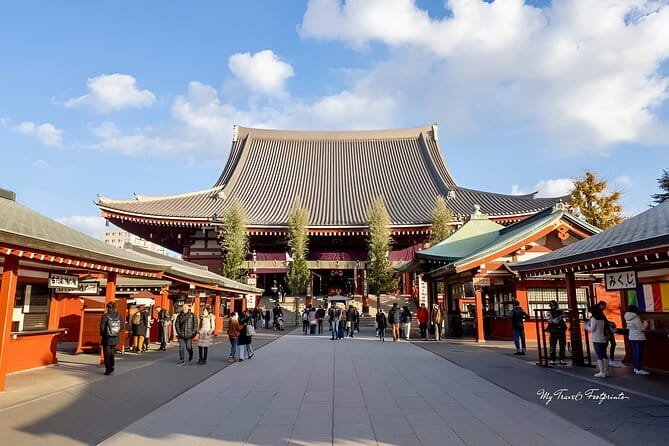
Asakusa follows with one of Tokyo’s most recognizable traditional settings. The district is home to the city’s oldest temple and is an essential first-time stop. The bike lets you approach the area as part of a larger city route, rather than spending the entire morning or afternoon in one temple district.
The guide can also explain temple customs and rituals. This is a useful detail for the rest of your Japan trip, since knowing how to approach a temple, where to bow, and how the rituals work makes later visits less confusing.
From Asakusa, the route continues toward Ryogoku, the area associated with sumo wrestling. If timing is fortunate, you might see actual sumo wrestlers. That possibility is not guaranteed, but the neighborhood connection gives the ride a strong local theme.
The afternoon route also includes Nihonbashi Bridge, connecting the traditional center of the city with the modern districts you have already seen. As with the morning tour, the stop is short, but it helps tie the route together.
Guides make the short route more useful
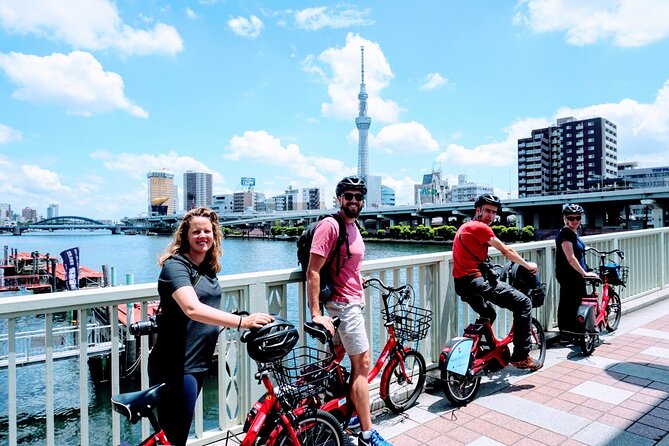
The guide is a major part of the experience. You are not simply following a rental bike route on your phone. Guides such as Yo, Jenny, Kazu, Take, Ted, and Yoshiko have different personalities, but the experience depends on clear instructions, regular stops, and explanations that work for both adults and teenagers.
Specific strengths to expect include:
- History at the right moments: Tokyo Station, palace gates, Nihonbashi, and temple areas make more sense when the guide explains why they matter.
- Practical local advice: Guides may point out food places, smaller streets, and areas worth revisiting after the ride.
- Safety attention: The guide keeps the group together and watches traffic, which matters in central Tokyo.
- Flexible conversation: Questions about food, neighborhoods, temple customs, and Japanese culture fit naturally into the stops.
The small-group format helps. The maximum is six people per booking, though other participants may join you. That is small enough for the guide to give personal attention and keep the ride manageable, while still allowing solo visitors to join if at least two people are booked for the departure.
The real drawback: this is city cycling
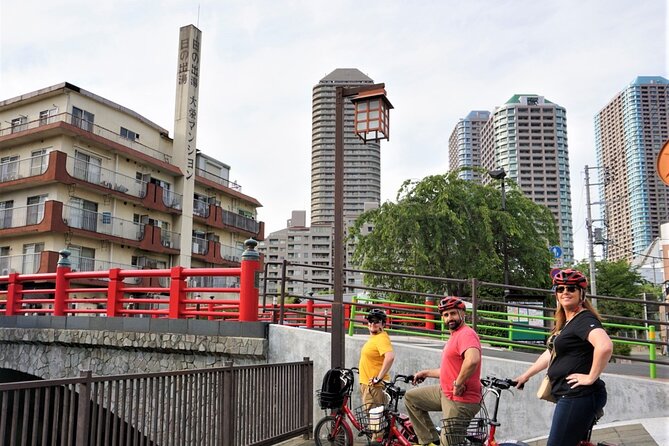
The e-bike reduces physical effort, but it does not remove the need for riding skill. You must be able to ride a bicycle confidently, handle city streets, and stay alert around vehicles and pedestrians.
The tour suits you if you already cycle at home or have experience riding in urban areas. It is less suitable if you are nervous on roads, have not ridden for years, or want a relaxed sightseeing activity with no traffic decisions.
The route can change because of road conditions, traffic, pedestrian levels, the season, or the difference between a weekday and weekend. That flexibility is sensible for safety, but it means the exact sequence and stopping points are not guaranteed.
Rain is another important limit. The tour can be canceled if the forecast is poor, with a choice of another date or a full refund. If rain begins during the ride, the guide may continue or stop early. Simple rain gear is supplied, but you may still want glasses and gloves for comfort.
Summer deserves special care. Tokyo can be extremely hot and humid in July and August. Bring water, sunscreen, and a towel. An electrolyte drink is a smart choice on very hot days. The operator checks the heat stress index when deciding if the ride is safe, and the tour may be canceled or ended early if conditions become dangerous.
Who gets the best value for $63.01?
At $63.01 per person, the price is reasonable if you want an active overview of central Tokyo rather than a single attraction. The fee covers the e-bike, helmet, English-speaking guide, insurance, seasonal comfort items, simple rain gear, and luggage storage for nonvaluable items.
You are paying for more than bicycle rental. A rental bike alone would not give you a planned route through several districts, local explanations, traffic guidance, or the confidence to connect places that you might otherwise visit on separate train trips.
The value is strongest on your first Tokyo visit. In three hours, you can identify neighborhoods, markets, temples, shopping streets, and food areas for later exploration. Several people have used the ride early in their stay to decide where to return on foot.
It also works well for families with older children. The minimum age is 12, and the minimum height is 147 centimeters. Teenagers who enjoy movement and conversation may get more from this than another indoor attraction, but every participant must already know how to ride.
The price is less compelling if you have only one short day and need to enter major attractions, since the tour mainly provides exterior views and brief stops. It is also not a food tour. Food and drinks are self-paid at the shop or elsewhere, and market visits are short.
Booking details that affect your plans
Choose morning or afternoon carefully. The routes are different, not simply the same ride at a later hour. Pick the morning option for Tokyo Station, the Imperial Palace, Ginza, Tsukiji, and local streets. Pick the afternoon option for Akihabara, Kappabashi, Asakusa, and Ryogoku.
The experience lasts about three hours and returns to Cycling Holiday Tokyo in Kanda. The meeting point is at 3-chome-8-6 Uchikanda, Chiyoda City, Tokyo, close to JR Kanda Station.
Confirmation is sent within 48 hours, subject to availability. Tours require at least two participants, although a solo person can join if other participants are booked. Cancellation is free up to 24 hours before the start time. Poor weather or an unmet minimum may lead to a different date, another experience, or a full refund.
The overall rating is 4.9 from 670 ratings, with 98 percent recommending the experience. That strong record matches the features that matter most here: friendly guides, easy-to-use bikes, safety care, and a route that covers far more ground than a walking tour.
Should you book the Cycling Holiday Tokyo ride?
I would book this tour if you want to get your bearings quickly, enjoy riding, and prefer seeing Tokyo at street level. The morning ride is the stronger pick for first-time visitors interested in the Imperial Palace, Tokyo Station, Ginza, and Tsukiji. The afternoon ride is better if Asakusa, Akihabara, cooking tools, and sumo appeal more.
You should skip it if you cannot ride a bicycle, dislike traffic, or will be visiting during a period of extreme heat or unsettled weather. For everyone else, the combination of e-bike range, small-group guidance, and ordinary neighborhood streets makes this a useful and enjoyable way to begin understanding Tokyo.
FAQ
How long does the Tokyo e-bike tour last?
The tour lasts approximately three hours and ends back at the Cycling Holiday Tokyo meeting point in Kanda.
Where does the tour meet?
The meeting point is Cycling Holiday Tokyo, 3-chome-8-6 Uchikanda, Chiyoda City, Tokyo 101-0047, Japan. The shop is about a one-minute walk from the west exit of JR Kanda Station.
Are morning and afternoon routes the same?
No. The morning route includes areas such as Tokyo Station, the Imperial Palace, Ginza, and Tsukiji. The afternoon route includes Akihabara, Kappabashi Street, Asakusa, and Ryogoku. Nihonbashi and Kanda may feature on either route.
What is included in the tour price?
The price includes an electric-assist bicycle, helmet, English guide, insurance, simple rain gear, winter gloves, summer cooling products, and luggage storage for items that are not valuable.
Can children join the tour?
Participants must be at least 12 years old and at least 147 centimeters tall. Anyone joining must be able to ride a bicycle.
What happens if it rains?
The tour may be canceled if the weather forecast is poor. You will be offered a different date or a full refund. If rain starts during the ride, the guide decides whether to continue or return early.
How large is the group?
The maximum is six participants per booking, and other participants may join your group. Tours operate with a minimum of two people, so solo visitors can participate if other riders are booked.
More E-Bikes in Tokyo


More Guided Tours in Tokyo
More Cycling Tours in Tokyo

More tours in Tokyo we've reviewed












E-Bikes, compared.
 ★ 5.0Tokyo Top Highlights 3h Guided E-bike TourFrom $63
 ★ 4.8Tokyo: 3-Hour Bike or E-Bike City Highlights TourFrom $453 hours
 ★ 4.8Tokyo: 3-hour Guided E-Bike Tour of the City’s Hidden GemsFrom $65
 ★ 5.0Tokyo: 3-Hour Bike/E-Bike Tour of the City’s HighlightsFrom $63
 ★ 5.03-Hour Tokyo Private E-Bike Tour Starting from Your HotelFrom $145
 ★ 4.7Tokyo: 3-Hour Bike or E-Bike Tour of City’s Hidden GemsFrom $603 hours