Reviewed · E-BIKES
Tokyo: 3-Hour Bike or E-Bike Tour of City’s Hidden Gems
Tokyo reveals itself differently from a bicycle. On foot, you cover only a few neighborhoods. By train, you skip the streets between the big sights. This three-hour ride links temples, palace grounds, grand avenues, creative neighborhoods, and Shibuya’s famous crossing in one brisk outing. I especially like the small-group format and the chance to stop, walk, and hear the story behind each place rather than simply pedal past it.
In This Article
- At a glance: a three-hour ride across Tokyo
- Starting beside the Statue of Commodore Perry
- Zojo-ji Temple and the Tokyo Tower area
- Imperial Palace, Ote-mon Gate, and the city center
- Akasaka Palace and the New National Stadium
- A lesser-known stop in Aoyama
- Cat Street, Miyashita Park, and Shibuya
- What the cycling itself feels like
- Guides, group size, and the human side of the ride
- Is $60 good value for three hours?
- Practical booking advice before you ride
- Who should book this Tokyo bike tour?
- Should you book it?
- FAQ
- How long is the Tokyo bike tour?
- Where does the tour start?
- Where does the tour finish?
- What languages are available?
- Are bicycles included?
- Do I need to bring a helmet?
- Can children join the tour?
- What should I bring?
- Can I cancel the booking?
I also like the choice of quality Bianchi and Fuji bikes, plus an e-bike for riders who do not cycle often. Guides such as Shin and Casey have been praised for clear explanations, route flexibility, and taking photos. The tradeoff is simple: this is a real bike ride, not a sightseeing bus. You may find the pace tiring in hot weather, and helmets cost an extra ¥1,000 in cash.
At a glance: a three-hour ride across Tokyo
- Starts near Tokyo Tower: Meet by the Statue of Commodore Perry, a three-minute walk from Daimon Station’s A6 exit.
- Connects old and new Tokyo: The route moves from Zojo-ji Temple and the Imperial Palace to Aoyama, Cat Street, Miyashita Park, and Shibuya.
- Uses good city bikes: Bianchi and Fuji cross bikes are provided, with an e-bike option for riders who want assistance.
- Includes local context: English and Japanese-speaking guides explain customs, architecture, daily life, and the city’s past.
- Covers a lot of ground: You will cycle between stops, with short walks and photo breaks along the way.
- Best for active sightseers: Children under 12, pregnant women, people with back problems, and anyone unable to ride a bike should choose another outing.
Starting beside the Statue of Commodore Perry
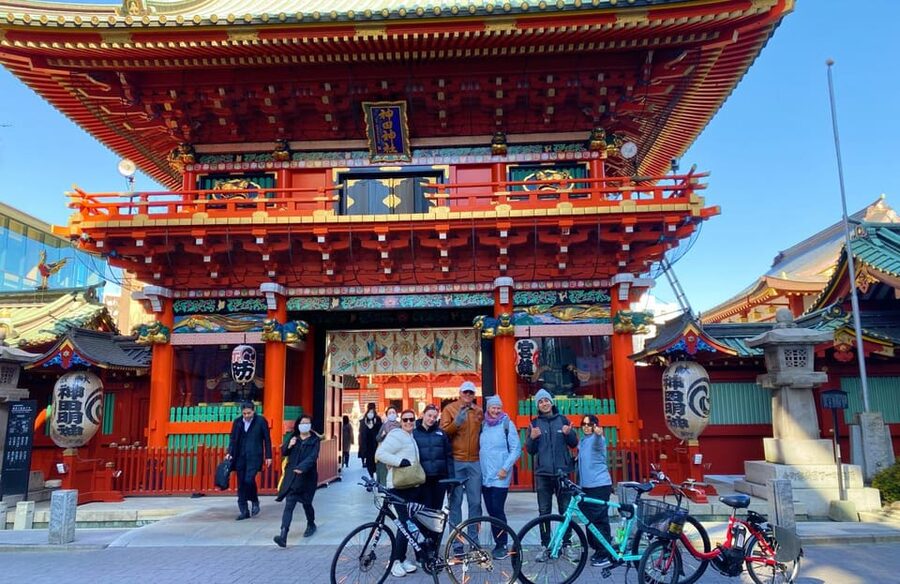
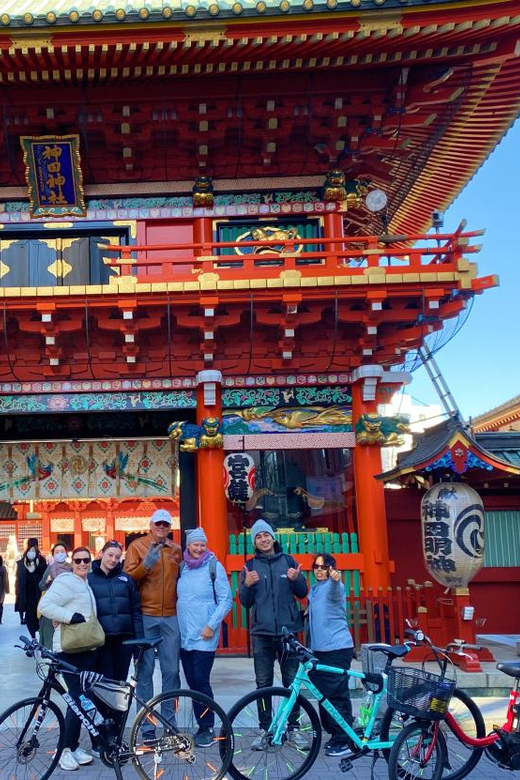
The meeting point is around the Statue of Commodore Perry near Daimon Station. The statue is not as instantly recognizable as Tokyo Tower, so allow a few extra minutes to find the guide. One rider found the meeting place unclear, making this the one practical detail I would take seriously: use the station exit information and look around the statue rather than simply aiming for the tower.
The start is useful for another reason. This part of Tokyo puts you near Shiba Park and Zojo-ji Temple, so the ride begins in an area where Tokyo’s modern office towers sit close to older religious sites. After a bike fitting and basic preparation, you set off into central Tokyo.
The tour provides a mini pouch attached to the bike for a phone, wallet, or keys. Bike insurance is included. Helmets are not included in the base price, but you can rent one on site for ¥1,000 per unit in cash. I would bring the cash and wear one, particularly since the route includes city streets and a fair amount of cycling.
Other cycling tours in Tokyo
Zojo-ji Temple and the Tokyo Tower area
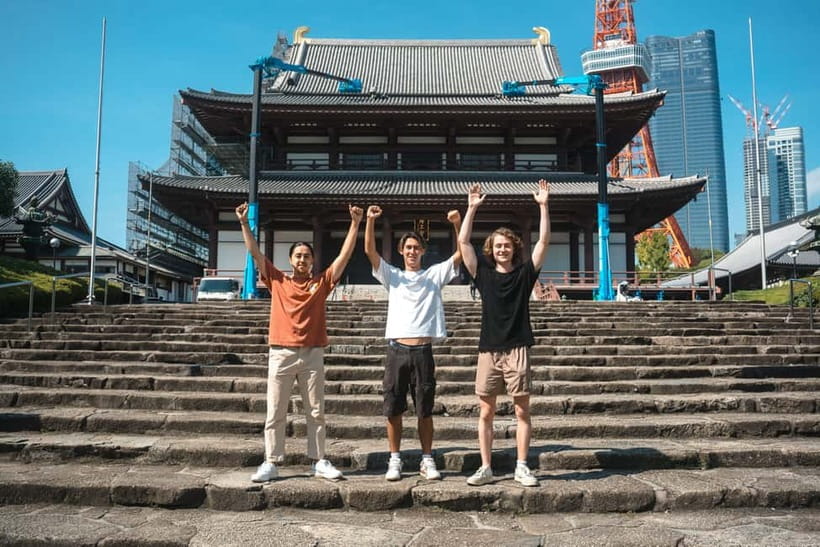
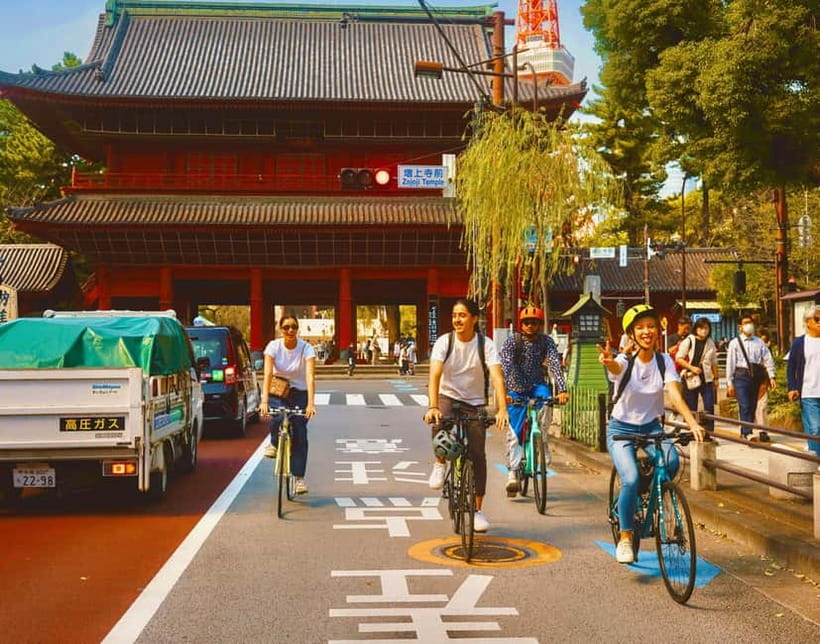
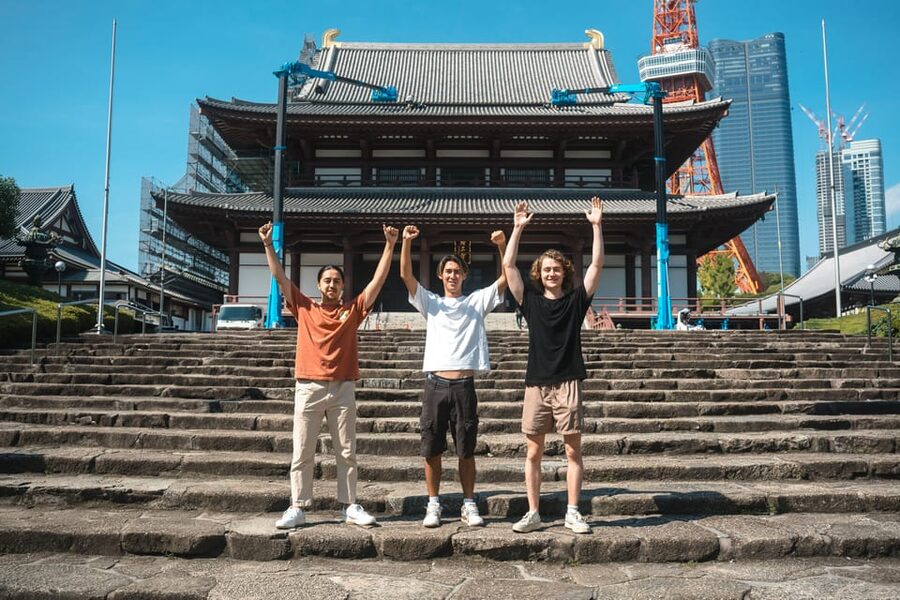
Zojo-ji Temple is the first major stop, with about 15 minutes for a guided visit and photographs. The temple is one of the tour’s strongest early moments because it gives you a calm, traditional setting before the route moves toward busy roads and modern districts.
Your guide can explain the difference between Japanese temples and shrines, a subject that several riders found especially useful. You will have time to look around on foot, but this is not a full temple visit with extended prayer, museum time, or a long quiet wander. Think of it as a well-placed introduction to Tokyo’s religious traditions.
The surrounding area also gives you a memorable contrast: temple roofs and gates against the high-rise Tokyo skyline. Bring a phone or camera where you can reach it easily, since the pouch makes quick stops more convenient.
Imperial Palace, Ote-mon Gate, and the city center
The route continues toward the Tokyo Imperial Palace, where the stop lasts about 10 minutes. You will have a chance to take photographs and hear about the imperial grounds, but do not expect to enter the palace interior. This is a viewing stop from the outside.
Ote-mon Gate follows, with roughly five minutes for photographs and a short explanation. The gate adds a more specific architectural focus to the palace segment. You are not simply being pointed toward a broad complex. You get a look at one of its formal entrances and the defensive design associated with old castle sites.
These stops work well by bicycle because they are too far apart for a casual walk from the tour’s starting point, yet close enough to connect without returning underground. The cycling also helps you see the scale of central Tokyo. You pass from temple grounds to official avenues and palace walls, then continue into neighborhoods with a different feel.
The limitation is time. Ten minutes at the Imperial Palace and five minutes at Ote-mon Gate give you context and photos, not a full palace visit. If the palace grounds are your main reason for coming to Tokyo, plan a separate visit.
Akasaka Palace and the New National Stadium
The State Guest House Akasaka Palace is a 10-minute photo stop. Its formal setting gives the route a change of tone after the temple and palace areas. The building is associated with official receptions, so it offers a glimpse of Tokyo’s ceremonial side rather than its everyday streets.
The New National Stadium comes next, also for about 10 minutes. This stop brings the tour into modern Tokyo and gives you an architectural counterpoint to Zojo-ji and the Imperial Palace. You will see how the route shifts from old institutions to a contemporary sporting landmark.
The itinerary does not promise interior access at either place. You should treat both as exterior visits with guide commentary and time for pictures. That format suits you if you want a broad look at Tokyo without spending half a day inside one building.
A lesser-known stop in Aoyama
After the major landmarks, the ride becomes less predictable. There is a 15-minute visit to a lesser-known stop, followed by a brief visit around 3 Chome Minamiaoyama. The exact character of the first stop is not specified, so you should expect the guide to introduce a place outside the standard first-time Tokyo checklist.
That uncertainty is part of the appeal, but it also means you cannot plan around a named attraction. The value comes from seeing how the guide shapes the route and connects the better-known sights to local streets and neighborhoods.
Aoyama is a good setting for this change of pace. The area helps show Tokyo beyond temples, government buildings, and giant crossings. The stop is short, so stay ready to move, and do not expect a long neighborhood walk.
Other city tours we've reviewed in Tokyo


Cat Street, Miyashita Park, and Shibuya
Cat Street receives about five minutes, enough for a quick look and a short explanation. The route then reaches Miyashita Park for approximately three minutes. These brief pauses are less about formal sightseeing and more about seeing the city’s contemporary shopping, design, and public spaces.
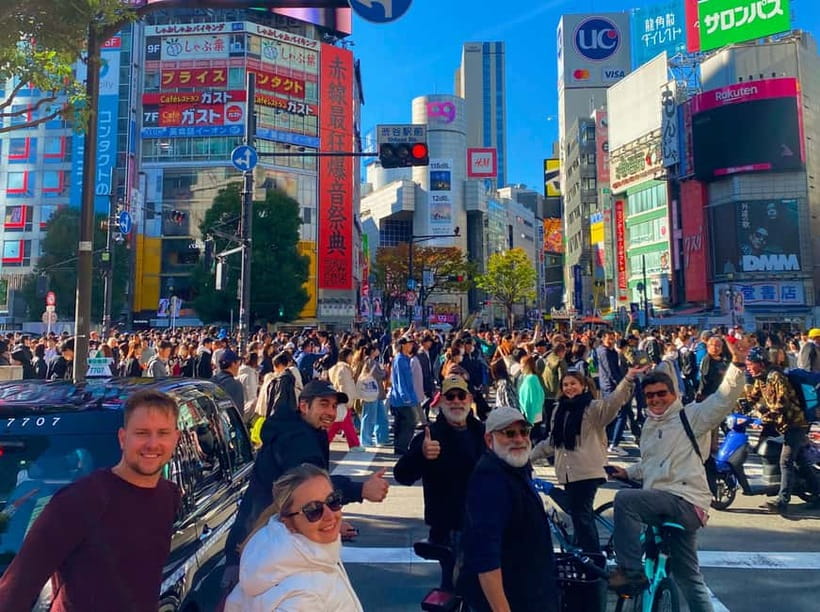
The final major stop is Shibuya Crossing. You get about five minutes for photographs and a visit before finishing at the Bell of Peace. Shibuya is the most instantly recognizable part of the ride, but it works better at the end than at the beginning. By then, you have seen several layers of Tokyo, from temple grounds to palace gates and quiet residential or commercial streets.
Do not expect a long stop in Shibuya. Five minutes lets you take in the crossing and capture a few photos, but it is not enough for shopping, café time, or a full look at the surrounding district. If you want to explore Shibuya properly, use the Bell of Peace as your endpoint and continue on your own afterward.
What the cycling itself feels like
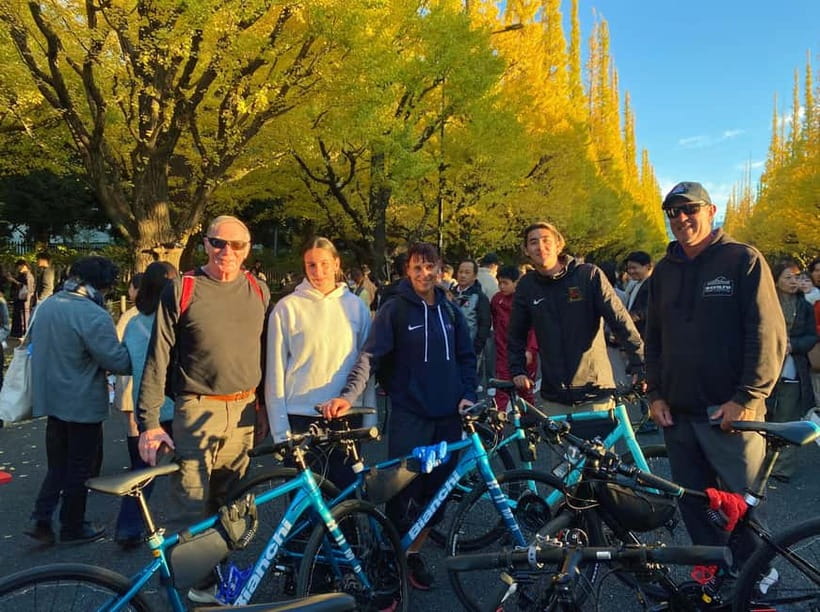
The route is designed for a range of cycling abilities, but the word range should not be confused with effortless. You need to ride for much of the three hours, and one rider specifically described the route as extended cycling for this type of tour. Another called it a workout session.
That makes the e-bike a sensible choice if you do not cycle often, lack stamina, or worry about Tokyo’s distance between sights. You still ride and remain part of the group, but the electric assistance can make the day more comfortable. Select the e-bike option when booking rather than assuming it will be available as a last-minute swap.
The supplied Bianchi and Fuji cross bikes are a strong point. Cross bikes suit a city route because they are practical for moving between stops while remaining comfortable enough for a longer ride. High-quality equipment matters here. A poorly fitted or heavy bike would make the connecting sections much less enjoyable.
The tour is not suitable for children under 12, pregnant women, people with back problems, or anyone who cannot ride a bike. Comfortable shoes, comfortable clothing, and water are the right basics. Tokyo summers can be extremely hot, so consider the time of day and your own tolerance before choosing a standard bike.
Guides, group size, and the human side of the ride
The guides speak English and Japanese. Their role is more than pointing out landmarks. They explain historical sites, traditions, the difference between religious buildings, and aspects of modern Japanese life.
Specific guides praised by name include Shin, Casey, Naoki, Marika, Nouchi, Georgie, Miguel, and KG. Shin was noted for adjusting the route to suit two riders’ interests, while Casey was described as attentive, clear, and good at stopping for photos. You should not assume a particular guide will lead your departure, but these names give you an idea of the personal approach the company aims for.
Small groups make a real difference on a bicycle. You can move through streets more easily, stop without creating a large cluster, and hear the guide without straining. Private and small-group arrangements are available, so check the selected option if keeping the ride intimate matters to you.
The strongest part of the guiding is the mix of facts and practical care. Guides have been praised for watching the group, selecting safe stopping points, taking pictures, and making adjustments. That matters more on a bike than it does on a walking tour. You are managing traffic, turns, bicycles, and sightseeing at the same time.
Is $60 good value for three hours?
At $60 per person, this tour offers fair value if you want an active orientation to central Tokyo. The price includes the guide, bike, e-bike option when selected, local stories, bike pouch, and insurance. You cover a substantial area that would take much longer to connect on foot.
The value is strongest during a first Tokyo visit or a short stay. In three hours, you see a temple, imperial grounds, a historic gate, a formal state building, a modern stadium, Aoyama, Cat Street, Miyashita Park, and Shibuya. You will not explore any one place in depth, but you get a useful map of the city and several ideas for later visits.
The cost feels less worthwhile if you dislike cycling, want long visits at each sight, or hope to enter the buildings. The tour is designed for breadth and movement. It gives you a broad view, then leaves you to return to the places that catch your interest.
There are two small extra costs to remember. Helmets are ¥1,000 each and must be paid in cash, while a child seat costs ¥3,000. Child seats do not change the age restriction for the tour, which excludes children under 12.
Practical booking advice before you ride
Meet at the Statue of Commodore Perry, about three minutes from Daimon Station’s A6 exit. Since the location can be hard to spot, arrive early and keep the meeting instructions available on your phone.
Choose the standard cross bike if you cycle regularly and feel comfortable riding for several hours. Choose the e-bike if you rarely cycle or are unsure about your stamina. The e-bike is not merely a luxury add-on here. It directly addresses the main physical demand of the experience.
Free cancellation is available up to 24 hours before departure for a full refund, and you can reserve now and pay later. Starting times vary, so check availability for your date. The activity is offered as a private or small-group tour.
Avoid smoking, alcohol, drugs, and littering during the outing. Bring water and shoes that work well on pedals. If you have back problems or are pregnant, skip this tour rather than trying to manage the ride.
Who should book this Tokyo bike tour?
I would choose this ride for an active first look at Tokyo, especially if you have only a few days and want to connect several central districts quickly. It also suits you if you prefer local explanation and street-level views to sitting behind a bus window.
It is a good fit for couples, friends, solo riders, and small private groups. The route has enough famous landmarks for a first visit, while the Aoyama and neighborhood sections keep it from feeling like a simple checklist of major sights.
I would be more cautious if you want a slow cultural visit. The temple, palace, and Shibuya stops are short, and the ride between them is a real part of the experience. The e-bike improves the physical side, but it does not turn the tour into a relaxed sightseeing stroll.
At 4.7 out of 5 from 81 ratings, the experience has a strong record, with the most consistent praise focused on the guides, quality bikes, route variety, safety, and the amount of Tokyo covered in three hours. The clearest criticism is not about the route itself, but about confusion over choosing a standard bike or e-bike and the fact that major sights are usually viewed from outside.
Should you book it?
Book this tour if you want to cover central Tokyo efficiently, enjoy cycling, and value a guide who can explain the city between stops. Select the e-bike if stamina is a concern, bring ¥1,000 cash for a helmet, and arrive early at the Commodore Perry statue.
Skip it if you cannot ride comfortably, want long indoor visits, or prefer to spend an entire morning at one temple or palace. For everyone else, this is a lively, practical way to get your bearings across several very different parts of Tokyo before exploring your favorites on foot.
FAQ
How long is the Tokyo bike tour?
The tour lasts three hours.
Where does the tour start?
Meet the guide around the Statue of Commodore Perry, about a three-minute walk from Daimon Station’s A6 exit.
Where does the tour finish?
The tour finishes at the Bell of Peace.
What languages are available?
The tour is available in English and Japanese, with live guides in those languages.
Are bicycles included?
Yes. The tour includes Bianchi and Fuji cross bikes, with an e-bike option available when selected.
Do I need to bring a helmet?
Helmets are not included. They are available on site for ¥1,000 per unit, paid in cash.
Can children join the tour?
Children under 12 are not permitted to join this activity.
What should I bring?
Bring comfortable shoes, water, and comfortable clothing. You may also want cash for the optional helmet rental.
Can I cancel the booking?
You can cancel up to 24 hours in advance for a full refund. A reserve-now, pay-later option is also available.
More E-Bikes in Tokyo
More City Tours in Tokyo
More Cycling Tours in Tokyo
More tours in Tokyo we've reviewed












E-Bikes, compared.
 ★ 5.0Tokyo Top Highlights 3h Guided E-bike TourFrom $63
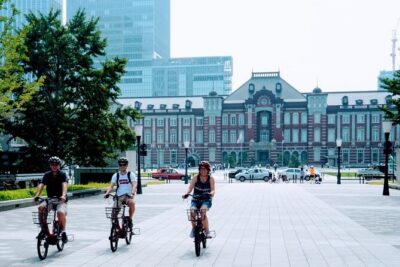 ★ 5.03h Tokyo E-Bike Tour: Hidden Gems, and Local Life with guideFrom $63
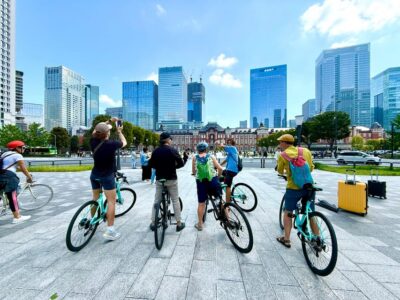 ★ 4.8Tokyo: 3-Hour Bike or E-Bike City Highlights TourFrom $453 hours
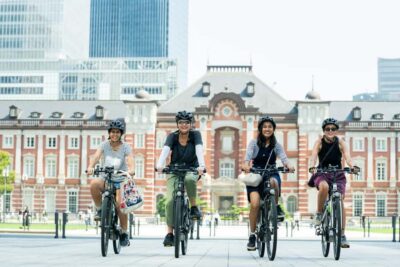 ★ 4.8Tokyo: 3-hour Guided E-Bike Tour of the City’s Hidden GemsFrom $65
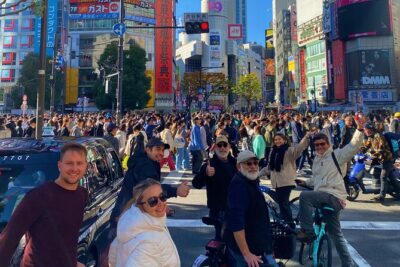 ★ 5.0Tokyo: 3-Hour Bike/E-Bike Tour of the City’s HighlightsFrom $63
 ★ 5.03-Hour Tokyo Private E-Bike Tour Starting from Your HotelFrom $145