Reviewed · CYCLING TOURS
Tokyo Guided Small-Group Biking Tour
Tokyo is so large that sightseeing by train can feel like jumping between separate cities. This 20-mile bicycle route connects those pieces in one long day, moving from Shinjuku skyscrapers to quiet shrines, Tokyo Bay, Ginza, the Imperial Palace, and a high-rise view over it all. I like the mix of famous sights and ordinary side streets, and I like that guides such as Gaku keep the group small, often no more than five people.
In This Article
- Key points at a glance
- Why a bicycle makes Tokyo easier to understand
- Starting under the Shinjuku skyscrapers
- Meiji Shrine and Yoyogi Park
- Omotesando, Roppongi Hills, and an older side of Aoyama
- Buying a bento and eating beside Tokyo Bay
- Zojo-ji Temple with Tokyo Tower behind it
- Through Ginza and toward the Imperial Palace
- Finishing above Tokyo at the Metropolitan Government Building
- How hard is the 32-kilometer ride?
- Why the small group matters
- Price, weather, and planning details
- Who should book this Tokyo ride?
- Should you book it?
- FAQ
- How long is the Tokyo biking tour?
- How far do you ride?
- What sights does the tour visit?
- Is lunch included?
- Is the tour suitable for beginners?
- What type of bicycle is provided?
- What are the age and height requirements?
- How many people can join the tour?
- What happens if the weather is bad?
I also like the practical rhythm: a local supermarket stop for a bento lunch, a waterfront picnic beside Rainbow Bridge, and a final panorama from the Tokyo Metropolitan Government Building. The trade-off is clear: this is an active ride on busy city roads, not a gentle cruise. You need to handle a multi-speed bike, steer around pedestrians, and feel comfortable cycling about 32 kilometers.
Key points at a glance
- A 20-mile route through several Tokyos: Ride from Shinjuku and residential lanes to Meiji Shrine, Roppongi Hills, Tokyo Bay, Ginza, and the Imperial Palace.
- Small groups keep the day personal: The maximum is five riders, and the guide can answer questions and adjust the pace more easily than on a large coach tour.
- Gaku is a frequently praised guide: His route includes quiet community shrines, local streets, and practical explanations of what lies ahead.
- Lunch is part of the local experience: Buy a bento at a supermarket, carry it in your backpack, and eat beside the waterfront at your own expense.
- The bike is a standard cross-city bike: It has a flat handlebar and multiple gears, not a cruiser setup or an electric motor.
- The route ends with Tokyo from above: The 48-story Tokyo Metropolitan Government Building gives you a useful final view of the places you saw at street level.
Why a bicycle makes Tokyo easier to understand
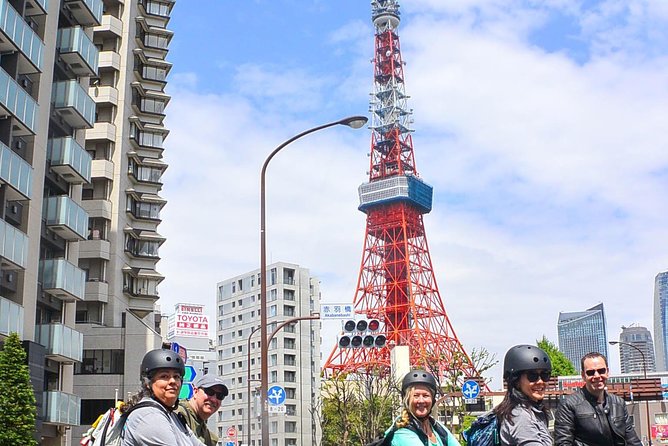
Tokyo is not a single sightseeing district. Its major areas are spread across a huge urban area, and each has a different feel. On foot, you can spend much of your day reaching the next place. By train, you move quickly but miss the streets between the stations.
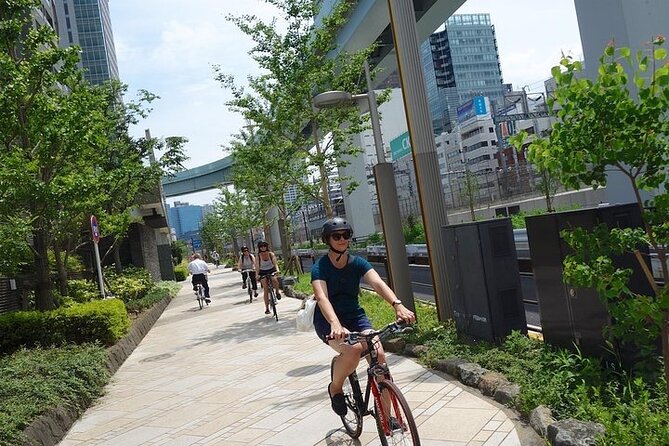
This tour fills that gap. You ride beneath Shinjuku’s towers, pass through residential backstreets, cross grand shopping avenues, pedal beside moats, and reach the waterfront under your own power. The movement itself becomes part of the sightseeing.
I especially like the contrast between Tokyo’s polished public face and its quieter corners. A small neighborhood shrine can appear among homes and narrow lanes, while a few minutes later you are looking toward a major commercial district. That shift is hard to appreciate from a coach window.
The route is also useful early in a Tokyo visit. In one day, you get a working map of the city. Later, you can return to the areas that caught your interest, such as Omotesando, Ginza, the Imperial Palace area, or the waterfront.
Other cycling tours in Tokyo
Starting under the Shinjuku skyscrapers
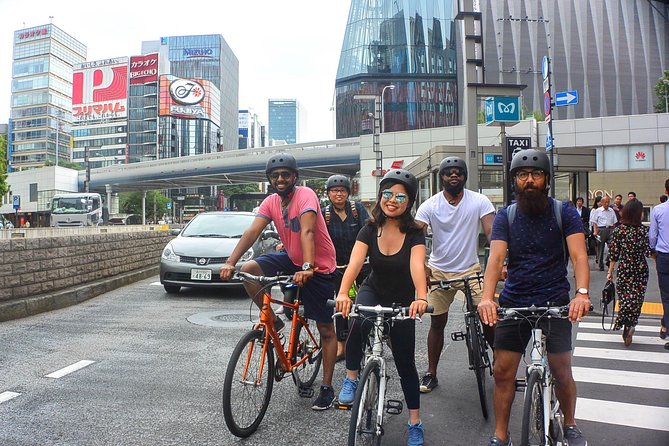
The meeting point is in Nishishinjuku, a central part of Shinjuku surrounded by tall buildings and good public transport connections. After fitting your bike and helmet, the guide starts at a relaxed pace.
The first section does a good job of setting the tone. Instead of rushing directly to a major landmark, you ride through backstreets toward a small shrine in a residential area. This is the kind of stop that shows how Tokyo’s traditional religious spaces remain part of daily neighborhood life.
You should not expect a long formal visit at every location. The value comes from the changing surroundings and the guide’s local perspective. Gaku is often praised for explaining the route before each ride, including how long the next section will take and what kind of road to expect.
That matters on a day with many stops. You are less likely to wonder where you are going or how much farther you must ride.
Meiji Shrine and Yoyogi Park
From the residential lanes, the route heads toward Yoyogi Park and Meiji Jingu, Tokyo’s best-known Shinto shrine. Yoyogi Park provides a welcome change from traffic and concrete, with broad paths and seasonal color. In spring, cherry blossoms add another reason to pause.
The shrine grounds are a key walking section. You leave the bike for a while and take time with the peaceful gardens and approach to the shrine. A guide can help you understand the basic customs and significance of the site without turning the stop into a long lecture.
This part of the day is also a useful rest. The tour covers a lot of ground, so not every minute is spent pedaling. You get short breaks at major sights, though the overall schedule remains active.
If Meiji Shrine is already high on your personal list, this tour saves you the trouble of arranging a separate visit. If you have seen it before, the ride through the park and nearby streets still helps connect it with the rest of central Tokyo.
Omotesando, Roppongi Hills, and an older side of Aoyama
After Meiji Shrine, you pedal along Omotesando, one of Tokyo’s most polished shopping streets. The avenue is known for high-end stores and carefully designed buildings, and it gives you a strong sense of modern Tokyo’s style.
The route then turns toward Roppongi Hills, an entertainment and shopping complex. This is one of the city’s major urban centers, but the tour does not stay only on the main streets. You also take a back road through Aoyama Cemetery.
That change is one of the day’s more memorable transitions. The cemetery offers a quieter setting that can feel far removed from the glass towers and luxury shops nearby. The contrast gives you a glimpse of how old and new Tokyo sit close together.
The ride through city streets does require attention. Tokyo drivers are generally patient, but you still need to be alert around traffic, intersections, pedestrians, and other cyclists. The guide leads from the front and sets the pace, which helps, but you remain responsible for controlling your own bike.
Buying a bento and eating beside Tokyo Bay
Lunch is intentionally simple and local. You stop at a supermarket and choose a bento box at your own expense. Then you place it in your backpack and ride about 25 minutes to the waterfront.
This is not a restaurant meal or a planned tasting menu. That is part of its appeal. A supermarket gives you a casual look at everyday Japanese food, packaging, snacks, and prepared meals. You choose what suits you, then eat outside beside Rainbow Bridge with views toward Tokyo Bay and the Aqua City Odaiba complex.
The waterfront stop gives your legs a proper break and opens up the city. After spending the morning among streets and buildings, you see Tokyo from a broad urban viewpoint. The meal is also flexible, since you can select something familiar or try a bento that you might not otherwise buy.
Bring a backpack or messenger bag with room for lunch. You should also remember that food and drinks are not included in the $106.12 price. The cost of the bento is modest compared with a sit-down meal, but you need to budget for it.
Other guided tours in Tokyo
Zojo-ji Temple with Tokyo Tower behind it
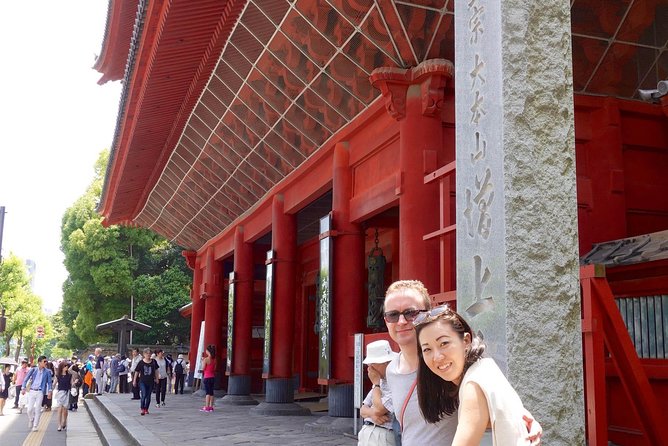
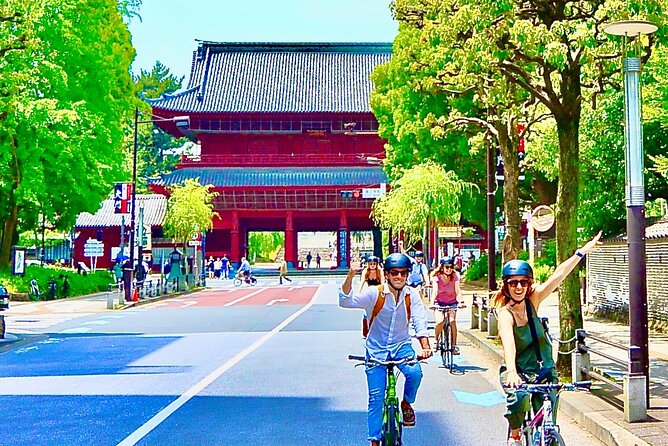
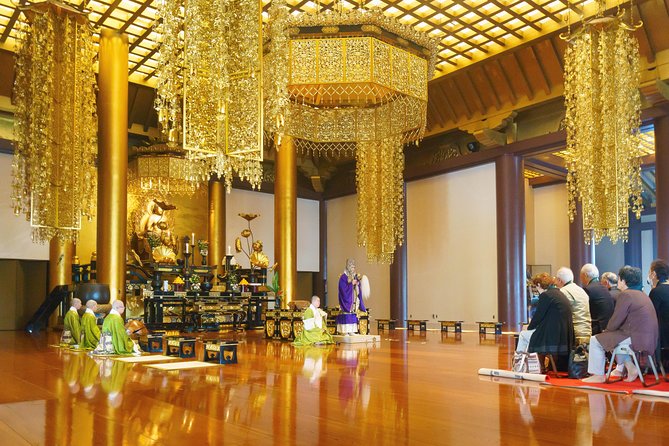
The route includes Zojo-ji Temple, one of the most striking stops because of its view toward Tokyo Tower. The temple’s traditional architecture and the tower’s bright modern form create a classic Tokyo contrast.
This is a good example of how the tour links separate visual sides of the city. You do not have to choose between old temples and modern landmarks. In a short visit, you see both in the same frame.
The tour description does not promise a long temple visit or a special admission area, so think of Zojo-ji as a meaningful stop along a larger route rather than a full temple-focused outing. If you want extended time for worship, photography, or close study, you may prefer to return independently.
Through Ginza and toward the Imperial Palace
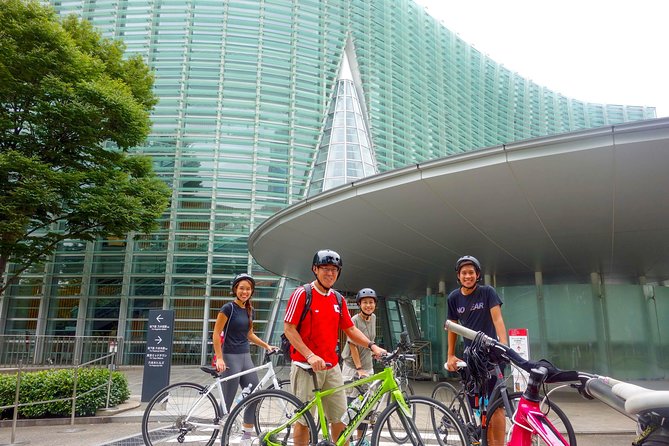
After lunch, the bikes return to the city through Ginza. This exclusive shopping district is best experienced at street level, where the scale of the avenues and the quality of the storefronts become easier to read.
The guide takes both main roads and backstreets. That balance keeps the ride from becoming a simple parade of famous commercial areas. You see the formal side of Ginza, then get a closer look at the less polished routes that connect it to the next part of the city.
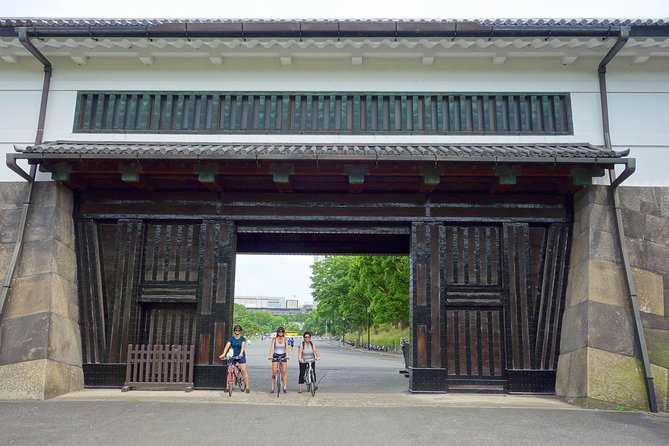
The Imperial Palace provides another major shift. You ride through two outer gates and along sections of the large moat. The palace grounds include traditional gardens, a tea pavilion, stone walls, and water defenses that give the area a strong sense of ceremony and scale.
This is a street-level visit rather than a promise of access to every palace building. Plan your expectations accordingly. You will see important exterior areas and the surrounding grounds, but the tour’s strength is its broad route through Tokyo, not a detailed palace tour.
Finishing above Tokyo at the Metropolitan Government Building
The final major stop is back in Shinjuku at the Tokyo Metropolitan Government Building. A high-speed elevator carries you up 48 floors to an observation level with a 360-degree view.
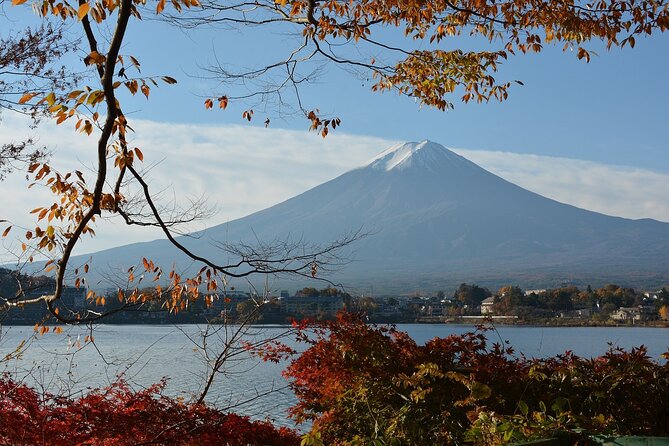
This ending works because you can look down at the city you have just crossed. On a clear day, you may see Tokyo Skytree and even Mount Fuji. The panorama helps turn the day’s many districts into one understandable whole.
It also gives you a calmer finish before the short ride back to the meeting point. The final cycling section is about five minutes, so you are not facing another long road stretch after the observation stop.
The view depends on weather and visibility. Mount Fuji is never guaranteed, and Tokyo can be hazy. Even without Fuji, the high viewpoint is useful for seeing the city’s scale and spotting the broad directions you traveled.
How hard is the 32-kilometer ride?
The route is about 20 miles, or 32 kilometers. That is a serious distance for a sightseeing tour, even though the ride is described as moderate and Tokyo is mostly flat.
You should be comfortable with:
- Riding a multi-speed bicycle
- Cycling on busy city roads
- Steering around pedestrians
- Maintaining control in traffic
- Riding for much of a six-and-a-half-hour day
The bike is a cross-city bicycle with a flat handlebar. It is not a cruiser with a high riser handlebar, and it is not described as an electric bike. Several practical details follow from that: wear comfortable clothing, choose shoes suitable for steady riding, and bring a backpack or messenger bag.
The height range is strict: riders must be between 125 and 190 centimeters, or about 4 feet 1 inch to 6 feet 3 inches. Give the correct height when booking. An incorrect measurement can mean you cannot ride, with no refund in that situation.
The age range is 12 to 69. You may be asked for identification to confirm age. A moderate fitness level is required, but you do not need to be a competitive cyclist. The main challenge is the length of the route and the urban traffic, not steep hills.
Why the small group matters
The maximum group size is five people. That is a major advantage on city streets. A small group can stop more easily, stay together through complicated areas, and give the guide room to answer questions.
Some bookings may become nearly private if other people cancel. That can allow the guide to adjust stops based on what you have already seen. Still, you should not book expecting a private tour, since group size depends on the day.
Gaku is the guide name that comes up repeatedly in the experience details. His strengths are practical as well as cultural: he explains the route, keeps riders oriented, watches safety in traffic, and shares Tokyo through personal experience. You should also expect the assigned guide to vary, so Gaku is not guaranteed unless the operator confirms it.
The tour is not designed as a formal history class. It gives you an informed local companion for a day of seeing Tokyo by bicycle. If you want dates, architectural analysis, or long talks at each shrine, a specialist walking tour may suit you better.
Price, weather, and planning details
At $106.12 per person, the tour is not the cheapest way to see Tokyo. The price includes the professional guide, bicycle, and helmet, but not lunch, drinks, or hotel transfers.
I think the value is strongest if you have limited time and want a broad first look at the city. You cover areas that would take several separate outings by foot, and the small group adds a level of attention that large sightseeing tours cannot match.
The value is weaker if you already know Tokyo well, dislike long bike rides, or mainly want to spend time inside one shrine, museum, or palace area. You are paying for range and local route planning, not extended time at each attraction.
Weather matters. Rain and heatwaves can cancel the ride, and the guide is expected to email by 7 a.m. on the morning of the tour if it is called off. A poor-weather cancellation can lead to another date or a full refund.
Free cancellation is available up to 24 hours before the start time. Within 24 hours, refunds and changes are not accepted, except when the operator cancels because of weather.
Who should book this Tokyo ride?
I would choose this tour for a first visit, especially if you want to understand how Tokyo’s districts fit together. It suits active couples, families with older children, and solo visitors who enjoy meeting a few other people while seeing a great deal in one day.
It is also a good match for anyone who prefers everyday streets to a checklist of major buildings. The neighborhood shrine, Aoyama Cemetery, supermarket lunch, and back roads give the day a more personal feel.
I would hesitate if you are not comfortable cycling in traffic, if you need frequent long rests, or if you want an easy sightseeing day. Six and a half hours is a long commitment, and the 32-kilometer route is not a casual spin.
Should you book it?
Book this tour if you want a fast but personal introduction to Tokyo, can ride confidently in city traffic, and like the idea of combining major sights with ordinary neighborhoods. The route is unusually broad, yet the small group keeps it from feeling like a rigid procession.
Skip it if your priority is comfort, deep time at individual attractions, or an electric-bike experience. For the right rider, though, this is an efficient way to see Tokyo from several angles, then finish by looking over the entire city from above.
FAQ
How long is the Tokyo biking tour?
The tour lasts approximately six and a half hours.
How far do you ride?
The total route is about 20 miles, or 32 kilometers.
What sights does the tour visit?
The route includes a local neighborhood shrine, Yoyogi Park, Meiji Jingu Shrine, Omotesando, Roppongi Hills, Aoyama Cemetery, Zojo-ji Temple, Tokyo Bay, Rainbow Bridge views, Ginza, the Imperial Palace, and the Tokyo Metropolitan Government Building.
Is lunch included?
No. You buy a bento box at a local supermarket at your own expense, carry it in your backpack, and eat it at the waterfront beside Rainbow Bridge.
Is the tour suitable for beginners?
You need a moderate fitness level and must be comfortable riding a multi-speed bicycle on busy city roads. The tour is mostly flat, but it covers about 32 kilometers and is not an electric-bike ride.
What type of bicycle is provided?
The tour provides a cross-city bike with a flat handlebar. It is not a cruiser bike with a high riser handlebar.
What are the age and height requirements?
The minimum age is 12 and the maximum age is 69. Rider height must be between 125 and 190 centimeters, or about 4 feet 1 inch to 6 feet 3 inches.
How many people can join the tour?
The maximum is five travelers per booking and five participants on the activity.
What happens if the weather is bad?
Cycling may be canceled because of rain, a heatwave, or other poor conditions. You will be offered another date or a full refund, and the guide is expected to email by 7 a.m. on the tour morning if the activity is canceled.
More Guided Tours in Tokyo
More Cycling Tours in Tokyo
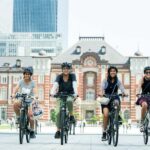

More tours in Tokyo we've reviewed












Cycling Tours, compared.
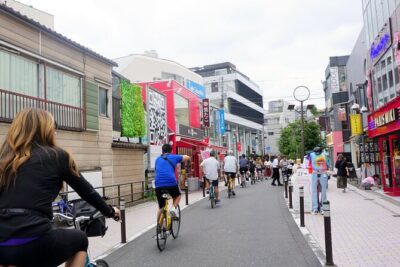 ★ 5.0Tokyo Great Cycling TourFrom $99
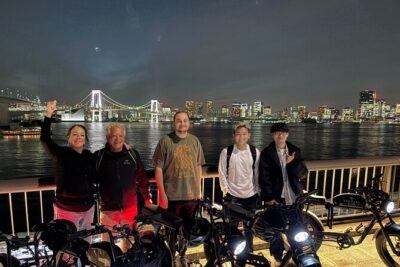 ★ 5.0Tokyo Top Highlights 3h Guided E-bike TourFrom $63
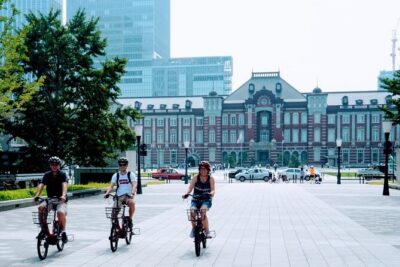 ★ 5.03h Tokyo E-Bike Tour: Hidden Gems, and Local Life with guideFrom $63
 ★ 4.8Tokyo: 3-Hour Bike or E-Bike City Highlights TourFrom $453 hours
 ★ 4.8Tokyo: 3-hour Guided E-Bike Tour of the City’s Hidden GemsFrom $65
 ★ 5.0Tokyo West-Side Cycling & Food TourFrom $99