Reviewed · SAMURAI & NINJA EXPERIENCES
Samurai Sword Training and Katazome Dyeing Experience in Tokyo
Tokyo does not make you choose between watching a craft and trying a martial art here. In about two hours, you dye a tenugui cloth using Edo Komon patterns, tie it as a headband, then step into a dojo for a sword demonstration and guided practice.
In This Article
- Key points to know before booking
- Two Tokyo traditions in one compact morning
- At Somenosato Ochiai, the cloth lesson begins
- A one-minute walk changes the mood
- The dojo program: watch first, then practice
- What the small group changes
- Is $97.73 a good value?
- Who should book this experience?
- Booking, timing, and cancellation details
- Should you book it?
- FAQ
- Where does the experience start?
- What time does the activity begin?
- How long does the experience last?
- What do I make during the dyeing workshop?
- What are Edo Komon patterns?
- How far apart are the two workshops?
- Do I need to remove my shoes?
- Are real swords used during the training?
- Where does the experience end?
I like the small group of no more than eight, which gives the workshop a better chance of feeling personal. I also like the clear cultural link between Katazome patterns and samurai clothing, rather than treating the craft and sword lesson as two unrelated tourist activities.
The main consideration is pace. You have roughly one hour for dyeing and one hour for sword training, so neither activity is a long-form course. The price is also $97.73 per person, a fair amount if you value hands-on instruction, but more than you would pay for a simple museum visit.
Key points to know before booking
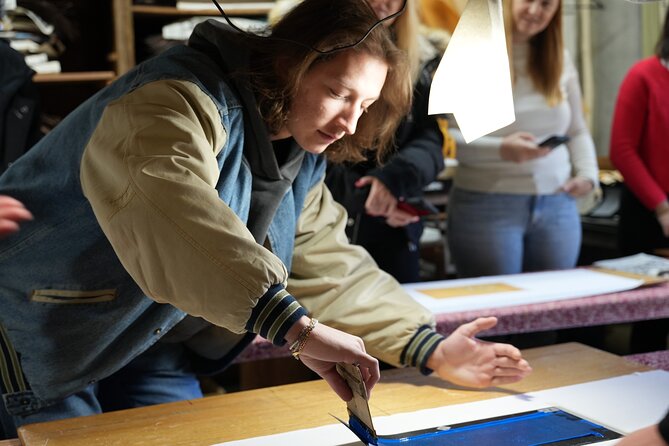
- You make a wearable souvenir: Dye a tenugui cloth with an Edo Komon pattern, then wrap it as a headband before leaving.
- The samurai connection is part of the lesson: You learn how these small repeated patterns were used on samurai kamishimo clothing.
- The dojo is only a one-minute walk away: The two workshops fit together without a long transfer across Tokyo.
- You see a real sword demonstration: The dojo portion begins with about 15 minutes of demonstration before practice starts.
- Practice uses toy swords: The training focuses on defensive actions and basic techniques in a controlled format.
- The experience begins at 10 a.m.: The meeting point is Somenosato Ochiai in Kamiochiai, Shinjuku City.
Two Tokyo traditions in one compact morning
This experience works because the subjects connect. Katazome is a stencil-dyeing method, and the lesson focuses on Edo Komon patterns, the tiny repeated designs associated with samurai kamishimo garments.
You are not simply making a colorful souvenir, then heading somewhere unrelated to swing a sword. The introduction explains why these understated patterns mattered in samurai dress. That context gives the dyeing work a stronger purpose, especially if you enjoy learning how clothing can signal status, taste, and social rules.
The sword training adds a very different kind of participation. You watch a real sword demonstration, learn defensive actions with toy swords, and then practice yourself. The result is a useful balance: one activity asks for patience and precision, while the other asks you to pay attention to movement and form.
The two-hour length also fits neatly into a Tokyo schedule. You can start at 10 a.m. and still have most of the afternoon free. I would choose this for a morning when you want something more active than sightseeing but less demanding than a full-day cultural tour.
A few more Tokyo tours and experiences worth a look

At Somenosato Ochiai, the cloth lesson begins
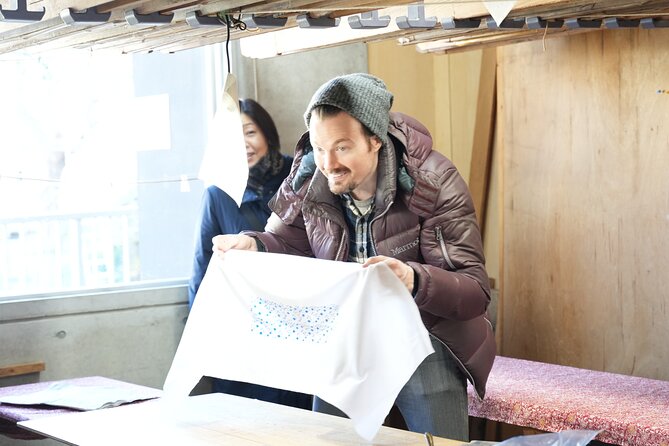
Your morning starts at Somenosato Ochiai, at 2-chome-3-6 Kamiochiai, Shinjuku City. The first section takes about an hour and begins with a 10-minute introduction to Edo Komon patterns and their connection to samurai kamishimo.
That short explanation matters. Without it, the stencil designs might look like attractive geometric decoration. With it, you can look at the patterns as part of a clothing tradition tied to samurai identity and dress.
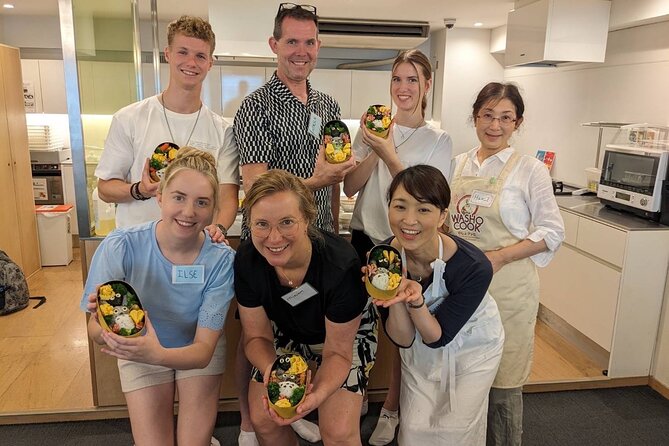
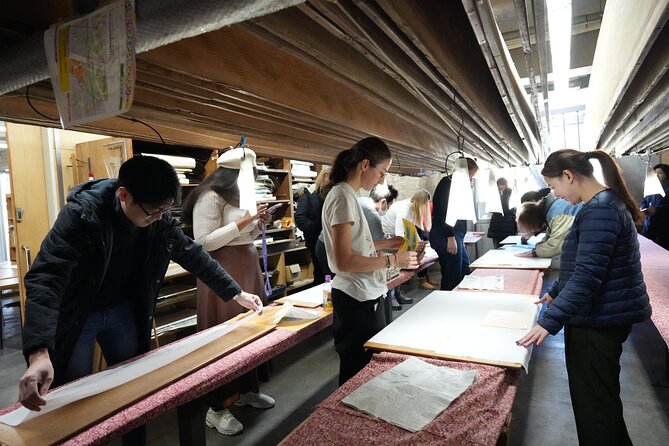
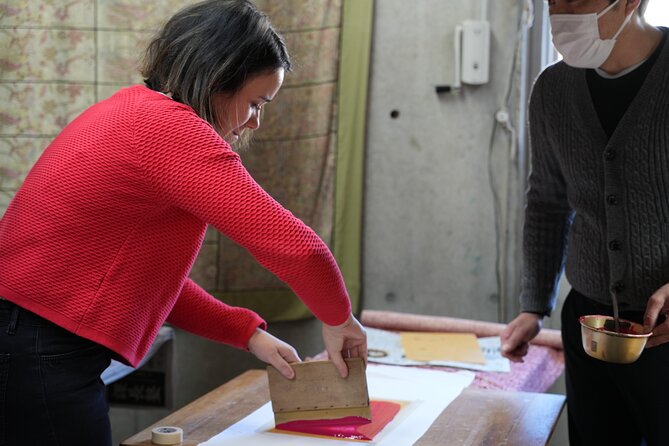
The practical work follows. You receive instruction from artisans at the workshop and dye a tenugui, a traditional Japanese cloth often used as a towel, wrapping cloth, or head covering. The listed session allows about 40 minutes for instruction and hands-on work, including Komon pattern dyeing.
This is the part where the tour earns its price. You are not just buying a finished object from a shop. You are handling the process and leaving with something you made yourself. The time limit keeps the task manageable, but it also means you should not expect to explore every possible dyeing method or create a highly complex textile.
The final 10 minutes are used to wrap the dyed tenugui as a headband and depart. That small finishing step is a nice touch because it turns the cloth into something you can wear immediately, rather than leaving you with an unfinished piece that needs attention later.
I would pay attention during the instructions and avoid rushing the pattern work. The value here is in understanding the technique and making a clean, personal result, not in producing a museum-quality textile in 40 minutes.
A one-minute walk changes the mood
After leaving Somenosato Ochiai, you walk about one minute to the dojo at 2-chome-4-6 Kamiochiai. You take off your shoes before entering, so wear socks or footwear that is easy to remove and put back on.
This short transfer is one of the strongest practical features of the experience. You do not lose half an hour crossing Tokyo or need to work out a second meeting point. The two locations are close enough to make the transition feel like a change of setting rather than a new tour.
The mood also shifts. The dyeing workshop is about pattern, texture, and careful handwork. The dojo asks you to watch closely, follow instructions, and control your movements. That contrast gives the morning a natural rhythm.
The tour ends at the dojo, so plan the rest of your day from there. The start and end addresses are both in Kamiochiai, but the experience does not include a return transfer. Since the two locations are close together, this is easy to manage if you have a phone with the mobile ticket and map access.
The dojo program: watch first, then practice
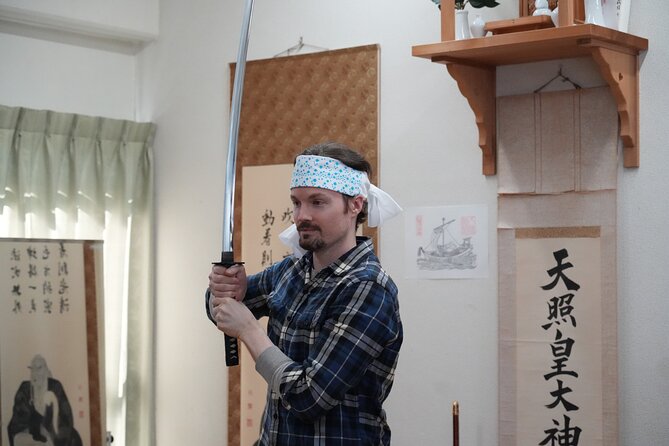
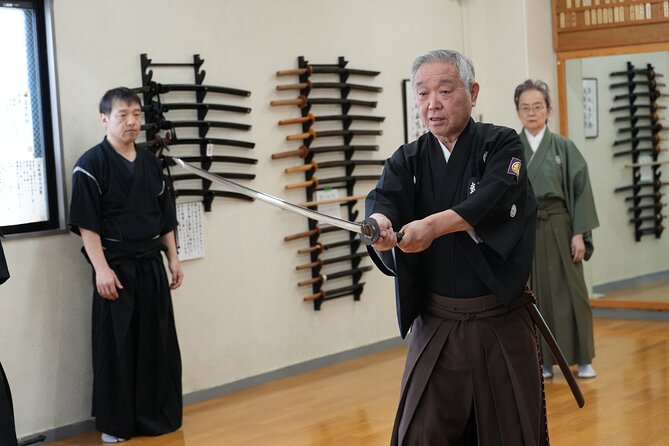
The sword portion lasts about one hour. It begins with a 15-minute real sword demonstration. This is an important distinction from a simple photo opportunity. You first get to see the weapon handled by someone trained in the discipline before taking part in the practice section.
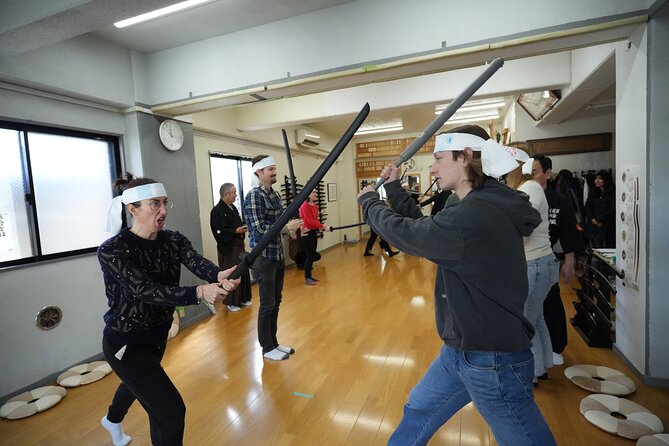
Next comes a 15-minute explanation of defensive actions using toy swords. This gives you a safer way to understand the basic movements before the final 30 minutes of sword training.
The use of toy swords is reassuring for anyone who wants the experience without handling a live blade. It also suggests that the emphasis is on learning actions, timing, and body control rather than on combat or theatrical swordplay. You should follow the dojo’s instructions closely and treat the practice as a formal lesson.
The final 30 minutes are the most active part of the morning. You begin sword training under guidance, using what you have just seen and learned. The session is short enough for most people to manage, but long enough to feel like participation rather than a quick demonstration.
If you are hoping for advanced martial arts instruction, this will likely feel introductory. That is not a flaw for most first-time visitors. The value is in receiving a structured introduction to samurai techniques inside a dojo, with the cultural explanation still fresh from the earlier workshop.
What the small group changes
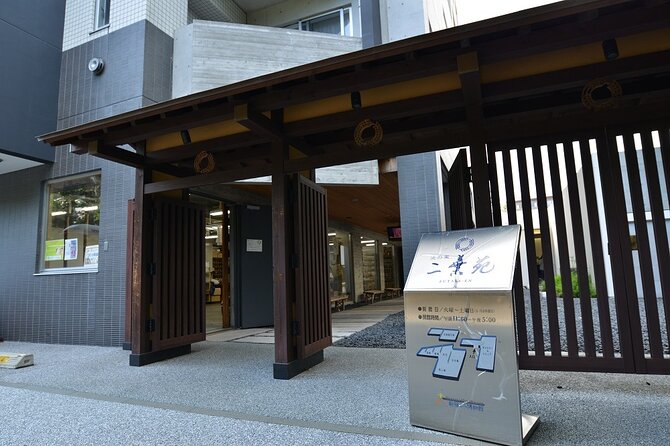
The maximum group size is eight. That is a useful limit for both activities, especially when the group moves from a craft workshop to a training space.
A smaller group can make it easier to follow the artisan’s instructions during dyeing. It also reduces the chance that you are standing far from the demonstration or waiting through a long rotation before practicing.
Personal attention is particularly important during the sword lesson. Defensive movements are easier to understand when the instructor can watch what you are doing and correct your position or timing. The available information does not name the instructors, so I would not book this expecting a particular teacher.
The high rating of 4.9 from seven reviews suggests that the cultural explanation and hands-on format are working well for the people who have taken it. One especially positive account describes the cloth workshop guides and dojo teachers as explaining both the cultural meaning and the technical side. That is exactly the combination you want here: context first, then practice.
Still, a small group does not guarantee a private lesson. Eight people can fill a compact workshop or dojo, and the schedule remains fixed. If you prefer slow, unstructured exploration, a self-guided craft visit may suit you better.






Is $97.73 a good value?
At $97.73 per person, this is not a budget activity. You are paying for two guided sessions, an artisan-made setting, your tenugui project, a real sword demonstration, and hands-on sword training.
I see the value in the combination. Many Tokyo activities give you either a craft lesson or a cultural performance. This one links two samurai-related subjects and keeps the transfer between them to about one minute. The included item also has practical use as a headband, rather than being only a small decorative object.
The price makes less sense if you mainly want to watch. The dyeing section requires participation, and the sword portion includes practice, so the experience is best for someone who wants to use their hands and follow instruction.
The two-hour format helps keep the cost reasonable for a short morning activity. You are not spending an entire day on it, and you can add lunch, a museum, or another Shinjuku-area stop afterward. I would compare the price against the cost of booking two separate activities, not against the price of entering a single attraction.
Who should book this experience?
I would recommend it to first-time visitors who want a clear introduction to two Japanese traditions without committing to a long class. It also suits couples, families with older children, and solo visitors who prefer a small group to a large demonstration.
Craft-minded people will appreciate the Katazome work. Martial arts fans will probably enjoy the dojo section, especially the progression from demonstration to toy-sword instruction to practice. If your interests are split between Japanese history and making things, the combination is unusually efficient.
The experience may not suit anyone who dislikes removing shoes, standing or moving during a training session, or working within a tight timetable. The supplied information says most people can participate, but it does not provide detailed accessibility information. If you have mobility concerns or need specific accommodations, confirm them before booking.
This is also not a substitute for a full samurai history tour. You receive a focused introduction to clothing patterns and sword techniques, not a broad survey of Japan’s military past. That narrow focus is part of its appeal, but you should choose it for participation rather than a long lecture.
Booking, timing, and cancellation details
The start time is 10 a.m., and the meeting point is Somenosato Ochiai, 2-chome-3-6 Kamiochiai, Shinjuku City, Tokyo 161-0034. The experience ends at the dojo, 2-chome-4-6 Kamiochiai, Tokyo 161-0034.
Confirmation is provided when you book, and the ticket is mobile. Keep the ticket easy to access when you arrive. The group maximum is eight, and the activity requires a minimum number of participants. If that minimum is not reached and the experience is canceled, you are offered another date or experience, or a full refund.
Free cancellation is available up to 24 hours before the start time. Changes or cancellations made within 24 hours are not accepted for a refund, so do not leave the decision until the last morning.
Should you book it?
Book this if you want a compact, hands-on Tokyo activity with genuine cultural context. The strongest feature is the pairing: you learn why Edo Komon patterns mattered, make your own tenugui headband, then practice basic defensive sword actions in a dojo.
I especially like the one-minute walk between venues and the eight-person limit. Those details keep the morning focused and personal. At $97.73, it is best treated as a two-part workshop, not a cheap attraction. If you want to make something, learn a little, and take part in a carefully structured sword session, it is a worthwhile choice.
FAQ
Where does the experience start?
It starts at Somenosato Ochiai, located at 2-chome-3-6 Kamiochiai, Shinjuku City, Tokyo 161-0034, Japan.
What time does the activity begin?
The start time is 10 a.m.
How long does the experience last?
The experience lasts approximately two hours, with about one hour for Katazome dyeing and one hour for sword training.
What do I make during the dyeing workshop?
You dye a tenugui cloth using Komon patterns and then wrap the finished cloth as a headband before leaving.
What are Edo Komon patterns?
The introduction explains Edo Komon patterns and their use in samurai kamishimo clothing.
How far apart are the two workshops?
The dojo is about a one-minute walk from Somenosato Ochiai.
Do I need to remove my shoes?
Yes. You take off your shoes before entering the dojo.
Are real swords used during the training?
The dojo portion includes a real sword demonstration. The explanation of defensive actions and the hands-on training use toy swords.
Where does the experience end?
The tour ends at the dojo, located at 2-chome-4-6 Kamiochiai, Tokyo 161-0034, Japan.
More Samurai & Ninja Experiences in Tokyo


More tours in Tokyo we've reviewed












Samurai & Ninja Experiences, compared.
 ★ 4.5Tokyo: Samurai Restaurant Show Ticket with 2 DrinksFrom $551h 30m
 ★ 4.6Tokyo: Samurai Ninja Museum Guided tour and ExperienceFrom $27
 ★ 5.0Skip the lines Basic Ticket at SAMURAI NINJA MUSEUM TOKYOFrom $28
 ★ 5.0Tokyo: Authentic Samurai Training at a DojoFrom $211
 ★ 5.0Best Samurai Experience in TokyoFrom $65
 ★ 4.6Tokyo: Legend Samurai Entertainment Night in Kanda ShrineFrom $44