Reviewed · KAMAKURA & ENOSHIMA DAY TRIPS
Historic Kamakura: Temples, Shrines and Street Food Private Walking Tour
Kamakura packs centuries of Japan into one highly walkable day: quiet temple grounds, a major Shinto shrine, a bamboo grove, local snacks, and the famous Great Buddha. The best part is the mix of sacred places and everyday food, so you see more than polished monuments.
In This Article
- Key points to know before booking
- Why Kamakura makes a good day away from Tokyo
- Engaku-ji: a calm start with Buddha and tengu
- Tsurugaoka Hachimangu: Kamakura’s main Shinto shrine
- Komachi-dori: lunch as a series of small discoveries
- Hokoku-ji: green tea inside the bamboo grove
- The Great Buddha: a strong final image
- What the six-hour schedule feels like
- Is $220.22 per person a fair price?
- Who should book this Kamakura tour?
- Should you book it?
- FAQ
- How long does the Kamakura tour last?
- Where does the tour begin?
- Where does the tour end?
- Is transportation included?
- Are food and drinks included?
- Can I cancel for a full refund?
I like the private format, which lets your guide adjust the pace for children, older parents, or anyone who wants more time with the architecture. I also like that lunch means sampling food along Komachi-dori rather than sitting down for one standard meal. The trade-off is simple: this is a six-hour walking day, and transportation costs to and from Kamakura are not included.
Key points to know before booking
- A private day with Simon or Chuck: Guides named in the experience include Simon and Chuck, both praised for friendly help, clear explanations, and a relaxed pace.
- Five very different stops: You move from Zen temple grounds to a Shinto shrine, food stalls, a bamboo tea house, and Kamakura’s bronze Great Buddha.
- Food and drinks are included: Lunch, snacks, bottled water, soda, and alcoholic drinks are covered, giving you a chance to try local items without guessing what to order.
- Starts at Kita-Kamakura Station: Meet at 9:00 a.m. and finish at Kamakura Station, making the route useful for a full day away from central Tokyo.
- Expect moderate physical activity: Temple paths, stairs, and walking between sights call for comfortable shoes and a reasonable level of fitness.
- Weather matters: The tour requires good weather, with a different date or full refund offered if poor conditions cause cancellation.
Why Kamakura makes a good day away from Tokyo
Kamakura gives you a sharp change of pace from Tokyo. Instead of rushing between distant city districts, you spend the day moving through temple compounds, shrine approaches, wooded slopes, food streets, and open spaces around the Great Buddha.
The route also gives you a useful introduction to two major strands of Japanese religious culture. Engaku-ji and Hokoku-ji are Buddhist temples, while Tsurugaoka Hachimangu is a Shinto shrine. A guide can help you notice the difference in layout, symbols, worship spaces, and atmosphere without turning the day into a lecture.
This is a private activity, so only your own group takes part. That matters here. Kamakura can feel crowded at its best-known places, and a private guide can decide when to move on, when to pause, and how much explanation your group wants. The available feedback gives particular praise to Simon for helping families and to Chuck for judging the pace well. Those details make this a useful choice if your group includes a child or older relatives.
The tour begins at Kita-Kamakura Station at 9:00 a.m. and ends at Kamakura Station. You need to arrange your own transportation to the starting point, and the tour price does not cover local rail fares or other transport. Plan that part before the morning begins.
A few more Tokyo tours and experiences worth a look
Engaku-ji: a calm start with Buddha and tengu
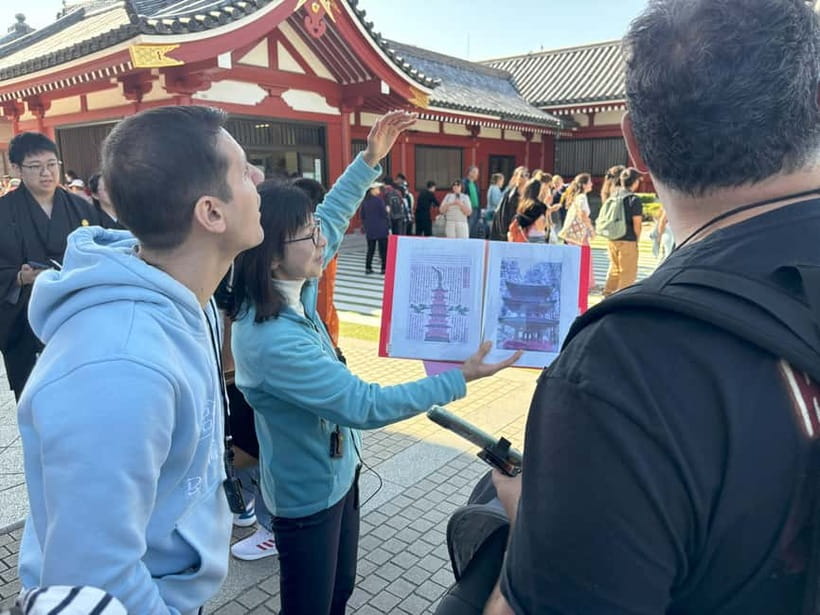
Your first stop is Engaku-ji, one of Kamakura’s major temple complexes. You have about 45 minutes here, with admission included.
The grounds include the Busudan hall, which houses a wooden Buddha statue. That gives you an early chance to look closely at Japanese Buddhist art and temple design rather than simply taking a quick exterior photo. The complex also reaches up the slopes behind the main grounds, where you can see tengu statues and views across the area.
The climb is one of the more distinctive parts of this stop. Tengu are supernatural figures in Japanese folklore, often shown with long noses or birdlike features. They add a playful edge to a serious religious setting, and they give your guide something memorable to explain.
Forty-five minutes is enough for a focused visit, but not enough for every corner of a large temple complex. I see that as a sensible choice for a day with four more stops. If you want a slow, contemplative temple morning with long periods of silence, this schedule may feel brisk. If you want a strong first look at Kamakura, it works well.
The slopes also explain the moderate-fitness note. You should be ready for uneven paths and some uphill walking. Comfortable footwear will make the day easier.
Tsurugaoka Hachimangu: Kamakura’s main Shinto shrine
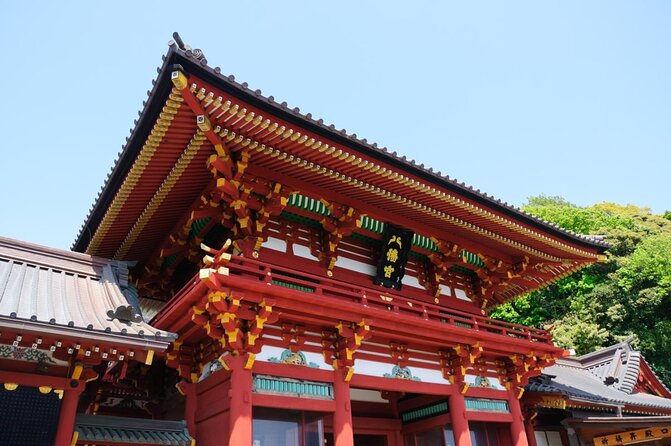
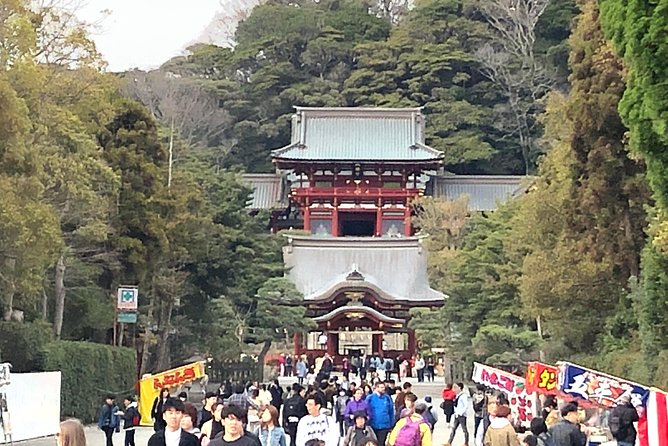
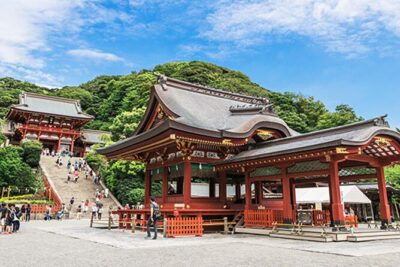
The next stop is Tsurugaoka Hachimangu, described as Kamakura’s most important Shinto shrine. You have roughly 30 minutes, and admission is included.
The approach features torii gates and leads toward the main hall. These gates mark the movement from ordinary space into a Shinto sacred area. Even if you know little about Shinto, the route gives you a clear sense of how a shrine is organized.
You also have a chance to see the small museum of treasures. The short stop means you will not study every object at length, but a guide can point out why the collection matters and connect what you see to Kamakura’s past.
This is a good place to pay attention to the contrast with Engaku-ji. At the temple, the focus is Buddhist worship and temple buildings. At Tsurugaoka Hachimangu, the torii gates and shrine arrangement create a different visual and spiritual setting. Seeing both in the same morning makes the cultural differences easier to grasp.
Thirty minutes is a tight window. The benefit is that you keep moving and preserve time for food and the bamboo grove. The drawback is that visitors who want extended time in the shrine museum or grounds may wish for more room.
Komachi-dori: lunch as a series of small discoveries
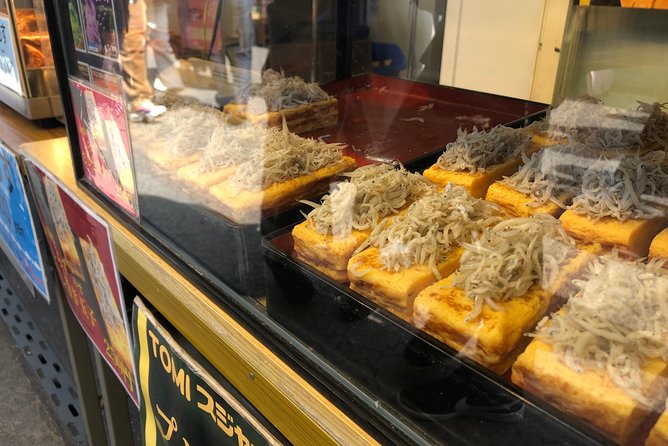
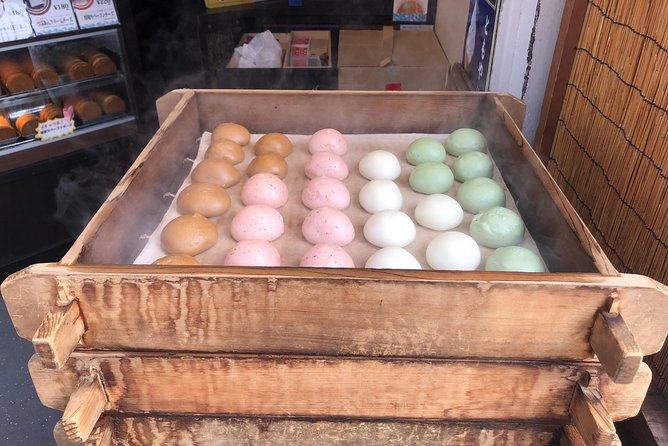
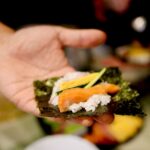
Komachi-dori is where the tour shifts from historic sites to eating. You spend about an hour sampling sweet and savory street food, with lunch and snacks included.
I like this approach far better than treating lunch as a forgettable break. A food street can be confusing when you do not read Japanese or know which item is worth trying. Your guide can point out local specialties, explain what you are eating, and help you make choices you might otherwise skip.
The information provided names examples beginning with shi, but the full list is not supplied. So you should think of this as a tasting walk rather than a fixed menu. The exact selection may depend on what is available on the day and what suits your group.
Food and drink coverage is unusually broad. Lunch, snacks, bottled water, soda, and alcoholic drinks are included, so the $220.22 per-person price is not just paying for guiding and entrance fees. It also covers much of the day’s eating. That makes the value easier to judge for anyone who enjoys trying several small items instead of buying a single meal.
The alcohol inclusion also explains the lighthearted side of the experience. One description of the day praised its balance of culture, history, and drinks. Still, drink responsibly. You continue walking afterward, and Kamakura’s paths and temple steps are not a good match for overdoing it.
An hour lets you sample several things without turning lunch into a long restaurant stop. If you need a large, formal meal or have strict dietary requirements, confirm the food arrangements before booking, since the available details do not specify a set menu or dietary substitutions.
Hokoku-ji: green tea inside the bamboo grove
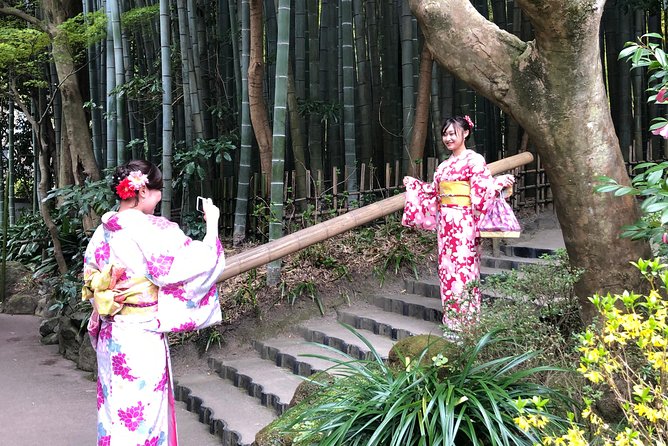
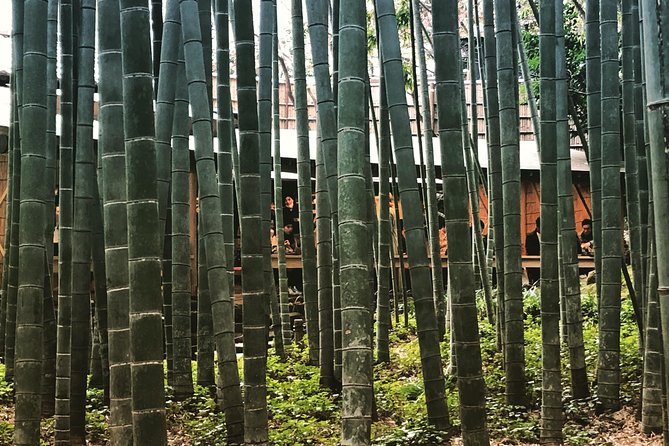
Hokoku-ji is known as the bamboo temple, and you spend about an hour here. The main draw is the bamboo grove, where you can pause for green tea at the tea house among the tall stalks.
This is likely to be the quietest and most restful part of the day. After the movement and food stalls of Komachi-dori, the bamboo grove changes the rhythm. You get time to look up, slow down, and enjoy the cool shade.
The tea house adds more than a drink. It gives you a traditional setting in which to sit and take in the grove, rather than treating the bamboo as a quick photo stop. Your guide can also help explain the role of tea in Japanese culture, though the supplied details do not promise a formal tea ceremony. You should expect tea in a peaceful tea-house setting, not necessarily a full ceremonial demonstration.
An hour is generous compared with the 30-minute shrine stop. That seems right. Hokoku-ji works best when you are not pushed through it. The bamboo grove is compact enough to visit within the schedule, while the tea stop gives the experience a proper pause.
The ground may be uneven, and the overall tour still involves walking. If you have limited mobility, ask about the route before reserving. The stated requirement is moderate physical fitness.
Other walking tours we've reviewed in Tokyo


The Great Buddha: a strong final image
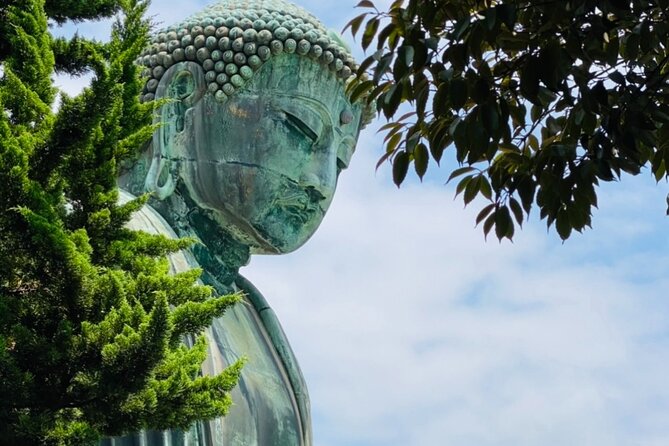
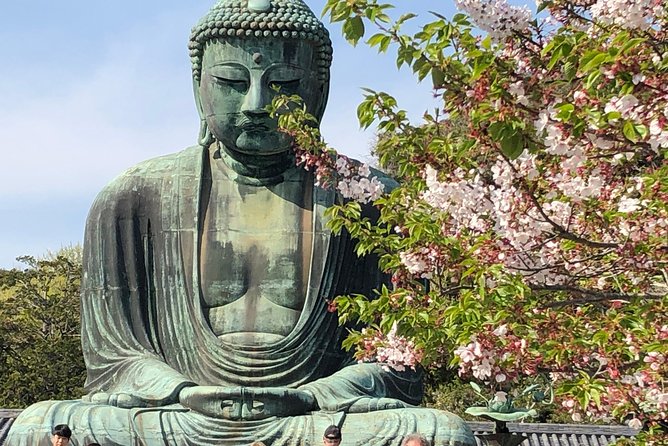
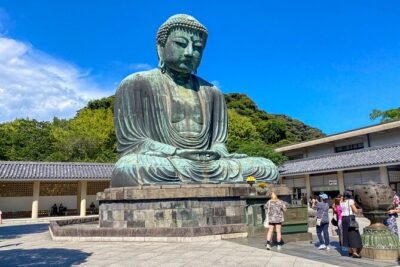
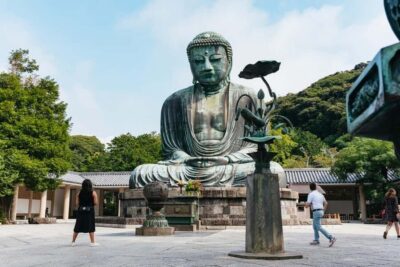
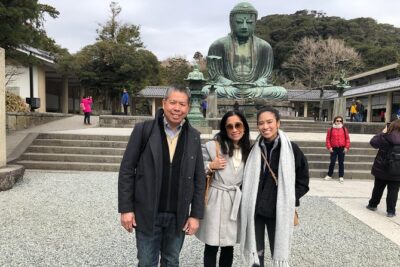
The final listed stop is Daibutsukiritoshi, where you see the Great Buddha of Kamakura, Japan’s second-largest bronze Buddha. You have about 30 minutes, with entrance included.
The Great Buddha makes an effective ending because it is visually direct. After smaller temple details, shrine gates, food stalls, and bamboo, you finish with a large bronze figure that carries the weight of Kamakura’s religious identity.
Half an hour gives you enough time to see the statue, take photographs, and hear the main explanation. It does not allow for a long visit to every nearby feature, so keep your expectations realistic. This is a concluding highlight, not a full afternoon at the site.
The tour then ends at Kamakura Station. That is practical. You are not returned to Kita-Kamakura, and you finish near a major transport point after a route that has gradually carried you through the town.
What the six-hour schedule feels like
The experience runs for about six hours, beginning at 9:00 a.m. and ending at Kamakura Station. Its order creates a sensible day: temple and shrine first, food in the middle, a slower tea stop, then the Great Buddha.
You should expect a full but varied morning and afternoon. The schedule includes five stops, though the actual time between them is not listed. Transportation costs are also separate, so your day includes planning the rail journey to the meeting point and any needed transport during the route.
The private format is valuable here. A group tour with fixed timing can make temples feel like a race. With your own guide, you can ask more questions, linger over a detail, or move on when younger members of your group lose interest. The strongest praise connected to Simon was his attention to families and his willingness to help with a little one. Chuck was singled out for moving on at the right time without making the day feel rushed.
Those are practical qualities, not just pleasant extras. A guide who watches the clock and the group can make the difference between a smooth day and one that feels tiring.
Is $220.22 per person a fair price?
At $220.22 per person, this is not a budget Kamakura outing. You are paying for a private guide, admission fees, lunch, snacks, bottled water, soda, and alcoholic drinks. The price makes more sense for a small private group that wants personal attention and does not want to organize food and temple visits independently.
You should also count the value of time. Planning the rail route, choosing food, working out which sites fit together, and understanding what you are seeing all take effort. This tour handles the guiding and sightseeing structure, while you still pay your own transportation costs.
Group discounts are available, which may improve the calculation for a larger party. Compare the total price with the cost of private guiding, entrance fees, and meals if arranged separately. If your priority is the lowest possible cost, public transport and self-guided sightseeing will be cheaper. If you want a flexible day with food and cultural context built in, the private price is easier to justify.
The experience is booked an average of 95 days ahead. That suggests you should plan early, especially if your Japan schedule is fixed. Free cancellation is available up to 24 hours before the start time. Changes or cancellations inside that window are not accepted for a refund, and poor weather may lead to a different date or a full refund.
Who should book this Kamakura tour?
I would consider this tour a good fit for:
- Couples who want a relaxed cultural day during a Tokyo trip
- Families that benefit from a guide who can adjust the pace
- First-time visitors who want help with street food and shrine customs
- Small groups that value privacy over the lower cost of a shared tour
- People who enjoy mixing history, scenery, tea, and casual drinks
I would think twice if you want a long, quiet visit at each temple, a formal tea ceremony, or a full day of independent wandering. The route is well packed, and the six-hour schedule means every stop has a time limit.
You also need moderate physical fitness. The day includes walking, temple grounds, slopes, and sightseeing in several locations. Anyone who finds stairs or uneven paths difficult should ask for more route detail before booking.
Should you book it?
Book this experience if you want Kamakura explained as a living town, not just a list of famous monuments. The strongest combination is the private guide, the food sampling on Komachi-dori, and the slower hour at Hokoku-ji with green tea in the bamboo grove.
I would be especially comfortable recommending it to families and first-time visitors. Simon and Chuck are the named guides connected with the experience, and the guidance described includes help with children, consideration for older parents, and a good sense of when to move on.
Skip it if your main goal is to save money or spend hours at one large temple. For everyone else, the route offers a smart introduction to Kamakura, with enough structure to remove the guesswork and enough variety to keep the day from feeling like a march through historic sites.
FAQ
How long does the Kamakura tour last?
The tour lasts approximately six hours.
Where does the tour begin?
The meeting point is Kita-Kamakura Station in Yamanouchi, Kamakura. The start time is 9:00 a.m.
Where does the tour end?
The tour ends at Kamakura Station.
Is transportation included?
No. Transportation costs are not included in the tour price.
Are food and drinks included?
Yes. Lunch, snacks, bottled water, soda, and alcoholic beverages are included, along with entrance fees and the guided tour.
Can I cancel for a full refund?
Yes, if you cancel at least 24 hours before the experience start time. Cancellations or changes made less than 24 hours before the start time are not refunded. If poor weather causes the tour to be canceled, you will be offered another date or a full refund.
More Food Experiences in Tokyo


More Walking Tours in Tokyo
More Kamakura & Enoshima Day Trips in Tokyo


More tours in Tokyo we've reviewed
Kamakura & Enoshima Day Trips, compared.
 ★ 4.5Tokyo: Kamakura & Enoshima Day Trip including Temple TicketsFrom $589 hours - 570 minutes
 ★ 5.0Mount Fuji, Kamakura, Big Buddha, & Lake Ashi Day TripFrom $109
 ★ 4.7Tokyo: Mt Fuji, Kamakura, Lake Ashi & Big Buddha Guided TourFrom $50
 ★ 4.5From Tokyo: Kamakura & Enoshima 1-Day Bus TourFrom $66
 ★ 4.9Tokyo:Sea of Mount Fuji, Hakone Ropeway, Ōwakudani, EnoshimaFrom $5010 hours
 ★ 5.0Kamakura 8 hr Private Walking Tour with Licensed Guide from TokyoFrom $201