Reviewed · BAY & RIVER CRUISES
Tokyo Bay: Traditional Japanese Yakatabune Dinner Cruise
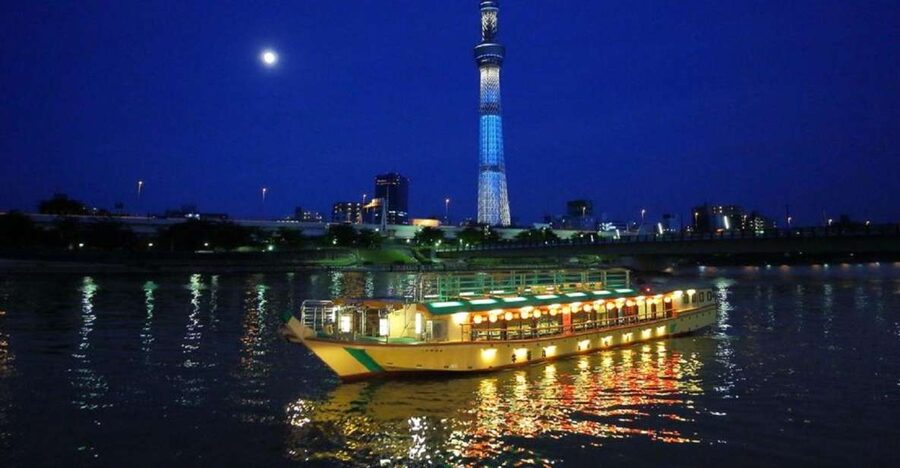
Tokyo’s old-style Yakatabune houseboat offers a rare mix of dinner, sightseeing, and local custom. You’ll sit low around a Japanese table, eat course after course, and watch Tokyo glow from the water as the boat moves between Shinagawa, Tokyo Bay, the Sumida River, Rainbow Bridge, Odaiba, and Tokyo Skytree.
In This Article
- Key things to know before you book
- A traditional boat ride with Tokyo lights outside
- Starting at Funasei Pier in Shinagawa
- The dinner arrives course by course
- Unlimited drinks change the value of the evening
- Tokyo Bay, Rainbow Bridge, and Odaiba
- The roof deck and Tokyo Skytree stop
- Moving into the Sumida River
- A warm crew, even across a language gap
- Who will enjoy this cruise most
- Price, timing, and practical value
- My verdict: a strong choice for a final Tokyo night
- FAQ
- Where does the Yakatabune dinner cruise depart?
- How long does the cruise last?
- What time does the boat depart?
- How early should I arrive?
- What food is included?
- Are drinks included?
- Is hotel transportation included?
- Is the cruise conducted in English?
- Can the dinner accommodate dietary requirements?
- Can I cancel for a refund?
I like the freshly cooked tempura and the generous Japanese dinner, and I like that beer, sake, wine, spirits, and soft drinks keep flowing. The main drawback is that much of the commentary and onboard entertainment is in Japanese, so you’ll miss some explanations unless a staff member helps translate.
Key things to know before you book
- The roof deck is the photo spot: The boat pauses near Tokyo Skytree and Rainbow Bridge, giving you time to go upstairs for nighttime pictures.
- Dinner is a full Japanese course: Expect appetizers, sashimi, fresh tempura, seasonal rice, pickles, salad, noodles, and dessert.
- Drinks are included: Beer, shochu, sake, wine, whiskey, plum liqueur, and soft drinks are available without extra charges.
- The atmosphere feels local: Japanese families and groups often share the boat, and traditional clothing is sometimes part of the scene.
- English is limited: Staff are kind and helpful, but announcements and commentary may be mainly in Japanese.
- Allow extra time for the pier: Check in 30 minutes early at Funasei Boat Pier in Shinagawa, and do not rely blindly on Google Maps.
A traditional boat ride with Tokyo lights outside
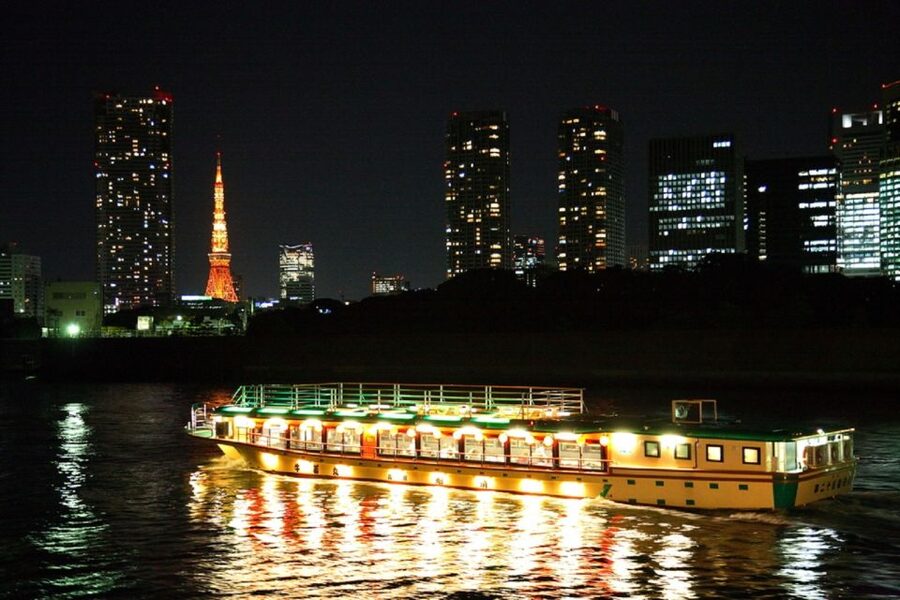
The appeal here is simple: you get a proper Japanese meal while Tokyo passes by the windows. A Yakatabune is not a modern sightseeing ferry with rows of seats and a quick narration. It is a dining boat, built around food, drink, conversation, and views.
The dining room is air-conditioned, which matters during Tokyo’s humid months. Seating is either at a table with chairs or at a low table over a recessed floor. You can enjoy the traditional style without having to sit directly on the floor, a useful option if kneeling is uncomfortable.
The boat usually spends two and a half to three hours on the water. The departure window is between 5:00 and 6:30 PM, but the exact time depends on the date and weather. You receive the confirmed departure information by separate email, so check your inbox before setting your evening plans in stone.
I would treat this as a full evening rather than a short cruise with dinner attached. The value comes from the combination of a long meal, unlimited drinks, several scenic stops, and a distinctly Japanese setting.
Starting at Funasei Pier in Shinagawa
Your evening begins at the Funasei Boat Pier in Shinagawa-Ku. This is the one part of the experience that deserves extra care. The pier can be hard to locate, and one booking party reported that Google Maps sent them to the wrong place. I would check the meeting-point directions closely and arrive well before the required 30-minute check-in.
There is no hotel pickup or drop-off included. You need to make your own way to the pier, and you are responsible for being on time. If you arrive late, there is no refund, so allow a generous buffer for finding the waterfront entrance.
Once aboard, the staff help you settle in and explain the basic flow of the evening. English support varies. Some English-speaking staff may assist, and the crew regularly makes an effort to show international diners how to order drinks or use the table settings. Still, the main announcements may be delivered in Japanese.
That language gap does not prevent you from enjoying the meal, but it changes the experience. You can follow the action, watch the views, and ask for help, yet you should not book this as an English-language sightseeing lecture.
The dinner arrives course by course
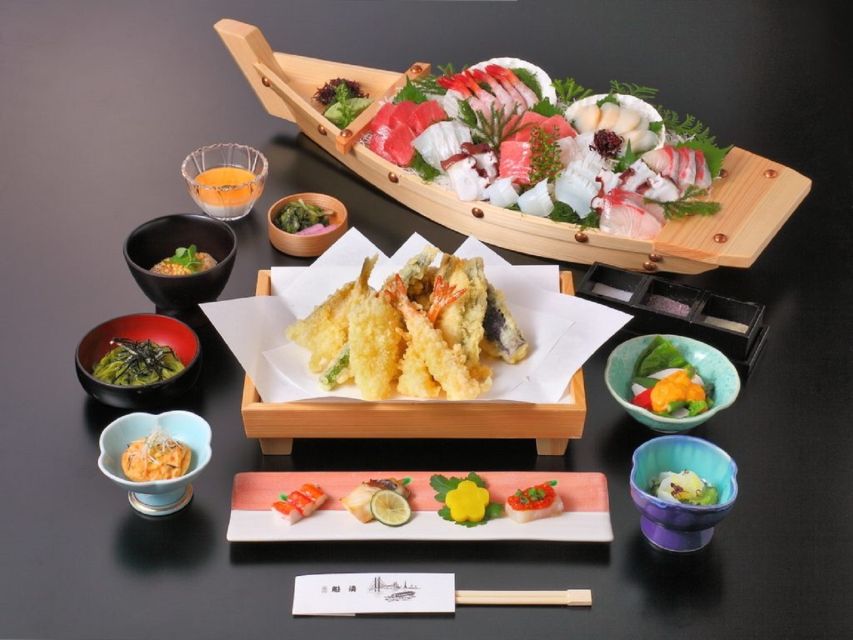
The meal is the heart of the cruise. Instead of one large plate, you receive a sequence of Japanese-style dishes prepared that day. The menu includes shikidashi appetizers, vegetables, smaller kobachi dishes, a sashimi boat, fresh tempura, a seasonal rice dish, pickled vegetables, salad, noodles, and dessert.
The tempura is served fresh in stages. This is a small but important detail. Rather than receiving a pile of fried pieces that cools on the table, staff bring out more as the meal continues. That keeps the batter crisp and makes the dish feel like part of the evening’s performance.
Sashimi and seafood feature prominently, along with vegetables and seasonal items. If you enjoy Japanese food, the range gives you a better sense of a traditional dinner than a standard restaurant set menu. If you prefer familiar food or have strict dietary needs, take note: the dinner cannot be adapted for dietary requirements.
The quantity is generous. You should arrive hungry, since the courses continue at a steady pace. The meal is also suited to families with older children and teenagers. Children aged 3 to 5 receive a special meal, while other children may receive the standard adult food unless arrangements are made.
Table labels in English can help you understand basic items such as which condiment goes with sashimi. That is useful, but it does not replace a detailed explanation of each dish. If knowing the cultural meaning of every course matters to you, consider arranging an English-speaking guide separately.
Unlimited drinks change the value of the evening
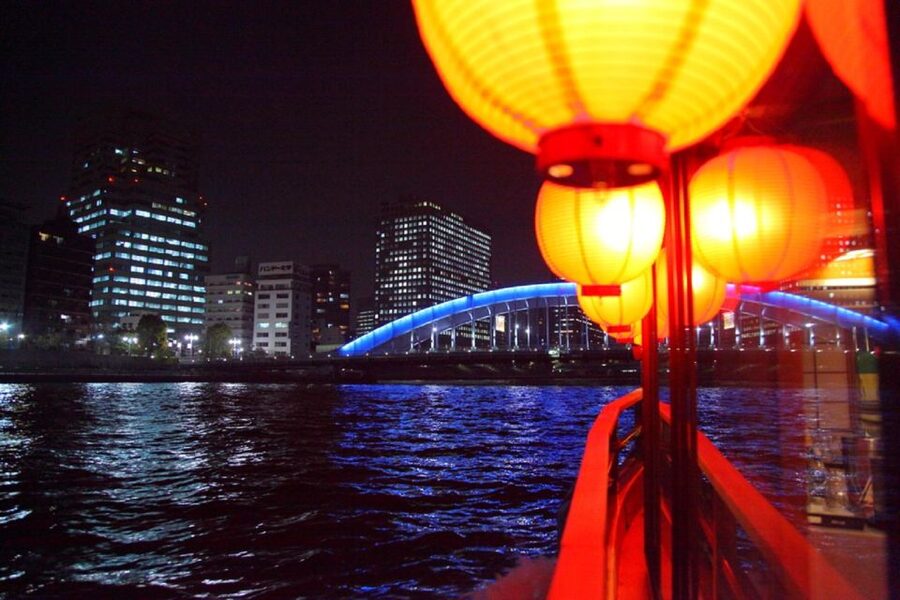
The all-you-can-drink arrangement is a major part of the price. Included options are beer, shochu, Japanese sake, wine, whiskey, plum liqueur, and soft drinks.
Drink service is quick. You can scan the bar code and request a drink, with staff bringing it promptly. Plum wine is worth trying if you like sweet drinks. It was singled out as a particularly enjoyable choice, though it may be too sweet for some palates.
The open bar makes the $108 price easier to understand. Tokyo has plenty of restaurants where a multi-course meal costs less, but this is not only a meal. You are also paying for three hours on the water, the roof deck, the service, and the sightseeing route. If you do not drink alcohol, the value is less obvious, although the food and cruise still provide the main experience.
I would not choose this solely to save money on dinner. I would choose it as a special evening where food and scenery are equally important.
Tokyo Bay, Rainbow Bridge, and Odaiba
After leaving Funasei, the boat heads through Tokyo Bay. The water gives you a different view of the city, with bridges, waterfront buildings, and illuminated structures appearing from a low and constantly changing angle.
The route generally includes Rainbow Bridge and Odaiba. The exact course can change, so think of these as likely highlights rather than fixed promises. Weather and operating conditions can also affect the route.
Odaiba is especially striking at night because the open waterfront allows wide views of Tokyo’s lights. From the boat, the city feels less crowded and more spacious than it does from street level. This is a good chance to put your camera away for a few minutes and simply watch the shoreline move past.
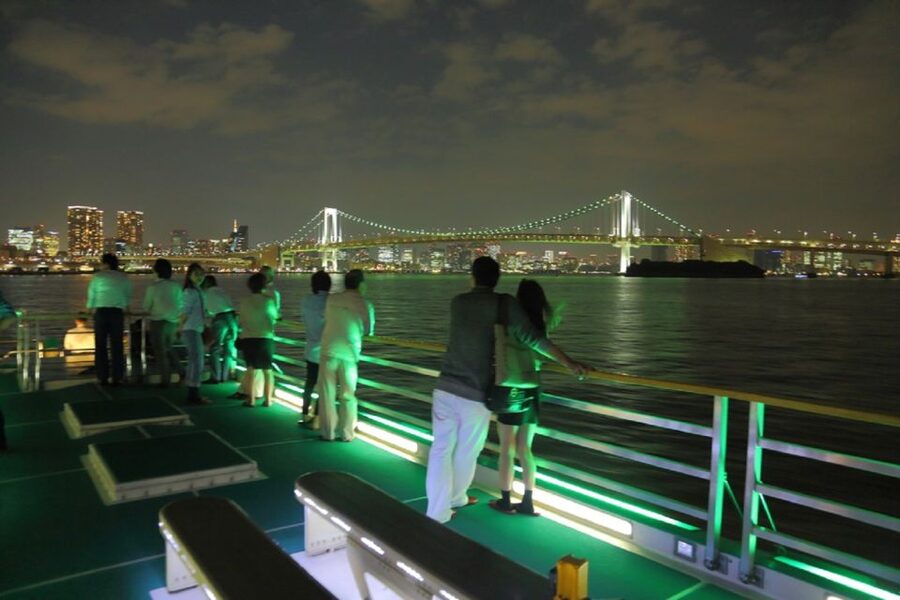
The boat may pause at scenic points. These breaks are when staff help you head to the roof deck and take pictures. Crew members have also helped take group photographs, which is handy when you want everyone in the frame.
The roof deck and Tokyo Skytree stop
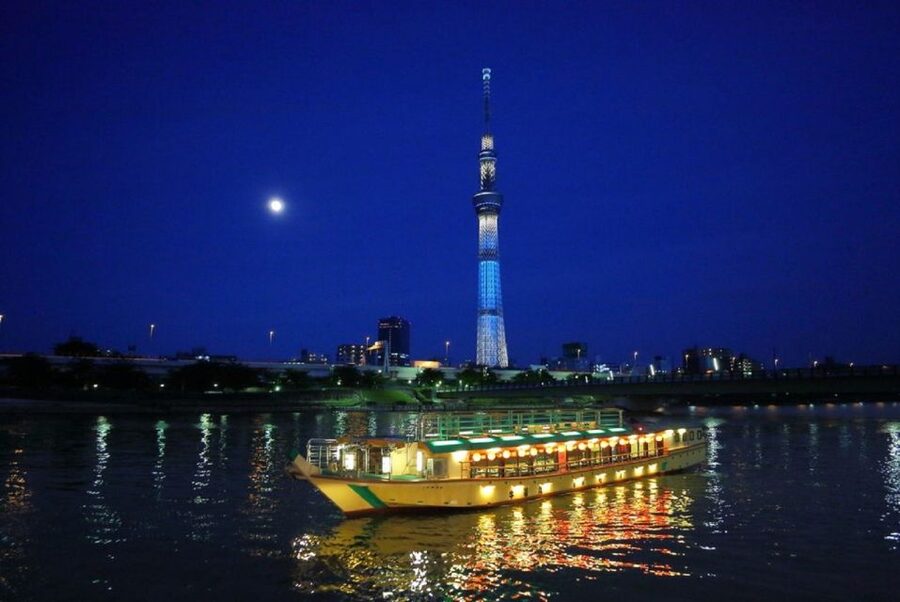
The top deck is the most memorable part for many people. From there, you can look over the water and photograph Tokyo Skytree, Rainbow Bridge, and the surrounding city lights.
Tokyo Skytree is particularly effective after dark. Its height gives your photos a clear focal point, while the boat provides a setting that feels more special than a standard observation deck visit. You may also have a chance to wear traditional clothing for photographs, depending on what the boat offers that evening.
The roof deck is open air, so conditions matter. The cruise operates in rain, but not during serious events such as an earthquake, tsunami, or storm. The route and outdoor time can change with the weather. Bring a layer for the upper deck, especially in cooler months.
Do not expect a long, formal stop with a full sightseeing talk. The roof-deck time is mainly for views and photographs. A map helps you identify what you are seeing, but the spoken commentary may be only in Japanese.
Moving into the Sumida River
The cruise also enters the Sumida River, creating a contrast with the more open bay. Here you see Tokyo from a narrower waterway, with bridges and buildings closer to the boat.
This part is less about one famous landmark and more about the rhythm of the city. You continue eating and drinking while the boat makes its way along the river. The changing views keep the dinner from feeling like a meal in a room that happens to float.
The route may include Tokyo Skytree as the main landmark, with the boat positioning itself for photographs. Staff may point out sights, but the amount of English explanation is limited. If you only want the view, this is no issue. If you want detailed background about the bridges, districts, and buildings, you may find the information thin.
A warm crew, even across a language gap
Service is one of the strongest reasons to book this cruise. The crew are attentive, cheerful, and quick to help. They make an effort with international diners, even when the main program is in Japanese.
You may find that the atmosphere is partly shaped by local groups sharing the boat. Japanese families and groups sometimes dress in traditional clothing, giving the evening a more genuine social feel than a cruise designed only for foreign tourists.
The onboard host may tell jokes and keep the room lively, but you may not understand the words. That is not necessarily a problem. The energy, gestures, meal service, and shared excitement around the roof deck still communicate plenty.
Special occasions receive thoughtful attention. Birthday and honeymoon celebrations have included small gifts, and staff have made the evening feel personal for couples and families. These touches are not guaranteed, but the crew clearly tries to mark important occasions when they are told in advance.
Who will enjoy this cruise most
I would recommend the Yakatabune dinner cruise to you if you want an evening that combines several sides of Tokyo:
- You want Japanese food rather than a basic buffet.
- You enjoy trying several dishes in one meal.
- You like city views but prefer a relaxed setting.
- You want unlimited drinks included in the price.
- You are comfortable with some Japanese-only announcements.
- You are marking a birthday, honeymoon, or final night in Japan.
- You are traveling with teenagers who can appreciate food, photos, and a three-hour outing.
It is less suitable if you need a fully English-speaking guide, have strict food restrictions, dislike seafood, or want complete control over the route and schedule. The boat may share tables with other diners, with up to six people at a table, so this is not a private romantic cruise.
The shared setting can be part of the fun. You are taking part in a social Japanese dinner tradition, not booking a secluded table for two.
Price, timing, and practical value
At $108 per person, this is a splurge, but a reasonable one for a special night. The cost includes the Yakatabune cruise, the full Japanese dinner, and unlimited drinks. You would pay separately for a substantial meal, several alcoholic drinks, and a Tokyo night-view attraction, so the package can make sense for people who will use all three parts.
The strongest value comes from the food and drink combination. The cruise itself is scenic, but the water route is subject to change. The dinner and open bar give the evening substance even if the route is shortened by weather.
Book early if your dates are fixed. The cruise can fill up, and the departure time is not confirmed until later. Once the time arrives, check in 30 minutes early. Rain does not automatically cancel the cruise, but severe conditions can lead to cancellation by email.
Cancellation is free up to 11 days before departure for a full refund. After that point, the stated protection does not apply, so avoid booking until your plans are firm.
My verdict: a strong choice for a final Tokyo night
I would book this cruise for a memorable final evening in Tokyo, especially if you want something more rooted in local dining culture than a standard restaurant reservation. The fresh tempura, steady food service, unlimited drinks, friendly crew, and Skytree photo stop give the night a clear sense of occasion.
Just set the right expectations. This is not a fully translated tour, not a private boat, and not a guaranteed fixed route. You may share a table, hear most commentary in Japanese, and need to work a little to find the pier.
If those points sound manageable, the Yakatabune offers excellent evening value and a genuinely enjoyable way to see Tokyo from the water.
FAQ
Where does the Yakatabune dinner cruise depart?
It departs from the Funasei Boat Pier in Shinagawa-Ku, Tokyo.
How long does the cruise last?
The cruise lasts about three hours, with the usual time on the water ranging from two and a half to three hours.
What time does the boat depart?
Departure is between 5:00 PM and 6:30 PM. The exact time depends on the date and weather and is confirmed by separate email.
How early should I arrive?
You should check in 30 minutes before departure. If you arrive late, you will not receive a refund.
What food is included?
The Japanese course meal includes appetizers, vegetables, smaller side dishes, sashimi, fresh tempura, seasonal rice, pickled vegetables, salad, noodles, and dessert.
Are drinks included?
Yes. Unlimited drinks include beer, shochu, Japanese sake, wine, whiskey, plum liqueur, and soft drinks.
Is hotel transportation included?
No. Hotel pickup and drop-off are not included.
Is the cruise conducted in English?
The main commentary and onboard program may be in Japanese. Some staff can assist in English, but full English explanations are not guaranteed.
Can the dinner accommodate dietary requirements?
No. The dinner cannot be catered for dietary requirements.
Can I cancel for a refund?
You can cancel up to 11 days in advance for a full refund. The cruise may operate in rain but can be canceled during special circumstances such as an earthquake, tsunami, or storm.
Bay & River Cruises, compared.
 ★ 4.0Mt Fuji & Hakone Cruise, Drum Show Bullet Train 1 Day from TokyoFrom $149
 ★ 4.4Tokyo Mt Fuji 5th St & Hakone Cruise Bus Tour w/Bullet TrainFrom $15410 hours
 ★ 4.2Tokyo: Mt. Fuji 5th Station & Hakone Cruise 1-Day Bus TourFrom $12911 hours
 ★ 4.7Tokyo: Meiji Shrine, Asakusa, Skytree Bus Tour and CruiseFrom $12210 hours
 ★ 4.0Mt Fuji & Hakone Cruise, Drum Show Bus 1 Day from TokyoFrom $122
 ★ 4.6Sumida River: Japanese Traditional Yakatabune Dinner CruiseFrom $1032h 30m