Reviewed · MT FUJI DAY TRIPS
Japan’s Best Mount Fuji Tour
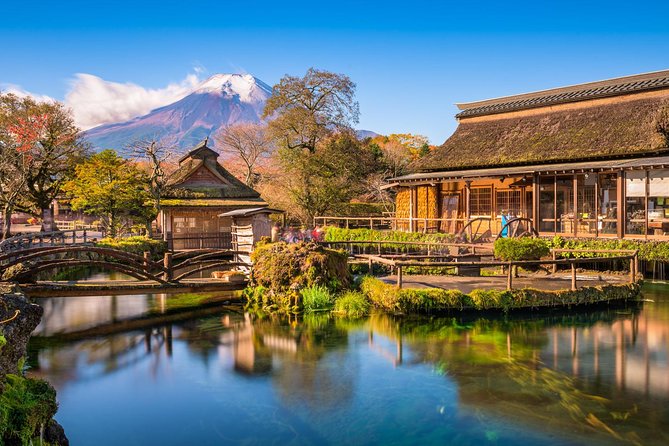
Mount Fuji is the star, but the best part of this day is seeing how many different faces the mountain has. You’ll view it from Arakurayama Sengen Park, Fujiyoshida’s old-style Honcho Street, Lake Kawaguchi, and a reconstructed village by Lake Saiko. In spring, cherry blossoms and seasonal flowers add extra color, though clear weather is never guaranteed.
In This Article
- Key points to know before booking
- Why this Mount Fuji day trip works
- Meeting in Shinjuku without a last-minute scramble
- Arakurayama Sengen Park and the famous Fuji view
- Fujiyoshida’s Honcho Street and lunch break
- A short Mount Fuji viewing stop
- Oishi Park by Lake Kawaguchi from April to June
- Saiko Iyashi no Sato Nenba, the Healing Village
- The guide, vehicle, and group size
- Traffic, weather, and the real schedule
- Is $77 a good value?
- Who should book this Fuji tour?
- Should you book it?
- FAQ
- Where does the Mount Fuji tour start?
- Where does the tour finish?
- Is hotel pickup and drop-off included?
- Is lunch included in the price?
- How long does the tour last?
- Is Mount Fuji guaranteed to be visible?
- Is Oishi Park included all year?
- How large is the group?
- Can I cancel or change the booking?
I like the broad mix of stops and the fact that transportation, tolls, parking, tax, and the Healing Village entrance fee are included in the $77 price. I also like the chance to travel with an English-speaking guide such as Sam, who has been praised for explaining Japanese culture clearly and helping keep the day moving. The main drawback is the road-dependent schedule: traffic, crowds, and weather can shorten stops or make Mount Fuji disappear behind clouds.
Key points to know before booking
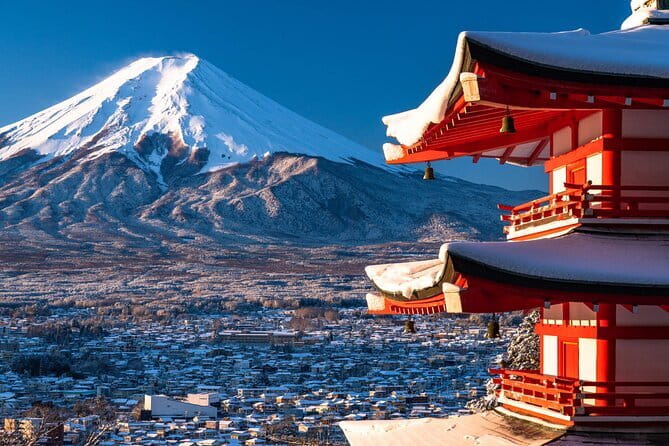
- Arakurayama Sengen Park gives you the classic Fuji view: Expect a city panorama with Mount Fuji and the famous pagoda setting, though crowds can affect your view.
- Fujiyoshida adds a local street stop and lunch: You’ll have time for Honcho Street and a Japanese meal, but food is not included.
- Oishi Park is seasonal: This Lake Kawaguchi stop is offered for departures from April through June and includes views of the lake, mountain, and flowers.
- The tour is a shared day trip: A booking can include up to eight people, but the vehicle may also carry people from other bookings.
- The schedule is strict: Meet at Kogakuin University by 8:20 am for the 8:30 am departure, and wear shoes suitable for walking and some hiking.
- The mountain may not appear: Even a well-planned Fuji tour cannot control cloud cover, fog, traffic, or road closures.
Why this Mount Fuji day trip works
At $77 per person, this is a reasonably priced way to reach several Fuji-area sights from central Tokyo without arranging trains, buses, local transfers, parking, or admission on your own. The value comes from the number of places covered in one day, not from a long stay at any single one.
The planned day lasts about seven to eight hours, with a scheduled return to Shinjuku around 6:00 pm. That makes it useful if you have limited time in Tokyo and want a guided introduction to the Fuji Five Lakes area. You’ll spend a fair amount of time in the vehicle, but that is normal for a Tokyo to Mount Fuji outing.
I love that the route is not limited to one photo stop. You get a famous viewpoint, a traditional-looking shopping street, a lakeside park, and the Saiko Healing Village. Each place gives you a different way to understand the region.
The tour also has a practical edge. Parking fees, toll fees, consumption tax, transportation from the meeting point, and the entrance fee for Saiko Iyashi no Sato Nenba are included. You pay separately for lunch and personal purchases, so carry enough yen. Many places around Mount Fuji accept cash only.
A few more Tokyo tours and experiences worth a look
Meeting in Shinjuku without a last-minute scramble
The meeting point is at Kogakuin University Shinjuku Campus, near the west side of Shinjuku Station. The instructions direct you from the Central West Exit underground toward the Chuo-dori Underpass and the Tokyo Metropolitan Government Building.
Once you reach street level, walk toward the Tokyo Metropolitan Government Building for another one or two minutes. At the intersection, Keio Plaza Hotel is across the street from the university. The pickup is in front of Kogakuin University, with an 8:20 am meeting time and an 8:30 am departure.
Shinjuku Station is large and easy to underestimate. I would allow extra time to find the correct west exit and reach the street-level meeting point. Arrive at least 10 minutes early, since the vehicle is scheduled to leave on time.
Hotel pickup and drop-off are not included. You need to make your own way to the university and return there at the end. The tour finishes back at the meeting point, rather than at your hotel.
Arakurayama Sengen Park and the famous Fuji view
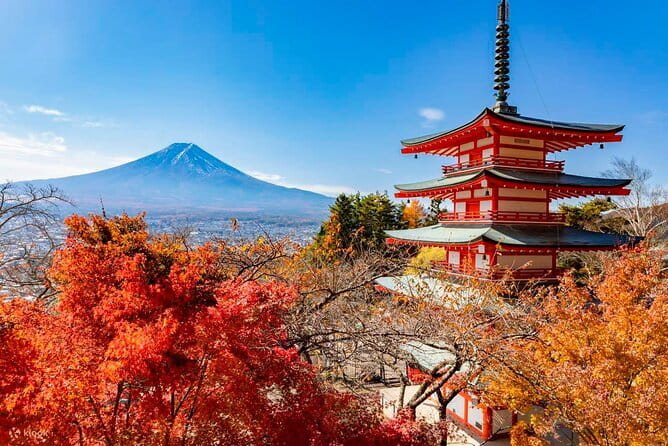
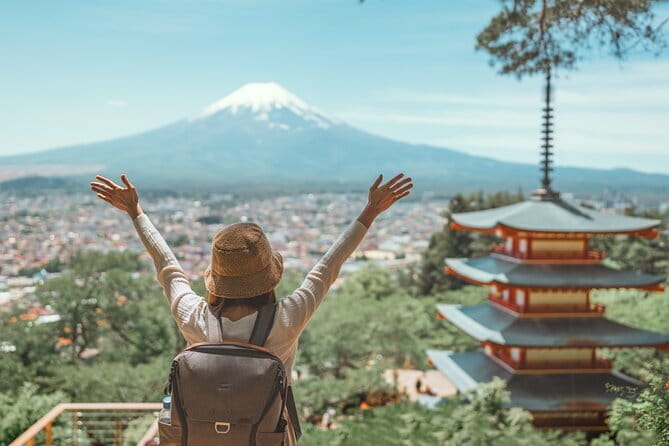
The first major stop is Arakurayama Sengen Park, where the city, Mount Fuji, and the Chureito Pagoda area create one of Japan’s most recognizable views. You’ll have about an hour here.
This is the part of the day that often appears in photographs: Mount Fuji behind the pagoda, with the surrounding town spread below. In spring, cherry blossoms can make the setting especially striking. The timing is also useful because an early stop gives you a chance to see Fuji before the day’s clouds or haze become heavier.
The catch is that this is not a flat roadside viewpoint. You should expect stairs and some hiking, so comfortable walking shoes matter. Crowds can also be a problem, especially around the most photographed points. You may need patience to reach a clear viewing position.
Weather controls the result. Mount Fuji can be completely hidden, even when the rest of the day runs properly. That does not make the stop pointless, since the park and town view remain attractive, but you should book this outing for the wider experience rather than for one guaranteed photograph.
One serious operational point deserves attention. A complaint connected with the first stop described being left behind and unable to continue. The operator said it would investigate. I would treat the departure time seriously, stay aware of the guide’s instructions, and make sure you know where the vehicle is parked before walking off to take photographs.
Fujiyoshida’s Honcho Street and lunch break
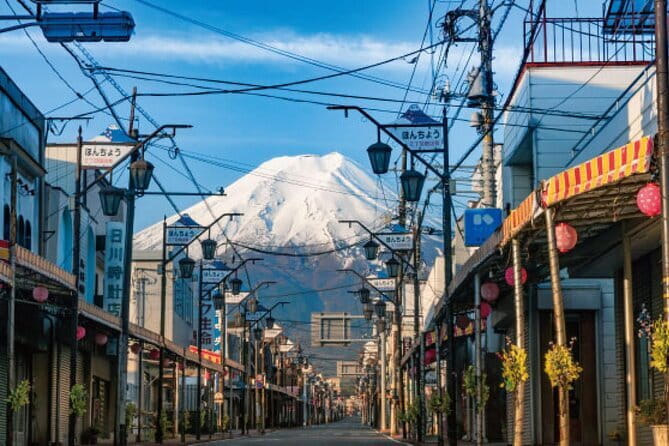
Next comes Fujiyoshida, where you’ll stroll along Honcho Street and have time for lunch. The stop lasts about two hours in total, with roughly 90 minutes set aside for the meal and the street visit.
Honcho Street is valued for its view toward Mount Fuji and its traditional Japanese town atmosphere. It gives you a chance to walk rather than simply step off a bus, take a picture, and leave. The street is also a useful place to see how the mountain shapes daily life and local tourism in Fujiyoshida.
Lunch is not included. That keeps the tour price down and gives you some choice, but it means you need to budget separately. The available meal options and prices are not specified, so carrying cash is sensible. Food and drinks, including snacks, are not allowed on the bus under the tour’s stated rules.
The two-hour block sounds generous, but traffic can affect every stop on this route. Keep an eye on the meeting time, especially if you stop for a full meal. The guide may provide local context, but you should not assume that every minute can be used casually.
A short Mount Fuji viewing stop
The itinerary includes about 30 minutes for a direct Mount Fuji viewing stop. This is a brief pause, so think of it as a chance to appreciate the mountain or take a few photographs, not as a long walk or a full sightseeing session.
The wording for this stop is broad, and the exact point can vary with weather, road conditions, and the vehicle’s route. That flexibility is understandable in the Fuji area, where traffic and access can change quickly.
If the mountain is visible, this may be one of the day’s simplest pleasures: a short break, open views, and time to look without a major climb. If clouds cover the summit, there is little the tour can do. A Fuji outing always involves some weather risk, so keep your expectations realistic.



Oishi Park by Lake Kawaguchi from April to June
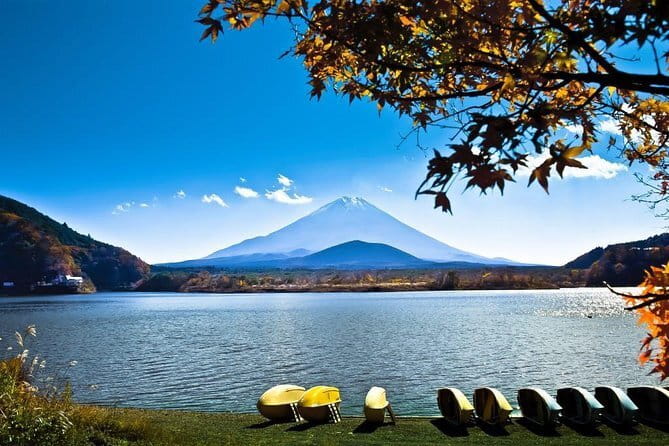
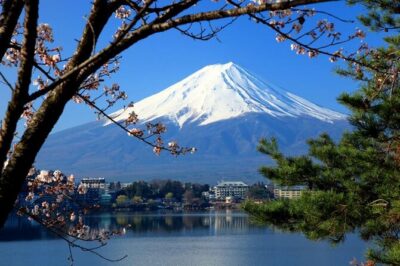
For departures from April through June, the tour stops at Oishi Park beside Lake Kawaguchi. The park offers views across the lake toward Mount Fuji, with seasonal flowers adding interest in the foreground. The planned stop is about 40 minutes, within an approximately one-hour visit.
This is a strong contrast to Arakurayama Sengen Park. Instead of seeing Fuji above a town and pagoda, you’ll see the mountain across open water and planted flower beds. The lake setting can make the mountain feel quieter and more spacious.
The seasonal restriction matters. Oishi Park is listed only for departures from April to June, so you should not assume this stop is part of every departure. The tour’s spring focus also does not guarantee cherry blossoms on your chosen date. Bloom timing depends on the season, and weather can still block the mountain.
As with the other stops, traffic may shorten the visit. Bring a camera, but do not let the perfect picture consume the whole stop. A few minutes simply looking across the lake can be more rewarding than spending the entire time lining up a photograph.
Saiko Iyashi no Sato Nenba, the Healing Village
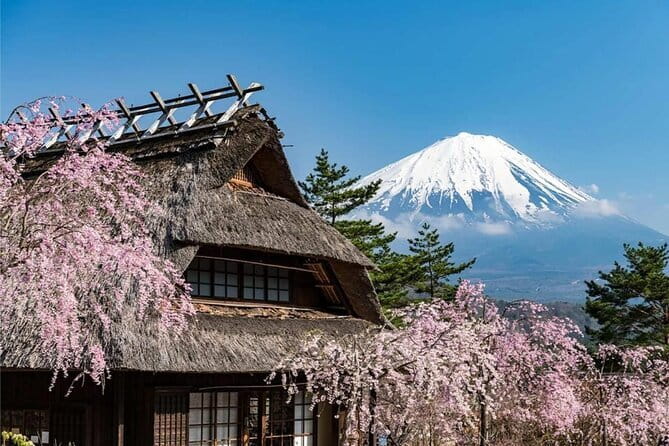
The final major sightseeing stop is Saiko Iyashi no Sato Nenba, also called the Healing Village. You’ll spend about an hour among reconstructed traditional-style houses and nostalgic Japanese scenery beside the Fuji area.
The entrance fee is included, which is helpful because this is the only named paid attraction in the schedule. The village offers a change of pace from the mountain viewpoints. Instead of focusing only on nature, you get a sense of older rural design and Japanese village life as presented through the site.
An hour is enough for a focused visit, but not for a slow, detailed exploration of every corner. You may find that the stop works best if you first look across the village toward the surrounding mountains, then choose a few buildings or paths to explore.
The weather matters here too. Even if Fuji remains hidden, the village can still provide a worthwhile cultural stop. One strong day described by the operator included the village and the pagoda area as highlights, while another account noted that crowds prevented reaching the final pagoda viewpoint. That contrast tells you something useful: the route can be excellent, but crowd levels and timing make a difference.
The guide, vehicle, and group size
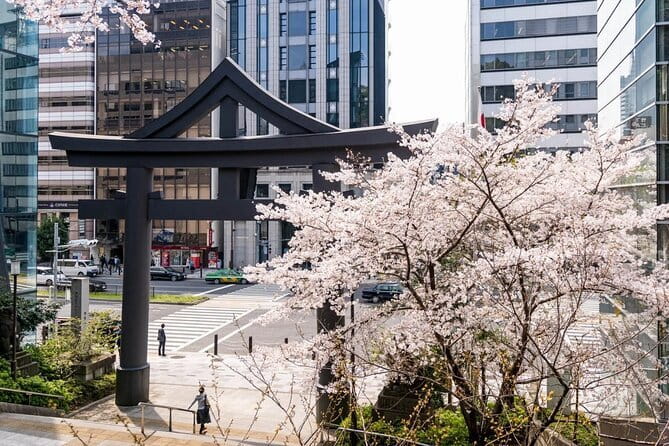
The experience is led in a shared vehicle rather than as a private tour. The information says a booking may contain up to eight people, but that number refers to one booking and not necessarily the entire group. Other bookings can be combined, so do not reserve this expecting a private ride.
A good guide matters on a day with several short stops. Sam is specifically named in the tour information, and his strengths include English conversation, Japanese cultural explanations, and practical help during the day. The driver is also described as polite and helpful. Guide quality can vary by departure, but the best version of this tour depends heavily on clear instructions and good time management.
You need moderate physical fitness. The walking is not described as extreme, but Arakurayama Sengen Park includes hiking and stairs, and the day involves getting in and out of the vehicle several times. Supportive shoes will make the outing more pleasant.
The bus rules are strict: eating and drinking, including snacks, and loud conversation are prohibited on board as a public-health measure. Plan to eat during the lunch stop rather than treating the vehicle as a picnic space.
Traffic, weather, and the real schedule
Mount Fuji tours are especially vulnerable to road congestion. The route from Tokyo can slow down, and traffic may shorten or cancel intermediate stops. The order of stops can also change depending on the vehicle assigned to the tour.
A scheduled arrival at Shinjuku around 6:00 pm should be treated as an estimate, not a promise. The operator warns that transportation and road conditions can cause delays. Recent limits on bus-driver working hours may also affect how many sightseeing stops are possible during heavy congestion.
This matters if you have an evening flight, theater ticket, restaurant reservation, or Shinkansen connection. Do not schedule anything tight after the tour. If a delay forces you to take a taxi or stay overnight, the stated terms provide no compensation for those costs.
The same caution applies to visibility. The mountain can be fully hidden, as happened on one praised outing, yet the day can still work because the route includes the village, street walk, lake views, and pagoda area. If seeing the summit is your only goal, no day tour can remove that risk.
Is $77 a good value?
I think the price is fair for the amount of ground covered. At $77, you receive transportation from Shinjuku, parking, tolls, tax, and the Healing Village admission. You also avoid the work of piecing together several regional connections.
The price does not include lunch, drinks, personal expenses, or hotel transfers. Those costs are easy to overlook, so plan for a cash lunch and small purchases. The tour’s cash warning is practical, since many Fuji-area spots may not accept cards.
You are paying for convenience and variety, not a private guide or a leisurely pace. A private outing would give you more control, but this shared trip is better suited to someone who wants a broad introduction at a fixed price.
Who should book this Fuji tour?
I would choose this tour if you want to see several well-known Fuji-area sights in one day and prefer a guide-led ride from Tokyo. It suits first-time visitors, people who do not want to navigate regional buses, and anyone interested in combining mountain views with a village and town stop.
It is also a good fit for photographers who understand that conditions may change. You’ll have several chances for views, including the pagoda, Honcho Street, Mount Fuji itself, and Lake Kawaguchi. That variety improves your odds, but none of the views is guaranteed.
I would hesitate if you dislike early starts, fixed departure times, shared transport, or road delays. I would also avoid booking it before an important evening commitment. The non-refundable policy makes careful planning essential: cancellations or changes are not refunded for any reason.
Should you book it?
Book this tour if you want maximum Fuji-area variety for a moderate price and can accept a firm schedule, shared transport, and weather risk. The route gives you more than a single mountain lookout, and the inclusion of transport, tolls, parking, and the Healing Village entrance fee helps justify the cost.
Skip it if you need a guaranteed Mount Fuji view, a private vehicle, hotel pickup, or a relaxed day with plenty of time at each stop. For the right visitor, this is a practical and scenic introduction to the mountain region. Just arrive early, carry yen, wear good shoes, and leave your evening schedule open.
FAQ
Where does the Mount Fuji tour start?
The tour starts at Kogakuin University Shinjuku Campus, 1-chōme-24-2 Nishishinjuku, Shinjuku City, Tokyo. The meeting time is 8:20 am, with departure scheduled for 8:30 am.
Where does the tour finish?
The activity ends back at the meeting point near Kogakuin University and Shinjuku Station. The scheduled arrival time is around 6:00 pm.
Is hotel pickup and drop-off included?
No. You must make your own way to the Shinjuku meeting point, and the tour returns there after the day’s sightseeing.
Is lunch included in the price?
No. Lunch is not included, and you should pay for your own meal and personal expenses. Carry enough Japanese yen because many places around Mount Fuji accept cash only.
How long does the tour last?
The tour lasts approximately seven to eight hours. The scheduled departure is 8:30 am, with an expected return around 6:00 pm, though traffic and road conditions can cause delays.
Is Mount Fuji guaranteed to be visible?
No. Weather can hide Mount Fuji completely, and stops may be shortened or canceled because of weather or traffic. The tour includes several different viewing areas, but no clear summit view is guaranteed.
Is Oishi Park included all year?
No. Oishi Park is listed as a stop for departures from April through June. The visit includes Lake Kawaguchi, views toward Mount Fuji, and seasonal flowers.
How large is the group?
The tour information states a maximum of eight travelers, but the clarification explains that this refers to the number in one individual booking. It is a join-in tour, so other bookings may be traveling in the same vehicle.
Can I cancel or change the booking?
No. The experience is non-refundable and cannot be changed for any reason. If you cancel or request an amendment, the amount paid will not be refunded.
More Mt Fuji Day Trips in Tokyo
More tours in Tokyo we've reviewed












Mt Fuji Day Trips, compared.
 ★ 5.0Mt Fuji and Hakone 1-Day Bus Tour Return by Bullet TrainFrom $163
 ★ 4.0Mt Fuji & Hakone Cruise, Drum Show Bullet Train 1 Day from TokyoFrom $149
 ★ 4.4Tokyo Mt Fuji 5th St & Hakone Cruise Bus Tour w/Bullet TrainFrom $15410 hours
 ★ 4.5From Tokyo: Mount Fuji Full-Day Sightseeing TripFrom $6810 hours
 ★ 4.7Tokyo: Mt. Fuji Tour, Hakone Ropeway, Owakudani, Lake AshiFrom $5410 hours
 ★ 4.4Tokyo:Mt.Fuji,Kawaguchiko Oishi Park,Arakurayama Sengen ParkFrom $5410 hours