Reviewed · GO-KARTS
Official Japan Go-Kart Tokyo Skytree/Akihabara (IDP Required)
Tokyo sightseeing usually means trains, sidewalks, and looking up at towers. This experience changes the view: you sit behind the wheel and pass Kaminarimon, Ameyoko, Ueno Park, Akihabara, Kappabashi, and Tokyo Skytree on city streets. It is a lively way to cover eastern Tokyo without spending the whole day walking between sights.
In This Article
- Key points to know before you book
- What this Tokyo go-kart ride is really like
- Starting near Asakusa and Kaminarimon
- Ameyoko and Ueno Park from behind the wheel
- Akihabara’s neon and electronics culture
- Kappabashi, Tokyo’s kitchen supply street
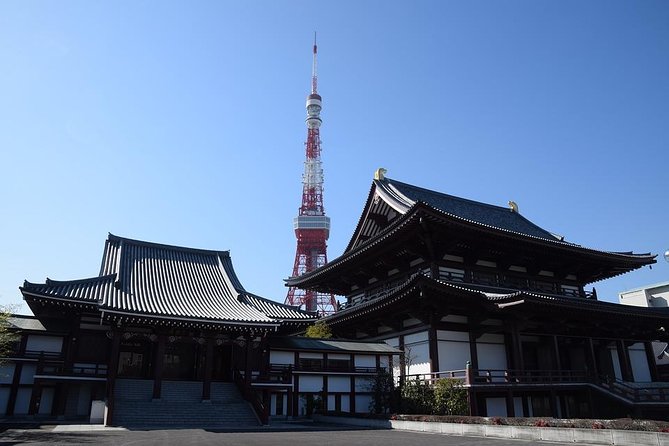
- Tokyo Skytree closes the route
- Price and value at $65.69
- The driving permit rules are not optional
- Clothing, alcohol, weather, and timing
- Who will enjoy this most
- Should you book the Tokyo Skytree and Akihabara kart tour?
- FAQ
- How long does the go-kart experience last?
- Where does the tour start and finish?
- What sights does the route include?
- Do I need an International Driving Permit?
- Are there exceptions to the standard permit rule?
- What should I wear?
- Can I participate after drinking alcohol?
- What happens if bad weather cancels the tour?
- How many people can join the group?
I like the small maximum group of 10, which keeps the briefing and road procession manageable. I also like the quick setup, including a short driving video and a choice of costumes, so you can get moving without giving up a full day. The main catch is serious: you need the right driving documents, and an ordinary home-country license alone is not enough for most participants.
Key points to know before you book
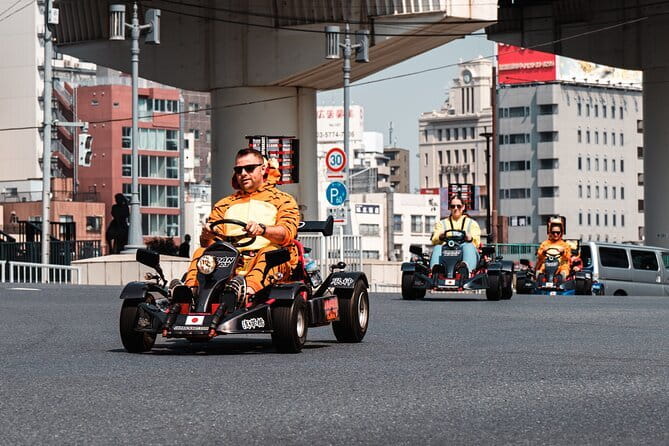
- You drive through eastern Tokyo: The route links Asakusa, Ueno, Akihabara, Kappabashi, and Tokyo Skytree in one outing.
- The group is capped at 10: A smaller group means clearer instructions and a more personal guide-led experience.
- Bring the correct permit: Most drivers need a booklet-form International Driving Permit under the 1949 Geneva Convention, plus their passport and home license.
- Expect costumes and a short safety video: You choose an outfit, sign a waiver, and watch a roughly three-minute instruction video before driving.
- The tour lasts about 1 hour 30 minutes: It suits a packed Tokyo schedule, though the actual route time may feel shorter once check-in and preparation are included.
- Weather can change the plan: Poor weather may lead to rescheduling or a full refund.
What this Tokyo go-kart ride is really like
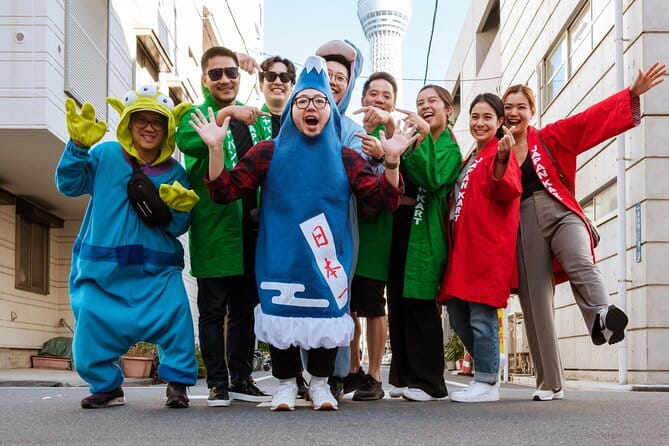
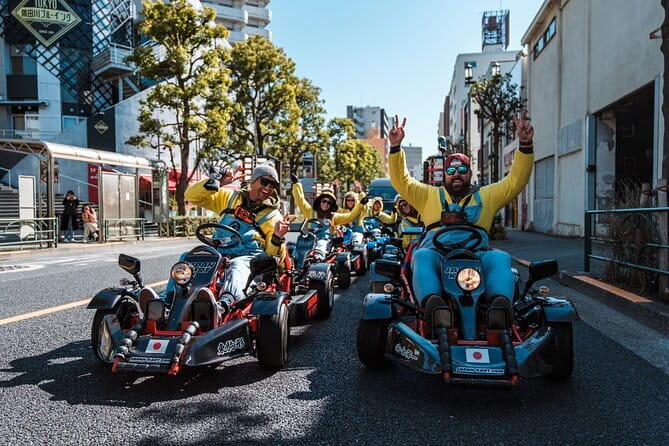
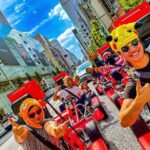
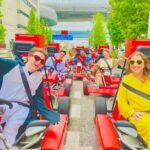
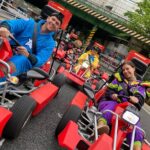
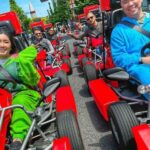
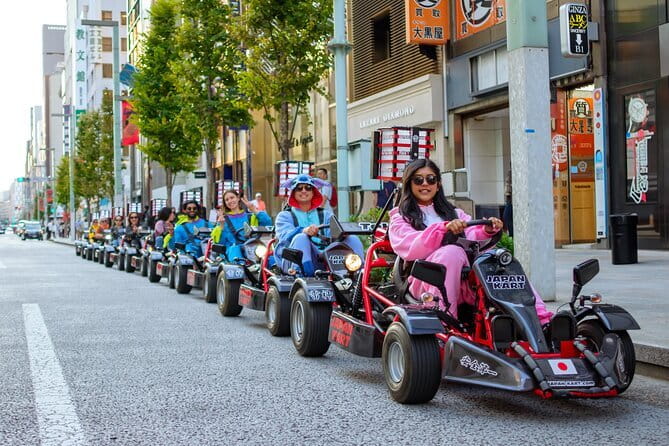
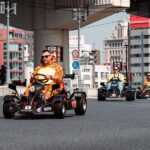
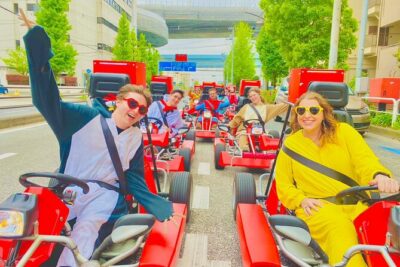
This is not a closed-track karting session. You drive a go-kart on public roads, following an English and Japanese-speaking guide through eastern Tokyo. That makes the ride more exciting than a normal amusement-park circuit, but it also means you need to take the rules, documents, clothing, and timing seriously.
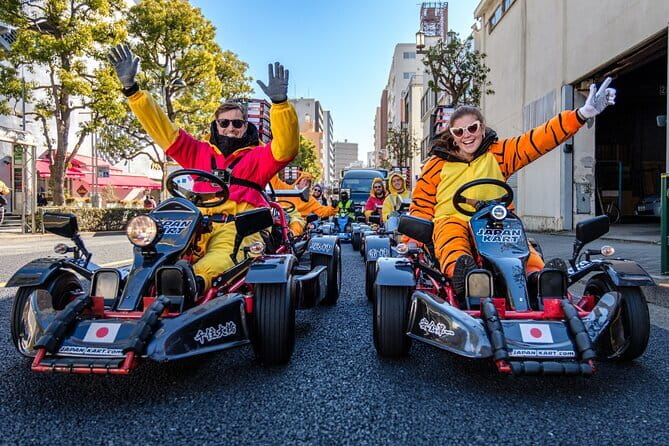
At the shop, you sign a waiver, choose from available costumes, and watch a short instructional video. The setup sounds simple, but do not arrive at the last minute. You are asked to be there 15 minutes before the booking time, and the operator can wait only 10 minutes after the reserved start.
The guide leads the group, and the experience can feel more personal because the maximum is 10 people. One participant described being placed at the front of the line, behind the guide vehicle, which added a little extra excitement. Your exact position may vary, but the order is set by the operator.
The staff have been praised for being friendly and professional, including helping with a requested time change before a booking. That sort of practical support matters in Tokyo, where a small delay on the train can quickly become a missed reservation. Still, you should plan your route carefully rather than rely on a last-minute adjustment.
A few more Tokyo tours and experiences worth a look

Starting near Asakusa and Kaminarimon
The meeting point is JapanKart at 2-chome-18-15 Azumabashi in Sumida City. It is near public transportation, and the activity returns to the same place at the end. That makes it easier to fit into a day based around Asakusa or Tokyo Skytree.
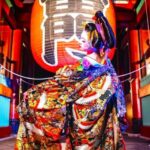
One of the route’s first major sights is Kaminarimon, or Thunder Gate, in Asakusa. Its huge red lantern and statues of Fujin, the wind god, and Raijin, the thunder god, mark the entrance to Sensō-ji temple. From street level, the gate is one of Tokyo’s most recognizable sights.
You will not have time to stop and explore Sensō-ji during the ride. That is both the point and the limitation. You get a moving view of one of Tokyo’s famous areas, but you should return on foot if you want temple grounds, shopping along Nakamise, or time beneath the lantern.
This part of the route gives the ride a strong sense of place right away. Asakusa feels different from the glass towers and giant crossings farther west. The old temple district, riverfront setting, and busy streets give you a quick look at one of Tokyo’s most distinctive neighborhoods.
Ameyoko and Ueno Park from behind the wheel
The route continues toward Ameyoko, short for Ameya Yokocho, near Ueno. This street market began with connections to American goods after the Second World War and has grown into a crowded shopping zone with food stalls, small shops, and bargain-style retail.
From a go-kart, you see the district in motion rather than browsing every storefront. That makes this a good introduction if you want to add Ameyoko to your Tokyo map before returning later on foot. It is not a substitute for stopping to eat or shop, so plan another visit if the market itself interests you.
Ueno Park brings a different mood. The broad park is home to cultural attractions such as the Tokyo National Museum and Ueno Zoo, and it is especially well known for cherry blossoms in spring. The ride gives you a quick look at the park area, but it cannot include a museum visit, zoo visit, or long picnic stop.
I like this pairing because it shows two sides of Ueno in a short span. Ameyoko is dense and commercial, while Ueno Park offers open public space and major cultural sites. You cover both without changing trains, though you trade away the freedom to pause wherever you wish.
Akihabara’s neon and electronics culture
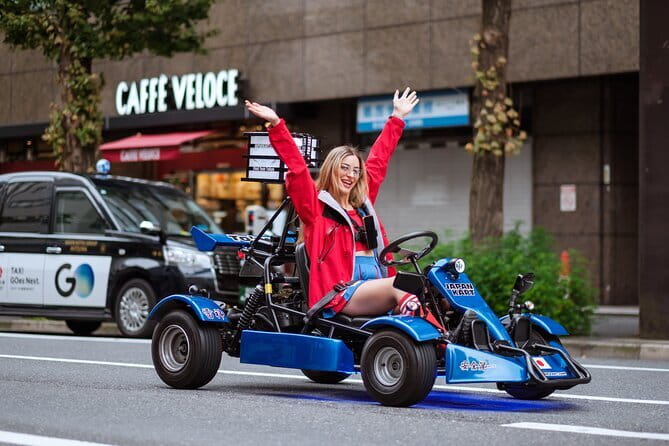
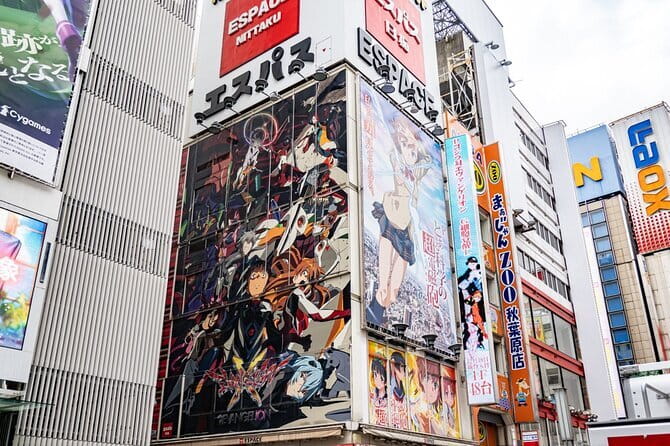
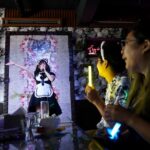
Akihabara is the route’s most obvious pop-culture stop. Known locally as Akiba, it is Tokyo’s center for electronics, anime, manga, games, and maid cafés. Tall signs and bright storefronts give the area a very different look from Asakusa’s temple district.
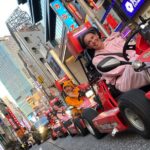
Driving through Akihabara is likely to be one of the most memorable parts of the outing because the kart puts you directly into the city scene. You may find yourself waving at people along the way, and the costumes add a playful touch to the experience. The fun comes from being visible, so this is not the best choice if you prefer quiet sightseeing or blending into the crowd.
The ride also gives you a useful first look at the area’s layout. If you want specific anime goods, electronics, or cafés, note where you pass and return later. You will not have time to investigate the shops from the kart, and the tour is designed for movement rather than browsing.
Some riders describe the experience as nerve-wracking at first. That makes sense: driving through Tokyo is a more active form of sightseeing than sitting on a bus. The guide and introductory video help, but you should be comfortable operating a vehicle and paying attention to traffic.
Kappabashi, Tokyo’s kitchen supply street
Kappabashi is one of the route’s more unusual stops. Often called Kitchen Town, this street is lined with stores selling professional knives, cookware, restaurant supplies, and detailed plastic food models. It is a practical shopping district with a strong connection to Tokyo’s food culture.
You may not have heard of Kappabashi before booking, which is part of its appeal. It shows a useful, working side of Tokyo rather than only famous monuments and entertainment zones. A cook, food fan, or anyone looking for a distinctive souvenir will want to return with time to browse.
As with the other stops, the kart ride only gives you a moving view. The shops are the real attraction, so treat this section as a preview. If you want to buy a knife or kitchen tool, do it on a separate visit when you can compare products and handle purchases without worrying about the next turn.
A few more Tokyo tours and experiences worth a look

Tokyo Skytree closes the route
Tokyo Skytree reaches 634 meters and is Japan’s tallest structure. Its observation decks offer wide views across Tokyo and, on suitable days, toward Mount Fuji. The complex also includes shops, restaurants, an aquarium, and a planetarium.
Seeing Skytree from the road is different from going up it. The kart tour does not include observation-deck admission, so you should not expect a tower visit as part of the booking. Instead, you pass one of the city’s defining sights and can schedule a separate visit if you want the views.
This is a smart final landmark for the route because it gives the ride a clear visual finish. You begin around Asakusa and move through markets, parks, pop culture, and kitchen shops before reaching Tokyo’s tallest structure. In roughly one short outing, you see a wide slice of eastern Tokyo.
Price and value at $65.69
At $65.69 per person, the experience is not the cheapest way to see these neighborhoods. Tokyo’s trains are far less expensive, and walking gives you more time at each stop. You are paying for the vehicle, guide, preparation, street experience, and the novelty of driving through the city in costume.
I think the price makes the most sense if you value the activity itself, not just the sightseeing list. A conventional route may cover similar ground, but it will not give you the same feeling of taking part in the city scene. The small group also adds value compared with a large coach outing.
The advertised duration is approximately 1 hour 30 minutes, while the experience is also described as a shorter one-hour tour for people with limited time. Read that as a compact activity with check-in and preparation included somewhere around the driving period, rather than a full half-day tour. If your schedule is tight, leave room for arrival, the video, costume selection, and return to the meeting point.
The activity is especially useful early in a Tokyo visit. It can help you identify areas you want to revisit by train or on foot. If you already plan to spend several hours exploring Asakusa, Ueno, Akihabara, and Kappabashi, the kart ride may feel like a quick preview rather than a complete visit.
The driving permit rules are not optional
This is the most important practical issue. Most participants must bring all three of the following:
- A booklet-form International Driving Permit issued under the 1949 Geneva Convention
- Your valid driving license from your home country
- Your passport
Japan does not accept International Driving Permits issued under the 1968 Vienna Convention for this purpose. A paper or A4 printout is not accepted as the required booklet-form permit.
The permit must come from an approved issuer in your country. Examples given for common countries include AAA or AATA in the United States, AAA in Australia, AA or RAC in the United Kingdom, and CAA in Canada.
Special rules apply to licenses issued in Switzerland, Germany, France, Taiwan, Belgium, and Monaco. In those cases, you need a Japanese translation from the Japan Automobile Federation, or JAF, along with your own license. The supplied information does not list other exceptions, so check before booking if your license comes from another country.
Do not assume that the operator will accept a digital document, a local translation, or a permit purchased from an unofficial seller. If you arrive without valid documents, you can be refused and may lose the full payment. One unhappy group missed the activity because of this rule, making it a costly mistake to leave until the day of the tour.
Clothing, alcohol, weather, and timing
Wear practical clothing. Long skirts, high heels, and sandals are not allowed. Choose shoes that stay secure and clothing that will not interfere with getting into or operating the kart.
Do not drink alcohol before the ride. The operator specifically prohibits alcohol consumption before participation, and you should treat that as a safety rule rather than a minor condition.
The tour requires good weather. If poor weather forces a cancellation, you can receive a full refund or ask to reschedule, depending on availability. This policy protects you from being sent onto the road in unsuitable conditions, but it also means you should avoid placing an important dinner or timed attraction immediately afterward.
Cancellation is free up to 24 hours before the local start time. Inside that 24-hour window, the amount paid is not refunded, and changes are not accepted. Mechanical availability can also require the operator to adjust a booking when demand reaches full capacity.
Who will enjoy this most
This is a strong choice for adults and older teens who meet the driving rules, like unusual city activities, and do not mind being part of the spectacle. It suits someone who has already seen Tokyo’s standard sights and wants a more active way to connect several districts.
It also works well for a short stay. In a compact session, you pass major landmarks, a market street, a park, Akihabara, Kappabashi, and Skytree. You can then choose which areas deserve a longer visit.
I would think twice if you want slow photography, temple time, shopping, or detailed cultural explanations at each stop. The guide provides insight into local life and culture, but the vehicle keeps moving. You will see more ground than you would on foot, but you will spend less time at each individual sight.
The ride is also a poor fit if you dislike public-road driving, cannot meet the permit rules, or plan to drink before the activity. Those are not small inconveniences. They determine if you can participate at all.
Should you book the Tokyo Skytree and Akihabara kart tour?
Book it if you want a playful, active view of eastern Tokyo and already have the required driving documents in hand. The best parts are the unusual route, the small group, the costume option, and the chance to pass famous sights under your own control rather than from a tour bus.
Skip it if your main goal is to explore each stop in depth. You can see Kaminarimon, Ameyoko, Ueno Park, Akihabara, Kappabashi, and Skytree more thoroughly by using trains and walking between them.
Before paying, check your permit format, confirm your passport and home license, choose sensible clothing, watch the instruction video in the confirmation email, and plan to arrive 15 minutes early. If those details are in order, the $65.69 fee buys a memorable hour or so of city sightseeing with a real sense of motion and mischief.
FAQ
How long does the go-kart experience last?
The tour summary gives an approximate duration of 1 hour 30 minutes. The activity is also described as a shorter one-hour tour, so allow time for check-in, the waiver, costume selection, instructions, driving, and returning to the meeting point.
Where does the tour start and finish?
It starts at JapanKart, 2-chome-18-15 Azumabashi, Sumida City, Tokyo 130-0001. The activity ends back at the same meeting point.
What sights does the route include?
The route includes Kaminarimon in Asakusa, Ameyoko, Ueno Park, Akihabara, Kappabashi, and Tokyo Skytree.
Do I need an International Driving Permit?
Most participants must bring a booklet-form International Driving Permit issued under the 1949 Geneva Convention, along with their home-country driving license and passport. Permits under the 1968 Vienna Convention are not accepted.
Are there exceptions to the standard permit rule?
Participants with licenses issued in Switzerland, Germany, France, Taiwan, Belgium, or Monaco need a Japanese translation from the Japan Automobile Federation, plus their own driving license.
What should I wear?
Do not wear long skirts, high heels, or sandals. Practical clothing and secure footwear are required.
Can I participate after drinking alcohol?
No. Alcohol consumption before the tour is prohibited.
What happens if bad weather cancels the tour?
You can receive a full refund or reschedule, depending on availability. The experience requires good weather.
How many people can join the group?
The maximum group size is 10 participants.
More Tickets & Passes in Tokyo
More Go-Kart Tours in Tokyo
More Akihabara & Anime Tours in Tokyo

More tours in Tokyo we've reviewed

Go-Karts, compared.
 ★ 5.0Flagship 2-Hours Official Street Go-Kart Tour – Tokyo Bay ShopFrom $642 hours to 2 hours 30 minutes (approx.)
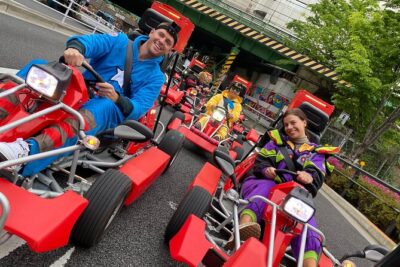 ★ 5.0Official Street Go-Kart in ShibuyaFrom $76
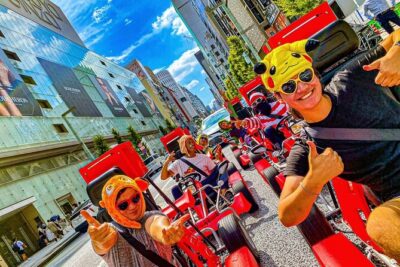 ★ 5.0Official Street Go-Kart Tour – AkihabaraFrom $61
 ★ 5.0Tokyo Go Kart: Asakusa, Skytree, and Akihabara **IDP MUST**From $99
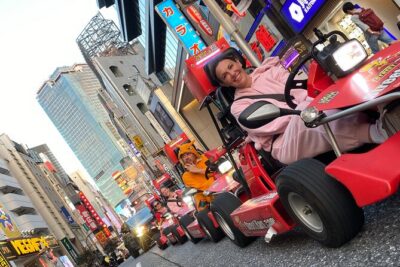 ★ 5.0Shibuya Official Street Go-Kart in Shibuya AnnexFrom $69
 ★ 4.6Tokyo: Asakusa and Skytree Go-Kart Tour and Photo ShootFrom $67