Reviewed · GO-KARTS
Asakusa/Tokyo Bay & Akihabara Go Karting Tours
Tokyo sightseeing usually means trains, temples, and sidewalks. This tour gives you a steering wheel instead. You follow an English-speaking guide through East Tokyo in a small go-kart, passing Rainbow Bridge, Ginza, Akihabara, Ueno, and Asakusa while ordinary traffic flows around you.
In This Article
- Key points to know before booking
- What it feels like to drive through Tokyo
- Choosing between the two-hour and one-hour routes
- Tokyo Bay, Rainbow Bridge, and the best views
- Toyosu and the approach to central Tokyo
- Ginza, Nihonbashi, and Kanda from a low seat
- Akihabara, Ueno, and the older side of Tokyo
- Asakusa, Kappabashi, and Tokyo Skytree
- Safety, traffic, and what you need to bring
- Costumes, photos, and group size
- Who will enjoy this most
- Booking, cancellations, and the final call
- FAQ
- How long is the Tokyo go-kart tour?
- Where does the tour start?
- What areas does the two-hour tour visit?
- What areas does the one-hour SkyTree route visit?
- What driving documents do I need?
- Are 1968 Vienna Convention permits accepted?
- What is included in the price?
- Can I cancel the tour?
I like the careful safety briefing and the small-group feel. I also like that the staff take photos, provide costumes and props, and keep the group together when traffic separates the karts. The main consideration is simple: you must bring the right Japanese driving documents. No valid hard-copy permit means no ride and no refund.
Key points to know before booking
- The two-hour route covers the most ground: Toyosu, Tokyo Bay, Ginza, Nihonbashi, Kanda, Akihabara, Ueno, and Asakusa.
- The one-hour route starts at a different branch: The SkyTree Branch visits Asakusa, Ueno, Ueno Park, Kappabashi Kitchen Tools Street, Akihabara, and Tokyo Skytree.
- Rainbow Bridge and Tokyo Bay are the visual high points: You get a break for photos and a short rest during the longer route.
- You drive on public roads: This is not a closed racing course. You need to be comfortable following traffic rules in Tokyo.
- The documentation rules are strict: Most drivers need a home-country license, a 1949 Geneva Convention International Driving Permit, and a passport.
- The $70 price includes useful extras: The kart, fuel, taxes, costumes, and photos are included.
What it feels like to drive through Tokyo
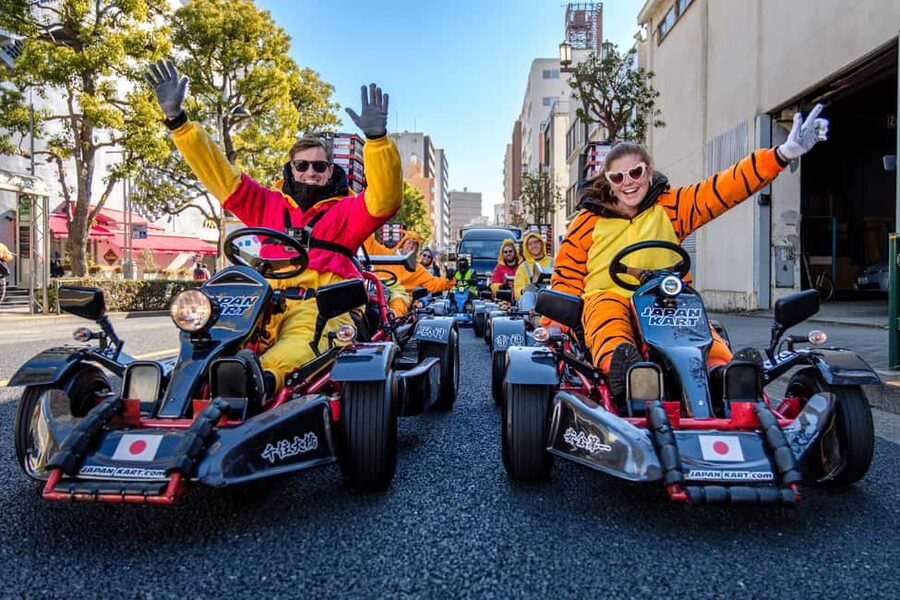
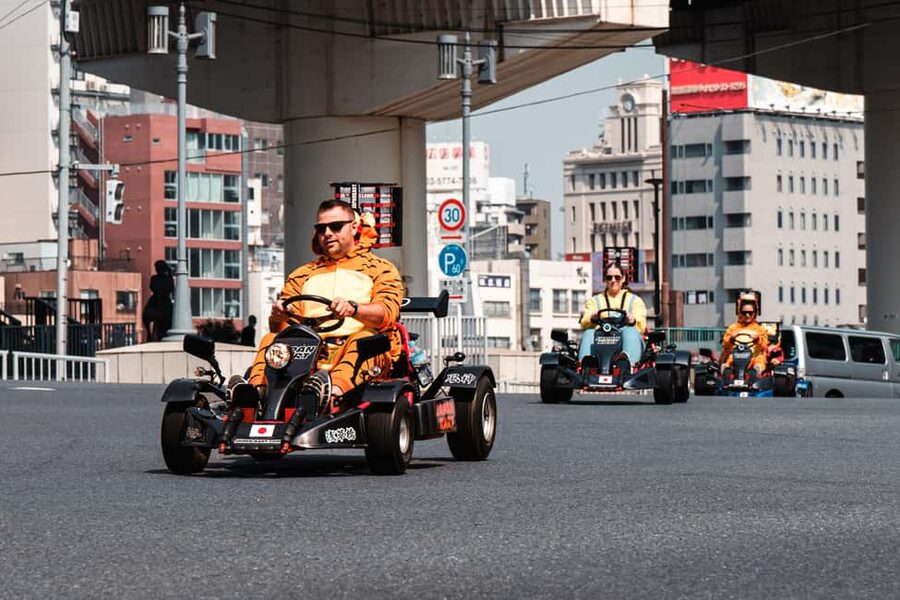
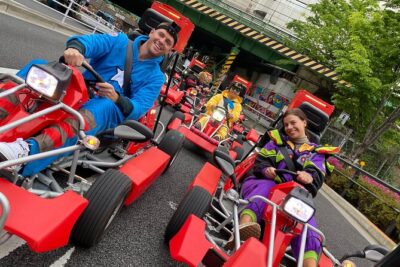
The unusual part comes before the sightseeing. You are not looking out a train window or walking behind a guide. You are sitting low in an open kart, feeling the air and watching city traffic from a much closer angle.
That sounds thrilling, and it is. It can also feel daunting during the first few minutes. The karts use public streets, so you need to pay attention to lane position, traffic lights, other cars, road surfaces, and the guide ahead. The staff give a safety briefing and demonstrations before every tour, then lead the group throughout the ride.
The strongest praise goes to the staff’s calm handling of the roads. Guides stop when the group gets split up and do not leave slower drivers behind. Staff members are described as friendly and patient, and one guide, Yo, received special praise for making the ride feel safe and welcoming.
You should not expect a detailed commentary tour. The guide’s main job is to lead the group safely, not to deliver a long history lesson at every corner. You will see plenty, but you will spend much of the time concentrating on driving. I see this as a moving city adventure with sightseeing along the way, not a substitute for a walking tour of Tokyo’s neighborhoods.
A few more Tokyo tours and experiences worth a look

Choosing between the two-hour and one-hour routes
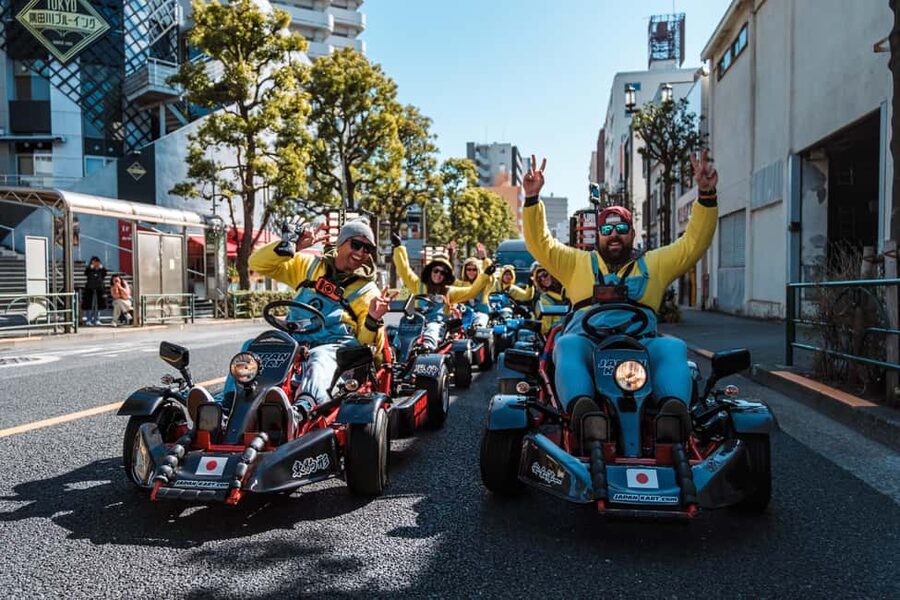
The two-hour tour from JAPANKART is the fuller outing. Its route takes in Toyosu, Tokyo Bay, Ginza, Nihonbashi, Kanda, Akihabara, Ueno, and Asakusa. The longer route gives you more time to settle into the kart and more chances to see the sharp contrasts of East Tokyo.
The actual driving time can be a little different from the advertised duration. One account puts the driving at about one hour and ten minutes for a scheduled tour, while other outings ran close to two hours or longer overall. Allow extra time for the briefing, getting ready, stops, photos, and returning to the shop.
The one-hour tour from JAPANKART SkyTree Branch is more compact. It passes through Asakusa, Ueno, Ueno Park, Kappabashi Kitchen Tools Street, Akihabara, and the Tokyo SkyTree area. This option makes sense if your schedule is tight or if you want to build the ride around Asakusa and Skytree.
Pay close attention to the meeting point when booking. The two options do not use the same starting location, and the ride ends back at the meeting point you selected. The SkyTree Branch is close to Tokyo Skytree, so you can pair the ride with that attraction before or after.
Tokyo Bay, Rainbow Bridge, and the best views
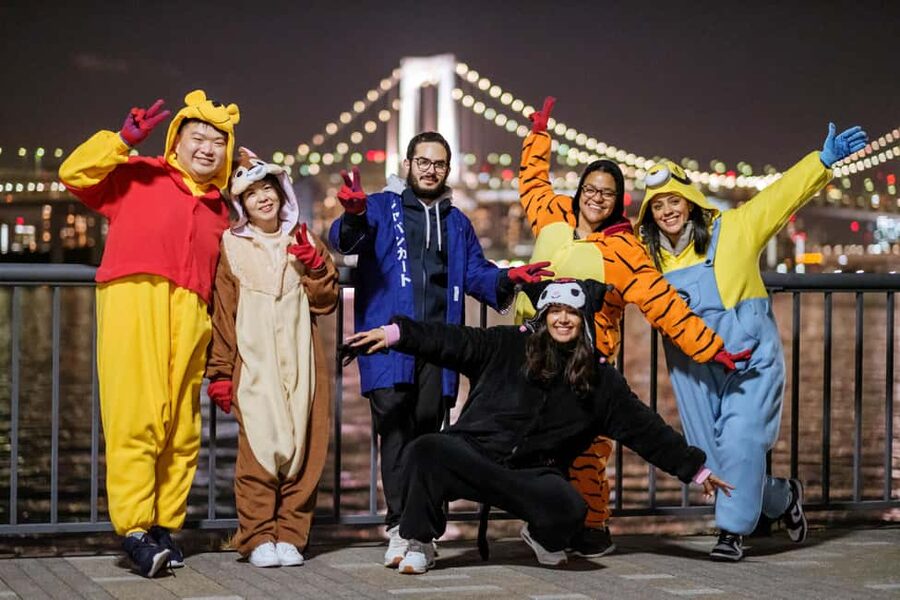
The Tokyo Bay section gives the two-hour tour its biggest visual payoff. The road opens up, and the towering Rainbow Bridge becomes the main sight. You also get a view across the bay that is hard to match from a normal sidewalk.
There is a break during the route. The group can stop for photos, and there is a short opportunity for a toilet break. The guide may take group pictures here, and staff can provide harnesses if you bring a phone or GoPro.
This stop matters because the rest of the ride asks you to focus on traffic. At Tokyo Bay, you have a chance to pause, look around, and enjoy the view instead of trying to spot landmarks while steering. If you can choose a starting time, a sunset or evening departure may give the city a more dramatic look, although weather and traffic will affect the mood.
Bad weather is the main risk for this section, and for the whole outing. If conditions force a cancellation, you can receive a full refund or reschedule when another time is available. Staff have also offered to reschedule guests on rainy days, but you should not assume every change will work with your schedule.
Toyosu and the approach to central Tokyo
Toyosu appears on the longer route as the tour moves toward Tokyo Bay and central Tokyo. This part helps connect the newer waterfront districts with the older commercial areas that follow.
You will not be stopping for a market visit on this ride. The route is built around driving past the city, not getting out at each attraction. That distinction is important if you want time inside markets, temples, shops, or museums.
Still, seeing Toyosu from the road gives the route a useful change of pace. The bay area feels more open than central Tokyo, and the karts have room to move before the ride reaches denser streets. From there, the tour heads toward Ginza and Nihonbashi.
Ginza, Nihonbashi, and Kanda from a low seat
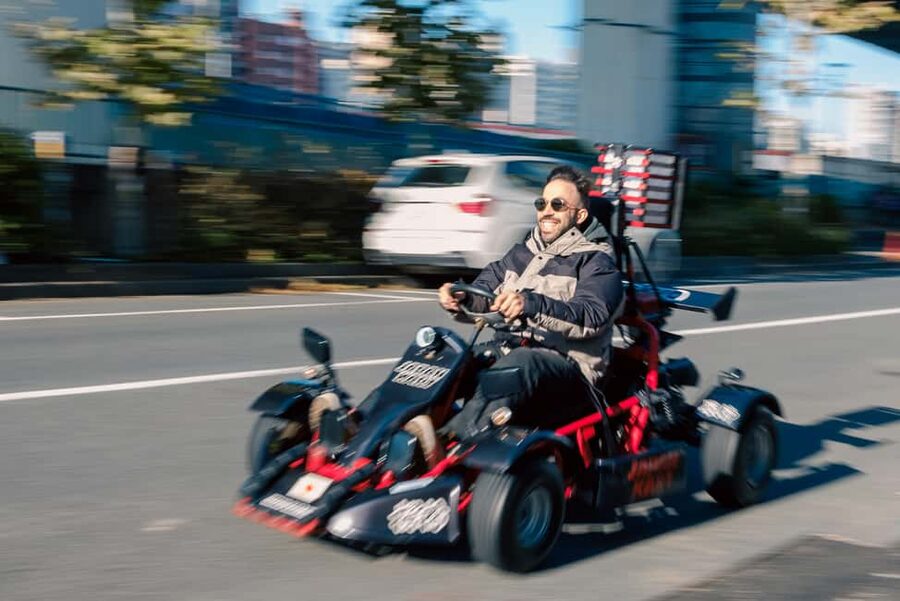
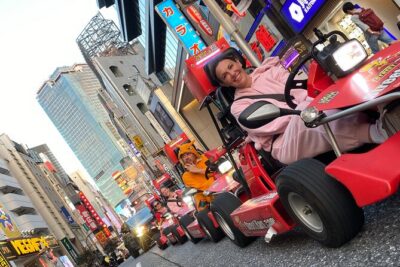
Ginza brings you into one of Tokyo’s best-known shopping districts. You pass through its polished streets in a kart, which creates a funny contrast between the small open vehicles and the serious city setting around them.
The route does not include a shopping stop. You are sightseeing from the road, so you should plan a separate visit if you want department stores, cafés, or a closer look at the district.
Nihonbashi follows as another central Tokyo landmark area. Kanda is also passed along the way, giving you a quick look at streets that feel more local and workaday than Ginza. These sections are less about one dramatic photo stop and more about seeing how several parts of central Tokyo fit together.
Traffic can make this stretch demanding. Some people find that they focus so hard on driving that they miss details around them. That is normal. Look when it is safe, but do not treat the ride as a relaxed sightseeing bus.
A few more Tokyo tours and experiences worth a look


Akihabara, Ueno, and the older side of Tokyo

Akihabara is one of the most recognizable stops on the route. The district is known for electronics, games, anime, and bright signs, and passing through by kart puts you right in the middle of its visual energy.
The experience does not include shopping time, so I would visit Akihabara separately if you want to browse stores. The kart ride gives you a quick street-level impression, not a full neighborhood visit.
Ueno changes the tone again. The area connects to Ueno Park and some of Tokyo’s older cultural sights. One rider’s favorite part was the ride through Ueno, and I can understand why. Compared with the wide bay roads and commercial districts, Ueno feels more layered and rooted in everyday city life.
The one-hour route also includes Ueno Park. Since the shorter route has less time, you should expect a pass-through rather than a long stop. If Ueno’s museums or park grounds are a priority, plan them before or after the kart ride.
Asakusa, Kappabashi, and Tokyo Skytree
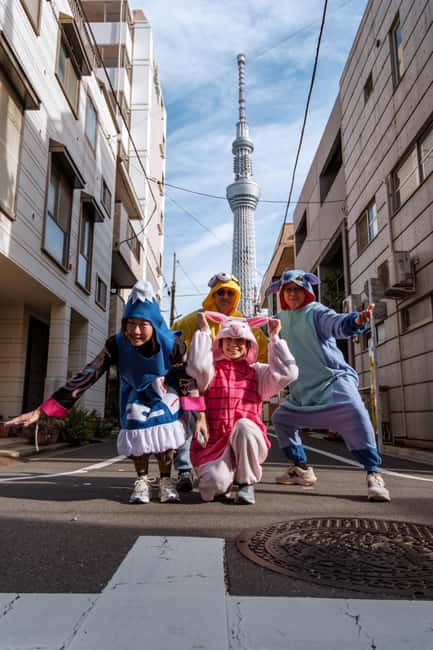
Asakusa is the best place to connect the ride with old Tokyo. Its temples, traditional streets, and historic atmosphere provide a sharp contrast to Akihabara’s modern signs and the newer waterfront districts.
The karts pass through the area, but this is not a walking tour of Sensoji Temple or the surrounding lanes. I suggest visiting Asakusa on foot at another point in your day, then using the kart ride to see how the district connects to the rest of East Tokyo.
The one-hour SkyTree route includes Kappabashi Kitchen Tools Street. This is a particularly useful detail for cooks and food lovers. Kappabashi is known for restaurant equipment and kitchen goods, and it gives the shorter route a more specific local flavor than a simple drive through major avenues.
Tokyo Skytree provides the route’s final visual marker. From the road, you get the tower as a city reference point rather than a full observation-deck visit. If you plan to go up Skytree, allow separate time and check the distance from your selected branch.
Safety, traffic, and what you need to bring
The safety system is one of the best reasons to choose an organized tour instead of trying to arrange anything independently. Every group receives a briefing and demonstrations before setting off. The guide leads from the front, manages the pace, and stops if the group stretches out.
You still need to take responsibility for your own driving. Cars may cut in, roads can feel busy, and surfaces may become slippery. One rider found the karts faster than expected and had to adjust to skids on the road surface. Take the first part slowly, follow the guide, and leave sightseeing until you feel settled.
You must be at least 18 years old. High heels, sandals, flip-flops, bare feet, alcohol, and drugs are not allowed. Alcoholic drinks cannot be taken in the vehicle.
Most drivers must arrive with all three of these items:
- Your driving license from your country of origin
- A hard-copy International Driving Permit issued under the 1949 Geneva Convention by an approved authority in your own country
- Your passport
Japan does not accept an International Driving Permit issued under the 1968 Vienna Convention. The permit must be in booklet form, not a loose paper document, and buying one from an online company is not enough.
Drivers from Switzerland, Germany, France, Taiwan, Belgium, Estonia, or Monaco need their original license, an official Japanese translation from the authorized organization, and a passport. US military personnel need the combination of an active military ID and a stateside driver’s license under the SOFA arrangement.
Check this before paying. Forgetting a license or permit means you cannot participate and will not receive a refund. The company can help check documents if you are unsure, but the final responsibility remains with you.
Costumes, photos, and group size
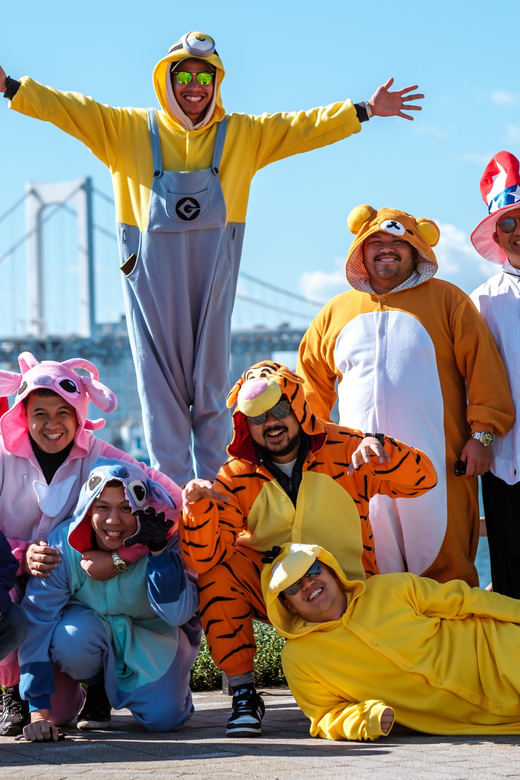
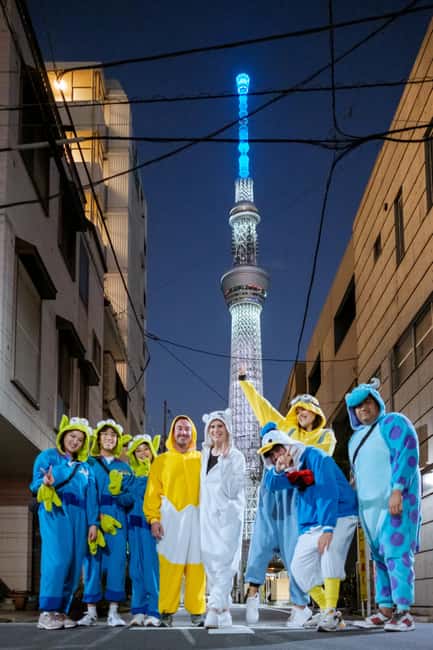
The $70 cost per person includes the go-kart, fuel, taxes, costumes, and photos. That is a fair package for an unusual city activity, especially since there is no extra fuel charge and the staff take pictures during the route.
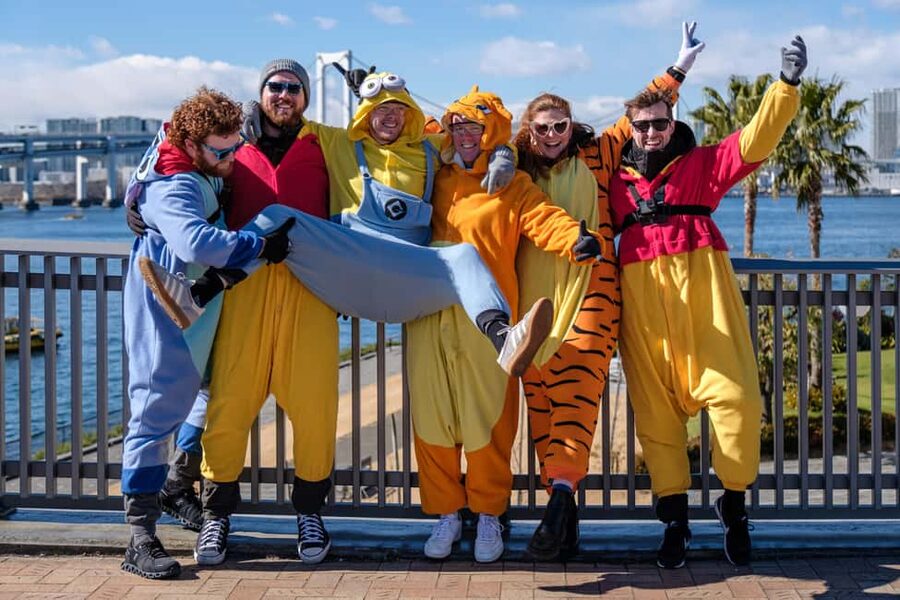
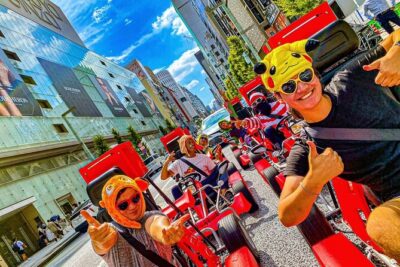
The costumes add a playful touch, but you do not need to treat them as the main reason to book. The real value is driving on Tokyo’s public streets with a guide and getting a city view you cannot have from a train. The photos are useful because you cannot safely take many pictures while steering.
Small groups are available. Group size can affect the feel of the outing, and mechanical availability may require the operator to adjust bookings when it reaches capacity. If you want the most personal attention, a smaller departure should be your preference, but availability will vary.
There is no hotel pickup or drop-off. You make your own way to the selected JAPANKART location, then return there at the end. Build in time to find the correct branch, especially if you choose the SkyTree option.
Who will enjoy this most
I would choose this for an adult who wants a playful, active way to see Tokyo and already has the required driving paperwork. It suits people who are happy to follow instructions and stay alert in traffic.
It also works well for couples, friends, and small groups who want photos with a strong sense of place. The mix of Tokyo Bay, Ginza, Akihabara, Ueno, and Asakusa gives you a better cross-section of East Tokyo than a short ride confined to one district.
I would be cautious about booking it for someone who dislikes city driving, feels nervous around traffic, or wants detailed information about every landmark. It is also a poor fit if you mainly want to stop and explore markets, temples, shops, or museums.
The staff’s patient approach helps beginners. One 70-year-old participant completed the ride without trouble after the pre-start instruction, but every driver should judge their own comfort and ability. This is still a real road experience, not a theme-park circuit.
Booking, cancellations, and the final call
You can cancel up to 24 hours before the start for a full refund. If bad weather cancels the tour, you can receive a full refund or reschedule if another opening is available. Mechanical problems can also lead to a schedule change or cancellation.
I would book the two-hour route if you want the broadest city ride and have enough time for the briefing, driving, break, photos, and return. Choose the one-hour SkyTree Branch route if you want a shorter outing centered on Asakusa, Ueno, Kappabashi, Akihabara, and Skytree.
At $70, this is good value for a guided activity that includes the kart, fuel, costumes, and photos. Book it if the idea of driving through Tokyo sounds exciting and you have the correct documents in hand. Skip it if your priority is quiet sightseeing or long stops at attractions. For the right driver, it is one of the most memorable ways to connect Tokyo’s modern streets, old neighborhoods, and waterfront in a single outing.
FAQ
How long is the Tokyo go-kart tour?
You can choose a one-hour or two-hour option. Allow extra time for the safety briefing, preparation, breaks, photos, and returning to the meeting point.
Where does the tour start?
The meeting point depends on the option you book. The two-hour tour starts at JAPANKART, while the one-hour route starts at the JAPANKART SkyTree Branch.
What areas does the two-hour tour visit?
The two-hour route passes through Toyosu, Tokyo Bay, Ginza, Nihonbashi, Kanda, Akihabara, Ueno, and Asakusa.
What areas does the one-hour SkyTree route visit?
The one-hour route includes Asakusa, Ueno, Ueno Park, Kappabashi Kitchen Tools Street, Akihabara, and Tokyo Skytree.
What driving documents do I need?
Most drivers need their home-country driving license, a hard-copy International Driving Permit issued under the 1949 Geneva Convention by an approved authority in their own country, and their passport.
Are 1968 Vienna Convention permits accepted?
No. International Driving Permits issued under the 1968 Vienna Convention are not accepted in Japan for this activity.
What is included in the price?
The price includes the go-kart, all fees and taxes, fuel, costumes, and photos. Hotel pickup and drop-off are not included.
Can I cancel the tour?
You can cancel up to 24 hours before the tour starts for a full refund. If bad weather cancels the activity, you can receive a full refund or reschedule depending on availability.
More Akihabara & Anime Tours in Tokyo
More Asakusa Tours in Tokyo
More tours in Tokyo we've reviewed












Go-Karts, compared.
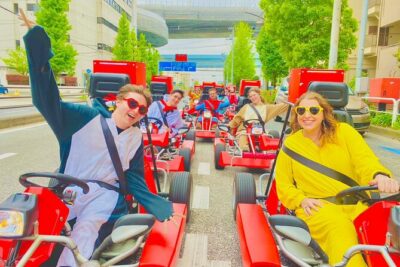 ★ 5.0Flagship 2-Hours Official Street Go-Kart Tour – Tokyo Bay ShopFrom $642 hours to 2 hours 30 minutes (approx.)
 ★ 5.0Official Street Go-Kart in ShibuyaFrom $76
 ★ 5.0Official Street Go-Kart Tour – AkihabaraFrom $61
 ★ 5.0Tokyo Go Kart: Asakusa, Skytree, and Akihabara **IDP MUST**From $99
 ★ 5.0Shibuya Official Street Go-Kart in Shibuya AnnexFrom $69
 ★ 4.6Tokyo: Asakusa and Skytree Go-Kart Tour and Photo ShootFrom $67