Reviewed · TOURS
3 Day Japan Tour Kyoto, Osaka & Nara from Tokyo
Kyoto’s lantern-lit lanes, Osaka’s neon streets, and Nara’s free-roaming deer make this three-day Japan tour a fast-moving sampler of the country’s cultural heart. You start at Tokyo Station, ride the bullet train to Kyoto, and finish back in Kyoto after long days of temples, markets, shrines, and city streets.
In This Article
- Key points to know before booking
- A fast route through Japan’s cultural core
- Day one: Tokyo Station to Kyoto’s evening streets
- Day two: Osaka food, neon, and castle grounds
- Day three: bamboo, red gates, and a golden temple
- The real challenge is managing the rail travel
- What $795 really buys you
- Who should book this three-day route
- Should you book it?
- FAQ
- Where does the tour start?
- Where does the tour end?
- Is the bullet train from Tokyo to Kyoto included?
- Is train travel between Kyoto and Osaka included?
- Is accommodation included?
- Which entrance fee is included?
- Are Todai-ji and other entrance fees included?
- Is the tour suitable for solo visitors?
I like the efficient mix of major sights and local neighborhoods, especially Gion, Pontocho Alley, Dotonbori, and Kuromon Ichiba Market. I also like that the plan includes accommodation and the Tokyo to Kyoto Shinkansen, though the tour requires you to handle several train journeys yourself, and the directions may not be detailed enough for every visitor.
Key points to know before booking
- Tokyo to Kyoto by Shinkansen: Your trip begins with a two-hour bullet train ride from Tokyo Station.
- Gion after arrival: Explore Pontocho Alley, Yasaka Shrine, Hanamikoji Street, and Kyoto’s traditional entertainment district.
- Osaka food and city life: Kuromon Ichiba Market includes one non-alcoholic drink and some Osaka street food.
- Kyoto’s classic sights: Arashiyama Bamboo Forest, Fushimi Inari Taisha, and Kinkaku-ji fill the third day.
- Nara’s deer and Great Buddha: Nara Park and Todai-ji bring a quieter, more spiritual finish to the trip.
- Independent train navigation: You travel between several stops without a private vehicle or hotel pickup, so basic confidence with public transport matters.
A fast route through Japan’s cultural core
At $795, this is not a cheap add-on, but it covers a lot in a very short time. You receive touring, accommodation, the Tokyo to Kyoto bullet train, the Kyoto to Osaka and Osaka to Kyoto train journeys, and admission to Kinkaku-ji Temple.
The price is easier to justify if you want a fixed plan and do not want to arrange hotels, rail travel, and sightseeing across three cities yourself. It is less appealing if you already know Japan’s train system or prefer to set your own pace. The itinerary is packed, and much of the movement between stops is your responsibility.
The maximum group size is 40 people. That is large enough to make meeting instructions important, especially in major stations. The start time is 9:00 a.m. at Tokyo Station, at 1 Chome-9 Marunouchi, Chiyoda City. The stated end point is Kyoto, so you should not plan to finish in Tokyo unless you arrange your own return.
You need a moderate level of physical fitness. Expect walking through station corridors, city streets, shrine grounds, temple approaches, and market lanes. Some stops are brief, which helps fit more into the schedule, but it also means you will not have much time to linger.
A few more Tokyo tours and experiences worth a look
Day one: Tokyo Station to Kyoto’s evening streets
The journey starts at Tokyo Station with a two-hour Shinkansen ride to Kyoto. The bullet train is one of the most practical parts of the package. It turns what could be a long transfer into a direct, comfortable ride, and it gets you from Japan’s modern capital to its old imperial center in a single morning.
Once in Kyoto, the program shifts from transport to walking. Pontocho Alley is an excellent first look at the city. This narrow lane runs beside the Kamo River and is known for traditional restaurants and evening atmosphere. The schedule gives you about 30 minutes here, so think of it as an introduction rather than a full meal stop.
You also see the statue of Izumo-no-Okuni, the performer associated with the early development of kabuki. That detail adds useful context to the district. This is not just a pretty lane for photographs. It connects Kyoto’s theater traditions with the streets you are walking through.
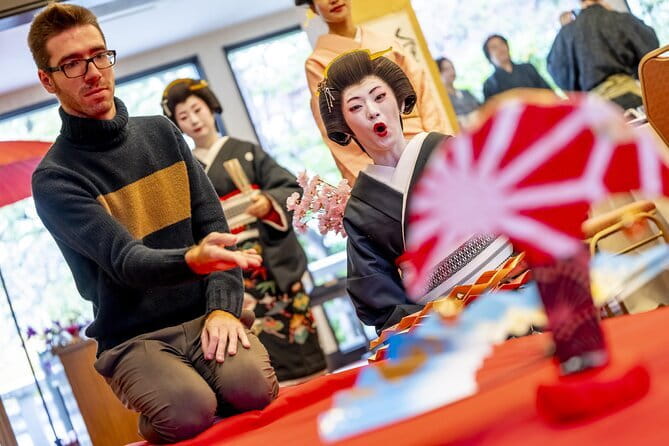
The route continues into Gion, Kyoto’s geisha district. You can expect traditional wooden facades, tea houses, and narrow streets where the architecture often feels more restrained than the crowds around it. The tour allows about an hour in Gion, including a quick stop at Gion Corner.
Use care and courtesy here. Gion is not a theme park. It is a working neighborhood, and the most valuable part of the visit is noticing the streets, buildings, and atmosphere rather than chasing people for photographs.
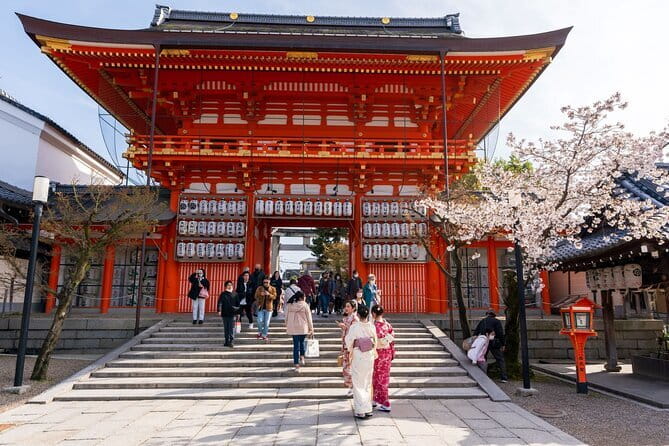
Yasaka Shrine follows, with about 20 minutes set aside. The shrine is one of Kyoto’s best-known sacred sites and gives you a quick introduction to Shinto worship. You may have time to look at the main buildings and grounds, but this is not a long, unhurried shrine visit.
The final stop is Hanamikoji Street, with roughly 10 minutes scheduled. That is enough for a short walk and photographs, but not enough for a slow exploration of nearby lanes. The short timings tell you how this tour works: you see the essential places, then move on.
You overnight in Kyoto. The accommodation is included, but the provided details do not specify the hotel, room type, neighborhood, or breakfast arrangements. If those details matter to you, confirm them before booking. Solo visitors must select a single accommodation option, and groups needing separate rooms must also choose single accommodation before completing the reservation.
Day two: Osaka food, neon, and castle grounds
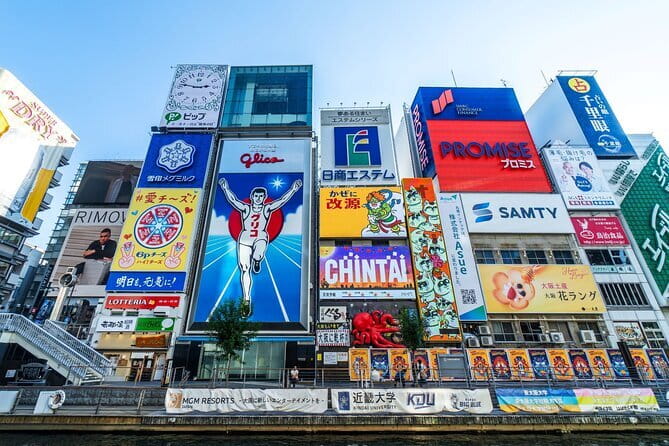
The second day takes you from Kyoto to Osaka by train. The included Kyoto to Osaka and Osaka to Kyoto rail travel keeps the route practical, but you are still handling the station process yourself. Allow extra mental space for platforms, signs, departure times, and meeting points.
Namba is your first Osaka area, with about an hour to explore. Namba is a useful introduction to Osaka’s entertainment and shopping culture, with dense streets, bright signs, and plenty of food options. The tour does not promise a particular restaurant or extended free time, so treat this as a guided orientation rather than a full food tour.
Dotonbori follows for another hour. The canal-side district is famous for oversized signs, restaurant fronts, and a lively night-time feel. The nearby Dotonbori Tsuribori stop is listed as another entertainment district visit, so you should expect more street walking and city atmosphere than formal sightseeing.
Hozenji Temple offers a welcome change of pace. The temple dates from the 17th century and is known for its small, intimate setting. At 20 minutes, you can see the temple and take in the contrast between a quiet religious site and the crowded commercial streets nearby.
Kuromon Ichiba Market is the food highlight of the day. You receive one non-alcoholic drink and some Osaka street food, which gives you a small taste without requiring you to plan every bite. The market stop lasts about an hour.
Keep your expectations sensible. One included tasting is not a complete meal or a full market crawl. You may find additional food to buy, but anything beyond the included tasting is your own expense. The market works best if you arrive ready to look, sample, and keep moving.
Osaka Castle Park comes next, with about an hour. The park provides open space and a change from the tight commercial streets of Namba and Dotonbori. You can admire Osaka Castle from the grounds, though admission to the castle interior is not listed as included. The wording supports seeing the castle and park, not assuming an interior tour.
The day ends in Shinsaibashi, one of Osaka’s best-known shopping areas. You receive about an hour here. This is useful if you want browsing time, but it can feel less essential if your main interests are temples and traditional culture. The contrast is part of Osaka’s appeal: this city is not simply another Kyoto.
You then return to Kyoto by train. This is where the trip’s logistics matter most. The route is not a private coach tour with a leader collecting you at each hotel. You must follow the instructions, keep track of your belongings, and reach the correct meeting points on time.
Day three: bamboo, red gates, and a golden temple
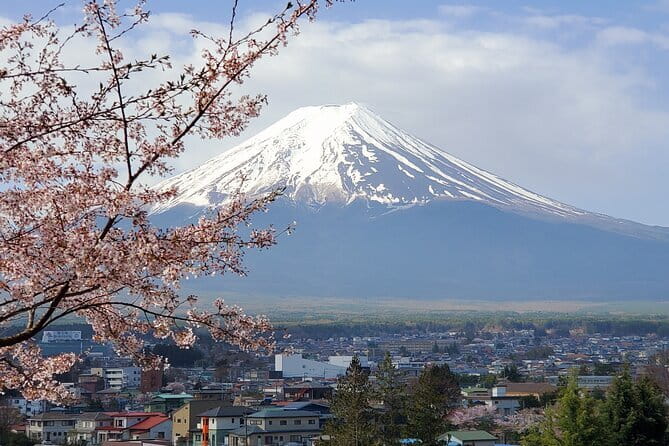
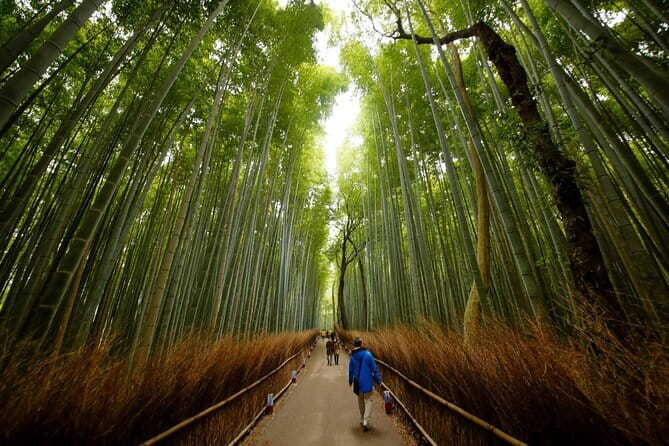
The third day packs several of Kyoto and Nara’s most recognizable sights into one long route. Arashiyama is first, with an hour at the Bamboo Forest. The tall bamboo creates one of Kyoto’s most memorable settings, but the limited time means you will likely walk the main stretch rather than explore every nearby attraction.
Arashiyama can be a busy place, and the famous path is not the whole district. Still, an hour gives you enough time to see the central bamboo grove and understand why it is included on a first visit. Wear comfortable shoes, since the day continues through more walking routes.
Fushimi Inari Taisha Shrine receives another hour. Its rows of vermilion torii gates are among Japan’s most familiar sights. The shrine path climbs into wooded hills, so one hour is enough for a short uphill walk, not the full mountain route.
This stop rewards a practical approach. You do not need to reach the highest point to enjoy the gates. Follow the route as far as your time and energy allow, then return promptly to the meeting point. Entrance is not included in the package, so budget for the listed admission fee if required at the time of your visit.
Kinkaku-ji Temple, the Golden Pavilion, is next. Its gold-colored exterior reflected in the pond is the visual centerpiece of many Kyoto visits. The tour includes admission, which is a useful saving and removes one small task during an already full day.
You should know what Kinkaku-ji offers. The main reward is the view of the pavilion and its garden setting. This is not a place where you enter the golden building or spend hours inside. The one-hour stop gives you time for the main path and photographs, but expect a structured visit.
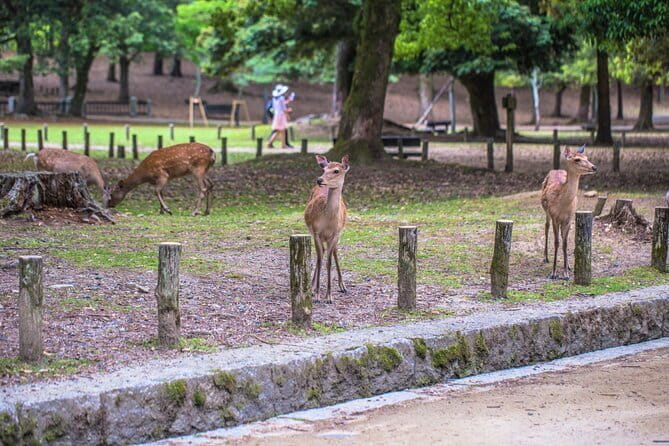
The route then heads to Nara Park. Nara is known for its deer, and you can expect to see them moving through the park near the main sightseeing areas. The deer are part of the experience, but remember that they are still animals. Keep food and personal items under control, and follow local instructions.
Nara Park provides a calmer finish after Kyoto’s crowded streets. You have about an hour to walk through the park and take in the open setting. The tour does not list deer crackers or any particular feeding activity as included, so do not assume that food for the deer is part of the price.
Todai-ji Temple completes the day. The temple is home to the Great Buddha, one of Nara’s major religious sights. You receive about an hour, which should allow a meaningful visit, but admission is not included. Add the Todai-ji entrance fee to your budget.
Ending in Nara and then returning to Kyoto makes this a long day. The advantage is clear: you see several headline sights without arranging separate transport. The cost is energy and flexibility. If you prefer slow temple visits, quiet gardens, or long meals, this schedule may feel too tight.
The real challenge is managing the rail travel
The most important thing to understand is that this is partly a self-guided transport experience. You are not simply carried from one attraction to the next. The train legs require you to read instructions, find platforms, board the correct service, and reach the agreed meeting location.
That can be easy for confident public transport users. It can be stressful if you are unfamiliar with Japanese stations, especially in Tokyo, Kyoto, and Osaka. The trip instructions are especially important, yet the available information does not spell out every train time, platform, or meeting procedure.
I would save every ticket, screenshot all instructions, and keep the tour operator’s customer care details available. Build a little extra time into every transfer. A missed train or wrong station exit can quickly affect the rest of a tightly scheduled day.
The package is mobile-ticket friendly, but mobile access does not replace clear directions. Make sure your phone is charged and that you have reliable access to the booking information. If you need hotel pickup, private transfers, or a guide beside you for every rail connection, this is probably not the right format.

What $795 really buys you

The $795 price pays for speed and structure more than luxury. You are buying a ready-made route through three famous destinations, accommodation, the main intercity train, local train travel between Kyoto and Osaka, and Kinkaku-ji admission.
The included Shinkansen is a major benefit. Booking Tokyo to Kyoto yourself can take time, and adding the hotel and sightseeing arrangements would require careful planning. The Kyoto and Osaka train travel also keeps the route connected without a private vehicle.
The weak point is that several admission fees and personal costs remain outside the package. Todai-ji is specifically excluded, and Fushimi Inari’s listed entrance fee is not included. Food beyond the Kuromon Market tasting, insurance, and anything not named in the inclusions are also your responsibility.
The price makes the most sense for a first visit when you have only three days and want someone else to decide the order of sights. It makes less sense for a flexible independent visitor who can book rail tickets, accommodation, and temple entries with ease.
Who should book this three-day route
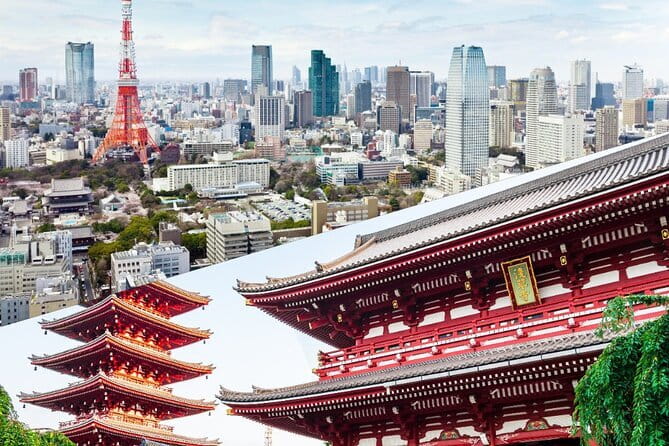
You should consider this tour if you want to cover Kyoto, Osaka, and Nara from Tokyo without building the trip from scratch. It suits an active visitor who enjoys full days, major landmarks, city walks, and a mix of temples, food streets, shopping areas, and parks.
It is also a reasonable fit if you are comfortable asking for help, reading signs, and managing public transport in an unfamiliar country. A moderate fitness level is important, and a calm attitude helps when the schedule moves quickly.
I would hesitate if you want door-to-door service, long meals, extensive temple time, or a quiet pace. The group can reach up to 40 people, and the self-guided train sections require more independence than the phrase three-day tour might suggest.
The experience has received mixed ratings, including one particularly positive assessment of the sightseeing portions once people reached the meeting points. That distinction matters. The attractions are well chosen, but the transport instructions and ticket communication can make or break the trip.
The experience is non-refundable and cannot be changed after booking. Poor weather or failure to reach the minimum number of participants can lead to a new date, another experience, or a full refund, but ordinary cancellations do not qualify for a refund.
Should you book it?
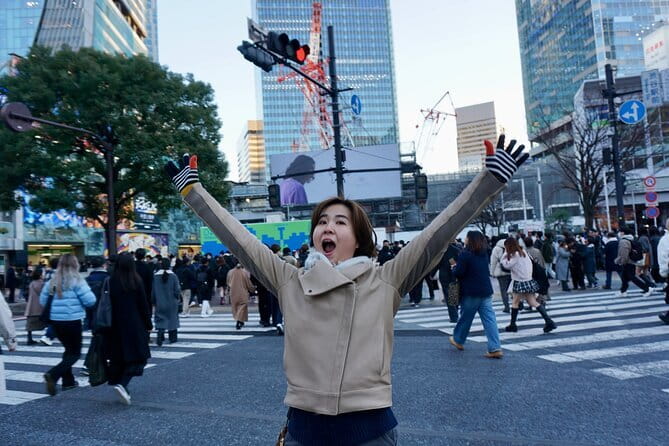
Book this tour if your priority is seeing the headline sights quickly and you are willing to manage trains, timing, and some entrance fees yourself. The route gives you a strong first look at Kyoto’s traditional districts, Osaka’s food and shopping streets, and Nara’s deer and Great Buddha.
Skip it if you want a fully escorted experience. In that case, a private tour with hotel pickup and clearer point-to-point support would better match your needs. Before paying, confirm the accommodation details, train instructions, meeting procedures, and which admissions are required on the day.
FAQ
Where does the tour start?
The tour starts at 9:00 a.m. at Tokyo Station, 1 Chome-9 Marunouchi, Chiyoda City, Tokyo 100-0005, Japan.
Where does the tour end?
The stated end point is Kyoto, Japan.
Is the bullet train from Tokyo to Kyoto included?
Yes. The Tokyo to Kyoto Shinkansen is included in the tour price.
Is train travel between Kyoto and Osaka included?
Yes. Train travel from Kyoto to Osaka and back to Kyoto is included.
Is accommodation included?
Yes. Touring and accommodation are included. Single visitors must select a single accommodation option, and groups needing separate rooms must choose the appropriate single accommodation option.
Which entrance fee is included?
Admission to Kinkaku-ji Temple is included.
Are Todai-ji and other entrance fees included?
Todai-ji Temple admission is not included. The provided information also lists Kyoto and Nara entrance fees as excluded, so you should budget for admissions not specifically named as included.
Is the tour suitable for solo visitors?
Yes, solo visitors can book, but they must choose from the single accommodation options. The tour also requires a moderate level of physical fitness and includes several train journeys that you manage yourself.
More 3-Day Experiences in Tokyo
More tours in Tokyo we've reviewed












Tours, compared.
 ★ 5.0Mt Fuji and Hakone 1-Day Bus Tour Return by Bullet TrainFrom $163
 ★ 5.01-Day Tokyo Bus TourFrom $129
 ★ 5.0Tokyo: Shinjuku Food Tour (13 Dishes at 4 Local Eateries)From $86
 ★ 4.4Tokyo Mt Fuji 5th St & Hakone Cruise Bus Tour w/Bullet TrainFrom $15410 hours
 ★ 5.0Flagship 2-Hours Official Street Go-Kart Tour – Tokyo Bay ShopFrom $642 hours to 2 hours 30 minutes (approx.)
 ★ 4.7Tokyo: Mt. Fuji Tour, Hakone Ropeway, Owakudani, Lake AshiFrom $5410 hours