Reviewed · BAY & RIVER CRUISES
Sumida River: Japanese Traditional Yakatabune Dinner Cruise
Tokyo looks different from the water. This 150-minute yakatabune dinner cruise leaves Asakusa, follows the Sumida River toward Tokyo Bay, and pauses so you can climb onto the roof for views of Rainbow Bridge, Odaiba, and Tokyo Skytree. It is part sightseeing ride, part traditional Japanese meal, and part lively night out.
In This Article
- Key points to know before booking
- Why a yakatabune is a different Tokyo night
- Boarding near Azumabashi in Asakusa
- The first course: a full Japanese meal at sea
- Free-flow drinks and the social mood
- From the Sumida River toward Tokyo Bay
- Tokyo Bay, Rainbow Bridge, and Odaiba
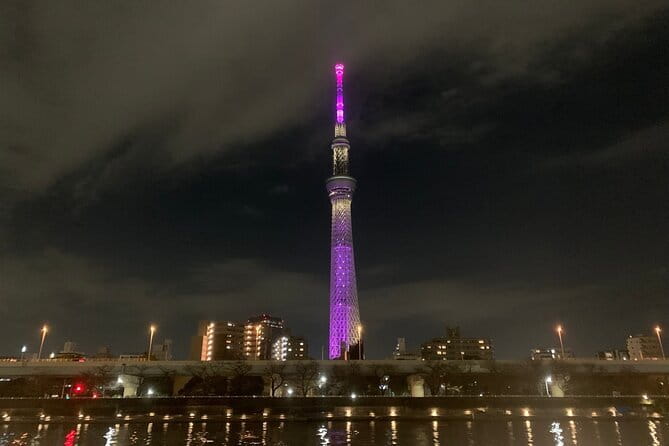
- Tokyo Skytree from the water
- Seating, comfort, and small practical drawbacks
- Is $103 good value?
- Who should book this dinner cruise?
- Helpful planning advice for the evening
- Final verdict: book it for the whole evening, not just the view
- FAQ
- Where does the Sumida River dinner cruise depart?
- How long does the cruise last?
- What is included in the price?
- Which drinks are included?
- Is hotel pickup included?
- Is there an English-speaking guide?
- What sights can I see during the cruise?
- Can I go onto the roof of the boat?
- Can I request a dietary change?
- What happens if the weather is severe?
I like the wide variety of food, which gives you a chance to try many Japanese dishes in one sitting. I also like the free-flow drinks, especially since the menu includes beer, sake, whiskey, wine, plum wine, tea, and soft drinks. The main drawback is practical: the boat’s interior lights and seating can limit your view while you eat, so the roof stops matter.
Key points to know before booking
- About 14 Japanese dishes are served as a full-course dinner, with traditional cold dishes and hot items such as tempura.
- Free-flow drinks are included, with beer, sake, whiskey, wine, plum wine, tea, and soft drinks.
- Two major photo opportunities focus on Tokyo Bay, Rainbow Bridge, Odaiba, and Tokyo Skytree.
- The cruise begins near Azumabashi in Asakusa, but the exact meeting point can vary by booking option.
- Seating is traditional, with tatami flooring and low tables. Your legs rest in a recessed space beneath the table.
- There is no dedicated English guide, and staff may use a translator, so this is better for food, scenery, and atmosphere than detailed sightseeing commentary.
Why a yakatabune is a different Tokyo night
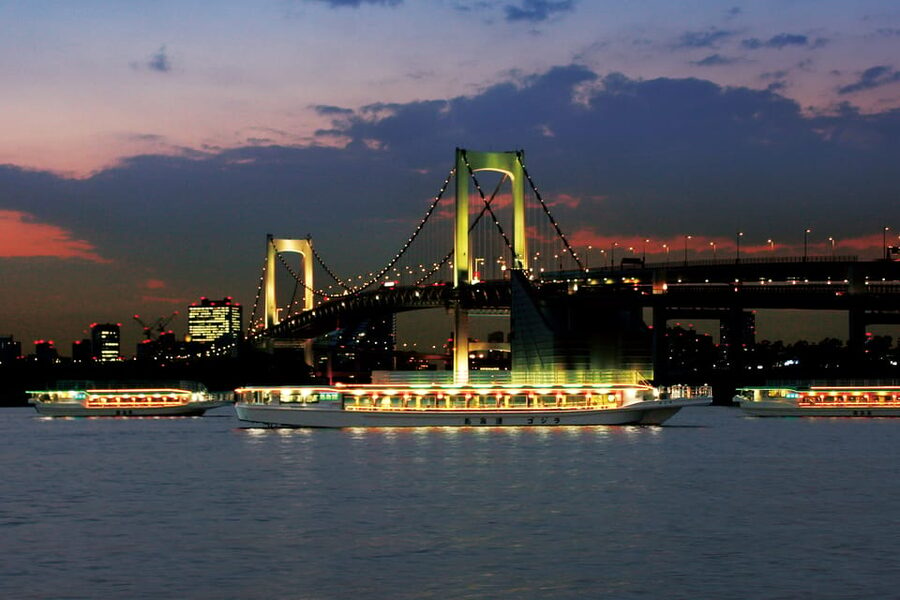
A yakatabune is a traditional Japanese dinner boat. The idea is simple: sit down to a substantial meal, drink, talk, and watch the city pass by. In Tokyo, that old-style setting is paired with a modern skyline of illuminated towers, bridges, office blocks, and the bright silhouette of Skytree.
This is not a quiet observation cruise with a running narration. It is closer to a Japanese social dinner that happens to move through some of Tokyo’s best night scenery. That distinction matters. If you want historical explanations at every landmark, you may find the experience light on information. If you want an enjoyable evening with food and drinks, it makes a lot of sense.
The boat is also a good way to see Tokyo without adding another complicated stop to your day. You can spend the afternoon around Sensoji and Asakusa, then walk toward the pier for dinner. The route gives you a change of pace from crowded streets and packed train platforms.
A few more Tokyo tours and experiences worth a look
Boarding near Azumabashi in Asakusa
The cruise departs from the Azumabashi area, close to the heart of Asakusa. Your meeting point can vary depending on the option booked, so check the exact instructions rather than relying only on a general map pin.
Allow extra time to find the pier. Signage may not be obvious, particularly if the boat is not yet waiting at the dock. A phone with map access and translation tools will help, and arriving early is wise. There is no hotel pickup or drop-off, so you are responsible for reaching the meeting point.
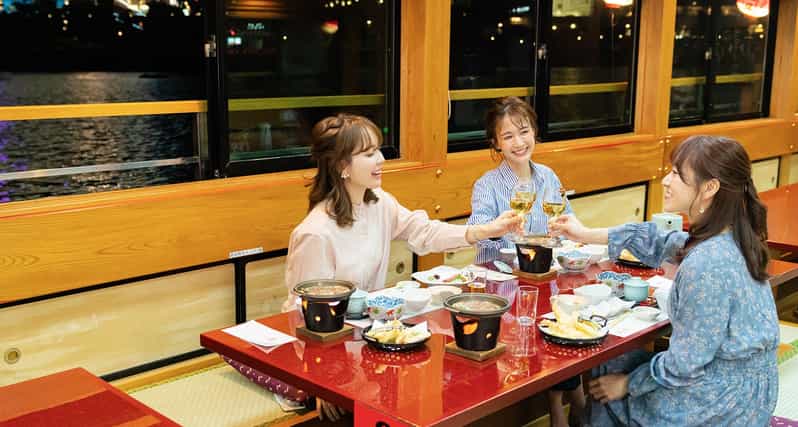
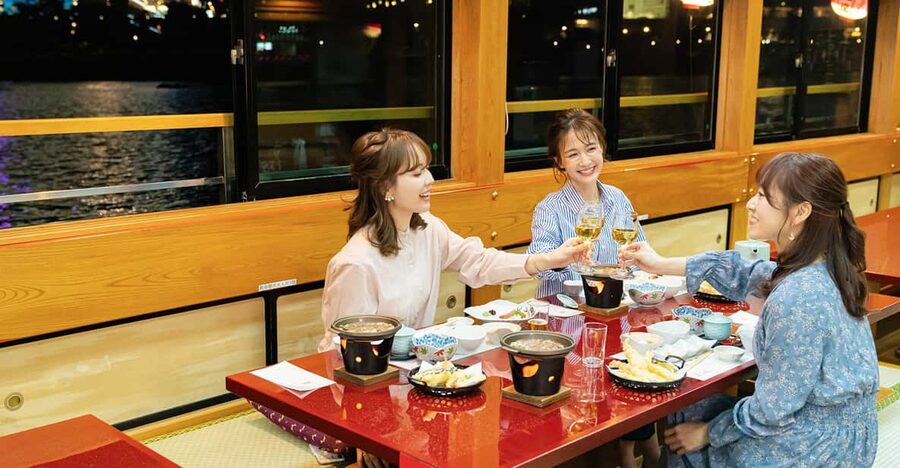
Once aboard, you are shown to your table. The dining room uses tatami flooring, so you take off your shoes. The tables are low, but the floor has a recessed area under the table for your legs. That arrangement is more comfortable than sitting cross-legged on a flat floor, though anyone unused to floor seating may still find getting up a little awkward.
Tables may seat six people, meaning a small party can share with other diners. This creates a social feel and can be part of the fun, but it is worth knowing before you book a romantic evening. The arrangement is not the private, two-person dinner you might picture from a luxury restaurant cruise.
The first course: a full Japanese meal at sea
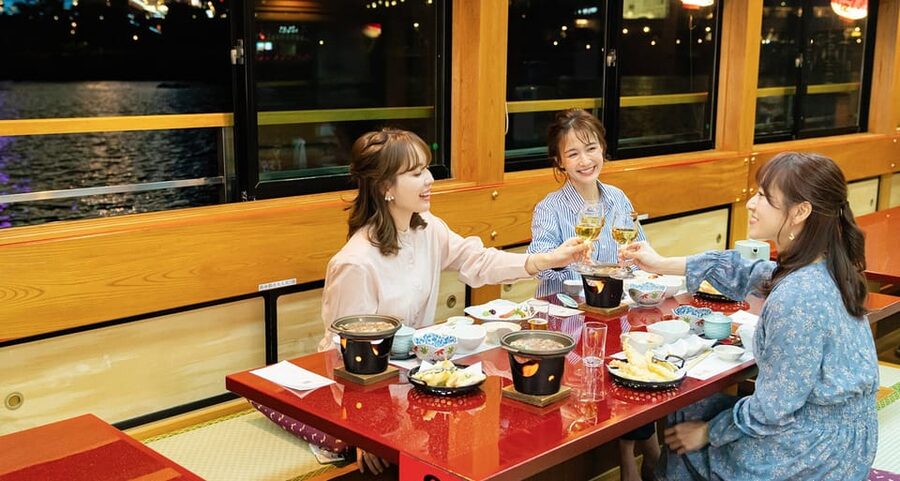
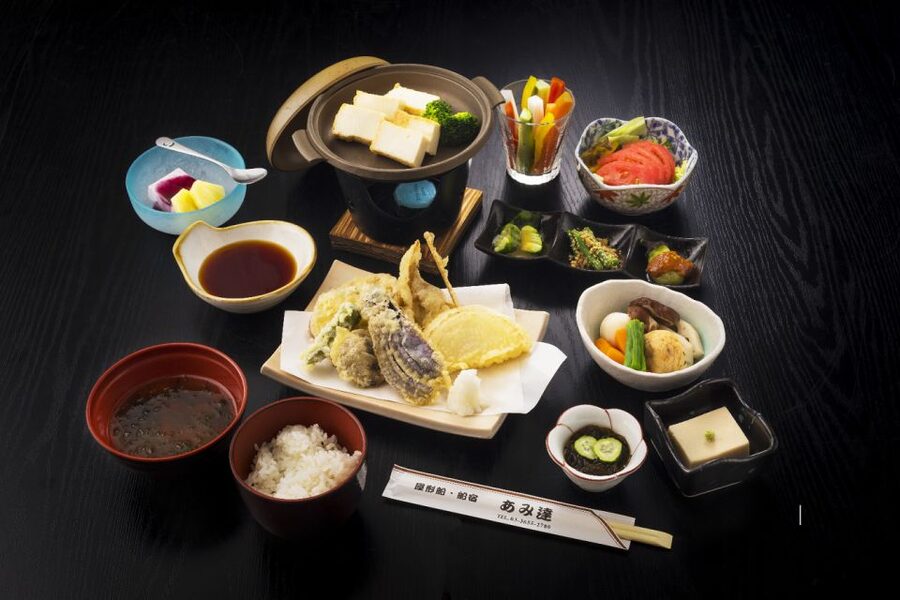
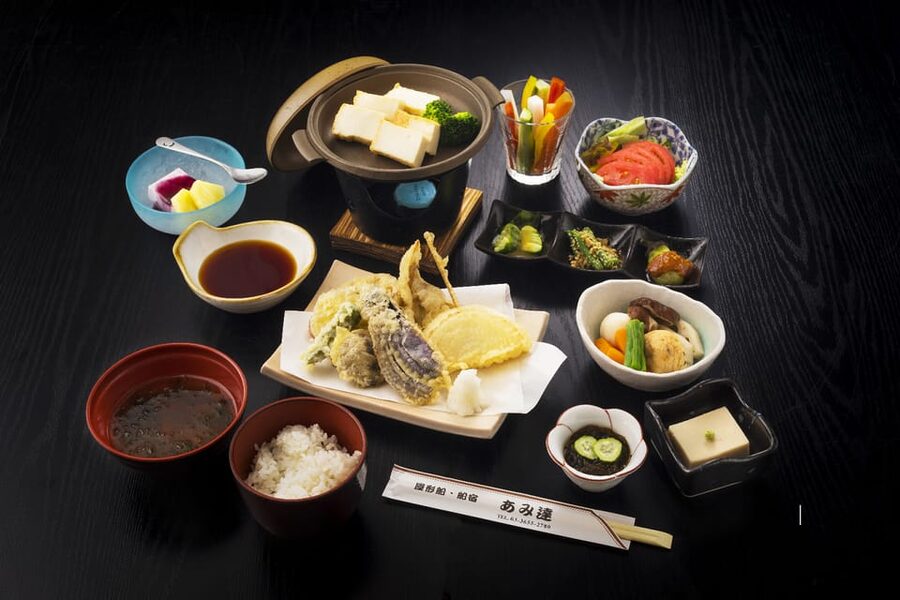
The dinner includes about 14 dishes, so come hungry. The meal offers a broad introduction to Japanese flavors rather than one large main course. You may encounter several small preparations, different textures, seafood, vegetables, and carefully presented traditional items.
Some of the food is served cold, which is normal for many Japanese set meals and not a sign of poor quality. Hot dishes are also served during the meal, and fresh tempura is a particular highlight of the menu. The combination gives you a useful introduction to Japanese dining: a little of this, a little of that, with the pleasure coming from variety.
The quantity is generous. I would not plan a large meal immediately before boarding, especially because drinks are included and the food keeps arriving. The dinner is substantial enough to work as your main evening meal.
You do not need to recognize every dish to enjoy the experience. An English menu is available, but there is no dedicated English-speaking guide leading a food lesson. Staff use translation tools when needed. You can ask questions, though communication may be simpler than on a fully guided food tour.
Dietary requests need careful planning. Send any request at least two days before your reservation date. Changes cannot be handled on the day of the cruise, and a ¥1,000 tax-included handling fee per person applies to changes related to dietary restrictions or meal selections.
A pescatarian meal has been accommodated successfully, but you should still notify the operator in advance. Do not assume that a last-minute substitution will be possible.
Free-flow drinks and the social mood
The all-you-can-drink plan is one of the strongest parts of the value. The selection includes beer, sake, whiskey, wine, plum wine, tea, and various soft drinks. This is not limited to one house drink, so you can try different Japanese-style options during the meal.
Orders are generally made by scanning a QR code at the table. The system lets you select your drinks and indicate your table, then staff bring the order. It is a practical setup, though you may need internet access or help connecting to onboard Wi-Fi. If you arrive without mobile data, ask the staff for assistance after boarding.
The service is attentive, with food and drinks brought out promptly. Staff are described as friendly and hardworking, while still giving you space to enjoy dinner. The atmosphere is festive, but it is not presented as a formal show.
There is no entertainment listed as part of the cruise. You should expect conversation, food, drinks, and city views rather than music or a performance. For some people, that is exactly right. If you want a cultural show with dancing or live music, choose a different evening activity.
From the Sumida River toward Tokyo Bay
As the boat leaves Asakusa, the route follows the Sumida River through the illuminated city. The river provides a different angle on Tokyo, with bridges and buildings reflected in the dark water. The view changes slowly, giving you time to eat instead of turning the evening into a rapid sightseeing circuit.
The windows are not always ideal for sightseeing. At night, reflections from the interior can make it hard to see clearly, and some seats face away from the windows. The bright cabin lighting makes this more noticeable. I would treat the indoor view as a bonus, not the main reason to reserve a particular seat.
The roof access is more important. During the cruise, the boat stops so you can go outside and take photos. Bring a light jacket in cooler weather, and be prepared for wind even when the city feels calm at street level.
Other boat tours in Tokyo
Tokyo Bay, Rainbow Bridge, and Odaiba
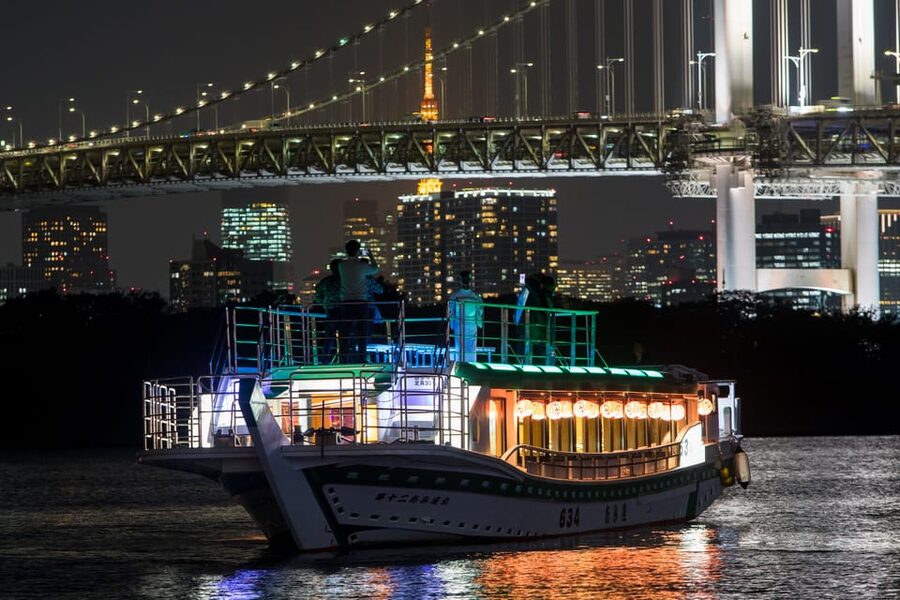
At Tokyo Bay, the scenery opens up. The illuminated city takes on a wider scale, with Rainbow Bridge and Odaiba providing the main visual focus. This is the section where the boat feels most like a sightseeing cruise rather than simply a dinner venue.
The stop gives you time to climb onto the roof and take panoramic photos. You can see the lights from the bay, bridges, and waterfront buildings without trying to shoot through a window. Staff may also help take photos, which is useful when you want a picture of your whole party.
The roof stop is brief enough that you should pay attention to announcements and return promptly. You will not spend the entire cruise outdoors. Most of the evening remains inside at the table, with the deck stops providing concentrated moments for scenery and pictures.
For couples, this is likely the most romantic part of the route. For families and groups, it is a welcome chance to stretch your legs after sitting on the floor. The city lights and open water also create a clear contrast with the older atmosphere inside the boat.
Tokyo Skytree from the water
After Tokyo Bay, the cruise continues toward the Sumida River and makes another stop near Tokyo Skytree. This is the signature photo moment for many people. Skytree is easy to recognize from land, but seeing it lit up from the river gives it more space and scale.
The view is especially appealing around the Asakusa riverfront, where the tower rises above the surrounding city. During cherry blossom season, the riverside trees can add another layer to the scene. The exact view will change with weather, season, and lighting, but Skytree remains the dependable landmark.
Again, go onto the roof if you want the best photos. Indoor seats may not provide a clear line of sight, and cabin lighting can wash out night views. A phone camera will capture the tower, but steady hands and a few attempts will help with reflections and low light.
The return to Azumabashi completes the circuit. The entire activity lasts about 150 minutes, which is long enough for a full dinner and two sightseeing pauses without taking up the whole night.
Seating, comfort, and small practical drawbacks
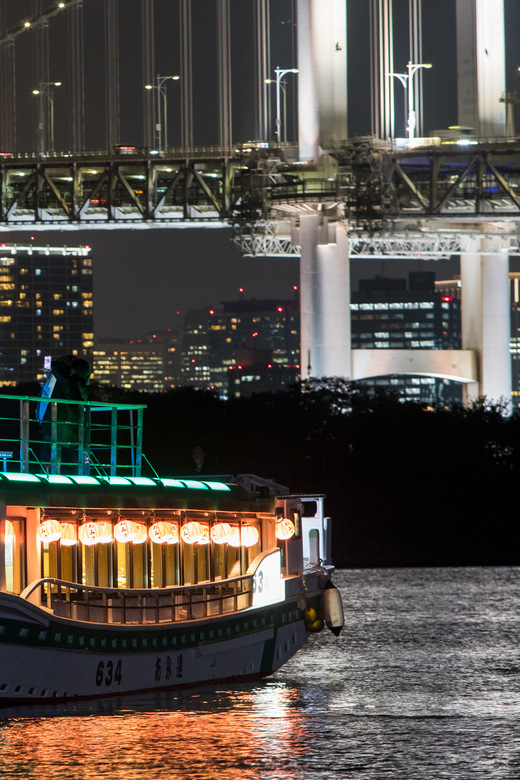
The traditional seating is a major part of the experience, but it is not ideal for everyone. You sit at low tables on tatami, with a leg recess under the table. That works well for many people, yet standing up can feel awkward, especially in a shared table arrangement.
The dining room is air-conditioned, which matters during Tokyo’s hot summer months. The boat also has clean toilets, an often overlooked detail on a two-and-a-half-hour meal cruise.
The biggest comfort issue is the interior lighting. Bright lights help with eating and service, but they reduce the atmosphere and make it harder to see the night sky through the windows. The solution is simple: plan to use the roof during the stops instead of expecting uninterrupted views from your seat.
The cruise may be canceled in severe weather, including typhoons. This is a sensible safety measure, but it can affect your evening plans during storm season.
Is $103 good value?
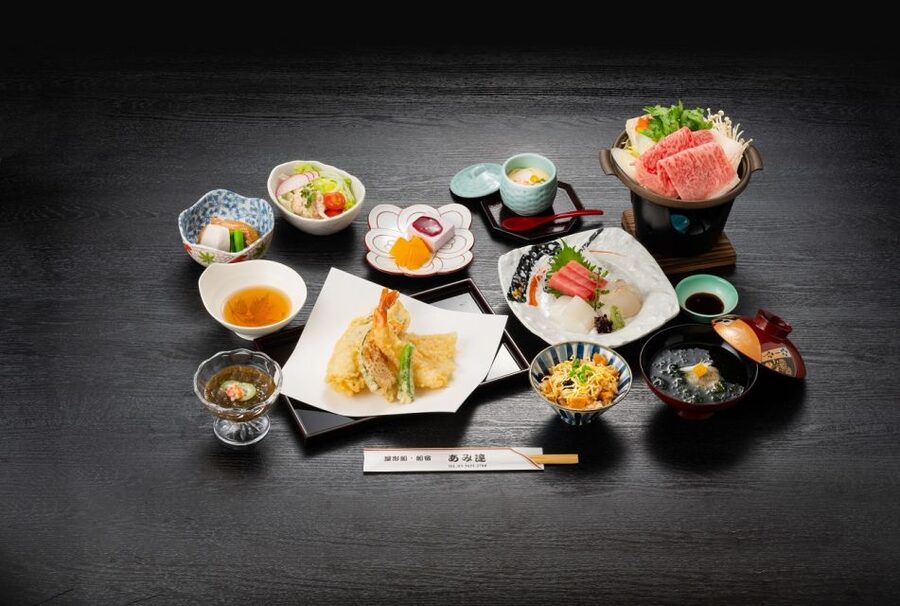
At about $103 per person, this is a splurge, but the price covers three meaningful parts of the evening: the boat fare, a full Japanese dinner of about 14 dishes, and free-flow alcoholic and non-alcoholic drinks.
For a person who enjoys sake, beer, wine, or mixed drinks, the included beverage plan adds real value. You are not paying separately for each drink while also covering a multicourse dinner and a city cruise. Soft drinks and tea are included too, so nondrinkers are not left without options, though the package naturally feels more valuable to people who will order several drinks.
The price also buys a setting that would be difficult to reproduce by simply eating at a restaurant and walking along the river. You get a traditional boat, a moving view of Tokyo, roof-deck photo stops, and a ready-made evening plan.
It is less compelling if you mainly want landmark photography or detailed commentary. A restaurant with a Skytree view may give you a clearer sightline from the table, and a dedicated sightseeing boat may offer more information. This cruise earns its price through the combination of food, drinks, atmosphere, and access to the water.
Who should book this dinner cruise?
I would recommend it to you if you want a distinctive Tokyo evening and enjoy trying several Japanese dishes at once. It works well for couples, adult families, friend groups, and anyone marking a special occasion.
It is also a good choice for first-time visitors who want more than another meal in a restaurant. You get a taste of Japanese food culture, traditional floor seating, and a view of the city that you cannot get from the street.
You may want to think twice if you need a private table, dislike floor seating, or want a fully narrated tour in English. The shared tables and limited guiding are central parts of the format. People with dietary restrictions should also be organized early, since changes on the day are not available.
The cruise suits adults particularly well because the free-flow drinks are a major feature. Families can enjoy it too, but the food, seating, and evening atmosphere are designed more for a long social dinner than for a quick family attraction.
Helpful planning advice for the evening
- Check the exact meeting point for your selected option, since the pier can vary.
- Arrive early and allow time to find the dock near Azumabashi.
- Keep your phone charged for QR-code drink orders, maps, translation, and photos.
- Tell the operator about dietary needs at least two days ahead.
- Wear something comfortable for sitting on tatami flooring.
- Save room for the full meal, since the food is plentiful.
- Go to the roof during both stops for the clearest city views.
- Bring a light layer for the open deck, especially outside summer.
- Do not expect a formal English narration or onboard entertainment.
- Check the weather forecast during typhoon season.
Final verdict: book it for the whole evening, not just the view
I would book this cruise if you want food, drinks, and Tokyo scenery in one relaxed package. The excellent meal, generous beverage selection, friendly service, and roof-deck stops make the evening feel special without requiring you to arrange several separate activities.
Book with realistic expectations. The windows may be hard to see through, the lighting is brighter than ideal, and the seating is shared and low. But if you accept those limits, the yakatabune delivers a memorable mix of old-style Japanese dining and modern Tokyo at night. For a couple or group looking for a distinctive final evening in the city, $103 is a fair splurge.
FAQ
Where does the Sumida River dinner cruise depart?
The cruise departs from the Azumabashi area in Asakusa. The exact meeting point may vary depending on the booking option, so check your reservation details carefully.
How long does the cruise last?
The activity lasts 150 minutes, or about two and a half hours.
What is included in the price?
The price includes the cruise boat fare, a full-course Japanese-style dinner of about 14 dishes, and free-flow alcoholic and non-alcoholic drinks.
Which drinks are included?
Included drinks include beer, sake, whiskey, wine, plum wine, tea, and various soft drinks.
Is hotel pickup included?
No. Hotel pickup and drop-off are not included.
Is there an English-speaking guide?
There is no dedicated English guide included. Staff use a translator, and English menus are available according to the activity details and onboard arrangements.
What sights can I see during the cruise?
The route includes the Sumida River, Tokyo Bay, Rainbow Bridge, Odaiba, and views of Tokyo Skytree.
Can I go onto the roof of the boat?
Yes. The boat makes stops where you can climb to the roof for panoramic views and photos.
Can I request a dietary change?
Yes, but you must submit dietary or meal-change requests at least two days before the reservation date. Changes cannot be handled on the day, and a ¥1,000 tax-included handling fee per person applies to related changes.
What happens if the weather is severe?
The cruise may be canceled in severe weather, such as a typhoon. You can cancel up to 10 days in advance for a full refund under the stated cancellation policy.
More Dining Experiences in Tokyo
More Boat Tours & Cruises in Tokyo
More Bay & River Cruises in Tokyo
More tours in Tokyo we've reviewed












Bay & River Cruises, compared.
 ★ 4.0Mt Fuji & Hakone Cruise, Drum Show Bullet Train 1 Day from TokyoFrom $149
 ★ 4.4Tokyo Mt Fuji 5th St & Hakone Cruise Bus Tour w/Bullet TrainFrom $15410 hours
 ★ 4.2Tokyo: Mt. Fuji 5th Station & Hakone Cruise 1-Day Bus TourFrom $12911 hours
 ★ 4.7Tokyo: Meiji Shrine, Asakusa, Skytree Bus Tour and CruiseFrom $12210 hours
 ★ 4.0Mt Fuji & Hakone Cruise, Drum Show Bus 1 Day from TokyoFrom $122
 ★ 4.7Tokyo: Yakatabune Dinner Cruise with Japanese Show & DrinksFrom $104