Reviewed · 1-DAY TOURS
Tokyo Private Day Trip – Enjoy Your First-Time Visit to Tokyo!
Tokyo can feel like several cities stitched together, and this private day trip gives you a fast way to see those contrasts. You begin at peaceful Meiji Jingu, pass through Harajuku’s youth-fashion streets, eat around Tsukiji, view Tokyo Tower, and finish at Senso-ji in Asakusa. Guides such as Taku, Usha, Ken, Meg, and Eriko have helped visitors adjust the day to fit their interests.
In This Article
- Key points to know
- Why This Tokyo Route Works for First-Time Visitors
- Meiji Jingu: A Quiet Start in Central Tokyo
- Harajuku: Takeshita Street and Omotesando
- Tsukiji: Lunch and Tokyo’s Seafood Tradition
- Tokyo Tower: A Short Stop for City Views
- Senso-ji: Finishing in Asakusa
- The Real Value of a Private Guide
- Walking, Weather, and Pace
- Customizing the Day Two Weeks Ahead
- Who Should Book This Experience?
- Should You Book the Tokyo Private Day Trip?
- FAQ
- How long does the Tokyo private day trip last?
- What places are included in the standard itinerary?
- Is this a private tour?
- Where does the tour start and end?
- Are transportation costs included?
- Is lunch included?
- Can I customize the itinerary?
- Is Tokyo Tower admission included?
- What happens if the weather is bad?
I like the private format, which lets you ask questions, set the pace, and sometimes change the route. I also like that the guide teaches you how to use Tokyo’s trains and subways, a skill that can make the rest of your trip much easier. The main caution is that seven hours of walking, stairs, transfers, and standing can be tiring, and guide quality may vary.
Key points to know
- Five major areas in one day: Meiji Shrine, Takeshita Street, Tsukiji, Tokyo Tower, and Senso-ji.
- A practical introduction to public transport: Your guide handles the route while showing you how Tokyo’s rail system works.
- Lunch is not included: You pay for food, drinks, transportation, and any entrance fees.
- The route ends far from the start: You meet at Harajuku Station and finish at Asakusa Station.
- Customization is possible: Contact the guide two weeks ahead if you choose the customizable option.
- Good for first-time visitors: You get culture, shopping, food, architecture, and city views in a single day.
Why This Tokyo Route Works for First-Time Visitors
This tour’s strength is its variety. In seven hours, you move from a forested Shinto shrine to one of Tokyo’s loudest shopping streets, then on to a traditional food district, a famous tower, and an old temple quarter.
That variety gives you a useful first outline of the city. You will not know every neighborhood afterward, but you will understand how Tokyo shifts from quiet religious spaces to youth fashion, seafood counters, department-store districts, and old temple streets.
The tour is private, so only your group participates. That matters in Tokyo, where a fixed group schedule can feel awkward in crowded stations and narrow streets. A private guide can pause when you need a break, spend longer at a place that interests you, or adjust the day around weather and energy.
Several guides have also helped visitors beyond the scheduled sights. Meg assisted with the subway and the route back to the hotel, while Eriko helped with train tickets for an airport journey. Taku explained rail travel and useful cultural customs that visitors could apply during the rest of their stay.
Other private tours in Tokyo

Meiji Jingu: A Quiet Start in Central Tokyo
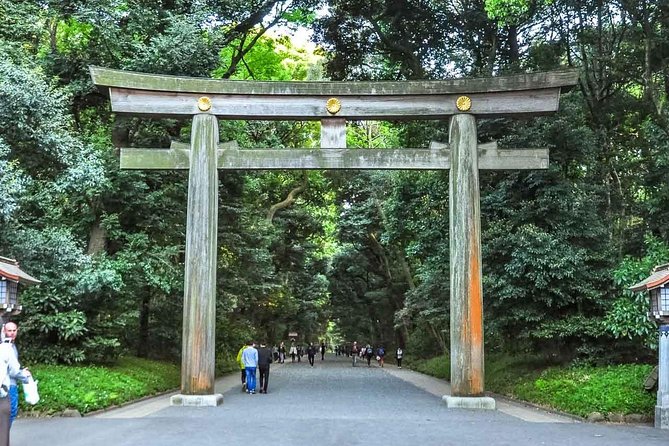
Your first stop is Meiji Jingu, reached from Harajuku Station. This Shinto shrine honors Emperor Meiji and Empress Shoken, and its large wooded grounds offer a striking change from the city streets nearby.
You have about 50 minutes here. That is enough time to walk through the approach, see the shrine buildings, and learn basic points about Shinto worship. Your guide can explain customs such as how to behave at the entrance, how to approach the main shrine area, and the meaning of common offerings.
The setting is the main attraction. Meiji Jingu is not a small urban shrine squeezed between buildings. Its broad paths and trees give you breathing room before the day becomes more crowded.
I would use this first stop to ask your guide questions about Japanese religion. Later, at Senso-ji, you can compare Shinto traditions with Buddhism. That contrast is more useful than treating the two sites as separate photo stops.
The 50-minute visit is fairly brisk. If you enjoy gardens, shrine architecture, or quiet walks, you may wish for more time. Still, the early placement makes sense because it begins the tour at a calm pace.
Harajuku: Takeshita Street and Omotesando
From Meiji Jingu, the route moves into Harajuku’s fashion district. Takeshita Street and Omotesando represent two very different sides of Tokyo shopping.
Takeshita Street is associated with youth culture, colorful shops, snacks, and an energetic pedestrian crowd. The street is compact, busy, and visually loud. You get a quick look at the way fashion and pop culture shape this part of the city.
Omotesando has a more polished feel, with major brands, design-focused buildings, and broad avenues. Seeing both streets together helps you understand that Harajuku is not just one shopping zone. It ranges from playful and informal to sleek and high-end.
The scheduled time is about 50 minutes, with no admission charge. That makes this a good section for visitors who want shopping suggestions rather than a long historical explanation. Guides have also offered souvenir advice, which can be useful if you want something more distinctive than the usual airport purchases.
There is a practical tradeoff. Fifty minutes is enough to look around, but not enough for serious shopping, browsing every side street, and stopping for food. If you already know you want fashion or retail time, ask about adjusting the route when you book the customizable option.
Tsukiji: Lunch and Tokyo’s Seafood Tradition
Tsukiji receives the longest scheduled stop, about one hour and 30 minutes. That is sensible because this is where you are likely to pause for lunch, browse food shops, and sample the atmosphere at your own pace.
The former wholesale market moved to Toyosu in 2018, but Tsukiji remains an important food district. You can expect shops and restaurants connected with seafood, kitchen goods, prepared food, and Japanese ingredients. The old market location still carries strong meaning for local food culture, even though the wholesale operation is no longer there.
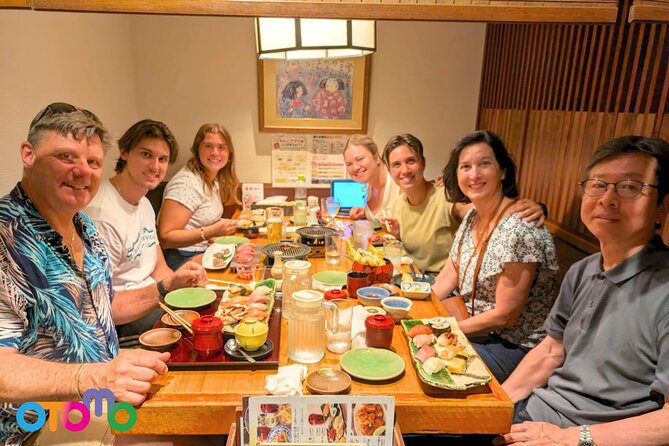
Lunch is not included in the tour price. You pay for your meal and drinks, but a guide can help you choose a place and order. Several visitors have particularly valued being taken to a local restaurant they would not have found alone, including a sushi lunch around the market.
Market timing matters. Many businesses near Tsukiji close on Wednesdays, Sundays, and public holidays. On those days, your guide may lead you to an open restaurant or shift lunch to nearby Ginza or Tsukishima.
Some places accept cash only, so carry Japanese yen. The tour also recommends wearing a mask at Tsukiji if possible. That is a small item, but it is worth putting one in your day bag before you leave.
The 90-minute stop can become the day’s most relaxed portion, or it can turn into a rushed meal if you spend too much time browsing. Tell your guide early if you care more about eating, shopping, or seeing the market area.
Tokyo Tower: A Short Stop for City Views
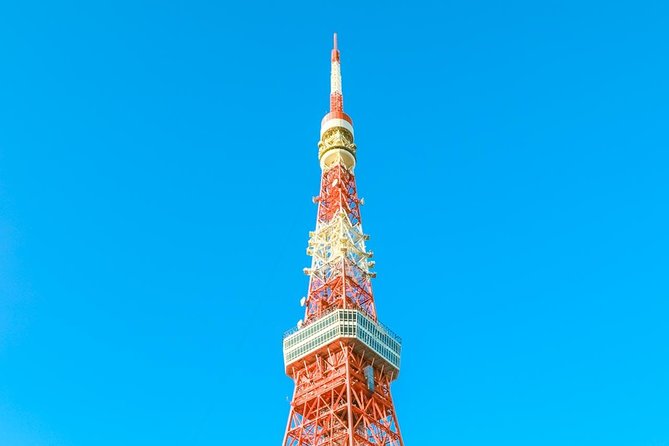
Tokyo Tower is scheduled for about 45 minutes. Built in 1958, it remains one of Tokyo’s best-known symbols, even though Tokyo Skytree is taller.
The tour description lists the tower as a photo and sightseeing stop, but the admission fee is not included. You should confirm with your guide whether your chosen route includes going inside the observation areas or viewing the tower from outside. The supplied cost estimate for the pre-planned route is ¥2,780 per person, but additional expenses can include admissions, meals, and transportation.
This stop works well as a visual marker. After seeing traditional buildings and crowded shopping streets, Tokyo Tower gives you a recognizable piece of the modern city. If you are interested in going up the tower, allow for possible lines and ask how that would affect the remaining stops.
The 45-minute schedule leaves little room for a long visit inside, especially if the day is busy. Some guides have extended the day or added Tokyo Skytree when time allowed, but you should not count on extra hours. Treat added stops as something to arrange with your guide, not as part of the standard promise.
A few more Tokyo tours and experiences worth a look

Senso-ji: Finishing in Asakusa
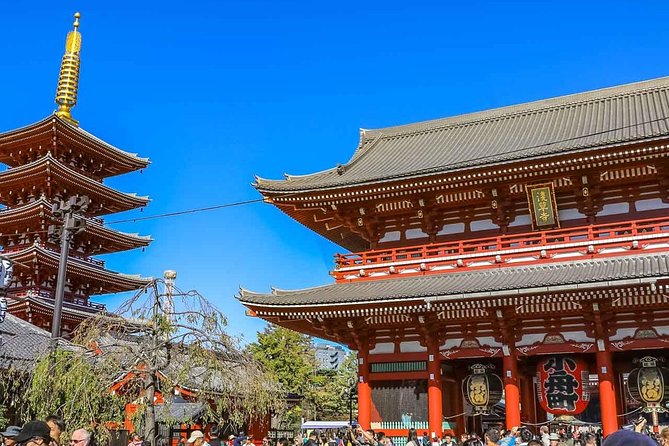
The final scheduled stop is Senso-ji in Asakusa, with about 45 minutes at the temple. This is Tokyo’s oldest temple and one of the city’s most recognizable sights.
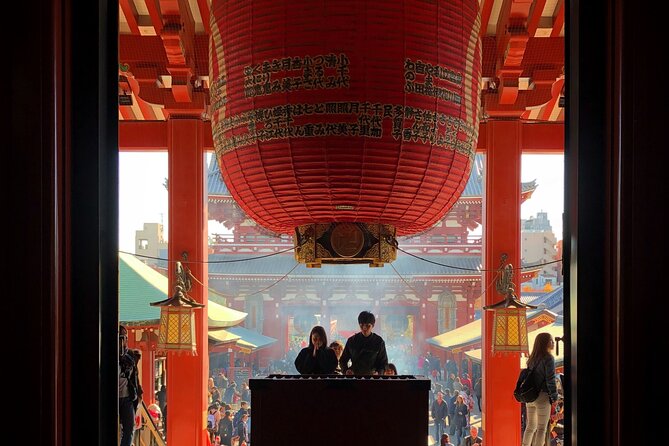
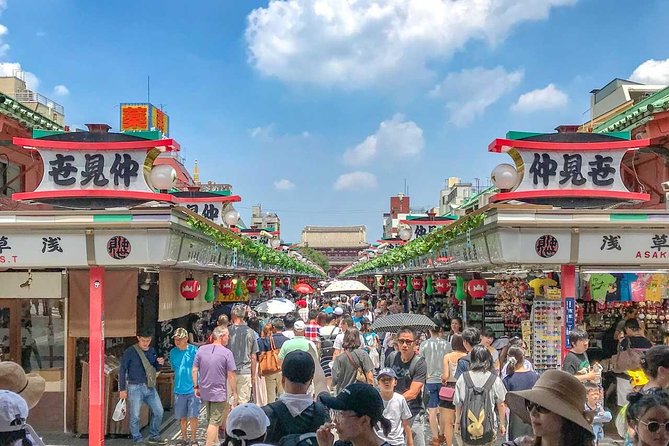
The approach leads through the famous Kaminarimon gate, marked by its large red lantern, and toward the temple buildings. The area has a strong traditional feel, with souvenir stalls, food stands, and streets that contrast sharply with Harajuku’s fashion scene.
Your guide can explain Buddhist customs and help you understand how Senso-ji differs from Meiji Jingu. The red architecture and ceremonial approach make this a memorable closing stop, particularly if this is your first day in Japan.
Forty-five minutes is enough to see the main approach and temple area, but Asakusa rewards extra time. If you want to shop for souvenirs, eat local snacks, or explore nearby streets, discuss that before the tour begins. Since the official endpoint is Asakusa Station, the tour does not naturally return you to Harajuku.
The finish is practical for visitors who want to continue exploring Asakusa. It is less convenient if your hotel is in western Tokyo and you were hoping for a guided return. Some guides have helped people navigate back to their hotels, but that should be treated as a helpful courtesy rather than a guaranteed inclusion.
The Real Value of a Private Guide
The listed price is $99.49 per person, before transportation, food, and admission costs. The tour also gives an estimated ¥2,780 per person for the pre-planned route, but the details say that customers cover the actual costs incurred during the day.
That makes the price fair if you value personal help with Tokyo’s rail system and want a private route through several districts. It is less attractive if you are comfortable using Google Maps, buying train tickets, and visiting the sights on your own.
Tokyo’s public transport is efficient, but the number of lines, platforms, exits, and station signs can slow down a first visit. A guide can save time and reduce stress, especially when your group includes older family members or people who are not used to urban rail networks.
The strongest part of the service is often the human attention. Guides including Usha, Tatsu, Ken, Taku, and Shinobu have adjusted routes, explained history and customs, taken photos, recommended food, or helped with onward transport. The best version of this tour feels like walking through the city with a patient local companion.
Still, you should keep expectations realistic. The experience depends heavily on the individual guide assigned to your group. There have been cases where the commentary was too brief or lacked useful historical context. One serious account also described a train-platform mix-up that separated part of a family for about 30 minutes. The operator apologized and said it was retraining the guide and tightening safety procedures.
Stay together at stations, especially at ticket gates and on platforms. Make sure everyone in your group knows the next destination and has the guide’s contact details.
Walking, Weather, and Pace
This is called a walking tour, but it is really a walking and public-transport day. You will walk between stations, through shrine grounds, along shopping streets, around the market, and across temple approaches.
Wear sneakers. Tokyo’s distances can look short on a map but become tiring when you add stairs, transfers, crowds, and time on your feet. The seven-hour duration is approximate, so your exact pace depends on your group and the route.
Heat and humidity can make outdoor sections harder in summer. Rain may lead to changes in transportation, destinations, or routes. Temporary closures can also result in substitute stops.
The private format helps here. You can tell the guide when you need to slow down or change the plan. If someone in your group has limited stamina, make that clear when arranging the tour rather than waiting until the middle of the day.
Customizing the Day Two Weeks Ahead
The standard route is a sensible introduction, but the customizable option may be the better choice if you have clear priorities. You can ask for more shopping, additional food time, a different neighborhood, or a route built around your family’s interests.
Contact the guide two weeks in advance. If you choose customization but do not respond to the operator, the standard itinerary will be used.
Custom hotel pickup is available only when the hotel is in Tokyo. The regular meeting point is Harajuku Station, at 1 Chome-18 Jingumae. The standard ending point is Asakusa Station, at 1-chōme-1-3 Asakusa.
The best use of customization is not trying to add every famous place. Tokyo’s size makes that unrealistic in seven hours. Instead, choose one or two priorities, such as shopping over temples, food over observation decks, or a slower pace for an older parent.
Who Should Book This Experience?
I would recommend this tour to first-time visitors who want a clear introduction before exploring Tokyo independently. It also suits families, small private groups, and anyone uneasy about public transportation.
It is a good fit if you want several types of experience in one day:
- Shrine and temple culture
- Youth fashion and shopping
- Food and market browsing
- Modern city architecture
- Help with trains and subways
- Advice on souvenirs and local restaurants
I would hesitate if you dislike walking, want a slow visit at each site, or expect all expenses to be covered. You should also think twice if you prefer a fixed professional lecture rather than a flexible guide-led day, since the quality of explanation may depend on the person assigned.
Free cancellation is available up to 24 hours before the start time. Changes or cancellations inside that window are not accepted for a refund.
Should You Book the Tokyo Private Day Trip?
Book it if you want to get your bearings quickly and value a private guide more than a low-cost sightseeing route. The mix of Meiji Shrine, Harajuku, Tsukiji, Tokyo Tower, and Senso-ji gives you a useful first look at Tokyo’s old and new sides.
Before booking, budget separately for trains, lunch, and admissions. Wear good shoes, carry cash, and contact the guide early if you want a custom day.
This is not the perfect choice for a slow, specialist tour of one neighborhood. It is a practical first-day orientation, and with a strong guide, it can make the rest of your Tokyo visit easier and more rewarding.
FAQ
How long does the Tokyo private day trip last?
The tour lasts approximately seven hours.
What places are included in the standard itinerary?
The standard route includes Meiji Jingu Shrine, Takeshita Street and Omotesando, Tsukiji Fish Market, Tokyo Tower, and Senso-ji Temple.
Is this a private tour?
Yes. Only your group participates in the activity.
Where does the tour start and end?
The standard meeting point is Harajuku Station in Shibuya. The standard ending point is Asakusa Station in Taito City.
Are transportation costs included?
No. You pay for transportation during the tour, along with food, drinks, admission fees, and other personal expenses.
Is lunch included?
No. Lunch is not included. Your guide can direct you to an open restaurant near Tsukiji, Ginza, or Tsukishima when needed.
Can I customize the itinerary?
Yes. Choose the customizable option and contact the guide two weeks in advance. If you do not respond, the standard itinerary will be used.
Is Tokyo Tower admission included?
No. The Tokyo Tower admission fee is not included.
What happens if the weather is bad?
The transportation method, destinations, or route may change in bad weather. Temporary closures may also lead to alternative stops.
More 1-Day Tours in Tokyo
More Private Tours in Tokyo
More tours in Tokyo we've reviewed












1-Day Tours, compared.
 ★ 5.0Mt Fuji and Hakone 1-Day Bus Tour Return by Bullet TrainFrom $163
 ★ 5.01-Day Tokyo Bus TourFrom $129
 ★ 4.0Mt Fuji & Hakone Cruise, Drum Show Bullet Train 1 Day from TokyoFrom $149
 ★ 4.5Tokyo: DisneySea 1-Day PassportFrom $571 day
 ★ 4.6Tokyo Disneyland 1-Day PassportFrom $571 day
 ★ 4.2Tokyo: Mt. Fuji 5th Station & Hakone Cruise 1-Day Bus TourFrom $12911 hours