Reviewed · SHIBUYA TOURS
Kintsugi Workshop Class in Shibuya, Tokyo with mon cadeau
Broken pottery gets a second life in this intimate Shibuya workshop, where you repair a ceramic piece with the Japanese art of kintsugi. Michiko and Yuki guide you through the process while you enjoy matcha tea and local sweets.
In This Article
- Key points
- Why Kintsugi Makes a Good Tokyo Workshop
- Meeting Michiko and Yuki in Shibuya
- Matcha, Japanese Sweets, and a Calm Beginning
- Choosing Your Pottery Piece
- Learning the Origins and Meaning of Kintsugi
- The Step-by-Step Repair Process
- Taking Home a Kintsugi Souvenir
- Is $145.35 a Fair Price?
- Who Will Enjoy This Workshop Most
- Should You Book the Mon Cadeau Kintsugi Class?
- FAQ
- Where does the kintsugi workshop meet?
- Where does the activity finish?
- How long does the workshop last?
- How much does the workshop cost?
- How many people can join the workshop?
- What happens during the workshop?
- Can I take my repaired pottery home?
- Do I need previous kintsugi experience?
- Can I cancel or change my booking?
I like the maximum group size of six, which leaves room for patient, personal help. I also like the simple rhythm: choose a piece, watch a demonstration, then work with your own hands. The main drawback is the price, $145.35 per person, and the booking is non-refundable, so this suits a planned Tokyo day rather than a last-minute gamble.
Key points
- A small Shibuya class: The group is limited to six people, and only your own group participates.
- A hands-on souvenir: You choose a piece of crockery from Mon Cadeau’s collection and repair it yourself.
- A gentle start: Matcha tea and Japanese sweets set the tone before the craft begins.
- Patient instruction: Michiko and Yuki provide step-by-step demonstrations and individual guidance.
- A two-hour cultural break: The workshop gives you quiet time away from Tokyo’s fast pace.
- Plan carefully: The $145.35 price is substantial, and cancellations or changes are not refunded.
Why Kintsugi Makes a Good Tokyo Workshop
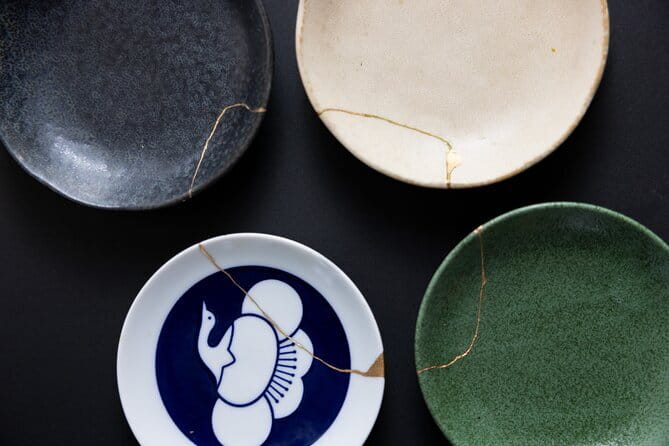
Kintsugi is the Japanese practice of repairing broken pottery with gold-colored adhesive, making the cracks part of the finished design rather than hiding them. That idea gives this class more weight than a standard souvenir-making activity. You are not simply buying something made in Japan. You are taking part in a traditional form of repair and bringing home the object you worked on.
I like the way the class connects a physical task with a broader Japanese idea: damage does not automatically make an object worthless. You can see the repair, and the visible lines become part of the piece. The meaning will appeal to you if you enjoy crafts, design, or cultural activities that leave you with something personal.
The class also offers a useful pause in a packed Tokyo schedule. Shibuya is known for speed, crowds, and constant motion. Here, you spend about two hours seated with a small group, focusing on pottery, tools, and careful steps. That slower pace is the point.
Still, keep your expectations sensible. This is a short introductory workshop, not a professional ceramics course. You will learn the process and restore one chosen piece, but the available information does not promise a full study of every traditional kintsugi method or a long technical session.
A few more Tokyo tours and experiences worth a look


Meeting Michiko and Yuki in Shibuya
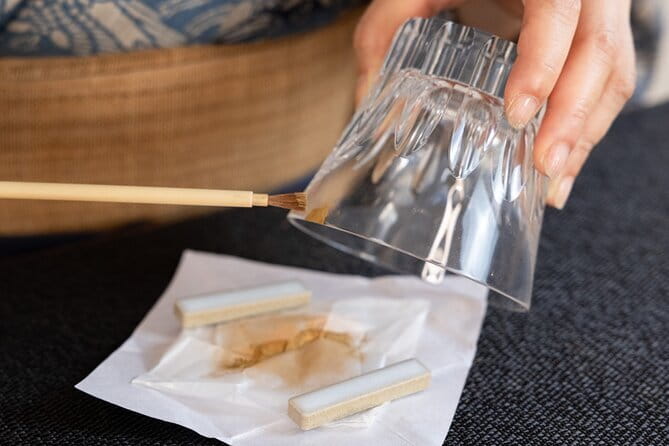
The workshop begins at Central Hospital, 25-1 Shinsenchō, Shibuya, Tokyo 150-0045. The activity ends at the same meeting point. It is near public transportation, but you should allow enough time to find the exact entrance and arrive ready to start. The address is in Shibuya, so it can work well before or after other plans in the area.
The setting is part of the experience. The class takes place at Mon Cadeau, described in personal accounts as a welcoming, home-like place. That matters because kintsugi is best learned in a calm setting where you can ask questions without feeling rushed.
Michiko is praised for her warm hospitality, patience, and clear instruction. Yuki also helps guide the class. The two instructors are described as friendly and engaged, which is especially useful if you have never handled kintsugi materials before.
The group limit of six is one of the strongest practical features. In a large class, you might spend much of the session watching from a distance. Here, you have a better chance of receiving direct help while working on your own piece. The activity is also private, meaning only your group takes part.
Matcha, Japanese Sweets, and a Calm Beginning
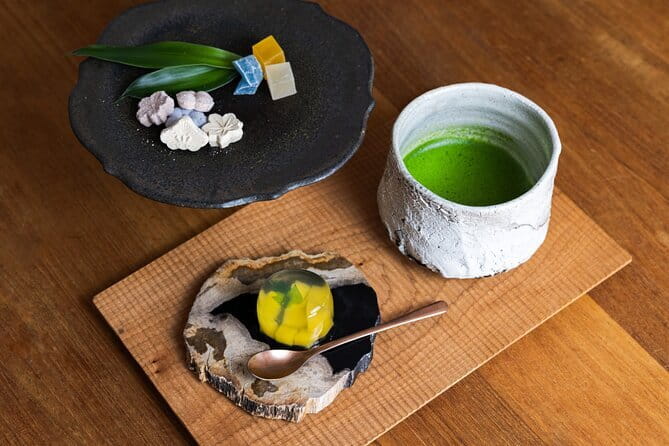
The class starts with matcha tea and local Japanese sweets. This is more than a snack break. It gives you time to settle in before the careful work begins, and it introduces a small part of Japanese hospitality at the start of the session.
You should not expect a full tea ceremony. The activity description presents matcha as a calming opening to the kintsugi process, not as a formal performance with an extended set of rituals. That distinction is useful. You are here for a practical craft class with a cultural welcome, not a specialist tea lesson.
The tea and sweets also help set the pace. Tokyo sightseeing can leave you moving from station to station, checking maps, and watching the clock. A quiet drink before handling your pottery helps shift your attention to the task in front of you.
Personal accounts give the refreshments unusually strong praise, especially the tea and local Japanese sweets. If food is an important part of your cultural experiences, this opening adds value. If you do not drink matcha or have dietary concerns, the available information does not specify alternatives, so ask Mon Cadeau before booking.
Choosing Your Pottery Piece
After the introduction, you choose your own piece of crockery from Mon Cadeau’s collection. This choice gives you some control over the final result. Rather than receiving an identical item to everyone else, you work on a piece that suits your taste.
The exact range of pottery is not specified, so do not book expecting a particular shape, color, or style. Your choice will depend on what is available during your session. That uncertainty is normal for a hands-on workshop, but it is worth keeping in mind if you have a very specific object in mind.
This is also the point where the activity becomes personal. You are not just learning about kintsugi in the abstract. You are deciding what you want to restore, then following it through to the finished piece.
I would take a moment before choosing. Look at the size, shape, and visible break lines, then choose the piece that feels manageable and appealing. You do not need prior craft experience. The class is designed to provide guidance from the first demonstration through the repair.
Learning the Origins and Meaning of Kintsugi
Before you begin the repair, the instructors explain the origins and traditions surrounding kintsugi. This cultural context helps you understand why the method matters in Japan and why the finished cracks are displayed rather than disguised.
The central idea is simple: the history of the object remains visible. A repaired bowl or cup carries evidence of having been broken, but the damage does not end its useful life. That makes the finished piece both functional-looking and symbolic, though you should follow the instructor’s advice about how to handle and use it after the class.
This explanation is one of the reasons the workshop works well for a first visit to Japan. You get a direct cultural lesson tied to an object you can hold. The meaning is easier to remember when you are applying it to a real piece of pottery.
The class also gives you a chance to see a Japanese tradition in a modern format. The workshop is built for visitors, with a short duration, refreshments, demonstrations, and a finished item to take home. That makes it accessible, but it also means the session is an introduction rather than an exhaustive study.
A few more Tokyo tours and experiences worth a look

The Step-by-Step Repair Process
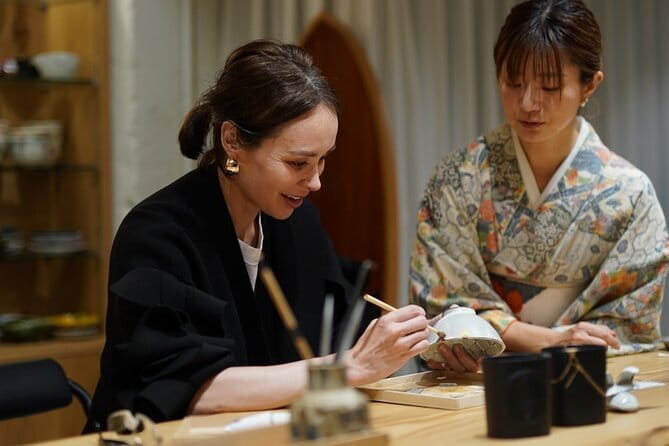
The instructors demonstrate the kintsugi technique before you begin. You then work on your chosen crockery with guidance from Michiko and Yuki. The important point is that this is hands-on. You are not watching someone repair pottery while you sit back.
Step-by-step instruction is especially helpful here because the finished lines need care and attention. The process may look simple from a distance, but applying adhesive and creating a clean gold effect requires you to slow down. The small group means you can receive help as you work instead of trying to copy a demonstration on your own.
You should be prepared to concentrate. This is not an activity to rush through while chatting constantly or taking photos every few minutes. The value comes from handling the piece yourself and seeing the repair develop.
The class is suitable for most people, and no previous experience is stated as a requirement. Still, younger children or anyone who dislikes fine handwork may find the pace less exciting. The available information does not give a minimum age, so families should confirm that detail directly before booking.
The instructors’ patient approach is a major advantage. Michiko is repeatedly described as kind and welcoming, while the guidance from both instructors helps people succeed with the technique. That personal attention can make the difference between a frustrating craft session and a satisfying one.
Taking Home a Kintsugi Souvenir
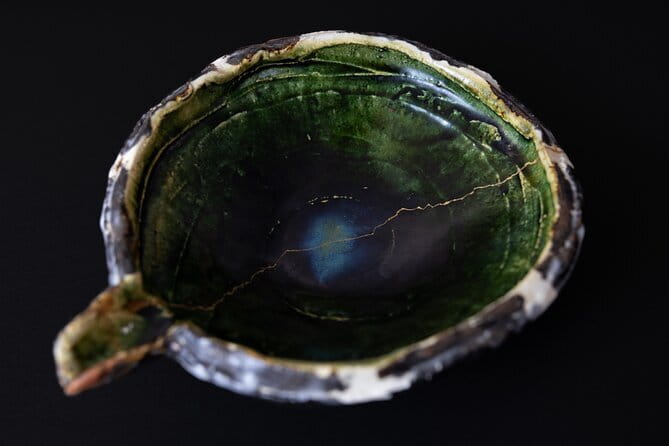
At the end, you take home your restored crockery. This is the strongest souvenir feature of the experience. You leave with something connected to Japanese culture and marked by your own work, not a mass-produced item picked up in a station shop.
The finished piece may not look perfectly uniform, and that is part of the charm. Kintsugi highlights the repair rather than pretending the break never happened. If you prefer polished, identical results, you may find the handmade finish less predictable. If you like objects with a story, the uneven details are likely to make it more meaningful.
Pack with care after the workshop. The activity says you can take the piece home, but it does not provide specific packing or luggage guidance. If you are still traveling around Japan, ask the instructor how best to protect it before placing it in your suitcase.
This souvenir also gives you something to talk about later. You can explain how you selected the crockery, learned the technique, and repaired the piece in Shibuya. That personal connection is a better value than simply adding another object to your luggage.
Is $145.35 a Fair Price?

At $145.35 per person, this is an expensive two-hour activity. You are paying much more than you would for a casual craft kit or a simple museum visit. The price needs to be judged by what is included in the experience: a private small group, an instructor-led workshop, matcha, local sweets, your selected pottery, personal guidance, and a finished piece to take home.
For me, the price makes the most sense if you value three things: direct instruction, a small group, and a meaningful handmade souvenir. The maximum of six gives the class a personal feel, while the included refreshments add a hospitable touch. You also avoid the uncertainty of trying to teach yourself a delicate technique from a book or video.
The value is weaker if you are mainly looking for cheap entertainment or a quick souvenir. Two hours is not a long class, and the exact pottery selection is not guaranteed. You should also remember that the booking is non-refundable and cannot be changed for any reason. That makes the financial commitment higher than the price alone suggests.
The activity is often booked about 23 days ahead. That is useful planning information. If this class fits your Tokyo schedule, reserve it early, then protect that time in your itinerary. Do not book it on a day when a delayed train, jet lag, or a tightly timed tour could easily make you cancel.
Who Will Enjoy This Workshop Most
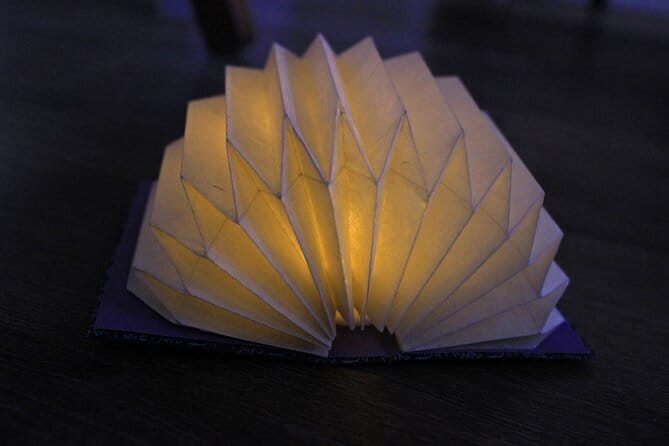
I would recommend this class to you if you enjoy making things with your hands and prefer a personal cultural activity over a large sightseeing tour. It is also a good choice for couples, parents and adult children, friends, and solo visitors who like small groups.
The workshop has a reflective quality, but it is still practical. You learn a technique, receive guidance, and leave with pottery. That balance makes it easier to fit into a Tokyo trip than an all-day class.
It may suit you particularly well after several busy sightseeing days. Shibuya can be loud and demanding, so two hours of focused craft gives your schedule some breathing room. The class also works for visitors who have already seen major temples and markets and want a different way to connect with Japan.
You may want to skip it if your main goal is advanced ceramics training, a formal tea ceremony, or a long workshop with several finished pieces. The available format centers on one chosen piece and an introduction to kintsugi within about two hours.
Service animals are allowed, and most people can participate. Since the workshop involves hands-on work and the details of the physical setup are not provided, contact Mon Cadeau directly if you have specific mobility or accommodation needs.
Should You Book the Mon Cadeau Kintsugi Class?
Book it if you want a small, personal craft experience with a clear cultural connection. Michiko and Yuki provide the kind of close instruction that makes a beginner feel supported, and the matcha and sweets add a thoughtful Japanese welcome.
The strongest reasons to book are the six-person limit, the chance to choose your own pottery, and the fact that you take home something you repaired yourself. The main reasons to hesitate are the high price, the short two-hour format, and the strict no-refund policy.
For the right person, this is a memorable break from Tokyo’s busy streets. For a bargain hunter or serious ceramics student, it may not be the best fit. Reserve it when you can commit to the date, and treat the finished piece as both a souvenir and a record of time spent learning something carefully.
FAQ
Where does the kintsugi workshop meet?
The meeting point is Central Hospital, 25-1 Shinsenchō, Shibuya, Tokyo 150-0045, Japan.
Where does the activity finish?
The workshop ends back at the meeting point.
How long does the workshop last?
The activity lasts approximately two hours.
How much does the workshop cost?
The listed price is $145.35 per person.
How many people can join the workshop?
The group has a maximum of six people, and the activity is private for your group.
What happens during the workshop?
You begin with matcha tea and local sweets, learn about kintsugi, choose a piece of crockery, watch step-by-step demonstrations, and repair your pottery with instructor guidance.
Can I take my repaired pottery home?
Yes. You create a restored piece of crockery to take home.
Do I need previous kintsugi experience?
No previous experience is stated as a requirement. The instructors provide demonstrations and personal guidance throughout the class.
Can I cancel or change my booking?
No. The experience is non-refundable and cannot be changed for any reason. If Mon Cadeau cancels because the minimum number of participants is not met, you will be offered another date or experience, or a full refund.
More Workshops & Classes in Tokyo

More Craft Workshops in Tokyo
More Shibuya Tours in Tokyo



More tours in Tokyo we've reviewed












Shibuya Tours, compared.
 ★ 5.0Official Street Go-Kart in ShibuyaFrom $76
 ★ 5.0Shibuya Meltdown Nightlife Tour: All-You-Can-Drink Bar HoppingFrom $106
 ★ 4.9Tokyo: Street Kart Experience in ShibuyaFrom $99
 ★ 5.0Shibuya Official Street Go-Kart in Shibuya AnnexFrom $69
 ★ 5.0Tokyo: Shibuya Food Tour (13 dishes and 4 Eateries)From $77
 ★ 5.0Best of Shibuya Food TourFrom $217