Reviewed · TSUKIJI MARKET TOURS
Tokyo Sushi Making Class in Tsukiji with Professional Chef
The best part of this Tsukiji sushi class is that you do not simply watch a chef work. You see a professional prepare fish, learn how sushi is shaped, then make five nigiri and one rolled sushi before eating your own lunch. It packs a useful taste of Japanese food culture into about 90 minutes.
In This Article
- Key points at a glance
- What this Tsukiji sushi class actually offers
- Fish preparation comes before the sushi lesson
- Making five nigiri and one rolled sushi
- Eating your own sushi in a traditional classroom
- How the three Tsukiji stops fit together
- The English support makes a real difference
- Who will enjoy it most
- Practical details that affect your decision
- Should you book the Tsukiji sushi-making class?
- FAQ
- How long does the sushi-making class last?
- What sushi will I make?
- Is lunch included?
- Is the class taught in English?
- Where does the class meet?
- Can the class accommodate allergies or special diets?
I like the small, hands-on format and the setting in a traditional Japanese building near Tsukiji’s food markets. I also like that an English-speaking host works alongside the sushi master, so you can follow the explanation and get help while your fingers are still learning what to do.
The main drawback is practical: the classroom is on the third floor with stairs only, and the session can run past its scheduled end. You should also report allergies before booking, since halal, kosher, and some special dietary requests cannot be accommodated.
Key points at a glance
- Watch a fish-cutting demonstration: A professional sushi chef shows the steps used to prepare fish and explains Japanese knives.
- Make six pieces of sushi: You prepare five different nigiri sushi and one rolled sushi, with guidance at each stage.
- Eat what you create: Your handmade sushi becomes lunch, with the chef also preparing sushi and fresh wasabi for you to enjoy.
- Learn in Tsukiji: The classroom sits inside a traditional Japanese building near Tsukiji Fish Market, Tsukiji Jogai Market, and Tsukiji Nippon Fish Port Market.
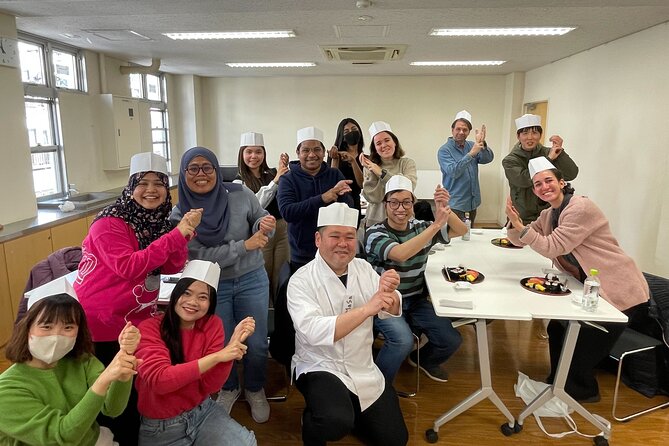
- English support is built in: Hosts such as Yuko, Yugo, Kanon, Emma, and Eri have helped explain the chef’s instruction, though the individual host may vary.
- Plan for stairs and timing: The class is short and easy to fit into a Tokyo day, but the room is reached only by stairs and the finish may run late.
What this Tsukiji sushi class actually offers
This is a practical introduction rather than a full cooking course. In a compact session, you learn what sushi is, see how fish is prepared, and practice two basic forms: nigiri sushi and rolled sushi, often called maki.
The experience begins with a friendly English-speaking host and a professional sushi master. The host helps translate and explain the chef’s instruction, while the chef handles the technical demonstration. That partnership matters. Sushi technique can look simple from across a restaurant counter, but rice shape, fish cutting, pressure, and rolling all require careful explanation.
You receive proper utensils and tableware sourced from local shops. Fresh ingredients come from the market area, and the class gives you a chance to work with the food rather than simply eat a finished plate. If you are new to sushi, the step-by-step help keeps the task manageable.
The lesson is also designed for beginners. You do not need a previous cooking background, and the teaching style allows the chef or staff to assist when your rice mound looks less tidy than the model piece. That is part of the fun. You are learning a skill, not taking a professional examination.
A few more Tokyo tours and experiences worth a look


Fish preparation comes before the sushi lesson
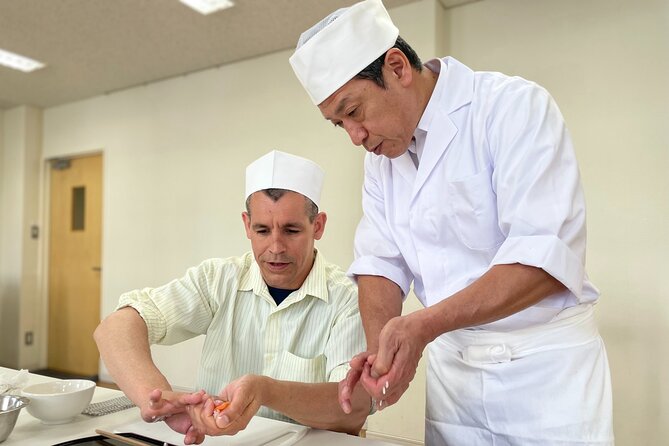
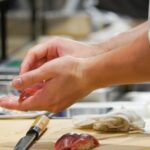
The fish disassembly demonstration gives the class its most distinctive moment. A professional chef shows the several steps involved in preparing fish for sushi and explains the use of Japanese knives.
This is more useful than a generic introduction to ingredients. It shows the care that comes before a slice reaches a sushi counter. You see that sushi is not just raw fish placed on rice. The cutting and preparation affect the final texture, shape, and presentation.
The demonstration also gives context to the meal you make later. You can pay attention to how the chef handles the fish, then try to copy the precision when you prepare your own pieces. You will not reproduce the chef’s speed, but you will understand more about the craft.
The exact fish selection is not specified, so do not book this expecting a guaranteed list of particular seafood. Ingredients are fresh and market-sourced, but the menu can depend on what is available for the session. Tell the operator about allergies when you reserve. The team tries to help with allergy-related needs, but it cannot promise every request can be met.
Making five nigiri and one rolled sushi
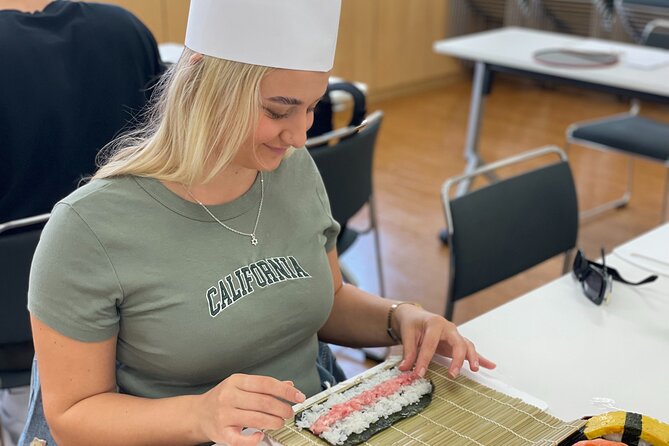
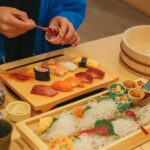
After the demonstration, the chef explains the different types of sushi and leads you through the making process. The class includes five different nigiri sushi and one rolled sushi, giving you a useful comparison between the two forms.
Nigiri is the familiar hand-shaped piece of rice topped with fish or another ingredient. The skill lies in forming the rice without crushing it and placing the topping neatly. Staff help you work through the steps, which is especially useful for children and first-time sushi makers.
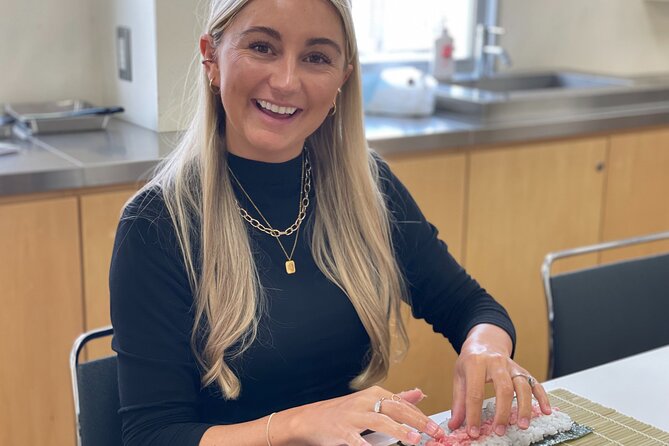
The rolled sushi introduces a different rhythm. You work with the filling and rice, then use the rolling method shown by the chef. The result may not have the exact symmetry of a restaurant piece, but the finished plate can look surprisingly polished with a little help.
This is where the class earns its price. At $49.74 per person, you are paying for instruction, fresh ingredients, a professional demonstration, an English-speaking host, utensils, and a meal. It is not the cheapest lunch in Tokyo, but it combines lunch with a structured cultural activity. If you already plan to eat around Tsukiji, the added value is the skill and access to the preparation process.
You should arrive with some appetite, but not an empty stomach if you are prone to hunger during activities. The sushi you make is the meal, and the session is short enough that you do not need to set aside half a day.
Eating your own sushi in a traditional classroom
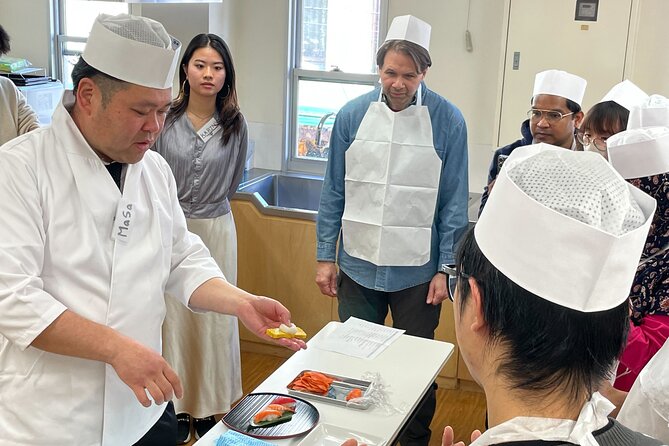
Once the preparation is finished, you eat what you have made. The included meal consists of the five nigiri and one rolled sushi, so you get to taste the direct result of your work.
The chef also prepares another sushi piece during the meal, with expertly prepared wasabi. This gives you a useful side-by-side comparison between your beginner effort and the professional version. Fresh wasabi is specifically noted as part of the tasting, although the experience does not promise a particular number of extra pieces or additional dishes.
The classroom is in a traditional Japanese-style building on the third floor of a local building near the Tsukiji market area. This is not a modern cooking studio designed for large demonstrations. The setting is more intimate, which helps the staff give personal assistance, but it also means stairs and limited space.
The maximum group size is 20 people. That is not a private lesson, yet it remains small enough for a class rather than a theater show. If you are part of a family or group, you can expect the activity to work well for mixed ages. Families with children from about seven to twelve have enjoyed the format, especially because making the sushi encourages children to try food they might otherwise avoid.
How the three Tsukiji stops fit together
The listed itinerary names three nearby areas: Tsukiji Fish Market, Tsukiji Jogai Market, and Tsukiji Nippon Fish Port Market. Their importance is mainly the setting around the class. You make your own way to the meeting point, and the activity ends back there.
Tsukiji Fish Market gives the class its food-focused identity. The market area is a fitting place to learn about fish handling and sushi preparation, rather than doing the lesson in a detached tourist venue.
Tsukiji Jogai Market is the outer market area, known for food shops and stalls. The class location allows you to pair the lesson with your own time among the surrounding food businesses. Do not assume, however, that hotel pickup, transportation, or a separate guided market tour is included. Those are not part of the package.
Tsukiji Nippon Fish Port Market adds another link to the seafood trade. Together, the three names explain why this location feels connected to working food culture. The class itself remains the main event, so leave extra time if you want to look around the market before or after eating.
The meeting address is 千社額棟 4-chōme-16-2 Tsukiji, Chuo City, Tokyo 104-0045. It is near public transportation, but you are responsible for getting there and returning to your next stop.
A few more Tokyo tours and experiences worth a look
The English support makes a real difference
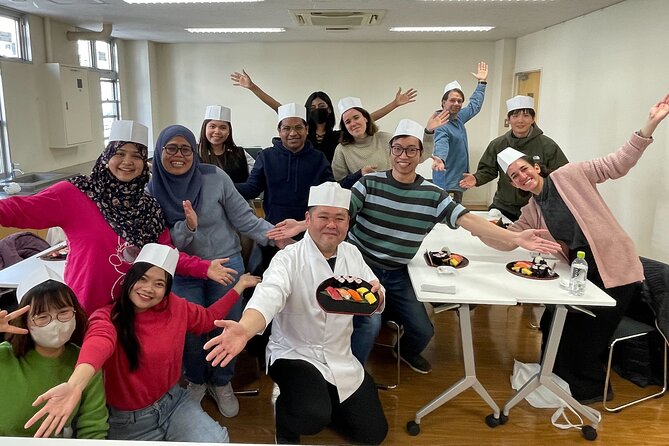
The chef instruction is supported by an English-speaking host. Past sessions have included hosts named Yuko, Yugo, Kanon, Emma, Eri, Miky, Nao, and AJ, along with chefs such as Tanaka and Kate. Staff assignments can change, but the format remains the same: the host explains, translates, and helps keep the class moving.
This is one of the activity’s strongest features. Food demonstrations often lose their value when you cannot follow the details. Here, the host helps explain sushi types, ingredients, knife work, and the sequence for making nigiri and rolls.
The teaching also appears warm and encouraging. That matters when you are working with sticky rice and trying to make several pieces in a row. Staff assist without taking over, so you can still say you made the sushi yourself.
The class has received a 5 out of 5 rating from 1,177 reviews, with 99 percent recommending it. Those numbers point to consistent satisfaction, especially with the hosts, the chef’s demonstration, the fresh food, and the amount of hands-on practice. They do not erase the limitations: this is a short introduction, not advanced sushi training, and dietary flexibility is limited.
Who will enjoy it most
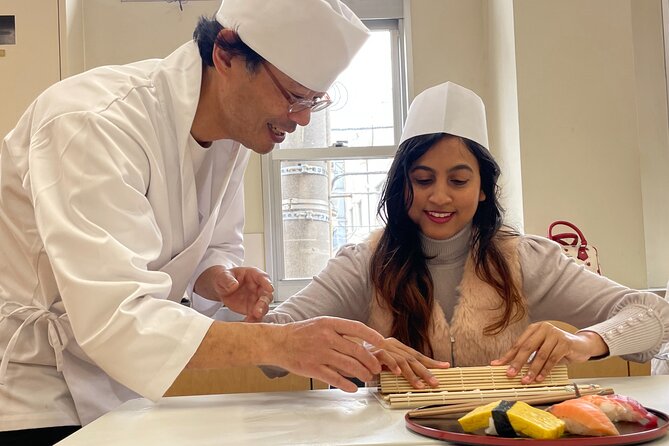
I would recommend this to sushi fans who want to understand the food beyond the restaurant plate. It also suits first-time visitors looking for a short indoor activity that fits between market visits, shopping, or other Tokyo plans.
Families are a strong match. Children can take part in a clear task, receive help, and eat the result. The activity has also worked well for groups with teenagers, including tired families who needed something engaging without committing to a long tour.
It is a good choice for rainy weather, too. The class takes place indoors, and you still get a connection to Tsukiji without spending the whole day outside. Just remember that the market area itself may require walking between shops and the meeting point.
You might skip it if you are looking for a full market tour, a large meal with many courses, or a class focused on advanced knife skills. It is also not suitable for anyone who has trouble with stairs. The room is on the third floor, and there is no elevator listed.
Practical details that affect your decision
The advertised duration is about one hour and 30 minutes. That is a useful length for a busy Tokyo itinerary, but allow some flexibility because the activity may run beyond the scheduled finish. If you have a train, reservation, or timed attraction afterward, tell the operator in advance and avoid scheduling it too tightly.
The class includes your handmade sushi, instruction, the English-speaking host, the professional chef, fresh ingredients, and utensils. Hotel pickup and drop-off, transportation, and extra food or drinks are not included.
The mobile ticket makes entry simple, and confirmation is provided when you book. The experience has free cancellation if you cancel at least 24 hours before the local start time. Cancellations or changes made inside that window are not accepted for a refund.
For food restrictions, be direct before reserving. Allergy-related requests may be considered, but cannot always be met. Halal and kosher requests are not accommodated.
Should you book the Tsukiji sushi-making class?
Book it if you want a hands-on lunch with a clear cultural connection, especially if you are new to sushi making, traveling with children, or need a short activity near Tsukiji. The fish-cutting demonstration, English support, fresh ingredients, and six pieces of sushi to make give the $49.74 price solid value.
Skip it if you need an elevator, strict dietary accommodation, or a guaranteed finish time. For most sushi lovers, though, this is an easy way to turn a meal into a skill you can try again at home. You leave with a better sense of how sushi is prepared, and with the pleasant satisfaction of eating your own work.
FAQ
How long does the sushi-making class last?
The activity lasts approximately one hour and 30 minutes. It may run beyond the scheduled ending time, so avoid booking an appointment immediately afterward.
What sushi will I make?
You will make five different nigiri sushi and one rolled sushi.
Is lunch included?
Yes. You eat the sushi you prepare during the class. The sushi master also prepares another piece, with fresh wasabi.
Is the class taught in English?
An English-speaking host works with the professional sushi master and explains or translates the instruction in English.
Where does the class meet?
The meeting point is 千社額棟 4-chōme-16-2 Tsukiji, Chuo City, Tokyo 104-0045, Japan. The class ends back at the meeting point.
Can the class accommodate allergies or special diets?
You should report allergies when making your reservation. Allergy-related requests may be considered but are not guaranteed. Halal and kosher requests are not accommodated.
More Workshops & Classes in Tokyo


More Sushi Making Classes in Tokyo
More Tsukiji Market Tours in Tokyo
More tours in Tokyo we've reviewed












Tsukiji Market Tours, compared.
 ★ 5.0Tokyo Tsukiji Fish Market Food and Culture Walking TourFrom $99
 ★ 5.0Tokyo: Tsukiji Fish Market Food and Walking tourFrom $30
 ★ 4.9Tokyo: Tsukiji Fish Market Guided Walking TourFrom $222 hours
 ★ 5.0Tsukiji Fish Market Guided Tour and Sushi Making with Pro ChefFrom $104
★ 4.7Tokyo: Tsukiji Fish Market Food and Culture Walking TourFrom $963 hours
★ 5.0Tsukiji Fish Market Guided Tour and Sushi Making with Pro ChefFrom $104
★ 4.7Tokyo: Tsukiji Fish Market Food and Culture Walking TourFrom $963 hours
 ★ 5.0Tsukiji Fish Market: Street Food & Culture Walking TourFrom $33